Overview
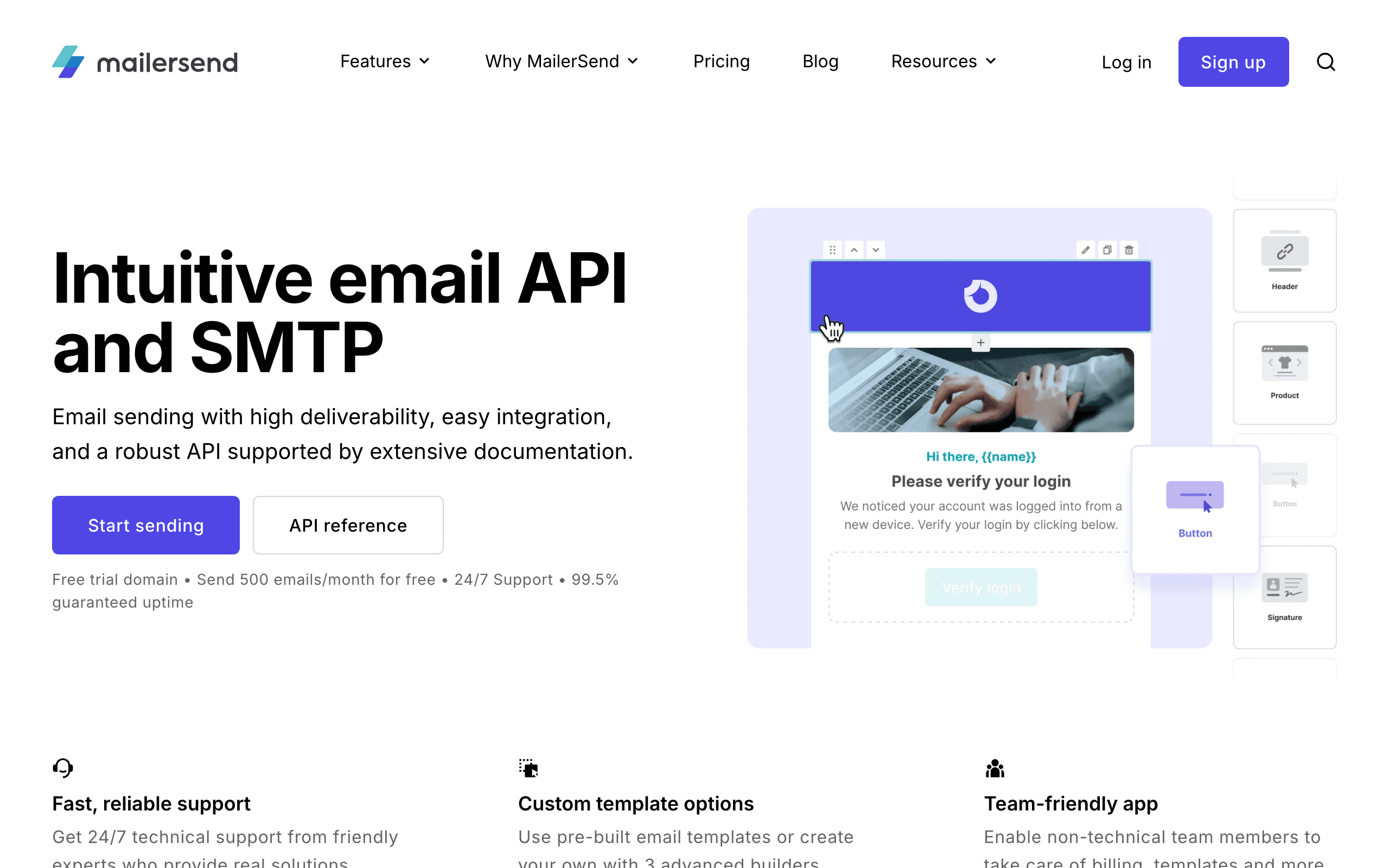
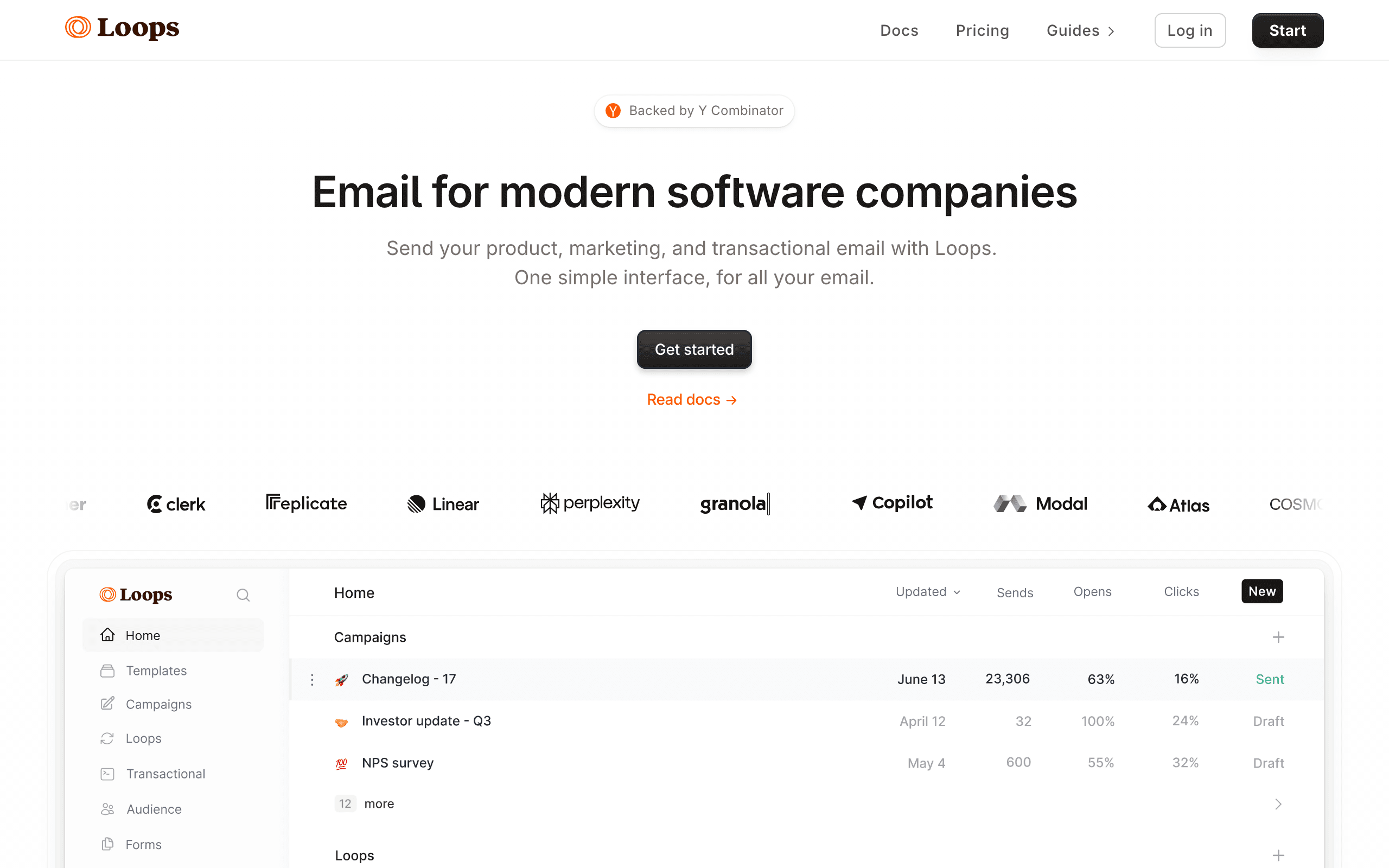
MailerSend and Loops serve SaaS companies differently. MailerSend specializes in transactional with email verification. Loops is purpose-built for SaaS with unified transactional and marketing.
One Tool vs Two
With MailerSend, you need MailerLite (or similar) for marketing. With Loops, everything is unified. For simplicity, Loops wins. For specialized transactional with verification, MailerSend wins.
SaaS Focus
Loops is purpose-built for SaaS companies with product-led growth features. MailerSend is general transactional for any use case including SaaS.
Email Verification
MailerSend includes email verification. Loops doesn't. For validating addresses before sending, MailerSend provides more value.
For SaaS with Stripe
Neither has native Stripe integration. Sequenzy offers Stripe integration for subscription businesses with payment-triggered automation.
Making the Choice
Choose MailerSend for pure transactional with email verification. Choose Loops for unified SaaS email. Or choose Sequenzy for Stripe integration.
The Two-Tool vs One-Tool Trade-off
The core decision between MailerSend and Loops comes down to whether you prefer specialized tools or a unified platform. With MailerSend, you get best-in-class transactional email with verification, but your marketing needs require adding MailerLite or another platform. That means two dashboards, two billing relationships, and the cognitive overhead of context-switching.
Loops eliminates this friction by combining everything in one place. Your onboarding sequences, product announcements, and transactional notifications all live in the same platform with the same contact data. For small SaaS teams that value simplicity, this unification is genuinely valuable and reduces operational overhead.
Product-Led Growth Alignment
Loops was designed from the ground up for product-led SaaS companies. Its event-based automation understands concepts like user activation, feature adoption, and lifecycle stages. You can trigger campaigns based on what users do in your product, not just arbitrary time delays.
MailerSend has no concept of product events or user lifecycle. It sends emails when your application tells it to via API, which is perfectly fine for transactional use cases but means you are building all your marketing logic yourself. For teams with engineering resources, this flexibility can be an advantage. For smaller teams, Loops provides the framework.
Long-Term Platform Considerations
MailerSend benefits from the stability and resources of the MailerLite group, which has been operating since 2010. Loops is a newer startup that is growing rapidly but has a shorter track record. For risk-averse organizations, MailerSend's established backing provides confidence. For teams comfortable with newer platforms, Loops' modern approach and rapid feature development can be appealing.
User Behavior Tracking
MailerSend is built for transactional sending, not for reading product behavior, so tracking what users do inside your app is not really its job, you would pair it with MailerLite for anything behavioral. Loops is purpose-built for SaaS and ties directly into event-based triggers, letting you fire emails off specific user actions inside one unified platform. If your automations depend on in-product events, Loops gives you that natively; MailerSend expects you to bring that logic from elsewhere.
Trial and Onboarding Optimization
Loops lets you build onboarding sequences around actual product milestones since event tracking and marketing automation live in the same platform as transactional sending. MailerSend focuses on reliably delivering transactional messages like verification emails and receipts, and pushes marketing automation over to its sister product MailerLite, which means managing two tools instead of one. For SaaS teams converting trial users through milestone-based emails, Loops' unified approach is more direct.
Company-Level vs User-Level Communication
Loops is designed around SaaS accounts and product usage, which makes it more natural for grouping users by company and triggering sends off account-level events, even though this is still a newer, smaller platform. MailerSend does not have that SaaS-specific data model at all since it specializes in transactional delivery with built-in email verification and optional SMS. B2B teams needing account-level targeting will find Loops closer to what they need out of the box.
Use-case matchups
| Situation | Best first look | Why |
|---|---|---|
| Transactional email with verification and SMS extras | MailerSend | MailerSend is the stronger fit when reliable API delivery, verification, inbound parsing, and SMS matter. |
| SaaS marketing with product-event triggers | Loops | Loops is built around SaaS messaging, onboarding, product announcements, and event-based campaigns. |
| Team that already has a separate marketing platform | MailerSend | MailerSend can stay focused on transactional delivery while marketing lives elsewhere. |
| Small SaaS team that wants one email workspace | Loops | Loops reduces dashboard and billing sprawl for product-led email. |
| Subscription business that needs billing-aware automation | Sequenzy | Sequenzy is a stronger fit when Stripe events need to trigger marketing and transactional messages. |
Best Fit by SaaS Email Ownership
Best transactional email service for teams with marketing already covered
MailerSend is the better fit when app email needs a dedicated sender and marketing automation already lives somewhere else. It can own delivery, verification, inbound parsing, and SMS without becoming the campaign system.
Best SaaS email platform for product-event lifecycle campaigns
Loops is the better fit when a small SaaS team wants product updates, onboarding, lifecycle campaigns, and transactional messages in one workspace. It is closer to a SaaS email operating layer than a delivery API.
Best email platform for Stripe-aware subscription automation
Sequenzy is the better fit when subscription events should trigger both campaigns and transactional messages. Trial conversion, failed payments, upgrades, cancellations, and receipts are the key workflows.
Pricing reality
MailerSend pricing should be modeled around transactional volume, verification usage, SMS usage, and any support or dedicated-IP needs. It may look inexpensive, but marketing automation usually requires another platform.
Loops pricing should be evaluated as a SaaS email workspace rather than only a transactional sender. The value comes from unifying marketing and product-triggered email, not from replacing the cheapest delivery API.
Sequenzy is relevant if the missing requirement is Stripe-native subscription automation. If Stripe events are central to onboarding, dunning, activation, or retention, compare that explicitly rather than only comparing send volume.
Review signals
The MailerSend snippets are positive on the MailerLite backing, free-tier value, SMS, and verification, with cautions around limited marketing features and maturity in the transactional category.
The Loops snippets are positive on SaaS focus, clean interface, and event-based triggers, with cautions around newer-platform risk, integrations, and reporting depth.
Migration checklist
| Workstream | Moving to MailerSend | Moving to Loops | Moving to Sequenzy |
|---|---|---|---|
| Product events | Keep app event logic in your product or another marketing tool. | Map signup, activation, feature usage, trial, and lifecycle events into Loops. | Map app and Stripe events into Sequenzy subscriber timelines. |
| Transactional email | Move password resets, receipts, notifications, and verification emails to MailerSend. | Decide which transactional emails belong in Loops and which stay in code. | Centralize transactional and lifecycle email templates. |
| Marketing email | Pair MailerSend with MailerLite or another marketing platform if needed. | Rebuild onboarding, product updates, and lifecycle campaigns. | Rebuild campaigns and automations around customer lifecycle states. |
| Data model | Preserve suppressions, bounces, validation status, and recipient metadata. | Import contacts, companies, events, and custom properties. | Import subscribers, attributes, tags, suppressions, and billing state. |
| Reporting | Validate delivery logs, webhooks, and verification reporting. | Validate campaign, event, and lifecycle reporting for SaaS teams. | Validate campaign, transactional, automation, and Stripe reporting together. |
Decision checklist
- Is the main job transactional delivery or SaaS lifecycle messaging?
- Do you need email verification and SMS enough to prefer MailerSend?
- Is Loops' newer-platform risk acceptable for your team?
- Do you need company/account-level communication for B2B SaaS?
- Would native Stripe automation remove enough custom logic to matter?