
Updated 2026-03-15

Best Email Marketing Tools for Freelance Writers

Land more clients, build your audience, and grow your writing business with the right email marketing platform.

Building a freelance writing career means more than great writing. You need to find clients, nurture leads, deliver projects, and build an audience for your work. Email marketing helps with all of it. But most email tools are not built for writers. Here are 13 platforms that actually work for freelance writers, ranked by ease of use, automation features, and value for money.

TL;DR

For most freelance writers, Sequenzy is the best value - the AI generates welcome sequences, client follow-ups, and newsletters in seconds, and you can start free with up to 2,500 emails per month. ConvertKit (Kit) is excellent for writers building a personal brand with content. MailerLite offers the cleanest simple experience at the lowest price.

Why Freelance Writers Need Email Marketing

Build Your Audience

A newsletter or email list builds an audience that follows your work. This audience becomes clients, referral sources, and eventually passive income.

Nurture Client Relationships

Stay top of mind with past clients so they think of you when they need writing. Automated follow-ups keep relationships warm.

Land More Clients

Cold pitches get ignored. Warm leads from your email list convert better. Build trust before you pitch.

Promote Your Work

New articles, blog posts, books, or courses. Email drives more engagement than social media for writers.

Freelance Writers Email Marketing Benchmarks

Know these numbers before you start. They'll help you set realistic goals and pick the right tool.

30-45%
Average Open Rate

Freelance writer newsletters see 30-45% open rates because subscribers choose to follow your work. Personal, conversational emails from individuals consistently outperform branded corporate emails.

3-7%
Average Click Rate

Click rates of 3-7% are typical. Links to your published work, recommended resources, and service pages drive the most clicks. Include one primary call to action per email for best results.

Tuesday or Thursday morning
Best Send Time

Tuesday and Thursday mornings (8-10am) work well for writer newsletters. Readers engage with professional content during weekday mornings. Weekend sends can work for lifestyle or personal essay newsletters.

2-5% of subscriber inquiries
Client Conversion Rate

Freelance writers who consistently nurture their list see 2-5% of subscribers become clients over time. The conversion is indirect - subscribers trust your expertise, then hire you when they need writing help. Warm leads from email convert at a much higher rate than cold pitches.

Important Tips Before You Choose

Lessons from freelance writerswho've been doing this for years. Save yourself the trial and error.

Consistency matters more than perfection in your newsletter

Weekly or bi-weekly newsletters build the strongest reader relationships. A short, genuine email every week outperforms a perfectly crafted essay once a month. Readers subscribe for your voice and perspective, not polished prose. Pick a schedule and stick to it - consistency builds trust and keeps you top of mind.

Provide value in most emails, then your pitches land better

The 80/20 rule works well for writers - 80% valuable content (insights, resources, behind-the-scenes, lessons learned) and 20% promotional (services, courses, products). When you do pitch, your audience is receptive because you have already proven your value.

Use your newsletter to demonstrate your writing expertise

Every newsletter you send is a writing sample. Potential clients read your newsletter and judge your ability. Write with the same care you bring to client work. Your newsletter is simultaneously your marketing channel and your portfolio.

Segment readers from potential clients from the start

At minimum, tag subscribers as readers (newsletter audience), potential clients (inquiries), and past clients (completed projects). Each group needs different content. Readers want your perspective. Potential clients want proof of expertise. Past clients want to stay connected for future work.

Repurpose client work into newsletter content

Every client project teaches you something. Share the lessons (without confidential details) in your newsletter. What you learned about a new industry, writing techniques that worked, or challenges you overcame. This repurposing saves time while building authority.

Ask for referrals after delivering strong results

The best time to ask past clients for referrals is right after you deliver great work. Include a referral request in your post-project follow-up sequence. Happy clients refer friends and colleagues, and email makes it easy to ask at the right moment.

13 Best Email Marketing Tools for Freelance Writers

Our Top Pick for Freelance Writers
#1
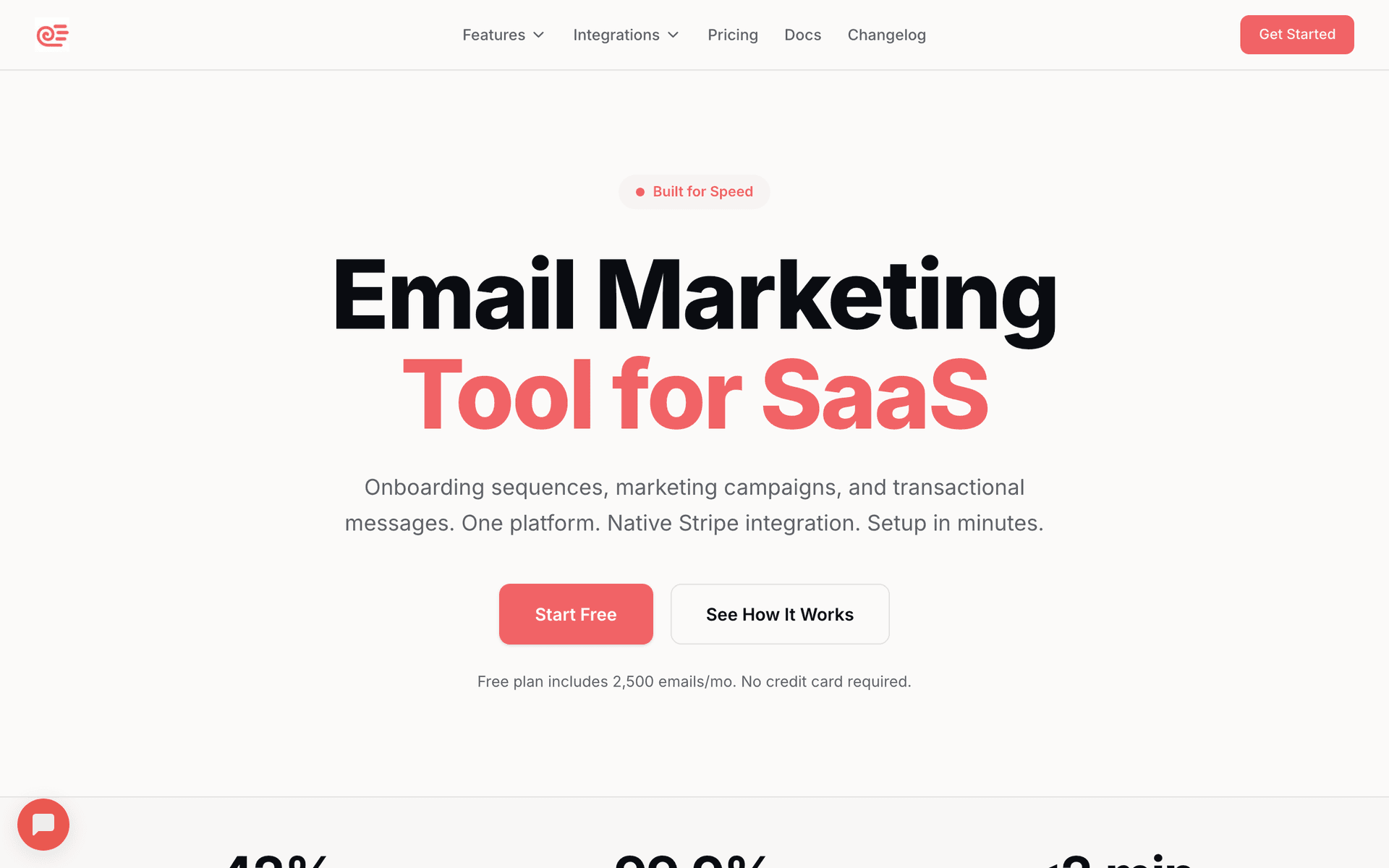
Sequenzy

AI-powered email marketing built for service businesses and creators. Creates sequences automatically.

Visit

Sequenzy is the best fit for most freelance writers because it handles both newsletter sending and client relationship management with minimal effort. The AI sequence builder creates welcome sequences, client follow-ups, and newsletter templates in seconds - describe your writing niche and it generates personalized email flows. The free tier covers up to 2,500 emails per month, which handles a smaller writer's newsletter at zero cost. The $29/month plan covers 50,000 emails with unlimited contacts, so your growing subscriber list does not inflate costs over time. The interface is simple enough to use between writing assignments without becoming another time sink. For writers who want email marketing to work without becoming a second job, Sequenzy is the most practical choice.

Best for
Freelance writers wanting simple email marketing with AI assistance
Pricing
Free up to 2,500 emails/mo, then $29/mo for 50K emails (unlimited contacts)

Pros

  • AI writes sequences and newsletters
  • Free tier for getting started
  • Simple interface for busy writers
  • Pay for emails sent, not contacts
  • Direct founder support

Cons

  • Launched in 2025, less track record
  • No built-in SMS
  • Fewer templates than established competitors
#2
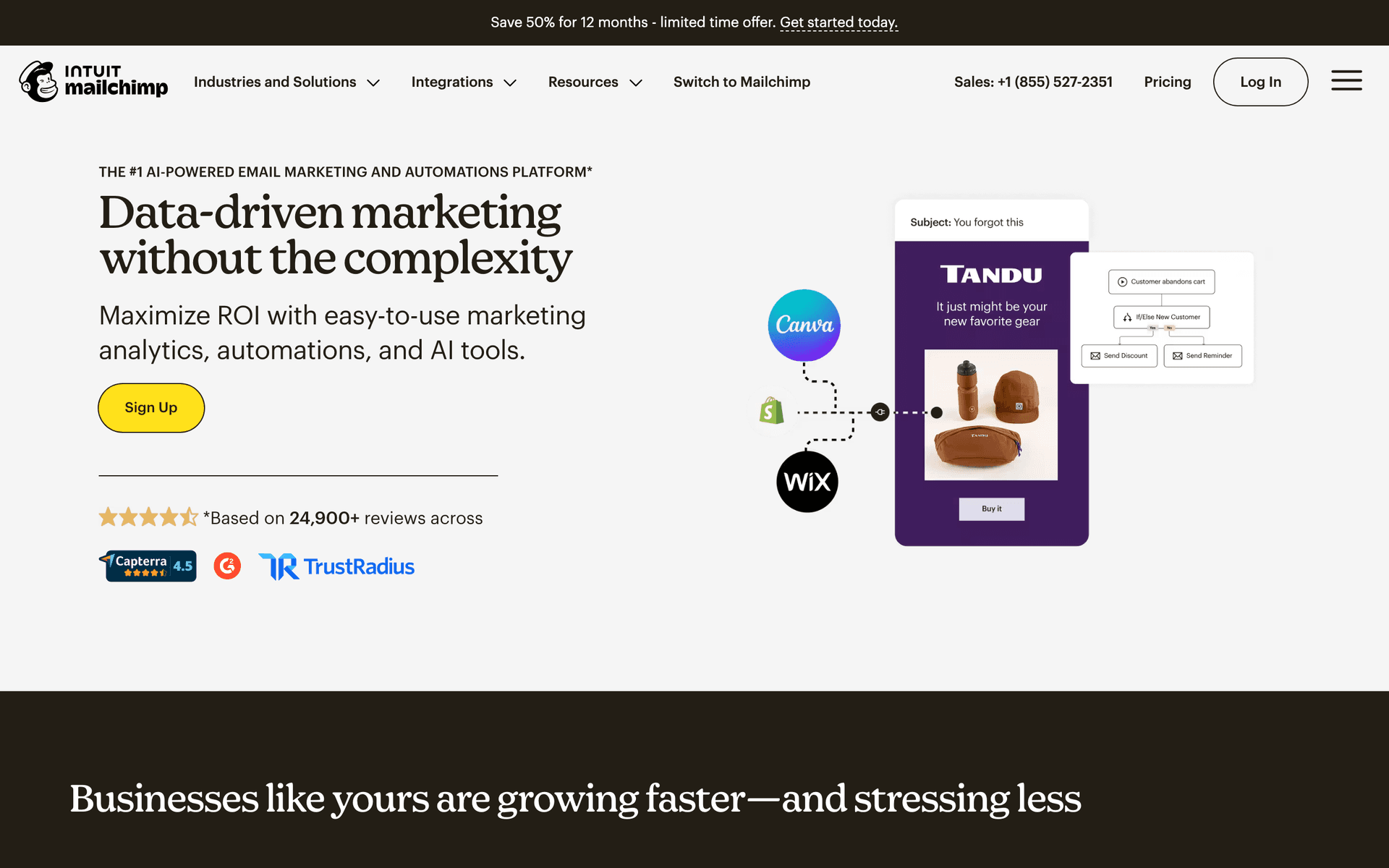
Mailchimp

The most popular email marketing platform. Solid features but can get expensive.

Visit

Mailchimp is the platform everyone knows, and for writers it handles newsletters and subscriber management reliably. The template library is extensive and the drag-and-drop editor works well for visual newsletters. The free tier starts at 500 contacts, giving you room to experiment. The frustration comes when your list grows - per-contact pricing means costs increase even if you send the same number of emails. The interface has gotten bloated with features most writers never use, making simple tasks feel more complicated than they need to be.

Best for
Writers wanting a well-known platform with broad integrations
Pricing
Free up to 500 contacts, then $13-350/month

Pros

  • Extensive template library
  • Many integrations
  • Strong deliverability
  • Good analytics

Cons

  • Gets expensive fast
  • Interface can feel overwhelming
  • Support quality has declined
  • Not writer-focused
#3
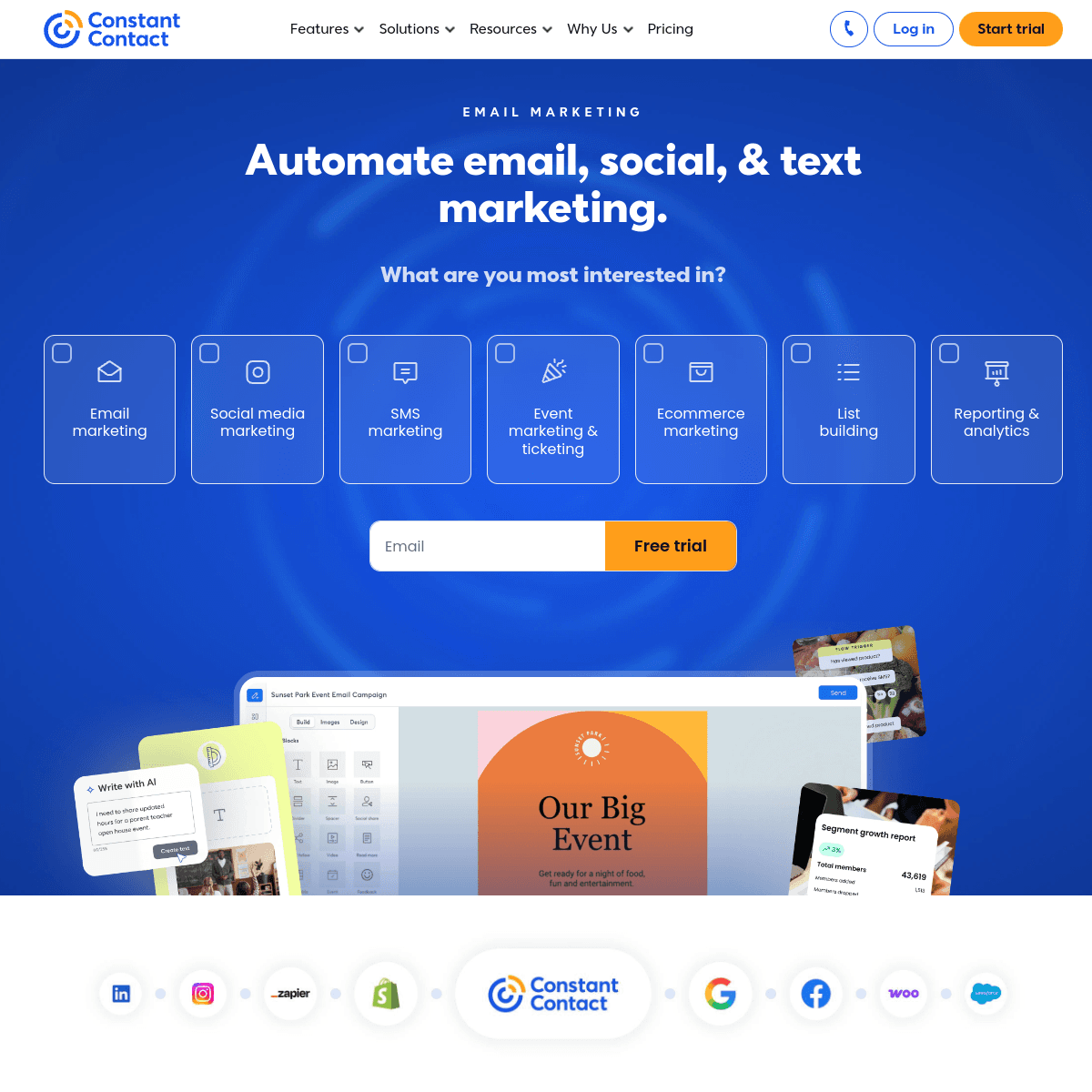
Constant Contact

Long-standing email platform popular with small businesses.

Visit

Constant Contact is reliable and straightforward, with phone support that is genuinely helpful when you need it. For writers who are not technically inclined and want human assistance setting up campaigns, the support team is a real differentiator. The interface is simple and the learning curve is minimal. Automation is basic compared to other options, and the templates feel dated, but the simplicity is refreshing when you just want to send a newsletter without fussing with complex tools.

Best for
Writers wanting simple email with phone support
Pricing
From $12/month for 500 contacts

Pros

  • Very easy to use
  • Excellent phone support
  • Reliable delivery
  • Social media integration

Cons

  • Limited automation
  • Templates feel dated
  • Higher prices
  • Basic segmentation
#4
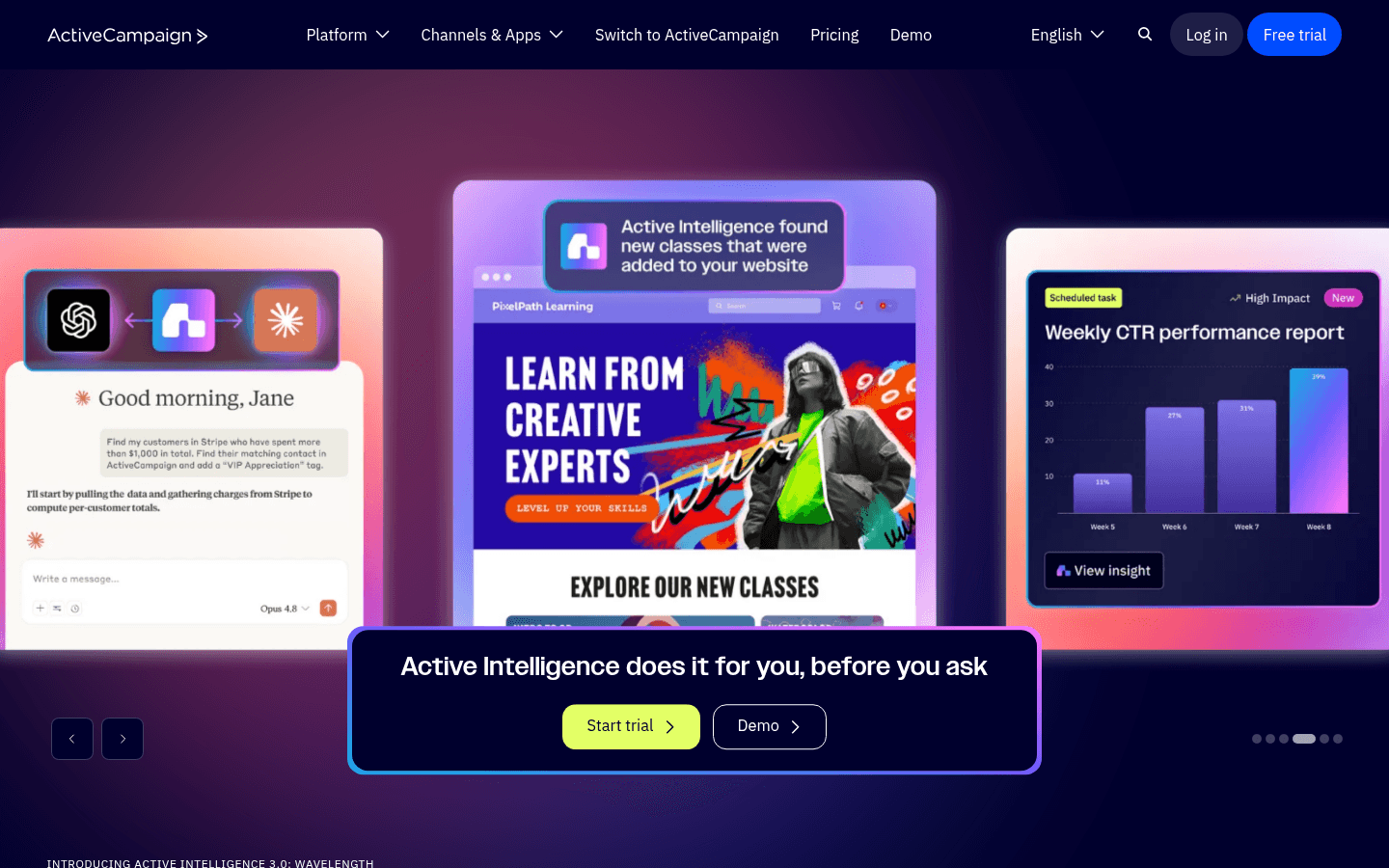
ActiveCampaign

Powerful automation platform with a learning curve.

Visit

ActiveCampaign offers the most powerful automation on this list. Build sophisticated sequences based on reader behavior, engagement patterns, or client lifecycle stage. The CRM tracks client relationships and project history. For writers with large audiences, multiple income streams, and complex marketing funnels, it is the most capable tool available. For most freelancers with simpler needs, it is overkill and the learning curve is steep enough to distract from actual writing work.

Best for
Writers with large audiences and complex marketing needs
Pricing
From $29/month for 1,000 contacts

Pros

  • Excellent automation
  • CRM included
  • Great deliverability
  • Detailed scoring

Cons

  • Steep learning curve
  • Overkill for most writers
  • Complex interface
  • Price jumps with features
#5
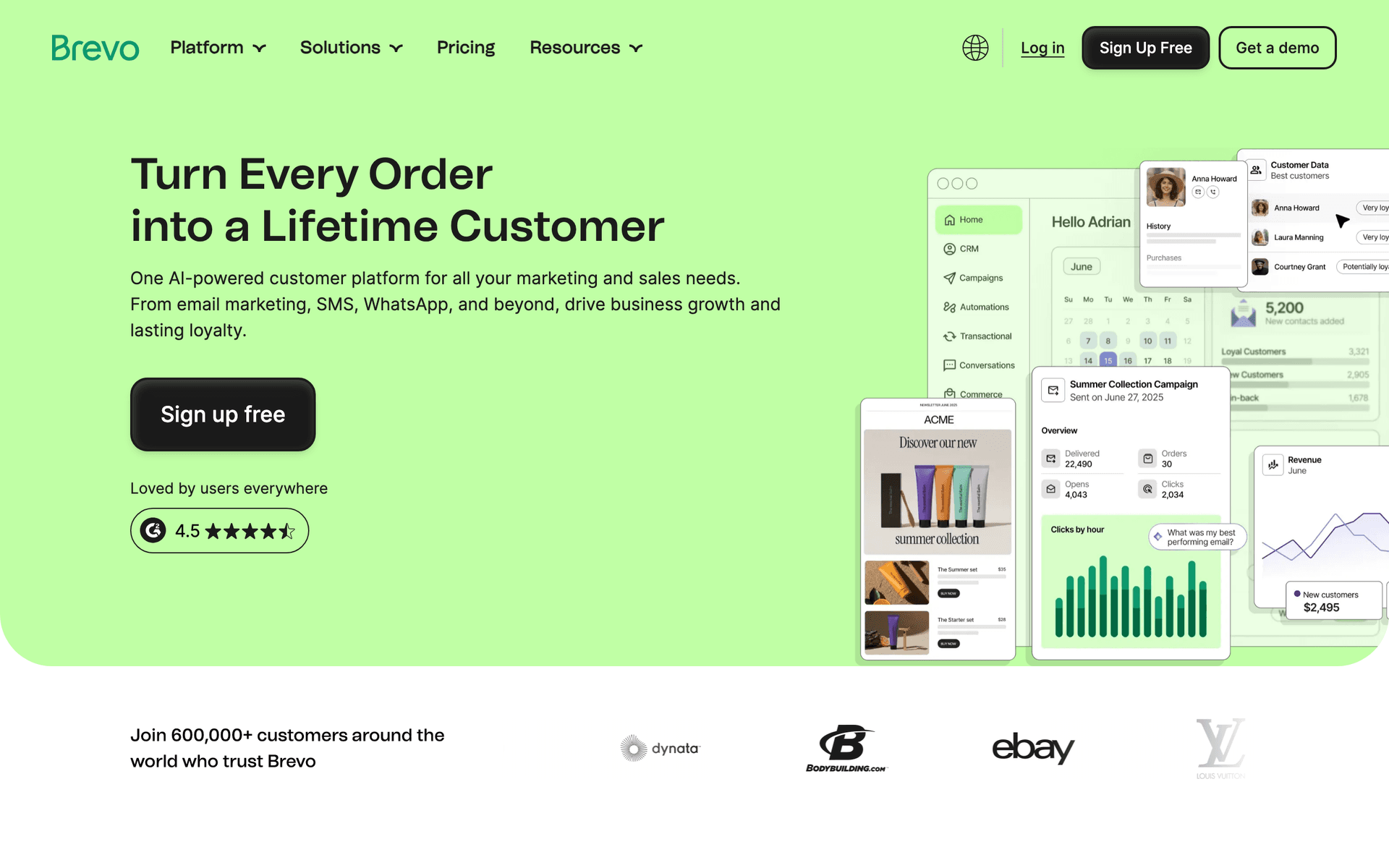
Brevo

Formerly Sendinblue. Good value with transactional email included.

Visit

Brevo offers excellent value for budget-conscious writers. The free tier gives 300 emails per day with unlimited contacts, which covers most freelance writers' needs entirely for free. The automation builder handles welcome sequences and follow-ups. For writers who want reliable email marketing without spending money they could invest in their writing career, Brevo is a strong practical choice.

Best for
Budget-conscious writers needing reliable email
Pricing
Free up to 300 emails/day, then from $25/month

Pros

  • SMS included
  • Generous free tier
  • Transactional email
  • Good automation

Cons

  • Daily limits on free
  • Support can be slow
  • Limited integrations
  • Branding on free tier
#6
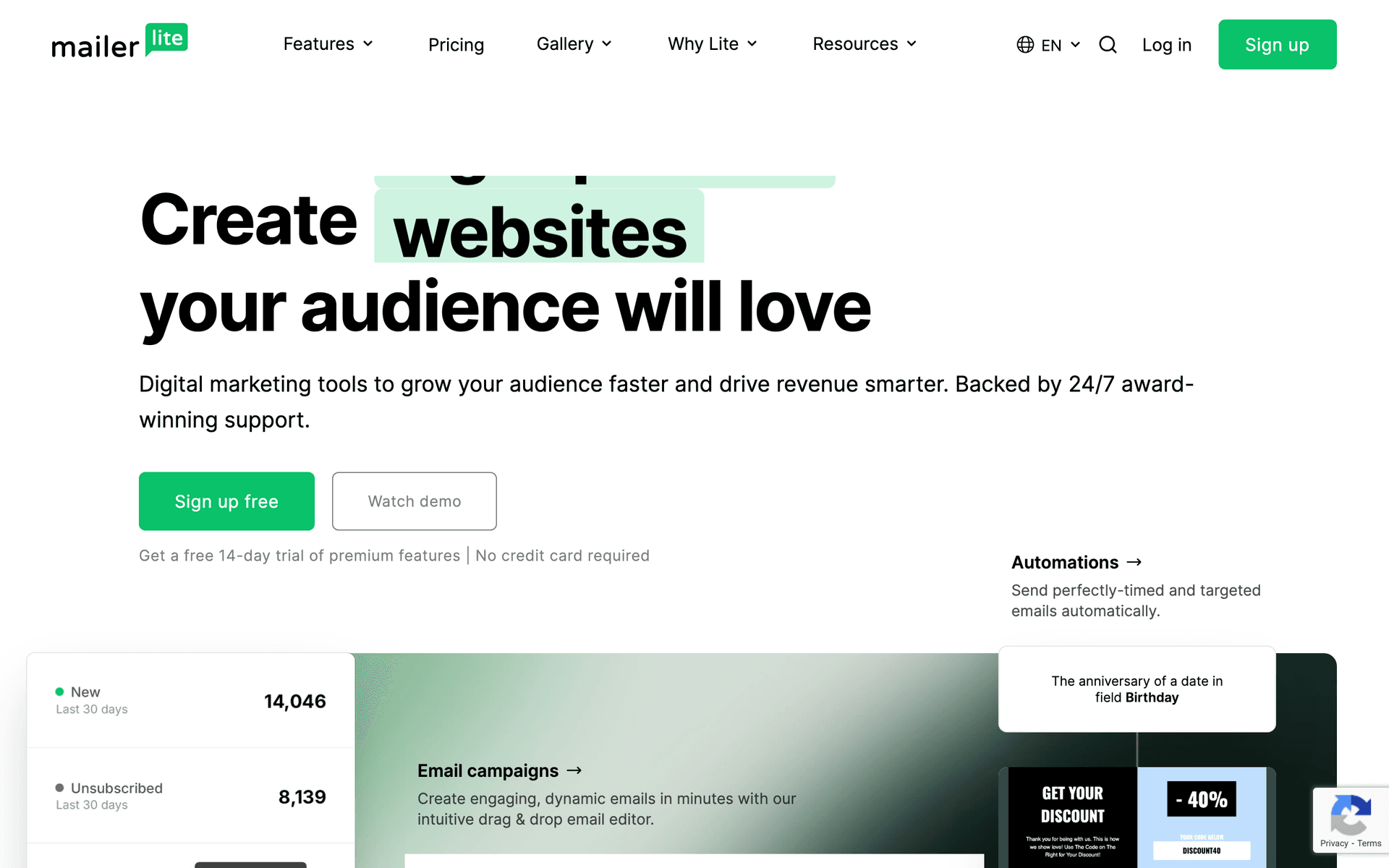
MailerLite

Clean, simple email marketing with good automation.

Visit

MailerLite is the recommendation for writers who want the cleanest, simplest email experience at the most affordable price. The interface is beautifully minimal, the free tier covers 1,000 subscribers with real automation, and the writing experience is pleasant. Landing pages are included for promoting lead magnets or writing services. The approval process can be strict and take time, which is the main frustration.

Best for
Writers wanting simplicity and affordability
Pricing
Free up to 1,000 subscribers, then from $10/month

Pros

  • Very affordable
  • Clean interface
  • Good landing pages
  • Generous free tier

Cons

  • Strict approval
  • Limited advanced features
  • Basic reporting
  • Approval takes time
#7
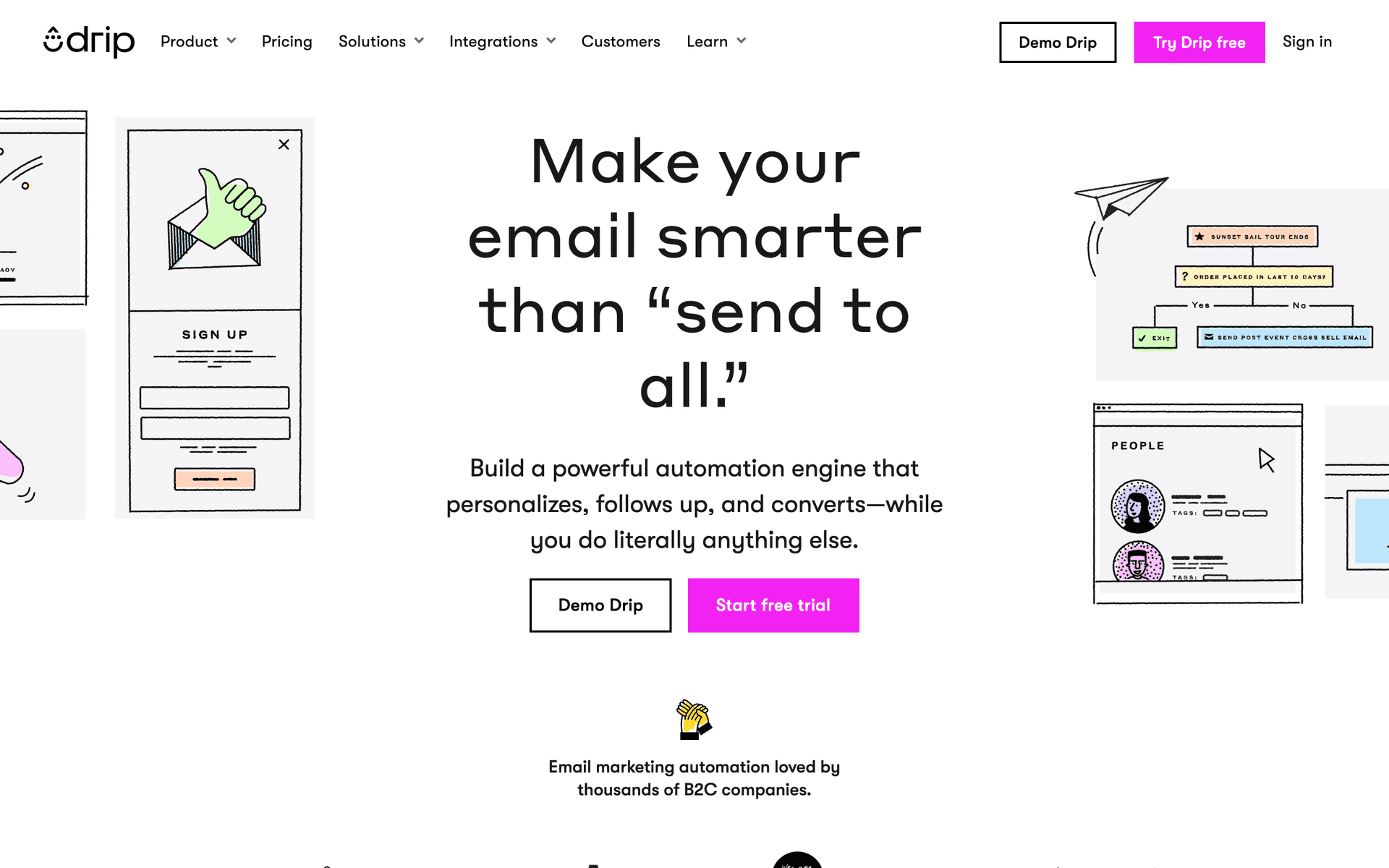
Drip

E-commerce focused but works for selling writing products.

Visit

Drip is built for online sales, which makes it relevant for writers who sell courses, ebooks, templates, or other digital products as a significant part of their income. Revenue tracking shows exactly which emails drive sales. At $39/month minimum, only consider Drip if digital product sales are a meaningful income stream and you need detailed purchase tracking and customer journey automation.

Best for
Writers with significant digital product sales
Pricing
From $39/month for 2,500 contacts

Pros

  • Strong automation
  • Revenue tracking
  • E-commerce features
  • Detailed analytics

Cons

  • Built for e-commerce
  • Expensive
  • Overkill for service writers
  • Learning curve
#8
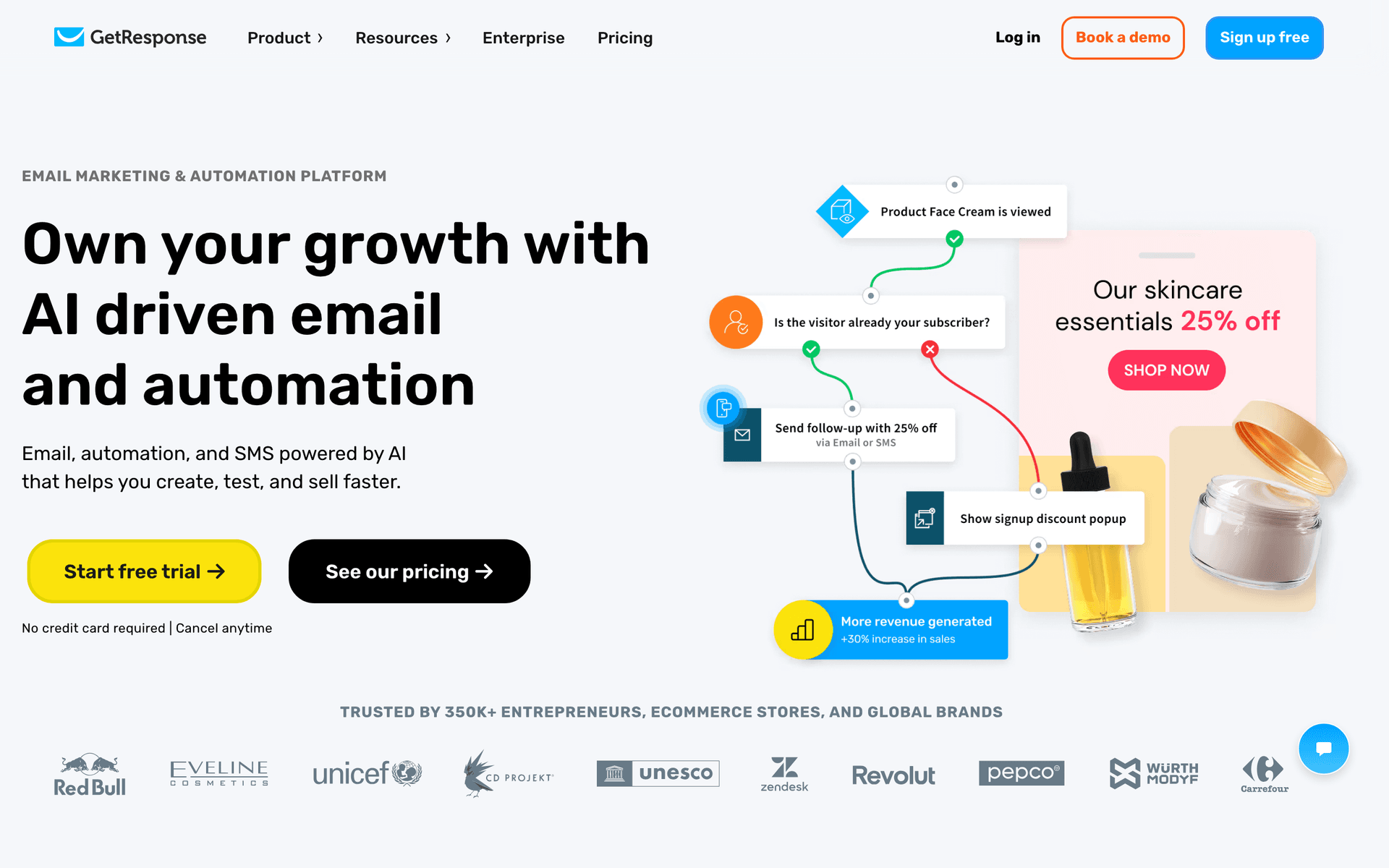
GetResponse

All-in-one marketing platform with webinars and landing pages.

Visit

GetResponse includes email, landing pages, and webinar hosting in one platform. For writers who run online workshops, writing courses, or educational webinars, having everything in one tool is convenient. The landing page builder works well for promoting writing services or lead magnets. The interface can feel busy with features most writers will not use.

Best for
Writers running webinars or courses
Pricing
From $19/month for 1,000 contacts

Pros

  • Webinar hosting
  • Landing page builder
  • Automation templates
  • Competitive pricing

Cons

  • Busy interface
  • Email editor could improve
  • Support varies
  • Features feel scattered
#9
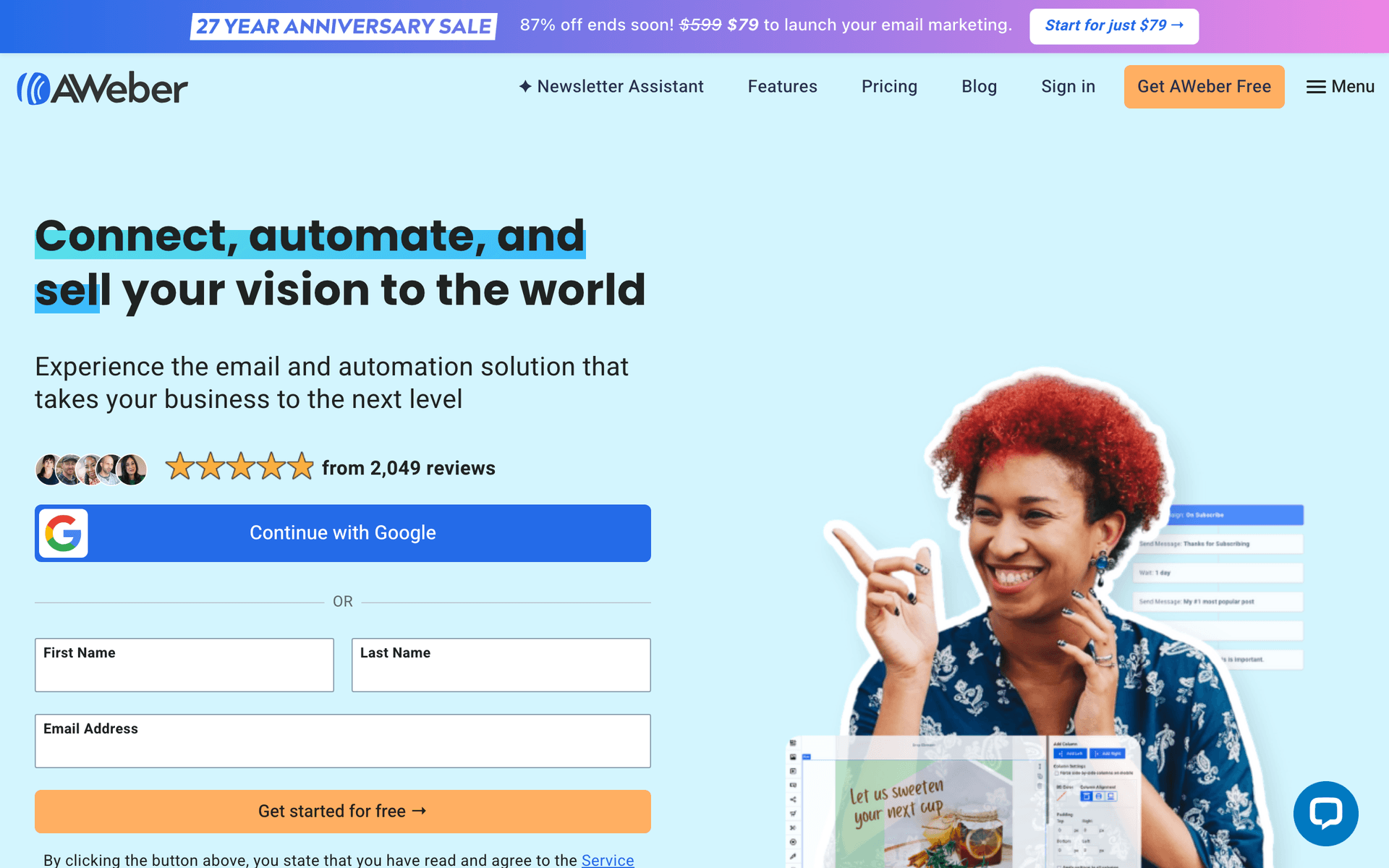
AWeber

One of the original email platforms. Simple and reliable.

Visit

AWeber has been around since 1998 and delivers reliably without surprises. The interface feels dated but the deliverability is excellent, meaning your emails actually reach inboxes. The free tier covers 500 subscribers. For writers who want simple newsletters without learning new technology or dealing with complex features, AWeber handles the basics and stays out of your way.

Best for
Writers wanting no-frills reliability
Pricing
Free up to 500 subscribers, then from $15/month

Pros

  • Reliable deliverability
  • Simple to use
  • Good support
  • Long track record

Cons

  • Feels dated
  • Limited automation
  • Basic templates
  • Little innovation
#10
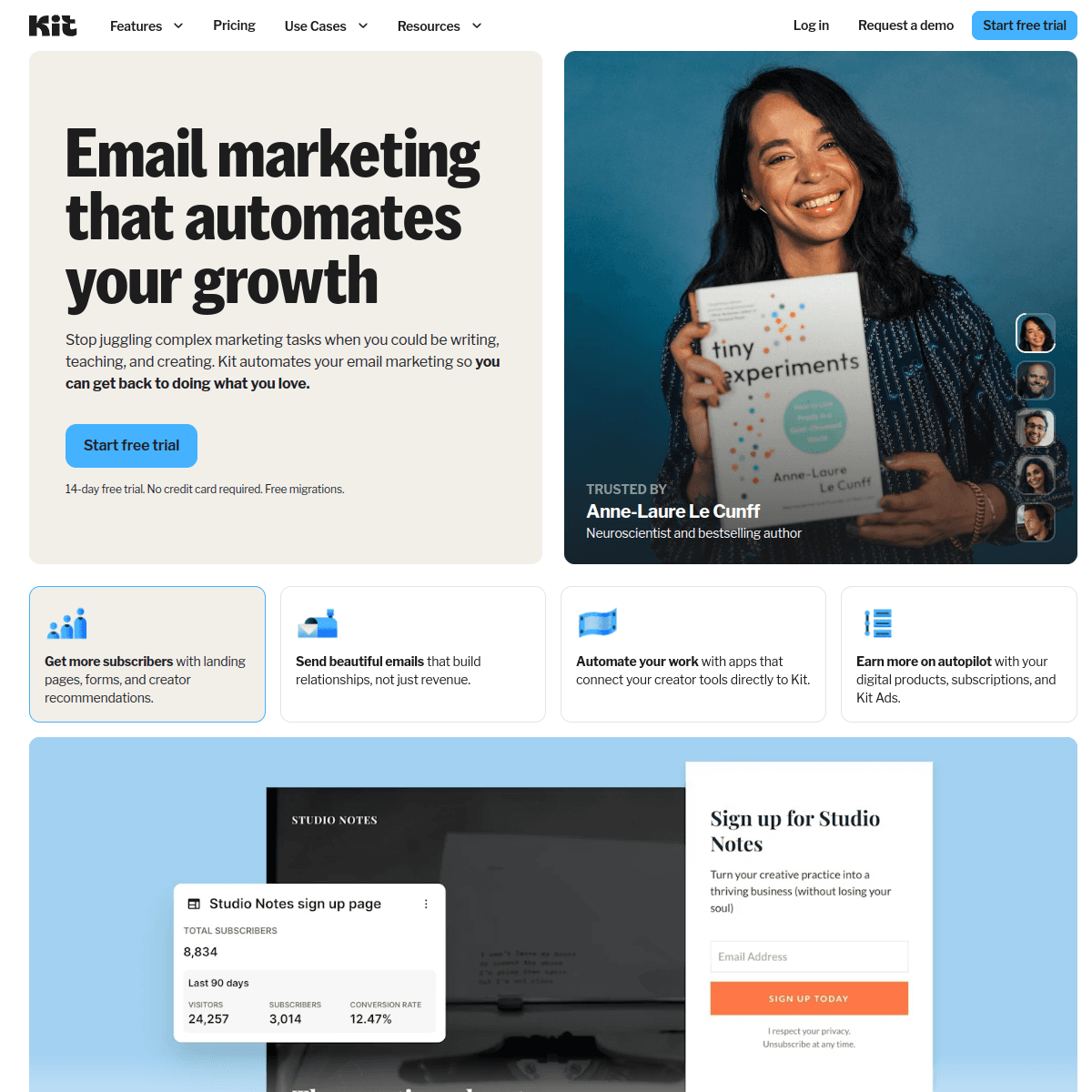
ConvertKit

Built for creators. The go-to choice for many writers.

Visit

ConvertKit (now Kit) is designed for content creators, and writers are the core audience. Newsletter creation is smooth, subscriber management is clean with tag-based organization, and the creator community is supportive and active. Many professional writers have built substantial audiences on Kit. The generous free tier of 10,000 subscribers is attractive for writers growing their audience. The downside is minimal visual design options - your emails will be text-focused, which is fine for most writers but limiting if you want visual newsletters.

Best for
Writers building a personal brand with content
Pricing
Free up to 1,000 subscribers, then from $29/month

Pros

  • Great for newsletters
  • Clean subscriber management
  • Tag-based automation
  • Writer-focused community

Cons

  • Minimal design options
  • No free landing pages
  • Expensive at scale
  • Limited visual customization
#11
HubSpot

Enterprise marketing platform with email included.

Visit

HubSpot is the enterprise solution designed for marketing teams. For content agencies with multiple writers and dedicated marketing staff, the full CRM and marketing automation suite makes sense. For independent freelance writers, it is massive overkill - the free tier is limiting, the paid plans are expensive, and the complexity is a time drain that takes away from writing.

Best for
Content agencies with marketing staff
Pricing
Free basic, paid from $50/month (realistically $200+)

Pros

  • Full CRM
  • Great for teams
  • Excellent reporting
  • Many integrations

Cons

  • Overkill for freelancers
  • Expensive
  • Complex setup
  • Ecosystem lock-in
#12
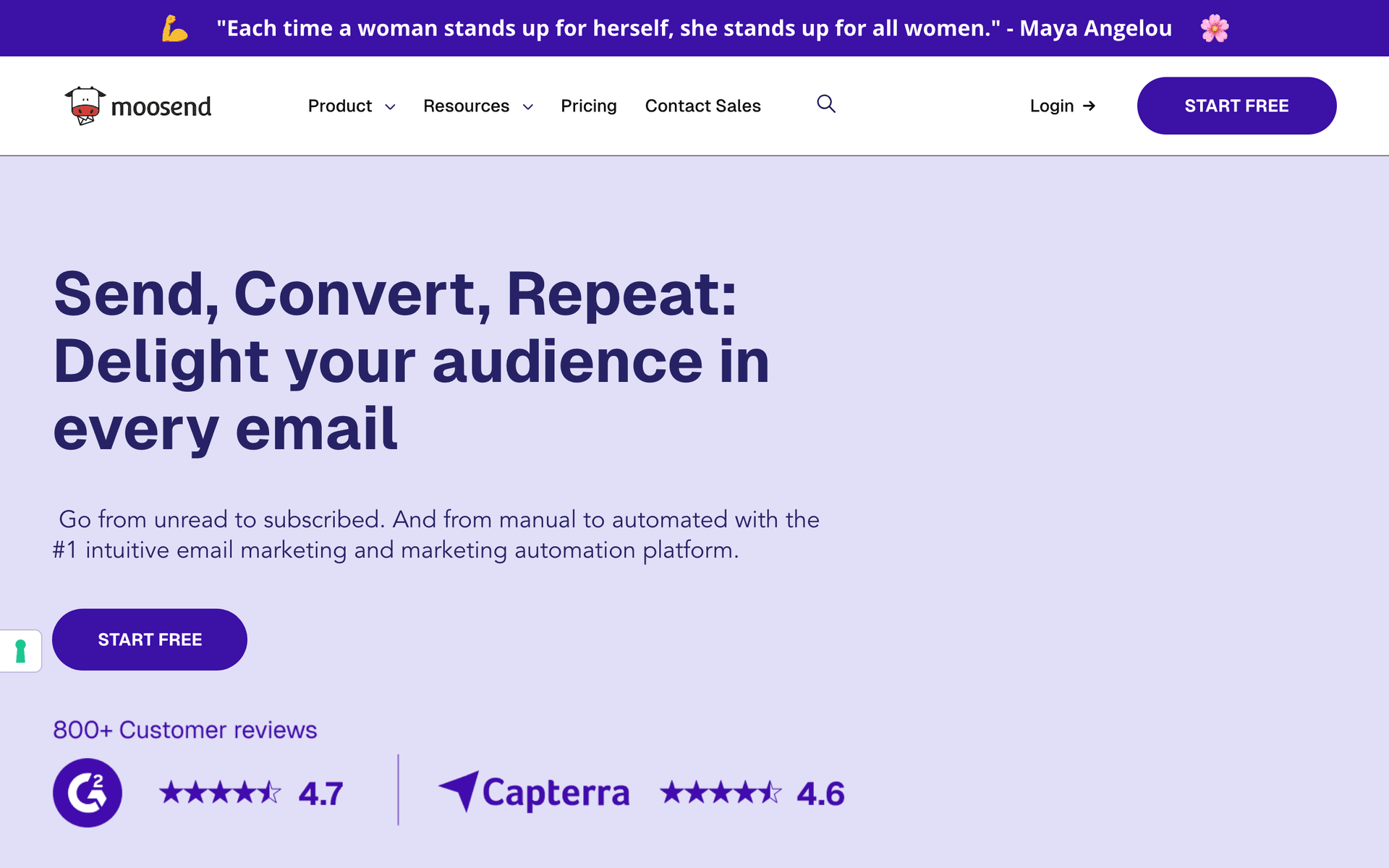
Moosend

Budget email marketing with solid features.

Visit

Moosend is the budget underdog that delivers more than expected at the price. Starting at $9/month, you get automation, landing pages, and decent reporting. The interface is clean and the learning curve is gentle. For writers whose primary concern is keeping costs low while getting real automation features, Moosend provides good value.

Best for
Very price-conscious writers
Pricing
From $9/month for 500 subscribers

Pros

  • Very affordable
  • Good automation
  • Responsive support
  • Landing pages

Cons

  • Less known
  • Limited integrations
  • Smaller templates
  • Fewer features
#13
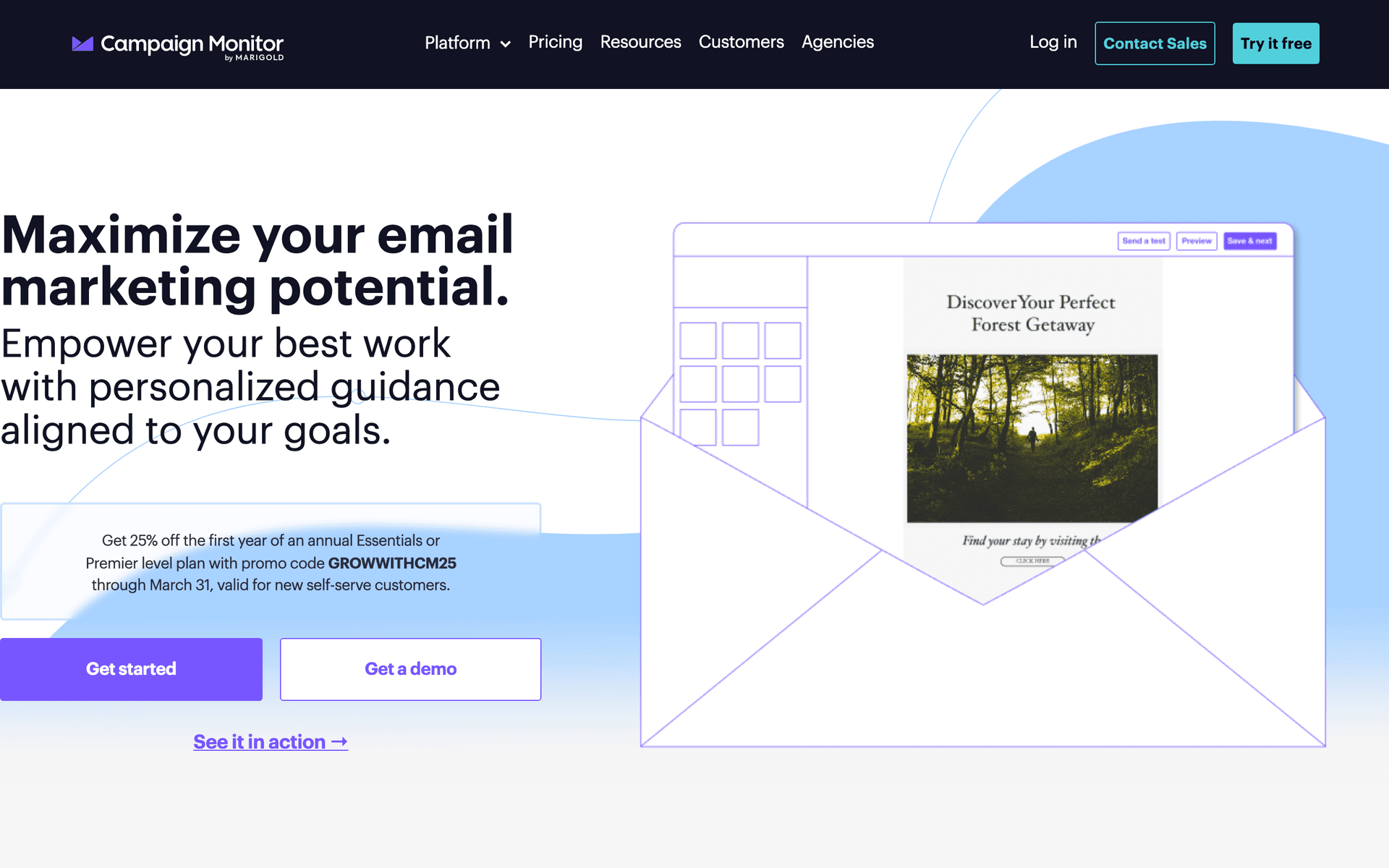
Campaign Monitor

Professional email marketing with beautiful templates.

Visit

Campaign Monitor has some of the best-looking email templates available. For writers who want their newsletters to look polished and professionally designed, the visual quality is excellent. The editor is easy to use and produces clean results. Automation is limited and contact-based pricing can get expensive for growing lists, but if visual presentation is your priority, Campaign Monitor delivers.

Best for
Writers prioritizing email design
Pricing
From $9/month for 500 contacts

Pros

  • Beautiful templates
  • Great visual presentation
  • Reliable delivery
  • Professional look

Cons

  • Contact-based pricing
  • Limited automation
  • Gets expensive
  • Not writer-specific

Feature Comparison

FeatureSequenzyMailchimpConvertKitMailerLite
Welcome sequence automation
Newsletter publishing
AI content generation
Drag-and-drop editor
Automation workflows
SMS marketing
Free tier available

Common Mistakes to Avoid

We see these mistakes over and over. Skip the learning curve and avoid these from day one.

Waiting until you have a large list to start sending

Writers often wait until they have 500 or 1,000 subscribers before sending regularly. Start with 10 subscribers. Those early readers become your most loyal fans and biggest advocates. The habit of consistent sending matters more than list size.

Making newsletters too long and polished

Writers tend to over-write their newsletters because writing is their craft. But newsletters are not magazine articles. Short, personal, and conversational outperforms long and polished. Aim for 300-500 words that feel like a note from a friend, not a published piece.

Never mentioning your services in emails

Some writers are so focused on providing value that they never tell subscribers what they do for hire. Your audience cannot hire you if they do not know you are available. Include a brief services mention in your email signature or dedicate one email per month to what you offer.

Using a platform that charges by contacts when your list is growing

Writers build lists slowly over time. Contact-based pricing means your costs increase even if you send the same number of emails. Pay-per-email pricing from Sequenzy or Brevo is often more cost-effective for writers with growing but moderately-emailed lists.

Email Sequences Every Freelance Writer Needs

These are the essential automated email sequences that will help you grow your business and keep clients coming back.

New Subscriber Welcome

When someone joins your email list

Welcome new subscribers and introduce them to your best work.

Immediately
Welcome, {{first_name}}! Here's what to expect

Thank them. Set expectations. Link to your best content.

Day 3
My most popular article

Share your best or most popular piece. Build credibility.

Day 7
How I can help

Overview of your services. How to work with you.

Client Inquiry Follow-Up

When potential client reaches out

Nurture client inquiries into paying projects.

Immediately
Thanks for reaching out, {{first_name}}

Acknowledge inquiry. Share relevant work samples.

Day 2
A few questions about your project

Qualify the opportunity. Show interest.

Day 5
Still thinking about your project?

Gentle follow-up with testimonial or case study.

Past Client Re-engagement

90 days after last project

Stay top of mind with past clients for repeat work.

Day 90
Checking in, {{first_name}}

Friendly check-in. Share recent work. Availability update.

Day 180
New services you might like

Share new offerings. Invite them to reconnect.

Newsletter Promotion

When you publish new content

Promote your latest articles, posts, or content.

On publish
New: {{article_title}}

Introduce the piece. Link to read more. Ask for feedback.

How to Choose the Right Email Tool

The best email marketing tool depends on your situation as a writer:

List Size and Growth Plans

Starting out with under 500 subscribers? Use a free tier from Sequenzy, MailerLite, or Mailchimp. Get comfortable with the tool and build your sending habit before paying.

Growing steadily with 500-5,000 subscribers? Watch your pricing model. Contact-based tools get expensive as your list grows. Pay-per-email options like Sequenzy keep costs predictable regardless of list size.

Established with 5,000+ subscribers? You need solid automation, good deliverability, and a tool that can handle segmentation. ActiveCampaign or ConvertKit make sense at this scale.

Selling Products vs. Services

If you primarily sell writing services (freelance work, consulting, ghostwriting), focus on tools with good client follow-up automation and CRM features. Sequenzy and ActiveCampaign handle this well.

If you sell digital products (courses, ebooks, templates), look for revenue tracking and e-commerce features. Drip and ConvertKit are strong for product sales.

Budget Reality

Calculate your email tool cost at your expected list size in 12 months, not today. A tool that costs $10/month at 500 subscribers might cost $50/month at 5,000. Pay-per-email pricing avoids this scaling cost.

What Actually Works for Writers

Consistency Wins Over Perfection

Regular emails build trust. Sporadic newsletters get forgotten. Pick a schedule and stick to it. Writers who send weekly have more engaged audiences, more client inquiries, and more product sales than writers who send monthly or irregularly.

Value Before Pitch

Provide value in most of your emails. Writing tips, industry insights, book recommendations, lessons from your projects. Then when you occasionally pitch your services or products, your audience is receptive because you have already demonstrated your expertise and generosity.

Your Voice Is Your Differentiator

Readers subscribe for your unique perspective, not generic writing advice they could find anywhere. Let your personality, opinions, and authentic experience shine through every email. The most successful writer newsletters feel like personal letters, not marketing campaigns.

Building Your Writing Business Through Email

The Client Pipeline

Your newsletter creates a warm pipeline of potential clients. Readers who follow your work for weeks or months already trust your expertise. When they need writing help, you are the first person they think of. This is significantly more effective than cold pitching.

The Passive Income Path

Once you have an engaged audience of 1,000+ subscribers, you have a distribution channel for courses, ebooks, templates, and other digital products. Every new product launch goes to an audience that already knows and trusts you.

The Referral Network

Satisfied readers and past clients refer work to you through email. A post-project follow-up sequence keeps you top of mind with past clients. A referral request email sent at the right moment generates warm introductions to new opportunities.

Getting Started

Pick a tool from this list. Then:

  1. Create a signup form and lead magnet that showcases your expertise
  2. Set up a welcome sequence that introduces your best work
  3. Commit to a newsletter schedule you can maintain
  4. Promote your newsletter on your website, social media, and in guest posts
  5. Build a past-client follow-up automation for repeat business

Start simple and expand later. The most important step is sending your first email, not finding the perfect tool.

How We Evaluated These Tools

Tools were evaluated based on their fit for freelance writing businesses - newsletter creation experience, client follow-up automation, subscriber management simplicity, pricing at various list sizes, and the overall writing and sending experience. We prioritized platforms that let writers focus on writing rather than learning complex marketing software.

Frequently Asked Questions

Ready to grow your freelance writer practice?

Start your free trial today. Set up your first email sequence in minutes with AI-powered content generation.

Related Industries

Sequenzy - Complete Pricing Guide

Pricing Model

Sequenzy uses email-volume-based pricing. You only pay for emails you send. Unlimited contacts on all plans — storing subscribers is always free.

All Pricing Tiers

  • 2.5k emails/month: Free (Free annually)
  • 15k emails/month: $19/month ($205/year annually)
  • 60k emails/month: $29/month ($313/year annually)
  • 120k emails/month: $49/month ($529/year annually)
  • 300k emails/month: $99/month ($1069/year annually)
  • 600k emails/month: $199/month ($2149/year annually)
  • 1.2M emails/month: $349/month ($3769/year annually)
  • Unlimited emails/month: Custom pricing (Custom annually)

Yearly billing: All plans offer a 10% discount when billed annually.

Free Plan Features (2,500 emails/month)

  • Visual automation builder
  • Transactional email API
  • Reply tracking & team inbox
  • Goal tracking & revenue attribution
  • Dynamic segments
  • Payment integrations
  • Full REST API access
  • Custom sending domain

Paid Plan Features (15k - 1.2M emails/month)

  • Visual automation builder
  • Transactional email API
  • Reply tracking & team inbox
  • Goal tracking & revenue attribution
  • Dynamic segments
  • Payment integrations (Stripe, Paddle, Lemon Squeezy)
  • Full REST API access
  • Custom sending domain

Enterprise Plan Features (Unlimited emails)

  • Visual automation builder
  • Transactional email API
  • Reply tracking & team inbox
  • Goal tracking & revenue attribution
  • Dynamic segments
  • Payment integrations
  • Full REST API access
  • Custom sending domain

Important Pricing Notes

  • You only pay for emails you send — unlimited contacts on all plans
  • No hidden fees - all features included in the price
  • No credit card required for free tier

Contact

  • Pricing Page: https://sequenzy.com/pricing
  • Sales: hello@sequenzy.com