Overview
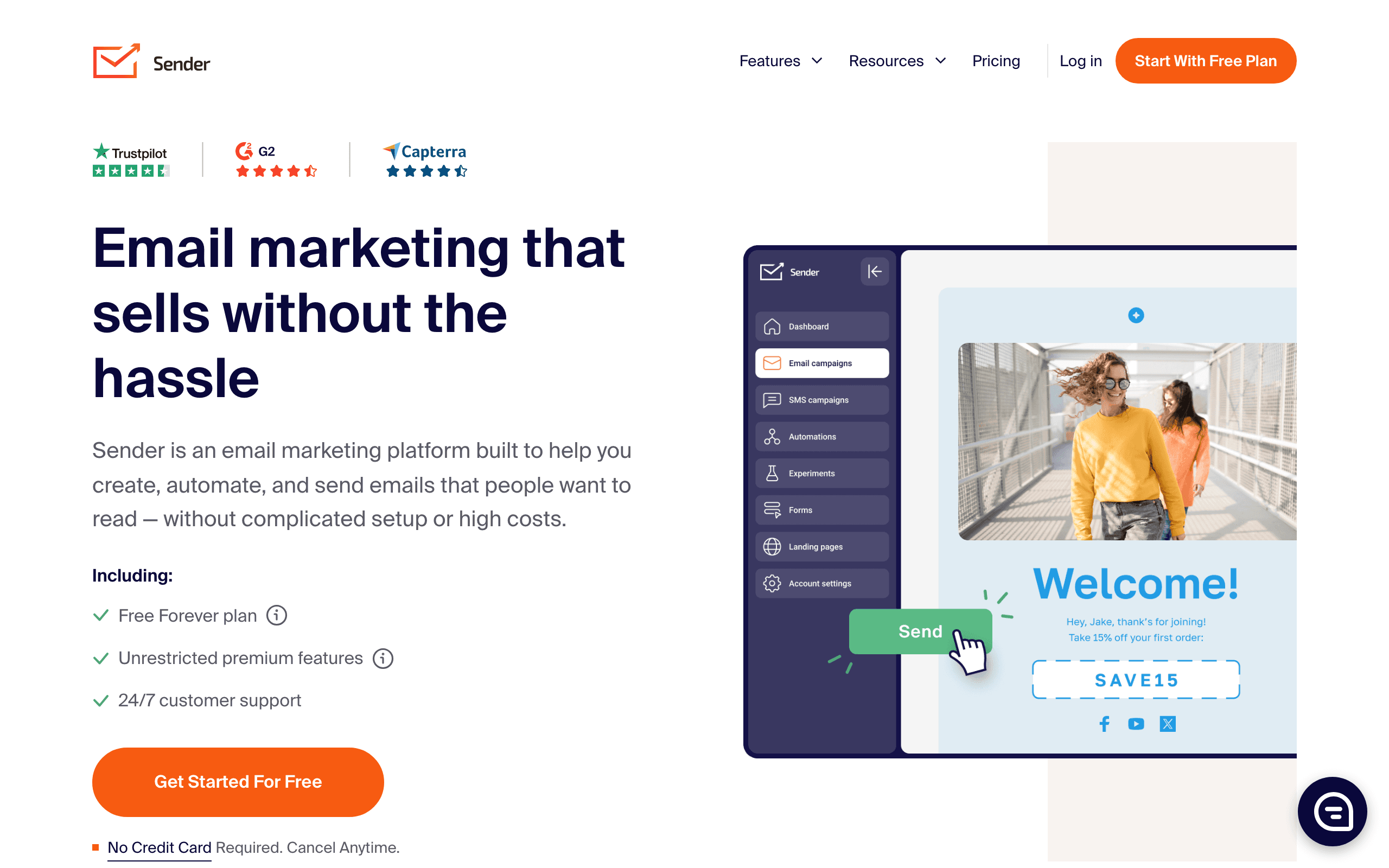
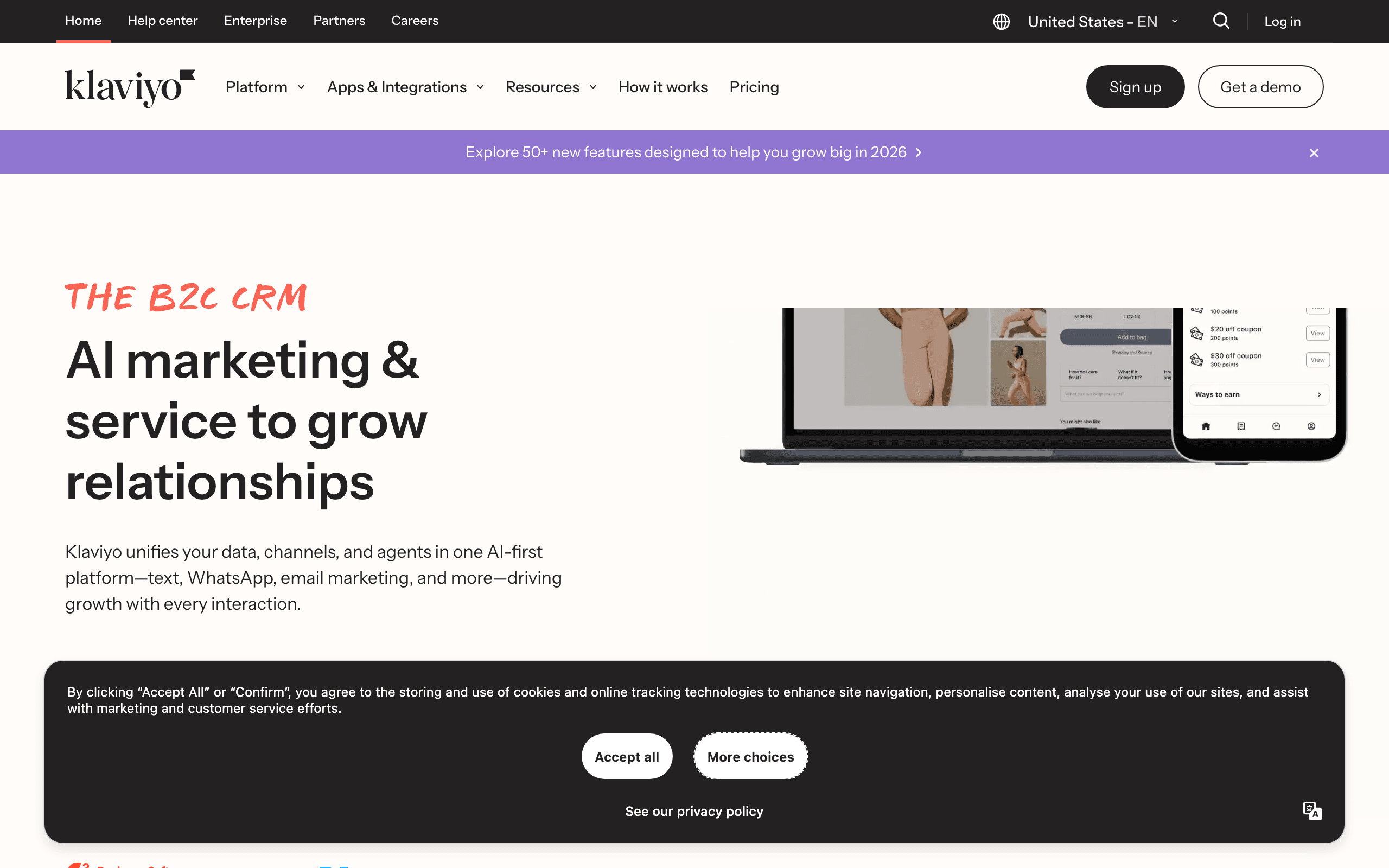
Sender and Klaviyo represent different tiers of e-commerce email marketing. Sender is the budget-friendly option with 1600+ templates and SMS included. Klaviyo is the premium choice with predictive analytics and the industry's deepest Shopify integration.
The Price Gap
The difference is significant: Sender costs roughly $50/month at 10k subscribers vs Klaviyo's $240/month. That's an 80% savings. The question is whether Klaviyo's advanced features justify the premium for your store.
Where Klaviyo Excels
Klaviyo's predictive analytics are unmatched. Churn risk scores, predicted next order dates, customer lifetime value predictions, and AI-powered product recommendations. For data-driven marketers, these features can significantly improve targeting and revenue.
The Shopify integration is also industry-leading. Real-time sync, predictive data at the customer level, and features specifically designed for Shopify Plus stores. If you're running a large Shopify operation, Klaviyo's integration depth matters.
Where Sender Excels
Sender offers excellent value. 1600+ templates give you more starting points than most platforms. SMS marketing is included without premium pricing. The free tier (2,500 subscribers, 15k emails) lets you start without commitment.
For stores with simpler needs, Sender covers the fundamentals well: abandoned cart flows, welcome sequences, segmentation, and solid e-commerce integrations.
For SaaS Companies
Neither Sender nor Klaviyo is built for SaaS. Both focus on e-commerce with cart abandonment and product recommendations. SaaS companies needing Stripe integration and subscription-based automation should consider Sequenzy instead.
Making the Choice
Choose Sender if you're budget-conscious and don't need predictive analytics - it handles e-commerce email fundamentals at a fraction of the price. Choose Klaviyo if email is a major revenue driver and you'll actively use predictive insights, AI recommendations, and advanced segmentation.
The Predictive Analytics Divide
Klaviyo's predictive analytics represent the largest capability gap between these platforms. Churn risk scores identify customers likely to stop buying, enabling proactive win-back campaigns. Expected next order date predictions trigger perfectly timed replenishment reminders. Customer lifetime value predictions help allocate marketing spend toward the highest-value segments.
Sender has none of these predictive capabilities. Its segmentation is based on observable data: tags, purchase history, engagement levels, and demographics. You can build effective campaigns with this data, but you cannot anticipate future behavior. The difference between reactive and predictive marketing becomes meaningful as your customer base grows past a few thousand.
The practical question is whether your team will use predictive data effectively. Predictive analytics generate value only when marketers act on the insights: creating targeted campaigns for high-churn-risk customers, adjusting timing based on predicted purchase cycles, and allocating budget based on CLV. If your team sends the same newsletter to everyone, paying for predictions wastes money.
The Revenue Attribution Question
Klaviyo shows exactly how much revenue each email flow and campaign generates. This granular attribution lets marketers optimize spending: double down on the welcome series generating $15,000/month, improve the browse abandonment flow with lower conversion, and sunset the underperforming weekly digest.
Sender provides basic analytics: opens, clicks, and general engagement metrics. Connecting email engagement to actual revenue requires manual tracking, UTM parameters, and analytics tools. For stores where email generates a small percentage of revenue, this manual approach is manageable. For stores where email drives 20-40 percent of revenue, the lack of automated attribution is a significant blind spot.
Revenue attribution becomes more valuable as email volume increases. A store sending three campaigns per week with ten active automation flows needs automated tracking to understand what is working. A store sending one weekly newsletter and two automations can track performance manually. Scale determines whether Klaviyo's attribution justifies its premium. Use our email warmup calculator if migrating between platforms to maintain deliverability.
The Growth Path for E-commerce Stores
The most common trajectory for e-commerce email marketing is starting cheap and upgrading as the store grows. Sender's free tier (2,500 subscribers) provides an excellent starting point. As the store scales past 10,000 subscribers and email becomes a significant revenue channel, the question of whether to stay with Sender or upgrade to Klaviyo becomes relevant.
The migration trigger is usually revenue-related. When you can demonstrate that better segmentation, predictive targeting, and AI recommendations would generate enough additional revenue to cover Klaviyo's premium, the upgrade pays for itself. For most stores, this threshold comes between $500,000 and $1,000,000 in annual revenue, when email optimization translates to meaningful dollar amounts.
For SaaS companies evaluating both platforms, neither addresses the subscription business model. E-commerce platforms optimize for product purchases, not subscription lifecycle. Sequenzy at $49/month offers subscription-aware automation with native Stripe integration and transactional email purpose-built for software businesses.
Use-case matchups
| Need | Better fit | Why |
|---|---|---|
| Budget email and SMS campaigns | Sender | Sender is stronger when the buyer wants low-cost email/SMS with practical campaign tools. |
| Ecommerce email and SMS workflows | Klaviyo | Klaviyo is stronger when ecommerce email and SMS workflows are the main requirements. |
| SaaS lifecycle and transactional email | Sequenzy | Sequenzy fits when the team needs Stripe-aware lifecycle campaigns, newsletters, and transactional email in one product. |
Best Fit by Ecommerce Data Depth
Best budget email and SMS tool for basic campaigns
Sender fits teams that want affordable email and SMS without deep ecommerce segmentation or revenue attribution. It should be tested first when the core workflow is newsletters, promotions, forms, and lightweight automations at a lower price.
Best ecommerce platform for email and SMS workflows
Klaviyo is the better fit when Shopify or WooCommerce data, product catalogs, segments, SMS, and revenue flows are the main requirements. Choose it when ecommerce attribution, abandoned carts, browse flows, and product recommendations should steer the marketing plan.
Best email platform for SaaS lifecycle and transactionals
Sequenzy fits when Stripe-aware lifecycle campaigns and transactional email matter more than ecommerce store-data workflows. It is the focused option when billing, onboarding, receipts, and lifecycle events need one email workflow without ecommerce SMS depth.
Pricing reality
The page data lists Sender at ~$50/month, Klaviyo at $240/month, and Sequenzy at $49/month for the cited comparison tier. Keep the original pricing context rather than turning these into generic equivalents.
Sender should be priced as a budget email/SMS platform. Klaviyo should be priced around ecommerce email and SMS workflows. Sequenzy should be compared when SaaS lifecycle, transactional email, and Stripe-aware workflows matter more than general email/SMS pricing.
Review signals
For Sender, pay attention to affordability and whether email/SMS depth is enough. For Klaviyo, pay attention to ecommerce email and SMS workflows, onboarding effort, support quality, and pricing as the list grows.
Migration checklist
| Workstream | What to verify |
|---|---|
| Subscriber data | Export subscribers, tags, custom fields, segments, consent, unsubscribes, bounces, and suppressions. |
| Channel consent | Preserve email consent, SMS consent if used, opt-out history, and suppression rules. |
| Automations | Rebuild welcome, nurture, cart, post-purchase, reactivation, newsletter, and promotional workflows manually. |
| Templates and forms | Recreate templates, forms, landing pages, coupons, dynamic content, and mobile rendering. |
| Integrations | Reconnect ecommerce, CRM, analytics, forms, billing, webhooks, and Zapier-style handoffs. |
| Reporting | Export campaign, automation, deliverability, revenue, and list-growth reports before cutover. |
Decision checklist
- Choose Sender if low-cost email/SMS is the main requirement.
- Choose Klaviyo if ecommerce email and SMS workflows matter more than budget email/SMS basics.
- Avoid Sender if you need predictive analytics, RFM analysis, or advanced segmentation, where Klaviyo is clearly ahead.
- Avoid Klaviyo if the buyer only needs practical low-cost campaigns.
- Consider Sequenzy if subscriptions drive revenue, since native Stripe triggers for failed payments and cancellations sit alongside transactional email.