Overview
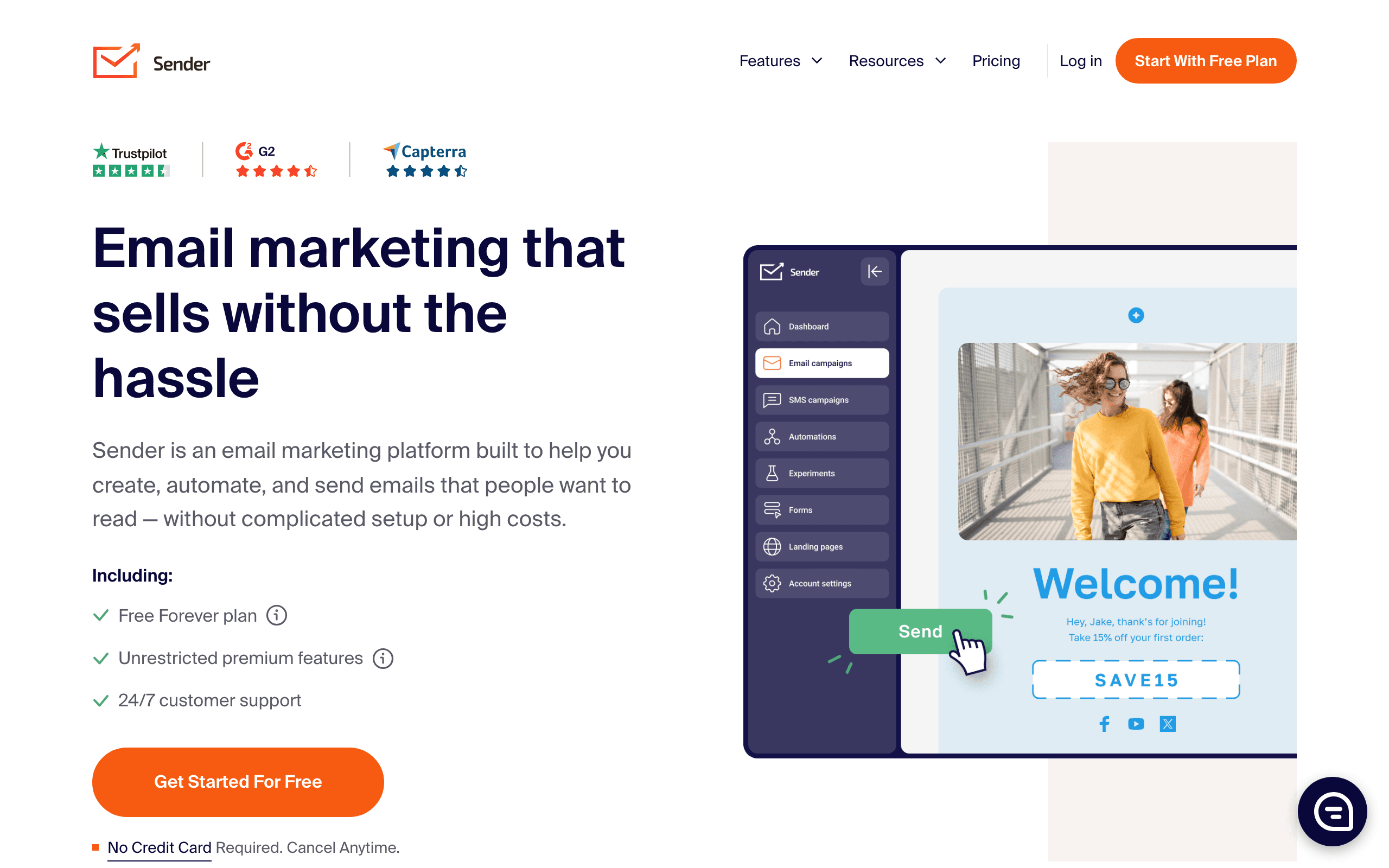
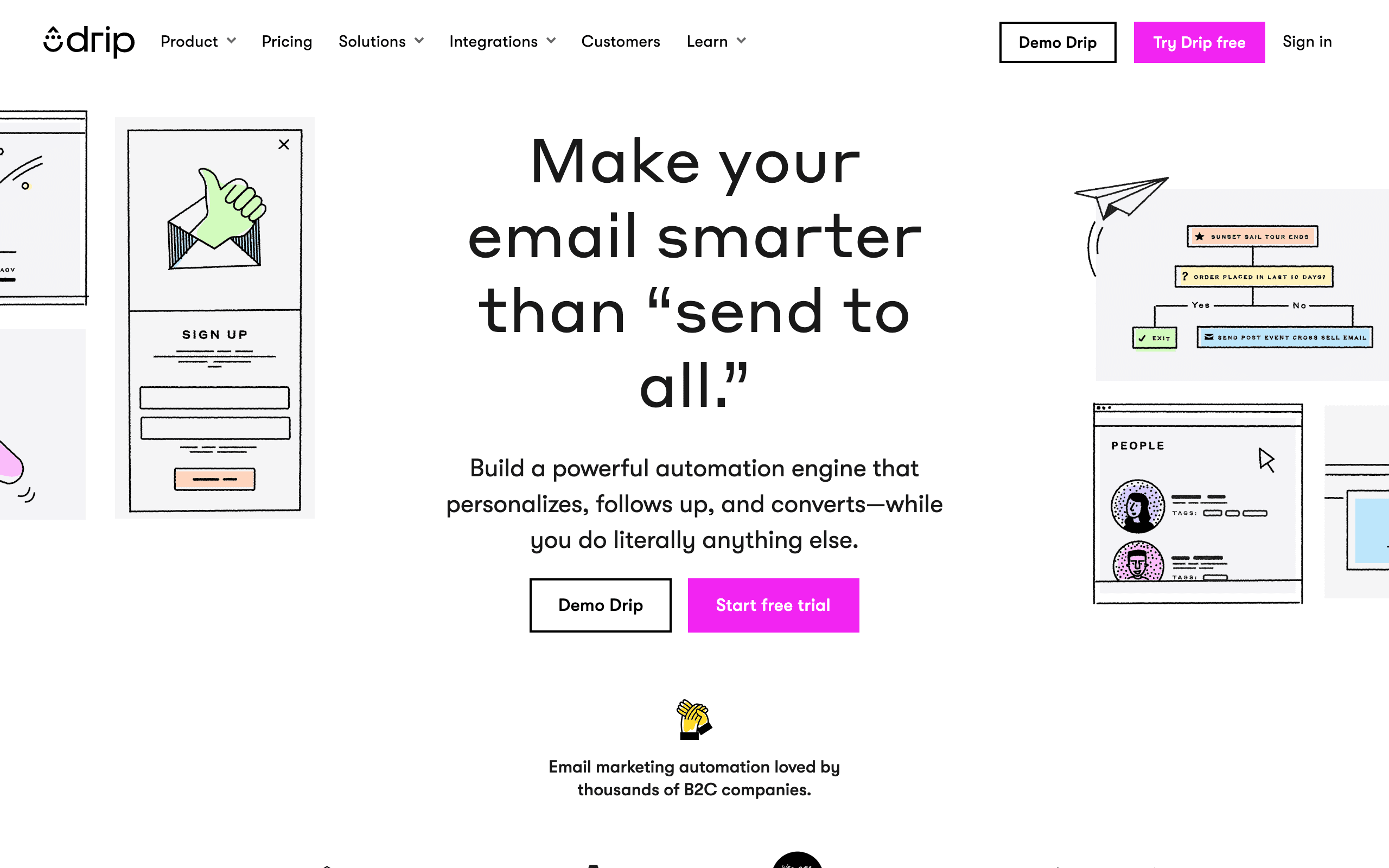
Sender and Drip serve e-commerce stores at different price points and sophistication levels. Sender is budget-friendly with 1600+ templates, SMS marketing, and solid e-commerce integrations. Drip is a dedicated e-commerce CRM with advanced automation and behavioral segmentation.
The Price Gap
The difference is significant: Sender costs ~$50/month at 10k subscribers vs Drip's $184/month. That's about 73% savings. Plus Sender includes SMS marketing - Drip discontinued SMS for new customers. The question is whether Drip's advanced features justify the premium.
Where Drip Excels
E-commerce sophistication is Drip's strength. Advanced behavioral segmentation lets you target customers based on detailed purchase history and browsing patterns. Revenue tracking shows exactly which campaigns drive sales. Automation workflows are more powerful with complex branching logic.
Drip is a CRM first, email tool second. For data-driven e-commerce marketers who want to optimize every campaign for revenue, Drip's depth matters.
Where Sender Excels
Value is Sender's superpower. 73% savings is substantial for businesses watching costs. SMS marketing is included - critical for order notifications, cart recovery, and promotions. 1600+ templates provide extensive starting points.
Sender covers e-commerce fundamentals well: abandoned cart flows, welcome sequences, product recommendations, and Shopify/WooCommerce integrations. For stores with straightforward needs, Sender delivers the essentials.
SMS Marketing
Sender includes SMS marketing. Drip discontinued SMS for new customers - a significant gap. If omnichannel marketing with both email and SMS matters to your store, Sender is the only choice between these two.
For SaaS Companies
Neither Sender nor Drip is built for SaaS. Both focus on e-commerce with cart abandonment and product-based workflows. SaaS companies needing Stripe integration and subscription-based automation should consider Sequenzy instead.
Making the Choice
Choose Sender for budget value with SMS - solid e-commerce email at a fraction of Drip's price. Choose Drip for sophisticated e-commerce automation and CRM capabilities - worth the premium if you'll use advanced behavioral segmentation and revenue tracking.
The SMS Gap After Drip's Decision
Drip's decision to discontinue SMS for new customers created a significant gap in their platform. SMS abandoned cart reminders have recovery rates that often exceed email alone. Order confirmation texts, shipping updates, and flash sale announcements through SMS reach customers with over 90 percent open rates. Sender includes all of this natively.
For e-commerce stores where SMS drives meaningful revenue, Drip's SMS absence is a dealbreaker regardless of its other strengths. Adding a third-party SMS provider alongside Drip eliminates the unified analytics advantage and adds cost. The combined price of Drip plus a separate SMS tool pushes the total well beyond what either platform costs individually.
Sender's SMS integration sends from the same platform as email, with unified subscriber profiles and coordinated automation. A customer who abandons a cart gets an email first, then an SMS if they do not open it. This coordinated approach is simple to set up in Sender and impossible to replicate in Drip for new users.
Behavioral Segmentation: Basic vs Advanced
Drip's behavioral segmentation is where its CRM approach shines. Segment customers by exact purchase history: bought product A but not B, purchased three or more times in the last 90 days, browsed category X without buying. These granular segments power highly targeted campaigns that generic segments cannot match.
Sender's segmentation covers the fundamentals: tags, lists, engagement levels, and basic purchase data. For stores with straightforward customer profiles, this is sufficient. A welcome sequence, a re-engagement campaign, and an abandoned cart flow do not require Drip-level behavioral depth.
The question is whether your marketing strategy can leverage advanced segmentation. If your team has the bandwidth to create and maintain dozens of behavioral segments, test different messaging per segment, and analyze results at a granular level, Drip's depth generates ROI. If your team sends monthly newsletters and three automated sequences, paying for Drip's segmentation power wastes money. Use our email validator to ensure your segments are based on valid, active subscribers.
The Growth Path Decision
Many stores follow a predictable path: start with Sender for its free tier and low cost, grow until automation needs exceed basic capabilities, then evaluate whether to upgrade to Drip or a platform like Omnisend or Klaviyo. This progression is rational because overpaying for features during the early stage burns capital that growing stores need elsewhere.
The migration from Sender to Drip is straightforward but not trivial. Contact export and import works well. Automation workflows need rebuilding, and Drip's more powerful builder means you can create more sophisticated flows than what you had in Sender. The learning curve takes one to two weeks for most teams.
For SaaS companies watching this comparison, neither Sender nor Drip addresses subscription business needs. Both are e-commerce-first platforms without Stripe integration or subscription lifecycle awareness. Sequenzy at $49/month offers subscription-aware automation with transactional email that neither e-commerce platform provides.
Use-case matchups
| Need | Better fit | Why |
|---|---|---|
| Budget email and SMS campaigns | Sender | Sender is stronger when the buyer wants low-cost email/SMS with practical campaign tools. |
| Ecommerce automation and revenue attribution | Drip | Drip is stronger when ecommerce automation and revenue attribution are the main requirements. |
| SaaS lifecycle and transactional email | Sequenzy | Sequenzy fits when the team needs Stripe-aware lifecycle campaigns, newsletters, and transactional email in one product. |
Best Fit by Ecommerce Depth
Best budget email and SMS tool for basic campaigns
Sender fits teams that need affordable email and SMS and only light ecommerce campaign functionality. It is most attractive when channel coverage and price matter more than deep store data.
Best ecommerce email platform for automation and revenue attribution
Drip is the better fit when purchase behavior, store segments, cart flows, ecommerce automation, and revenue attribution are core requirements. Choose it when ecommerce revenue lift can justify higher platform cost.
Best email platform for SaaS lifecycle and transactionals
Sequenzy fits when Stripe-aware lifecycle campaigns and transactional email matter more than ecommerce attribution. It is the better option when subscription events, not SMS campaigns, drive customer communication.
Pricing reality
The page data lists Sender at ~$50/month, Drip at $184/month, and Sequenzy at $49/month for the cited comparison tier. Keep the original pricing context rather than turning these into generic equivalents.
Sender should be priced as a budget email/SMS platform. Drip should be priced around ecommerce automation and revenue attribution. Sequenzy should be compared when SaaS lifecycle, transactional email, and Stripe-aware workflows matter more than general email/SMS pricing.
Review signals
For Sender, pay attention to affordability and whether email/SMS depth is enough. For Drip, pay attention to ecommerce automation and revenue attribution, onboarding effort, support quality, and pricing as the list grows.
Migration checklist
| Workstream | What to verify |
|---|---|
| Subscriber data | Export subscribers, tags, custom fields, segments, consent, unsubscribes, bounces, and suppressions. |
| Channel consent | Preserve email consent, SMS consent if used, opt-out history, and suppression rules. |
| Automations | Rebuild welcome, nurture, cart, post-purchase, reactivation, newsletter, and promotional workflows manually. |
| Templates and forms | Recreate templates, forms, landing pages, coupons, dynamic content, and mobile rendering. |
| Integrations | Reconnect ecommerce, CRM, analytics, forms, billing, webhooks, and Zapier-style handoffs. |
| Reporting | Export campaign, automation, deliverability, revenue, and list-growth reports before cutover. |
Decision checklist
- Choose Sender if low-cost email/SMS is the main requirement.
- Choose Drip if ecommerce automation and revenue attribution matter more than budget email/SMS basics.
- Avoid Sender if the team needs deeper specialization or enterprise workflow depth.
- Avoid Drip if the buyer only needs practical low-cost campaigns.
- Consider Sequenzy if SaaS lifecycle, transactional email, and Stripe-triggered messages are the core jobs.