Overview
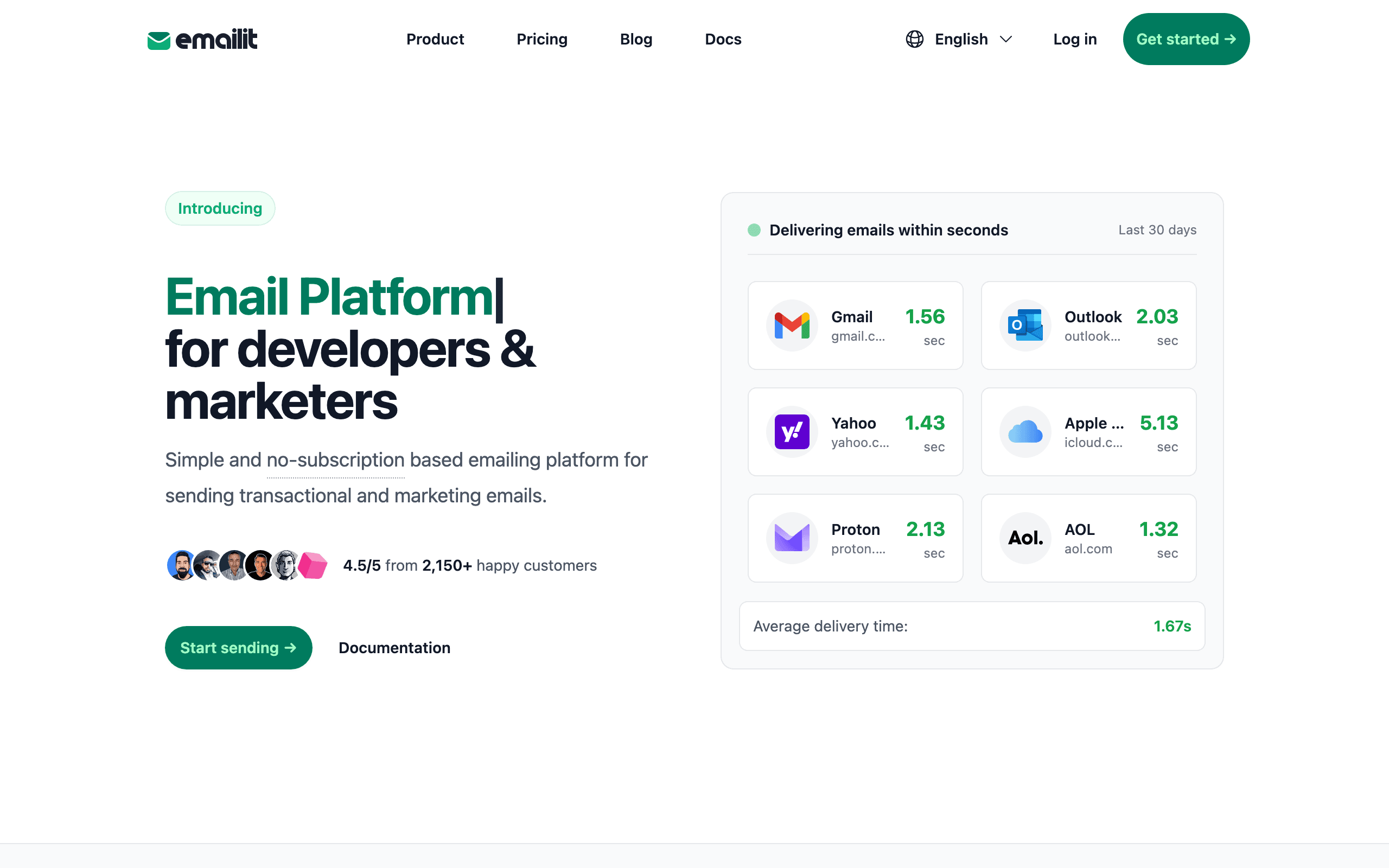
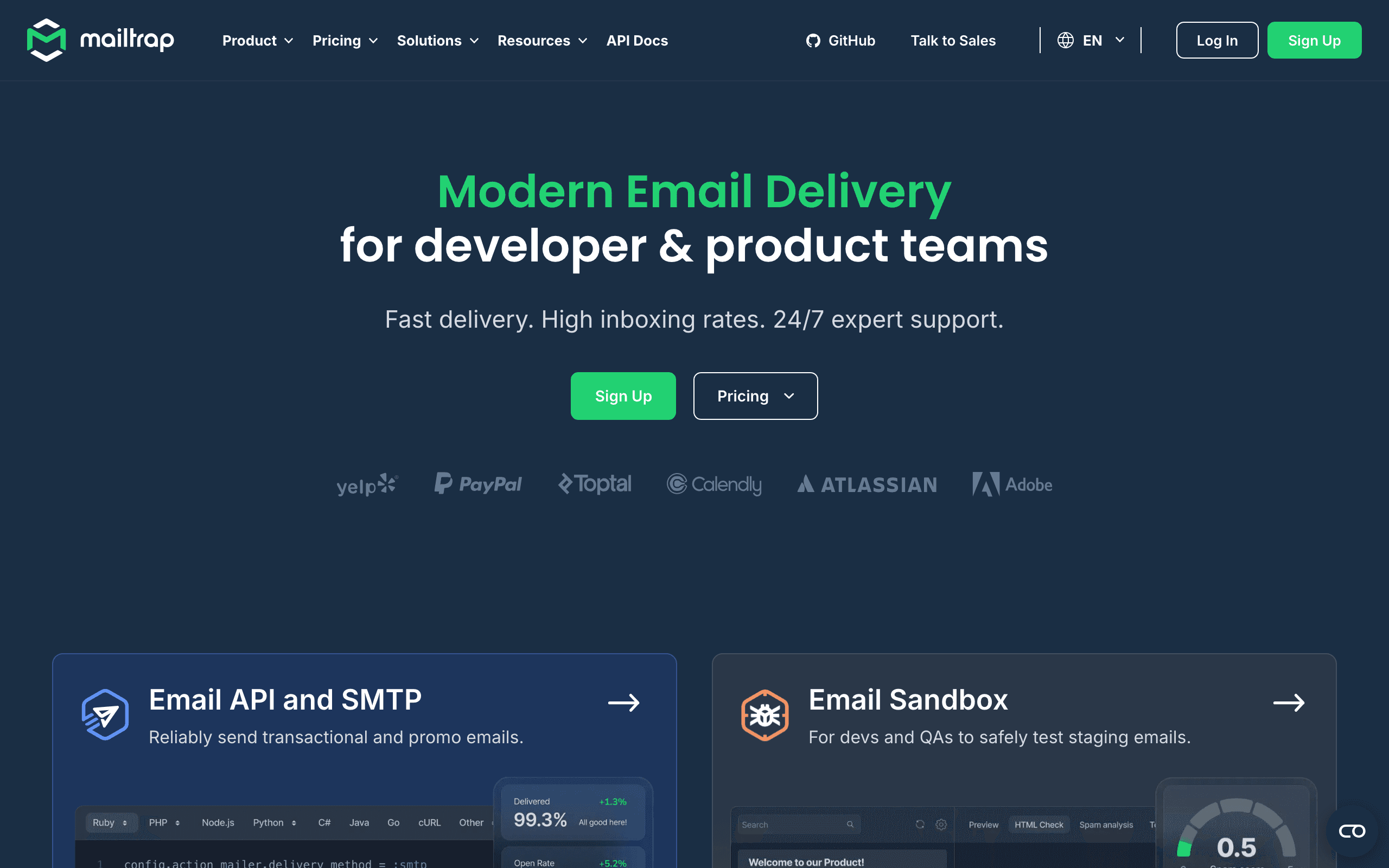
EmailIt and Mailtrap serve different needs in the email space. EmailIt is a budget pay-per-email delivery service. Mailtrap is a email testing and production sending platform.
The choice depends on what you need: cheapest per-email pricing (EmailIt) or best email testing sandbox (Mailtrap). For SaaS businesses specifically, Sequenzy offers purpose-built features that neither tool provides.
Pricing reality
- EmailIt: ~$1-2/10k emails - Pay-per-email, no subscription. SMTP and API.
- Mailtrap: $10/month - Email testing sandbox + production sending.
- Sequenzy: $99/month for 120,000 emails, unlimited subscribers, fully managed. See pricing.
Review signals
The EmailIt reviews on this page support production-cost optimization. One reviewer uses Mailtrap for testing and EmailIt for production because Mailtrap's production sending is still maturing and EmailIt is cheaper for delivery.
The caution signal is pre-send QA. Another EmailIt reviewer says they missed Mailtrap's quality checks after Mailtrap caught an Outlook rendering bug that EmailIt would have sent to real users.
Mailtrap's reviews reinforce the sandbox value: HTML rendering checks, spam analysis, broken-link detection, and development workflow safety. The limitation is that production sending is newer and less polished than dedicated transactional senders.
Where EmailIt Wins
Cheapest per-email pricing
EmailIt offers cheapest per-email pricing, which is a genuine advantage for teams that need it.
No monthly subscription
EmailIt offers no monthly subscription, which is a genuine advantage for teams that need it.
Simple SMTP/API
EmailIt offers simple smtp/api, which is a genuine advantage for teams that need it.
Fast delivery
EmailIt offers fast delivery, which is a genuine advantage for teams that need it.
Where Mailtrap Wins
Best email testing sandbox
Mailtrap offers best email testing sandbox, which matters for teams that prioritize this.
Testing + production
Mailtrap offers testing + production, which matters for teams that prioritize this.
Good docs
Mailtrap offers good docs, which matters for teams that prioritize this.
QA-friendly
Mailtrap offers qa-friendly, which matters for teams that prioritize this.
Delivery Speed and Reliability
EmailIt and Mailtrap approach transactional sending from different angles. EmailIt is a pay-per-email service with no monthly subscription, built for teams that already trust their setup and just want production delivery. Mailtrap adds a testing sandbox in front of that same production sending, so messages get checked for HTML and spam issues before they ever reach a real inbox.
API Design and Developer Experience
Both platforms offer an API and SMTP for developers, but the surrounding tooling differs. EmailIt keeps its integration simple and API-first, without a sandbox layer to configure. Mailtrap's documentation covers both its testing environment and its production sending API, which means more surface area to learn but also more built-in quality checks before code ships.
Scaling and Cost at Volume
EmailIt's pay-per-email pricing, roughly $1-2 per 10,000 emails, suits teams who send in bursts and don't want a fixed monthly fee. Mailtrap charges $10 a month with its own tiers layered on top of that for testing capacity. At high volume, the better deal depends on how much you value having a built-in sandbox versus paying strictly for what you send.
The Testing Pipeline Value
Mailtrap's email testing sandbox is its defining feature and the primary reason developers choose it over simpler alternatives like EmailIt. The sandbox captures emails sent from development and staging environments, preventing test emails from reaching real users while providing HTML/CSS rendering previews, spam score analysis, and blacklist checking.
For development teams that send emails from their applications, testing is not optional -- it is essential. A broken email template, a spam-triggering subject line, or incorrect personalization tokens can damage your sender reputation and user experience. Mailtrap catches these issues before they reach production. EmailIt sends whatever you give it without any pre-send validation.
The question is whether you need this testing integrated with your sending platform or as a separate tool. Many teams use Mailtrap's sandbox during development alongside a different sender for production. Mailtrap's production sending feature aims to consolidate this into one platform, but their sending infrastructure is newer and less proven than dedicated transactional email services.
The Development Workflow Integration
Mailtrap integrates into development workflows through its SMTP credentials that drop into any application's email configuration. Point your development environment's SMTP settings at Mailtrap and all outgoing emails are captured in the sandbox instead of being delivered. This works with any framework -- Rails, Django, Laravel, Node.js -- without code changes.
EmailIt has no development workflow features. It sends emails to real addresses from the moment you configure it. Development testing requires either a separate tool, custom code to intercept emails, or careful use of test email addresses. For solo developers on simple projects, this is manageable. For teams with CI/CD pipelines and staging environments, the lack of testing infrastructure creates risk.
The ideal workflow for many teams combines Mailtrap's sandbox for development and testing with a proven sender for production. Whether that production sender is Mailtrap's own sending feature, EmailIt, or a more established platform like Postmark depends on your volume, budget, and deliverability requirements.
Beyond Testing and Sending for SaaS
Neither EmailIt nor Mailtrap provides the lifecycle automation that SaaS businesses need. They handle the mechanics of testing and sending emails but do not understand your business context -- trial periods, subscription tiers, payment events, or user engagement patterns.
For SaaS companies, Sequenzy provides the automation layer with native Stripe integration for billing-aware email triggers, AI-generated sequences for onboarding and retention, and unified transactional plus marketing email. At $49/month, it addresses the SaaS-specific gap that both testing-focused Mailtrap and sending-focused EmailIt leave open.
Use-case matchups
| Use case | Better fit | Why |
|---|---|---|
| Lowest-cost production sending | EmailIt | EmailIt is the better first look when the team only needs SMTP/API delivery and wants to avoid a monthly platform fee. |
| Development and staging email QA | Mailtrap | Mailtrap is built for captured test inboxes, spam checks, HTML/CSS validation, and team review before production delivery. |
| One tool for testing plus modest production sending | Mailtrap | Mailtrap can cover both sandbox and sending workflows when production volume and deliverability demands are moderate. |
| Existing testing stack with separate production sender | EmailIt | EmailIt makes more sense when QA is already solved and the missing piece is cheap production email. |
| SaaS lifecycle automation | Sequenzy | Sequenzy is better when Stripe events, transactional email, and marketing sequences need to work together. |
| High-risk template changes | Mailtrap | Mailtrap reduces risk when many developers or marketers change templates and need pre-send inspection. |
Best Fit by Testing and Sending Workflow
Best production sender for teams that already handle QA elsewhere
EmailIt is the better fit when the application already has a testing workflow and only needs inexpensive production delivery through SMTP or API. It suits small products, internal tools, and teams that keep templates in code and do not need captured inboxes, spam scoring, or collaborative review. The fit is delivery-only, not development safety.
Best email testing platform for development and staging teams
Mailtrap is stronger when the biggest risk is shipping broken or spammy templates. Choose it for captured test inboxes, HTML/CSS inspection, spam checks, broken-link review, staging environments, and team QA before production sending. It is especially useful when developers and marketers both touch templates and need a safe review path.
Best SaaS email platform for lifecycle plus transactionals
Sequenzy is the better fit when the product needs more than testing and delivery mechanics. SaaS teams need Stripe-triggered billing emails, onboarding campaigns, receipts, failed-payment nudges, subscription updates, and transactional messages in one lifecycle model. That business context sits above the testing/sending distinction between EmailIt and Mailtrap.
Migration checklist
| Workstream | What to verify |
|---|---|
| Production delivery | Move SMTP/API credentials, domains, sender identities, templates, webhooks, and suppression handling. |
| Test environments | If moving to Mailtrap, rebuild dev/staging inboxes, spam checks, QA review rules, and team access. |
| Template safety | Confirm HTML rendering, broken links, unsubscribe behavior, plain-text fallbacks, and mobile rendering before production. |
| SaaS workflows | If moving to Sequenzy, map transactional events, billing triggers, lifecycle campaigns, and subscriber segments together. |
| Cutover | Test staging delivery, production delivery, bounces, complaints, and one high-risk template change before switching. |
Decision checklist
Is the main problem cheap production delivery or safer development/staging email QA?
Does the team need HTML checks, spam scoring, test inboxes, and broken-link review?
Is Mailtrap's newer production sending mature enough for the expected volume?
Would keeping Mailtrap for QA and EmailIt for production create useful separation or tool sprawl?
Would SaaS lifecycle automation and unified campaign/transactional email justify Sequenzy instead?
Decide whether the destination should be a production sender, a testing sandbox, or a unified SaaS email platform.
Export verified domains, SMTP/API keys, templates, sender identities, webhooks, suppression data, test inbox rules, and delivery logs.
If moving to Mailtrap, recreate development, staging, and production environments separately so test emails cannot leak to real users.
If moving to EmailIt, confirm what replaces Mailtrap's sandbox checks, spam analysis, HTML previews, team QA, and test inbox history.
Rebuild critical transactional templates first: verification, password reset, invite, receipt, invoice, billing, notification, and security emails.
Reconnect application SMTP/API settings, delivery webhooks, bounce handling, complaint handling, alerts, monitoring, and suppression syncing.
Authenticate SPF, DKIM, and DMARC, then run staged tests from development, staging, and production before switching all traffic.
Preserve historical test failures, spam scores, rendering issues, delivery logs, bounce reports, and cost data so the team can compare QA value against production simplicity.