Updated 2026-03-15

Best Email Marketing Tools for Medium Businesses

Scale your email marketing with tools built for growing teams, multiple departments, and complex customer journeys.

Medium-sized businesses face a unique email marketing challenge. You have outgrown the basic tools that worked when you had 500 subscribers, but you do not need enterprise platforms costing $50,000 per year. You need automation that handles multi-step workflows, team features for multiple departments, and pricing that does not punish growth. I tested 13 platforms specifically for businesses with 10 to 200 employees and 5,000 to 100,000 subscribers.

TL;DR

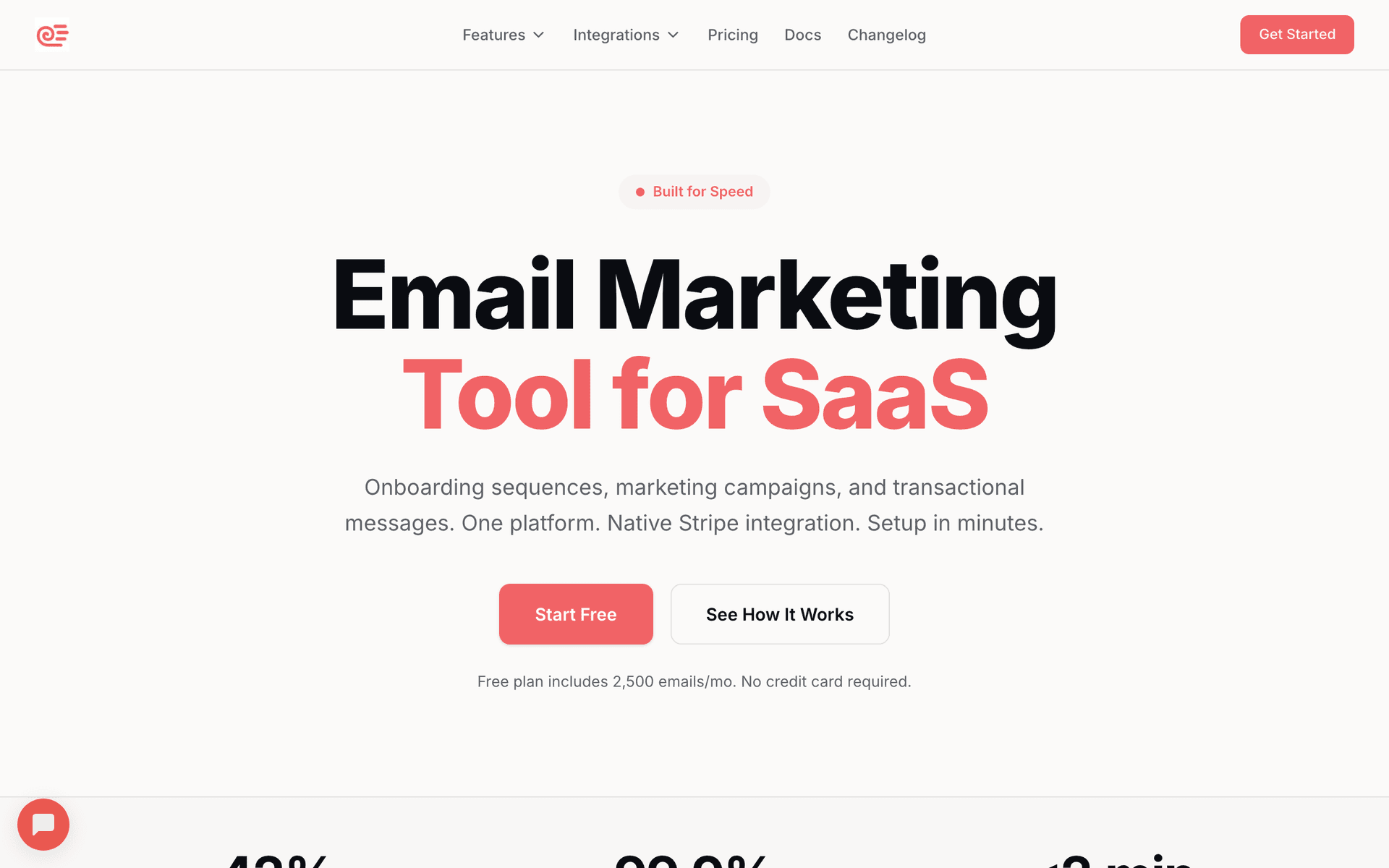
For medium businesses wanting AI-powered automation with predictable pricing, Sequenzy's free tier covers 2,500 emails/month and the $29/month plan handles 50,000 emails with unlimited contacts. For the most powerful automation with CRM, ActiveCampaign is the gold standard but costs escalate with contacts. For a complete marketing ecosystem with CRM, sales, and service, HubSpot is the safe choice if budget allows.

Why Medium Businesses Need Email Marketing

Lead Nurturing at Scale

With multiple products and customer segments, automated email sequences move leads through your pipeline without manual follow-up for every prospect.

Customer Retention Across Departments

Marketing, sales, and customer success all need to communicate with customers. A unified email platform prevents conflicting messages and subscriber fatigue.

Multi-Product Promotion

Cross-sell and upsell opportunities multiply as your product line grows. Email segmentation lets you target the right offer to the right customer automatically.

Data-Driven Decision Making

At this size, you need real analytics. Revenue attribution, engagement scoring, and campaign comparison help you allocate budget to what actually works.

Medium Businesses Email Marketing Benchmarks

Know these numbers before you start. They'll help you set realistic goals and pick the right tool.

22-30%
Average Open Rate

Medium business emails typically see 22-30% open rates across all campaign types. Segmented emails outperform broadcast sends by 5-10 percentage points. If your overall rate is below 20%, your list needs cleaning or your content needs more relevance.

2-4%
Average Click Rate

Click rates of 2-4% are typical for medium business emails. Lead nurture sequences with case studies and resource downloads drive the highest clicks. Generic newsletters without clear CTAs often fall below 1.5%.

Tuesday-Thursday, 9-11am
Best Send Time

For B2B medium businesses, mid-morning on Tuesday through Thursday produces the best engagement. For B2C, test weekend sends. Automated lifecycle emails should trigger based on behavior rather than time of day.

$0.10-0.50
Revenue Per Email

Medium businesses should track revenue per email as their north star metric. At 25,000 subscribers, even $0.10 per email per campaign means $2,500 per send. This metric justifies email investment better than open rates and helps compare tools objectively.

Important Tips Before You Choose

Lessons from medium businesseswho've been doing this for years. Save yourself the trial and error.

Calculate total cost of ownership, not just monthly price

Per-contact pricing that seems affordable at 1,000 contacts can cost $300+/month at 25,000 contacts. Factor in add-ons like SMS, landing pages, and additional users. Pay-per-email tools like Sequenzy and Brevo keep costs predictable as your subscriber database grows.

Use one platform for all departments to prevent subscriber fatigue

When marketing, sales, customer success, and product all email customers from different tools, subscribers get overwhelmed. Consolidate on one platform where every department can see what others are sending. Set frequency caps to prevent a customer from receiving 4 emails in one week from different teams.

Implement lead scoring to focus sales team attention

With thousands of contacts, your sales team cannot follow up with everyone manually. Lead scoring based on email engagement, content downloads, and website visits identifies the hottest prospects automatically. ActiveCampaign and HubSpot both offer lead scoring.

Build cross-sell sequences based on current product usage

Medium businesses with multiple products leave money on the table without cross-sell automation. Trigger sequences that introduce complementary products to customers who have been active for 60+ days. Use case studies showing how similar customers expanded their usage.

Evaluate your email platform annually

What worked at 500 subscribers and 3 employees holds you back at 25,000 subscribers and 100 employees. Review your email platform every year against three criteria: is per-contact cost still competitive, can the team manage campaigns without bottlenecking, and does automation handle current workflows.

19 Best Email Marketing Tools for Medium Businesses

#ToolDescriptionBest ForPricing
1SequenzyAI-powered email marketing with smart automation and pay-per-email pricing.Medium businesses wanting AI-powered automation with predictable, scalable pricingFree up to 2,500 emails/mo, then $19/mo (unlimited contacts)
2ActiveCampaignAdvanced automation with built-in CRM for marketing teams.Medium businesses with sales teams wanting advanced automation and CRMFrom $29/month for 1,000 contacts
3HubSpotAll-in-one CRM, marketing, sales, and service platform.Medium businesses willing to invest in a complete marketing ecosystemFree CRM, marketing hub from $50/month
4MailchimpWell-known email marketing with drag-and-drop editor and basic automation.Medium businesses with simple email needs who value ease of useFree up to 500 contacts, Standard from $20/month
5BrevoAll-in-one marketing with email, SMS, chat, and CRM at affordable pricing.Medium businesses wanting multi-channel marketing on a budgetFree up to 300 emails/day, then $25/month for 20,000 emails
6KlaviyoData-driven email and SMS marketing with deep e-commerce integrations.Medium businesses with significant e-commerce revenueFree up to 250 contacts, then from $20/month
7GetResponseEmail marketing with automation, landing pages, webinars, and conversion funnels.Medium businesses that use webinars and want an all-in-one platform$19/month for 1,000 contacts
8DripE-commerce CRM with email automation focused on online stores.Medium e-commerce businesses wanting revenue-focused email$39/month for 2,500 contacts
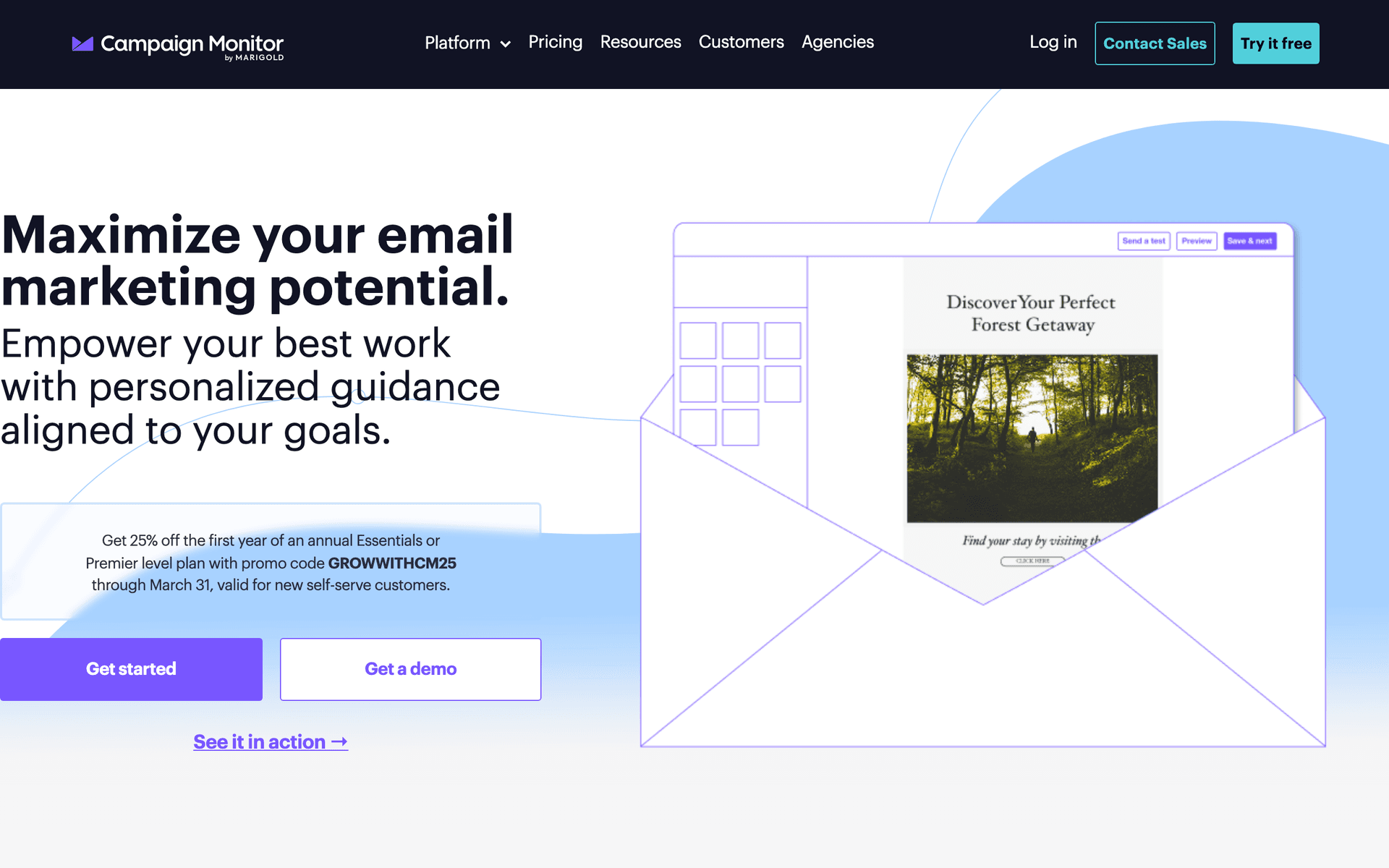
9Campaign MonitorEmail marketing with brand control and team collaboration features.Medium businesses prioritizing brand consistency across senders$12/month for 500 contacts
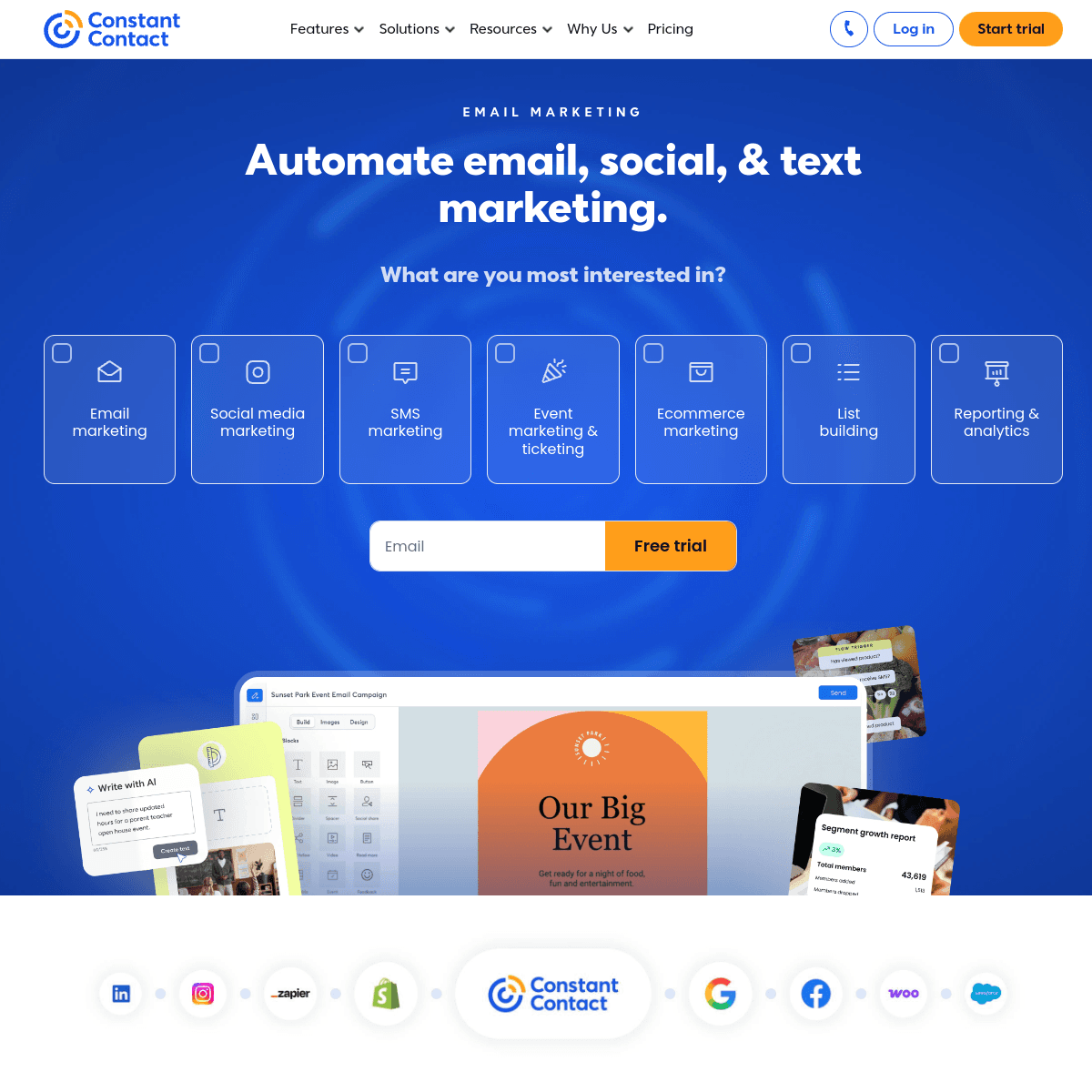
10Constant ContactEmail marketing with event management and social media tools.Medium businesses that host events and want phone support$12/month for up to 500 contacts
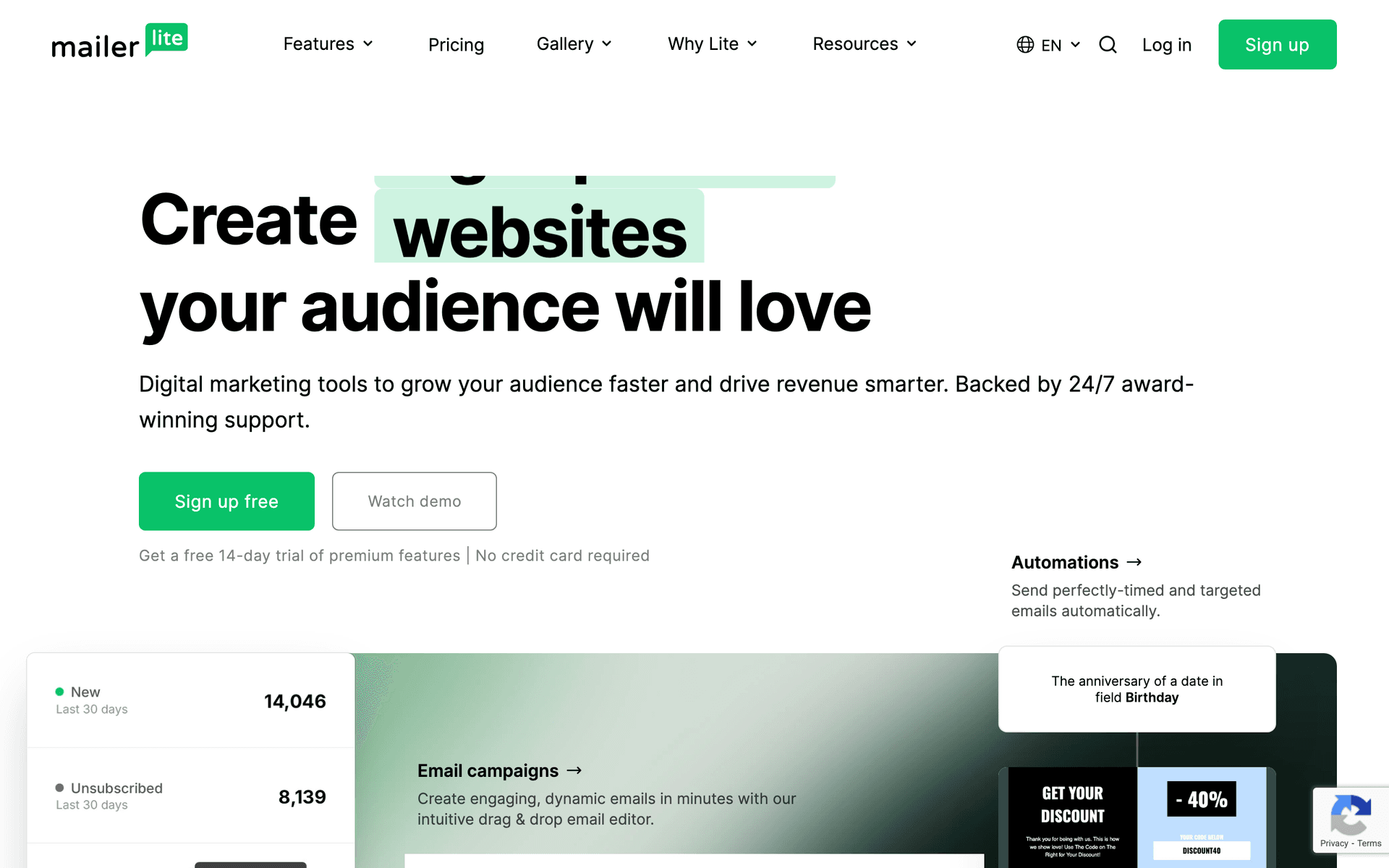
11MailerLiteAffordable email marketing with a clean interface.Budget-conscious medium businesses wanting a clean, simple platformFree up to 1,000 subscribers, then from $10/month
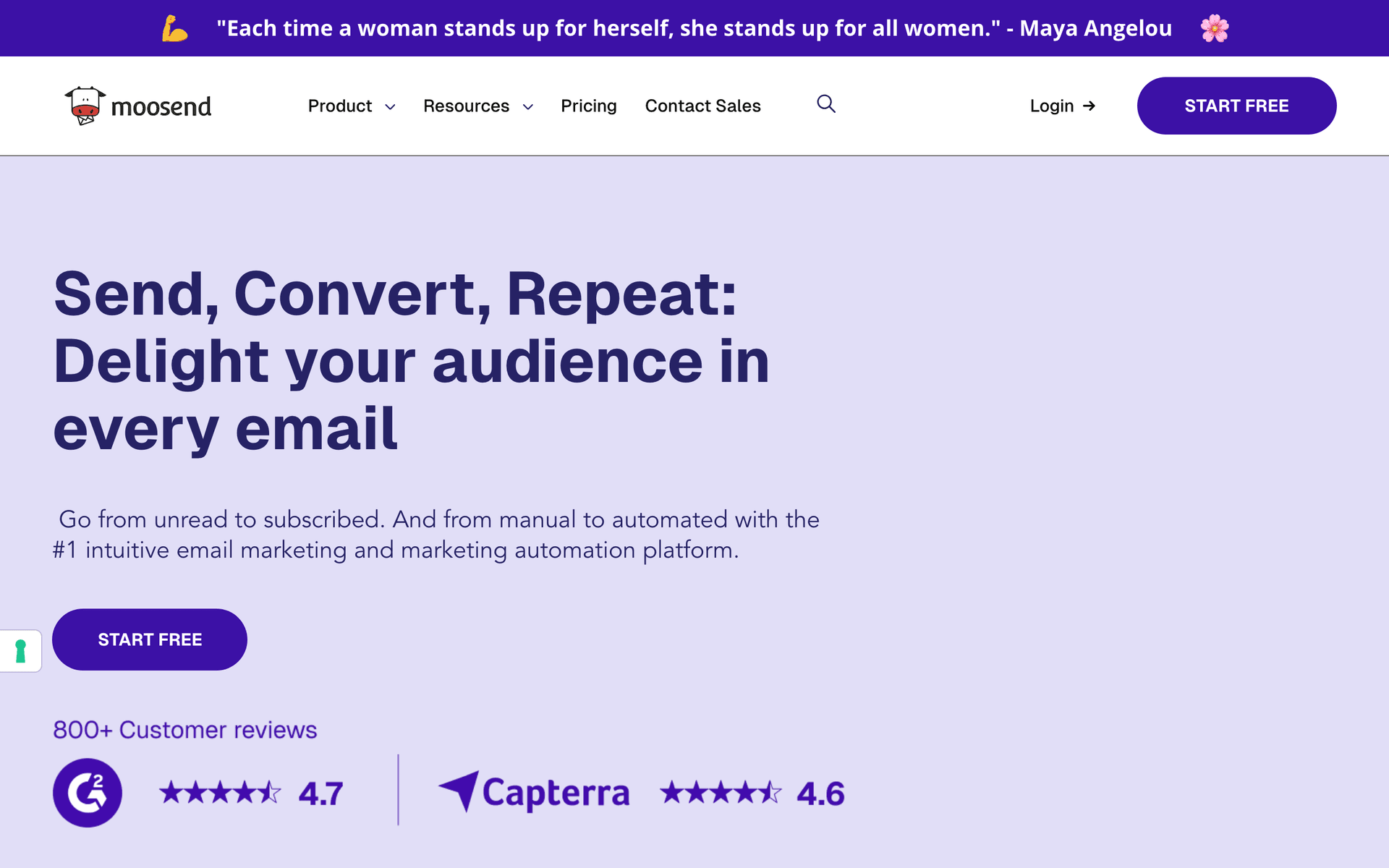
12MoosendAffordable email marketing with automation and landing pages.Medium businesses wanting capable automation at the lowest price$9/month for 500 subscribers
13KitEmail marketing for creators with visual automations.Content-driven medium businesses with strong newsletter programsFree up to 10,000 subscribers, then from $25/month
14KlaviyoAdvanced email and SMS with predictive analytics.Medium-sized e-commerce and consumer businesses wanting advanced data-driven segmentationFrom $20/month, scales with contacts
15OrttoCDP and journey-based marketing automation.Medium businesses wanting to unify customer data and build journey-based automation$99/month for 5,000 contacts
16OmnisendEmail, SMS, and push for multi-channel marketing.Medium-sized retail and e-commerce businesses wanting email, SMS, and push in one toolFrom $16/month for 500 contacts
17KeapCRM and marketing automation for service businesses.Medium-sized service businesses wanting CRM, automation, and billing in one platformFrom $169/month
18GoHighLevelAll-in-one marketing platform with CRM, email, SMS, and funnels.Medium businesses wanting to consolidate multiple marketing tools at a flat priceFrom $97/month
19SenderAffordable email and SMS for growing businesses.Budget-conscious medium businesses wanting good email and SMS at lower costFree up to 2,500 subscribers, paid from $15/month
Our Top Pick for Medium Businesses
#1
Sequenzy

AI-powered email marketing with smart automation and pay-per-email pricing.

Visit
Sequenzy dashboard screenshot

Sequenzy earns the top spot for medium businesses because it solves the scaling problem that plagues growing companies. The AI sequence builder creates lead nurturing, onboarding, re-engagement, and cross-sell flows in seconds, saving your marketing team hours of manual campaign creation. The free tier covers up to 2,500 emails per month for testing and validation. The $29/month paid plan covers 50,000 emails with unlimited contacts, which is transformative for mid-size businesses. You can maintain a large subscriber database across departments without paying a premium for contacts who only receive occasional emails. The unified platform handles both marketing and transactional email, eliminating the need for separate tools. The interface is clean enough that multiple team members can create campaigns without extensive training.

Best for
Medium businesses wanting AI-powered automation with predictable, scalable pricing
Pricing
Free up to 2,500 emails/mo, then $19/mo (unlimited contacts)

Pros

  • AI generates complete sequences for any business goal
  • Free tier for testing and validation
  • Pay-per-email pricing scales without penalty
  • Marketing and transactional email in one platform

Cons

  • Newer platform building its track record
  • No built-in SMS marketing
  • Smaller template library than established competitors
  • Team collaboration features still growing
#2
ActiveCampaign

Advanced automation with built-in CRM for marketing teams.

Visit
ActiveCampaign dashboard screenshot

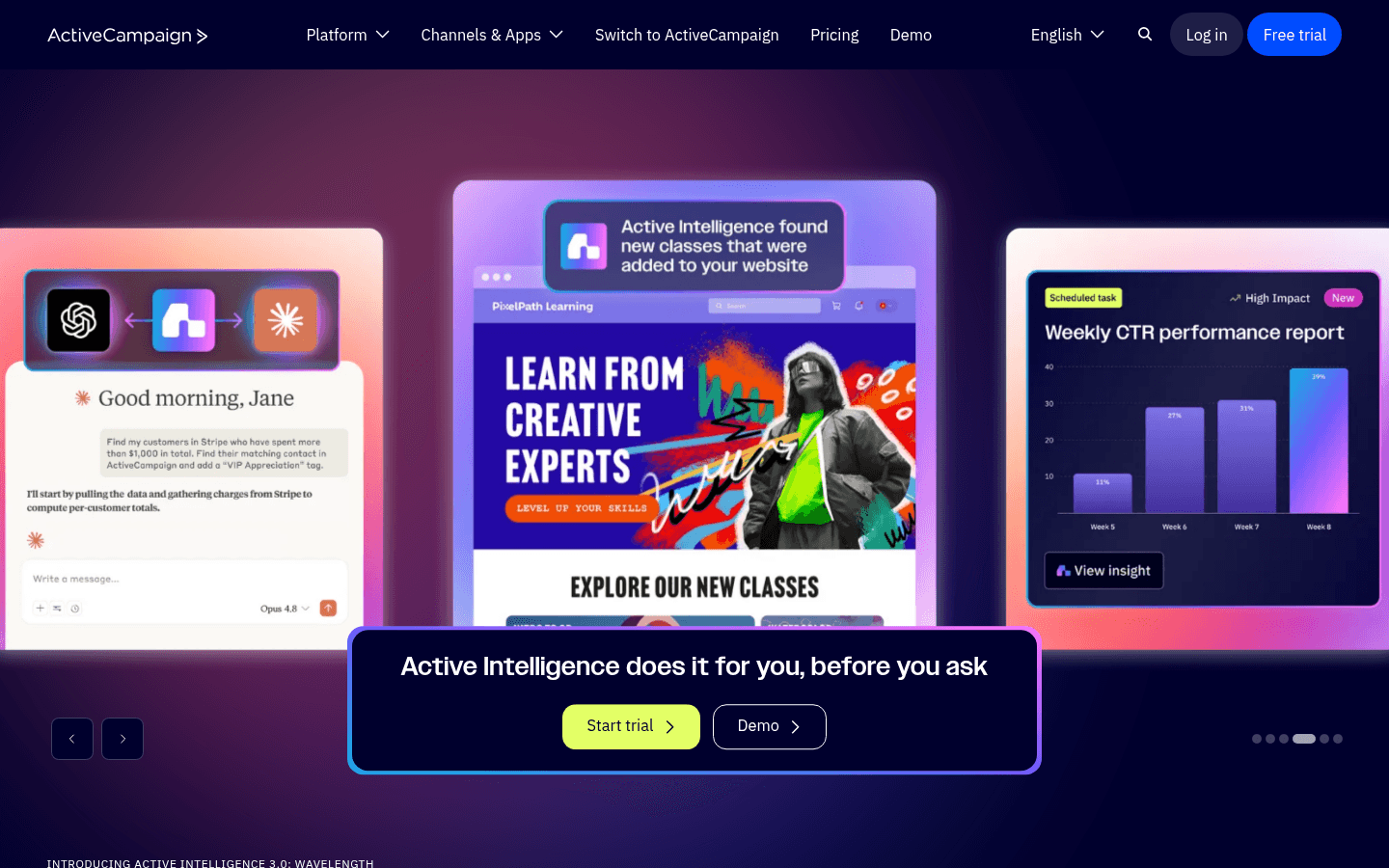
ActiveCampaign is the automation powerhouse for medium businesses with complex customer journeys. The workflow builder handles conditional waits, if/else paths, goal tracking, and branching logic that models sophisticated buyer behavior. The built-in CRM tracks deals across pipelines with lead scoring that prioritizes high-value contacts. For medium businesses with dedicated sales teams, the combination of marketing automation and CRM in one platform eliminates the gap between marketing and sales. The per-contact pricing escalates as you grow, and the learning curve is real - budget time for training.

Best for
Medium businesses with sales teams wanting advanced automation and CRM
Pricing
From $29/month for 1,000 contacts

Pros

  • Most powerful automation builder available
  • Built-in CRM with deal pipeline
  • Lead scoring and conditional content
  • Strong deliverability

Cons

  • Per-contact pricing escalates quickly
  • Steep learning curve
  • Interface can feel cluttered
  • CRM is basic compared to dedicated tools
#3
HubSpot

All-in-one CRM, marketing, sales, and service platform.

Visit
HubSpot dashboard screenshot

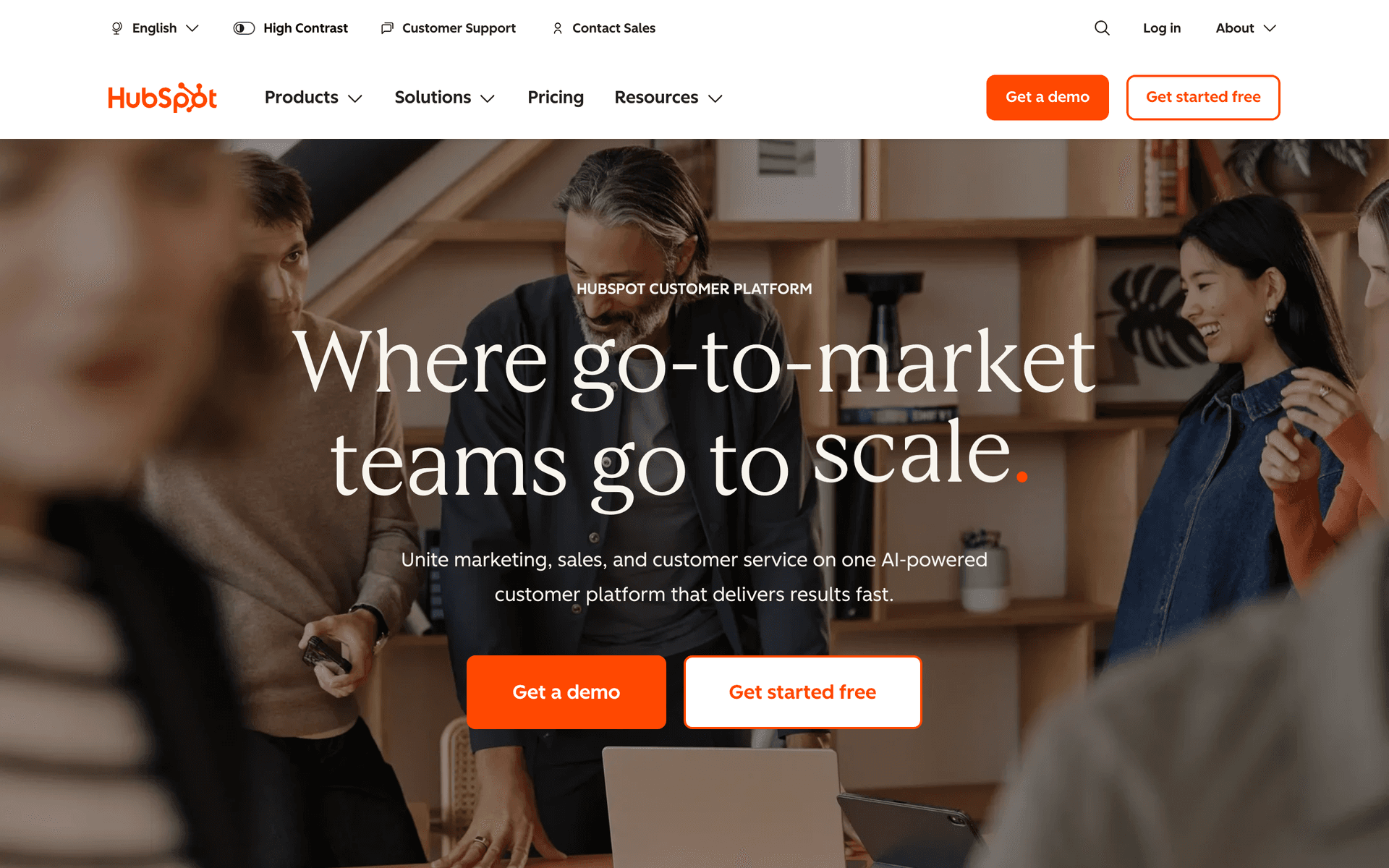
HubSpot is the safe choice for medium businesses that want a complete marketing ecosystem. The free CRM is genuinely good with contact management, deal tracking, and meeting scheduling. The marketing hub gives you email, landing pages, forms, and analytics in one place. The integration ecosystem is unmatched with thousands of connected tools. Where HubSpot struggles is pricing - the marketing hub starts at $50/month, but features you actually need like automation and A/B testing require Professional at $800/month, which is a significant jump.

Best for
Medium businesses willing to invest in a complete marketing ecosystem
Pricing
Free CRM, marketing hub from $50/month

Pros

  • Complete CRM and marketing platform
  • Massive integration ecosystem
  • Excellent reporting and attribution
  • Strong educational resources

Cons

  • Expensive once you need advanced features
  • Per-contact pricing on top of platform fees
  • Can feel bloated for email-only needs
  • Requires training to use effectively
#4
Mailchimp

Well-known email marketing with drag-and-drop editor and basic automation.

Visit
Mailchimp dashboard screenshot

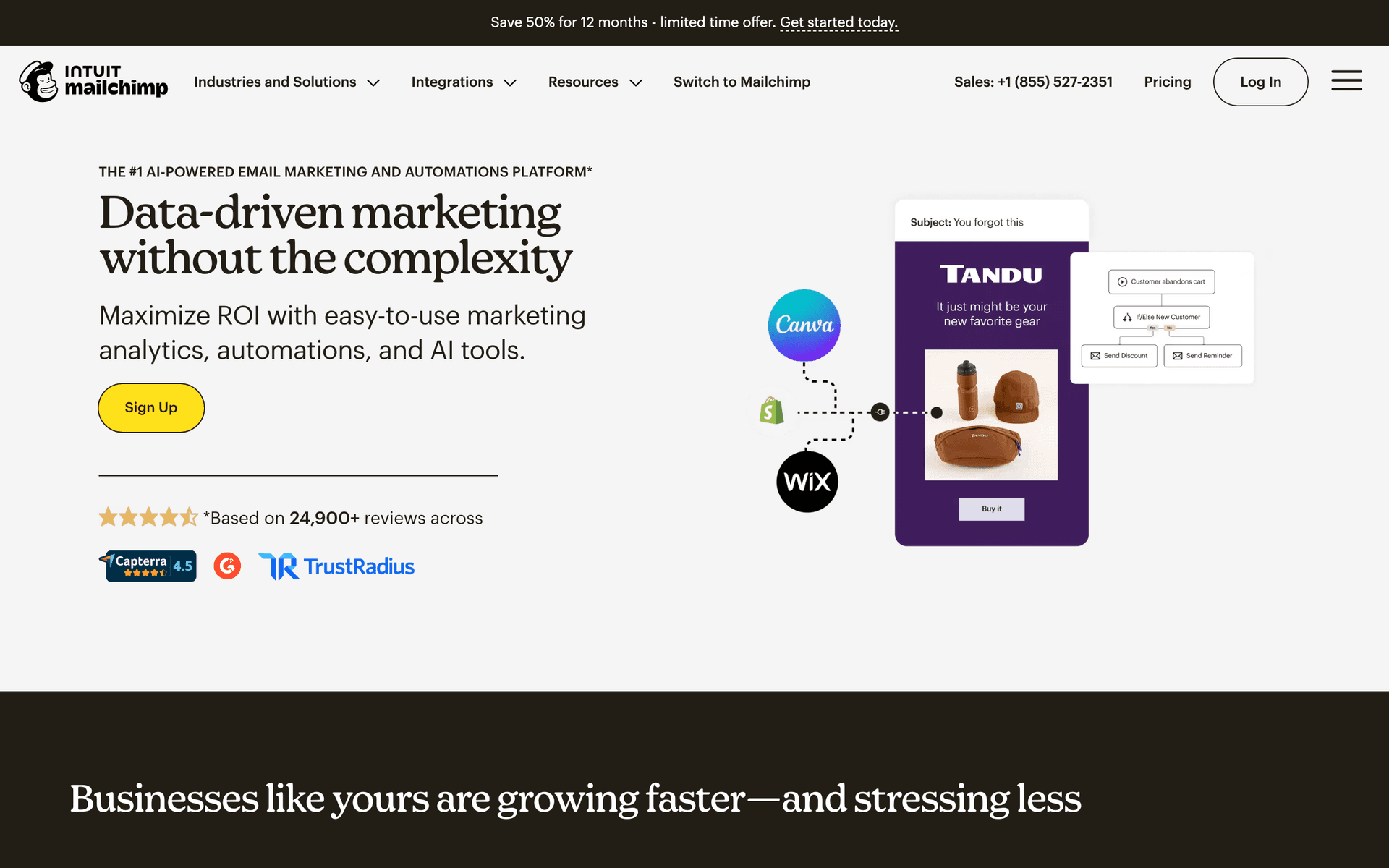
Mailchimp is what most medium businesses already use because they started with it when they were small. The editor is excellent and the brand is trusted. The problem is that Mailchimp has not kept pace with the automation needs of growing businesses. Per-contact pricing gets expensive at scale, and they charge for unsubscribed contacts. Many mid-sized businesses paying $300+/month for Mailchimp could get better features for less from alternatives. If you are already on Mailchimp and it meets your needs, staying is reasonable. If you are evaluating options fresh, compare carefully.

Best for
Medium businesses with simple email needs who value ease of use
Pricing
Free up to 500 contacts, Standard from $20/month

Pros

  • Intuitive drag-and-drop editor
  • Large template library
  • Familiar brand teams already know
  • Good basic analytics

Cons

  • Automation is basic for growing businesses
  • Charges for unsubscribed contacts
  • Support quality has declined
  • Feature-gated pricing pushes to expensive tiers
#5
Brevo

All-in-one marketing with email, SMS, chat, and CRM at affordable pricing.

Visit
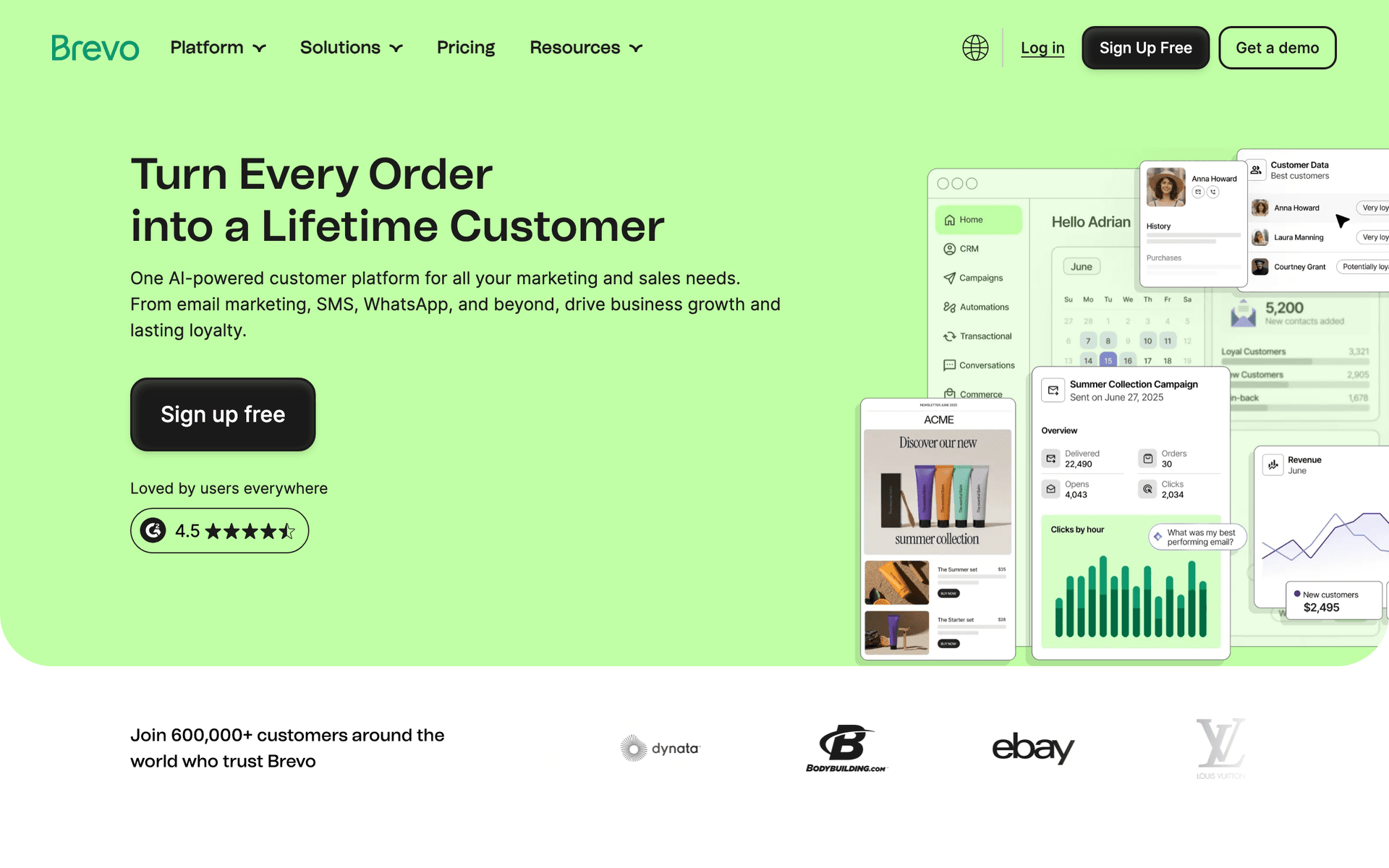
Brevo dashboard screenshot

Brevo is the budget-friendly multi-channel option that does not feel budget. For medium businesses watching spend, the pricing model is hard to beat: you pay by emails sent, not contacts stored. This means a large subscriber list does not cost a premium. The platform covers email, SMS, WhatsApp, and live chat from one interface. The built-in CRM tracks customer interactions. The tradeoff is that no single feature is best-in-class - automation is functional but not as sophisticated as ActiveCampaign, and the email editor is less polished than Mailchimp.

Best for
Medium businesses wanting multi-channel marketing on a budget
Pricing
Free up to 300 emails/day, then $25/month for 20,000 emails

Pros

  • Pay by emails sent, not contacts
  • Multi-channel: email, SMS, WhatsApp, chat
  • Built-in transactional email
  • Affordable compared to competitors

Cons

  • Automation is functional but not advanced
  • Email editor less polished than Mailchimp
  • CRM lacks depth for complex sales
  • Support slow on lower tiers
#6
Klaviyo

Data-driven email and SMS marketing with deep e-commerce integrations.

Visit
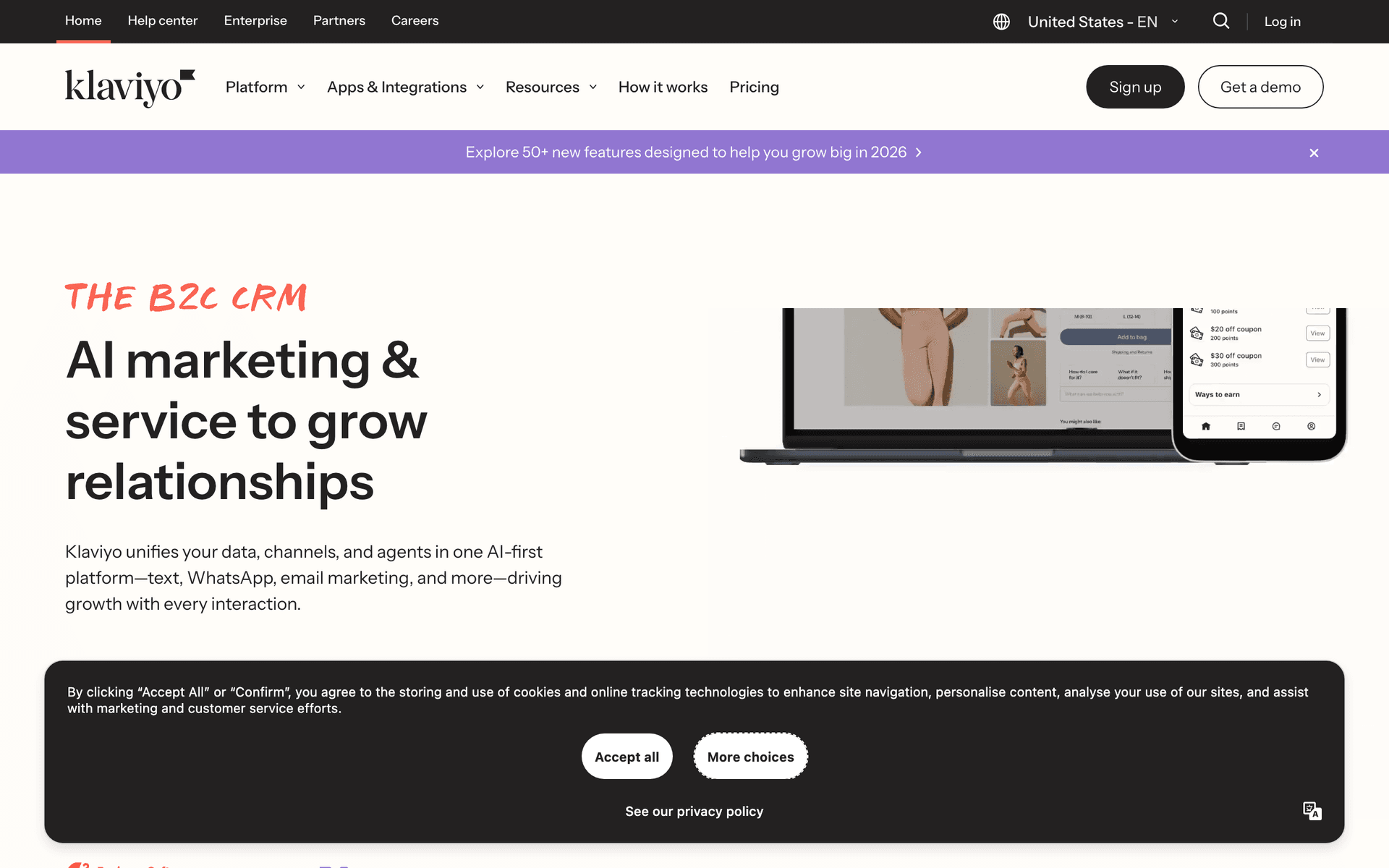
Klaviyo dashboard screenshot

Klaviyo is exceptional if your medium business has significant e-commerce revenue. The Shopify and WooCommerce integrations are best-in-class with predictive analytics that tell you when a customer is likely to buy again. If you are not in e-commerce, most of Klaviyo's best features are irrelevant. Per-contact pricing is among the highest in the market, which matters significantly at medium business scale.

Best for
Medium businesses with significant e-commerce revenue
Pricing
Free up to 250 contacts, then from $20/month

Pros

  • Best-in-class e-commerce integrations
  • Predictive analytics and scoring
  • Strong purchase-based segmentation
  • SMS marketing included

Cons

  • Expensive per-contact pricing
  • Overkill for non-e-commerce businesses
  • Steep learning curve
  • Limited value without e-commerce data
#7
GetResponse

Email marketing with automation, landing pages, webinars, and conversion funnels.

Visit
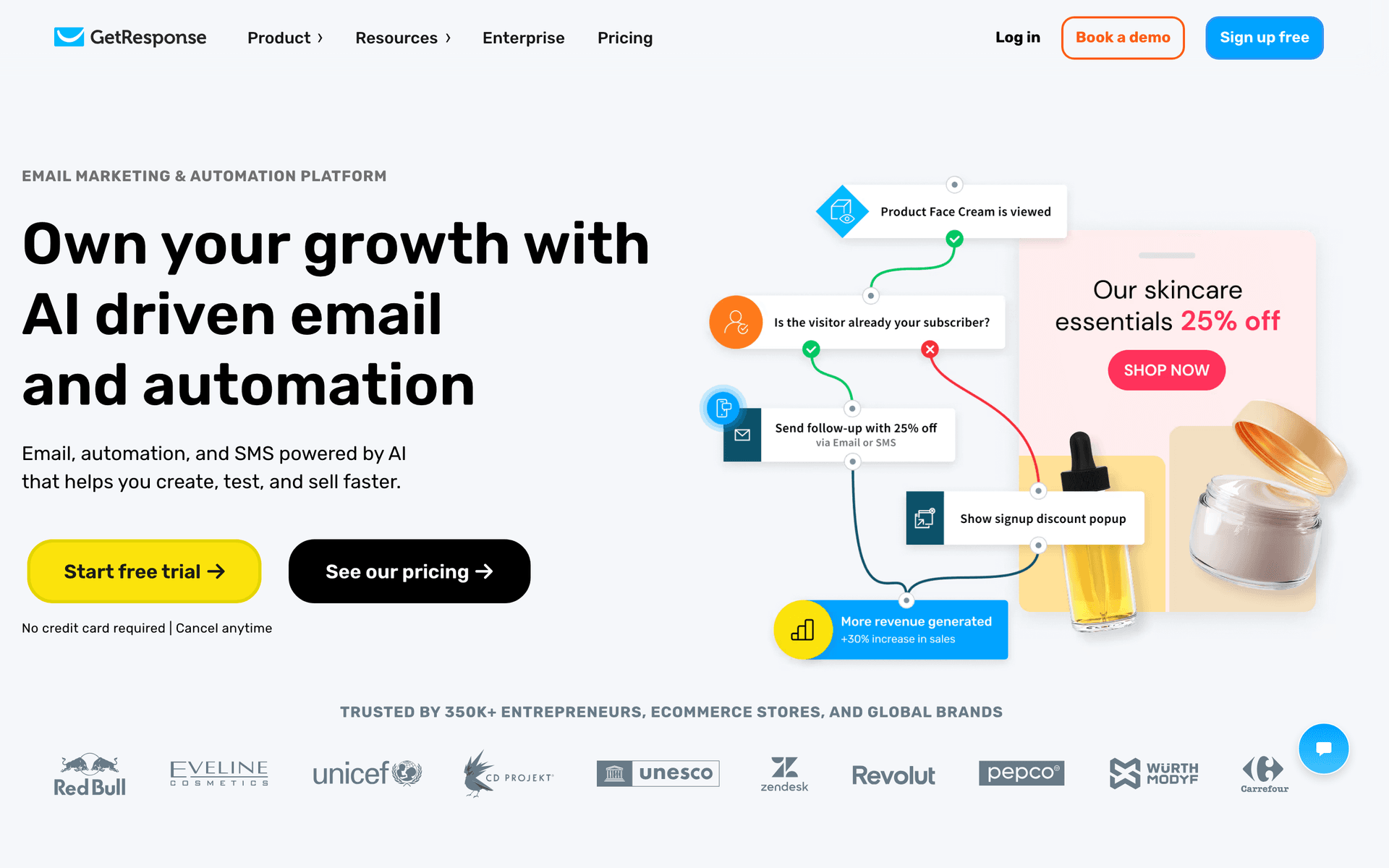
GetResponse dashboard screenshot

GetResponse tries to be everything and mostly succeeds with email, landing pages, webinars, and conversion funnels in one platform. The webinar feature is genuinely unique and useful for medium businesses that rely on webinars for lead generation. The interface feels dated and the all-in-one approach means no individual feature is best-in-class, but the combined value is strong if you use multiple features.

Best for
Medium businesses that use webinars and want an all-in-one platform
Pricing
$19/month for 1,000 contacts

Pros

  • Built-in webinar hosting
  • Conversion funnels included
  • Landing page builder
  • Competitive pricing

Cons

  • Interface feels dated
  • Jack of all trades, master of none
  • Per-contact pricing
  • Automation less powerful than ActiveCampaign
#8
Drip

E-commerce CRM with email automation focused on online stores.

Visit
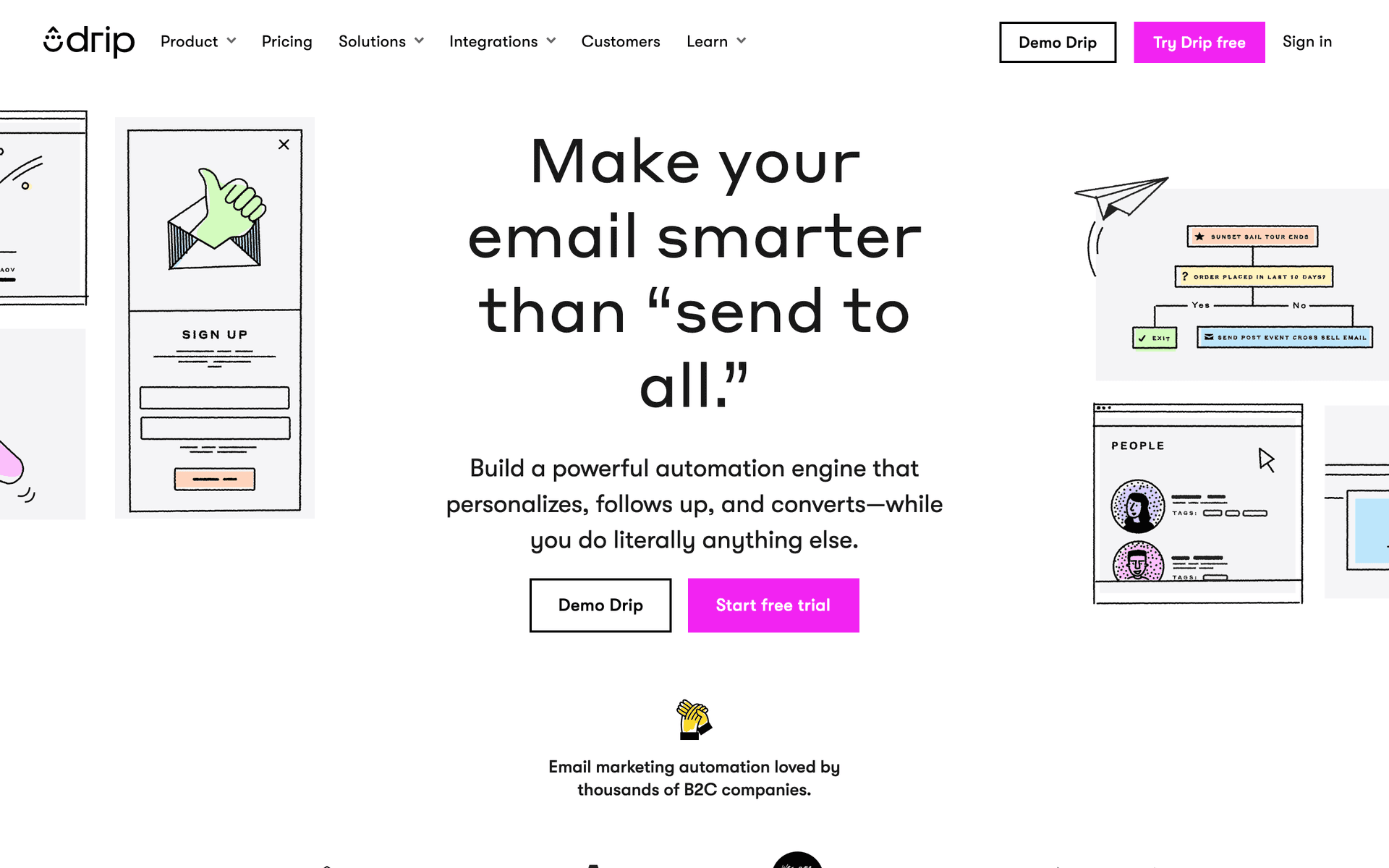
Drip dashboard screenshot

Drip is designed for e-commerce and does that job well. Revenue attribution shows exactly how much each email generates. For medium businesses with an online store, Drip gives you e-commerce focus at a slightly more approachable price than Klaviyo. If e-commerce is not your primary business, Drip's best features go unused.

Best for
Medium e-commerce businesses wanting revenue-focused email
Pricing
$39/month for 2,500 contacts

Pros

  • Strong revenue attribution
  • Visual workflow builder
  • Good e-commerce integrations
  • Easier to learn than Klaviyo

Cons

  • Limited value for non-e-commerce businesses
  • Per-contact pricing
  • Smaller integration ecosystem
  • No SMS channel
#9
Campaign Monitor

Email marketing with brand control and team collaboration features.

Visit
Campaign Monitor dashboard screenshot

Campaign Monitor focuses on brand consistency, which matters for medium businesses with multiple team members sending emails. The template locking feature ensures no one can break the brand by changing colors or fonts. The editor produces clean, professional emails. Automation is more limited than ActiveCampaign, but for businesses where brand presentation is critical, Campaign Monitor delivers consistency.

Best for
Medium businesses prioritizing brand consistency across senders
Pricing
$12/month for 500 contacts

Pros

  • Template locking for brand control
  • Beautiful, professional templates
  • Clean and simple interface
  • Good deliverability

Cons

  • Limited automation
  • Per-contact pricing
  • Fewer integrations
  • Reporting could be more detailed
#10
Constant Contact

Email marketing with event management and social media tools.

Visit
Constant Contact dashboard screenshot

Constant Contact is extremely reliable with unique event management tools and phone support. Many medium businesses use it because it was their first email tool. Automation is basic, analytics are surface-level, and pricing is not competitive at medium business scale. It works, but it does not push your marketing forward.

Best for
Medium businesses that host events and want phone support
Pricing
$12/month for up to 500 contacts

Pros

  • Built-in event management
  • Phone support available
  • Very easy to learn
  • Reliable platform

Cons

  • Automation is very basic
  • Analytics lack depth
  • Pricing high for the feature set
  • Feels outdated
#11
MailerLite

Affordable email marketing with a clean interface.

Visit
MailerLite dashboard screenshot

MailerLite punches above its weight for the price. The free tier supports 1,000 subscribers, paid plans are among the cheapest, and the interface is the cleanest on this list. For medium businesses on a tight budget, MailerLite is a strong contender. Limitations show up in advanced segmentation, reporting depth, and team collaboration features.

Best for
Budget-conscious medium businesses wanting a clean, simple platform
Pricing
Free up to 1,000 subscribers, then from $10/month

Pros

  • Generous free tier
  • Clean, modern interface
  • Built-in landing pages
  • Excellent value

Cons

  • Advanced segmentation is limited
  • Reporting is basic
  • Automation lacks depth
  • Deliverability can be inconsistent
#12
Moosend

Affordable email marketing with automation and landing pages.

Visit
Moosend dashboard screenshot

Moosend is the quiet underdog with a surprisingly capable automation builder for the price. Straightforward pricing without hidden fees. The platform is less known with a smaller community and fewer integrations. On pure value for money, Moosend is hard to beat for basic to intermediate email marketing needs.

Best for
Medium businesses wanting capable automation at the lowest price
Pricing
$9/month for 500 subscribers

Pros

  • Very affordable pricing
  • Capable automation builder
  • Clean email editor
  • No hidden fees

Cons

  • Smaller integration ecosystem
  • Less known brand
  • Limited customer support
  • Reporting is basic
#13
Kit

Email marketing for creators with visual automations.

Visit

Kit was built for individual creators and it shows. For medium businesses where content marketing drives lead generation, Kit provides a focused toolset with a generous 10,000-subscriber free tier. But it lacks CRM, has limited reporting across campaigns, and basic team collaboration. If your medium business operates like a content brand, Kit could work. Otherwise, you will outgrow it quickly.

Best for
Content-driven medium businesses with strong newsletter programs
Pricing
Free up to 10,000 subscribers, then from $25/month

Pros

  • Generous free tier
  • Excellent visual automation builder
  • Strong tagging and segmentation
  • Built-in paid newsletter support

Cons

  • No CRM or sales pipeline
  • Limited multi-department capabilities
  • Reporting is basic for business use
  • Not designed for team collaboration
#14
Klaviyo

Advanced email and SMS with predictive analytics.

Visit
Klaviyo dashboard screenshot

Medium-sized businesses in e-commerce or consumer sectors should seriously consider Klaviyo. Its predictive analytics identify customers likely to churn or make high-value purchases, enabling proactive campaigns that drive revenue. Deep behavioral segmentation goes beyond basic demographics to include purchase patterns, browsing history, and engagement scores. SMS integration creates coordinated multi-channel campaigns. For medium businesses with large customer databases and a focus on consumer marketing, Klaviyo's data capabilities justify its higher price point compared to basic tools.

Best for
Medium-sized e-commerce and consumer businesses wanting advanced data-driven segmentation
Pricing
From $20/month, scales with contacts

Pros

  • Predictive analytics and AI recommendations
  • Deep behavioral segmentation
  • Email and SMS combined
  • E-commerce integrations

Cons

  • Expensive as contact list grows
  • More than needed for simple use cases
  • Not well-suited for B2B businesses
#15
Ortto

CDP and journey-based marketing automation.

Visit
Ortto dashboard screenshot

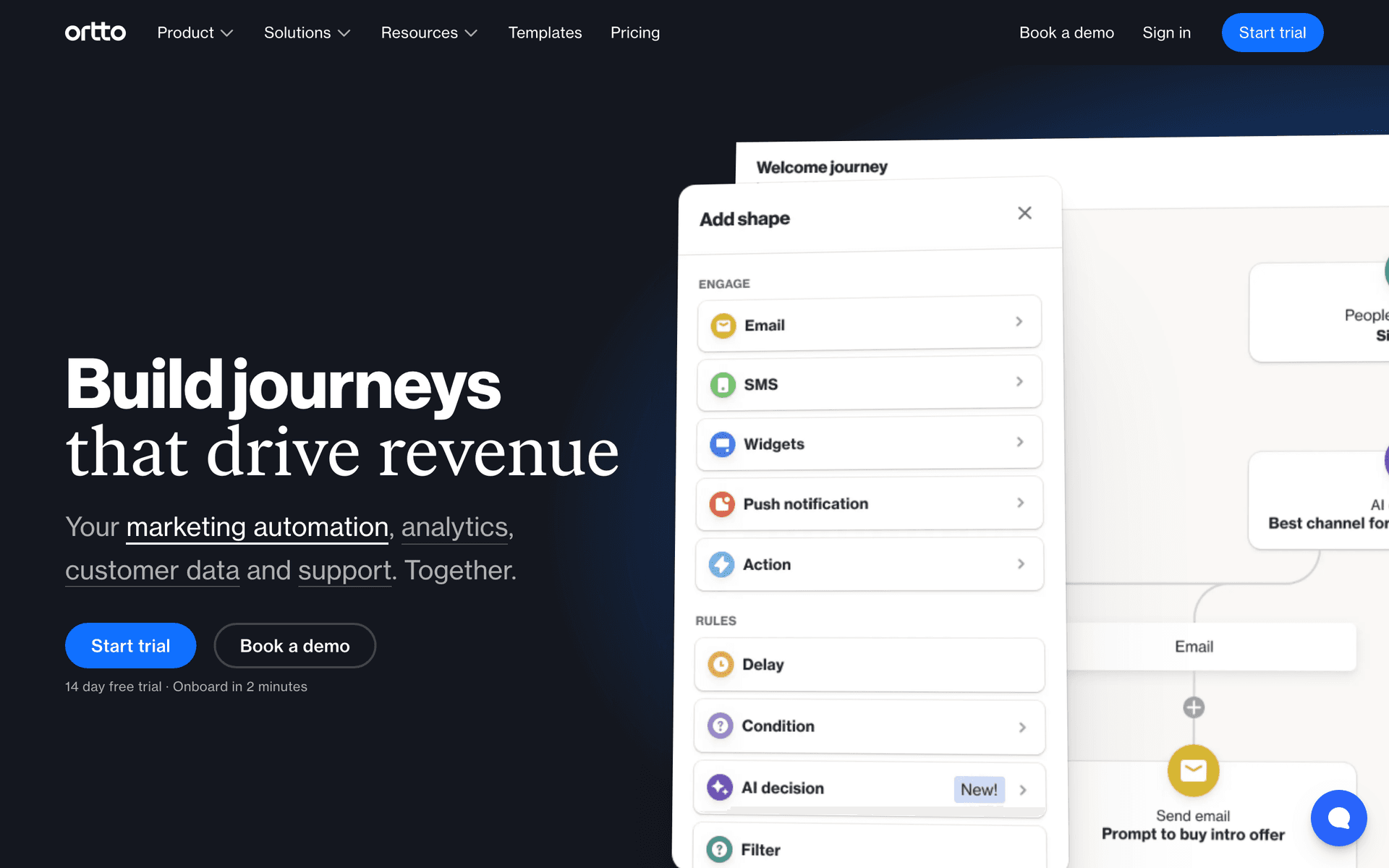
Medium businesses with customer data spread across multiple systems benefit from Ortto's CDP capabilities. Instead of building automations on incomplete data, Ortto unifies CRM, product, and billing data into a single customer profile. The visual journey builder then creates automated sequences based on that complete view. For medium businesses that are scaling their marketing sophistication and need better data infrastructure before investing in complex automation, Ortto provides both in one platform. Competes directly with HubSpot on features at a lower starting price.

Best for
Medium businesses wanting to unify customer data and build journey-based automation
Pricing
$99/month for 5,000 contacts

Pros

  • CDP plus automation in one
  • Unifies multi-source customer data
  • Visual journey builder
  • Good analytics

Cons

  • Learning curve
  • Per-contact pricing
  • Less known than HubSpot
#16
Omnisend

Email, SMS, and push for multi-channel marketing.

Visit
Omnisend dashboard screenshot

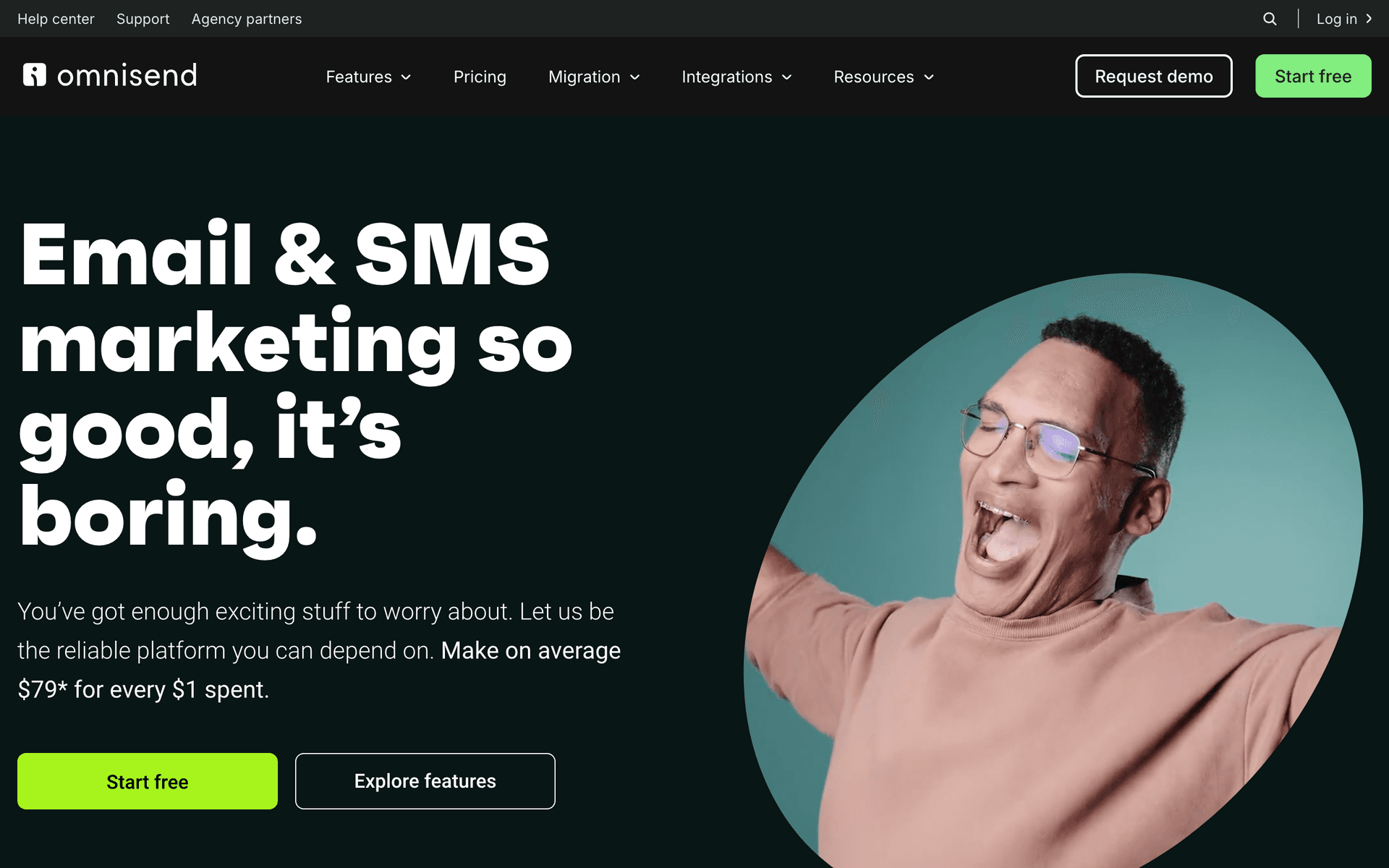
Medium-sized businesses in retail and e-commerce benefit from Omnisend's multi-channel approach. Coordinated email, SMS, and push notification campaigns create consistent communication across all channels from one platform. Pre-built automation workflows handle common sequences - welcome series, cart recovery, post-purchase follow-up - out of the box without extensive configuration. For medium businesses that want multi-channel marketing without the complexity of managing separate tools, Omnisend's bundled approach at competitive pricing is practical.

Best for
Medium-sized retail and e-commerce businesses wanting email, SMS, and push in one tool
Pricing
From $16/month for 500 contacts

Pros

  • Email, SMS, and push combined
  • Pre-built automation workflows
  • Good e-commerce integrations
  • Competitive pricing

Cons

  • E-commerce focus limits B2B utility
  • Less advanced segmentation than Klaviyo
  • Per-contact pricing
#17
Keap

CRM and marketing automation for service businesses.

Visit
Keap dashboard screenshot

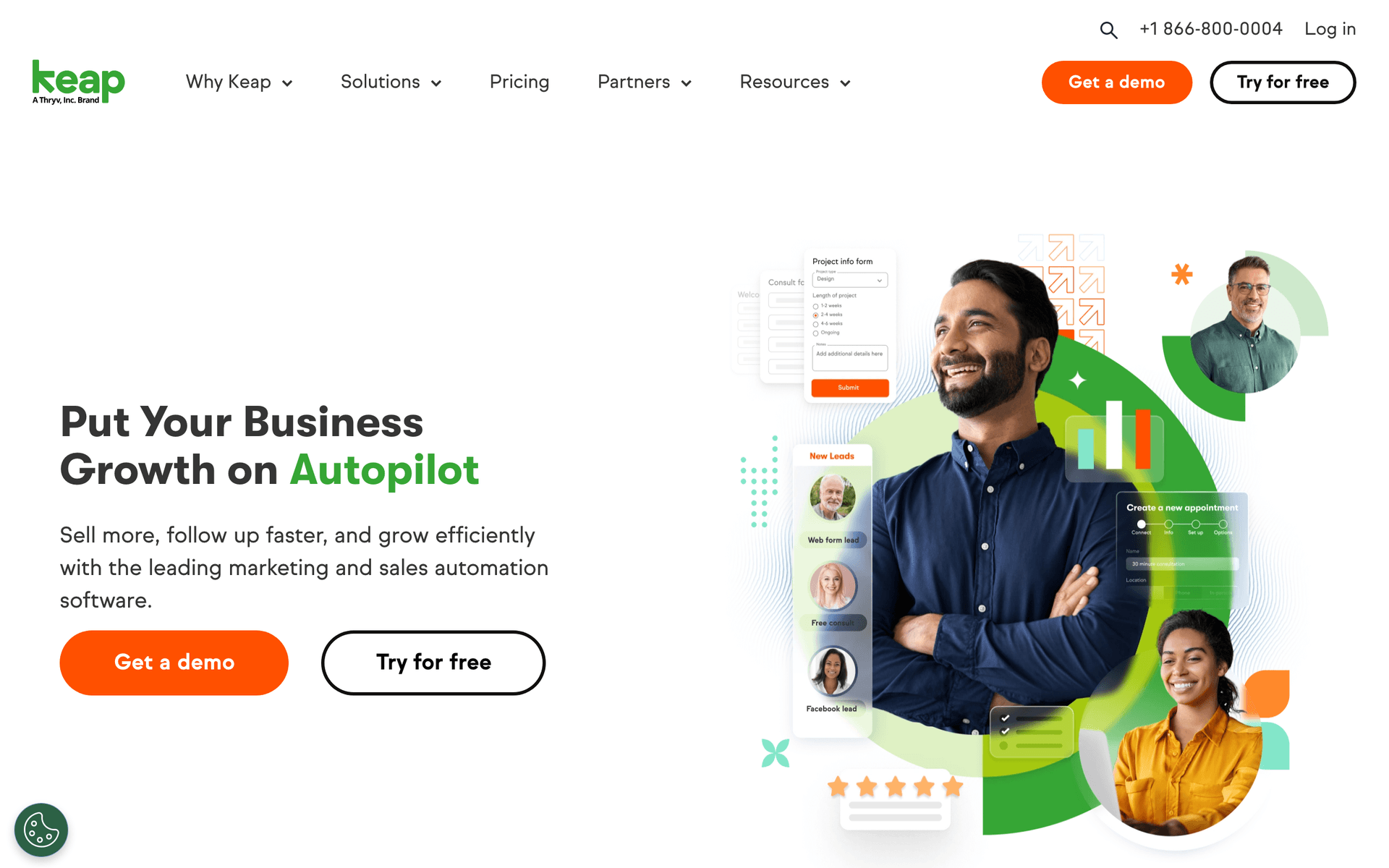
Medium-sized service businesses - consulting firms, agencies, healthcare practices, and professional services - find Keap's CRM and automation combination practical. The platform tracks the full customer lifecycle from lead to long-term client, automates follow-up and check-in sequences, and handles invoicing and payment collection. For service-oriented medium businesses that want to manage marketing, CRM, and billing in one platform, Keap provides meaningful operational consolidation. Pricing at $169/month is reasonable for established service businesses with stable revenue.

Best for
Medium-sized service businesses wanting CRM, automation, and billing in one platform
Pricing
From $169/month

Pros

  • CRM with full client lifecycle
  • Built-in invoicing and payments
  • Service business automation
  • Pipeline tracking

Cons

  • Expensive for smaller budgets
  • Not ideal for product or e-commerce businesses
  • Interface complexity
#18
GoHighLevel

All-in-one marketing platform with CRM, email, SMS, and funnels.

Visit
GoHighLevel dashboard screenshot

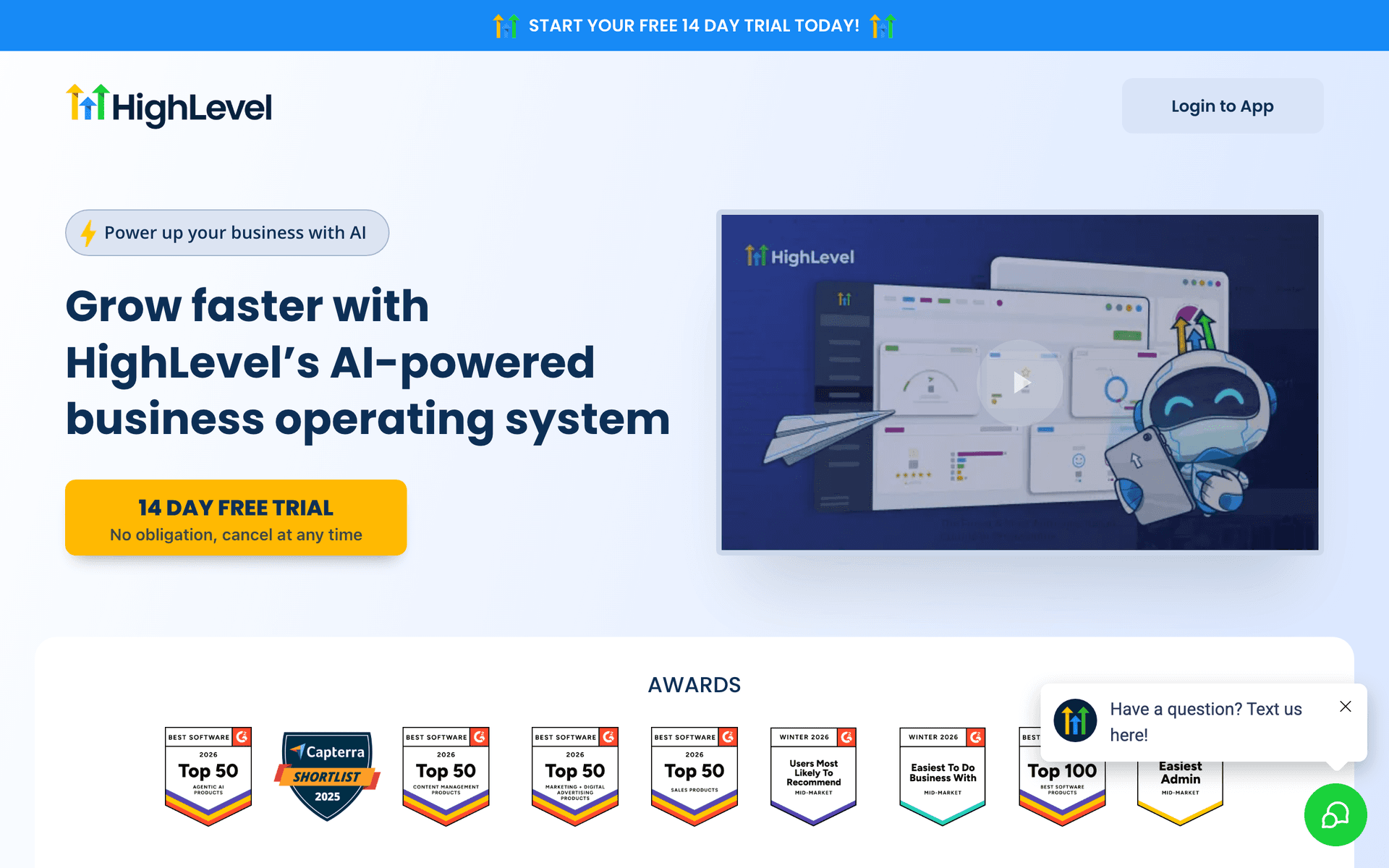
GoHighLevel is gaining traction with medium-sized businesses that want to consolidate their marketing stack. Email, SMS, CRM, funnel builder, appointment booking, and reputation management are all included at a flat price. For medium businesses that currently pay for HubSpot, a separate SMS tool, a landing page builder, and a review management tool, GoHighLevel's consolidation can significantly reduce costs. The interface is dense and has a learning curve, but the breadth of functionality at $97-297/month is compelling for businesses that use most of the included features.

Best for
Medium businesses wanting to consolidate multiple marketing tools at a flat price
Pricing
From $97/month

Pros

  • CRM, email, SMS, funnels, and reviews in one
  • White-label option
  • Flat pricing regardless of list size
  • Appointment booking included

Cons

  • Dense interface with steep learning curve
  • Can be overwhelming
  • Support quality varies
#19
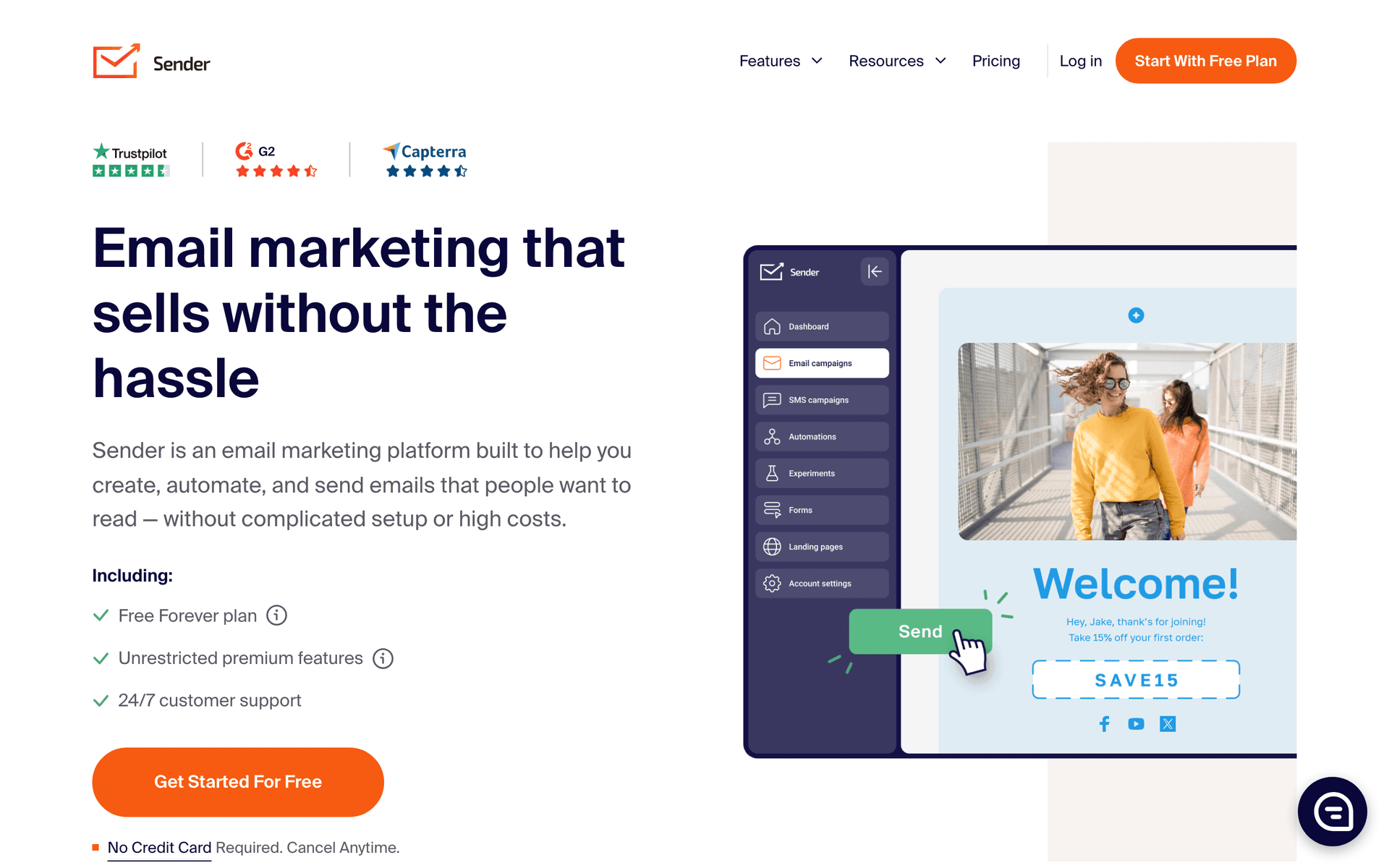
Sender

Affordable email and SMS for growing businesses.

Visit
Sender dashboard screenshot

Sender is an underrated option for cost-conscious medium businesses that need solid email and SMS capabilities without enterprise pricing. The free tier supports 2,500 subscribers and 15,000 emails per month - generous enough for many medium business use cases. Automation handles multi-step workflows, SMS is integrated, and the drag-and-drop editor creates professional emails quickly. For medium businesses that are growing their list rapidly and want to control per-contact costs, Sender provides good value at a price point well below ActiveCampaign or HubSpot.

Best for
Budget-conscious medium businesses wanting good email and SMS at lower cost
Pricing
Free up to 2,500 subscribers, paid from $15/month

Pros

  • Generous free tier
  • Email and SMS combined
  • Affordable paid plans
  • Good automation for the price

Cons

  • Less advanced segmentation
  • Smaller integration ecosystem
  • Less known brand

Feature Comparison

FeatureSequenzyActiveCampaignHubSpotBrevo
AI-powered sequences
Yes
No
No
No
Built-in CRM
No
Yes
Yes
Basic
Multi-channel (SMS)
No
Add-on
No
Yes
Team collaboration
Basic
Yes
Advanced
Yes
Advanced segmentation
Yes
Advanced
Advanced
Good
E-commerce integrations
No
Yes
Yes
Yes
Landing pages
No
Yes
Yes
No
Free tier available

Common Mistakes to Avoid

We see these mistakes over and over. Skip the learning curve and avoid these from day one.

Sticking with the tool you chose when you were small

Many medium businesses still use Mailchimp or a basic tool they chose at 500 subscribers. These tools were great then but their per-contact pricing punishes growth. Evaluate whether your current tool still serves your needs or if you are paying a premium for familiarity.

Paying for contacts who never receive emails

Per-contact pricing means you pay for every contact in your database, including unsubscribed contacts, bounced emails, and people who have not engaged in years. Clean your list quarterly or switch to a pay-per-email model that only charges for actual sends.

Letting multiple departments email without coordination

Without a unified platform and frequency management, a customer can receive a marketing newsletter Monday, a sales follow-up Tuesday, a support survey Wednesday, and a product update Thursday. This is not more communication - it is worse communication.

Building automation complexity before proving the simple version works

Medium businesses sometimes build elaborate 20-step automation workflows before validating that a simple 3-email sequence produces results. Start simple, measure impact, then add complexity. A simple lead nurture sequence that converts is better than a complex one that has never been tested.

Email Sequences Every Medium Businesse Needs

These are the essential automated email sequences that will help you grow your business and keep clients coming back.

Lead Nurturing Sequence

New lead enters through form submission or content download

Move leads from initial interest to sales-ready.

Immediately
Here is the resource you requested

Deliver the promised content and introduce your company. Include one call to action to explore a relevant product page.

Day 3
How {{similar_company}} solved {{specific_problem}}

Share a case study from a similar customer. Focus on measurable results.

Day 7
The 3 biggest mistakes mid-sized businesses make with {{topic}}

Educational content that positions your team as experts.

Day 14
Quick question about your {{specific_goal}}

Personal-feeling email asking about their timeline. Reference their original content download.

Customer Onboarding Sequence

New customer signs up or first purchase completed

Guide new customers to value quickly.

Immediately
Welcome to {{company}} - here is how to get started

Clear first steps with setup guides. Introduce their support contact.

Day 2
Quick tip: most teams start here

One specific action that delivers early value.

Day 7
How is your first week going?

Check-in with helpful resources and a direct line to support.

Cross-Sell Sequence

Customer active for 60+ days using one product

Introduce complementary products to existing customers.

Day 0
Getting more out of {{current_product}}

Tips for maximizing their current product. Naturally mention the complementary product.

Day 7
How {{similar_customer}} expanded to {{additional_product}}

Case study showing concrete results from the combination.

Day 14
Exclusive offer for existing customers

Time-limited offer for the additional product. Make it low-risk.

Re-Engagement Sequence

Subscriber inactive for 90 days

Win back disengaged subscribers or clean your list.

Day 0
We have not heard from you in a while

Acknowledge the silence. Share biggest updates since they last engaged.

Day 7
Is this still the best email for you?

Ask if they want to update preferences: content types, frequency, or email address.

Day 14
Should we part ways?

Clear stay-or-unsubscribe choice. This improves deliverability for engaged subscribers.

Choosing the Right Platform for Your Growth Stage

The biggest mistake medium businesses make is sticking with the tool they chose at 500 subscribers and 3 employees. What worked then holds you back at 10,000 subscribers and 200 employees. Evaluate your email platform annually against these criteria: Is our per-contact cost still competitive? Can the team manage campaigns without bottlenecking on one person? Does automation handle our current workflows? If more than one answer is no, it is time to explore alternatives.

Multi-Department Email Without the Chaos

When marketing, sales, customer success, and product all need to email customers, coordination becomes the real challenge. A customer might receive a newsletter Monday, a sales follow-up Tuesday, a support survey Wednesday, and a product update Thursday. The solution is not fewer emails but better coordination. Choose a platform that lets each department see what others are sending. Set frequency caps and use segmentation to ensure no customer receives more than they want.

Pricing Traps to Watch For

Watch for three common traps at medium business scale. First, per-contact pricing that charges for unsubscribed or inactive contacts - this penalizes you for having a long history of customer data. Second, feature gating that puts essentials like automation and A/B testing behind expensive tiers. Third, add-on pricing where SMS, landing pages, and additional users each cost extra. Calculate total cost of ownership at your actual subscriber count, not just the advertised starting price.

Building Your Medium Business Email Stack

Start with these automations in priority order:

  1. Lead nurture sequence that moves prospects from content download to sales-ready through educational emails and case studies
  2. Customer onboarding that guides new customers to value within the first week
  3. Cross-sell campaigns that introduce complementary products to active customers at the right moment
  4. Re-engagement sequence that wins back disengaged subscribers or cleans them from your list to protect deliverability
  5. Monthly newsletter that keeps your broader audience informed and engaged between targeted campaigns

Getting Started with a New Platform

If you are migrating from a basic tool to something more capable:

  1. Export your current list with all custom fields and tags
  2. Set up your new platform with proper authentication (SPF, DKIM, DMARC)
  3. Import your list and verify data mapping
  4. Recreate your highest-performing automations first
  5. Run both platforms in parallel for 2-4 weeks
  6. Migrate remaining campaigns and sunset the old platform

Most medium business email migrations take 1-2 weeks of active work. The investment pays off in better automation, lower costs, and features that match your current scale rather than the scale you were at when you first chose your email tool.

How We Evaluated These Tools

Tools were evaluated based on their fit for medium business operations - scalable pricing from 5,000 to 100,000 subscribers, multi-user team features, automation depth for complex workflows, integration breadth, and the ability to support multiple departments without creating subscriber fatigue.

Frequently Asked Questions

Ready to grow your medium businesse practice?

Start your free trial today. Set up your first email sequence in minutes with AI-powered content generation.

Related Industries

Sequenzy - Complete Pricing Guide

Pricing Model

Sequenzy uses email-volume-based pricing. You only pay for emails you send. Unlimited contacts on all plans — storing subscribers is always free.

All Pricing Tiers

  • 2.5k emails/month: Free (Free annually)
  • 15k emails/month: $19/month ($205/year annually)
  • 60k emails/month: $29/month ($313/year annually)
  • 120k emails/month: $49/month ($529/year annually)
  • 300k emails/month: $99/month ($1069/year annually)
  • 600k emails/month: $199/month ($2149/year annually)
  • 1.2M emails/month: $349/month ($3769/year annually)
  • Unlimited emails/month: Custom pricing (Custom annually)

Yearly billing: All plans offer a 10% discount when billed annually.

Free Plan Features (2,500 emails/month)

  • Visual automation builder
  • Transactional email API
  • Reply tracking & team inbox
  • Goal tracking & revenue attribution
  • Dynamic segments
  • Payment integrations
  • API, MCP, and CLI access
  • Custom sending domain

Paid Plan Features (15k - 1.2M emails/month)

  • Visual automation builder
  • Transactional email API
  • Reply tracking & team inbox
  • Goal tracking & revenue attribution
  • Dynamic segments
  • Payment integrations (Stripe, Paddle, Lemon Squeezy)
  • API, MCP, and CLI access
  • Custom sending domain

Enterprise Plan Features (Unlimited emails)

  • Visual automation builder
  • Transactional email API
  • Reply tracking & team inbox
  • Goal tracking & revenue attribution
  • Dynamic segments
  • Payment integrations
  • API, MCP, and CLI access
  • Custom sending domain

Important Pricing Notes

  • You only pay for emails you send — unlimited contacts on all plans
  • No hidden fees - all features included in the price
  • No credit card required for free tier

Contact

  • Pricing Page: https://sequenzy.com/pricing
  • Sales: hello@sequenzy.com