
21 Best SOC 2 Compliant Email Tools (2026)

When your B2B customers ask "Is your email vendor SOC 2 compliant?" during their security review, you need an answer. SOC 2 (Service Organization Control 2) is the standard that enterprise and mid-market companies use to evaluate the security practices of their vendors and their vendors' vendors. That chain includes your email tool.
If you're a SaaS company selling to enterprises, your email platform handling subscriber data needs to meet the same security standards your customers expect from you. SOC 2 Type II certification means the platform has been audited by an independent firm and demonstrated ongoing compliance with security, availability, and confidentiality principles.
This matters more than you might think. When an enterprise prospect runs a vendor security assessment on your company, they'll ask about every sub-processor that touches their data. If your email tool sends onboarding sequences, trial reminders, and lifecycle emails, it's handling your customers' data. It needs to be SOC 2 compliant, or you'll have an uncomfortable conversation during the security review.
Best SOC 2 Compliant Email Tool by Use Case
Best SOC 2-aligned email tool for B2B SaaS lifecycle email: Sequenzy
Sequenzy is the best fit when security-review readiness needs to come with SaaS lifecycle automation, not just secure sending. It covers onboarding, trial conversion, transactional email, Stripe-triggered dunning, and customer segmentation in one system, with encryption, RBAC, scoped API keys and audit logging live today and the SOC 2 Type II audit in progress. Start with transactional emails, smart segments, and Stripe email automation.
Best SOC 2 compliant email tool for critical transactional email: Postmark or SendGrid
Postmark and SendGrid are better when the main requirement is secure, reliable delivery for product emails like password resets, magic links, receipts, and account alerts. Postmark is narrower and delivery-focused; SendGrid is broader infrastructure. Compare the Postmark comparison and SendGrid comparison.
Best SOC 2 compliant email tool for developer-first teams: Resend
Resend is the best fit when a SOC 2 vendor also needs a modern developer workflow, clean APIs, and React Email support. It is more transactional than lifecycle-oriented. See the Resend comparison and developer-friendly email tools guide.
Best SOC 2 compliant email tool for advanced product-event marketing: Customer.io
Customer.io is the stronger choice for larger product-led teams with complex event schemas, multi-path lifecycle journeys, and mature marketing operations. It takes more setup, but it has deep event-based automation. The Customer.io comparison is the right next page for this evaluation.
Best SOC 2 compliant email tool for CRM-governed teams: HubSpot or ActiveCampaign
HubSpot and ActiveCampaign make sense when security review requirements extend across CRM, sales, marketing, support handoff, and email automation. Compare the HubSpot comparison and ActiveCampaign comparison if the buyer journey is sales-assisted.
Quick Comparison
| Tool | Best For | Starting Price | Free Tier | SOC2 Type | Status Checked |
|---|---|---|---|---|---|
| Sequenzy | SaaS with marketing automation | $19/mo | Yes (2.5k emails/mo) | Type II audit in progress | Sep 2026 |
| SendGrid | Email infrastructure at scale | $19.95/mo | 60-day trial | Type II + ISO 27001 | Sep 2026 |
| Postmark | Transactional deliverability | $15/mo | No | Type II | Sep 2026 |
| Customer.io | B2B SaaS marketing automation | $100/mo | No | Type II | Sep 2026 |
| Braze | Enterprise multi-channel | $50K+/yr | No | Type II + ISO 27001 | Sep 2026 |
| ActiveCampaign | Marketing + CRM mid-market | $29/mo | No | Type II | Sep 2026 |
| Resend | Developer transactional email | $20/mo | 3K/mo | Type II | Sep 2026 |
| Mailchimp | Marketing for all business sizes | $13/mo | 500 contacts | Type II | Sep 2026 |
| HubSpot | CRM-first email marketing | $20/seat/mo | Yes | Type II | Sep 2026 |
| Klaviyo | E-commerce + B2B segmentation | $20/mo | 250 contacts | Type II | Sep 2026 |
| Campaign Monitor | Professional email campaigns | $9/mo | No | Type II | Sep 2026 |
| Mailgun | Developer email infrastructure | $15/mo | 100/day | Type II | Sep 2026 |
| Amazon SES | Cheapest email infrastructure | Pay-per-use | No | SOC 1/2/3 | Sep 2026 |
| Salesforce Marketing Cloud | Enterprise marketing suite | Custom | No | Type II + ISO 27001 | Sep 2026 |
| Iterable | Growth marketing automation | Custom | No | Type II | Sep 2026 |
| Twilio | Programmable communications | Pay-per-use | No | Type II + ISO 27001 | Sep 2026 |
| Zendesk | CX platform with email | Custom | No | Type II | Sep 2026 |
| Intercom | Customer messaging + email | $74/mo | No | Type II | Sep 2026 |
| Loops | SaaS-focused email automation | $49/mo | 1K contacts | Type II | Sep 2026 |
| Drip | E-commerce marketing automation | $39/mo | No | Type II | Sep 2026 |
| Brevo | Marketing + transactional combo | $9/mo | 300/day | Type II | Sep 2026 |
Pricing and certification status verified September 2026 against each vendor's public pricing and trust/security pages. SOC 2 Type II reports cover a fixed audit window and expire, so re-check the report date directly with any vendor during your own review rather than trusting a roundup.
What SOC 2 Compliance Means for Email Tools
SOC 2 evaluates five trust service criteria:
- Security: Protection against unauthorized access (the most common and most important). Covers network security, access controls, encryption, vulnerability management, and incident response.
- Availability: The system is available for operation as agreed. Includes uptime commitments, disaster recovery, and capacity planning.
- Processing integrity: System processing is complete, valid, and accurate. Ensures emails are sent correctly, data is processed without errors, and automations trigger reliably.
- Confidentiality: Information designated as confidential is protected. Covers data encryption, access restrictions, and secure data disposal.
- Privacy: Personal information is collected, used, and disclosed properly. Relates to how subscriber data is handled, which overlaps with GDPR and CCPA requirements.
Not every email tool needs all five. At minimum, you want Security and Availability. For tools handling sensitive subscriber data, Confidentiality and Privacy matter too.
Type I vs. Type II
This distinction is important:
- Type I evaluates whether security controls are properly designed at a single point in time. It's a snapshot.
- Type II evaluates whether those controls are operating effectively over a period (usually 6-12 months). It's a sustained assessment.
Type II is significantly more valuable. Any company can set up good security for an audit day. Type II proves they maintain it over months. When evaluating email tools, always ask for Type II.
The 21 Best Options
1. Sequenzy
Best for: Security-review-ready email marketing with SaaS-specific automation
Sequenzy's SOC 2 Type II audit is in progress; security controls (encryption, RBAC, API key scoping, audit logging) are live. For B2B SaaS companies whose customers require vendor compliance documentation, that means the controls a reviewer asks about are in place and demonstrable today, while the independent attestation is not yet issued. If a signed Type II report is a hard requirement of your own customers' security reviews right now, choose one of the already-attested vendors below and revisit this later.
The platform implements encryption at rest and in transit, role-based access controls, API key scoping, comprehensive audit logging, and 2FA.
Beyond security posture, Sequenzy offers full email marketing automation with native Stripe integration, behavioral triggers, and lifecycle sequences. For SaaS companies that need modern email marketing without weak security defaults, Sequenzy covers the control side; weigh the missing attestation against that.
The API key scoping is worth noting. You can create API keys with specific permissions, so different parts of your application have different access levels. Your backend might have full API access while your frontend widget only has permission to add subscribers. This granular access control is exactly what SOC 2 auditors look for.
Compliance: SOC 2 Type II audit in progress Security features: TLS encryption, RBAC, API key scoping, audit logging, 2FA Pricing: Free for 2,500 emails/month with unlimited contacts, then from $19/month Pros: Live security controls, full marketing automation, SaaS-focused, Stripe integration, granular API permissions Cons: No issued SOC 2 Type II report yet, so a buyer who requires the attestation document today will need a different vendor
2. SendGrid (Twilio)
Best for: SOC 2 certified email infrastructure at scale
SendGrid (owned by Twilio) inherits Twilio's comprehensive SOC 2 Type II certification. The audit covers security, availability, confidentiality, and processing integrity. For enterprise teams that need certified email infrastructure, SendGrid's Twilio parentage provides robust compliance documentation.
The SOC 2 report is available to customers under NDA. SendGrid also maintains ISO 27001 certification, providing additional assurance for international customers. The combination of certifications makes SendGrid one of the most thoroughly audited email platforms.
SendGrid's enterprise features include IP access management (restrict platform access to specific IP ranges), SSO integration, dedicated IP addresses, and sub-user management with granular permissions. For large organizations with strict security requirements, these controls matter.
For teams that need both transactional and marketing email, SendGrid can handle both under the same compliance umbrella, eliminating the need for two separate vendor assessments.
Compliance: SOC 2 Type II, ISO 27001 Security features: TLS encryption, IP access management, API key scoping, 2FA, SSO (enterprise), dedicated IPs Pricing: From $20/month, enterprise plans for full compliance features Pros: Comprehensive certifications, enterprise features, proven at scale, ISO 27001 + SOC 2
3. Postmark (ActiveCampaign)
Best for: SOC 2 certified transactional email with focus on security
Postmark maintains SOC 2 Type II certification. The platform's security practices include encrypted data storage, TLS for all communications, regular penetration testing, and documented incident response procedures. As part of ActiveCampaign, Postmark benefits from shared security infrastructure.
For SaaS companies that send transactional email (password resets, notifications, receipts) containing user data, Postmark's SOC 2 compliance provides assurance that this sensitive data is handled securely. Password reset emails, in particular, are security-critical. A compromised email platform could theoretically intercept reset tokens.
Postmark's deliverability is another security consideration. For security-critical transactional emails (2FA codes, account alerts, password resets), reliable delivery isn't just a convenience feature, it's a security feature. An undelivered 2FA code means a user can't access their account.
Compliance: SOC 2 Type II Security features: TLS encryption, 2FA, API token management, bounce handling, penetration testing Pricing: From $15/month Pros: SOC 2 certified, excellent deliverability, transactional focus, security-conscious, transparent security practices
4. Customer.io
Best for: SOC 2 compliant marketing automation for B2B SaaS
Customer.io maintains SOC 2 Type II certification covering security and availability. For B2B SaaS companies that need compliant marketing automation (onboarding sequences, lifecycle email, campaigns), Customer.io provides the compliance alongside powerful automation features.
The platform includes role-based access control, audit logging, and data encryption. For enterprise customers who require SOC 2 from their vendors, Customer.io can provide their report under NDA.
Customer.io's webhook support includes webhook signing, which is a security feature worth mentioning. Signed webhooks let you verify that incoming webhook data actually comes from Customer.io and hasn't been tampered with. For SaaS companies building event-driven architectures, this prevents webhook spoofing attacks.
The SSO support on enterprise plans eliminates the need for separate credentials for your email platform, reducing password-related security risks and centralizing access management.
Compliance: SOC 2 Type II Security features: RBAC, audit logs, encryption, 2FA, SSO (enterprise), webhook signing Pricing: From $100/month Pros: SOC 2 certified, powerful automation, B2B focus, security features, webhook signing
5. Braze
Best for: Enterprise SOC 2 compliance with multi-channel messaging
Braze maintains SOC 2 Type II certification and ISO 27001. As an enterprise platform, Braze's security infrastructure is built for the most demanding compliance requirements. The platform includes comprehensive audit logging, role-based access, SSO, and data encryption at rest and in transit.
For enterprise companies that need SOC 2 compliant multi-channel messaging (email, push, SMS, in-app), Braze provides the certifications and security features. The compliance documentation is extensive and available to customers during security reviews.
Braze's security features include IP allowlisting, data retention controls, PII hashing, and separate development/staging/production environments. The platform is designed for organizations where security is a primary concern, not an afterthought.
The trade-off is cost and complexity. Braze is an enterprise product with enterprise pricing. For SaaS companies with fewer than 50,000 users, it's likely overkill both in features and in price. But for large organizations that need the most comprehensive compliance posture, Braze is hard to match.
Compliance: SOC 2 Type II, ISO 27001 Security features: RBAC, SSO, audit logging, encryption, data retention controls, IP allowlisting, PII hashing Pricing: Custom (typically $50K+/year) Pros: Most comprehensive compliance, enterprise security features, multi-channel, extensive documentation
6. ActiveCampaign
Best for: SOC 2 compliant email marketing with CRM for mid-market
ActiveCampaign maintains SOC 2 Type II certification. The platform includes security features like 2FA, role-based permissions, and data encryption. For mid-market companies that need compliant email marketing and CRM in one platform, ActiveCampaign provides both.
The SOC 2 certification covers the full platform including email, CRM, and automation features. This means your enterprise customers' security reviews don't need to evaluate separate vendors for email and CRM. A single SOC 2 report covers the entire surface area.
ActiveCampaign's mid-market positioning makes it accessible for companies that need compliance but don't have the budget for enterprise platforms like Braze. The security features on higher tiers (SSO, custom user roles, dedicated account management) satisfy most enterprise security requirements.
Compliance: SOC 2 Type II Security features: 2FA, role-based permissions, encryption, data export controls, SSO (enterprise tier) Pricing: From $29/month (enterprise features on higher tiers) Pros: SOC 2 certified, CRM + email in one platform, mid-market accessible, comprehensive platform coverage
7. Resend
Best for: SOC 2 compliant developer-focused transactional email
Resend maintains SOC 2 Type II certification. For development teams building applications that send transactional email, Resend's compliance means the email sending layer meets enterprise security standards. The platform includes API key management, team permissions, and encrypted data handling.
For early-stage SaaS companies that need to pass customer security reviews, having a SOC 2 certified email provider simplifies the vendor assessment process. Resend's developer-friendly approach means you can integrate quickly without compromising on security.
Resend's support for React Email is a nice addition for teams already building with React. You can build email templates as React components and send them through SOC 2 compliant infrastructure.
The platform is newer but growing quickly, and the SOC 2 certification demonstrates a commitment to security from the early stages. For other early-stage SaaS companies, partnering with a vendor that takes security seriously from day one aligns with the approach your own customers expect.
Compliance: SOC 2 Type II Security features: API key management, team permissions, encryption, webhook signing Pricing: From $20/month Pros: SOC 2 certified, developer-friendly, modern platform, growing quickly, React Email support
8. Mailchimp
Best for: SOC 2 compliant email marketing for all business sizes
Mailchimp maintains SOC 2 Type II certification covering its full platform. As one of the most widely used email marketing tools, Mailchimp's compliance documentation is well-developed and frequently requested during enterprise security reviews.
The security features include 2FA, login activity tracking, role-based permissions (available on higher plans), and TLS encryption. Mailchimp also provides a Data Processing Agreement for GDPR compliance and maintains sub-processor documentation.
For businesses that are already Mailchimp customers and need to pass a security review, the SOC 2 certification removes a potential blocker. The platform's size means compliance documentation is battle-tested across thousands of enterprise security reviews.
The limitation for enterprise users is that some security features (SSO, advanced permission controls) are only on higher-tier plans. The lower tiers are fine for SMBs but may not satisfy the most demanding enterprise requirements.
Compliance: SOC 2 Type II Security features: 2FA, login tracking, role-based access (higher tiers), TLS encryption, DPA available Pricing: From $13/month, free plan available (500 contacts, 1,000 sends/month) Pros: SOC 2 certified, widely accepted in security reviews, strong documentation, well-established platform
9. HubSpot
Best for: SOC 2 compliant CRM-first email marketing
HubSpot maintains SOC 2 Type II certification across its full platform. As a CRM-first company, HubSpot's security model is built around protecting customer contact data, which aligns well with enterprise requirements.
The security features include SSO (on higher plans), 2FA, field-level permissions, user role management, and comprehensive audit logging. HubSpot's security team publishes a detailed trust portal with compliance documentation, certifications, and sub-processor lists.
HubSpot's email marketing is part of the Marketing Hub, which includes landing pages, forms, workflows, and analytics. All of this is covered under the same SOC 2 certification. For companies doing security reviews, one SOC 2 report covers the entire HubSpot implementation.
The enterprise features - custom SSO, advanced user permissions, hierarchical teams - make HubSpot suitable for large organizations with strict security governance requirements. The compliance documentation is extensive and regularly updated.
Compliance: SOC 2 Type II Security features: SSO (enterprise), 2FA, role-based permissions, field-level security, audit logging Pricing: Free CRM with paid email starting at $15/month Pros: SOC 2 certified, comprehensive CRM + email under one certification, strong trust portal, enterprise security features
10. Klaviyo
Best for: SOC 2 compliant email and SMS for e-commerce and B2B segmentation
Klaviyo maintains SOC 2 Type II certification. As a publicly traded company with enterprise customers, Klaviyo's compliance program is mature and well-documented. The security features include 2FA, SSO (on enterprise plans), role-based permissions, and data encryption.
The platform's compliance documentation includes DPA for GDPR, CCPA documentation, and sub-processor lists. For B2B SaaS companies selling to enterprises that use Klaviyo as a customer, having the same SOC 2 certified vendor can simplify mutual security reviews.
Klaviyo's data handling is particularly relevant from a compliance perspective. The platform processes detailed behavioral data (purchases, page views, event data) in addition to email data. The SOC 2 certification covers all of this data, providing broad compliance coverage.
The enterprise plan includes additional security features like SSO and dedicated customer success, which help organizations that need hands-on compliance support.
Compliance: SOC 2 Type II Security features: 2FA, SSO (enterprise), RBAC, encryption, DPA, CCPA compliance Pricing: From $20/month for 250 contacts Pros: SOC 2 certified, mature compliance program, broad data coverage, public company accountability
11. Campaign Monitor
Best for: SOC 2 compliant professional email campaigns for agencies and mid-market
Campaign Monitor (part of the Marigold/CM Group family) maintains SOC 2 Type II certification. The platform provides enterprise security features including role-based access, 2FA, and data encryption.
The multi-brand and agency-focused features are covered under the same certification. Agencies managing multiple client accounts can present a single SOC 2 report that covers all client data processed through Campaign Monitor.
Campaign Monitor's compliance documentation includes a DPA for GDPR compliance and regular security assessments. The platform has been around since 2004, and the security program reflects that maturity.
For mid-market companies that want professional email marketing with compliance credentials, Campaign Monitor offers a middle ground between enterprise complexity (Braze, Salesforce) and consumer simplicity (Mailchimp on lower tiers).
Compliance: SOC 2 Type II Security features: 2FA, RBAC, encryption, DPA available Pricing: From $9/month Pros: SOC 2 certified, mature platform, agency-friendly, professional email templates
12. Mailgun
Best for: SOC 2 compliant developer email infrastructure
Mailgun (owned by Sinch) maintains SOC 2 Type II certification. For developers building applications that need compliant email infrastructure, Mailgun provides the compliance alongside a flexible API and developer tooling.
The security features include API key management, 2FA, webhook signing, and TLS encryption. Mailgun's compliance documentation covers the sending infrastructure, email validation, and inbound processing features.
As part of the Sinch group, Mailgun benefits from shared compliance infrastructure with a larger organization's security team. The audit is conducted by a recognized third-party firm and renewed annually.
For companies using Mailgun as the sending layer for a larger application, the SOC 2 compliance means the email infrastructure component passes enterprise security reviews. This is particularly relevant for ISVs building platforms that send email on behalf of their customers.
Compliance: SOC 2 Type II Security features: API key management, 2FA, webhook signing, TLS encryption Pricing: From $35/month for 50,000 emails Pros: SOC 2 certified, developer-focused, flexible API, Sinch group compliance infrastructure
13. Amazon SES
Best for: SOC-certified lowest-cost email infrastructure within AWS ecosystem
Amazon SES is covered by AWS's comprehensive compliance portfolio, which includes SOC 1, SOC 2, and SOC 3 certifications, along with ISO 27001, PCI DSS, HIPAA, and FedRAMP. For companies already running on AWS, SES's compliance credentials integrate with the existing AWS compliance posture.
The AWS compliance documentation is extremely thorough and widely accepted in enterprise security reviews. AWS's compliance program is arguably the most rigorous of any infrastructure provider. If your enterprise customers use AWS themselves, the shared compliance framework makes security reviews straightforward.
For the compliance-focused engineer, SES's integration with AWS IAM (Identity and Access Management) provides granular, policy-based access control that goes beyond what email-specific platforms offer. IAM policies let you control exactly which parts of your application can send email and what they can access.
The trade-off is the operational overhead. SES requires more engineering work to build a complete email system than managed platforms. But from a pure compliance perspective, SES within AWS has credentials that no email-specific platform can match.
Compliance: SOC 1/2/3, ISO 27001, PCI DSS, HIPAA eligible, FedRAMP Security features: IAM integration, encryption, VPC support, CloudTrail logging, TLS Pricing: $0.10 per 1,000 emails Pros: Most comprehensive compliance portfolio, AWS IAM integration, FedRAMP eligible, HIPAA eligible
14. Salesforce Marketing Cloud
Best for: Enterprise SOC 2 compliance within the Salesforce ecosystem
Salesforce Marketing Cloud maintains SOC 2 Type II certification and ISO 27001 as part of Salesforce's enterprise compliance program. For organizations already using Salesforce CRM, Marketing Cloud's compliance credentials extend the existing Salesforce security posture.
The security features are enterprise-grade: field-level security, sharing rules, advanced user permission management, IP restrictions, and comprehensive audit trails. The Salesforce Trust portal provides real-time system status, security advisories, and compliance documentation.
Marketing Cloud's compliance is particularly valuable for regulated industries (financial services, healthcare-adjacent) where vendor compliance requirements are strict. Salesforce's compliance program includes certifications beyond SOC 2 that many of these industries require.
The cost is the obvious limitation. Salesforce Marketing Cloud starts at several thousand dollars per month. For most SaaS companies, the cost exceeds the compliance benefit. But for large enterprises already invested in the Salesforce ecosystem, Marketing Cloud is the natural choice.
Compliance: SOC 2 Type II, ISO 27001, PCI DSS, HIPAA, GDPR Security features: Field-level security, sharing rules, advanced permissions, IP restrictions, audit trails Pricing: Custom (typically $1,250+/month) Pros: Salesforce ecosystem integration, enterprise compliance portfolio, regulated industry certifications
15. Iterable
Best for: SOC 2 compliant growth marketing automation for mid-to-enterprise SaaS
Iterable maintains SOC 2 Type II certification. As a growth marketing platform targeting mid-market and enterprise SaaS companies, Iterable's compliance program is aligned with the security review requirements these companies face.
The security features include SSO, 2FA, RBAC, audit logging, and data encryption. Iterable's compliance documentation includes DPA for GDPR and sub-processor lists. The enterprise tier includes dedicated security review support for customers going through compliance assessments.
Iterable's multi-channel capabilities (email, push, SMS, in-app) are all covered under the same SOC 2 certification, simplifying the vendor assessment for companies using multiple channels.
The platform is more expensive than mid-market tools but less expensive than Braze or Salesforce Marketing Cloud. For growth-stage SaaS companies that need enterprise compliance credentials without enterprise pricing, Iterable is a realistic option.
Compliance: SOC 2 Type II Security features: SSO, 2FA, RBAC, audit logging, encryption, DPA Pricing: Custom (typically starts at several hundred dollars/month) Pros: SOC 2 certified, growth marketing focus, multi-channel under one certification, SaaS-friendly
16. Twilio
Best for: SOC 2 certified programmable communications infrastructure
Twilio (the parent company of SendGrid and Segment) maintains SOC 2 Type II and ISO 27001 certifications across its platform. For companies using Twilio for SMS, voice, or other communications in addition to email, the shared compliance posture simplifies vendor management.
The Twilio Trust Hub provides centralized compliance documentation, security advisories, and sub-processor information. For enterprise security reviews, having one compliance portal covering multiple communication channels is operationally efficient.
Twilio's security features include RBAC, 2FA, audit logging, API key management, and account hierarchy with permission inheritance. The enterprise features are particularly strong for organizations with complex permission structures.
For companies building communications products on Twilio's infrastructure, the SOC 2 compliance certification extends to the email sending layer. This is particularly relevant for ISVs building platforms that use Twilio's stack.
Compliance: SOC 2 Type II, ISO 27001 Security features: RBAC, 2FA, audit logging, API key management, account hierarchy Pricing: Pay-per-use for most services Pros: SOC 2 + ISO 27001, multi-service compliance portfolio, strong enterprise features, Trust Hub
17. Zendesk
Best for: Customer support-oriented email within a SOC 2 compliant platform
Zendesk maintains SOC 2 Type II certification for its full platform, including its email channel features. While Zendesk is primarily a customer support platform rather than an email marketing tool, it handles significant volumes of customer email and often appears in vendor security assessments.
For B2B SaaS companies using Zendesk for customer support, the email handling within Zendesk is covered by the SOC 2 certification. This simplifies the compliance conversation when enterprise customers ask about how their support emails are handled.
Zendesk's security features include SSO, 2FA, audit logging, role-based access, and data encryption. The enterprise plan includes additional security features like custom roles, advanced audit logs, and dedicated security configurations.
Compliance: SOC 2 Type II Security features: SSO, 2FA, RBAC, audit logging, encryption Pricing: Custom (starts at $55+/agent/month) Pros: SOC 2 certified, strong CX focus, enterprise security features, widely accepted in reviews
18. Intercom
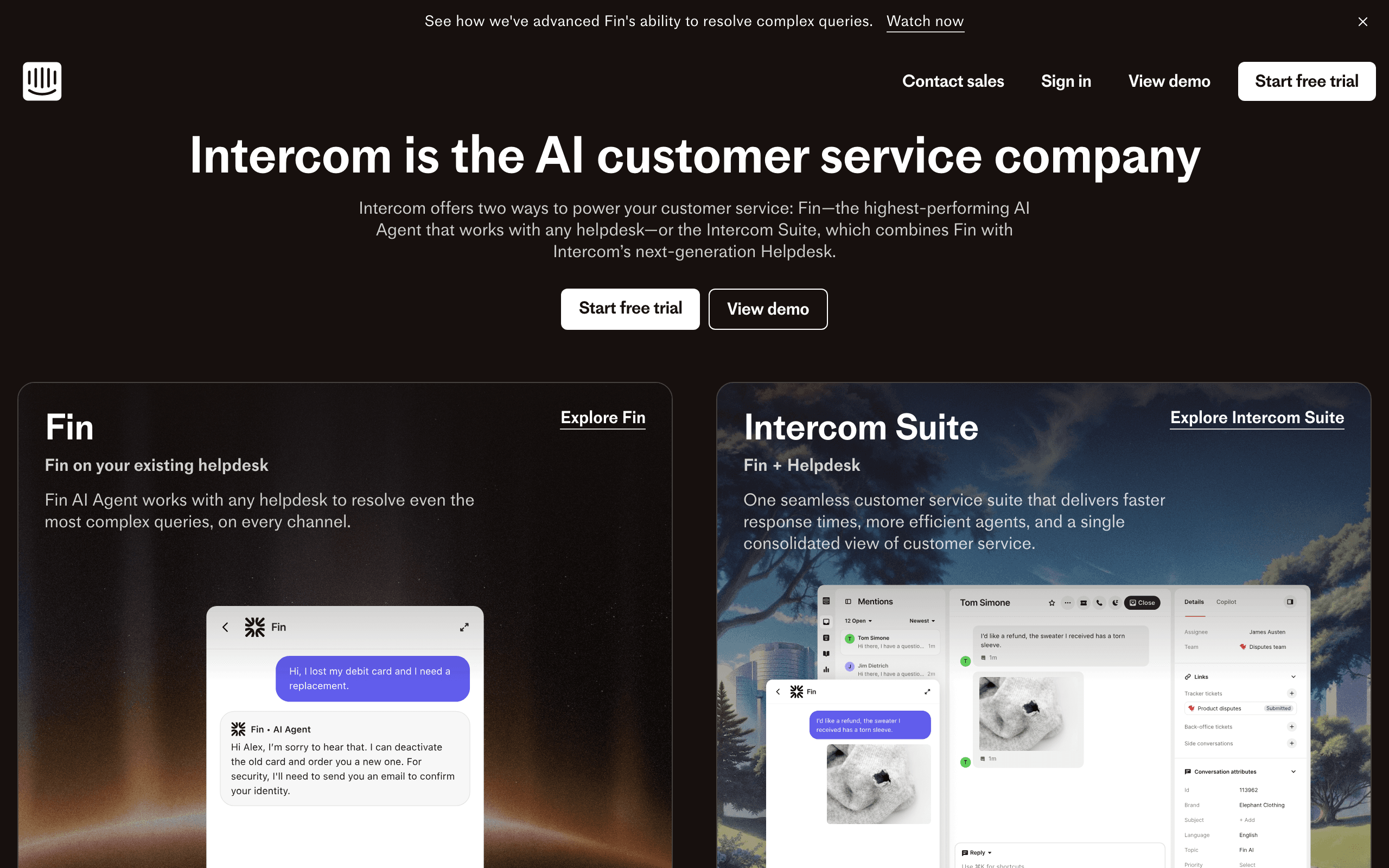
Best for: SOC 2 compliant customer messaging with email capabilities
Intercom maintains SOC 2 Type II certification. The platform combines customer messaging (chat, in-app), email marketing, and support ticketing under a single compliance umbrella.
For B2B SaaS companies using Intercom for customer communication, the SOC 2 certification covers not just email but also the chat and in-app messaging channels. Enterprise customers conducting vendor assessments often find this broad coverage valuable.
Intercom's security features include SSO, 2FA, RBAC, and audit logging. The enterprise plan adds dedicated security support, custom data retention settings, and identity verification for chat.
The email marketing features in Intercom are strong for customer lifecycle use cases (onboarding, activation, retention) but lighter than dedicated marketing platforms for campaign management. The compliance value is highest for companies already using Intercom for customer communication.
Compliance: SOC 2 Type II Security features: SSO, 2FA, RBAC, audit logging, identity verification Pricing: From $74/month Pros: SOC 2 certified, multi-channel under one certification, strong customer lifecycle email
19. Loops
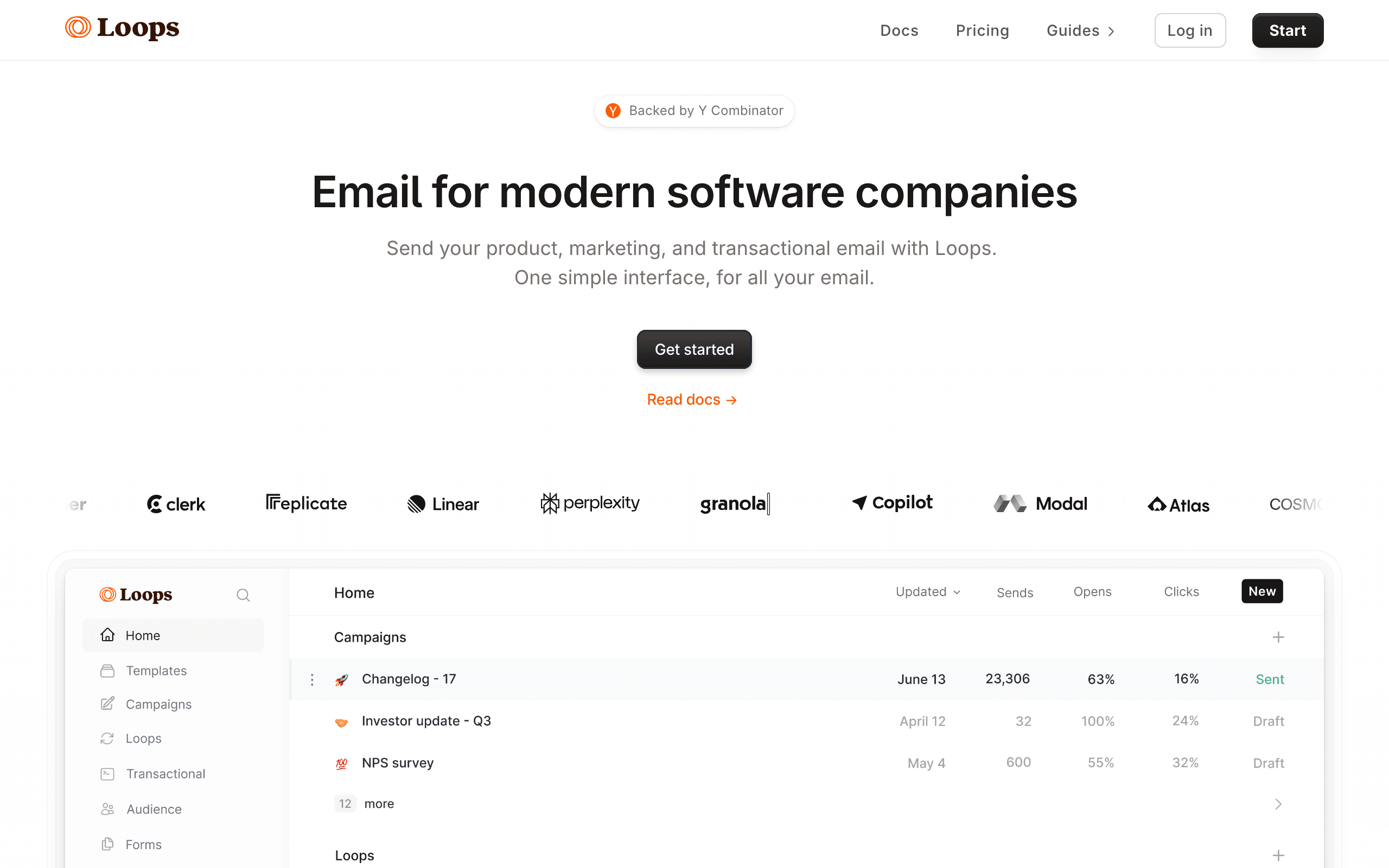
Best for: SOC 2 compliant email automation built for SaaS products
Loops maintains SOC 2 Type II certification. As a platform built specifically for SaaS email (transactional + lifecycle automation), Loops appeals to SaaS companies that need compliant email infrastructure aligned with their own product architecture.
The security features include API key management, team permissions, and data encryption. The platform's architecture uses events and contacts models that align with how SaaS applications handle user data.
For early-stage SaaS companies building their email stack, Loops provides SOC 2 compliance from the start. Having a certified transactional + marketing platform means you won't need to switch providers when your first enterprise prospect asks about vendor compliance.
Loops is smaller than the enterprise platforms on this list, but the SOC 2 certification is genuine and regularly renewed. For SaaS companies that prioritize developer experience and compliance over feature breadth, Loops is worth evaluating.
Compliance: SOC 2 Type II Security features: API key management, team permissions, encryption, webhook signing Pricing: From $49/month, free for 1,000 contacts Pros: SOC 2 certified, SaaS-native architecture, developer-friendly, transactional + marketing
20. Drip
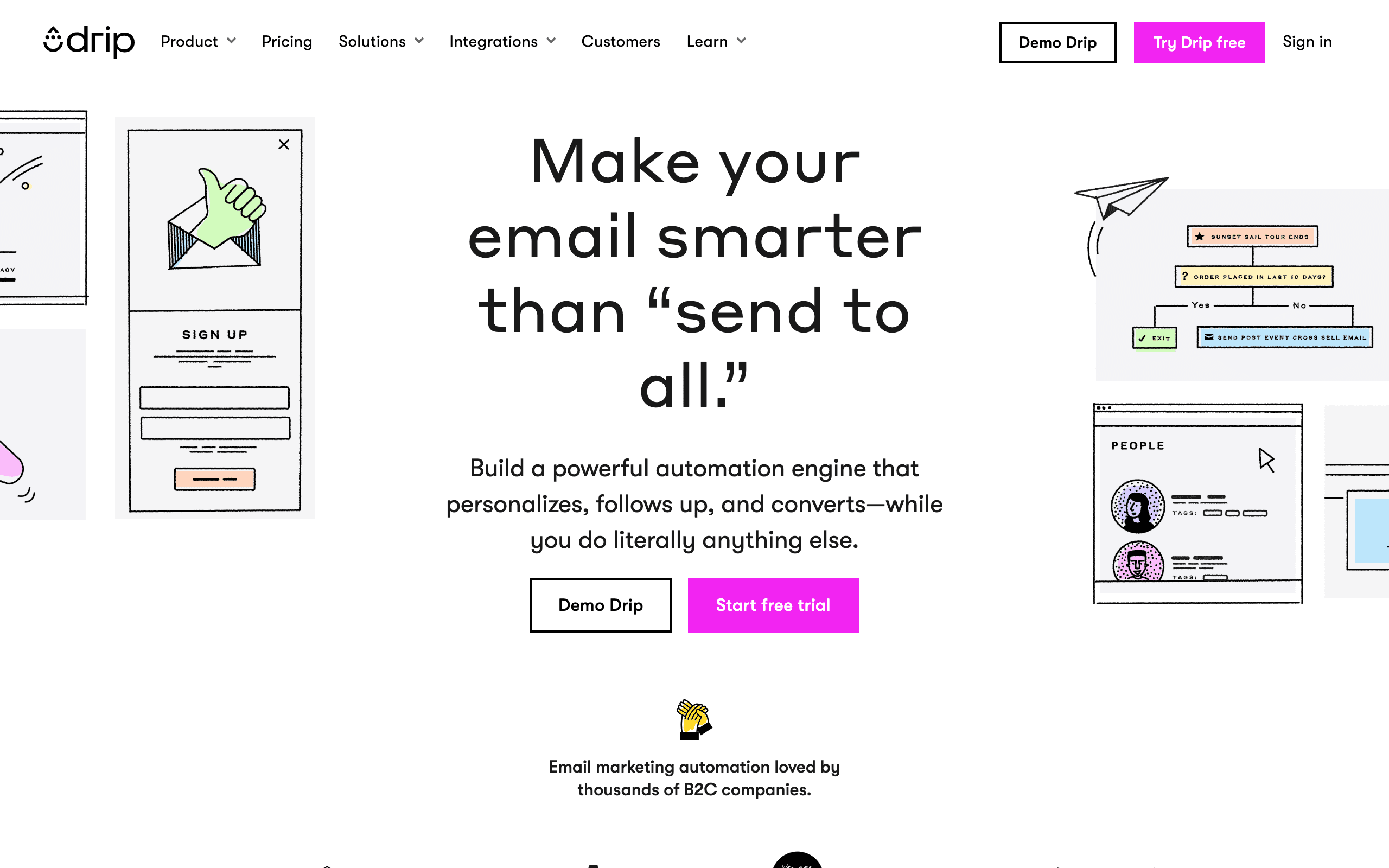
Best for: SOC 2 compliant e-commerce marketing automation
Drip maintains SOC 2 Type II certification. The platform focuses on e-commerce marketing automation (purchase workflows, cart abandonment, customer segmentation) with compliance credentials that satisfy enterprise security reviews.
The security features include 2FA, role-based permissions, and data encryption. Drip's compliance documentation covers the marketing automation, customer data, and email sending features.
For e-commerce brands selling to enterprise retailers or B2B distributors, Drip's SOC 2 compliance can be relevant when procurement teams assess vendor security. The certification covers the full scope of customer data processing within the platform.
Drip's compliance positioning is straightforward - it's a certified platform that does e-commerce email well. It's not the most feature-rich compliance option, but for e-commerce companies that need compliance without enterprise complexity, it delivers.
Compliance: SOC 2 Type II Security features: 2FA, RBAC, encryption Pricing: From $39/month Pros: SOC 2 certified, e-commerce focus, straightforward compliance
21. Brevo (Sendinblue)
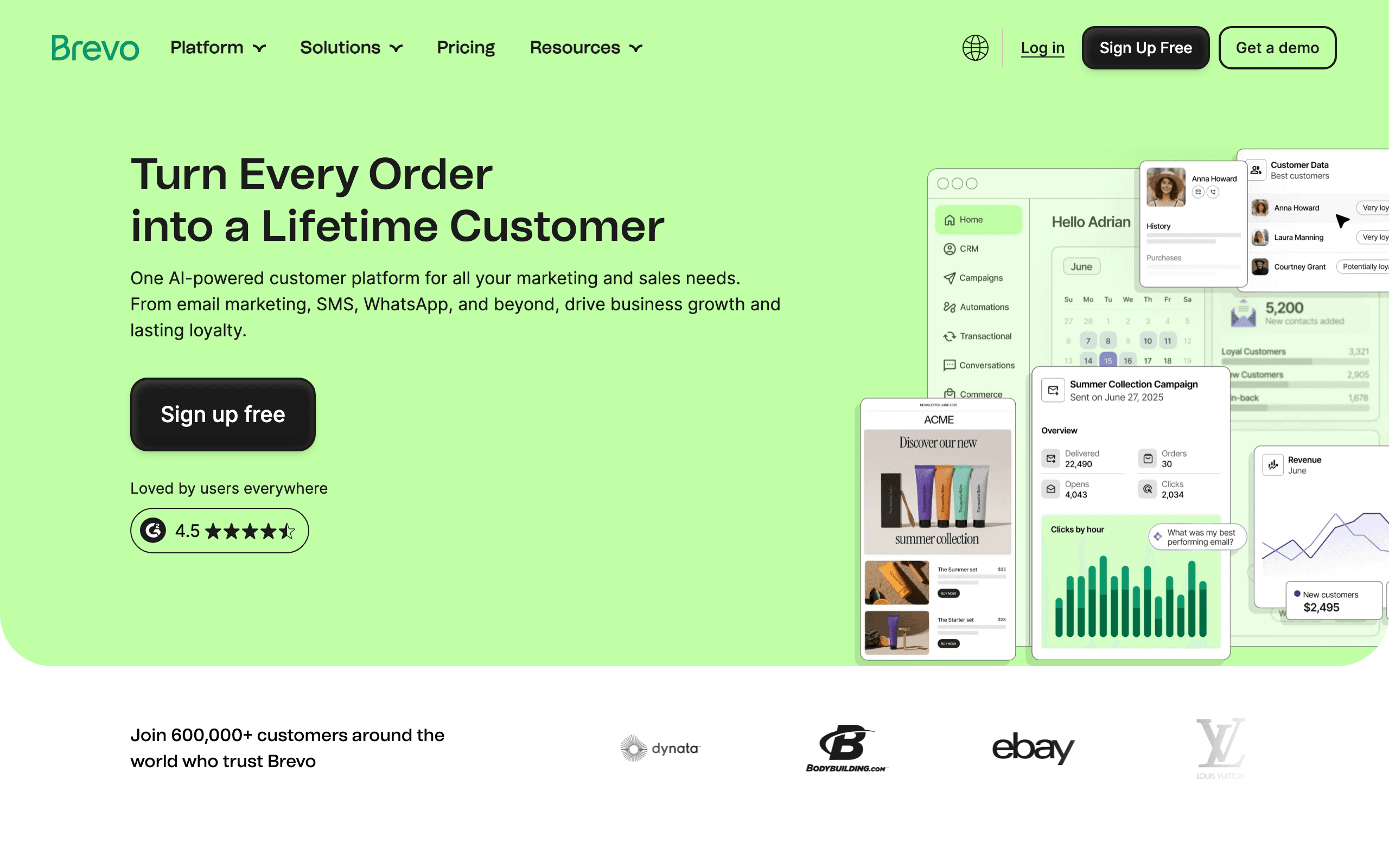
Best for: SOC 2 compliant marketing + transactional combo at accessible pricing
Brevo maintains SOC 2 Type II certification across its full platform. As one of the more affordable platforms with compliance credentials, Brevo is particularly valuable for cost-conscious companies that need to pass enterprise security reviews.
The security features include 2FA, user role management, and data encryption. Brevo's compliance documentation includes GDPR DPA, sub-processor lists, and SOC 2 report availability under NDA. European data center options make Brevo additionally compliant for EU businesses.
Brevo's pricing model - per email sent rather than per subscriber - combined with SOC 2 compliance creates a compelling offer for companies with large contact lists and variable sending patterns. You don't pay subscriber fees, and you still pass enterprise security reviews.
Compliance: SOC 2 Type II Security features: 2FA, user roles, encryption, GDPR DPA, EU data centers Pricing: From $25/month, free plan with 300 emails/day Pros: SOC 2 certified, affordable pricing, EU data residency option, transactional + marketing
Comparison Table
| Feature | Sequenzy | SendGrid | Postmark | Customer.io | Braze | ActiveCampaign | Resend |
|---|---|---|---|---|---|---|---|
| SOC 2 Type II | Audit in progress | Yes | Yes | Yes | Yes | Yes | Yes |
| ISO 27001 | No | Yes | No | No | Yes | No | No |
| SSO | No | Enterprise | No | Enterprise | Yes | Enterprise | No |
| RBAC | Yes | Yes | Basic | Yes | Advanced | Yes | Basic |
| 2FA | Yes | Yes | Yes | Yes | Yes | Yes | Yes |
| Audit logging | Yes | Yes | Yes | Yes | Comprehensive | Yes | Basic |
| API key scoping | Yes | Yes | Yes | Yes | Yes | Limited | Yes |
| Encryption at rest | Yes | Yes | Yes | Yes | Yes | Yes | Yes |
| Marketing features | Full | Yes | No | Full | Full | Full | No |
| Starting price | $19/mo | $20/mo | $15/mo | $100/mo | $50K+/yr | $29/mo | $20/mo |
SOC 2 compliance announcement email template (for customers)
This is the email you send once the Type II report is issued. Keep it short, lead with what changed for the reader, and make the report easy to request.
Subject: [Company] is now SOC 2 Type II certified
Hi [First name],
[Company] has completed its SOC 2 Type II audit. An independent auditor examined our security controls over a [6/12]-month observation period ending [date], and the report is now available.
What this means for you
- Our security, availability and confidentiality controls have been independently verified, not just described.
- Your security review of [Company] should now be faster: we can supply the report instead of answering a questionnaire from scratch.
- Nothing changes in the product, your data, or your pricing.
Getting the report
The report is available under NDA. Reply to this email or contact [security@company.com] and we will send it within one business day. A public summary of our controls lives at [trust page URL].
Thanks for trusting us with your data.
[Name] [Title], [Company]
Notes on this template. Send it to admins and security contacts, not your whole marketing list - it is a trust signal for buyers, not a newsletter item. Name the audit window; "SOC 2 certified" without a date is the first thing a reviewer will push back on. Do not attach the report; NDA-gate it. If you have other certifications or subprocessor changes, mention them in the same email rather than sending three.
"SOC 2 in progress" announcement email template
This one is harder to write well, because the temptation is to imply more than is true. Do not. A prospect who discovers the gap themselves will trust you less than one you told.
Subject: Our SOC 2 Type II audit is underway - here's where we are
Hi [First name],
A few of you have asked about SOC 2, so here is a straight update.
Where we are: we are in the observation window for our SOC 2 Type II audit with [auditor], which began [month year]. We expect the report to be issued in [quarter/year]. We do not have an issued report yet, and we will not describe ourselves as certified until we do.
What is already in place: encryption in transit and at rest, role-based access control, scoped API keys, audit logging across administrative actions, mandatory 2FA for staff access, [background checks / annual penetration testing / documented incident response].
What we can give you today: a completed security questionnaire, our subprocessor list, our data-processing agreement, and a walkthrough with our engineering lead if your review needs one. Reply here and we will send them.
We will email you again the week the report is issued.
[Name] [Title], [Company]
Notes on this template. Three rules. Never use the words "certified", "compliant" or "attested" before the report exists - "audit in progress" and "controls in place" are the accurate phrases. Give a real expected date and then actually follow up on it, because silence after a promised quarter reads as failure. Lead with the controls you have, since most security reviewers care more about the controls than the paperwork and will accept a Type I or a completed questionnaire as an interim answer.
GDPR and SOC 2 together: what enterprise buyers actually ask for
These get bundled in the same security review but they test different things. SOC 2 is a US-originating audit of how you operate controls; GDPR is EU law about what rights data subjects have and where their data goes. A vendor can hold a clean Type II report and still be a GDPR problem if it processes EU personal data in the US without a valid transfer mechanism.
What a combined review typically asks for, in order:
- The SOC 2 Type II report with its audit window, and any exceptions noted in it.
- A signed DPA naming the vendor as processor, with your subprocessor list attached.
- The transfer mechanism for EU personal data: Standard Contractual Clauses, an adequacy decision, or EU-region data residency.
- Deletion and export guarantees: how a data subject request is honoured, and how fast.
- Breach notification terms, usually 72 hours to align with GDPR Article 33.
Points 2 to 5 are contract and architecture questions, not audit questions, and an email vendor can fail them while passing SOC 2 comfortably. For the vendor-by-vendor breakdown on the GDPR side, see best GDPR-compliant email marketing tools. If healthcare data is in scope, HIPAA-compliant email marketing tools covers the BAA question separately.
SOC 2 Compliance Checklist for Your Email Program
Vendor Assessment
- Verify your email platform has SOC 2 Type II (not just Type I)
- Request the SOC 2 report (usually under NDA)
- Review the report for the trust service criteria that matter to your business
- Check the audit period (should be within the last 12 months)
- Note any exceptions or qualified opinions in the report
- Verify the auditing firm is reputable (AICPA member, recognized name)
- Review sub-processor lists (who does your email tool use?)
Access Controls
- Enable 2FA on all email platform accounts
- Use SSO if available (eliminates separate password management)
- Implement role-based access (not everyone needs admin access)
- Regularly review who has access and remove former employees
- Use scoped API keys with minimum necessary permissions
- Document who has access to what and why
Data Handling
- Understand where your subscriber data is stored (region, data centers)
- Verify data is encrypted at rest and in transit
- Know your data retention policies and configure appropriately
- Have a process for data deletion requests
- Review what subscriber data your email tool collects and stores
- Understand data backup and disaster recovery procedures
Monitoring
- Enable audit logging if available
- Monitor for unusual access patterns
- Set up alerts for failed login attempts
- Review API key usage periodically
- Document security incidents and responses
- Conduct periodic access reviews (quarterly recommended)
Preparing for Your Customers' Security Reviews
When your enterprise customers audit your vendor stack, here's how to make the email tool portion smooth:
Before the Review
- Obtain the SOC 2 report from your email vendor (most provide under NDA)
- Review it yourself before sharing. Know what it covers and any exceptions
- Prepare a vendor risk assessment that includes your email tool
- Document your own controls around how you use the email platform
During the Review
Expect questions like:
- "Is your email vendor SOC 2 Type II certified?" (Yes, here's the report)
- "What subscriber data do you store in your email tool?" (Be specific: email, name, custom attributes, engagement data)
- "Who on your team has access to the email platform?" (Show your RBAC configuration)
- "How do you handle data deletion requests?" (Describe your process)
- "Is data encrypted at rest and in transit?" (Yes, here are the specifics)
After the Review
- Address any findings or recommendations
- Schedule periodic re-reviews (annually is standard)
- Keep your SOC 2 report current (request updated reports from your email vendor annually)
When SOC 2 Isn't Enough
SOC 2 is a baseline for enterprise security, not a comprehensive compliance framework. Depending on your industry, you might also need:
- HIPAA: Healthcare data. Requires BAAs, PHI protections, and specific security controls beyond SOC 2.
- GDPR: EU personal data. Requires DPAs, consent management, and data subject rights support.
- PCI DSS: Payment card data. If your email tool processes payment information (rare but possible), PCI compliance applies.
- CCPA: California consumer data. Requires data deletion, opt-out of data sales, and transparency about data practices.
- ISO 27001: International security standard. Broader than SOC 2, recognized globally.
- FedRAMP: US government data. Required for tools used by federal agencies.
Some email platforms maintain multiple certifications. SendGrid (ISO 27001 + SOC 2), Braze (ISO 27001 + SOC 2), and AWS SES (comprehensive AWS compliance) cover the most ground. If you're choosing an email platform for your SaaS and your customers span multiple industries, look for platforms with overlapping certifications.
FAQ
What's the difference between SOC 2 Type I and Type II?
Type I evaluates security controls at a single point in time. Type II evaluates controls over a period (usually 6-12 months). Type II is more rigorous and more valuable because it demonstrates ongoing compliance, not just a snapshot. Always ask for Type II. A company with only Type I may be working toward Type II, which is reasonable for newer companies, but Type II should be the target.
Do I need my email tool to be SOC 2 certified?
If your customers require SOC 2 from you, they'll often ask about your sub-processors (vendors). Having a SOC 2 certified email platform simplifies your compliance. If you're not selling to enterprises, SOC 2 is nice to have but not critical. However, if you plan to sell to enterprises in the future, choosing a SOC 2 compliant vendor now saves you a painful migration later.
Can I see the SOC 2 report before signing up?
Most platforms share the report under NDA after you become a customer or during the sales process. Some provide a summary or compliance brief publicly. Ask during evaluation if the report is important to your decision. If a vendor refuses to share their report under any circumstances, that's a red flag.
Does SOC 2 mean my data is safe?
SOC 2 means the platform has been independently audited against security standards. It reduces risk but doesn't eliminate it. No certification guarantees zero security incidents. SOC 2 is about demonstrating reasonable security practices and controls. Think of it as evidence of good hygiene, not a guarantee of immunity.
How often is SOC 2 certification renewed?
SOC 2 Type II reports cover a specific audit period (usually 12 months) and need to be renewed annually. Ask your email vendor when their current report was issued and when the next one is expected. A report older than 18 months should raise questions about whether the vendor is maintaining their certification.
What if my email tool isn't SOC 2 certified but has strong security?
Some tools have robust security practices but haven't undergone SOC 2 auditing. This might be acceptable if your customers don't specifically require SOC 2 documentation. But understand that without the audit, you're relying on the vendor's self-reported security claims. SOC 2 provides independent verification. For enterprise sales, the documentation matters as much as the actual security.
Does SOC 2 cover my use of the platform?
SOC 2 certifies the platform itself, not how you use it. If you configure weak passwords, grant excessive access, or mishandle API keys, that's your responsibility regardless of the platform's certification. Think of SOC 2 as ensuring the foundation is solid. You still need to build your house properly on top of it.
Can a SOC 2 certified email tool help my own SOC 2 audit?
Yes. Using SOC 2 certified sub-processors simplifies your own audit. Your auditor will ask about vendor security, and having a SOC 2 report ready for each critical vendor saves time and reduces findings. It's one less area where your auditor needs to dig deeper.
Try it during your next security review
Sequenzy's free plan sends 2,500 emails a month with unlimited contacts and includes scoped API keys, role-based access, audit logging and 2FA on every plan, plus transactional email, the automation builder and the Stripe integration. The SOC 2 Type II audit is in progress; a completed security questionnaire and DPA are available on request. Start free or compare the tiers on pricing.