
Overview
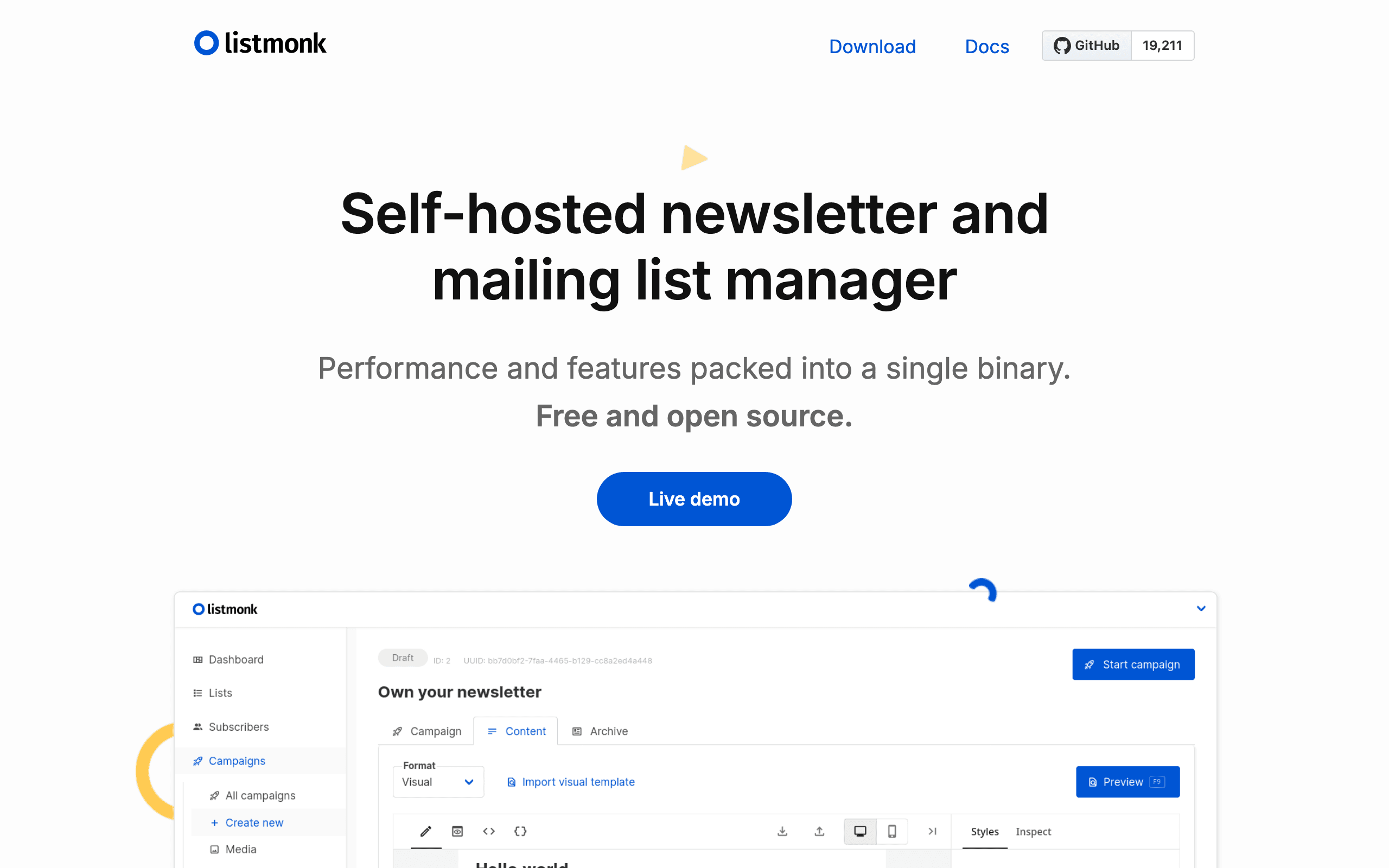
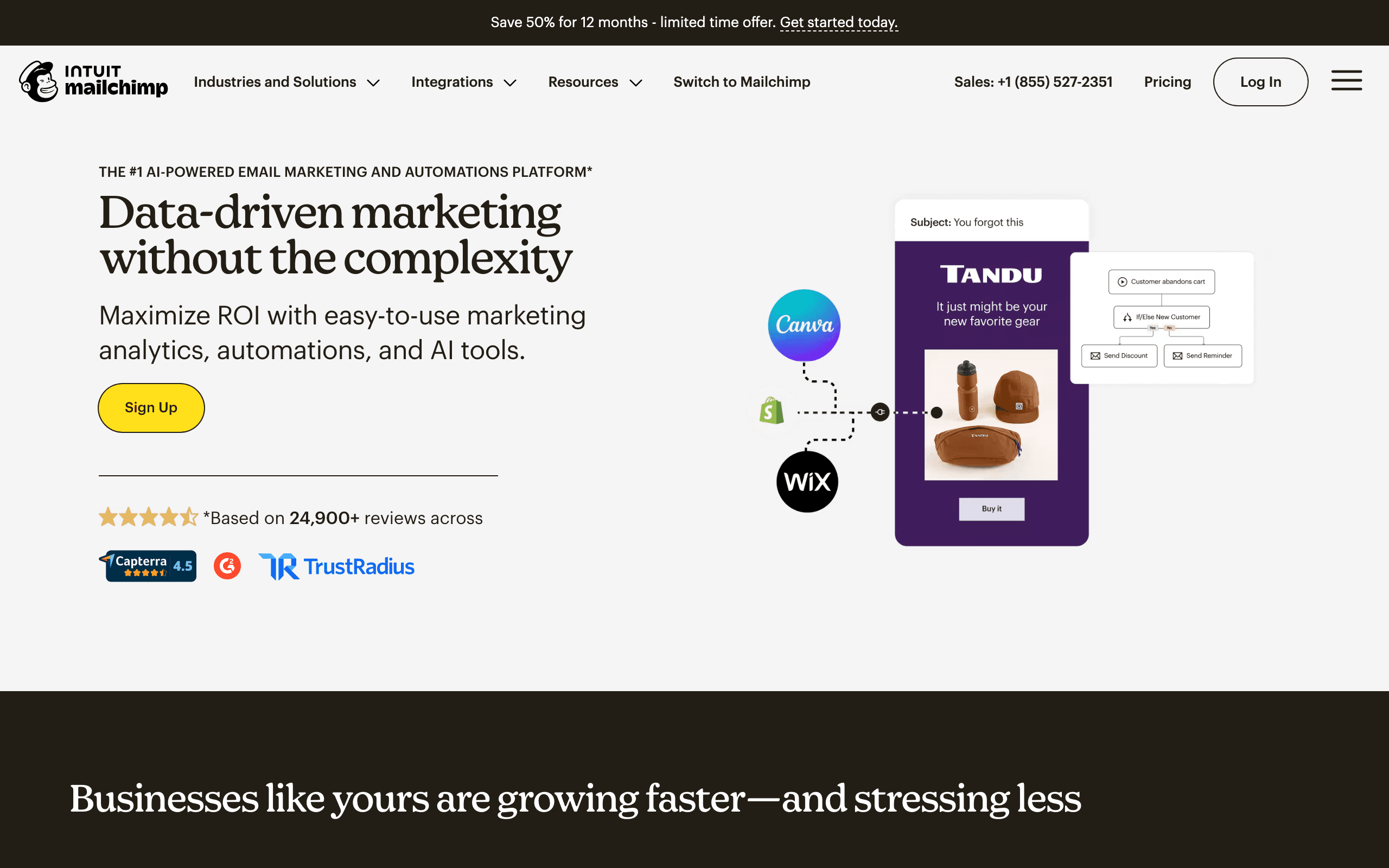
Listmonk and Mailchimp represent opposite ends of the email marketing spectrum. Listmonk is free, open-source, self-hosted, and simple. Mailchimp is paid, managed, and feature-rich. One gives you complete control at zero software cost. The other handles everything but charges accordingly. See our Mailchimp comparison for context.
The Fundamental Tradeoff
Listmonk costs nothing but requires you to host and maintain it. Mailchimp costs money but handles all the infrastructure. This isn't just about money. It's about what you want to spend your time on. If you enjoy (or at least don't mind) running Docker containers, Listmonk is a great deal. If you want to focus purely on marketing, Mailchimp removes the technical burden.
Cost Comparison
At 10,000 subscribers, Listmonk costs $0 for the software. Add maybe $10/month for a VPS and $1-5/month for SMTP (Amazon SES pricing). Total: under $20/month. Mailchimp costs $130/month. That's a $1,200+ annual difference. For high-volume senders, the savings compound significantly.
Feature Gap
Mailchimp offers automation, landing pages, social media scheduling, e-commerce integrations, audience segmentation, and A/B testing. Listmonk sends newsletters. That's it. No automation workflows. No landing pages. No social integration. If you need those features, Listmonk simply doesn't have them.
Technical Requirements
Listmonk requires Docker and basic server administration. You need to handle updates, backups, security, and troubleshooting. Mailchimp requires only an email address to sign up. For non-technical users or teams without DevOps, Mailchimp is dramatically more accessible.
Performance and Scale
Listmonk is built in Go and is exceptionally fast. It can handle millions of subscribers on modest hardware. This makes it attractive for high-volume senders who want to minimize costs. Mailchimp handles scale through infrastructure, but you're paying for that infrastructure.
Data Ownership
With Listmonk, your subscriber data stays on your server. Complete ownership and control. With Mailchimp, data lives on their infrastructure. For privacy-focused organizations or those with compliance requirements, Listmonk's self-hosted model is appealing.
For SaaS Companies
Neither is ideal for SaaS. Listmonk lacks behavioral automation. Mailchimp lacks deep SaaS integrations. For subscription businesses needing Stripe integration and event-based automation, consider Sequenzy. Managed like Mailchimp, priced better, built for SaaS.
Making the Choice
Choose Listmonk if you can self-host, want to save money, and only need basic newsletter sending. Choose Mailchimp if you need comprehensive marketing features and want zero technical hassle. For SaaS companies wanting managed hosting with subscription-focused features, consider Sequenzy.
The Hidden Costs of Both Approaches
Listmonk's hidden cost is time. Server maintenance, security updates, SMTP configuration, troubleshooting delivery issues, and building HTML templates all require engineering hours. For a solo developer this might be enjoyable. For a team with other priorities, these hours have real opportunity cost.
Mailchimp's hidden cost is feature creep. You start on a Standard plan, then need advanced automation which requires Premium. You add SMS which costs extra. E-commerce features push you to higher tiers. The advertised price is often lower than what you end up paying. Run the numbers for your specific feature needs before committing.
Email Builder and Template Experience
Mailchimp's drag-and-drop email builder is one of the most polished in the industry. Hundreds of templates, content blocks, and design tools make it accessible to non-designers. For teams that create visual, branded emails regularly, this builder saves significant time.
Listmonk requires you to write or import HTML templates. There is no visual editor. You can use external tools like MJML or email builders to create templates, then paste the HTML into Listmonk. This works but adds friction to every campaign. For teams sending primarily text-based newsletters, this matters less. For visually rich campaigns, the difference is stark.
Long-Term Platform Strategy
Mailchimp was acquired by Intuit in 2021 and has since been evolving toward a broader small business marketing platform. This means more features but also more complexity and higher prices. The long-term direction seems to be competing with HubSpot rather than staying a simple email tool.
Listmonk will remain a focused, open-source newsletter tool. Its roadmap is community-driven and unlikely to bloat with unrelated features. For users who want stability and predictability, Listmonk's simplicity is an advantage. For those who want a platform that grows with their marketing sophistication, Mailchimp offers that trajectory. Learn more about maintaining email deliverability regardless of which platform you choose.
Use-case matchups
| Use case | Better fit | Why |
|---|---|---|
| Low-cost self-hosted newsletters | Listmonk | Listmonk is free, open-source, fast, and cost-efficient for broadcasts. |
| Managed marketing suite | Mailchimp | Mailchimp includes automation, landing pages, templates, ecommerce, and reporting. |
| Data ownership and self-hosting | Listmonk | Subscriber data stays on your infrastructure. |
| Non-technical campaign operations | Mailchimp | Mailchimp removes hosting, SMTP setup, backups, and template coding. |
| SaaS lifecycle email with Stripe | Sequenzy | Sequenzy is better when product and billing events should drive messages. |
Pricing reality
Listmonk is much cheaper in cash cost, but it requires server operations and email-provider management. Mailchimp costs more because it provides managed infrastructure and marketing features. If you need automation, landing pages, and a visual editor, Listmonk's low price does not cover those gaps.
Review signals
The reviews on this page match the core tradeoff. Listmonk users praise savings and performance, while calling out the lack of automation. Mailchimp users praise feature breadth and time savings, while warning about rising prices and feature gating.
Best Fit by Hosting Preference
Best self-hosted newsletter tool for technical teams
Listmonk fits teams that want high-volume newsletters, full data control, and the ability to manage hosting themselves. It is strongest when developers are comfortable operating infrastructure and marketers do not need a polished all-in-one suite.
Best managed email marketing platform for nontechnical teams
Mailchimp fits teams that want templates, forms, automation, support, and integrations without maintaining servers. It is the safer fit when marketing execution matters more than infrastructure ownership.
Best SaaS lifecycle platform for product-triggered email
Sequenzy fits SaaS teams that want managed lifecycle automation connected to product and billing events. It avoids the operational burden of self-hosting while staying more focused on software customer journeys than Mailchimp.
Migration checklist
| Step | Moving to Listmonk | Moving to Mailchimp | Moving to Sequenzy |
|---|---|---|---|
| Scope | Confirm newsletter-only needs, self-hosting, SMTP, templates, and data ownership. | Confirm audiences, automations, landing pages, ecommerce, templates, and reporting. | Confirm SaaS lifecycle, Stripe events, campaigns, and transactional templates. |
| Data export | Export audiences, subscribers, fields, templates, and suppression records. | Export subscribers, lists, segments, templates, automations, and suppression records. | Export contacts, lifecycle fields, billing IDs, and suppression records. |
| Rebuild workflows | Rebuild lists, HTML templates, sender setup, and any external automation. | Rebuild audiences, signup forms, landing pages, automations, and campaigns. | Rebuild lifecycle journeys, transactional sends, and billing-triggered campaigns. |
| QA | Test SMTP, bounces, complaints, unsubscribes, backups, and updates. | Test imports, forms, templates, automations, reports, and unsubscribes. | Test campaign, transactional, and Stripe-triggered paths together. |
Decision checklist
- Choose Listmonk if you can self-host and only need reliable newsletter sending.
- Choose Mailchimp if managed marketing features and non-technical operation matter more.
- Choose Sequenzy if SaaS lifecycle email and Stripe-aware automation are central.









