
Overview
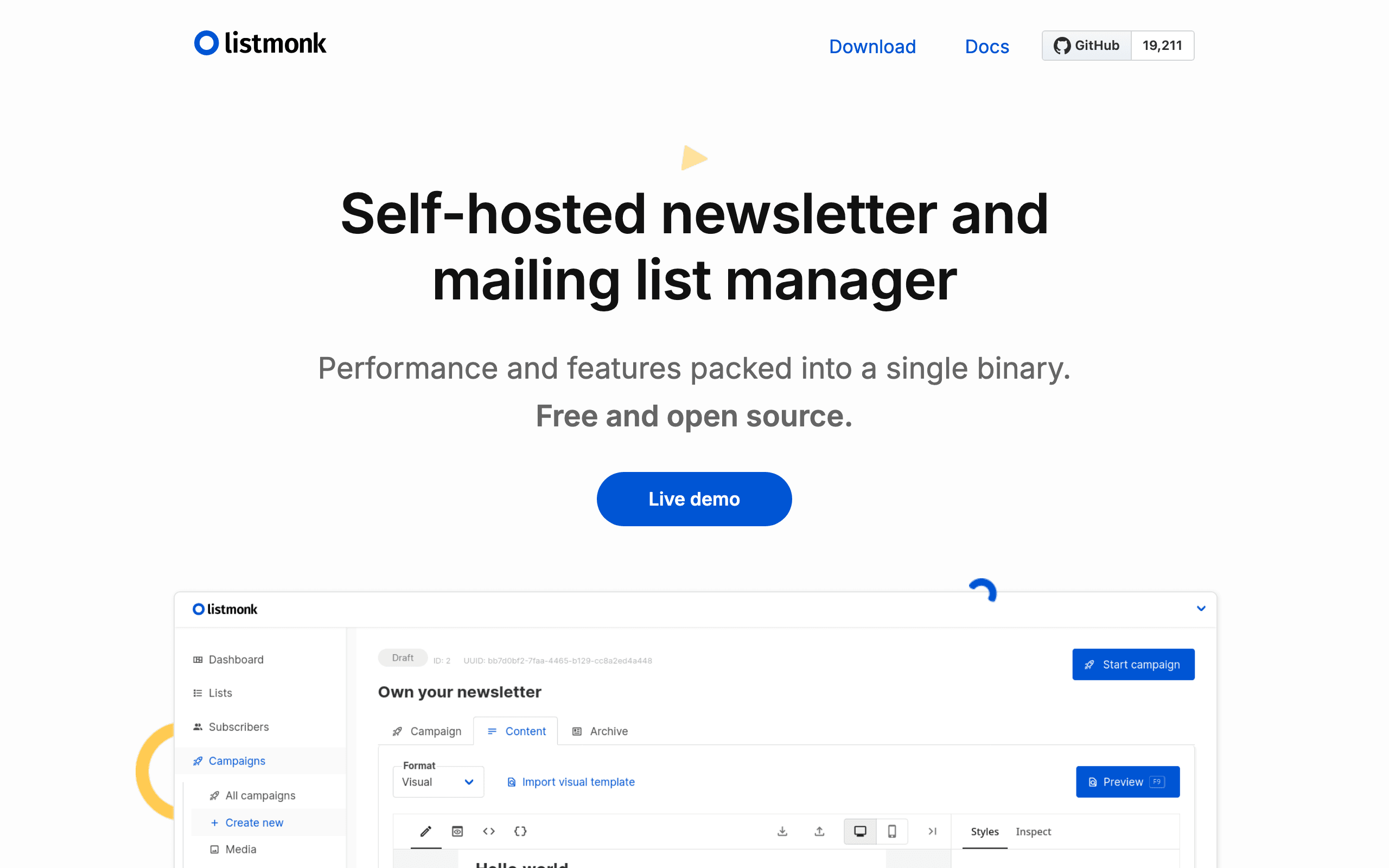
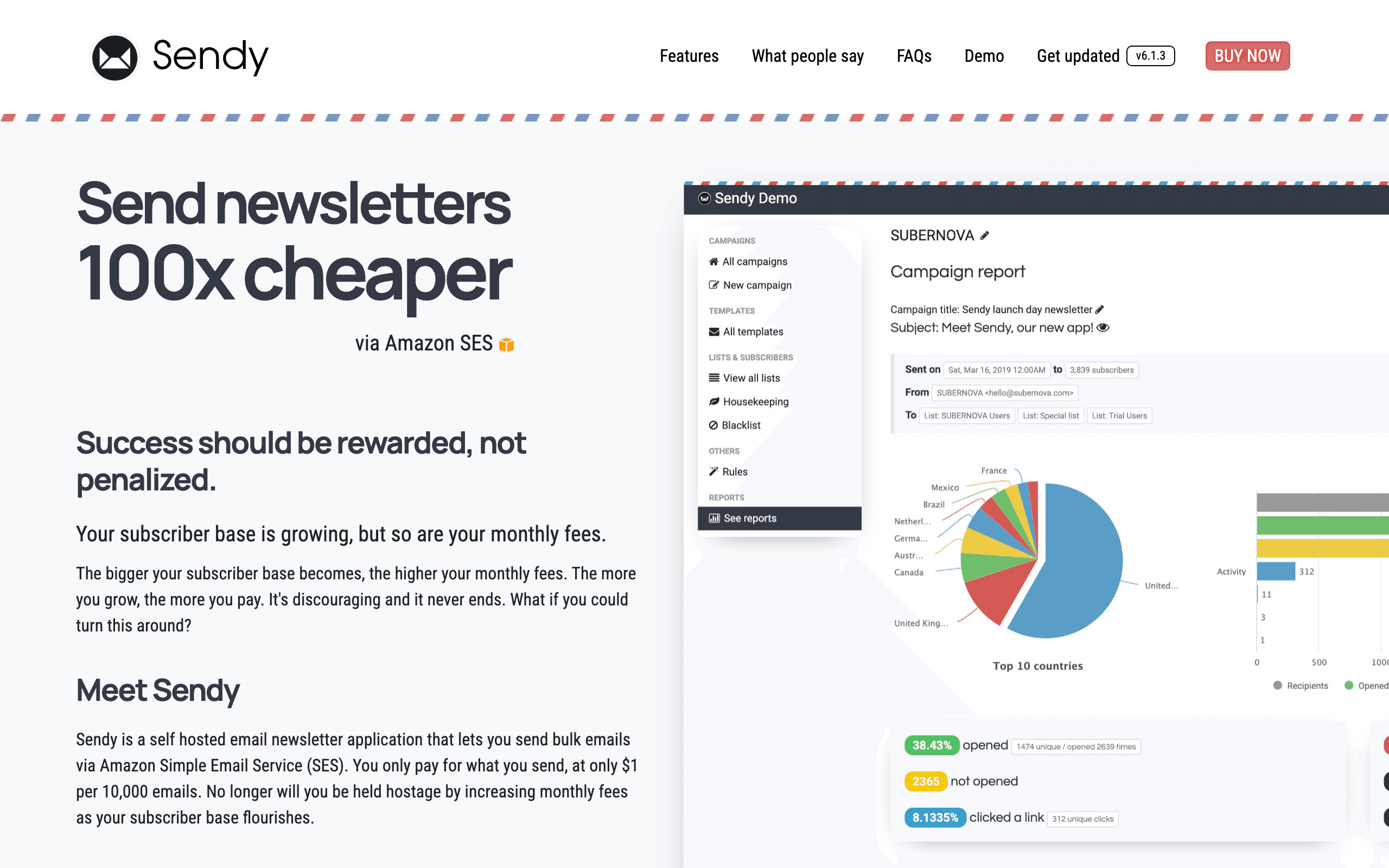
Listmonk and Sendy are both self-hosted email marketing solutions that let you escape recurring SaaS fees. Listmonk is free, modern, and built in Go. Sendy costs $69 once, has been around longer, and offers more features. Both dramatically reduce email marketing costs compared to hosted platforms.
The Cost Breakdown
Listmonk: $0 for software. Maybe $5-10/month for a VPS. SMTP costs vary by provider.
Sendy: $69 one-time plus $29/year for updates. Similar hosting costs. Amazon SES at ~$0.10 per 1000 emails.
Both save thousands compared to Mailchimp or ConvertKit. Between them, Listmonk's free model is marginally cheaper.
Technical Approaches
Listmonk uses Go and Docker. Modern containerized deployment. Fast performance. Any SMTP provider works.
Sendy uses PHP with traditional web hosting. Familiar if you've run WordPress. Tightly coupled to Amazon SES.
Your existing skills matter here. Docker people lean Listmonk. PHP hosting veterans lean Sendy.
SMTP Flexibility
This is a key differentiator. Listmonk works with any SMTP provider: Amazon SES, Postmark, SendGrid, Mailgun, or your own mail server. You can even use multiple providers simultaneously for redundancy.
Sendy only works with Amazon SES. This isn't necessarily bad. SES is cheap and reliable. But if you want flexibility or backup options, Listmonk wins decisively.
Feature Comparison
Sendy has more features: autoresponders, RSS-to-email, better segmentation, Amazon SES bounce handling. It's been around since 2012 and has matured.
Listmonk is leaner. Campaigns, lists, templates, basic analytics. No automation. No RSS. It does one thing simply and fast.
If you need autoresponders or RSS campaigns, Sendy is the better choice between these two.
Performance
Listmonk is built in Go and is exceptionally performant. Users report handling millions of subscribers on modest hardware. Sendy performs well too, but Go generally outperforms PHP for this workload.
Community and Ecosystem
Sendy has a larger ecosystem. More plugins, more templates, more community resources. Longer track record.
Listmonk has an active open-source community. Frequent updates. Growing adoption. But newer means less third-party tooling.
For SaaS Companies
Neither is ideal for SaaS. No Stripe integration. No behavioral automation. No subscription tracking. For SaaS companies wanting managed hosting with payment-triggered automation, consider Sequenzy.
Making the Choice
Choose Listmonk if you want free software, SMTP flexibility, and modern Go/Docker architecture. Choose Sendy if you're committed to Amazon SES, want autoresponders, or prefer PHP hosting. Both are excellent for saving money. Consider Sequenzy if you want managed hosting with SaaS-specific features.
The Amazon SES Lock-in Question
Sendy's tight coupling to Amazon SES is both its strength and its limitation. On the positive side, SES is one of the cheapest SMTP providers at roughly $0.10 per 1,000 emails, and Sendy's integration handles bounce processing and complaint feedback automatically. This tight integration makes deliverability management easier.
On the negative side, you cannot switch SMTP providers without switching away from Sendy entirely. If SES experiences deliverability issues in your region, or if you need to send from a different provider for compliance reasons, you are stuck. Listmonk's ability to use any SMTP provider, and multiple providers simultaneously, provides insurance against any single provider's issues.
Open Source vs Closed Source Implications
Listmonk is open-source under AGPLv3. You can inspect the code, contribute improvements, fork the project, and modify it for your needs. If the maintainers stop development, the community can continue. Transparency and longevity are built into the model.
Sendy is closed-source. You cannot see or modify the code. If the developer stops maintaining it, there is no community fork option. You depend entirely on one developer for updates, security patches, and bug fixes. That said, Sendy has been reliably maintained since 2012, so the track record is solid.
Architecture and Future-Proofing
Listmonk's Go/Docker architecture aligns with modern deployment practices. Container orchestration, CI/CD pipelines, and infrastructure-as-code all work naturally with Listmonk. For teams that deploy on Kubernetes or use modern DevOps tooling, Listmonk fits into existing workflows.
Sendy's traditional PHP hosting model is functional but less aligned with modern infrastructure trends. It works well on shared hosting and simple VPS setups, which is actually an advantage for users who find Docker intimidating. But for organizations moving toward containerized infrastructure, Listmonk's architecture is more future-proof. For a fully managed alternative, explore Sequenzy with subscription-aware automation.
Use-case matchups
| Use case | Better fit | Why |
|---|---|---|
| Free open-source self-hosting | Listmonk | Listmonk is open-source, free, and modern Go/Docker software. |
| Low-cost SES-based newsletters | Sendy | Sendy is inexpensive and tightly integrated with Amazon SES. |
| SMTP provider flexibility | Listmonk | Listmonk can use different SMTP providers; Sendy is tied to SES. |
| Autoresponders and RSS campaigns | Sendy | Sendy has more mature built-in newsletter features than Listmonk. |
| Managed SaaS lifecycle email | Sequenzy | Sequenzy avoids self-hosting while adding Stripe and transactional email. |
Pricing reality
Both tools are cheap compared with hosted platforms, but the cost is not just license price. Listmonk is free, while Sendy has a one-time license and optional updates. Both require hosting, sender setup, monitoring, and maintenance. Sendy can be easier if you are already committed to SES; Listmonk is better if provider flexibility matters.
Review signals
The reviews on this page point to practical ownership tradeoffs. Listmonk users value savings, speed, open-source control, and SMTP flexibility. Sendy users value SES cost savings and maturity, but some call out the dated interface and SES lock-in.
Best Fit by Self-Hosted Architecture
Best open-source newsletter tool for Go and Docker teams
Listmonk is the better fit when the team wants modern self-hosted infrastructure, Docker deployment, PostgreSQL, and SMTP provider flexibility. It suits teams that already run containerized services and want an open-source newsletter system without a commercial license.
Best self-hosted newsletter tool for Amazon SES savings
Sendy is the better fit when the team wants a mature, inexpensive SES-backed newsletter sender with autoresponders and RSS campaigns. It is most relevant when Amazon SES lock-in is acceptable and PHP hosting is easier than operating a Go/Docker stack.
Best managed email platform for SaaS lifecycle workflows
Sequenzy fits teams that want to skip self-hosted newsletter operations entirely. It is stronger when transactional email, campaigns, Stripe-triggered journeys, and lifecycle reporting should be managed in a hosted product.
Migration checklist
| Step | Moving to Listmonk | Moving to Sendy | Moving to Sequenzy |
|---|---|---|---|
| Infrastructure | Prepare Docker, PostgreSQL, SMTP credentials, backups, and monitoring. | Prepare PHP hosting, MySQL, SES credentials, bounce handling, and cron. | Verify domains, contact fields, transactional needs, and Stripe integration. |
| Contact export | Export lists, subscribers, custom fields, and unsubscribes. | Export lists, subscribers, custom fields, and unsubscribes. | Export contacts, lifecycle fields, billing IDs, and suppression records. |
| Campaign rebuild | Rebuild templates, lists, and any external automation. | Rebuild templates, autoresponders, RSS campaigns, and SES settings. | Rebuild campaigns, lifecycle journeys, and transactional templates. |
| QA | Test SMTP, bounces, complaints, unsubscribes, backups, and updates. | Test SES limits, bounce/complaint webhooks, unsubscribes, and updates. | Test campaigns, transactional email, and Stripe-triggered flows together. |
Decision checklist
- Choose Listmonk if you want open-source control, SMTP flexibility, and modern self-hosted architecture.
- Choose Sendy if Amazon SES lock-in is acceptable and its autoresponders/RSS features matter.
- Choose Sequenzy if you want managed SaaS email without self-hosting.









