
Overview
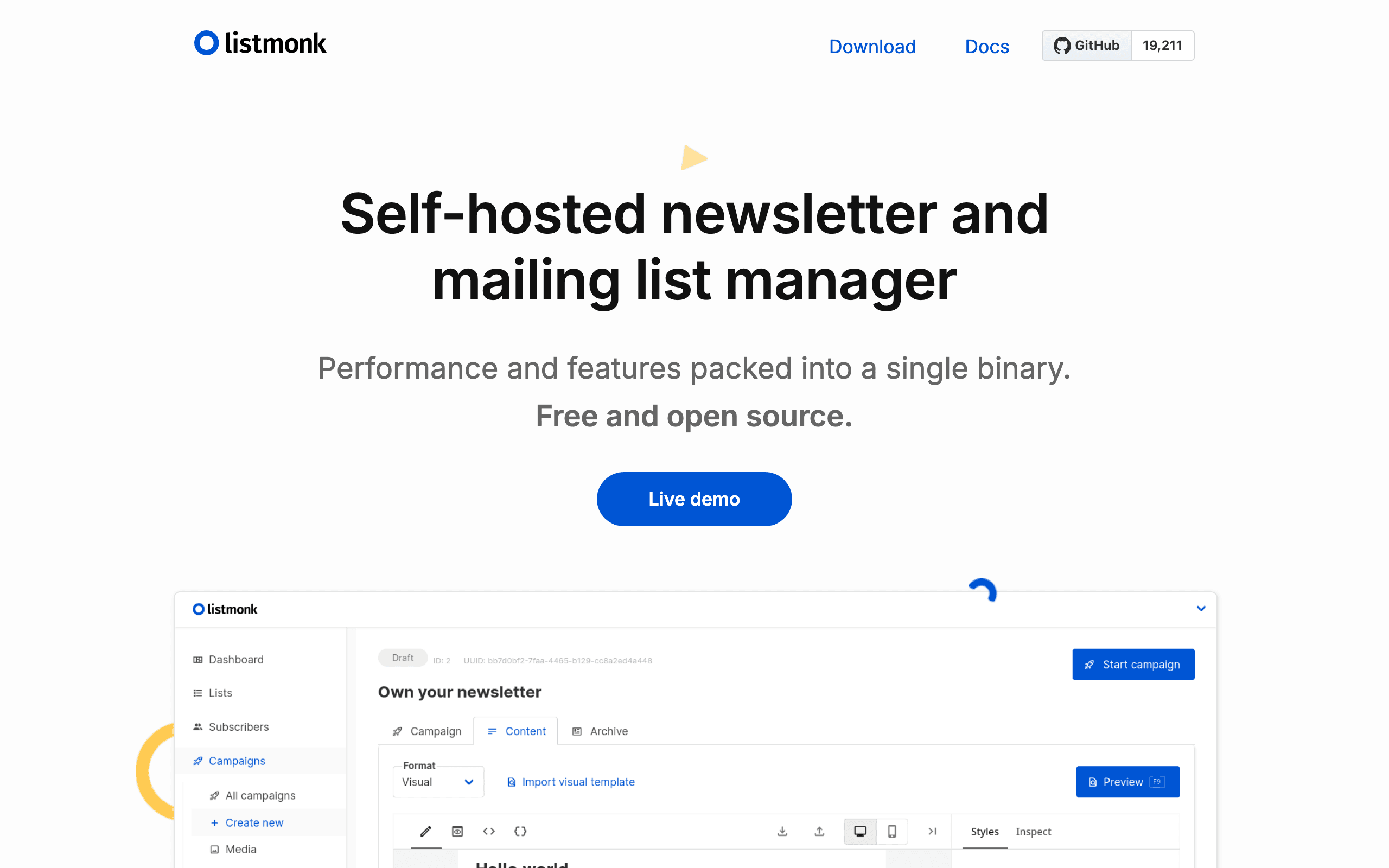
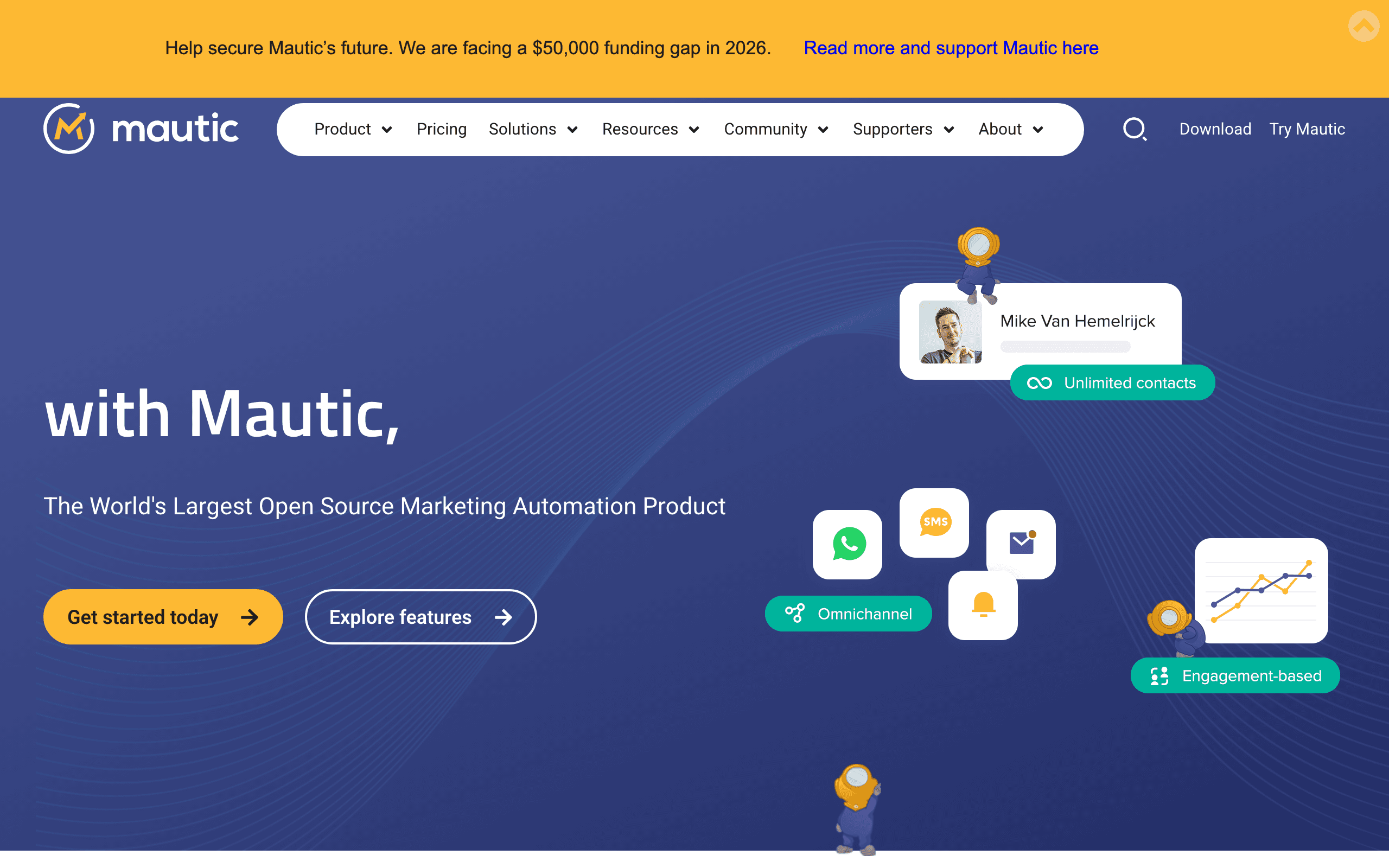
Listmonk and Mautic are both free, open-source, self-hosted email solutions. But they solve different problems. Listmonk is a lightweight newsletter manager. Mautic is a full marketing automation platform. One is simple by design. The other is powerful by necessity.
The Complexity Question
Listmonk: Install Docker, run container, configure SMTP, send newsletters. Maybe an hour of setup.
Mautic: Install PHP, MySQL, configure web server, set up cron jobs, optimize caching, configure tracking. Several hours to days. Then learn the complex interface.
This isn't a criticism of Mautic. That complexity exists because Mautic does much more. But if you don't need those features, Listmonk's simplicity is valuable.
Feature Gap
Mautic offers: visual workflow automation, CRM, lead scoring, landing pages, forms, multi-channel campaigns, behavioral tracking, and segments.
Listmonk offers: campaigns, lists, templates, basic analytics.
Mautic competes with HubSpot and ActiveCampaign. Listmonk competes with basic newsletter tools. They're in different categories.
Resource Requirements
Listmonk runs efficiently on minimal hardware. A $5/month VPS with 512MB RAM handles tens of thousands of subscribers.
Mautic needs more. 2GB RAM minimum, 4GB+ recommended. PHP opcache tuning. Database optimization. Cron job management. Budget $20-50/month for adequate hosting.
Performance Comparison
Listmonk is built in Go, known for performance. It sends emails fast and handles large lists efficiently.
Mautic's PHP/Symfony stack is heavier. Large campaigns can be slow without optimization. Database queries can bog down. Performance requires tuning.
When Listmonk Wins
You just need to send newsletters. You want minimal maintenance. Server resources are limited. You value simplicity over features. Setup time matters.
When Mautic Wins
You need marketing automation. Lead scoring matters. Landing pages are required. Multi-step workflows are essential. You want a free HubSpot alternative.
For SaaS Companies
Honestly, neither is ideal. Listmonk lacks automation. Mautic lacks SaaS-specific features. No Stripe integration in either. For SaaS companies wanting managed hosting with subscription-aware automation, consider Sequenzy.
Making the Choice
Choose Listmonk for simple newsletter sending with minimal overhead. Choose Mautic for full marketing automation when you can invest in setup and maintenance. Consider Sequenzy if you want managed hosting with SaaS-focused features without self-hosting complexity.
The Self-Hosted Marketing Automation Reality
Mautic is often described as the "free HubSpot alternative" and in terms of features, this comparison is fair. However, the total cost of ownership includes the engineering time to set up, optimize, and maintain the platform. A properly configured Mautic instance requires regular database optimization, cron job monitoring, PHP version updates, and security patching.
For organizations with dedicated DevOps teams, these maintenance tasks are routine. For small teams without operations expertise, Mautic's maintenance burden can become a significant distraction from actual marketing work. Be honest about your team's capacity before choosing Mautic over managed alternatives.
Go vs PHP Performance Characteristics
Listmonk's Go-based architecture gives it a significant performance advantage for high-volume sending. Go's concurrent processing model handles email queues efficiently, and the compiled binary uses minimal memory. A single Listmonk instance can process hundreds of thousands of emails on hardware that Mautic would struggle with.
Mautic's PHP/Symfony stack requires more resources for the same throughput. Large campaigns can cause memory spikes, and the cron-based processing model is inherently less efficient than Go's concurrent approach. Organizations sending high volumes may need to invest in worker processes, queue management, and database optimization to maintain acceptable performance.
Choosing Between Simplicity and Power
This comparison ultimately asks: do you need marketing automation or just email sending? If your marketing strategy involves lead scoring, multi-touch nurture campaigns, behavioral segmentation, and landing pages, Mautic provides those capabilities for free. The investment is in setup and maintenance rather than licensing.
If your marketing strategy is "send a newsletter to our list every week," Listmonk is dramatically more appropriate. Using Mautic for simple newsletter sends is like using a CRM to manage a contact list of ten people. The tool's power becomes overhead rather than value. Match the tool's complexity to your actual needs.
Use-case matchups
| Situation | Best first look | Why |
|---|---|---|
| Team only needs fast self-hosted newsletter sending | Listmonk | Listmonk is simpler, lighter, and easier to maintain. |
| Team needs lead scoring, landing pages, CRM, and workflows | Mautic | Mautic is the full marketing automation option. |
| Small VPS and low maintenance budget | Listmonk | Its Go-based stack and small footprint keep operations lighter. |
| Marketing team wants HubSpot-style automation without license fees | Mautic | Mautic trades software cost for setup, maintenance, and operational complexity. |
| SaaS team wants managed lifecycle email with Stripe | Sequenzy | Sequenzy removes self-hosting and focuses on product/billing-triggered email. |
Best Fit
Best self-hosted tool for high-volume newsletters
Listmonk is the better fit when the job is high-volume list management and broadcast sending, not full marketing automation. It works for developer-led teams, communities, associations, and publishers that want a lightweight Go-based service, fast imports, simple campaigns, and control over SMTP. It avoids the operational weight of forms, lead scoring, landing pages, and CRM-style marketing features when those features are not needed.
Best open-source marketing automation platform for lead nurturing
Mautic is the better fit when a team wants open-source marketing automation, not just email sending. Choose it for lead scoring, landing pages, forms, multi-step nurture campaigns, campaign canvases, CRM-style contact records, and broad marketing-ops ownership. The tradeoff is maintenance: PHP, cron jobs, database tuning, updates, and troubleshooting become part of the real cost.
Best managed SaaS email platform for lifecycle and billing triggers
Sequenzy is the better fit when the team does not want to self-host but still needs behavior-based lifecycle email. It is especially relevant for SaaS onboarding, product announcements, Stripe billing events, renewal nudges, receipts, and transactional messages. Compared with Listmonk and Mautic, the reason to choose Sequenzy is less server ownership and more managed product-email focus.
Pricing reality
Both Listmonk and Mautic can be free at the software-license level, but neither is truly cost-free. Budget for hosting, SMTP, backups, monitoring, upgrades, deliverability work, and the time needed to keep the system healthy.
Listmonk's operating cost is usually lower because it is lighter and narrower. Mautic's cost is mostly in resources and maintenance: PHP/MySQL setup, cron jobs, caching, performance tuning, and marketing-ops ownership.
Sequenzy's $49/month price is relevant when the team prefers a managed product and SaaS-specific lifecycle flows over self-hosting open-source marketing software.
Review signals
| Platform | What reviews in this page suggest | What to validate |
|---|---|---|
| Listmonk | Buyers value simplicity, fast setup, low resource usage, and newsletter performance, while noting missing automation. | Confirm that campaigns and lists are enough before committing to the simpler tool. |
| Mautic | Buyers value full automation, lead scoring, landing pages, and CRM-like features, while noting setup and maintenance pain. | Confirm technical ownership, server resources, cron setup, and whether the automation depth is worth the overhead. |
Migration checklist
| Workstream | Moving toward Listmonk | Moving toward Mautic | Moving toward Sequenzy |
|---|---|---|---|
| Infrastructure | Set up Docker/app server, database, SMTP, DNS, backups, and monitoring. | Set up PHP, MySQL, web server, cron jobs, queues, caching, SMTP, and monitoring. | Configure domains, product events, Stripe, subscriber data, and transactional routes. |
| Contacts | Import lists, subscribers, custom fields, consent, bounces, and suppressions. | Import contacts, companies, segments, fields, consent, scores, and suppressions. | Import subscribers, attributes, tags, suppressions, and billing identifiers. |
| Automations | Accept that workflows, scoring, and drip logic will not migrate directly. | Rebuild campaigns, workflows, lead scoring, forms, landing pages, and segments. | Rebuild onboarding, billing, product, campaign, and transactional flows. |
| Templates | Recreate HTML/newsletter templates and test rendering. | Recreate drag-and-drop emails, forms, landing pages, and tokens. | Recreate lifecycle and transactional templates. |
| Reporting | Track campaigns, lists, bounces, opens, clicks, and delivery health. | Track lifecycle workflows, campaign performance, lead scores, forms, and attribution. | Track lifecycle, transactional, billing, and campaign reporting. |
Decision checklist
- Do you need automation, or are newsletters enough?
- Who will own server maintenance, upgrades, backups, and deliverability?
- Is Mautic's complexity justified by workflows and scoring you will actually use?
- Is Listmonk's simplicity worth giving up automation?
- Would a managed SaaS email product remove more risk than it adds cost?









