
Overview
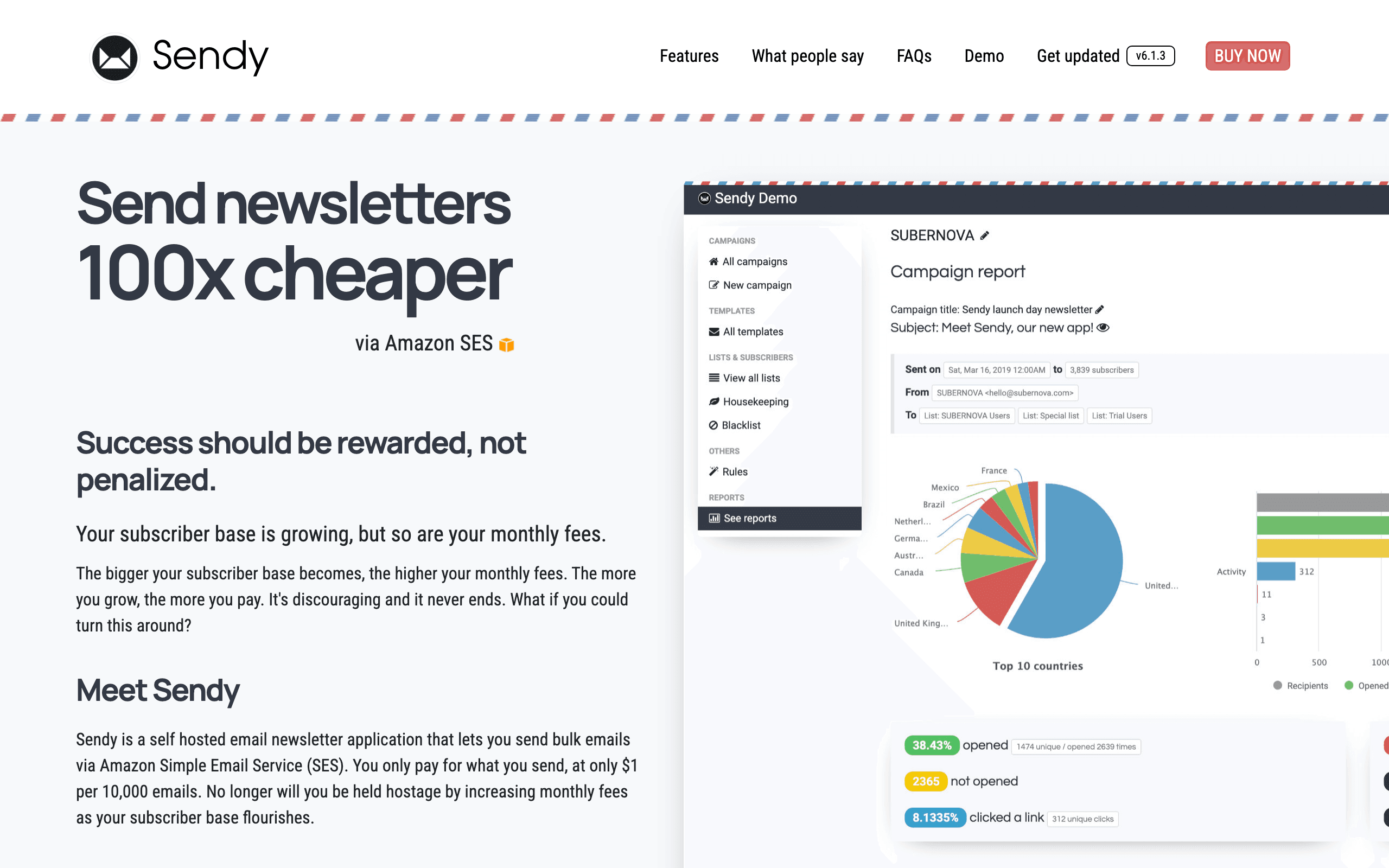
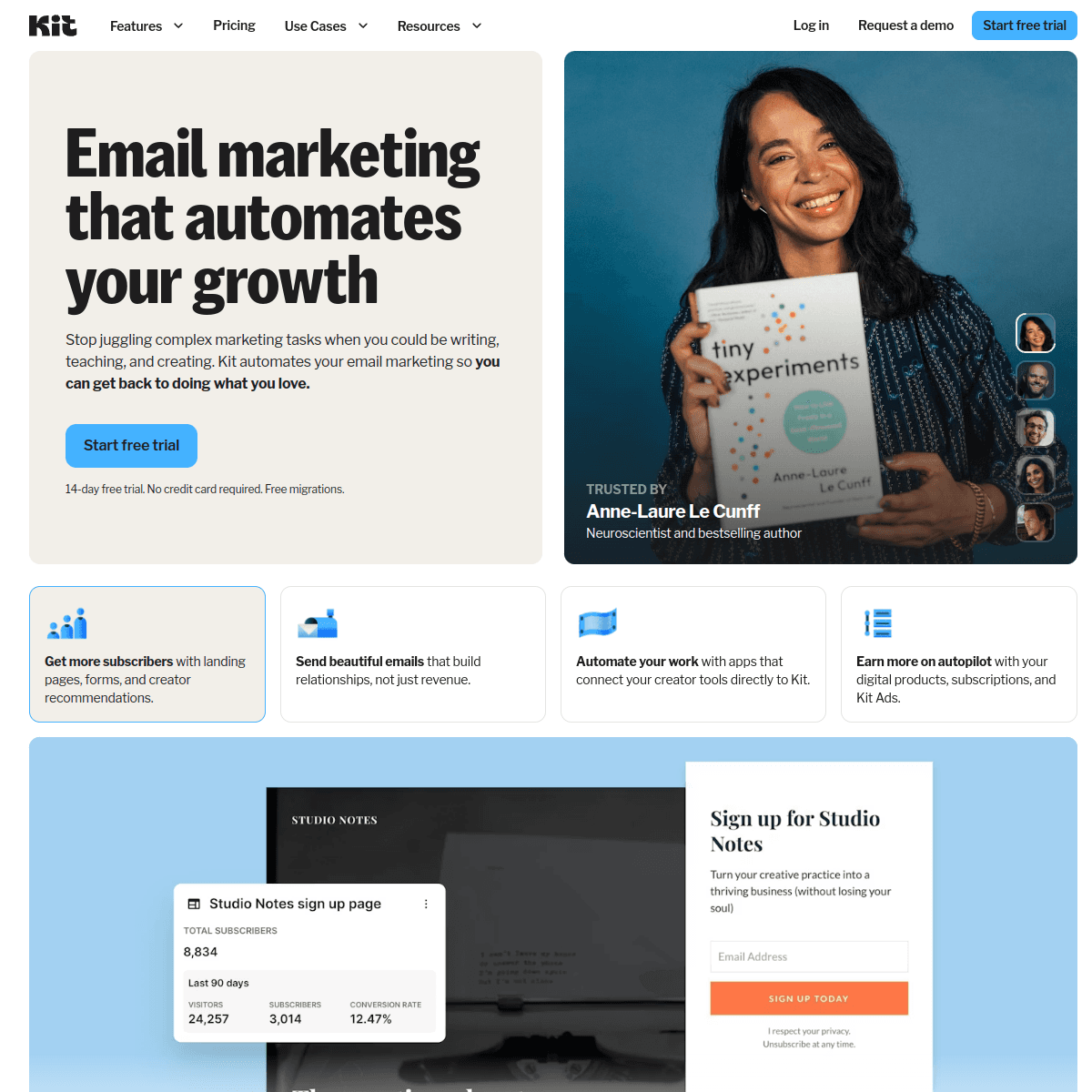
Sendy and ConvertKit serve completely different markets. Sendy is for technical users who want to minimize costs through self-hosting. ConvertKit is for creators who want a polished platform with monetization built in. The choice often comes down to who you are.
Different Users, Different Needs
Sendy targets technical senders who prioritize cost savings. ConvertKit targets creators who want to build audience-based businesses. A developer sending newsletters chooses differently than a blogger building a paid community.
Sendy's Cost Advantage
At 10,000 subscribers, Sendy costs $1-5/month (just Amazon SES fees). ConvertKit costs $119/month. Over a year, that's $1,300+ in savings. At larger list sizes, savings grow proportionally. If pure cost matters most, Sendy wins.
ConvertKit's Creator Features
ConvertKit has paid newsletters, digital product sales, tip jars, beautiful landing pages, and the Creator Network for cross-promotion. These features can generate revenue that exceeds the platform cost. Sendy has none of this.
Technical Reality
Sendy requires server administration. You need PHP/MySQL hosting, Amazon SES setup, and ongoing maintenance. ConvertKit is sign-up-and-start. For non-technical creators, Sendy isn't really an option.
Email Design Philosophy
ConvertKit intentionally uses minimal, text-focused email design. The theory is that personal-looking emails perform better for creators. Sendy has dated templates. Neither is ideal for visual marketing, but they're different kinds of not-ideal.
For SaaS Companies
Neither platform is built for SaaS. Sendy lacks modern automation. ConvertKit lacks Stripe integration for subscription businesses. For SaaS companies wanting payment-triggered emails, consider Sequenzy.
Making the Choice
Choose Sendy if you're technical, sending basic newsletters, and want to minimize costs. Choose ConvertKit if you're a creator wanting monetization tools and audience growth features. For SaaS companies, consider Sequenzy.
The Creator Economy vs Cost Optimization
Sendy and ConvertKit represent fundamentally different views of email's role. Sendy sees email as a delivery mechanism -- get messages to inboxes as cheaply as possible. ConvertKit sees email as a business platform -- help creators build, grow, and monetize audiences. These perspectives attract completely different users.
ConvertKit's paid newsletter feature alone can generate revenue that dwarfs the platform cost. A creator with 5,000 subscribers charging $5/month for premium content earns $25,000/month. ConvertKit's $79/month fee is insignificant against that revenue. Sendy saves $75/month but provides no path to subscriber monetization.
This framing matters because the cheapest tool is not always the most economical. ConvertKit's commerce features -- digital product sales, paid subscriptions, tip jars -- create revenue opportunities that Sendy cannot match. For creators who monetize their audience, ConvertKit is an investment that generates returns. For senders who just need delivery, Sendy is the rational economic choice.
Audience Growth Tools: The Hidden Cost of Sendy
ConvertKit provides landing pages, embeddable signup forms, and the Creator Network for subscriber acquisition. These tools directly drive list growth, which determines the lifetime value of your email program. Sendy offers basic signup forms and nothing else for audience building.
The Creator Network deserves special attention. It enables creators to recommend each other's newsletters, creating an organic growth channel that does not depend on paid advertising or social media algorithms. Some creators report gaining hundreds of subscribers per week through network recommendations alone. This feature has no equivalent in Sendy or most other email platforms.
When calculating Sendy's savings, factor in the cost of replacing ConvertKit's growth tools. A separate landing page builder ($20-50/month), form tool ($10-20/month), and paid growth channels (variable) can exceed ConvertKit's total cost while providing a fragmented experience. For creators serious about audience growth, ConvertKit's integrated toolkit is often the more cost-effective option despite higher headline pricing.
Email Design Philosophy: Simple by Choice vs Simple by Limitation
ConvertKit intentionally keeps emails text-focused and minimal. Their research and creator community consistently report that simple, personal-feeling emails outperform heavily designed templates. A ConvertKit email looks like a message from a friend, not marketing collateral. This is a deliberate design choice, not a limitation.
Sendy's simple emails are a limitation, not a choice. The dated template builder produces basic-looking emails because the tools are basic, not because the approach is intentional. There is no brand kit, no design system, and no way to create sophisticated visual emails without custom HTML knowledge.
The distinction matters. ConvertKit creators can confidently send plain emails knowing the platform supports their strategy. Sendy users send plain emails because they have no alternative. When ConvertKit creators need occasional visual emails -- product launches, event announcements -- the platform supports it. Sendy's design constraints are absolute.
Long-term Platform Strategy
Consider where each platform is heading. ConvertKit continues investing in creator commerce, audience monetization, and community features. Their roadmap focuses on helping creators earn more from their audiences. Sendy receives occasional updates focused on compatibility and bug fixes, not new capabilities.
For creators building long-term businesses around their audience, platform investment trajectory matters. ConvertKit is actively developing features that help creators succeed. Sendy is maintaining a tool that sends emails. Neither direction is wrong, but they serve different ambitions.
SaaS founders building software products rather than audience businesses should consider neither. ConvertKit's creator focus and Sendy's limitations both miss what software companies need: event-based automation, Stripe integration, and transactional email. Sequenzy addresses these specific needs at $49/month.
Use-case matchups
| Situation | Best first look | Why |
|---|---|---|
| Team wants the lowest visible email sending cost and can self-host | Sendy | Sendy is the baseline here for teams comfortable operating their own app layer on top of a sending service. |
| Creator business wants audience-first SaaS workflows | ConvertKit | ConvertKit is stronger when forms, broadcasts, creator products, and sequences drive the business. |
| SaaS or subscription team wants lifecycle and transactional email | Sequenzy | Sequenzy is stronger when Stripe events, transactional messages, and campaigns need a hosted lifecycle workflow. |
| Technical team already owns servers and AWS email operations | Sendy | Sendy can make sense when maintenance, updates, deliverability setup, and backup ownership are acceptable. |
| Team needs the specialist capability | ConvertKit | ConvertKit deserves the first demo when the main requirement is creator-focused newsletters, sequences, and monetization. |
| Team wants hosted workflows without self-hosting | Sequenzy | Sequenzy removes Sendy-style app maintenance while staying focused on email automation and transactional messages. |
Pricing reality
The pricing signals on this page list Sendy at ~$1-5/month or equivalent operating cost, ConvertKit at $119/month, and Sequenzy at $49/month. Sendy's number should never be read as the whole cost.
Sendy usually shifts cost from the vendor invoice to operations: hosting, updates, backups, SES or SMTP setup, bounce handling, deliverability monitoring, and internal troubleshooting. ConvertKit's real cost depends on whether the team needs creator-focused newsletters, sequences, and monetization.
Review signals
For Sendy, validate reviews around setup, updates, SES integration, bounce handling, deliverability, and the amount of technical maintenance required. For ConvertKit, focus review research on whether users praise the reason you would choose it: creator-focused newsletters, sequences, and monetization.
Best Fit by Cost and Creator Growth
Best low-cost email tool for AWS SES users
Sendy fits technical teams that can manage a self-hosted app and want very low sending costs through Amazon SES. It is strongest when volume economics justify owning setup, monitoring, bounces, and deliverability details.
Best creator email platform for audience growth tools
ConvertKit is the better fit when creators need forms, landing pages, sequences, paid newsletters, digital products, and audience-friendly workflows without self-hosting. It works best when platform support helps grow and monetize the audience.
Best SaaS lifecycle platform for managed product email
Sequenzy fits SaaS teams that want managed lifecycle email connected to product and billing events. It avoids self-hosting while staying more focused on subscription customer journeys than a creator email platform.
Migration checklist
| Workstream | Moving toward Sendy | Moving toward ConvertKit | Simplifying to Sequenzy |
|---|---|---|---|
| Hosting and ownership | Provision hosting, backups, updates, SSL, cron jobs, sending service credentials, and admin access. | Map subscribers, tags, segments, forms, landing pages, broadcasts, sequences, and products. | Import subscribers, attributes, tags, suppressions, and lifecycle events into a hosted workflow. |
| Sending setup | Configure SES or SMTP, SPF, DKIM, DMARC, bounce processing, complaint handling, and suppression logic. | Confirm sender authentication, deliverability tooling, and plan limits. | Configure sending domains and transactional paths without self-hosting. |
| Contacts and consent | Import lists, custom fields, segments, unsubscribes, bounces, and suppression records. | Import the data model ConvertKit needs for creator-focused newsletters, sequences, and monetization. | Import subscriber data and lifecycle attributes. |
| Automations | Rebuild simple autoresponders and campaigns; custom lifecycle logic may need outside code. | Rebuild the workflows that prove ConvertKit's advantage. | Rebuild campaign, lifecycle, and transactional email flows. |
| Reporting | Decide which analytics are built in and which require outside tooling. | Validate reporting for creator-focused newsletters, sequences, and monetization before committing. | Validate campaign, automation, transactional, and subscription lifecycle reporting. |
Decision checklist
- Does the team really want to run a PHP/MySQL server, apply Sendy's manual updates, and keep backups and SES setup working?
- Does ConvertKit's strength in creator-focused newsletters, sequences, and monetization matter more than Sendy's low visible cost?
- Who sets up and maintains bounce, complaint, and suppression handling on SES once Sendy is live?
- Does Sendy's ~$1-5/month, which covers SES fees only, still look cheap after hosting and engineering time are counted?
- Would hosted transactional email and Stripe-triggered lifecycle messages, like Sequenzy's failed payment flows, serve better than a self-hosted newsletter layer?
- ConvertKit is only worth the premium if creator workflows are central.









