Overview
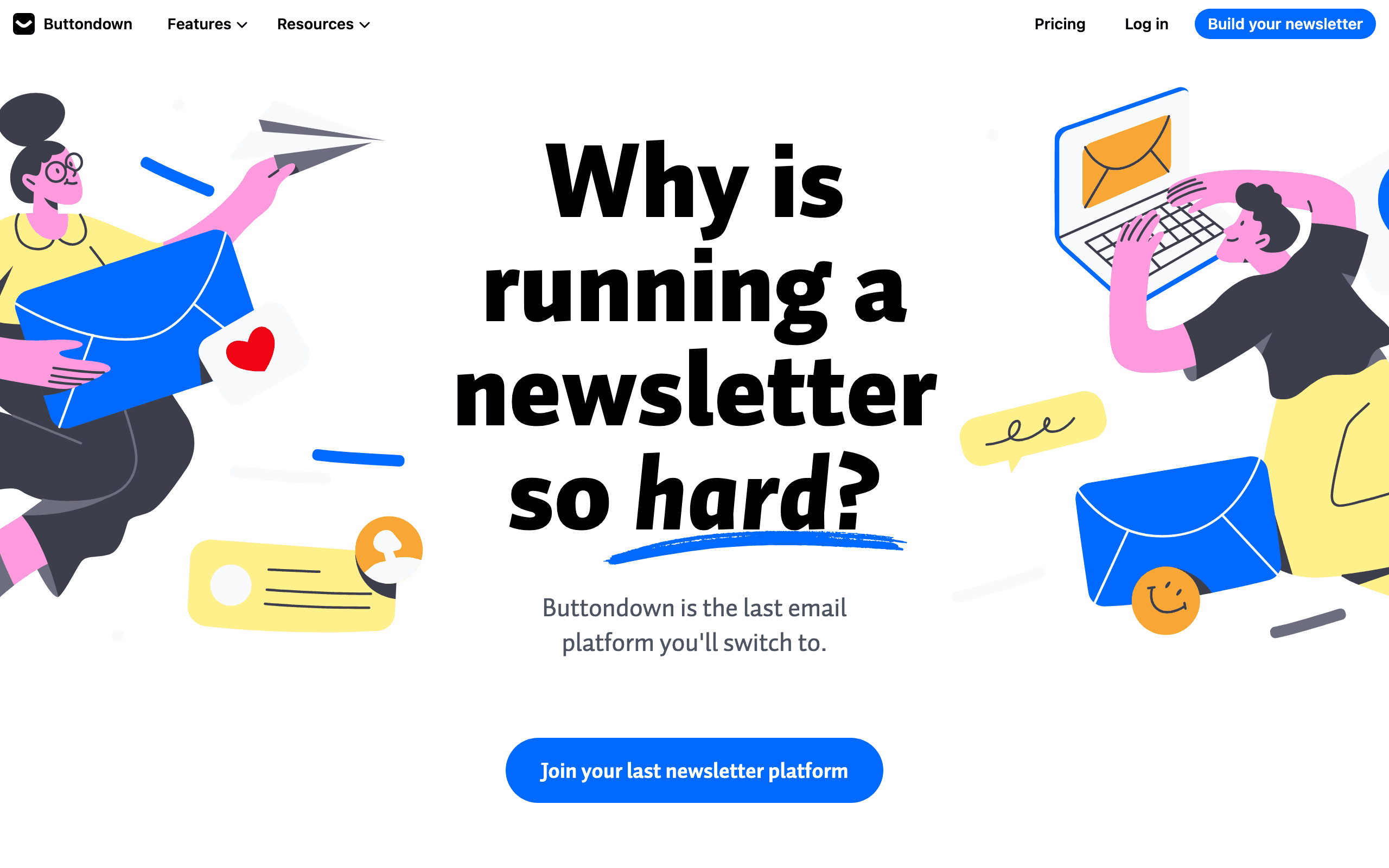
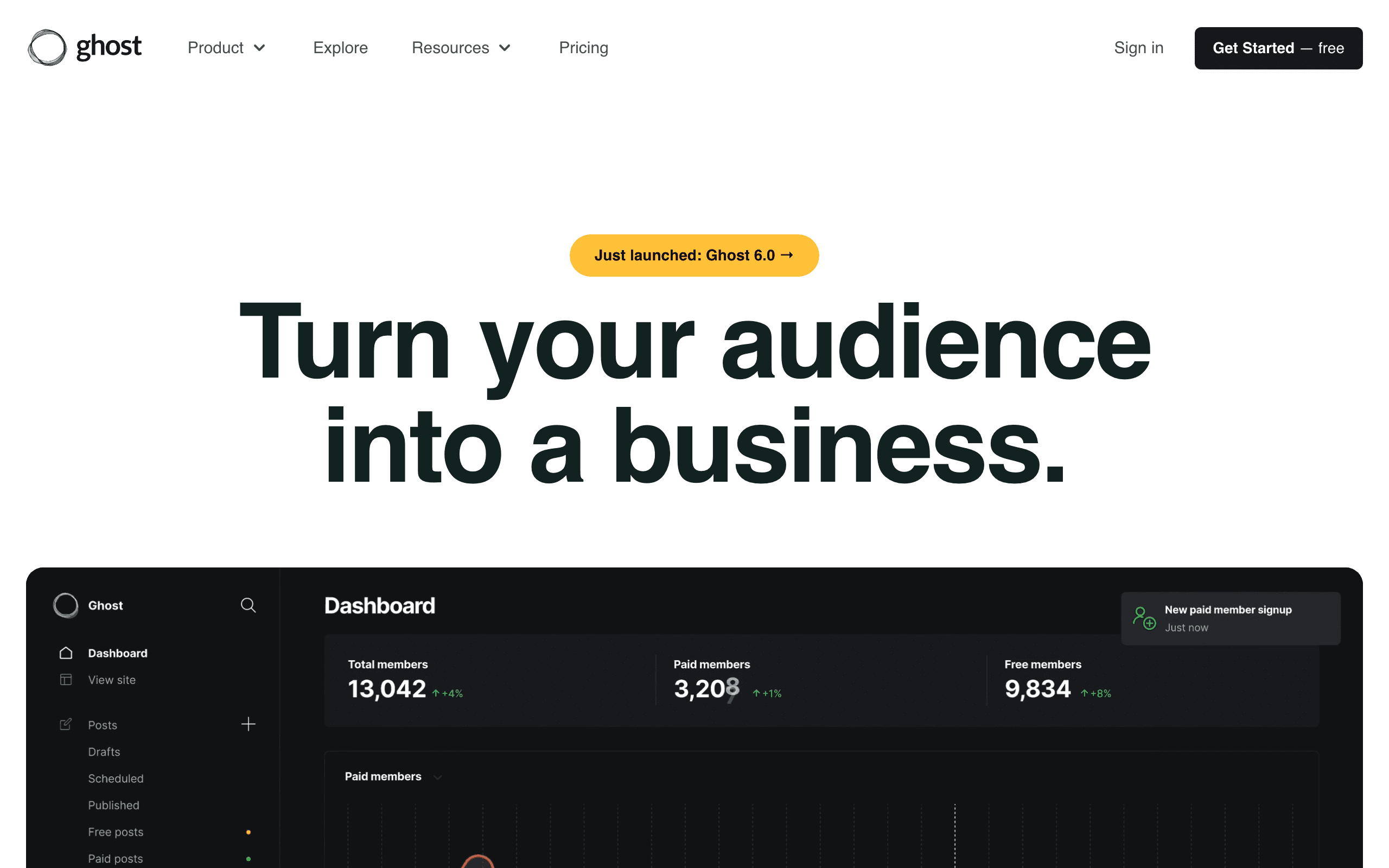
Buttondown and Ghost serve different needs in the email space. Buttondown is a minimalist Markdown-first newsletter platform. Ghost is a open-source publishing and newsletter platform.
The choice depends on what you need: markdown-native (Buttondown) or full publishing platform (Ghost). For SaaS businesses specifically, Sequenzy offers purpose-built features that neither tool provides.
Pricing Comparison
- Buttondown: ~$90/month for a Markdown-first newsletter, with paid newsletters collected through Stripe.
- Ghost: $25/month (Creator) - Open-source publishing + newsletter. Self-hosted or managed.
- Sequenzy: $99/month covers 120,000 emails with unlimited contacts, and yearly billing saves 10%. See pricing.
Use-case matchups
| Need | Better fit | Why |
|---|---|---|
| Focused Markdown newsletter without website management | Buttondown | Buttondown is scoped around writing and sending newsletters. |
| Publication website, SEO, memberships, and newsletter together | Ghost | Ghost is a full publishing platform, not only an email tool. |
| SaaS lifecycle and transactional email | Sequenzy | Sequenzy is better when product and billing events drive email. |
| Paid newsletter with minimal operational overhead | Buttondown | Buttondown keeps paid newsletter work simpler than running a full publication stack. |
| Content-led media business with gated posts | Ghost | Ghost has membership tiers, web publishing, and content gating. |
Best Fit by Publishing Surface
Best newsletter tool for simple paid publishing
Buttondown is the better fit when the creator wants to write, send, archive, and monetize a newsletter without managing a full publication website. It is narrower than Ghost, which is the point for many independent writers.
Best newsletter platform for owned publications
Ghost is the better fit when the business needs the website, posts, SEO archive, member portal, themes, paid memberships, and newsletter in one publishing stack. It is stronger when the public content surface matters as much as the inbox.
Best email marketing tool for SaaS product communication
Sequenzy is the better fit when newsletter updates must sit beside onboarding, transactional, retention, and billing-triggered emails. Creator publishing tools do not replace product lifecycle messaging.
Pricing reality
Buttondown and Ghost have different cost centers. Buttondown should be evaluated by subscriber count, newsletter workflow, paid publishing needs, and API usage. Ghost should be evaluated by managed hosting or self-hosting work, member count, themes, email sending, membership payments, SEO needs, and publication maintenance.
Review signals
The structured review data on this page keeps sourced snippets from G2, Capterra, and Trustpilot. Buttondown reviews emphasize a focused newsletter workflow and not paying for unused website features. Ghost reviews emphasize the combined website, SEO, newsletter, and membership platform, with email automation depth as the caution.
Where Buttondown Wins
Markdown-native
Drafting in Markdown is native to Buttondown, which Ghost does not offer. Writers who think in plain text will feel at home.
Clean API
Its REST API lets you control newsletters from code, which is useful for scripted publishing.
Paid newsletter support
Paid newsletters run on a flat fee through Stripe, with no content tiers. Simple pay-to-read newsletters need little else.
Privacy-conscious
Buttondown is built around minimal tracking, which suits readers and writers who care about privacy.
Where Ghost Wins
Full publishing platform
Ghost offers full publishing platform, which matters for teams that prioritize this.
SEO-optimized website
Ghost offers seo-optimized website, which matters for teams that prioritize this.
Paid memberships
Ghost offers paid memberships, which matters for teams that prioritize this.
Open source
Ghost is open source, which matters for teams that want self-hosting options, theme control, and stronger ownership of the publication stack.
Migration checklist
| Step | What to check |
|---|---|
| Subscribers and consent | Export subscribers, tags, segments, paid status, unsubscribes, bounces, and consent records. |
| Content archive | Map posts, pages, public archives, paid posts, embeds, images, and canonical URLs. |
| Memberships | Verify paid member tiers, Stripe settings, access rules, and cancellation flows. |
| Email setup | Rebuild newsletter templates, sender domains, unsubscribe behavior, and suppression lists. |
| SEO cutover | Preserve slugs, redirects, metadata, feeds, and analytics if moving into or out of Ghost. |
Decision checklist
- Do you need only a newsletter, or a full publication website?
- Are SEO, content archives, and memberships part of the business model?
- Is self-hosting or open-source ownership important enough to manage Ghost complexity?
- Would Buttondown's focused workflow be better if the website already exists elsewhere?
- Would SaaS lifecycle and transactional email make Sequenzy the more relevant comparison?
Ghost offers open source, which matters for teams that prioritize this.
Newsletter Tool vs Publishing Platform
The fundamental distinction between Buttondown and Ghost is scope. Buttondown is a newsletter tool - it sends emails to subscribers. Ghost is a publishing platform - it hosts your website, manages your content, delivers newsletters, and handles paid memberships. Choosing between them requires deciding whether you need a tool or a platform.
Ghost gives you an SEO-optimized website that attracts organic traffic, converts visitors to subscribers, and then nurtures those subscribers with email newsletters. The content lives on the web and gets delivered to inboxes. This dual-channel approach means your content works harder - blog posts attract Google traffic while the newsletter builds a direct audience.
Buttondown gives you a focused newsletter experience without the website. Your content lives only in email inboxes. If you already have a website (built with WordPress, Next.js, or any other tool), Buttondown handles the newsletter without duplicating your web presence. If you do not have a website and do not want one, Buttondown lets you skip that complexity entirely.
The Open Source Question
Ghost is fully open source under the MIT license. You can self-host it on your own server, inspect every line of code, and modify the platform to your needs. This matters for organizations that require data sovereignty, custom integrations, or independence from vendor lock-in. The self-hosted option means your subscriber data never touches a third-party server.
Buttondown is a proprietary SaaS product. You cannot self-host it, and your data lives on Buttondown's infrastructure. The trade-off is simplicity - no server management, no updates to install, no security patches to apply. For most newsletter creators, this is the right trade-off. For organizations with strict data residency requirements or a desire for platform independence, Ghost's open-source nature is a meaningful advantage.
The self-hosting option comes with real operational cost. Running Ghost on your own infrastructure requires managing a Node.js application, a MySQL database, email delivery integration (Ghost uses Mailgun for self-hosted email), and ongoing updates. The managed Ghost Pro service eliminates this overhead but at prices that increase significantly with member count.
Membership and Monetization Models
Both platforms support paid content, but their monetization architectures differ fundamentally. Ghost offers tiered memberships where subscribers pay monthly or annual fees for access to gated content. Posts can be free, member-only, or paid-member-only. The entire membership infrastructure - payment processing, content gating, member management - is built into the platform.
Buttondown supports paid newsletters through its own Stripe integration, but the model is simpler. Subscribers pay a flat fee for newsletter access. There are no content tiers, no gated web posts, and no membership management beyond subscription status. For writers who want a simple "pay to read my newsletter" model, Buttondown's approach is sufficient. For publishers building a membership business with multiple tiers and gated content, Ghost's architecture is more sophisticated.
For SaaS companies, neither monetization model is relevant. SaaS businesses monetize through their product, not through newsletter subscriptions. What SaaS companies need is email automation tied to product billing events - trial conversions, plan upgrades, payment failures. Sequenzy addresses this with native Stripe integration that triggers automated sequences based on subscription lifecycle events.