
Overview
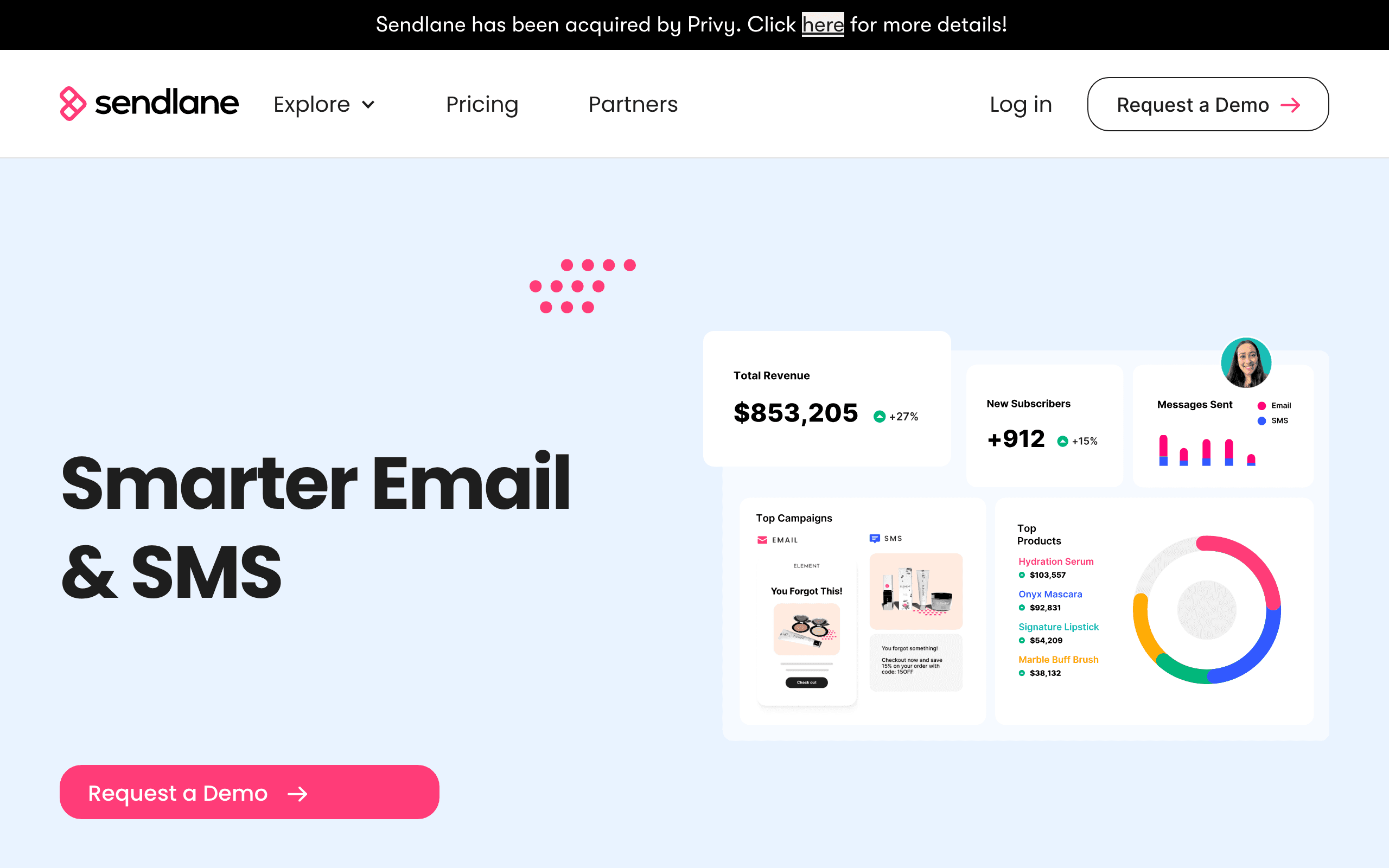
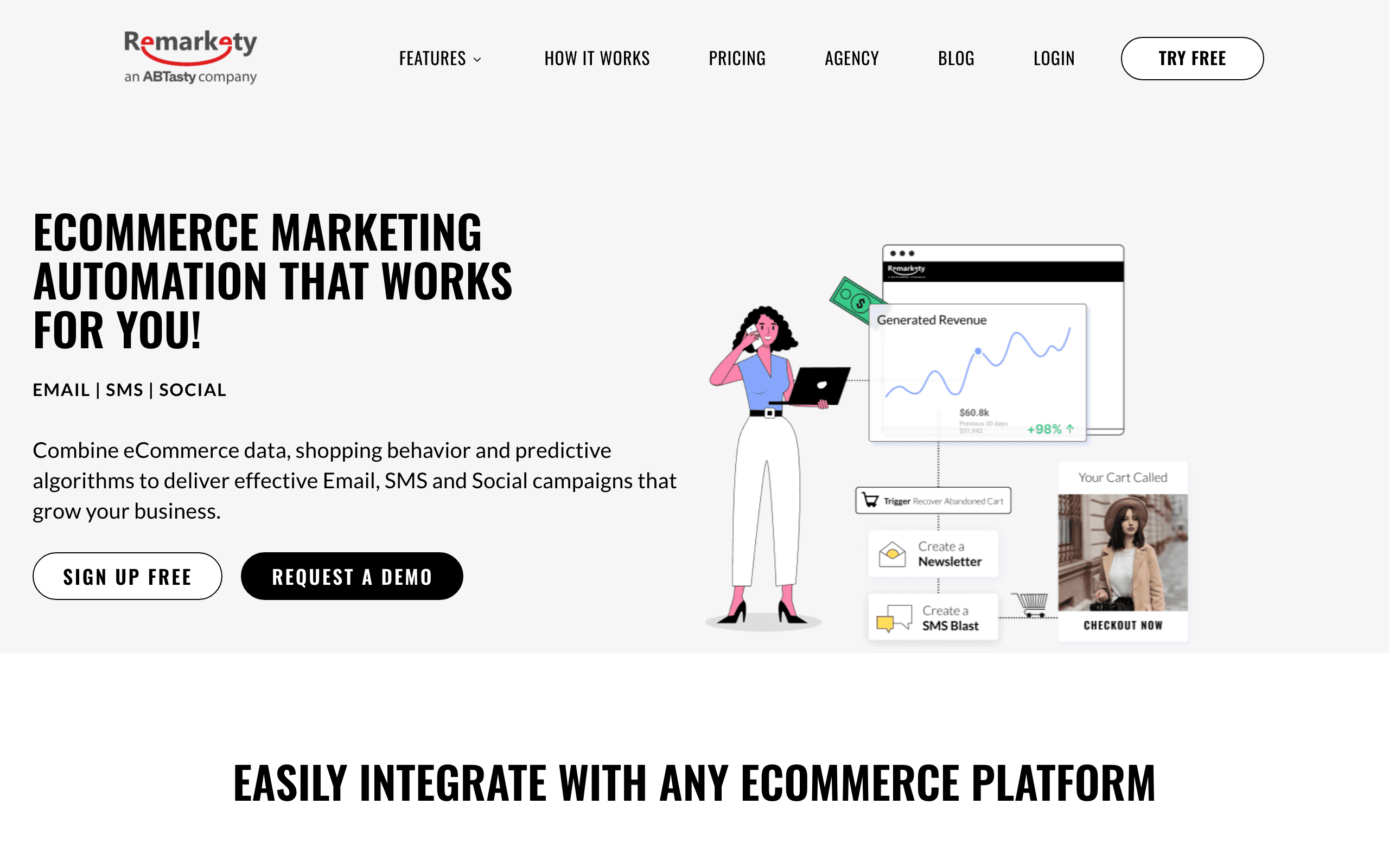
Sendlane and Remarkety are both built for e-commerce email marketing but approach it differently. See our Sendlane comparison for a detailed Sendlane breakdown.
Sendlane is the broader platform with email, SMS, and review collection. Remarkety is the more analytical platform with predictive product recommendations and RFM-based customer segmentation.
Pricing Comparison
Both are in a similar price range:
- Sendlane: $100/month for 50,000 emails (unlimited contacts)
- Remarkety: ~$100/month (varies by subscriber count)
- Sequenzy: Free tier, then $49/month for 60,000 emails
At similar price points, the choice comes down to what features matter most to your store. See our pricing page.
Where Sendlane Wins
SMS marketing
Sendlane offers SMS as an add-on with cross-channel automation. Remarkety is email-only. If SMS is part of your marketing strategy, Sendlane is the choice.
Built-in reviews
Sendlane includes product review collection and display at no extra cost. This replaces separate review tools and keeps your tech stack simpler.
Larger ecosystem
Sendlane has more users, more integrations, and more community resources. Finding help, agencies, and best practices is easier with Sendlane.
Where Remarkety Wins
Predictive product recommendations
Remarkety's recommendation engine analyzes purchase history, browse behavior, and customer segments to predict which products each customer is most likely to buy next. Sendlane has recommendations but they are less analytically advanced.
RFM analysis
Remarkety segments customers using Recency, Frequency, and Monetary analysis, a proven framework for identifying your most valuable customers and those at risk of churning. Sendlane uses behavioral segmentation without RFM specifics.
Data-driven approach
Remarkety's entire platform is built around customer data analysis. Every automation decision is informed by predictive models. Sendlane is more feature-driven than data-driven.
Why Sequenzy Is the Budget Alternative
At $49/month, Sequenzy covers core email automation for growing stores:
- AI sequences generate campaigns automatically
- Shopify integration for e-commerce basics
- Transactional email included (neither competitor offers this)
- Stripe integration for SaaS companies
RFM Analysis: When Data Science Meets Email
Remarkety's use of RFM (Recency, Frequency, Monetary) analysis is its standout feature. This proven retail analytics framework segments customers into groups based on when they last purchased, how often they buy, and how much they spend. It automatically identifies your champions, loyal customers, at-risk buyers, and hibernating contacts.
Sendlane uses behavioral tracking for segmentation -- browse patterns, email engagement, and purchase events. While effective, this approach does not provide the same statistical framework for customer value analysis. You can build similar segments manually in Sendlane using purchase data, but it requires more manual setup and lacks the automated scoring.
For stores with large catalogs and diverse customer bases, RFM analysis can reveal insights that behavioral tracking alone misses. A customer who bought frequently but suddenly stopped shows up clearly in RFM as "at-risk" before they completely disengage.
Platform Risk and Longevity
When choosing between a larger platform (Sendlane) and a more niche one (Remarkety), platform longevity matters. Sendlane has a bigger user base, more visible development activity, and stronger market position. If Sendlane were to face difficulties, the migration path to alternatives is well-documented.
Remarkety, as a smaller platform, carries more risk. Fewer users mean less revenue to fund development, and niche platforms occasionally get acquired or sunset. This is not a prediction about Remarkety specifically, but a general consideration when choosing smaller tools for your marketing stack.
For stores that prioritize long-term stability and want confidence their platform will exist in five years, established players carry less risk. For stores that value specific technical capabilities over market position, Remarkety's data science approach may justify the added risk.
When Predictive Recommendations Matter Most
Product recommendation engines drive the most value for stores with large catalogs (100+ products), repeat purchase behavior, and diverse customer segments. A store selling 10 products does not need machine learning to suggest the right product -- a simple "customers also bought" block works fine.
Remarkety's predictive recommendations shine when the product catalog is large enough that individual customers only see a fraction of offerings. The algorithm identifies patterns across purchase history and browsing behavior to surface products that are statistically likely to interest each customer.
Sendlane's recommendation approach is more template-based, pulling from recent views and popular items. For stores with smaller catalogs or straightforward purchase patterns, this is sufficient. For stores where product discovery is a growth lever, Remarkety's analytical approach delivers more relevant suggestions.
Use-case matchups
| Situation | Best first look | Why |
|---|---|---|
| Ecommerce brand wants email and SMS in one specialist platform | Sendlane | Sendlane is the baseline here for ecommerce teams that want campaigns, flows, segmentation, and SMS together. |
| Store wants ecommerce retention automation at similar scope | Remarkety | Remarkety is a practical ecommerce automation alternative when teams want retention flows without a larger platform switch. |
| SaaS or subscription team wants email without SMS complexity | Sequenzy | Sequenzy is stronger when Stripe events, transactional email, and lifecycle campaigns matter more than SMS. |
| Team is migrating from a store-first stack | Sendlane | Sendlane should be tested with real ecommerce events, revenue flows, SMS consent, and reporting needs. |
| Team is comparing against a narrower or broader specialist | Remarkety | Remarkety is the better first look when the main requirement is ecommerce retention email with simpler operations. |
| Team wants one lower-cost email lifecycle workflow | Sequenzy | Sequenzy keeps the scope to marketing email, transactional email, and lifecycle events instead of ecommerce SMS. |
Pricing reality
The pricing signals on this page list Sendlane at $100/month, Remarkety at ~$100/month, and Sequenzy at $49/month. Treat those as comparison anchors, not final procurement numbers.
Sendlane's real cost depends on contacts, email volume, SMS usage, plan limits, migration help, and any discounts. Remarkety's real cost depends on whether the team uses the capabilities that make it different from Sendlane: ecommerce retention email with simpler operations.
Review signals
For Sendlane, validate review themes around ecommerce automation, SMS, segmentation, support responsiveness, reporting, and total cost at your contact count. For Remarkety, focus review research on whether teams praise the exact capability you are buying it for: ecommerce retention email with simpler operations.
Best Fit by Retention Recommendations and SMS
Best ecommerce email and SMS platform for multi-channel retention
Sendlane is the better fit when retention depends on both email and SMS tied to store behavior. It suits teams that want campaigns, flows, segmentation, cart recovery, post-purchase messaging, and SMS consent handled in one ecommerce-focused platform.
Best ecommerce retention email tool for product recommendations
Remarkety is the better fit when product recommendations, purchase history, and simpler retention email workflows are the main requirements. It is especially relevant for catalogs where personalized merchandising can improve repeat purchase behavior without adopting a larger suite.
Best email lifecycle platform for leaner automation
Sequenzy fits teams that want lifecycle and transactional email without ecommerce SMS or a recommendation-heavy retention stack. It is relevant when the priority is simple customer-event messaging, not advanced product discovery.
Migration checklist
| Workstream | Moving toward Sendlane | Moving toward Remarkety | Simplifying to Sequenzy |
|---|---|---|---|
| Contacts and consent | Import contacts, tags, custom fields, SMS consent, email consent, suppressions, and unsubscribes. | Map customers, products, orders, coupons, segments, flows, templates, and unsubscribes. | Import subscribers, tags, attributes, suppressions, and lifecycle events. |
| Ecommerce data | Sync products, orders, carts, browse events, coupons, and revenue attribution. | Confirm the ecommerce data model supports the flows you plan to keep. | Connect only the store, Stripe, and transactional events needed for email workflows. |
| Automations | Rebuild welcome, browse, cart, post-purchase, winback, replenishment, and SMS flows. | Rebuild the flows that match Remarkety's strongest use case and retire weak duplicates. | Rebuild lifecycle and transactional email flows without SMS paths. |
| Templates and forms | Move email templates, signup forms, popups, coupons, and brand rules. | Move templates, forms, and brand assets that match the new platform's editor model. | Move email templates and lifecycle message content. |
| Reporting | Compare revenue attribution, SMS reporting, flow reporting, campaign exports, and cohort visibility. | Validate reporting for ecommerce retention email with simpler operations before committing. | Validate campaign, automation, transactional, and subscription lifecycle reporting. |
Decision checklist
- Is SMS bringing in enough revenue to justify Sendlane's add-on cost and the consent work that comes with it?
- Does Remarkety's strength in ecommerce retention email with simpler operations matter more than Sendlane's ecommerce email and SMS focus?
- Which setup needs less manual cleanup for SMS consent, suppressions, and store events: Sendlane or Remarkety?
- Do the $100/month and ~$100/month figures still hold at your real contact count, email volume, and SMS usage?
- Without SMS in the plan, would Remarkety's email-only scope or Sequenzy's marketing and transactional email fit better than Sendlane?
- Remarkety should be validated against current support, integrations, and reporting expectations.








