
Best email marketing software for insurance agents (2026)
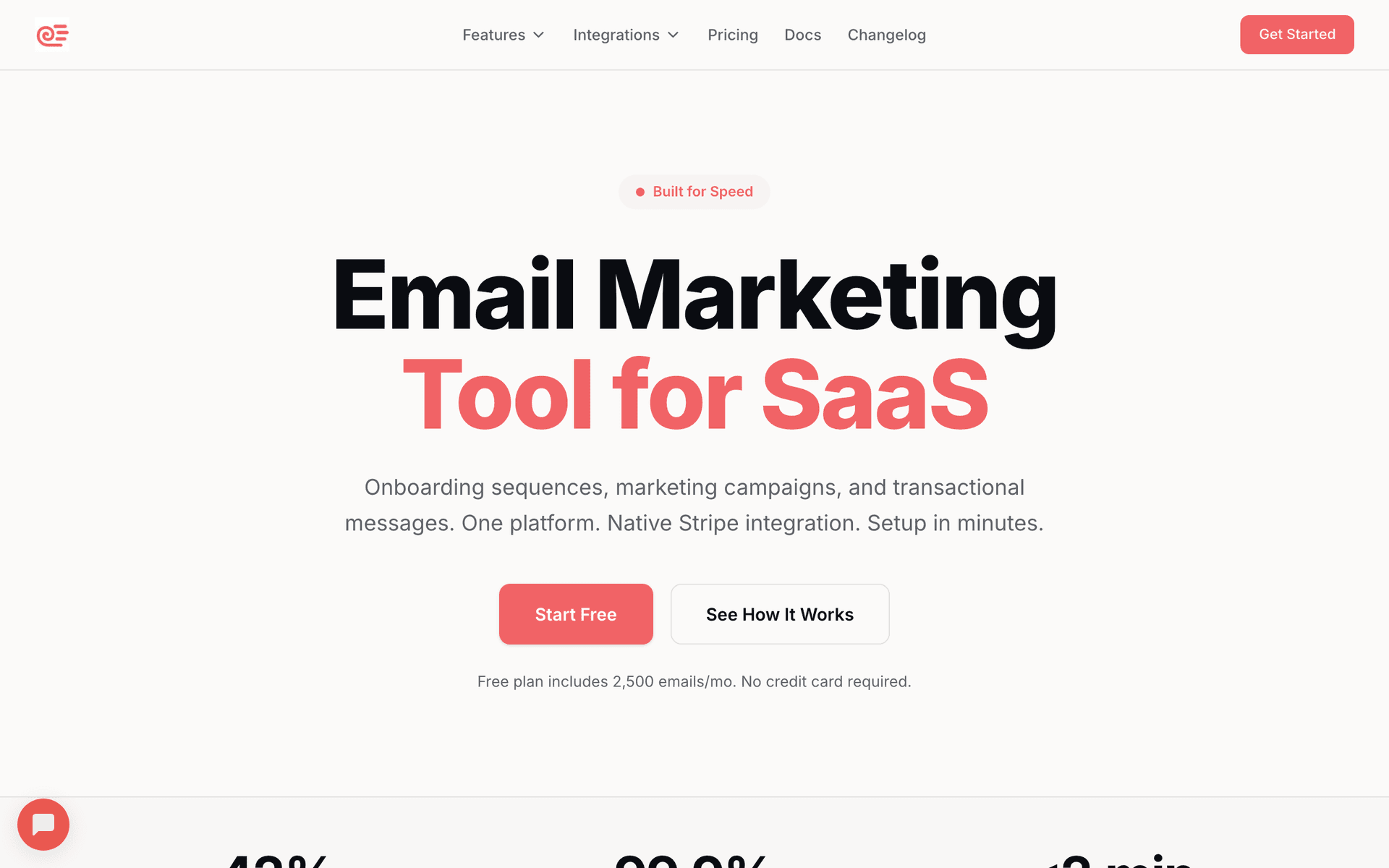
Pick on integration first. If your book lives in EZLynx, use EZLynx Marketing, because the renewal dates are already attached. If you are a life, health or benefits agency, AgencyBloc is the AMS and the marketing in one system. If you are a property and casualty agency above roughly 1,000 policies on Applied or Vertafore, Agency Revolution removes the integration problem for an agency-software price. Everyone else should run a general-purpose platform and sync five fields nightly. Sequenzy is our pick there: renewal triggers off a date attribute, missing-coverage segments as filters, an SMS add-on from $16/mo, and $19/mo for 15,000 emails at 5,000 policyholders because you pay for sends, not for a book you spent twenty years building.
| If you are... | Pick | Because |
|---|---|---|
| A P&C or mixed agency willing to sync data | Sequenzy | Date-based renewal triggers, attribute cross-sell segments, unlimited contacts, SMS add-on |
| A P&C agency above 1,000 policies on a major AMS | Agency Revolution | Native connectors and compliance-ready templates, so nothing is exported |
| A life, health or benefits agency | AgencyBloc | Policy, carrier, commission and renewal data are native, not imported |
| Already running EZLynx | EZLynx Marketing | Zero integration work and no second subscription |
| Betting on producer relationships rather than campaigns | Levitate | Personal-feeling outreach at scale with touchpoint prompts, built for this vertical |
Last verified 3 September 2026. Prices were re-checked against our pricing guides, which track each vendor's published rates. Where an insurance-native vendor sells through a sales conversation and publishes no rate card, this page says so rather than quoting a number we cannot source.
How we verified this list
Every platform here was assessed against a 5,000-policyholder book with custom fields for policy line, effective date, expiry date, premium and carrier, using the vendor's own documentation, pricing page and changelog. We checked whether the expiry date can drive a real date-based trigger; whether a missing-coverage segment can be built without exporting to a spreadsheet; what the documented AMS integration path genuinely is; how consent and DNC suppression survive an import; whether compliance disclosures can live in a footer block a producer cannot edit; and whether SMS is available with separate consent and quiet hours. Sequenzy is our own product and the only platform here we use first-hand. We have not opened accounts on twelve competing platforms and we do not claim to have.
AMS and CRM integration: the criterion that decides it
Almost every insurance email automation depends on data the agency management system already holds: policy line, effective and expiry dates, premium, carrier and producer. If the email platform cannot see those fields, you are left sending newsletters to a list, which is the version of email marketing that does not move retention.
| Integration path | What it looks like in practice | Platforms |
|---|---|---|
| Native AMS connector | Policy data syncs automatically, no maintenance | Agency Revolution, EZLynx Marketing (EZLynx only), AgencyBloc (its own AMS) |
| Vertical integration | Client and renewal data pulled from common agency systems | Levitate |
| API or webhook sync | A nightly job pushes fields into custom attributes | Sequenzy, ActiveCampaign, Brevo |
| Middleware | Zapier or similar sits between the AMS and the platform | Agent CRM, Keap, most general platforms |
| Manual CSV | Someone exports and imports on a schedule | Constant Contact, Mailchimp, MailerLite |
Five fields are enough to run every automation on this page: policy line, effective date, expiry date, premium band and carrier. Add producer and personal-versus-commercial and you can also route from-addresses and segment by book. A nightly API or CSV sync of those fields is a job an IT contractor sets up in an afternoon, which is worth saying plainly because "no native connector" often reads as "impossible" when it is really "one scheduled job".
The failure mode is not technical. It is that a manual export becomes somebody's job, that person gets busy in March, and by June the renewal automation is firing off stale dates and emailing clients about policies that have already lapsed. If you go the manual route, put the export on a recurring calendar entry with a named owner and audit it monthly. If you can automate it, automate it, because the automation you cannot trust is worse than no automation.
How to choose email marketing software for an insurance agency
Seven criteria, and none of them is ease of use.
1. Can it trigger on a date field? Good looks like storing an expiry date and firing an automation a configurable number of days before it, per policy rather than per contact. Sequenzy, ActiveCampaign, Brevo and MailerLite all do this on custom fields, and the AMS-native tools do it because they own the date. Mailchimp and Constant Contact need manual segment maintenance, which does not scale past a few hundred policies.
2. Can you segment on a missing attribute? Cross-sell is defined by absence: auto but no umbrella. Good looks like a segment builder that can express "has attribute A and does not have attribute B" without exporting anything. Sequenzy and ActiveCampaign do this properly on attributes, AgencyBloc and Agency Revolution do it on real policy data, and the general newsletter tools mostly require you to maintain lists by hand.
3. Can compliance text be locked? Good looks like a template block containing the address, licence numbers and state disclosures that individual producers cannot edit or delete. Sequenzy uses reusable template blocks; the AMS-native tools ship compliance-reviewed templates; on the general platforms it is a convention rather than a control, which means it will eventually be broken.
4. Does suppression survive an import? This is the compliance question nobody asks in a demo and the one that causes actual problems. Good looks like a global suppression list applied across every list and campaign in the account, so re-importing an old CSV cannot re-mail an opt-out. Every platform here has one; what varies is whether it is account-wide or per list. Test it before you trust it.
5. Is SMS available with separate consent? Renewal confirmations, document requests and claims-status updates are genuinely better by text. Good looks like a distinct SMS consent field, enforced quiet hours, and STOP, START and HELP handled by the platform. Sequenzy's add-on is $16/mo including 1,000 credits. Constant Contact adds SMS from $10/month. Brevo sells credits. MailerLite has none.
6. Can you A/B test the renewal subject line? The renewal series is the highest-value send in the vertical, so a few points of open rate is worth real retention. Included on Sequenzy, MailerLite and ActiveCampaign, on Brevo's Business plan, on Mailchimp's higher tiers, and generally absent from the AMS-native tools.
7. What does the book cost to store? Agencies accumulate policyholders and prospects for decades and never delete anyone. Contact-priced platforms charge every month for people you email six times a year. Sequenzy and Brevo charge for emails sent with unlimited contacts. Mailchimp, MailerLite, Constant Contact and ActiveCampaign charge by contact or subscriber band, and the gap widens every year the agency stays in business.
The insurance email playbook
Renewal communication that stops shopping
Trigger: the policy expiry date attribute. Segment: one policy at a time, split by personal versus commercial. Metric to watch: renewal retention for email-engaged versus non-engaged clients.
| Timing | Message | Purpose |
|---|---|---|
| 90 days (commercial) or 60 days (personal) | Renewal is coming, here is what we will review | Reaches them before a competitor's mailer arrives |
| 30 days | The specifics: what changed, why the cover still fits | The email that actually prevents shopping |
| 14 days | Confirm, or call us | Catches anyone who ignored the first two |
| Day after renewal | Thank you, plus one coverage question | Opens the cross-sell conversation at the warmest moment |
Lead with coverage and service, not with the premium. Clients who shop are almost always reacting to a number in isolation, and the thirty-day email is your one chance to put that number in context: what the market did, what their claims history did, what the alternative actually excludes. Subject lines that work in ascending order of directness: "Your renewal is coming up in November", "Before you renew: what changed and why the cover still fits", "Renewing in two weeks - anything to adjust?".
Two operational details. Send from the producer the client knows, not from a generic agency address, because renewal is the moment the relationship is being tested. And A/B test the thirty-day subject line - it is the single highest-value test available in this vertical, and most agencies never run it.
Cross-selling your existing book
Trigger: segment membership, refreshed on every sync. Segment: defined by what the client does not have. Metric to watch: quote requests per campaign, healthy at 3-8% of the segment.
| Current coverage | Missing line | Trigger point |
|---|---|---|
| Auto only | Home or renters | 30 days after auto renewal |
| Home only | Auto | At home renewal |
| Auto and home | Umbrella | Annual review, or an asset or income milestone |
| Personal lines, no life | Life or disability | Life event: marriage, birth, home purchase |
| Commercial general liability | Cyber | Annual review, or a relevant industry incident |
| Commercial, no workers comp | Workers compensation | First employee hired, recorded as a life-event flag |
| Group benefits | Ancillary lines | At plan renewal |
| Renters | Auto bundle | At renters renewal |
Every row is a segment defined by absence, which is why policy line has to be a queryable attribute rather than a note in the AMS. Two emails per gap is enough: one that explains the risk with a concrete scenario, one soft follow-up to non-responders offering a review rather than a quote.
The discipline that keeps this compliant is that these are education emails, not coverage descriptions. Explain in general terms what a category of risk looks like and what a solution generally does. Never state what the recipient's own policy does or does not cover in a broadcast, because you cannot see their policy at the moment the email opens and the file may have changed.
Claims, referrals and the two-week window
Trigger: claim closed. Metric to watch: referral response, 5-12% when triggered from the event rather than a calendar.
A claim is the only time most clients see what they have been paying for. Handled well, it is the highest-yield referral window in the business, and it closes in about two weeks.
- Three days after closure, a service check-in with no ask. A genuine question from the producer inviting a reply. This catches dissatisfaction while it is still fixable rather than discovering it at renewal.
- Day ten, the referral request - but only if the check-in went well or got no reply. One sentence of context referencing the claim, one sentence of ask, and a trivially easy way to pass on a name. Suppress anyone who replied unhappily.
- Nothing else. Do not attach the referral request to a newsletter, and do not attach an incentive unless your state rules clearly permit it, because rebating and inducement rules vary and this is not a place to improvise.
The same window exists after a successful renewal review where you found savings or fixed a gap. Trigger from that event too.
Life events and the annual check-in
Most cross-sell opportunities arrive as life events the agency never hears about: a marriage, a new driver, a house purchase, a first employee, a business that grew past a threshold. Two mechanics catch them.
The annual check-in, sent on the policy anniversary, is three or four yes-or-no questions - moved, married, new driver, started or grew a business, made a significant purchase. Every answer updates an attribute and can trigger a follow-up sequence. It takes the client thirty seconds and it produces better cross-sell data than any list you could buy.
The producer-set flag is the other half. When a producer hears about a life event on the phone, they set a flag on the record and an automation fires: acknowledge the event properly first, then note in general terms what that event usually changes about someone's cover, then offer a review. The value here is that it happens the same week rather than at the next renewal, which is usually eleven months too late.
Compliance: what insurance agents can and cannot send
This is a regulated vertical and the email rules are stricter than most agents assume. The practical checklist:
- Consent. Marketing email needs it, and SMS needs its own separate consent recorded as its own field. Consent to be quoted is not consent to be marketed to, and neither is a business card.
- Unsubscribe. Working, honoured promptly, and applied across every list in the account rather than only the one that was mailed. Check that your platform's suppression is account-wide, not per list.
- DNC and suppression on import. Keep a global suppression list that survives every import, and import it before you import contacts when you migrate. Re-importing an old CSV and re-mailing an opt-out is the most common failure in this vertical and it is entirely mechanical.
- Identification and disclosure. Accurate from-name and reply address, a physical postal address, and any licence numbers or state disclosures your carrier agreements or state department require. Put these in a locked template block so no producer can delete them to make an email look cleaner.
- Do not quote or describe coverage in a broadcast. Describing what a policy covers in a mass email is where producers create E&O exposure, because the recipient's actual policy may differ and the file may have changed since the segment was built. Keep specifics one-to-one and on the record.
- Rebating and inducement. Referral incentives, gift cards and prize draws are restricted differently by state. Check before you attach anything of value to a referral request.
- Data handling. Never put policy numbers, dates of birth, driver licence numbers, health information or claim details into a marketing platform. Attributes for segmentation, not records for storage. If a field does not appear in a segment or a trigger, it should not be in the sync.
- Producer sending. Personal one-to-one email from a producer is fine. Bulk sending from a producer's own mailbox is not: no unsubscribe, no suppression, no authentication, no record, and the relationship walks out of the door with the producer.
This is general guidance rather than legal advice. Your state department, your carriers and your E&O policy set the actual boundaries, and a compliance review of your templates costs far less than finding out the hard way.
The insurance email calendar
Educational content outperforms promotion in this vertical by a wide margin, and the calendar writes itself if you follow real risk seasons rather than marketing holidays.
| Quarter | Content angles | Best segment |
|---|---|---|
| Q1 | Annual coverage reviews, tax-season financial content, life-event check-ins, winter driving and frozen pipes | Personal lines, life-eligible clients |
| Q2 | Storm, hurricane and wildfire preparedness, home projects and coverage gaps, graduation and new drivers | Coastal and wildfire-zone clients, families |
| Q3 | Back to school and teen drivers, mid-year commercial reviews, umbrella education, holiday travel plans | Families, commercial accounts |
| Q4 | Open enrolment, year-end life and umbrella reviews, holiday liability, gifting and valuables | Benefits clients, high-asset personal lines |
Segment every one of these by policy line. A hurricane preparedness email sent to a life-only client is not a neutral event; it is a small deposit of irrelevance that makes the next renewal email slightly less likely to be opened.
What it costs at 1,000, 5,000 and 15,000 policyholders
Assumptions: monthly contact plus event-driven renewal and cross-sell sends, roughly one to two emails per contact per month, so about 2,000 emails at 1,000 policyholders, 10,000 at 5,000 and 30,000 at 15,000. SMS is priced separately everywhere and is not in these figures. Prices come from our pricing guides, which track each vendor's published rates; vendors that quote rather than publish are described rather than guessed.
| Platform | 1,000 policyholders | 5,000 policyholders | 15,000 policyholders |
|---|---|---|---|
| Sequenzy | Free tier, 2,500 emails a month, or $19/mo for 15,000 emails | $19/mo for 15,000 emails | $29/mo for 30,000 emails |
| Brevo | Free at 300 emails/day | Starter from $9/mo at 5,000 emails, one step up | Starter, a further volume step up |
| MailerLite | Comfort from $12/month at the entry band | Priced by subscriber band | Priced by subscriber band |
| Mailchimp | From about $13/month on entry tiers | Priced by contact band | Priced by contact band |
| Constant Contact | Lite from $12/month, ten times contacts in sends | Standard from $35/month upward by tier | Standard or Premium, by contact tier |
| ActiveCampaign | Plus from $49/month at 1,000 contacts | Between the 1,000 and 10,000 contact rates | Above the 10,000-contact rate of about $239/month |
| Keap | From $299/month | From $299/month | From $299/month, plus implementation |
| Agency Revolution, AgencyBloc, Levitate | Quoted by agency size or seat count | Quoted by agency size or seat count | Quoted by agency size or seat count |
| EZLynx Marketing | Bundled with the EZLynx subscription | Bundled with the EZLynx subscription | Bundled with the EZLynx subscription |
| Agent CRM | Flat monthly subscription | Flat monthly subscription | Flat monthly subscription |
Two conclusions. First, at agency volumes email itself is cheap on any volume-priced platform, and the real cost difference is contact storage: a 15,000-name database costs nothing to keep on Sequenzy or Brevo and a permanent monthly fee on the contact-priced tools, which is precisely the wrong shape for a business whose database only ever grows. Second, the insurance-native tools are not really an email purchase - you are buying an agency system, and the marketing is an argument for staying. Compare them against your AMS spend, not against an email bill.
SMS on top: Sequenzy's add-on is $16/mo including 1,000 credits with additional credits from $0.012, Constant Contact starts SMS at $10/month on Lite and Standard and includes the first 500 messages on Premium, Brevo sells credits as needed, and the AMS-native tools generally bundle it.
Getting started: first 30 days
Week 1 - get the data out and the domain right. Export from the AMS with exactly the fields you will segment on: email, mobile number with its own consent flag, name, policy line, effective date, expiry date, premium band, carrier and producer. Nothing else. Import your suppression and DNC list before you import any contacts. Authenticate the sending domain with SPF, DKIM and DMARC, because an agency domain that starts sending bulk mail without authentication lands in spam and takes months to recover. Build the locked compliance footer block and get it reviewed.
Week 2 - build the renewal series. Four emails triggered off the expiry date: 90 or 60 days, 30 days, 14 days, and the day after renewal. Split personal and commercial. Set the from-address to the producer who owns the relationship. Turn it on and let it run against the whole book. This one automation is worth more than everything else in the month combined, which is why it comes before the newsletter.
Week 3 - build the welcome and the first cross-sell segment. Four emails for new policyholders: welcome with the producer's direct number, the claim process walkthrough, the coverage education email at day thirty, and the life-event check-in at day ninety. Then pick your single largest coverage gap - usually auto with no umbrella, or personal lines with no life - build that segment and write the two-email educational sequence for it.
Week 4 - send the first real campaign and set up measurement. Send a segmented educational newsletter with no offer in it, and A/B test the subject line so you learn the mechanic before you need it on a renewal send. Then set up the five numbers you will actually review: retention for email-engaged versus non-engaged clients, cross-sell policies written after a campaign, referrals attributed to a request email, quote requests tagged to email, and revenue per policyholder for subscribers versus non-subscribers. Put the AMS sync on a schedule with a named owner and an audit date.
By the end of the month the renewal series is running against the whole book, new policyholders are being onboarded automatically, one cross-sell segment is live, and you can tell whether any of it is working. Add the claim follow-up, the referral request and the remaining cross-sell segments in month two.
Insurance email benchmarks
| Metric | Healthy range | Notes |
|---|---|---|
| Renewal series open rate | 40-55% | Clients open mail about money they are about to spend |
| Educational newsletter open rate | 22-32% | Education consistently outperforms promotion here |
| Cross-sell conversion per campaign | 3-8% | Only with genuine missing-coverage segmentation |
| Referral request response | 5-12% | Best within two weeks of a resolved claim |
| Claim follow-up reply rate | 10-20% | Low replies usually mean the email reads as automated |
| New policyholder welcome open rate | 50-70% | The highest-open sequence an agency sends |
| Unsubscribe per send | Under 0.3% | Spikes on unsegmented sends across policy lines |
| Retention lift from a renewal series | Several points | The reason to build this before anything else |
Where to go next
- Insurance email templates - renewal, cross-sell and referral copy
- Renewal email templates and reminder email templates
- Welcome email templates - for the new policyholder sequence
- Email marketing for financial advisors and mortgage brokers
- Email marketing for real estate agents - a common referral partner
- Email marketing for estate planners and accountants
- Smart segments - building missing-coverage segments from attributes
- SMS - renewal and claims-status nudges with separate consent
- Developer API and webhooks - for a nightly AMS sync
- Zapier integration - middleware sync where no native connector exists
- A/B testing - for the 30-day renewal subject line
- Annual renewal email sequence and subscription renewal reminder emails
- Email segmentation examples and the email deliverability guide
- Compare Sequenzy and Constant Contact or Mailchimp
- Pricing - what a 5,000-policyholder book actually costs
Start free with 2,500 emails a month and unlimited contacts - enough to run a renewal series for a small book at no cost.