
Updated 2026-05-12

12 AgentMail Alternatives for Agent Email

AgentMail is built for dedicated AI-agent inboxes. If you need marketing automation, notification routing, lower-cost mailboxes, or raw email infrastructure, these are the closest alternatives.

TL;DR

Quick answer: If you need email marketing agents, choose Sequenzy. If you need low-cost per-agent inboxes, evaluate AGmail or agentmail.email. If you need product notifications, choose Knock, Novu, or Courier. If you only need sending and receiving primitives, use Mailgun, Postmark, MailerSend, or SES.

12 Best AgentMail Alternatives

Our Pick for SaaS Companies
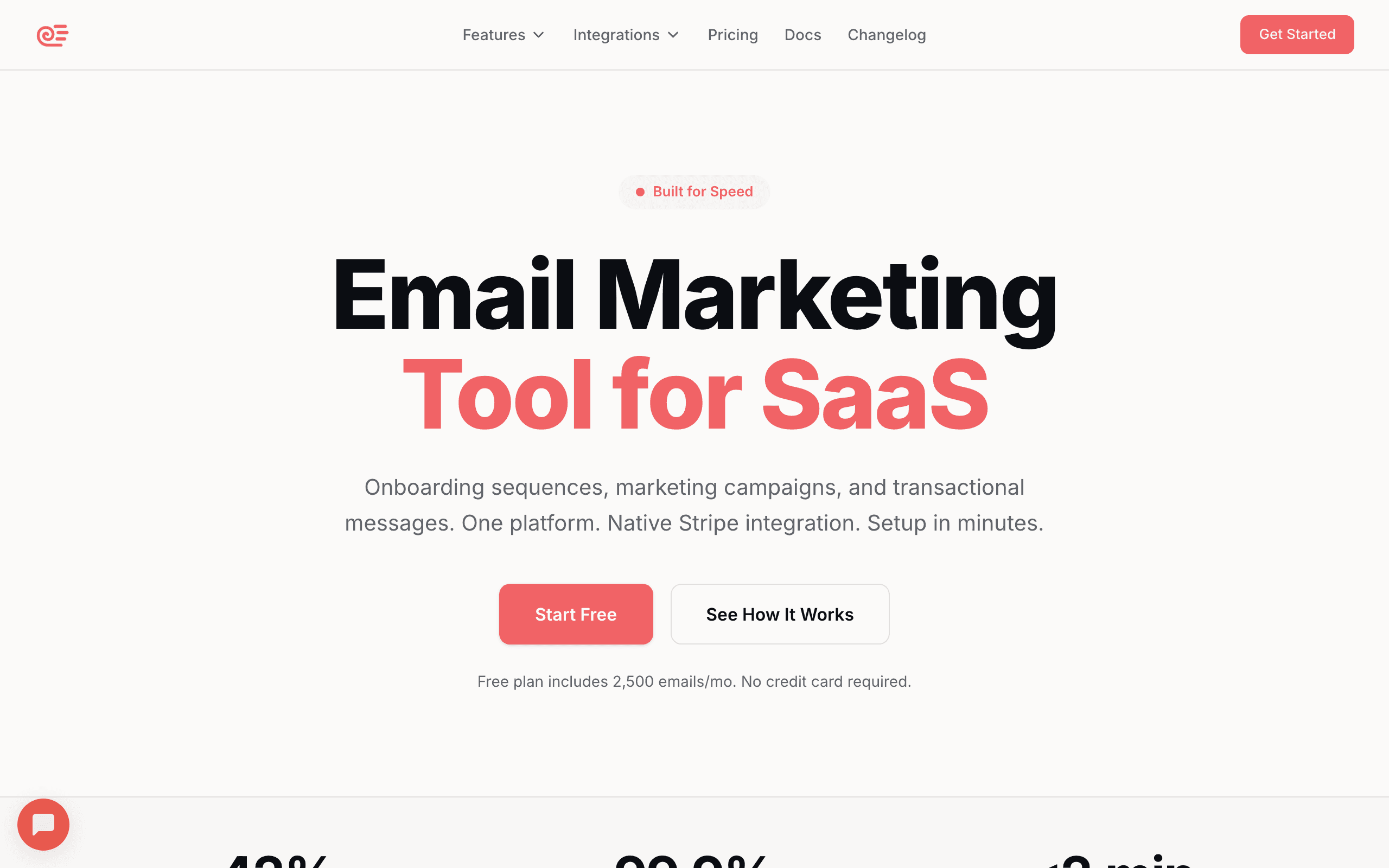
Sequenzy landing page screenshot
#1
4.8avg rating
Sequenzy
Email marketingMCPAI agentsSaaS

Sequenzy is the best AgentMail alternative when your agent needs to run email marketing workflows instead of owning a personal inbox. AgentMail is built around dedicated inboxes, receiving, threading, and per-agent identity.

Sequenzy is built around subscribers, campaigns, sequences, transactional emails, analytics, and revenue attribution. That makes it better for SaaS onboarding, lifecycle marketing, dunning, product updates, and agent-generated campaigns. The MCP integration lets agents create campaigns, generate sequences, inspect subscribers, send tests, and read stats from natural language. It is not a drop-in replacement for AgentMail if you need thousands of programmatic inboxes, but it is stronger when the goal is email marketing automation.

Visit
Best for
AI agents managing campaigns, sequences, subscribers, and transactional email
Pricing
$49/month for 120k emails (unlimited subscribers)

Pros

  • MCP support for real email marketing workflows
  • Campaigns, sequences, subscribers, and analytics
  • Transactional and marketing email in one platform
  • Native SaaS lifecycle use cases
  • Strong fit for revenue and onboarding workflows

Cons

  • Not a per-agent inbox provider
  • No general-purpose IMAP-style mailbox for every agent
  • Email-only, not broad notification routing
#2
4.3avg rating
AGmail
Agent inboxesOpenClawCustom domainsLow-cost

AGmail is one of the closest direct AgentMail alternatives because it also focuses on email inboxes for AI agents. It advertises unlimited inboxes on the free @agmail.ai domain, custom domains on paid plans, REST API access, OpenClaw skill support, realtime events, full threading, semantic search, and outbound guardrails.

The pricing is aggressive: free for unlimited inboxes on @agmail.ai, Pro at $15/month for custom domains, and Business at $49/month for dedicated infrastructure. Because it is newer and less proven than AgentMail, evaluate deliverability, uptime, security posture, and support carefully before using it for production customer communication.

Visit
Best for
Low-cost agent inboxes with OpenClaw-first workflows
Pricing
Free on @agmail.ai, Pro $15/mo, Business $49/mo

Pros

  • Unlimited inboxes advertised on every plan
  • Lower entry price than AgentMail paid tiers
  • REST API and OpenClaw skill support
  • Realtime events and threading
  • Custom domains on paid plans

Cons

  • Newer and less battle-tested
  • Security and compliance posture needs evaluation
  • Smaller ecosystem than AgentMail
#3
4.0avg rating
agentmail.email
Agent inboxesMCPCLIOpen source

agentmail.email is another close alternative for lightweight programmatic agent mailboxes. It supports creating mailboxes through an API, receiving email instantly, and integrating through CLI, REST API, or MCP server.

Its public pricing is simpler than AgentMail: free forever with 5 mailboxes, 500 messages/month, 50 sends/month, and webhooks; Pro is $9/month for 50 mailboxes, 10,000 messages/month, 500 sends/month, and priority support. The tradeoff is maturity. It looks useful for experiments, verification-code workflows, and small agent projects, but teams should evaluate reliability, custom domain status, support, and compliance before production use.

Visit
Best for
Lightweight agent mailbox experiments and verification-code workflows
Pricing
Free, Pro $9/mo

Pros

  • CLI, REST API, and MCP server
  • Open-source positioning
  • Cheap Pro plan
  • Simple mailbox creation flow
  • Good fit for prototypes

Cons

  • Lower free limits than AgentMail
  • Custom domains listed as coming soon
  • Less mature production story
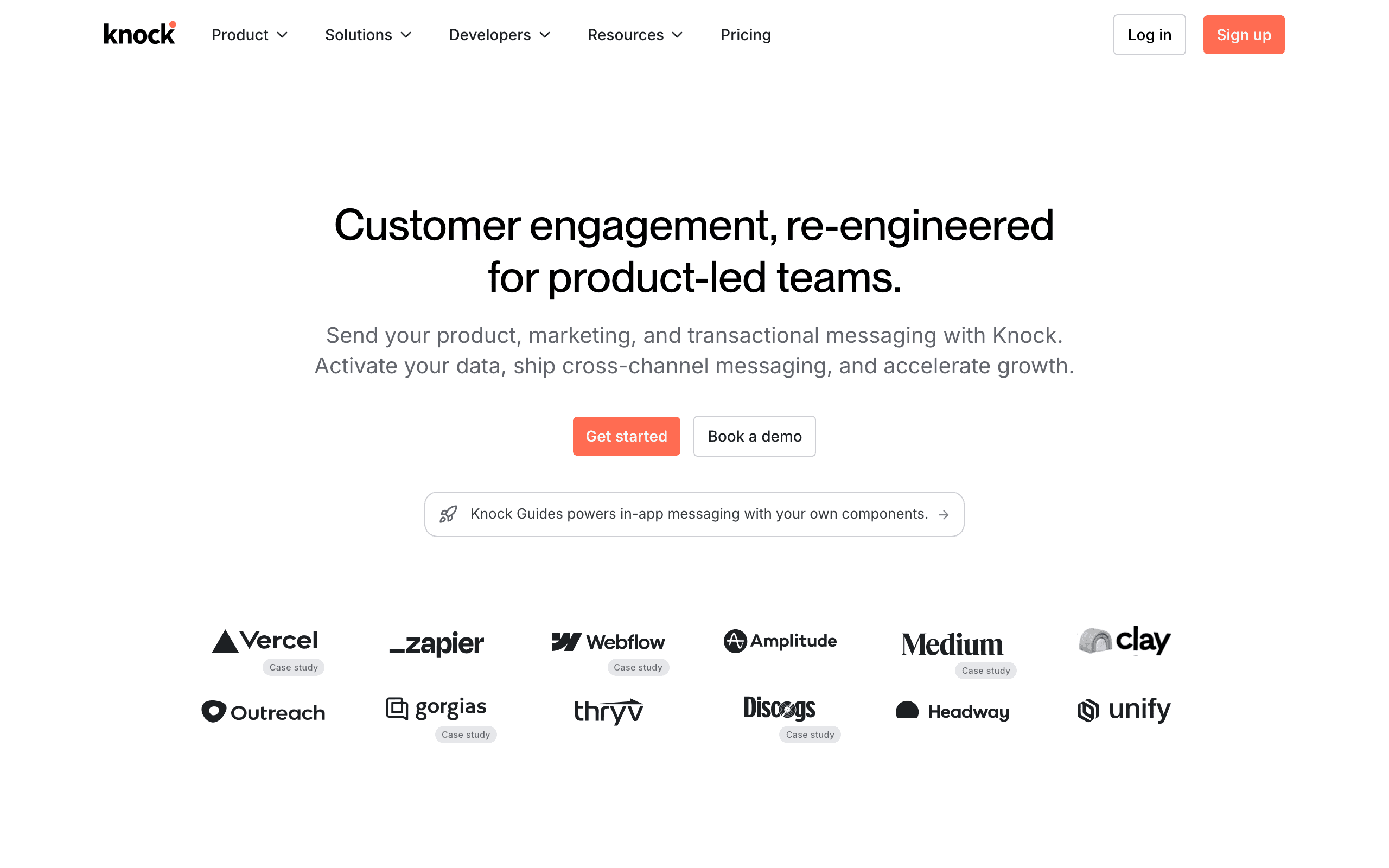
Knock landing page screenshot
#4
4.6avg rating
Knock
NotificationsMulti-channelMCPProduct messaging

Knock is not an AgentMail clone. It does not give every agent a mailbox. It is product notification infrastructure for workflows across email, in-app, push, SMS, Slack, and chat.

Choose Knock when your agent needs to notify users inside a product, respect preferences, batch messages, and manage multi-channel delivery. It is stronger than AgentMail for product notifications, but weaker for agent identity, threaded email conversations, and service-signup inboxes. Knock's developer tier includes 10,000 messages/month, while paid production plans start around $250/month.

Visit
Best for
Product notification agents across email, in-app, push, and Slack
Pricing
Free developer tier, paid plans from $250/mo

Pros

  • Multi-channel notification workflows
  • Preferences, batching, and in-app feeds
  • Strong developer experience
  • MCP and management API tooling
  • Better for product notifications than inbox ownership

Cons

  • Not a dedicated inbox provider
  • Higher paid entry point
  • Not focused on marketing campaigns
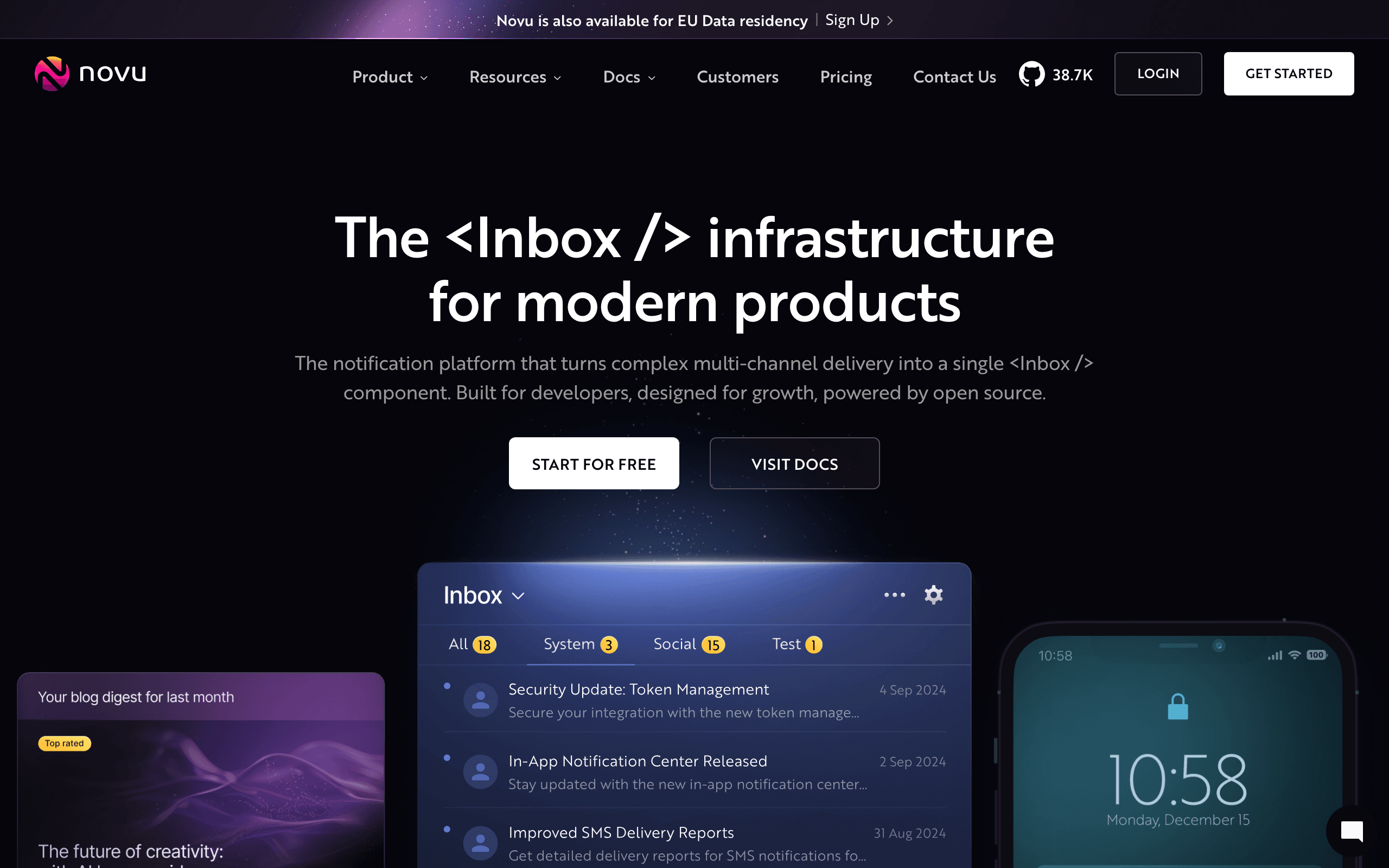
Novu landing page screenshot
#5
4.4avg rating
Novu
Open-sourceNotificationsMCPSelf-hostable

Novu is an open-source notification infrastructure platform with workflow, subscriber, preference, and multi-channel messaging primitives. It also documents MCP support, which makes it relevant for agentic notification workflows.

Novu is a good AgentMail alternative if your real need is "let agents trigger notifications" rather than "give every agent a full email inbox." It supports email, in-app, SMS, push, and chat channels, and can be self-hosted. The tradeoff is operational work if you self-host, and less focus on native email threading or per-agent inbox identity.

Visit
Best for
Open-source notification workflows with MCP support
Pricing
Open-source free, cloud plans vary

Pros

  • Open-source and self-hostable
  • Multi-channel notification workflows
  • MCP documentation
  • Good fit for developer-owned notification systems
  • Avoids per-inbox pricing model

Cons

  • Not an agent inbox platform
  • Self-hosting requires DevOps
  • Email threading and inbox identity are not the core product
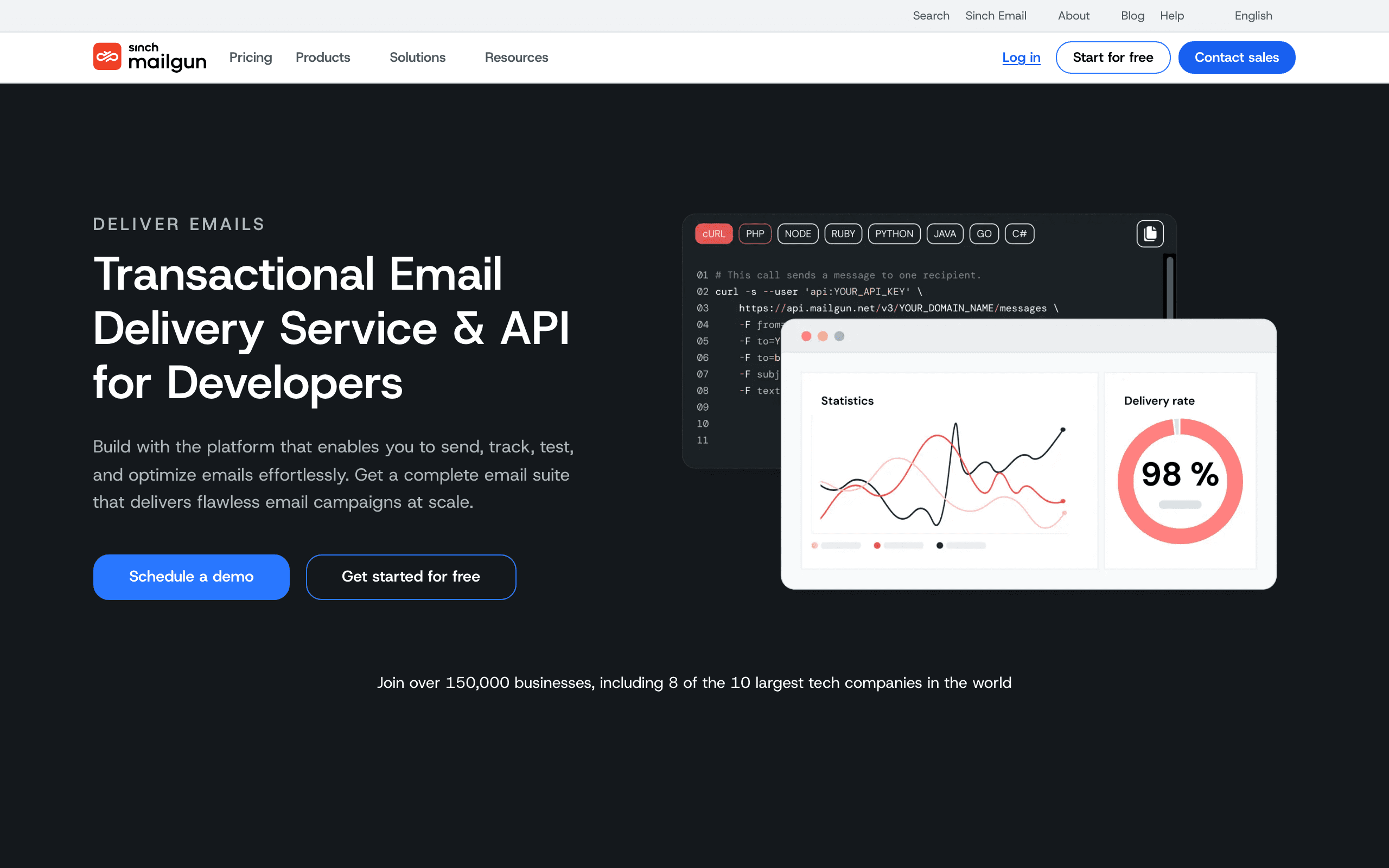
Mailgun landing page screenshot
#6
4.1avg rating
Mailgun
Email infrastructureInbound routingAPIDeveloper

Mailgun is the best AgentMail alternative when you want raw email infrastructure instead of a purpose-built agent inbox product. It supports sending, receiving, inbound routing, validation, suppression handling, logs, analytics, and webhooks.

You can build agent inbox behavior on top of Mailgun, but you will own the mailbox model, threading, state, permissions, and UI. That makes it more flexible but more engineering-heavy. Choose Mailgun if email is core infrastructure in your product and you want primitives rather than a packaged agent mailbox platform.

Visit
Best for
Teams building custom agent email infrastructure
Pricing
Paid plans commonly start around $15-$35/mo

Pros

  • Strong inbound routing
  • Flexible sending and receiving APIs
  • Email validation and logs
  • Good for custom products
  • More mature than most agent-specific inbox startups

Cons

  • You build mailbox/threading behavior yourself
  • No agent-native inbox concept
  • No marketing automation layer

What users say

View source reviews
Marcello Guimaraes · Trustpilot

Initially, it took a while for the first-level support to understand my need. Once I escalated to the second level, it was very quick and efficient.

Shahriar Alam · Trustpilot

If you want to see the world's worst support system, you should check their support system. You will open a ticket, and they will reply after 48 hours minimum. I just wonder why they even have a support system.

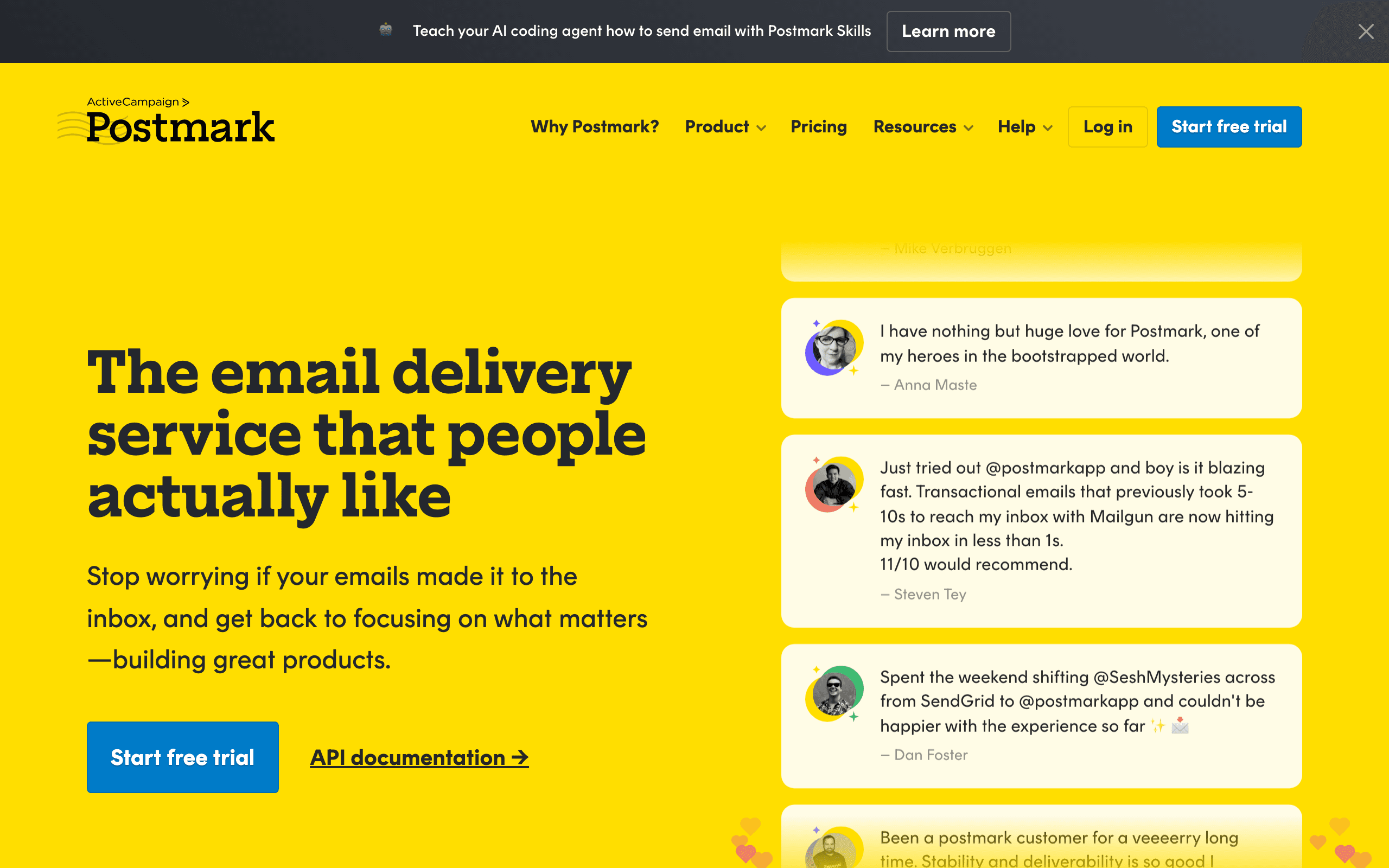
Postmark landing page screenshot
#7
4.5avg rating
Postmark
TransactionalInboundDeliverabilityAPI

Postmark is a strong alternative when reliability matters more than per-agent inbox provisioning. It offers excellent transactional deliverability, message streams, clear logs, templates, webhooks, and inbound email parsing.

Agents can receive inbound emails through webhooks and route replies into your app. It is not designed for creating thousands of independent agent inboxes, but it is much more proven for critical transactional delivery. Choose Postmark when the agent's email is tied to product workflows like receipts, alerts, magic links, and support replies.

Visit
Best for
Reliable transactional and inbound email for agent workflows
Pricing
Free developer plan, paid sending from 10,000 emails/mo

Pros

  • Excellent deliverability
  • Inbound email webhooks
  • Mature logs and message streams
  • Strong fit for production transactional email
  • Clear API documentation

Cons

  • Not per-agent inbox infrastructure
  • No native agent identity model
  • Limited marketing automation

What users say

View source reviews
Oli Ver · Trustpilot

We used SendGrid for 6 months and it was a constant headache. Our welcome emails, order confirmations, and password reset emails were either landing in spam or getting blocked. Postmark solved all of that.

Mateusz Kroplewski · Trustpilot

I have tried using MailJet and AmazonSES before Postmark and the customer service is very slow. I set up Postmark and got my domain approved to send email on the same day. Customer service is amazing.

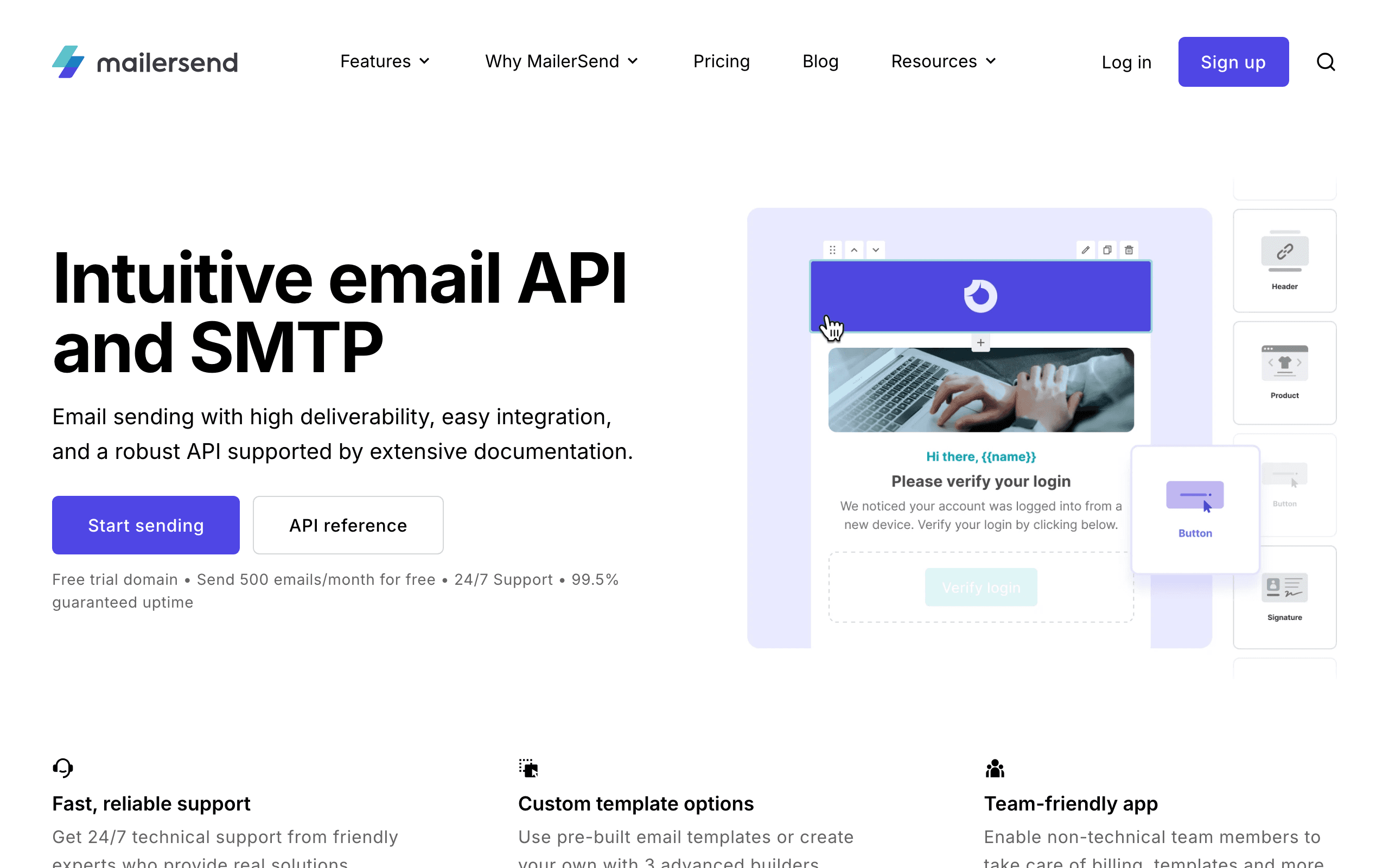
MailerSend landing page screenshot
#8
4.1avg rating
MailerSend
TransactionalMCPTemplatesWebhooks

MailerSend is a transactional email API with templates, inbound routing, webhooks, SMS add-ons, SDKs, and listed MCP server support. It is not a dedicated agent inbox platform, but it is a practical alternative when your agent only needs to send templated transactional emails and receive webhook feedback.

Compared with AgentMail, MailerSend is less specialized for inbox identity and threaded conversations, but more conventional for production transactional email workflows.

Visit
Best for
Transactional email agents that need templates and MCP availability
Pricing
Free tier, paid plans from around $7/mo

Pros

  • API, SMTP, SDKs, and templates
  • Webhooks and inbound routing
  • MCP server support listed
  • More traditional production email model
  • Good for template-owned sends

Cons

  • Not an agent mailbox provider
  • Free tier is limited
  • Marketing automation is not the main focus

What users say

View source reviews
Leonardo Messias · Trustpilot

I've had a great experience using MailerSend. The platform is reliable, easy to use, and delivers exactly what it promises. The interface is clean and intuitive.

J O Spies · Trustpilot

I have to say that MailerSend support is exceptional. They ask all the right questions so I simply have to provide the details accordingly. Professional assistance.

Resend landing page screenshot
#9
4.6avg rating
Resend
TransactionalDeveloper DXReact EmailAPI

Resend is a transactional email API with excellent developer experience, modern SDKs, React Email support, and a CLI useful for humans, AI agents, and CI/CD workflows. It is not a direct AgentMail alternative because it does not create per-agent inboxes or manage threaded conversations.

It is a better choice when the agent is writing application code that sends emails from your product. Use Resend for password resets, receipts, alerts, and code-owned templates. Use AgentMail when the agent itself needs an email identity.

Visit
Best for
Coding agents adding transactional email to applications
Pricing
Free 100/day, paid plans from around $20/mo

Pros

  • Excellent developer experience
  • React Email support
  • Clean SDKs and API
  • Good CLI story for agent workflows
  • Strong for application-triggered email

Cons

  • No dedicated agent inboxes
  • No native receiving/threading model
  • Limited lifecycle marketing

What users say

View source reviews
Mantas Vileisis · Trustpilot

They suspended account when we were getting a lot of new customers/traffic. We lost tons of them because of Resend. They decided to suspend our account, and after a long wait they decided to keep the ban!

Zeniki Beniki · Trustpilot

Just implemented this service to my client's website. Super easy to implement, all verifications went smooth and quick. Emails come to Gmail next second. Very happy so far!

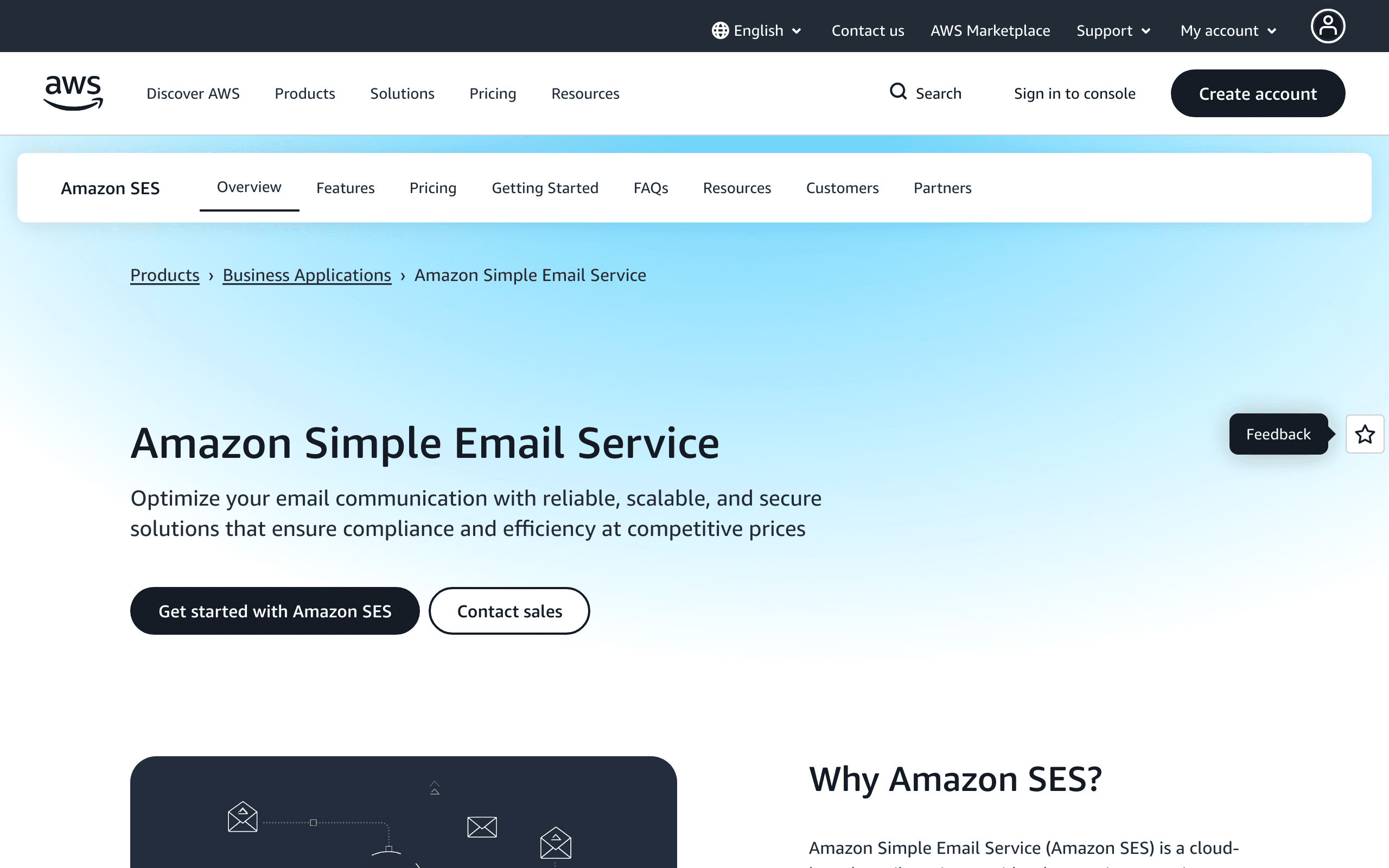
Amazon SES landing page screenshot
#10
3.8avg rating
Amazon SES
AWSLow-costInfrastructureAPI

Amazon SES is the cheapest serious option for raw email sending and receiving infrastructure. It is not agent-native at all, but AWS-native teams can build agent email systems around SES, Lambda, SNS, S3, EventBridge, and Kinesis.

This is the opposite of AgentMail's packaged inbox approach: you get primitives and low cost, but you build the mailbox model, threading, inbound processing, deliverability monitoring, and guardrails yourself.

Visit
Best for
AWS teams building custom low-cost email infrastructure
Pricing
$0.10 per 1,000 outbound emails

Pros

  • Lowest cost at scale
  • AWS-native event pipeline
  • Flexible sending and receiving primitives
  • No per-inbox SaaS pricing
  • Strong infrastructure reliability

Cons

  • No agent-native UX
  • You build inboxes, threading, and safety controls
  • AWS setup is more complex
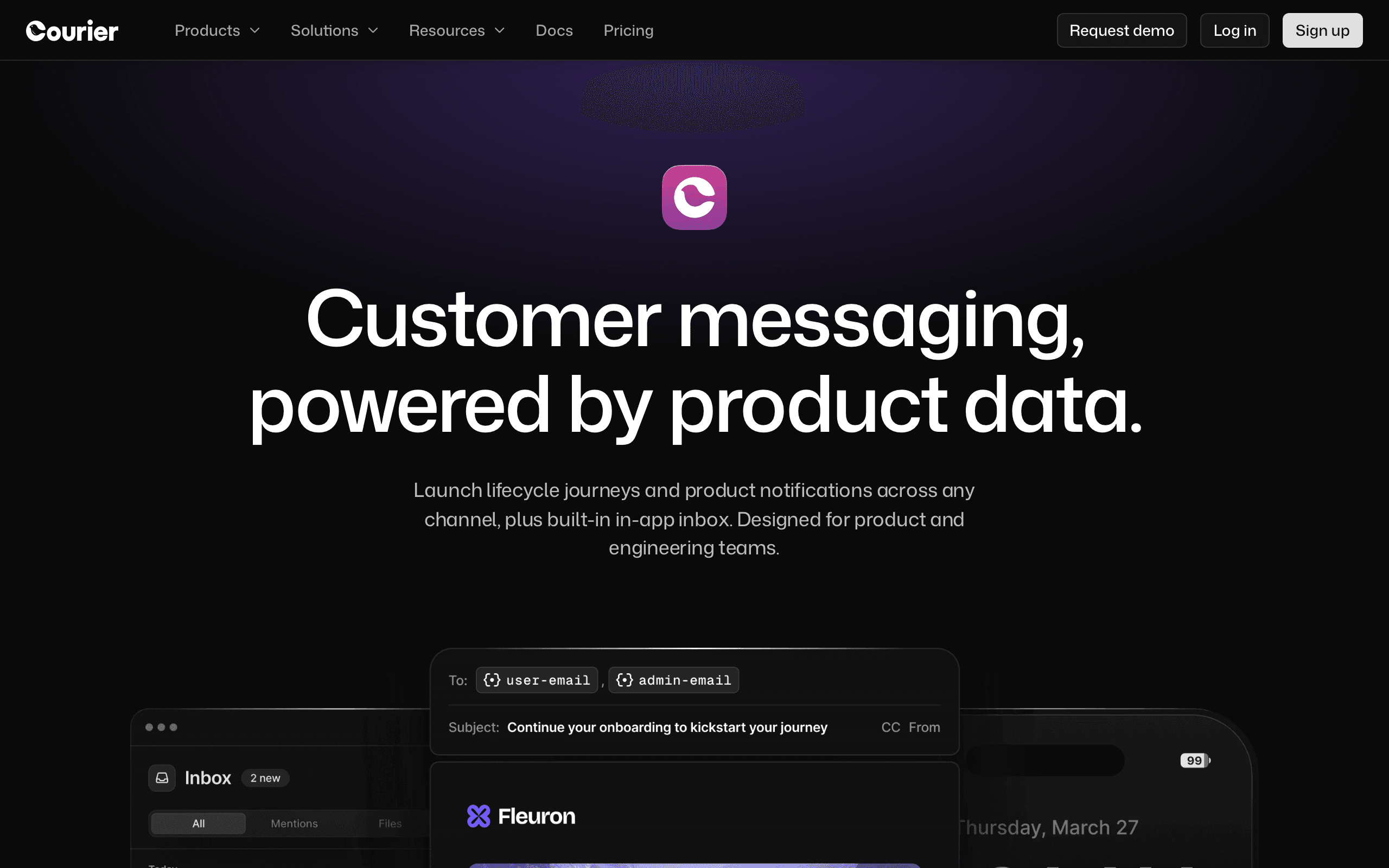
Courier landing page screenshot
#11
4.2avg rating
Courier
NotificationsRoutingMulti-channelAPI

Courier is a provider-agnostic notification routing platform. It is an AgentMail alternative only if you are trying to coordinate notifications across email, SMS, push, chat, and webhooks.

It does not give agents dedicated inboxes, but it can route messages through multiple providers and manage templates and preferences. Choose Courier when the agent should say "notify this user" and the platform should decide how.

Visit
Best for
Provider-agnostic notification routing for agents
Pricing
Developer tier includes 10,000 sends/mo, usage-based after

Pros

  • One API for many channels
  • Provider routing and preferences
  • Good fit for product notifications
  • Useful abstraction for agents
  • Generous developer tier

Cons

  • No native agent inbox identity
  • Less direct control over email provider details
  • Not an email marketing platform
MagicBell landing page screenshot
#12
4.1avg rating
MagicBell
In-app inboxNotificationsMulti-channelUI components

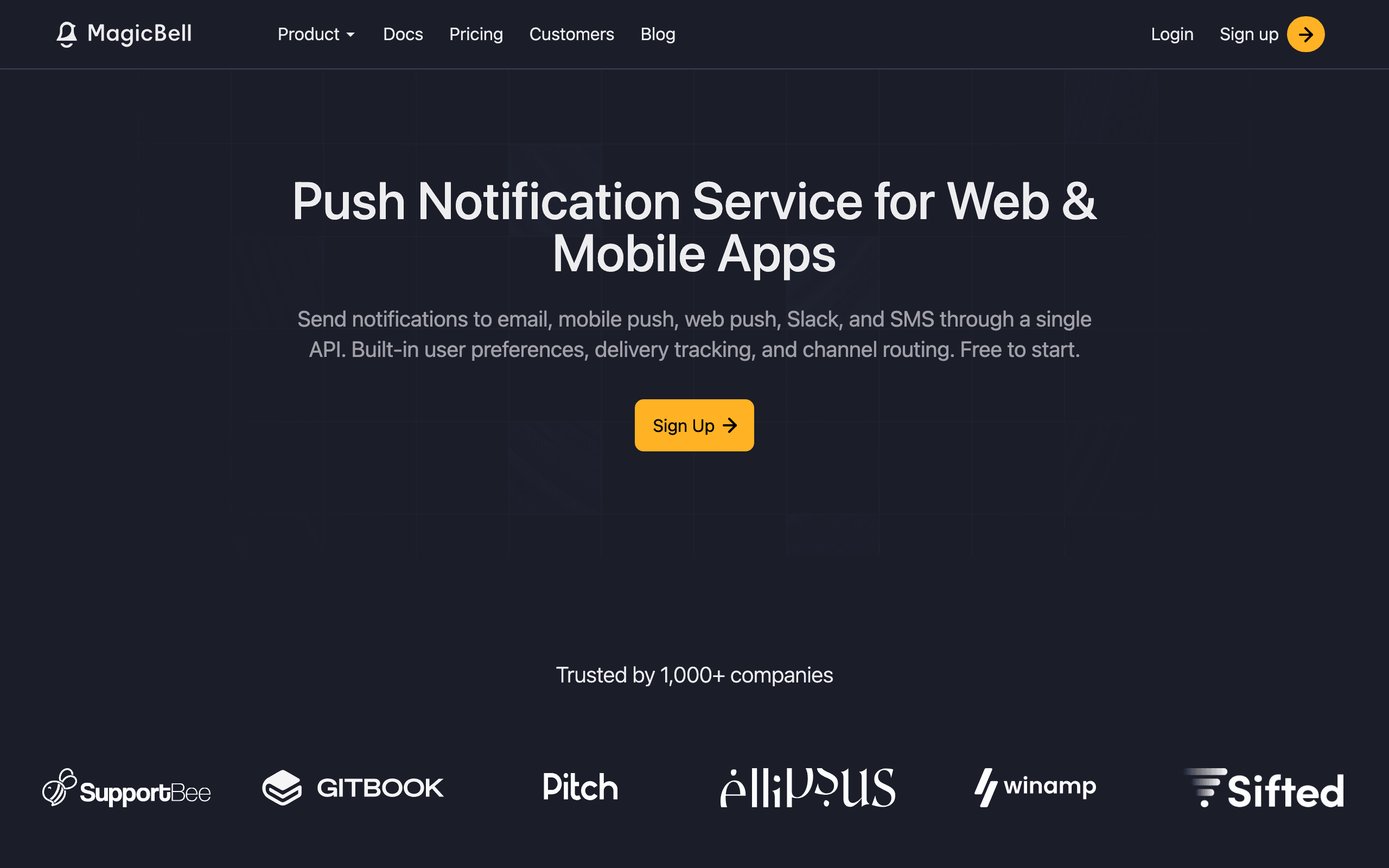
MagicBell is best thought of as an in-app notification inbox, not an email inbox provider. It gives products notification feeds, user preferences, realtime updates, and delivery through channels like email, push, SMS, and Slack.

It is useful if your "agent inbox" need is really a product notification center. It is not a fit if agents need external email addresses, service signups, receiving verification codes, or threaded email conversations.

Visit
Best for
Product notification inboxes and in-app agent alerts
Pricing
Free tier, usage-based paid plans

Pros

  • In-app notification UI components
  • Multi-channel delivery
  • Good fit for product alerts
  • User preferences and realtime feed
  • More UI-focused than AgentMail

Cons

  • Not an external email inbox provider
  • No per-agent email identity
  • Not built for email marketing

Why look for an AgentMail alternative?

You need marketing automation, not agent inboxes

AgentMail is built for per-agent email identity and two-way inboxes. If you need subscriber lists, campaigns, sequences, and revenue analytics, a platform like Sequenzy is a better fit.

You want lower-cost or unlimited agent inboxes

AgentMail's free tier includes 3 inboxes and the Developer plan includes 10. If inbox count is your bottleneck, AGmail or agentmail.email may be worth testing.

You need product notifications across channels

If your agent sends in-app, Slack, push, SMS, and email notifications, Knock, Novu, Courier, or MagicBell are closer fits.

You want raw email infrastructure

Mailgun, Postmark, MailerSend, and SES are better when you want primitives and are willing to build the agent mailbox logic yourself.

Feature Comparison

FeatureAgentMailSequenzyAGmailKnockMailgunResend
Dedicated agent inboxes
Yes
No
Yes
No
Build it
No
Send email
Yes
Yes
Yes
Email channel
Yes
Yes
Receive email
Yes
Reply tracking
Yes
No
Yes
Limited
Native threading
Yes
Partial
Yes
No
Build it
No
MCP or agent tooling
Yes
Yes
OpenClaw/MCP
Yes
API
CLI/API
Marketing campaigns
No
Yes
No
No
No
Basic
Multi-channel notifications
No
No
No
Yes
No
No

When to Use Each Platform

Choose AgentMail if...
  • Your agents need their own email identities.
  • You need receiving, replying, threading, and storage through an API.
  • You are building service-signup, scheduling, support, or conversational email agents.
Choose Sequenzy if...
  • Your agent manages email marketing campaigns and sequences.
  • You need subscriber segmentation, transactional email, and analytics.
  • You want MCP-driven lifecycle email workflows.
Choose AGmail or agentmail.email if...
  • You need low-cost agent inboxes for experiments.
  • You want CLI, skill, or MCP-oriented mailbox workflows.
  • You can tolerate newer providers while validating the use case.
Choose Knock, Novu, Courier, or MagicBell if...
  • Your agent sends product notifications, not full email conversations.
  • You need in-app, push, Slack, SMS, or provider routing.
  • User notification preferences matter more than email inbox identity.
Choose Mailgun, Postmark, MailerSend, Resend, or SES if...
  • Your app owns the agent logic and only needs email primitives.
  • You want transactional sends, inbound webhooks, or raw infrastructure.
  • You are prepared to build mailbox state and guardrails yourself.

AgentMail is not a normal email API

Most email APIs send messages. AgentMail gives agents inboxes.

That difference matters. If you need a password reset email, use Resend, Postmark, MailerSend, Mailgun, or SES. If you need a campaign engine, use Sequenzy. If you need push and in-app notifications, use Knock, Novu, Courier, or MagicBell.

AgentMail is strongest when an AI agent needs a persistent email identity: its own address, inbox, threads, attachments, reply handling, allowlists, blocklists, labels, and realtime events. That makes it useful for agents that sign up for services, receive verification codes, coordinate scheduling, handle support conversations, or operate as an external email participant.

The alternatives above are grouped by the job they replace:

  • Agent inbox alternatives: AGmail and agentmail.email.
  • Email marketing alternatives: Sequenzy.
  • Notification alternatives: Knock, Novu, Courier, MagicBell.
  • Email infrastructure alternatives: Mailgun, Postmark, MailerSend, Resend, Amazon SES.

The key decision

Ask one question:

Does the agent need its own inbox, or does it need to send messages from your product?

If it needs its own inbox, start with AgentMail, AGmail, or agentmail.email.

If it needs to send product or marketing email, AgentMail is probably the wrong category. Use Sequenzy for lifecycle marketing, Resend or Postmark for transactional sending, Mailgun for custom inbound routing, or Knock/Novu/Courier for notifications.

Pricing context

AgentMail's current pricing starts with a free plan for 3 inboxes and 3,000 emails/month. Developer is $20/month for 10 inboxes and 10,000 emails/month. Startup is $200/month for 150 inboxes and 150,000 emails/month.

That is reasonable if inbox identity is central to your product. It can be expensive if you only need outbound email or basic notifications. In those cases, the alternatives are often cheaper because they are solving a narrower problem.

Final recommendation

Use AgentMail when the agent itself needs to communicate by email as a first-class identity.

Use Sequenzy when the agent needs to run email marketing workflows.

Use AGmail or agentmail.email when you want cheaper or lighter agent inbox experiments.

Use Mailgun or Postmark when you want mature email infrastructure and can build the agent layer yourself.

Use Knock, Novu, Courier, or MagicBell when the real problem is notifications rather than email inboxes.

Frequently Asked Questions

Testimonials

Sequenzy Testimonials

Ready to try Sequenzy?

Start your free trial today. AI-generated sequences, Stripe integration, and direct founder support included.

More Alternatives

Sequenzy - Complete Pricing Guide

Pricing Model

Sequenzy uses email-volume-based pricing. You only pay for emails you send. Unlimited contacts on all plans — storing subscribers is always free.

All Pricing Tiers

  • 2.5k emails/month: Free (Free annually)
  • 15k emails/month: $19/month ($205/year annually)
  • 60k emails/month: $29/month ($313/year annually)
  • 120k emails/month: $49/month ($529/year annually)
  • 300k emails/month: $99/month ($1069/year annually)
  • 600k emails/month: $199/month ($2149/year annually)
  • 1.2M emails/month: $349/month ($3769/year annually)
  • Unlimited emails/month: Custom pricing (Custom annually)

Yearly billing: All plans offer a 10% discount when billed annually.

Free Plan Features (2,500 emails/month)

  • Visual automation builder
  • Transactional email API
  • Reply tracking & team inbox
  • Goal tracking & revenue attribution
  • Dynamic segments
  • Payment integrations
  • Full REST API access
  • Custom sending domain

Paid Plan Features (15k - 1.2M emails/month)

  • Visual automation builder
  • Transactional email API
  • Reply tracking & team inbox
  • Goal tracking & revenue attribution
  • Dynamic segments
  • Payment integrations (Stripe, Paddle, Lemon Squeezy)
  • Full REST API access
  • Custom sending domain

Enterprise Plan Features (Unlimited emails)

  • Visual automation builder
  • Transactional email API
  • Reply tracking & team inbox
  • Goal tracking & revenue attribution
  • Dynamic segments
  • Payment integrations
  • Full REST API access
  • Custom sending domain

Important Pricing Notes

  • You only pay for emails you send — unlimited contacts on all plans
  • No hidden fees - all features included in the price
  • No credit card required for free tier

Contact

  • Pricing Page: https://sequenzy.com/pricing
  • Sales: hello@sequenzy.com