
Overview
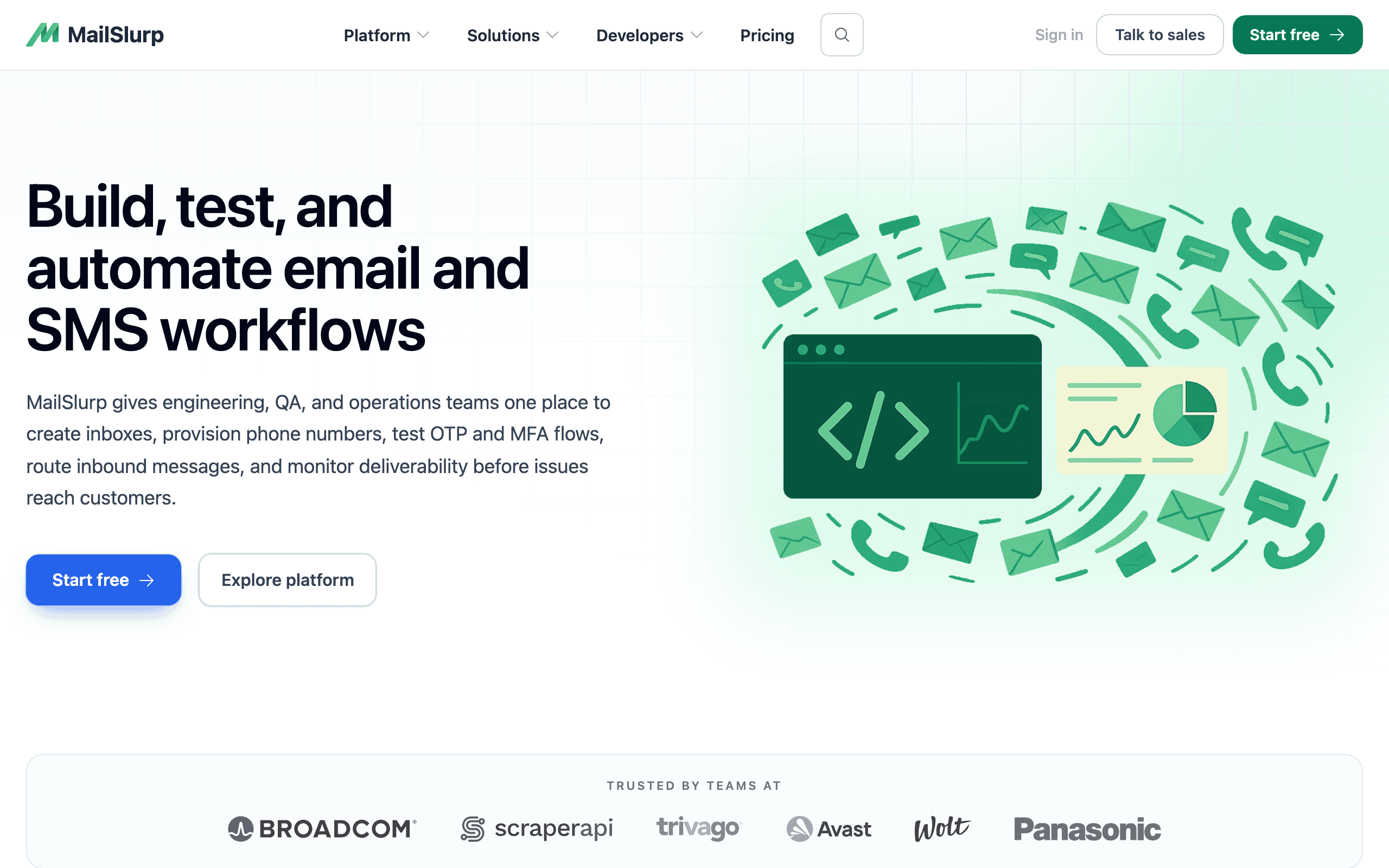
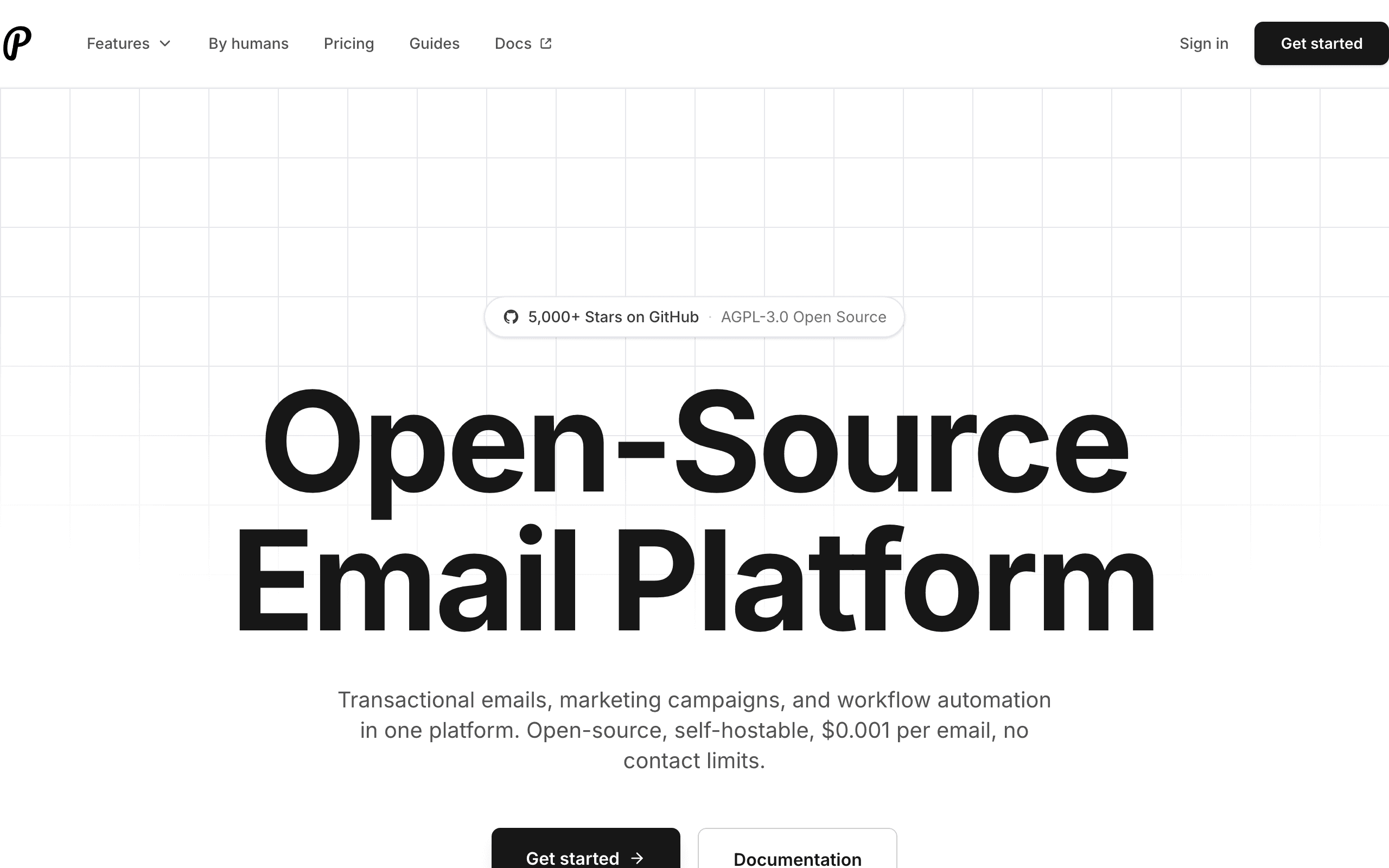
MailSlurp and Plunk are both developer-focused email tools that serve different purposes. MailSlurp creates programmable test inboxes for CI/CD testing. Plunk is an open-source email platform for SaaS that handles transactional and marketing email. See our MailSlurp comparison and Plunk comparison.
Both appeal to developers, but at different stages. MailSlurp tests that your email flows work. Plunk (or Sequenzy) sends those emails to real users.
Pricing Comparison
Developer-friendly pricing for both:
- MailSlurp: Free (200 inbound), Starter $19/mo, Team $207/mo
- Plunk: Free (self-hosted), Cloud from $10/mo
- Sequenzy: $99/mo for 120k emails and unlimited subscribers, with no servers to run. See pricing
Plunk's self-hosted option is the cheapest path if you're comfortable managing infrastructure. Sequenzy offers the most features for managed hosting.
Where MailSlurp Wins
Programmable test inboxes
Create email addresses on-demand for CI/CD testing. Plunk doesn't have testing infrastructure.
SDK breadth
18+ SDKs vs Plunk's Node.js SDK. MailSlurp covers far more programming languages.
Enterprise maturity
SOC 2 compliance, SSO, and enterprise support. MailSlurp is more mature for enterprise testing needs.
Where Plunk Wins
Open source
MIT-licensed and fully open source. Self-host for free, customize the code, and own your email infrastructure. Neither MailSlurp nor Sequenzy is open source.
Self-hosting freedom
Run on your own servers with full data control. Important for teams with strict data residency or compliance requirements.
Developer-first design
Built by developers for developers. Clean API, event tracking, and a focus on simplicity. Plunk's philosophy is "just enough" without feature bloat.
Cost efficiency
Self-hosted Plunk costs nothing beyond hosting. For teams with existing infrastructure, this can be significantly cheaper than SaaS alternatives.
Why Sequenzy Beats Both for Growing SaaS
As your SaaS grows, you need more than basic email:
Managed simplicity
No servers to manage, no deliverability to monitor, no infrastructure to scale. Sequenzy handles 120k emails/month without operational overhead.
Native Stripe integration
Stripe integration triggers emails on subscription events automatically. Trial expirations, payment failures, plan changes - all handled natively.
AI-generated sequences
Describe your goal and Sequenzy creates entire email sequences. Plunk has basic triggers. MailSlurp doesn't send marketing email.
Full marketing platform
Campaigns, segmentation, analytics, subscriber management - Sequenzy is a complete marketing platform. Plunk's marketing features are still basic.
Focus on your product
Instead of managing email infrastructure (Plunk self-hosted) or testing infrastructure (MailSlurp), spend that time building your product. Sequenzy handles email end-to-end.
Developer-First Email Stack
Both MailSlurp and Plunk appeal to developers who prefer code over GUIs. MailSlurp's programmable inboxes feel natural in test suites. Plunk's clean API feels natural in application code. Together they provide a development-to-production email pipeline that respects developer preferences.
The open-source nature of Plunk adds another dimension. Developers can inspect the code, contribute features, and self-host for complete control. MailSlurp is proprietary but offers the breadth of SDKs that makes integration frictionless across any language.
Self-Hosted Testing Workflows
Teams self-hosting Plunk can create particularly efficient testing workflows. By running Plunk locally alongside MailSlurp in CI, they test the complete email pipeline without external dependencies. This local-first approach reduces test flakiness and speeds up CI runs.
For production environments, the cloud-hosted version of either tool provides reliability without infrastructure management. The choice between self-hosted and cloud depends on your team's DevOps capacity and compliance requirements.
The Missing Piece for SaaS
Both MailSlurp and Plunk are developer tools that lack SaaS-specific awareness. They do not understand subscriptions, billing events, or trial periods. For SaaS companies, Sequenzy adds Stripe integration and subscription-aware automation to the email stack, providing the business logic layer that pure developer tools cannot.
Delivery Speed and Reliability
MailSlurp isn't the tool sending your password resets and receipts, it catches them in disposable test inboxes so you can verify content and links before code ships. Plunk plays the opposite role: it has full transactional email support built for SaaS products running in production. If your question is which one guarantees fast delivery to real customers, that's Plunk's job, while MailSlurp's job is making sure the email was built correctly first.
API Design and Developer Experience
Developers reach for MailSlurp because it ships SDKs in 18+ languages and slots directly into CI/CD pipelines to test inbound and outbound mail. Plunk keeps its API surface smaller, currently just a Node.js SDK, but it's open source under MIT, so you can read the code or self-host it. That trade-off, broader language coverage versus code you can own and modify, is worth weighing before you integrate either one.
Scaling and Cost at Volume
MailSlurp's plans run from a free tier covering 200 inbound emails up to $207 a month for its Team tier, pricing built around test volume rather than production sending. Plunk stays cheaper at the entry point: free if you self-host, or cloud hosting from $10 a month. Since one tool tests and the other sends, comparing sticker prices alone misses the point; budget for MailSlurp during development and Plunk once you're delivering real mail to customers.
Use-case matchups
| Need | Better fit | Why |
|---|---|---|
| Disposable inbox testing and QA automation | MailSlurp | MailSlurp is cited for testing, disposable addresses, API automation, inbound processing, webhooks, and SDKs. |
| Open-source SaaS email with event-based automations | Plunk | Plunk is cited for open source, SaaS focus, simple API, event automations, self-hosting, and modern developer experience. |
| Self-hosting and platform control | Plunk | Plunk is listed with free self-hosting and cloud from $10/month. |
| Managed SaaS marketing plus transactional email | Sequenzy | Sequenzy is listed at $99/month with 120k emails/month and unlimited subscribers. |
Best Fit by Email Testing and Production Sending
Best email testing platform for QA automation and disposable inboxes
Choose MailSlurp when the job is testing email flows rather than running customer marketing. Disposable inboxes, inbound processing, SDKs, webhooks, and QA automation make it the better fit for engineering teams validating signup, password reset, receipt, and notification flows.
Best open-source email platform for early product messaging
Choose Plunk when the team needs simple production email with event automations, API sending, and self-hosting options. It is a better first look for developer-led startups that want product emails without paying for a dedicated QA inbox platform.
Best managed SaaS email platform for marketing and transactional workflows
Choose Sequenzy when the company needs production lifecycle email, not just tests or a minimal open-source sender. Campaigns, transactional messages, Stripe-triggered lifecycle flows, and subscriber automation belong in a managed workspace when email is customer-facing revenue infrastructure.
Pricing reality
MailSlurp is listed from free to $207/month. Plunk is listed from free to $10/month, with self-hosting free and cloud from $10/month. Sequenzy is listed at $99/month for 120k emails/month and unlimited subscribers.
Plunk is the lower-cost production SaaS email option if early-stage maturity is acceptable. MailSlurp is the testing layer, not the production automation product.
Review signals
MailSlurp reviews cited here highlight email testing, QA automation APIs, and disposable addresses. The limitation is that it is primarily a testing tool and not production email marketing.
Plunk reviews cited here highlight open source, SaaS focus, and simple API. The tradeoffs are early-stage maturity and limited features.
Migration checklist
- Export events, automations, templates, API keys, webhooks, suppressions, MailSlurp inboxes, and test scenarios.
- If moving to Plunk, decide between self-hosted and cloud, then map event names and lifecycle workflows.
- If adding MailSlurp, create disposable-inbox tests for each Plunk transactional and lifecycle email.
- Reconfigure SPF, DKIM, DMARC, tracking domains if used, sender identities, webhooks, and unsubscribe handling.
- Test event triggers, delivery, bounce handling, suppressions, and inbox assertions before production cutover.
Decision checklist
- Choose MailSlurp if QA automation is the problem.
- Choose Plunk if open-source SaaS email and event automation are the priority.
- Avoid MailSlurp as a production email automation platform.
- Avoid Plunk if early-stage maturity and self-hosting responsibility are unacceptable.
- Choose Sequenzy if the team wants managed SaaS lifecycle email with a larger included sending allowance.








