
Overview
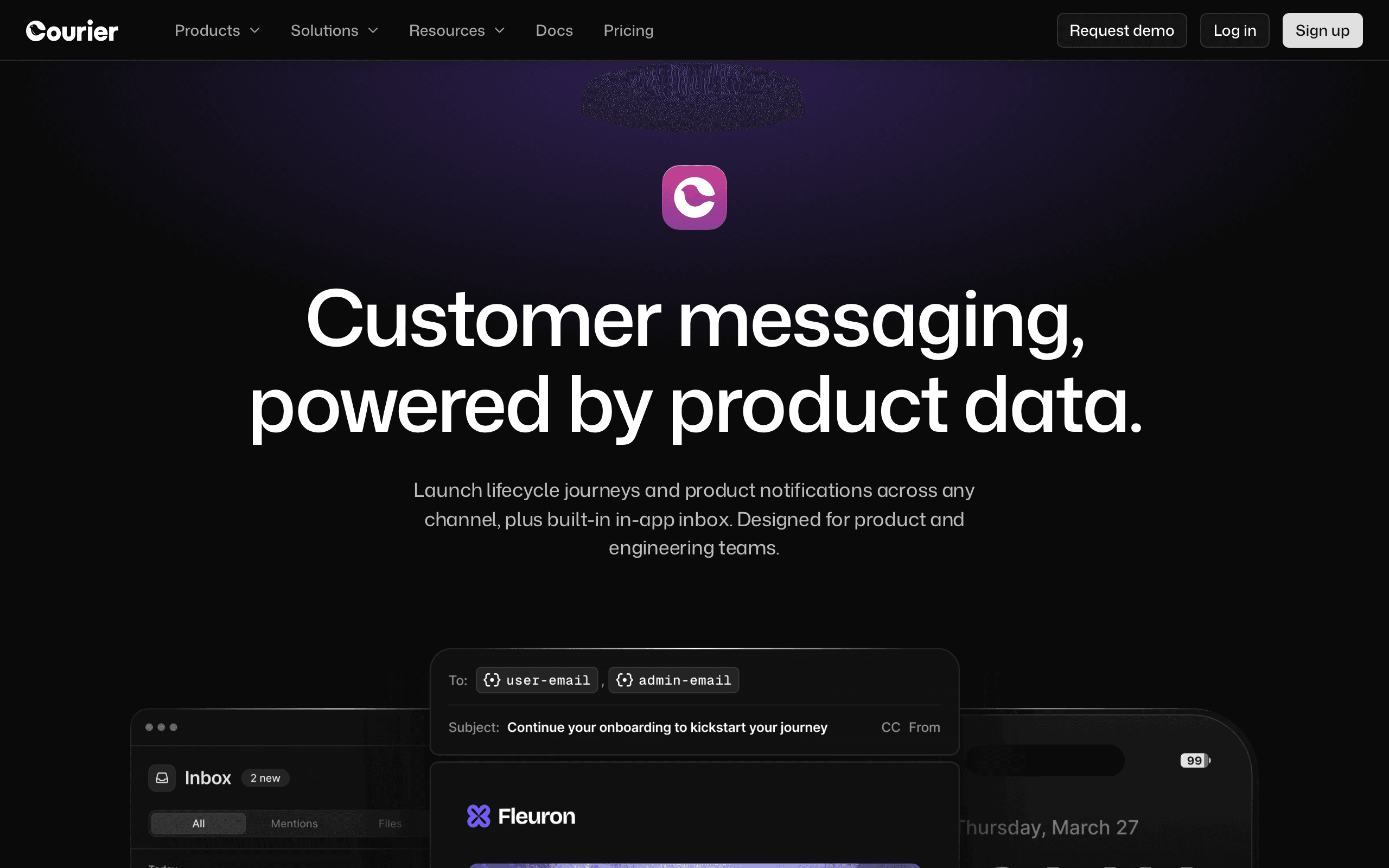
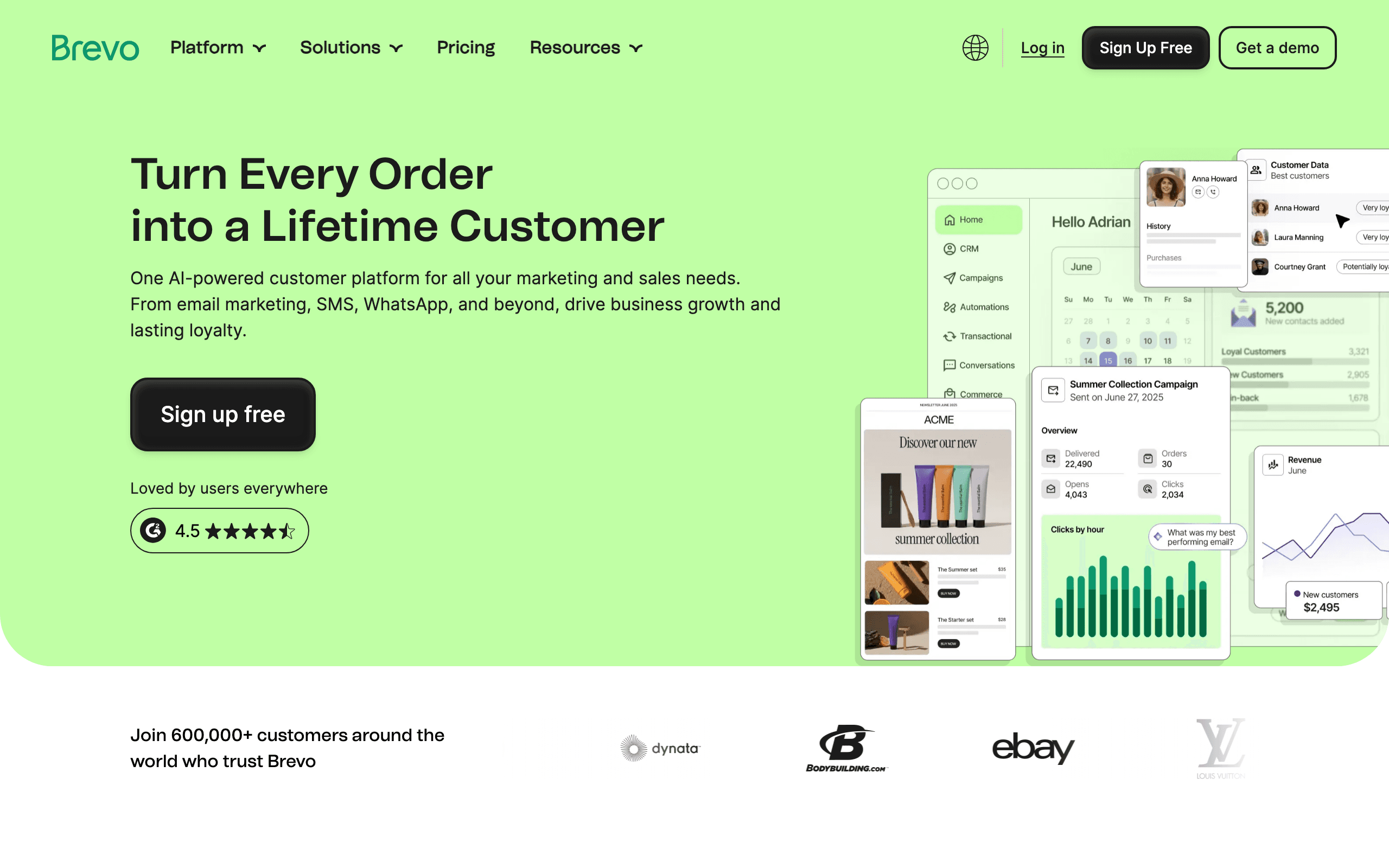
Courier and Brevo serve fundamentally different purposes. Brevo is a complete multi-channel marketing platform. Courier is developer notification infrastructure. For our take on each, see our Courier comparison and Brevo comparison.
Brevo's Marketing Completeness
Brevo includes email marketing, SMS, WhatsApp, CRM, live chat, landing pages, and transactional email - all in one platform starting free. Courier routes individual notifications through providers but has zero marketing features. For marketing, there's no comparison.
Courier's Developer Niche
Courier's value is notification routing - push, email, SMS, in-app through intelligent provider selection. Brevo doesn't do push or in-app, and doesn't abstract across providers. For developer notification infrastructure, Courier fills a genuine gap.
Pricing reality
At the cited 50k-email tier, Courier is listed at $0-$99+/month plus provider costs and Brevo is listed at $25/month. Brevo is the bundled value choice for marketing teams because it includes email, SMS, WhatsApp, CRM, live chat, and transactional email in one platform.
Courier's real cost includes the routing layer plus the actual delivery providers underneath. That can still be worth it when push, in-app, SMS, fallback logic, or provider abstraction are engineering requirements. Sequenzy is listed at $49/month for SaaS teams that need Stripe-aware email instead of broad multi-channel marketing or routing infrastructure.
Review signals
The Courier reviews cited here praise routing through FCM, SES, and Twilio, but one review warns that total vendor cost adds up. The Brevo reviews praise replacing multiple tools, WhatsApp campaigns, affordability, and the free tier, while noting the email editor can feel dated.
That points to a clean owner split: Courier for engineering-led notification infrastructure; Brevo for business-led marketing and customer communication.
Use-case matchups
| Use case | Better fit | Why |
|---|---|---|
| Multi-channel marketing for SMBs | Brevo | Brevo includes email, SMS, WhatsApp, CRM, live chat, forms, and landing pages in one platform. |
| Developer notification routing | Courier | Courier is stronger when the app needs provider abstraction, fallback routing, push, and in-app notification feeds. |
| WhatsApp-heavy customer communication | Brevo | Brevo has native WhatsApp marketing support, especially useful in markets where WhatsApp is primary. |
| Provider fallback across many channels | Courier | Courier helps engineering teams route through multiple providers without hardcoding every delivery path. |
| Low-cost marketing and transactional email | Brevo | Brevo directly sends email and offers broad marketing features without paying separate routing and provider bills. |
| Stripe-aware SaaS lifecycle email | Sequenzy | Sequenzy is more focused when billing status, trial events, and subscription lifecycle are the key triggers. |
The Sequenzy Alternative
For SaaS founders wanting transactional email and marketing campaigns with Stripe integration, Sequenzy is purpose-built for subscription businesses at $49/month.
The Hidden Cost of Routing Layers
Courier's pricing looks reasonable on paper - free for 10k notifications, $99/month for Business. But the real cost includes your email provider (SendGrid, SES, or Postmark), your SMS provider (Twilio or MessageBird), and your push provider (if not using free FCM). A typical multi-channel setup through Courier can cost $300-500/month when you add up all the providers. Brevo bundles email, SMS, and WhatsApp into a single $25/month plan with no additional provider fees.
For engineering teams with complex routing needs - multiple providers per channel, intelligent fallbacks, A/B testing delivery - that Courier premium makes sense. For marketing teams who just want to reach customers across channels, Brevo's bundled approach saves both money and integration complexity.
WhatsApp and the European Market
Brevo's WhatsApp integration is a genuine differentiator, particularly for businesses with European customers. WhatsApp has over 2 billion users globally, and in many European and Latin American markets, it's the primary messaging channel - more used than SMS. Brevo lets you send WhatsApp campaigns alongside email, which Courier simply cannot do.
Courier can route SMS through providers like Twilio, but it has no WhatsApp support. For businesses expanding into markets where WhatsApp dominates customer communication, Brevo's native integration eliminates the need for yet another tool. Combined with Brevo's GDPR-compliant data handling (the company is headquartered in Paris), it's a natural fit for international businesses.
When SaaS Companies Need Neither
Both Courier and Brevo solve problems that many SaaS companies don't actually have. SaaS founders typically need transactional email for password resets and receipts, marketing campaigns for product updates, and subscription-aware automation triggered by billing events. Brevo handles the first two but lacks Stripe integration for billing automation. Courier handles notification routing but has no marketing capabilities at all.
Sequenzy fills this gap for subscription businesses. At $49/month, it combines transactional and marketing email with native Stripe integration - automatically triggering sequences when trials expire, payments fail, or customers upgrade. Neither Courier's routing infrastructure nor Brevo's broad marketing platform was designed with this specific SaaS workflow in mind.
The Provider Abstraction Layer Most Businesses Do Not Need
Courier's core value is abstracting away the complexity of multiple notification providers. You write one API call and Courier routes it to the right channel through the right provider with intelligent fallbacks. This is genuinely useful for engineering teams at companies like DoorDash or Notion who send billions of notifications across push, email, SMS, and in-app.
Most businesses do not operate at this scale. A company sending 50,000 emails per month and occasional SMS messages does not need a routing layer between their application and their email provider. Brevo handles email, SMS, and WhatsApp directly without the abstraction layer, at a fraction of the cost. The engineering effort to integrate Courier and configure its routing rules would be better spent on product features for most startups.
Brevo's Self-Contained Ecosystem vs Courier's Provider Dependency
Brevo owns its sending infrastructure. When you send an email through Brevo, it goes through Brevo's servers. When you send through Courier, it goes through whatever provider you have configured: SendGrid, Amazon SES, Postmark, Twilio, or others. Each of those providers has its own pricing, its own deliverability characteristics, and its own setup requirements.
This architectural difference matters for operational simplicity. Brevo users manage one vendor relationship, one billing account, and one support channel. Courier users manage Courier plus every provider they route through, multiplying the vendor management burden. For lean teams that want to focus on their product rather than their notification infrastructure, Brevo's self-contained approach removes operational overhead that Courier's abstraction layer creates.
Why SaaS Founders Should Question Both Approaches
For SaaS companies, the real question is not "routing layer vs marketing platform" but "which tool understands subscription businesses?" Brevo sends email, SMS, and WhatsApp effectively but has no concept of Stripe subscription status, MRR, or billing lifecycle. Courier routes notifications efficiently but has no marketing capabilities whatsoever. Neither can trigger an email because a customer's trial ends tomorrow or a payment just failed.
Sequenzy is designed specifically for this gap. At $49/month, it combines transactional email and marketing campaigns with native Stripe integration that treats billing events as first-class automation triggers. For a SaaS company deciding between Courier's routing complexity and Brevo's marketing breadth, Sequenzy offers the third option: subscription-aware email that does exactly what software businesses need without the overhead of either approach.
Best Fit by Communication Layer
Best notification infrastructure for multi-channel product alerts
Courier fits engineering teams that need one API to route transactional notifications across email, SMS, push, chat, or in-app channels. It is strongest when provider abstraction and developer control matter more than marketing campaign tools.
Best all-in-one marketing platform for small businesses
Brevo is the better fit when marketers need email campaigns, transactional email, SMS, WhatsApp, CRM basics, and automations in one self-contained product. It works better when the team wants to send and manage campaigns rather than build a notification layer.
Best SaaS email platform for lifecycle and revenue messages
Sequenzy fits SaaS teams that need product-triggered and billing-triggered email without stitching together routing infrastructure and marketing tools. It is the practical fit when onboarding, transactionals, subscriptions, and retention all need one customer context.
Migration checklist
- Inventory every channel currently in use: email, SMS, WhatsApp, push, in-app, live chat, transactional messages, and marketing campaigns.
- If moving to Brevo, export contacts, lists, consent records, CRM data, deals, templates, automations, suppression lists, and transactional templates.
- If moving to Courier, map each notification type to channels, provider fallback rules, user preferences, payload fields, and delivery event webhooks.
- Rebuild critical transactional messages and active marketing campaigns before changing signup forms or application API calls.
- Reconnect providers and integrations: SMTP or email provider, SMS provider, WhatsApp, CRM, ecommerce, analytics, webhooks, and application events.
- Authenticate sending domains and test each channel independently because Brevo sends directly while Courier routes through configured providers.
- Run a small production cohort through the new system before moving high-volume campaigns or product notifications.
- Export historical campaign, CRM, delivery, and notification logs so marketing and engineering teams keep their prior baseline.
Decision checklist
| Question | Choose Courier when... | Choose Brevo when... |
|---|---|---|
| What channels matter? | Push, in-app, SMS, email, and provider fallback need one routing layer. | Email, SMS, WhatsApp, CRM, live chat, and landing pages should live together. |
| What cost model fits? | You accept Courier fees plus provider costs for routing control. | A bundled $25/month marketing platform is the better value. |
| Who owns the workflow? | Engineering owns notification events and delivery providers. | Marketing/support teams own campaigns, CRM, chat, and automations. |
| What should you verify first? | Provider costs, fallback rules, preferences, and operational monitoring. | Send limits, WhatsApp/SMS pricing, CRM depth, editor fit, and transactional needs. |









