
Overview
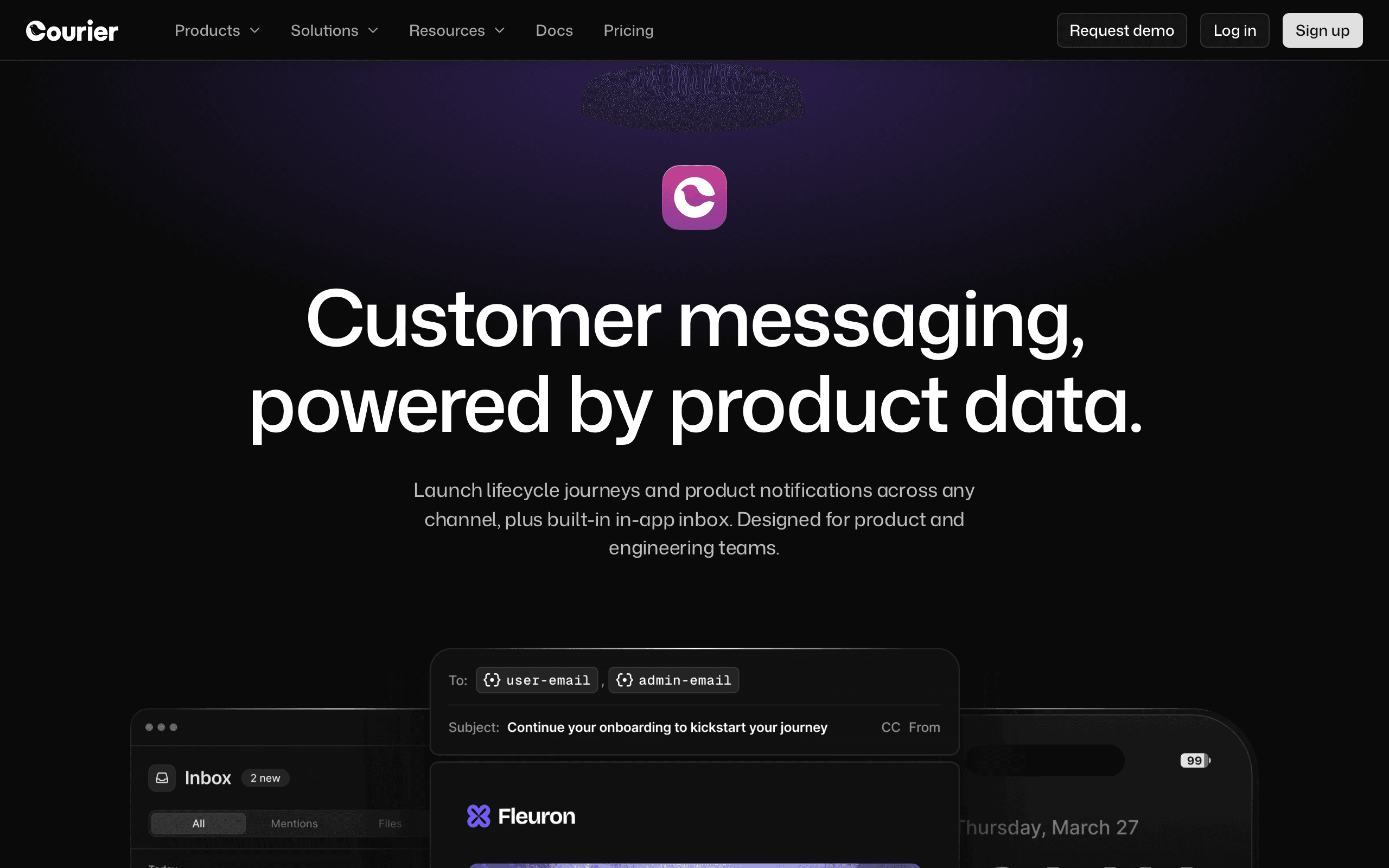
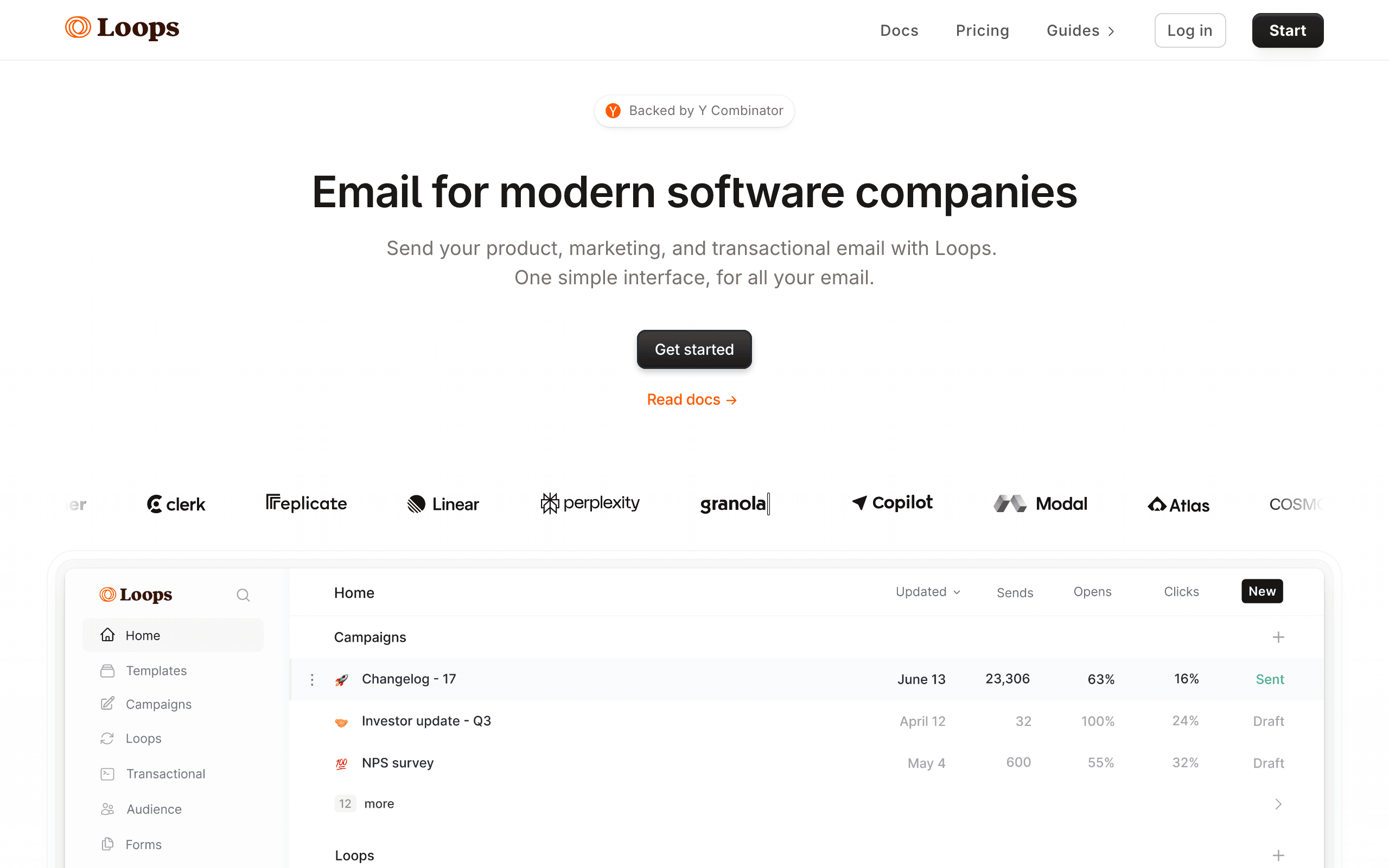
Courier and Loops serve SaaS companies differently. Loops is a modern email platform purpose-built for SaaS. Courier is notification infrastructure for routing messages across channels. For our take on each, see our Courier comparison.
Loops for SaaS Email
Loops was designed from scratch for SaaS companies - event-driven automations triggered by product usage, beautiful email editor, and modern interface for product teams. For SaaS email specifically, Loops is purpose-built. Courier is generic notification routing.
Courier for Multi-channel
Courier's value is routing notifications across push, SMS, email, Slack, and in-app from one API. If your SaaS needs more than email - push for mobile, SMS for critical alerts - Courier provides the infrastructure.
Pricing reality
At the cited 5k-contact tier, Courier is listed at $0-$99+/month plus email provider costs, while Loops is listed at $49/month. For SaaS email specifically, Loops is more direct because it includes email delivery, product events, marketing campaigns, and transactional email without a separate provider layer.
Courier can still be worth it when the product needs push, SMS, Slack, in-app notifications, fallbacks, and provider abstraction. Sequenzy is listed at $19/month in this page's pricing block for SaaS email with native Stripe integration.
Review signals
The Courier reviews cited here praise multi-channel routing for push, email, and SMS, but also say marketing email still needs another tool. The Loops reviews praise the SaaS-focused editor, event-driven automations, fast onboarding-flow setup, and modern interface, while calling out the lack of native Stripe integration.
That makes Loops the better user experience for product email, Courier the better infrastructure layer for non-email notifications, and Sequenzy the stronger option when billing events must trigger email natively.
Use-case matchups
| Use case | Better fit | Why |
|---|---|---|
| SaaS onboarding and product email | Loops | Loops is purpose-built for SaaS email with product events, user data, and a modern editor. |
| Multi-channel notification routing | Courier | Courier is stronger when the app needs push, SMS, Slack, email, and in-app routing from one API. |
| Fast marketing and transactional email setup | Loops | Loops sends email directly, while Courier requires a configured email provider underneath. |
| Critical alerts with channel fallback | Courier | Courier can route through multiple channels and providers when delivery priority matters. |
| Product-led lifecycle messaging | Loops | Loops gives product and growth teams a usable lifecycle email tool without building a full notification stack. |
| Billing-event automation | Sequenzy | Sequenzy is the stronger fit when Stripe trial, payment, upgrade, and cancellation events should trigger email automatically. |
The Sequenzy Alternative
For SaaS founders wanting transactional email and marketing campaigns with native Stripe integration, Sequenzy offers subscription-aware automation at $49/month - with AI-generated sequences.
The Modern SaaS Email Landscape
Loops represents a new wave of SaaS email tools - modern interface, event-driven design, and a focus on product teams rather than traditional marketers. Courier represents the infrastructure approach - flexible routing that engineering teams control completely. The choice reflects your team's philosophy: do you want a product your marketing and growth team can use independently (Loops), or infrastructure that your engineering team builds on (Courier)?
For early-stage SaaS companies, Loops' approach is typically faster to value. You can have event-driven onboarding emails running within a day. With Courier, you'd need to configure the routing layer, set up an email provider like SendGrid or Postmark, design templates, and build the logic for when to send what. That's weeks of engineering work for email that Loops handles out of the box.
The Stripe Integration Gap
One significant gap in both platforms is native billing integration. SaaS companies rely heavily on subscription events - trial started, trial expiring, payment failed, plan upgraded, subscription canceled. These billing events drive some of the most important automated emails in any SaaS business.
Loops can trigger emails based on custom events you send via API, so you could build a webhook handler that forwards Stripe events to Loops. But that's custom development work. Courier has the same limitation - you'd pipe Stripe webhooks into Courier's API for notification routing. Neither platform connects to Stripe natively. Sequenzy addresses this specifically with native Stripe integration that automatically syncs subscription data and triggers sequences based on billing events without custom webhook engineering.
Building a Complete SaaS Notification Stack
Many SaaS companies need both email and multi-channel notifications. Product updates and onboarding go via email. Collaboration alerts go via push and in-app. Critical system alerts might need SMS. No single tool handles all of these well.
A pragmatic approach for growing SaaS companies: use Loops (or Sequenzy) for email - transactional, marketing, and lifecycle automation. If you also need in-app notifications or push routing across providers, add Courier as the routing layer for non-email channels. This avoids forcing either tool into a role it wasn't designed for. Loops shouldn't route push notifications, and Courier shouldn't manage email campaigns. Keeping each tool in its lane produces a cleaner, more maintainable stack than trying to stretch one platform across all communication channels.
User Behavior Tracking
Courier and Loops approach user data very differently. Courier tracks basic notification attributes and routes messages across channels through third-party providers, without modeling product events itself. Loops builds directly on product events and native user and company data, which lets triggers fire the moment someone hits a specific milestone. If your onboarding emails depend on tracking real in-product behavior rather than just delivering a message, Loops gives you a head start Courier was not built for.
Trial and Onboarding Optimization
Turning trial signups into paying customers depends on emails that react to what a user actually does. Loops triggers onboarding sequences from product events directly, since it was built for SaaS teams tracking user and company data natively. Courier has no concept of onboarding sequences or product milestones; it only routes notifications you already decided to send across push, SMS, email, or in-app channels. For behavior-driven trial conversion emails, Loops is the tool designed for that job.
Company-Level vs User-Level Communication
B2B SaaS accounts often have several people who need different messages. Loops models company-level data natively alongside user data, so you can group people by organization and trigger emails from account-level events. Courier has no company data model at all; it only handles basic notification attributes and focuses on getting a message delivered through the right channel, whether that is push, SMS, Slack, or in-app. For organization-aware targeting, Loops is purpose-built and Courier is not.
Best Fit by Notification Stack
Best notification routing layer for multi-channel alerts
Courier fits engineering teams that need provider routing, fallback rules, preferences, and non-email channels such as push, SMS, Slack, or in-app notifications. It is the better fit when the product already owns message logic and only needs a flexible delivery layer.
Best SaaS email platform for product-led onboarding
Loops fits SaaS teams that want a managed email product for onboarding, broadcasts, transactional templates, and lifecycle events. Choose it when growth and product teams should own email workflows directly instead of asking engineering to build every message path.
Best billing-event email platform for subscription SaaS
Sequenzy fits when Stripe lifecycle events are more important than general notification routing. It is the cleaner option for subscription teams that want trial, payment, cancellation, and receipt emails without maintaining a separate routing platform.
Migration checklist
- Decide whether the move is email-only or multi-channel because Loops and Courier solve different communication layers.
- Export users, companies, attributes, segments, templates, suppression lists, transactional templates, and historical email reports.
- If moving to Loops, define product events, user properties, company properties, and lifecycle triggers before importing contacts.
- If moving to Courier, map every notification to a channel, provider, fallback rule, user preference category, and payload contract.
- Rebuild onboarding, product update, transactional, billing, alert, and lifecycle messages with test users before routing production traffic.
- Replace application API calls carefully: Loops for product email events, Courier for notification requests and provider routing.
- Authenticate sending domains and test event-triggered emails, transactional messages, and fallback behavior before full cutover.
- Preserve historical delivery and engagement data so product and growth teams can compare activation and retention impact after migration.
Decision checklist
| Question | Choose Courier when... | Choose Loops when... |
|---|---|---|
| What channels matter? | Push, SMS, Slack, in-app, and email need one routing layer. | Email is the main channel for product, lifecycle, and transactional messaging. |
| What setup should be fastest? | Engineering is already building notification infrastructure. | Product/growth teams need SaaS email flows live quickly. |
| What is missing? | Campaigns and email automation are handled elsewhere. | Push, SMS, and in-app are not required or can live elsewhere. |
| What should you verify first? | Provider costs, routing rules, preferences, and fallback logic. | Event model, segmentation, contact pricing, deliverability, and Stripe workaround needs. |









