
Revenue-Funded Email Economics
The beauty of email for revenue-funded SaaS is the economics. A free or $29/month email tool that recovers $500/month in failed payments and converts 5 additional trial users per month is a 20x+ return. No other marketing channel delivers this consistently at this cost.
The key is measuring the return and investing accordingly. Start with the sequences that directly impact revenue (dunning, trial conversion), prove the ROI, then expand to engagement and retention sequences.
Build the Minimum Effective Stack
Revenue-funded SaaS should resist tool sprawl. Every subscription is money that could go to product development. For email, the minimum effective stack is one tool that handles transactional email, marketing sequences, and dunning. If you can get all three from one platform, do it.
Add specialized tools only when the general-purpose tool is demonstrably costing you revenue. If your deliverability is fine and your automation is working, you do not need a separate transactional email service.
Revenue-Funded SaaS Email Benchmark Table
| Email type | Healthy open rate | Healthy revenue action rate | Revenue metric to watch |
|---|---|---|---|
| Dunning recovery | 50-70% | 20-35% payment update clicks | Failed revenue recovered |
| Trial conversion | 35-50% | 8-16% upgrade clicks | Trial-to-paid conversion |
| Activation onboarding | 38-55% | 15-30% activation clicks | Users reaching paid-value moment |
| Monthly product update | 28-42% | 4-8% feature clicks | Retention and expansion signals |
Time as a Cost
Revenue-funded founders are often the marketing team, engineering team, and support team. The real cost of an email tool is not the subscription price - it is the time required to set up, maintain, and optimize it. Choose tools that respect your time with fast setup, sensible defaults, and minimal ongoing maintenance.
AI-powered sequence generators are particularly valuable for revenue-funded founders. Instead of spending a day writing 5 onboarding emails, you describe your product and get a complete sequence in minutes. The time savings alone justify the tool cost.
The Revenue-Funded Email Priority Stack
Set up these sequences in this order, measuring ROI at each step:
Priority 1: Dunning (Day 1)
Recover failed payments. Highest ROI, lowest effort. Three emails, set and forget. If this recovers even 2-3 customers per month, the email tool pays for itself.
Priority 2: Trial Conversion (Week 1)
Convert free users to paid. Four to six emails timed to activation milestones. This is your revenue growth engine.
| Priority | Sequence | Setup time | Payback signal |
|---|---|---|---|
| 1 | Dunning | 30-60 minutes | 2-3 recovered subscriptions per month |
| 2 | Trial conversion | 2-4 hours | More users upgrading before trial ends |
| 3 | Activation onboarding | 2-4 hours | Higher activation and lower early churn |
| 4 | Product updates | 1 hour per month | Fewer cancellations and more feature adoption |
| 5 | Churn prevention | After baseline metrics exist | Inactive users returning or explaining why they left |
Priority 3: Onboarding (Week 2)
Drive new user activation. Better activation leads to better conversion and retention downstream.
Priority 4: Monthly Product Update (Month 1)
Keep paying customers engaged with what you are building. This reduces churn and drives expansion.
Priority 5: Churn Prevention (Month 2+)
Re-engage inactive users and win back cancellations. Only prioritize this after the first four are running and optimized.
Best Fit by Revenue-Funded Constraint
Best email marketing tool for founder-led SaaS teams
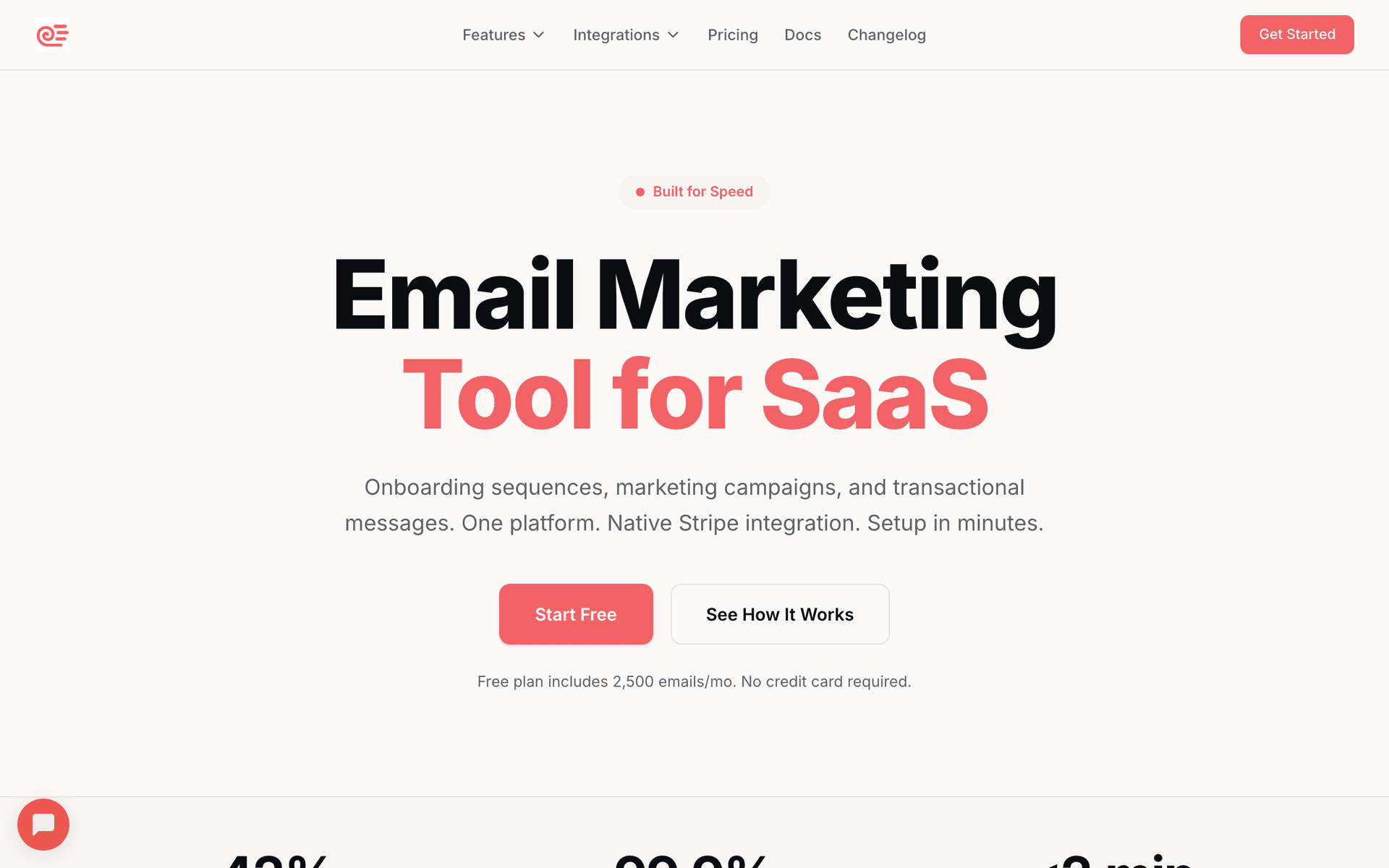
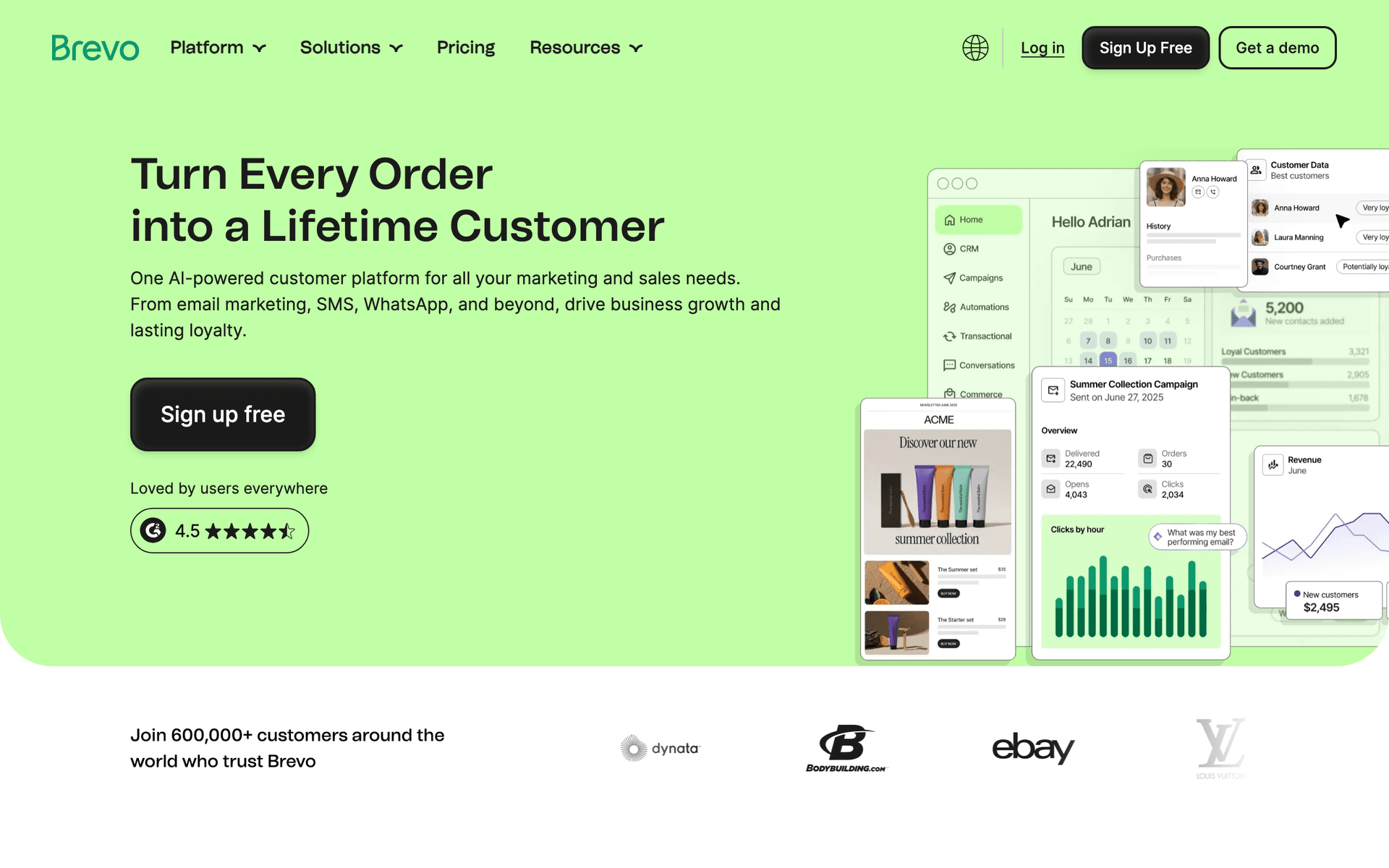
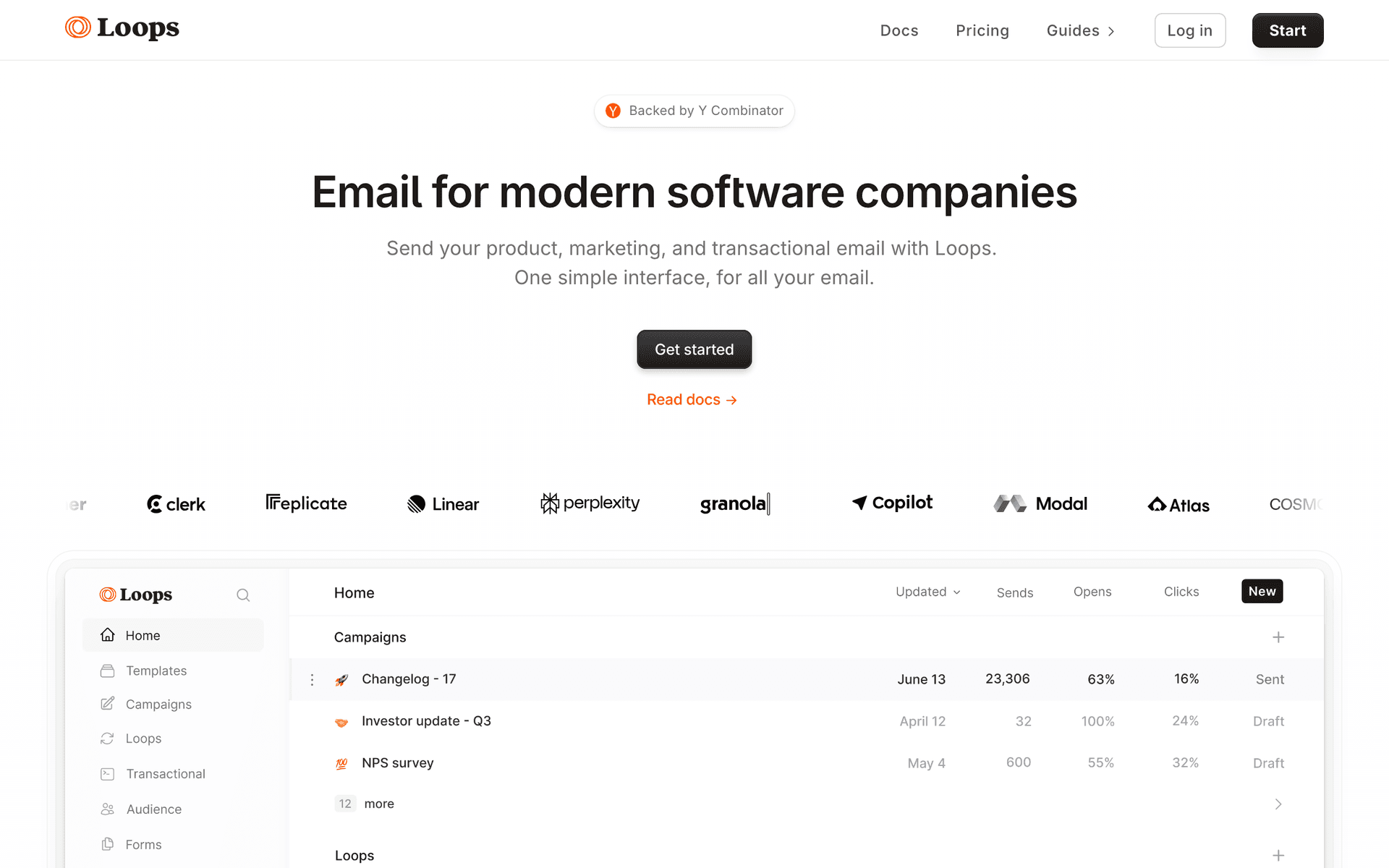
Choose Sequenzy, Loops, or Brevo when the founder owns product, support, and marketing. The tool should launch the core sequences quickly and avoid turning email into another weekly operations burden.
Best email marketing tool for revenue-funded SaaS dunning
Choose Sequenzy or another billing-aware platform when failed-payment recovery is the first ROI target. A small dunning sequence that recovers a few subscriptions per month can justify the entire email stack.
Best email marketing tool for revenue-funded SaaS cost control
Choose a platform whose pricing follows actual sends and revenue impact. Revenue-funded teams should avoid contact-based pricing that grows because the database is larger, not because email is creating more value.
When Free Tiers Make Sense
For revenue-funded SaaS, free tiers are not a compromise - they are smart capital allocation:
| Free-tier limit | When it is fine | When to upgrade | Revenue logic |
|---|---|---|---|
| Email volume | You can send all onboarding and dunning emails | You skip important lifecycle sends | Missing revenue emails costs more than the plan |
| Automation count | Essential sequences fit | Trial or dunning needs manual work | Manual work creates leakage |
| Contact cap | Most contacts are active or high-intent | Free users inflate costs without revenue | Prefer per-email pricing |
| Integrations | Stripe and product events are not needed yet | Payment or product triggers drive revenue | Upgrade when triggers recover or create revenue |
- Sequenzy free tier (2,500 emails/month): Enough for a SaaS with under 500 users to run essential lifecycle sequences
- Brevo free tier (300 emails/day): Enough for basic transactional and marketing emails for early-stage products
- Loops free tier (1,000 contacts): Enough for SaaS-specific automation during the validation phase
Upgrade when free tier limits are measurably costing you revenue. Not before.