
The Bootstrapped Advantage in Email
Bootstrapped SaaS founders have one advantage over VC-backed competitors when it comes to email: you can be personal. Your users know there is a real person behind the product. Use that. Write emails in your own voice. Reply when people respond. That personal connection converts better than any sophisticated automation.
The best email setup for a bootstrapped SaaS is simple: a solid onboarding sequence, automated dunning for failed payments, and a monthly product update. That covers 80% of the value. You can add trial conversion, re-engagement, and upsell sequences later as your user base grows.
Start With What Makes Money
If you can only build one email sequence this week, build dunning. Failed payments are revenue you already earned walking out the door. A simple 3-email dunning sequence recovers 20-40% of failed payments automatically. That is found money with zero acquisition cost.
Your second priority is onboarding. Users who get to their "aha moment" faster are more likely to convert and less likely to churn. A 4-email onboarding sequence that guides users to value beats a 20-email drip campaign every time.
Bootstrapped Email Priority Matrix
| Sequence | Build when | Revenue impact | Founder effort |
|---|---|---|---|
| Failed payment recovery | First paid customer | Recovers revenue already earned | Low after setup |
| Product onboarding | First repeatable signup flow | Improves activation and trial conversion | Medium |
| Trial expiry reminders | Free trial exists | Pulls hesitant users into paid plans | Low |
| Monthly product update | Users ask "what changed?" | Reduces churn and revives dormant accounts | Low |
| Expansion or upgrade prompt | Clear usage limits exist | Creates expansion MRR without sales calls | Medium |
Pricing That Works for Bootstrapped
Per-contact pricing punishes growth. If you have 5,000 free users and 200 paying customers, per-contact tools charge you for all 5,200. Pay-per-email tools only charge when you send, which aligns costs with value.
Look for tools with generous free tiers to get started, and predictable pricing that scales with your actual usage. Avoid tools where the price jumps dramatically at arbitrary thresholds.
Email Budget by MRR Stage
| SaaS stage | Reasonable monthly email budget | Tool requirement | What to avoid |
|---|---|---|---|
| Pre-revenue | $0 | Free tier, verified domain, basic templates | Paying for advanced automation too early |
| $1K MRR | $0-$29 | Onboarding, dunning, product updates | Per-contact plans inflated by free users |
| $3K MRR | $29-$79 | Behavioral triggers and Stripe events | Manually sending lifecycle emails |
| $10K MRR | $79-$199 | Segmentation, analytics, transactional support | Tools that cannot show revenue impact |
| $25K+ MRR | 1-3% of MRR | Lifecycle automation and deliverability controls | Staying on a tool that blocks growth |
The Bootstrapped SaaS Email Stack
Most bootstrapped founders overthink their email stack. You do not need five different tools. Here is what actually works at each stage:
Pre-Revenue (0-100 users)
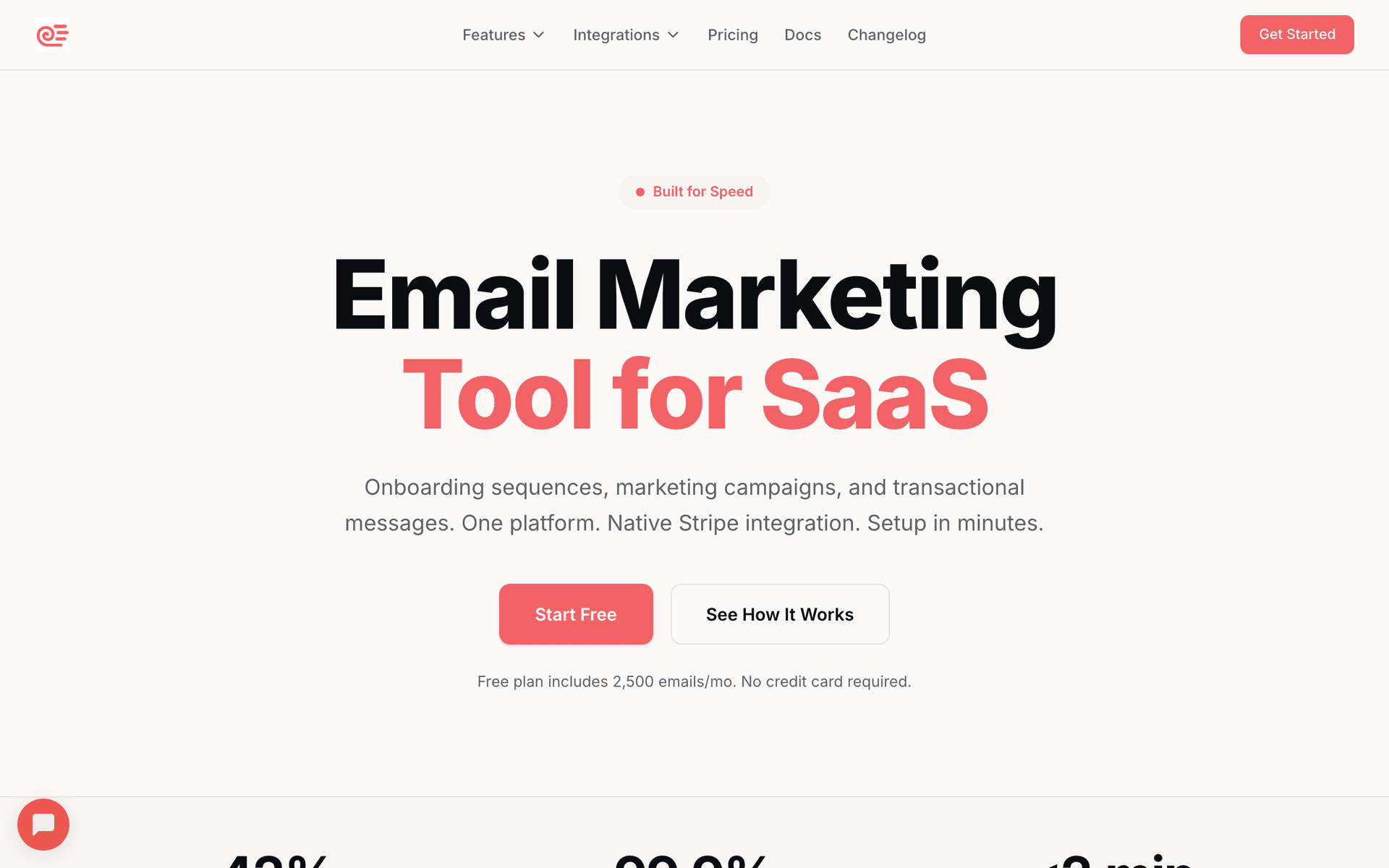
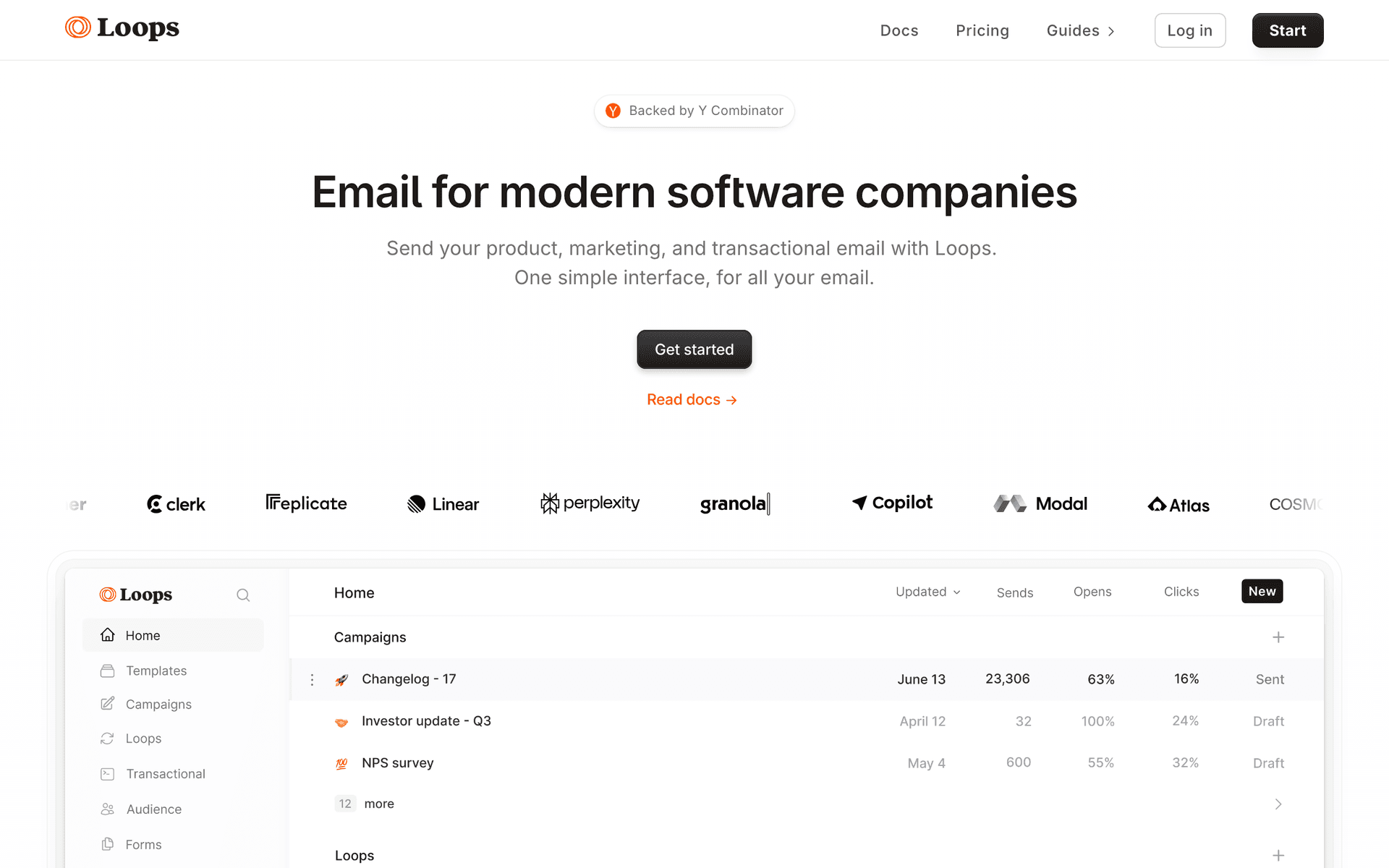
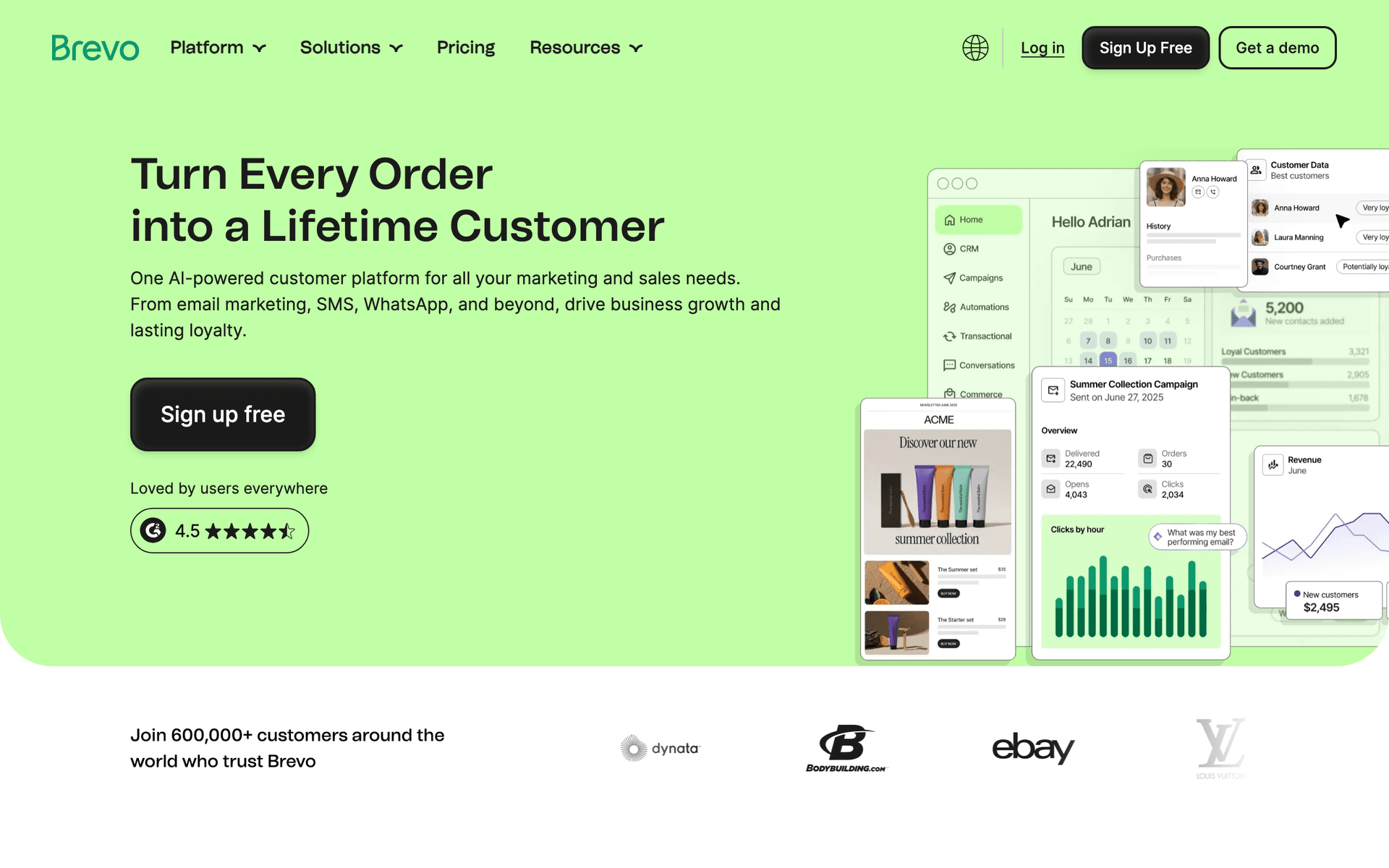
Use a single tool with a free tier. Sequenzy, Loops, or Brevo all work at this stage. Set up a basic welcome email and one dunning sequence if you have paying users. Do not spend more than an afternoon on email at this stage - your product needs more attention.
Early Revenue ($0-$3K MRR)
This is when email starts mattering. Build a proper 4-5 email onboarding sequence that guides users to your core value proposition. Set up dunning if you have not already. Start sending a monthly product update newsletter to keep users engaged. One tool should handle all of this.
Growing ($3K-$20K MRR)
Now you can invest more in email. Add trial conversion sequences, re-engagement flows for inactive users, and feature announcement campaigns. Consider segmenting by user behavior - power users get different emails than casual users. You might start A/B testing subject lines and send times.
Scaling ($20K+ MRR)
At this point, email is a meaningful revenue driver. Add lifecycle segmentation, expansion revenue sequences (upsell and cross-sell), and NPS or feedback surveys. Consider whether your current tool still fits or if you need to migrate to something with more advanced automation capabilities.
Best Fit by Bootstrapped SaaS Budget
Best email marketing tool for pre-revenue bootstrapped SaaS
Choose Sequenzy, Loops, or Brevo when the priority is launching a welcome email, waitlist updates, and basic onboarding without monthly platform pressure. Keep the setup small enough that product work stays the main focus.
Best email marketing tool for bootstrapped SaaS with paying customers
Choose Sequenzy when Stripe events, dunning, onboarding, and product updates need to work together without founder babysitting. Failed-payment recovery and activation emails usually pay for the tool before advanced marketing campaigns do.
Best email marketing tool for bootstrapped SaaS founders avoiding contact pricing
Choose pay-per-email pricing when the database includes free users, churned customers, trial dropoffs, and quiet accounts. Contact-based tools can look cheap early but become painful when the audience grows faster than active sending volume.
Onboarding Sequence Architecture
The most effective onboarding sequences for bootstrapped SaaS follow a simple framework:
Email 1: Immediate Welcome (sent on signup)
Get users to take one specific action. Not three actions, not a feature tour - one action that delivers immediate value. Link directly to that action with a clear button. This email should take 30 seconds to read.
Email 2: Day 1 Activation Check
If they completed the core action, congratulate them and suggest the next step. If they did not, re-explain why the action matters and make it even easier to do. Use conditional logic if your tool supports it.
Email 3: Day 3 Social Proof
Share what other users have accomplished with your product. Real numbers work best - "Users who complete setup see results within 48 hours" is more compelling than generic testimonials. Nudge toward features they have not tried.
Email 4: Day 7 Founder Check-In
Write a personal email from the founder asking a single question about their experience. Keep it short. This email should feel like it was written individually, not generated by a marketing tool. The replies you get are gold for understanding user needs.
Minimum Viable Onboarding Sequence
| Timing | Job to do | Success metric | |
|---|---|---|---|
| Welcome | Immediately | Push one activation action | Core action completed |
| Activation help | Day 1 | Remove setup friction | Setup completion rate |
| Proof | Day 3 | Show what good users achieve | Feature adoption |
| Founder check-in | Day 7 | Collect objections and confusion | Reply rate |
| Trial close | 2 days before trial ends | Convert value into payment | Trial-to-paid conversion |
Common Integration Patterns
Stripe + Email Tool
If your email tool has native Stripe integration (like Sequenzy), payment events automatically trigger the right emails. If not, use Stripe webhooks to trigger emails through your email tool's API when payments fail, trials expire, or subscriptions change.
Product Events + Email
Send user behavior events from your application to your email tool. Most tools accept events via API or webhook. Track actions like "completed_setup", "used_core_feature", "invited_team_member", and "inactive_7_days". These events power the most effective automated sequences.
CRM + Email
If you use a lightweight CRM for sales conversations, connect it to your email tool so you do not email prospects who are already in active sales conversations. Most tools support this through tagging or suppression lists.
Measuring What Matters
Forget vanity metrics. For bootstrapped SaaS email, track these numbers:
Trial-to-Paid Conversion Rate - The percentage of trial users who become paying customers. Your onboarding sequence directly impacts this number. Aim for 5-15% depending on your product and pricing.
Dunning Recovery Rate - The percentage of failed payments recovered through automated emails. Track this monthly and compare against your overall churn rate. A good dunning sequence saves 20-40% of failed payments.
Activation Rate - The percentage of new signups who complete your core action within 48 hours. Your welcome email and day-1 email drive this metric. Low activation means your onboarding sequence needs work.
Revenue Per Email - Total revenue attributed to email divided by emails sent. This tells you whether your email program is generating returns that justify its cost.
When to Migrate Email Tools
You should consider switching tools when any of these become true: your email costs exceed 3% of MRR consistently, you are spending more than 2 hours per week working around tool limitations, your deliverability drops below 95%, or you need features your current tool cannot provide (like event-based automation or transactional email). Plan migrations during slow periods and allow 2-4 weeks for full transition including sequence rebuilding and integration updates.