Updated 2026-03-15

Best Email Marketing Tools for Product-Led Growth SaaS

Turn product usage into revenue with activation emails, self-serve upgrade flows, and viral loop triggers.

In PLG, the product is your sales team. Users sign up, explore on their own, and (hopefully) upgrade without ever talking to a human. Email is the connective tissue that makes this work. It nudges inactive signups toward their activation moment, triggers upgrade prompts when users hit limits, and powers the viral loops that bring in new users. Most email tools were built for top-down sales or e-commerce. Here are the platforms that actually understand product-led motion.

TL;DR

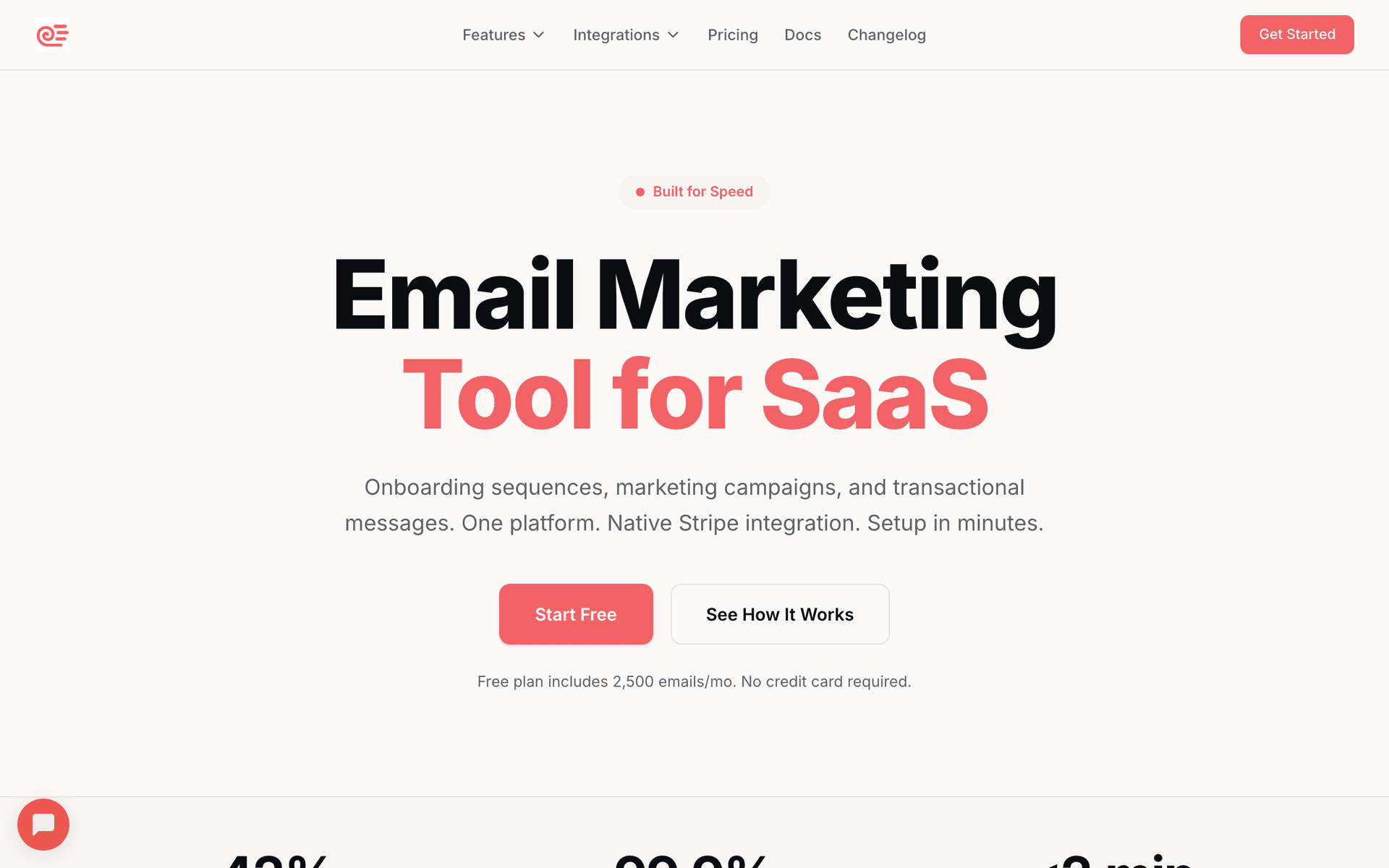
For PLG SaaS, Sequenzy is the best fit if you want pay-per-email pricing (free up to 2,500 emails/mo) with native Stripe integration that automatically triggers upgrade and dunning sequences from product events. Customer.io is the strongest alternative for funded teams with complex behavioral automation needs, though its per-profile pricing gets expensive when you have a large free tier.

Why PLG SaaS Companies Need Email Marketing

Activation Is Everything

The gap between signup and activation is where most PLG companies lose users. A behavior-triggered onboarding sequence that fires when users complete (or fail to complete) key setup steps is the difference between a 20% and 60% activation rate.

Self-Serve Conversion at Scale

PLG means thousands of users upgrading themselves. Email sequences triggered by usage limits, feature gates, and aha-moments convert users at the exact right time without needing a sales rep.

Viral Loop Amplification

Invites, sharing, and collaboration are built into PLG products. Automated emails that encourage users to invite teammates, share projects, or collaborate on workspaces amplify your viral coefficient.

Churn Prevention Without Human Intervention

When a paying user stops logging in or their usage drops, automated re-engagement sequences bring them back before they cancel. In PLG, you cannot rely on account managers to catch this.

Product-Led Growth SaaS Email Marketing Benchmarks

Know these numbers before you start. They'll help you set realistic goals and pick the right tool.

30-40%
Average Open Rate

PLG behavior-triggered emails typically see higher open rates than marketing broadcasts because they arrive at contextually relevant moments.

4-8%
Average Click Rate

Activation and upgrade emails driven by product events achieve strong click rates since users are actively engaged with the product.

Within 1 hour of trigger event
Best Send Time

PLG emails are event-driven, not calendar-driven. The best send time is as close to the triggering behavior as possible.

3-7%
Free-to-Paid Conversion from Email

Well-optimized PLG email sequences convert 3-7% of free users to paid, compared to 1-2% without automated nurture.

Important Tips Before You Choose

Lessons from product-led growth saaswho've been doing this for years. Save yourself the trial and error.

Trigger on Activation Gaps, Not Time

Stop sending day-1, day-3, day-7 drip emails to every user. Instead, trigger emails based on what users have not done. If a signup has not connected their first integration after 24 hours, that is the email trigger. Time-based sequences miss the point of PLG.

Separate Your Free Tier Communication

Free users need different emails than paid users. Build distinct tracks for each. Free users get activation and feature discovery emails. Paid users get onboarding for premium features and expansion nudges. Mixing these dilutes both.

Use Product Events as Your Email Calendar

Every meaningful product event should map to a potential email. User creates a project, hits a limit, invites a teammate, exports data, or goes inactive for 7 days. These events are your sending triggers, not a marketing calendar.

Make Upgrade Emails About the Problem, Not the Price

When a user hits a storage limit, do not lead with pricing. Lead with the problem they are experiencing and show how the paid plan solves it. The best PLG upgrade emails feel like help, not sales.

Track Viral Coefficient from Email

Measure how many new users come from invite emails. If your invite email generates 0.3 new signups per send, optimizing that email is one of the highest-leverage growth activities you can do.

Build a Sunset Flow for Inactive Free Users

Users who signed up and never activated are hurting your deliverability. After 60 days of inactivity, run a re-engagement sequence. If they still do not engage, suppress them from future sends.

19 Best Email Marketing Tools for Product-Led Growth SaaS

#ToolDescriptionBest ForPricing
1SequenzyEmail marketing with native payment integrations and event-driven automation for PLG SaaS.PLG SaaS wanting automated product-to-email pipelines with native payment integrationFree up to 2,500 emails/mo, then $19/mo (unlimited contacts)
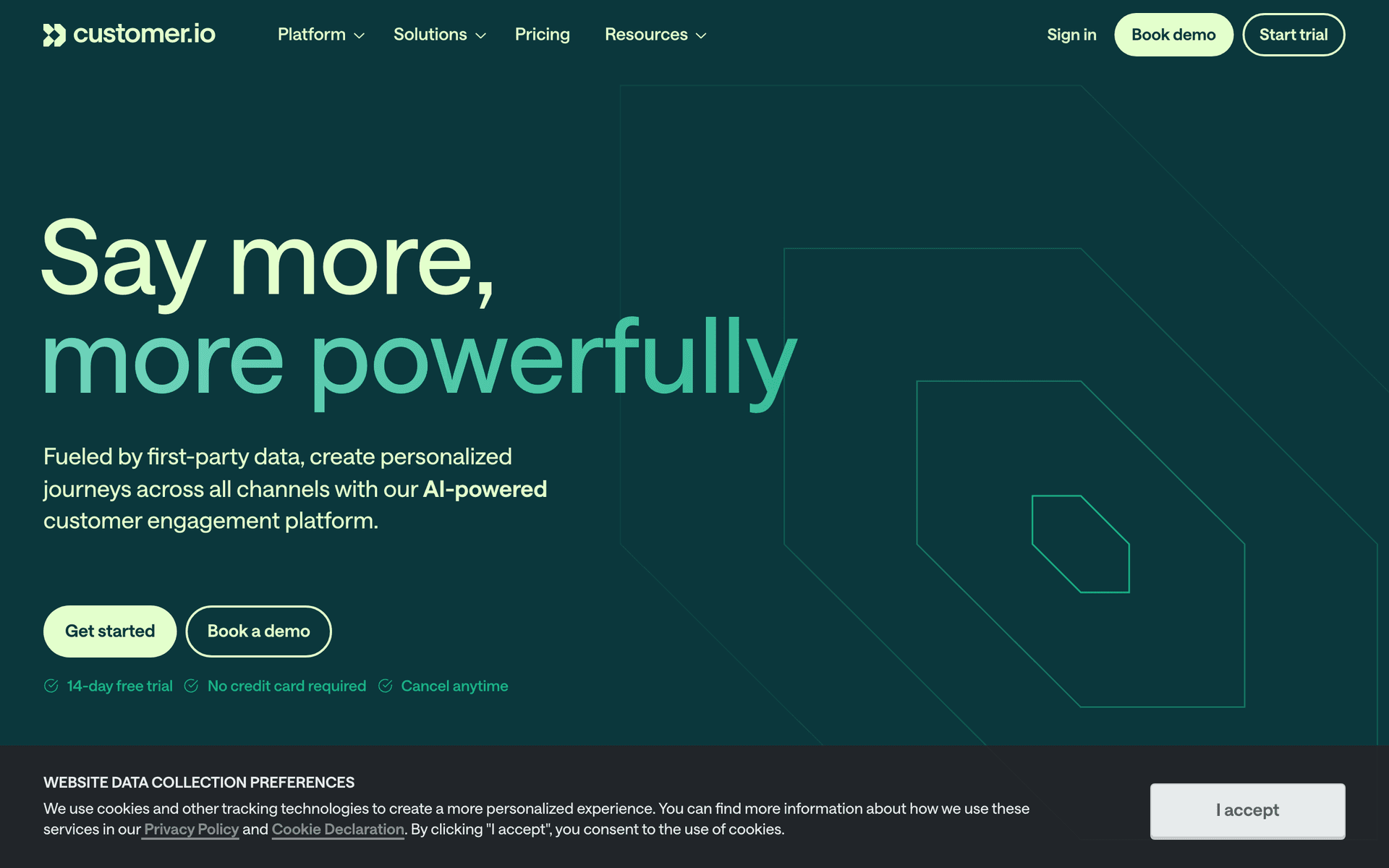
2Customer.ioPowerful event-driven messaging platform built for product-led teams.Funded PLG companies with complex activation funnels and multi-channel needs$100/month for 5,000 profiles
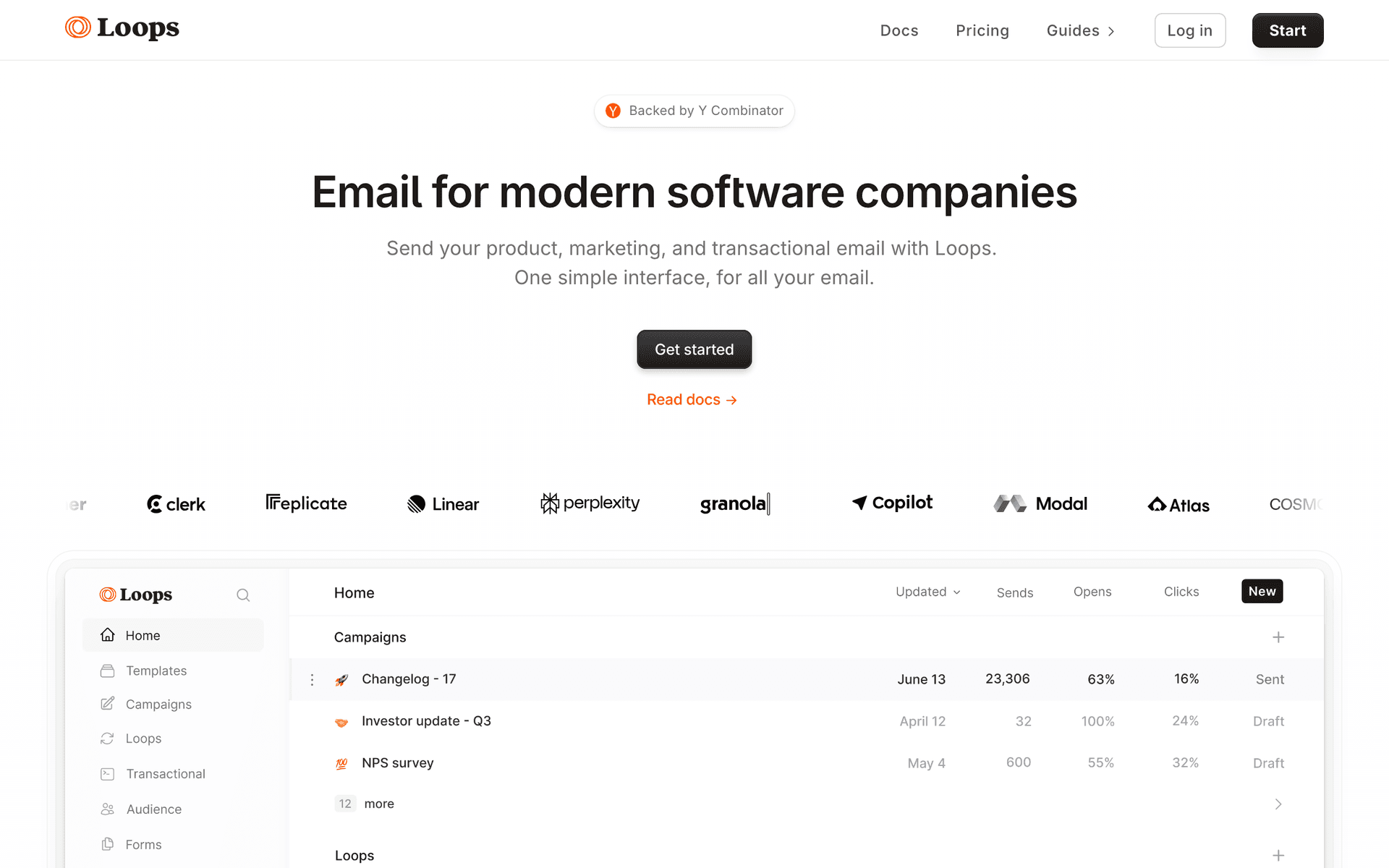
3LoopsModern email platform for SaaS with clean event-based automations.PLG companies wanting clean, simple event-based automationFree up to 1,000 contacts, then $49/month
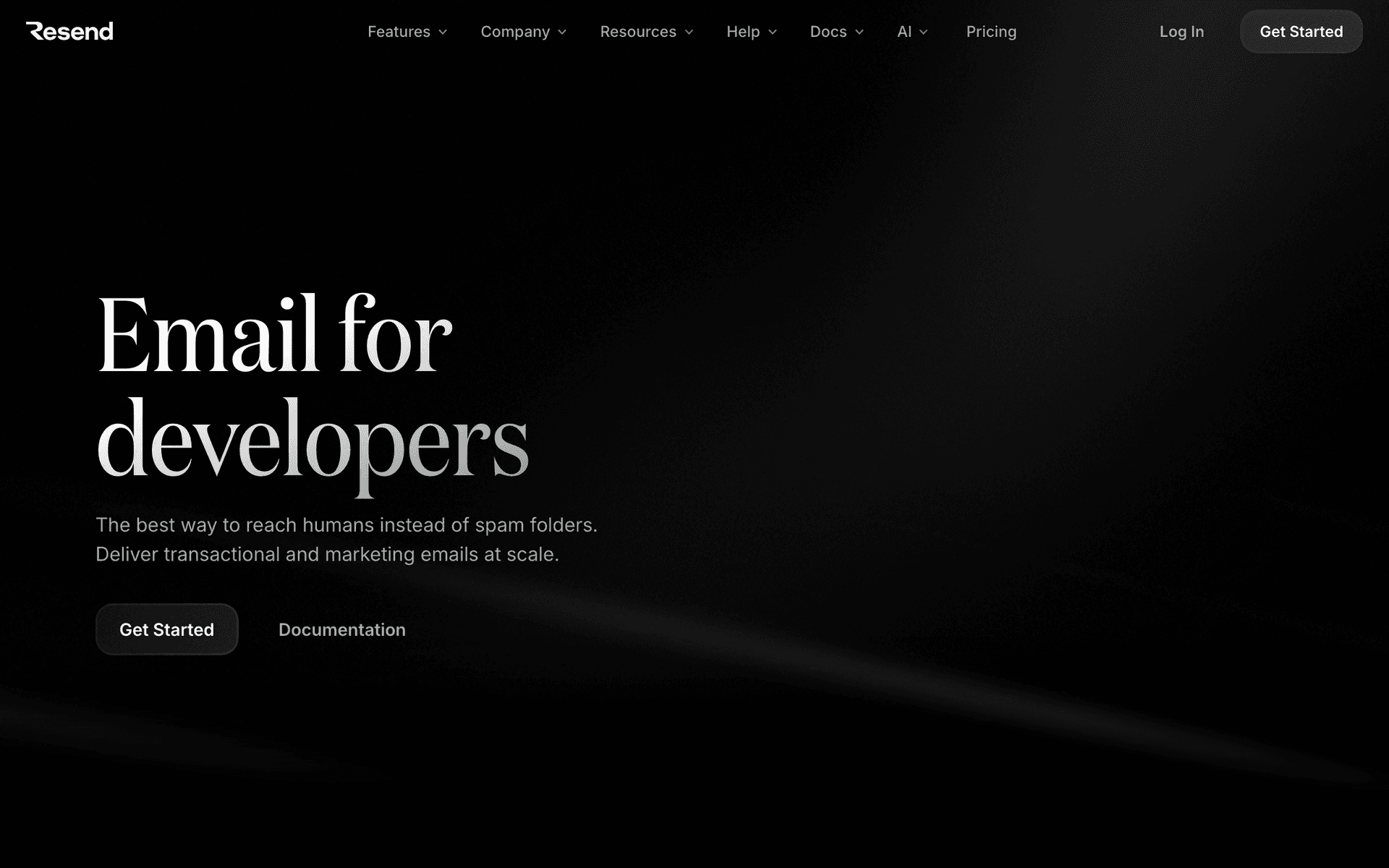
4ResendDeveloper-first email API with React Email for building templates in code.Engineering-led PLG teams who want full control in codeFree for 3,000 emails/month, then $20/month
5ActiveCampaignAdvanced automation platform with powerful workflow builder.PLG companies with complex upgrade paths and a growth team$29/month for 1,000 contacts
6BrevoAffordable all-in-one marketing platform.Early-stage PLG companies on a tight budgetFree up to 300 emails/day, then $9/month
7HubSpotEnterprise CRM and marketing platform.PLG companies with a PLG-to-sales motion and enterprise dealsFree CRM, marketing hub from $800/month
8EnchargeEvent-driven email automation for SaaS products.PLG SaaS teams who want event-driven lifecycle automation triggered by product activation milestonesFrom $49/month for 2,000 users
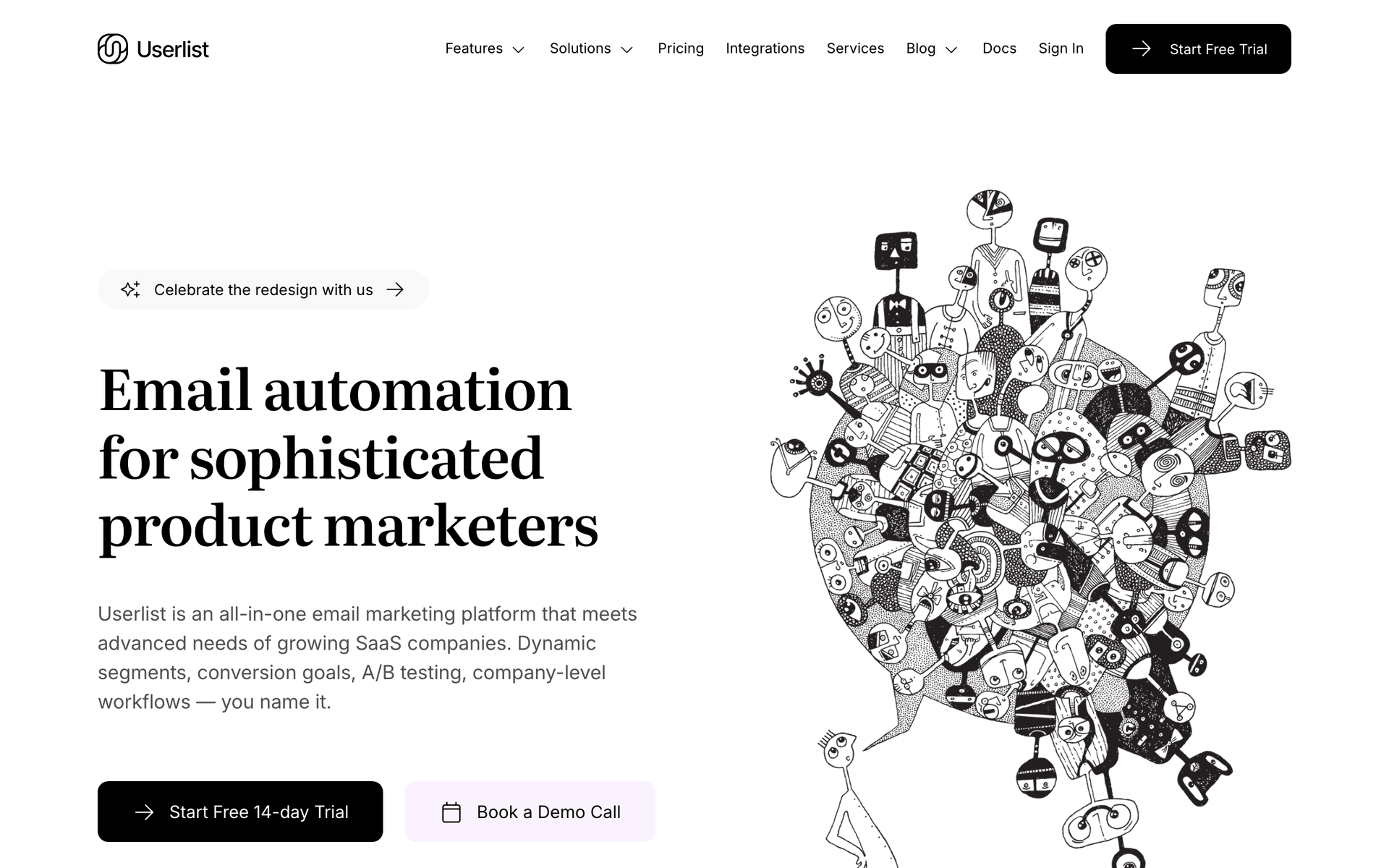
9UserlistSaaS email automation with user and company-level PLG tracking.PLG SaaS with team accounts where individual and account-level activation both drive conversionFrom $149/month
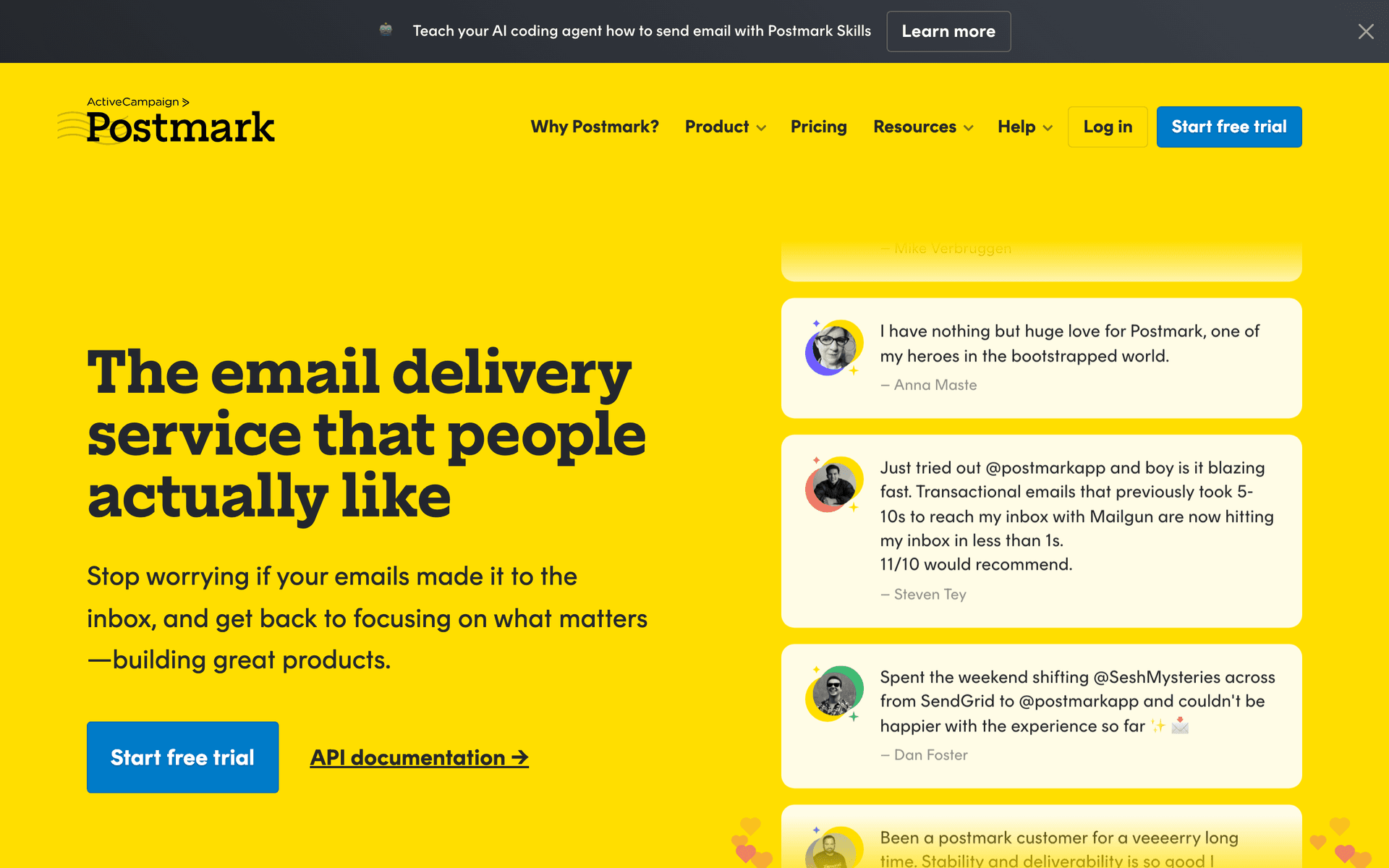
10PostmarkBest-in-class transactional email deliverability.PLG SaaS where transactional email delivery quality directly affects self-serve conversion$15/month for 10,000 emails
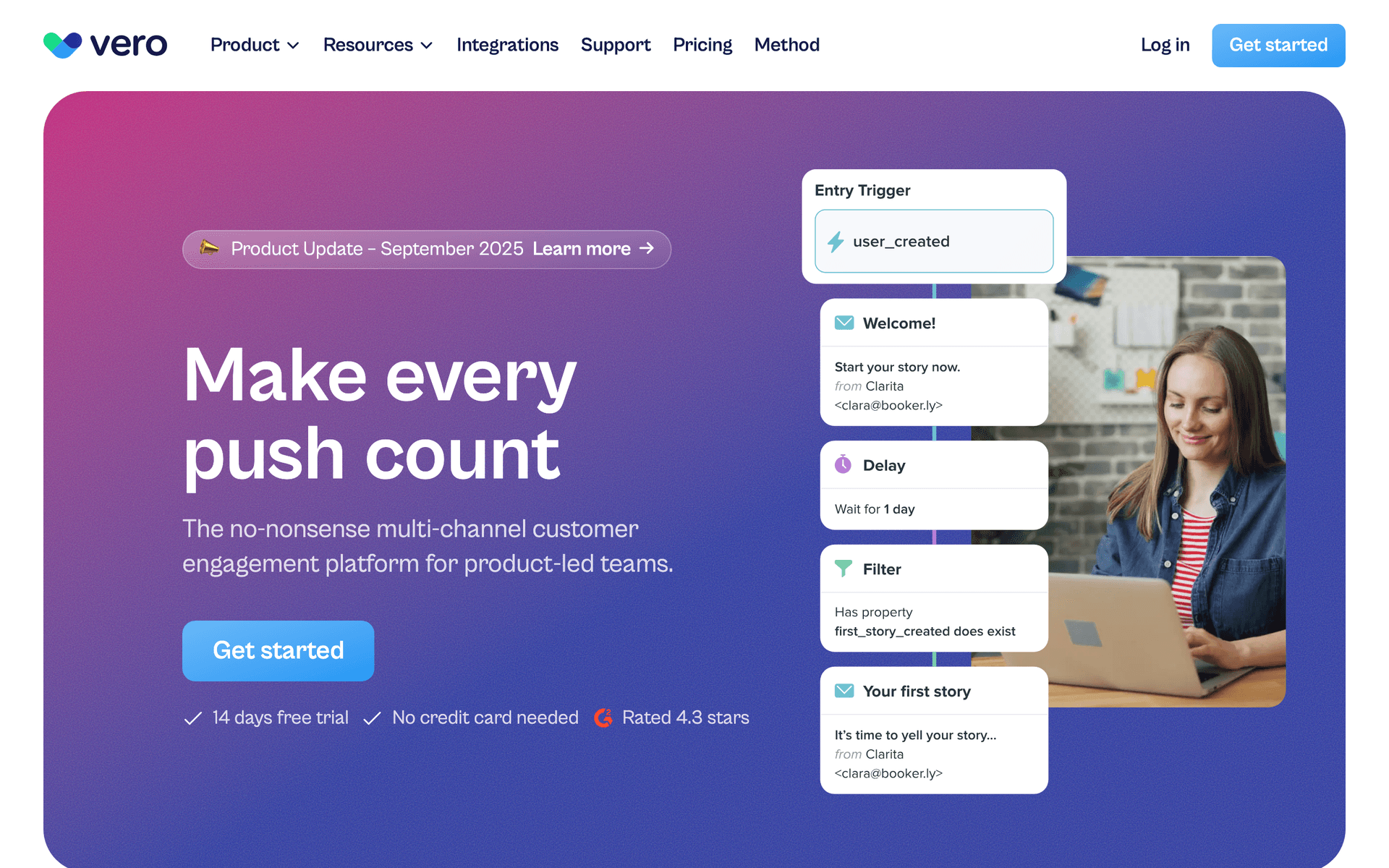
11VeroEvent-driven email for PLG product teams.Technical PLG SaaS teams who want event-driven behavioral automation more affordable than Customer.ioFrom $100/month
12ResendDeveloper-first transactional email API.Engineering-led PLG SaaS teams who want polished transactional email that reinforces product qualityFree for 100 emails/day, then $20/month
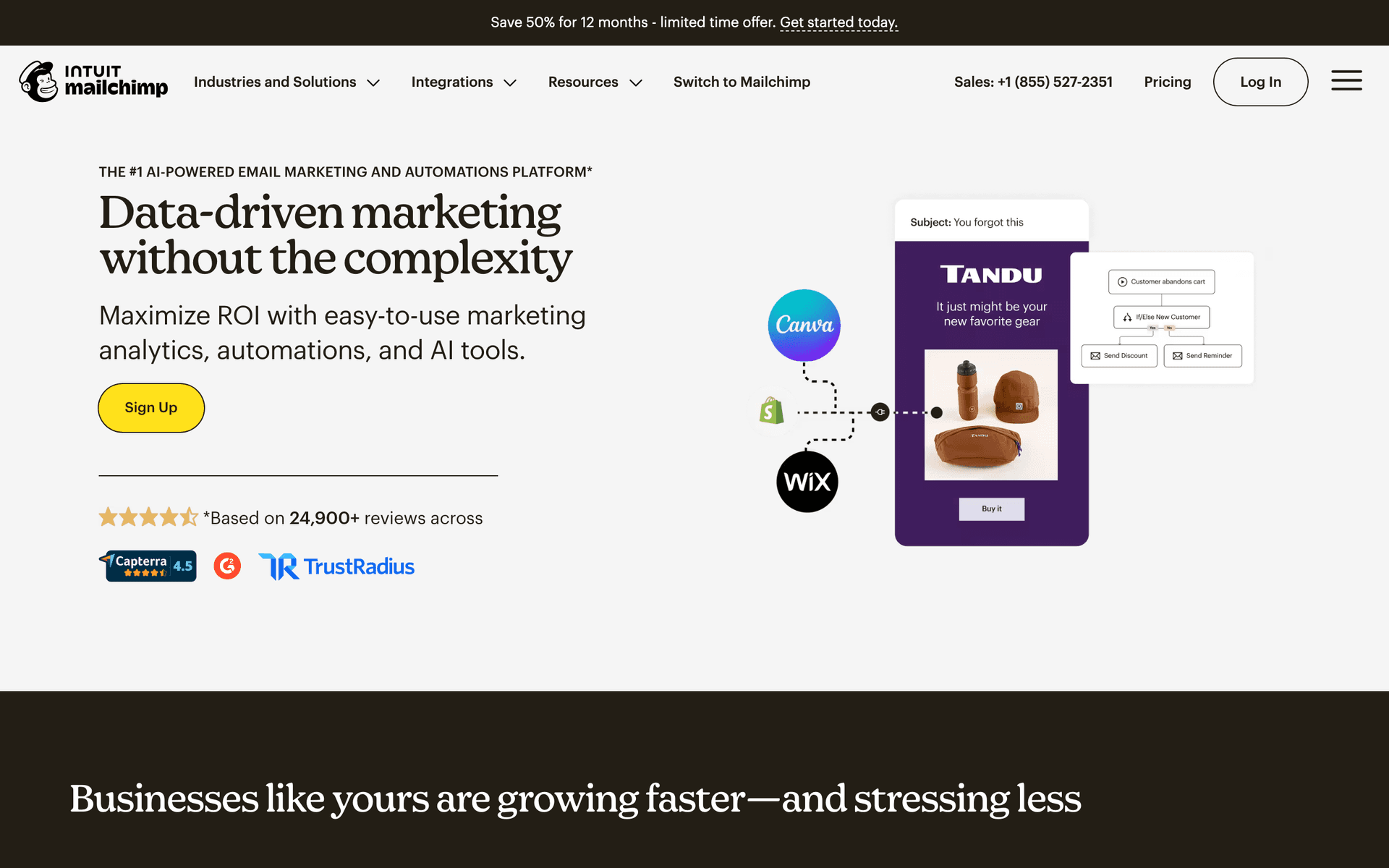
13MailchimpPopular email marketing platform.PLG SaaS teams who have started with Mailchimp and want to understand what tools better fit their modelFree up to 500 contacts, then from $13/month
14PlunkOpen-source transactional email for developers.Technical PLG SaaS teams with large free tiers who want to own transactional infrastructure and control costsFree self-hosted, hosted tier available
15OrttoCDP and email marketing for data-driven PLG teams.PLG SaaS growth teams who make email decisions based on behavioral product dataFrom $99/month
16SenderEmail and SMS with a generous free tier.Early-stage PLG teams who want a free starting point for basic lifecycle sequences before investing in behavioral toolingFree up to 2,500 contacts, paid from $8/month
17MailerSendCombined transactional and marketing email.Early PLG SaaS teams who want one tool for transactional and marketing email before adding behavioral complexityFree for 3,000 emails/month, then from $25/month
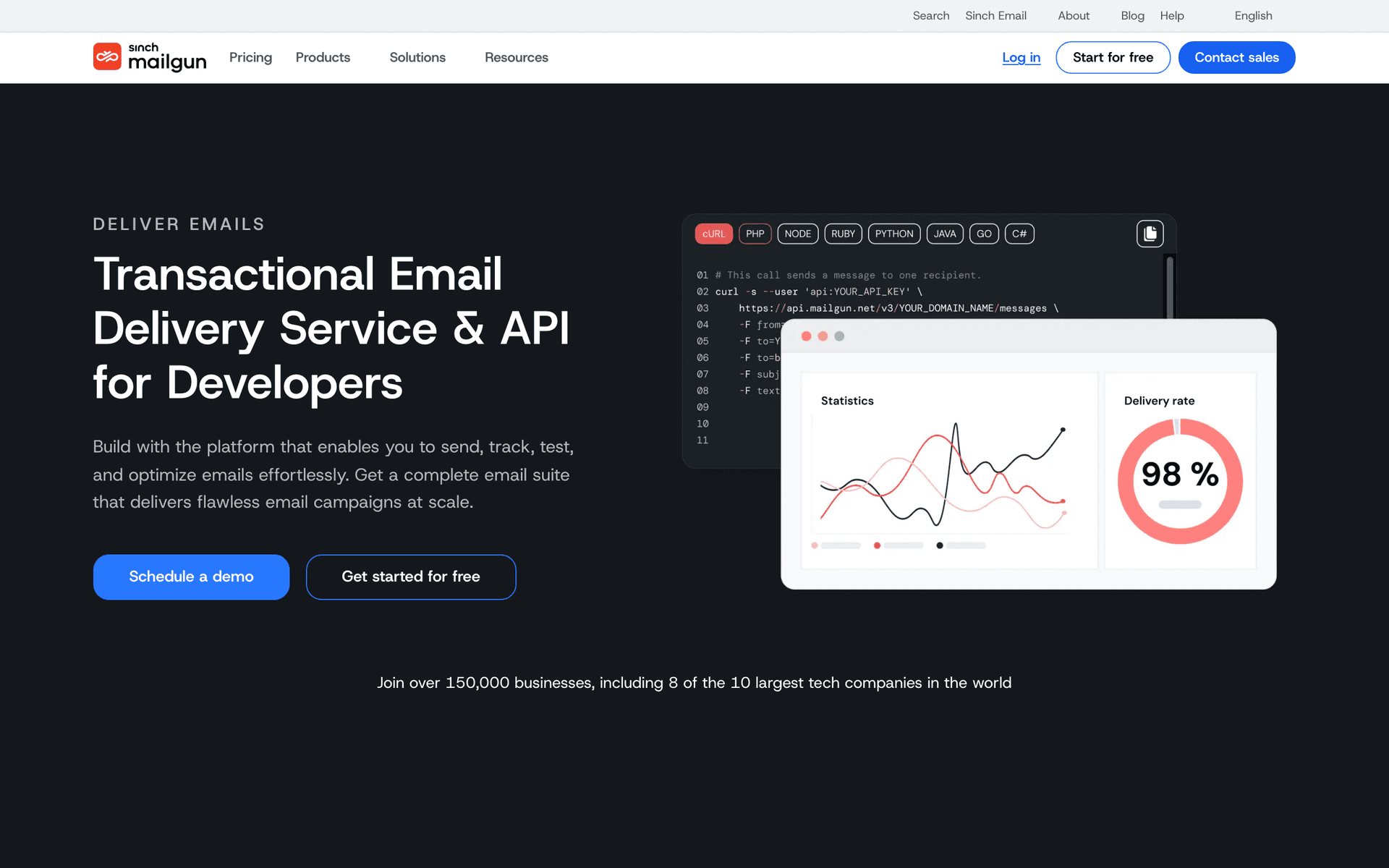
18MailgunEmail API infrastructure for high-volume sending.High-volume PLG SaaS with large free user bases who need scalable transactional email infrastructureFree up to 100 emails/day, then from $15/month
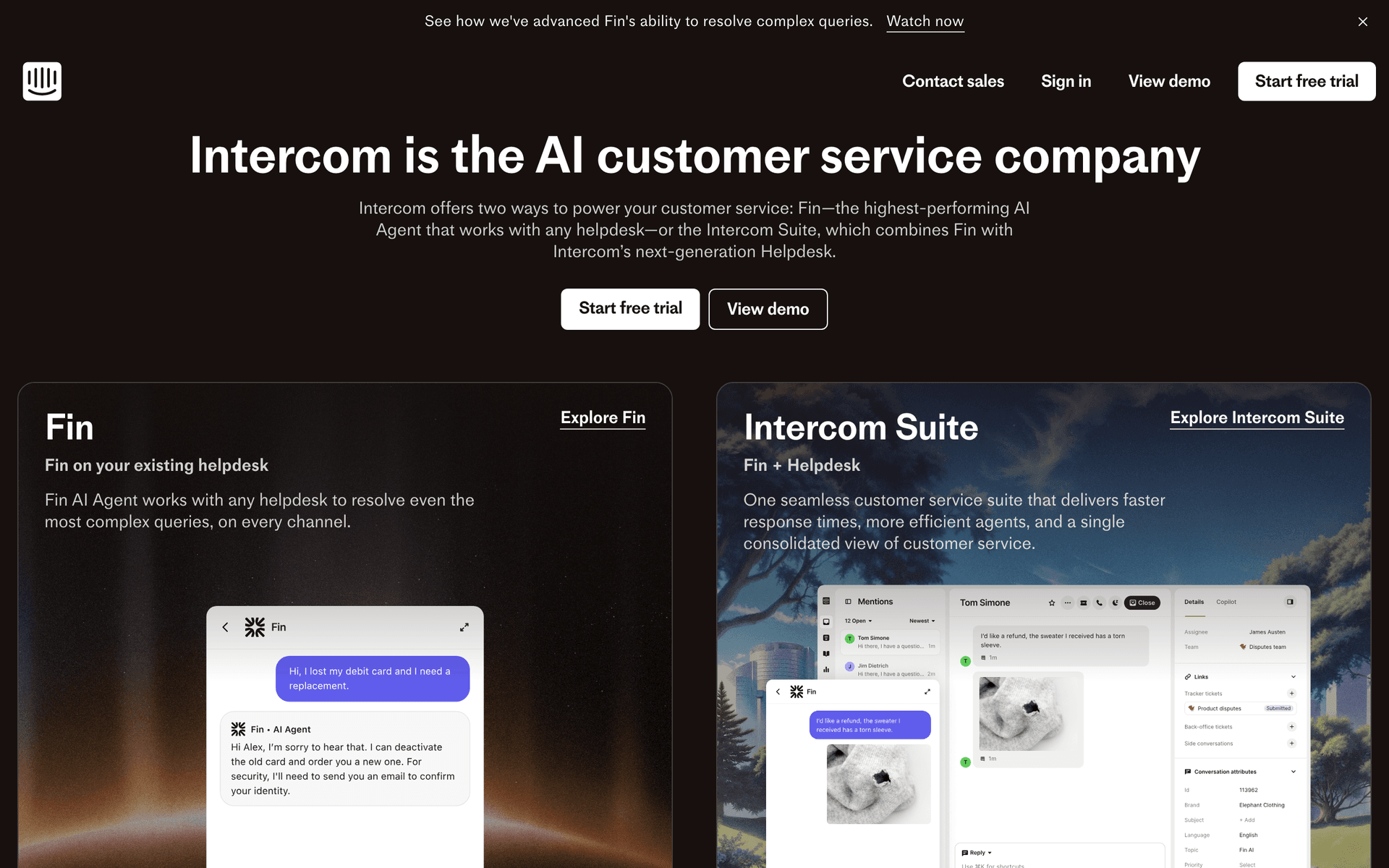
19IntercomCustomer messaging combining email, in-app, and support.PLG SaaS who want email and in-product behavioral messaging working together in the activation funnelFrom $74/month
Our Top Pick for Product-Led Growth SaaS
#1
Sequenzy

Email marketing with native payment integrations and event-driven automation for PLG SaaS.

Visit
Sequenzy dashboard screenshot

Sequenzy fits PLG companies well because of the tight loop between product events and email triggers. Connect Stripe (or Paddle, Polar) and every subscription event flows in automatically. User upgrades from free to paid? Onboarding sequence for paid features starts. User hits their plan limit? Upgrade nudge fires. Payment fails? Dunning sequence kicks in. The free tier covers up to 2,500 emails per month, which is enough for early-stage PLG companies to run basic activation and upgrade sequences without any cost. The AI sequence builder generates activation, conversion, and retention sequences tailored to your product in seconds, so you do not need a dedicated email ops person to get started. Pay-per-email pricing is significant for PLG since you might have 100,000 free users but only email a fraction of them in any given month. At scale, this saves dramatically compared to per-contact tools where you would pay for every dormant free signup sitting in your database.

Best for
PLG SaaS wanting automated product-to-email pipelines with native payment integration
Pricing
Free up to 2,500 emails/mo, then $19/mo (unlimited contacts)

Pros

  • Native Stripe/Paddle/Polar integration for automatic billing events
  • Event-driven triggers tied to product behavior
  • AI sequence builder for activation and conversion flows
  • Pay per email, not per contact. Large free tiers stay affordable

Cons

  • Newer platform with a smaller community
  • No built-in in-app messaging
  • Template library still growing
#2
Customer.io

Powerful event-driven messaging platform built for product-led teams.

Visit
Customer.io dashboard screenshot

Customer.io is the most flexible tool for PLG companies that have complex, multi-stage activation funnels. The event pipeline handles any product behavior you can track - page views, feature usage, API calls, whatever your app emits. Combine events, user attributes, and segment membership in complex automation workflows with branching logic that adapts to each user's journey. For example, you can build a workflow that checks if a user completed onboarding step A, branches to different emails based on their plan tier, and exits them from the sequence when they activate. Multi-channel support (email, push, in-app, SMS) means you can reach users wherever they are, which is valuable for PLG where in-app prompts and email work together. The main downside is cost and complexity. At $100/month for 5,000 profiles, it gets expensive fast when your PLG funnel has 50,000+ free users, and the setup requires engineering time to instrument your product events properly.

Best for
Funded PLG companies with complex activation funnels and multi-channel needs
Pricing
$100/month for 5,000 profiles

Pros

  • Best-in-class event-driven automation
  • Multi-channel messaging including in-app
  • Complex branching and conditional logic
  • Strong API and webhook support

Cons

  • Per-profile pricing hurts PLG economics
  • Complex setup requires engineering time
  • Steep learning curve for non-technical teams
#3
Loops

Modern email platform for SaaS with clean event-based automations.

Visit
Loops dashboard screenshot

Loops hits a sweet spot for PLG companies that want event-based automation without Customer.io's complexity. The interface is fast and clean - your growth team can build and modify sequences without waiting on engineering. Events from your product trigger sequences naturally through a simple API or Segment integration. Transactional and marketing emails live in one place, so your password resets and your activation nudges come from the same platform. For a PLG company that wants to get onboarding, activation, and upgrade sequences running quickly without weeks of setup, Loops delivers. The per-contact pricing model is the main concern as your free tier grows - at 50,000 contacts, you are paying significantly more than per-email tools.

Best for
PLG companies wanting clean, simple event-based automation
Pricing
Free up to 1,000 contacts, then $49/month

Pros

  • Clean modern interface that is fast to use
  • Event-based automations work well for PLG triggers
  • Combined transactional and marketing emails

Cons

  • Per-contact pricing scales poorly with large free tiers
  • Less flexible than Customer.io for complex workflows
  • No native payment provider integration
#4
Resend

Developer-first email API with React Email for building templates in code.

Visit
Resend dashboard screenshot

Resend is popular with PLG engineering teams because everything is code-first, which fits the developer-owned growth stack common in PLG. React Email lets you build activation emails as React components that live alongside your product code - version controlled, type-safe, and reviewable in PRs. The API is excellent, with clear docs and fast integration. For PLG companies where engineering owns the growth stack and wants full control over every email touchpoint, Resend gives you that control. You can dynamically personalize emails based on any product data without being limited by a template editor. The limitation is that Resend is an email API, not an automation platform. You need to build your own sequence logic, timing, and user tracking. This means engineering time on email infrastructure instead of product features.

Best for
Engineering-led PLG teams who want full control in code
Pricing
Free for 3,000 emails/month, then $20/month

Pros

  • Excellent developer experience and API
  • React Email for building templates as components
  • Per-email pricing works well for PLG

Cons

  • No built-in automation or sequence builder
  • You have to build all workflow logic yourself
  • No segmentation or audience management
#5
ActiveCampaign

Advanced automation platform with powerful workflow builder.

Visit
ActiveCampaign dashboard screenshot

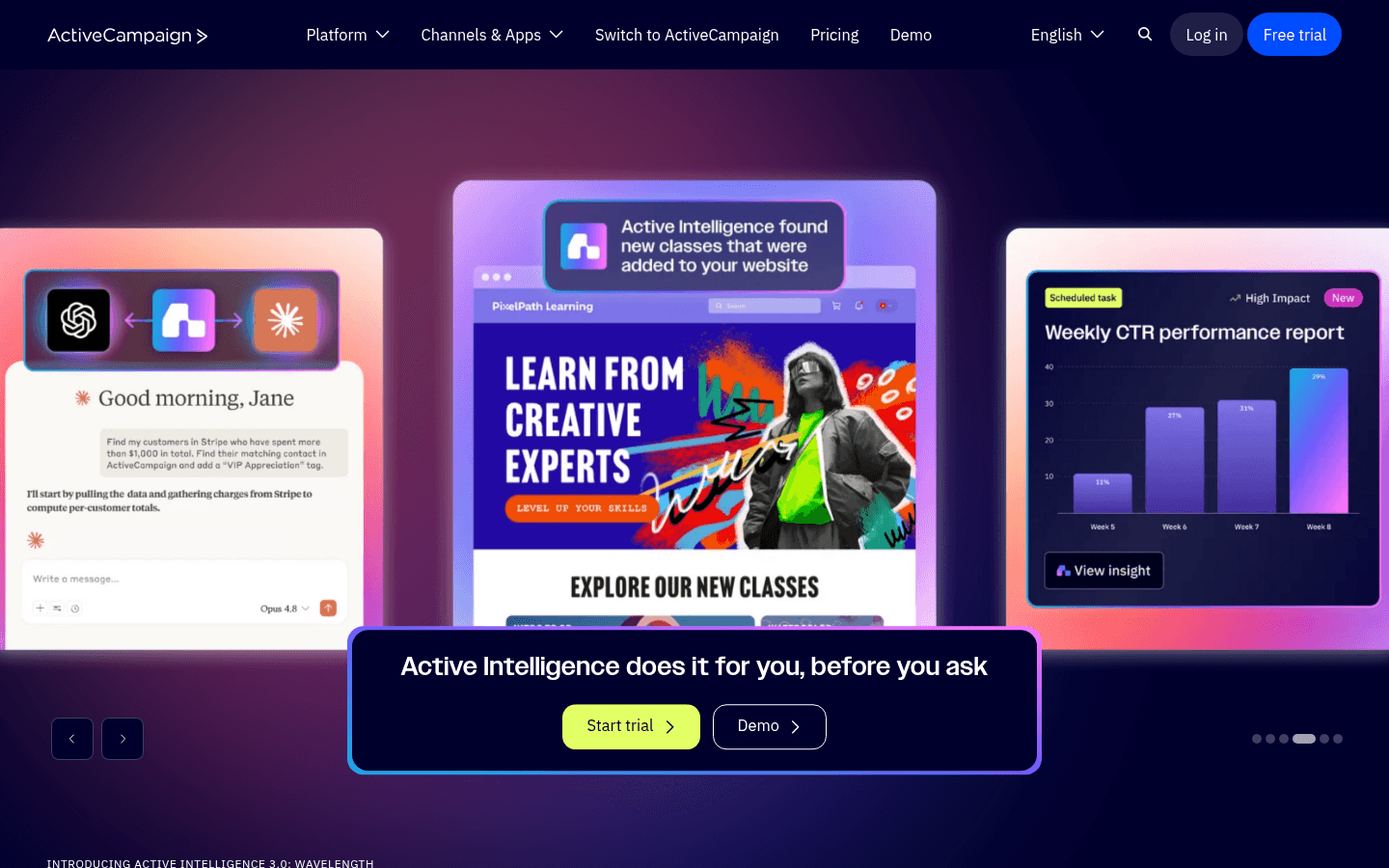
ActiveCampaign has the most powerful visual automation builder on the market, which matters for PLG companies with layered upgrade paths (free, starter, pro, enterprise). You can model the entire user journey with conditional branches, wait conditions, and goals. For example, build a workflow that scores users based on feature adoption, branches based on plan tier, waits for specific usage milestones, and notifies your sales team when a free user crosses an enterprise threshold. The CRM side helps when PLG leads become sales-qualified, bridging the gap between self-serve and sales-assisted motion. Per-contact pricing means your free tier inflates costs significantly though - at 50,000 free users, you are paying enterprise prices regardless of how many you actually email.

Best for
PLG companies with complex upgrade paths and a growth team
Pricing
$29/month for 1,000 contacts

Pros

  • Most powerful automation builder available
  • Built-in CRM for PLG-to-sales handoff
  • Complex conditional logic and goal tracking

Cons

  • Per-contact pricing punishes large free tiers
  • Complex interface with a learning curve
  • Not developer-friendly
#6
Brevo

Affordable all-in-one marketing platform.

Visit
Brevo dashboard screenshot

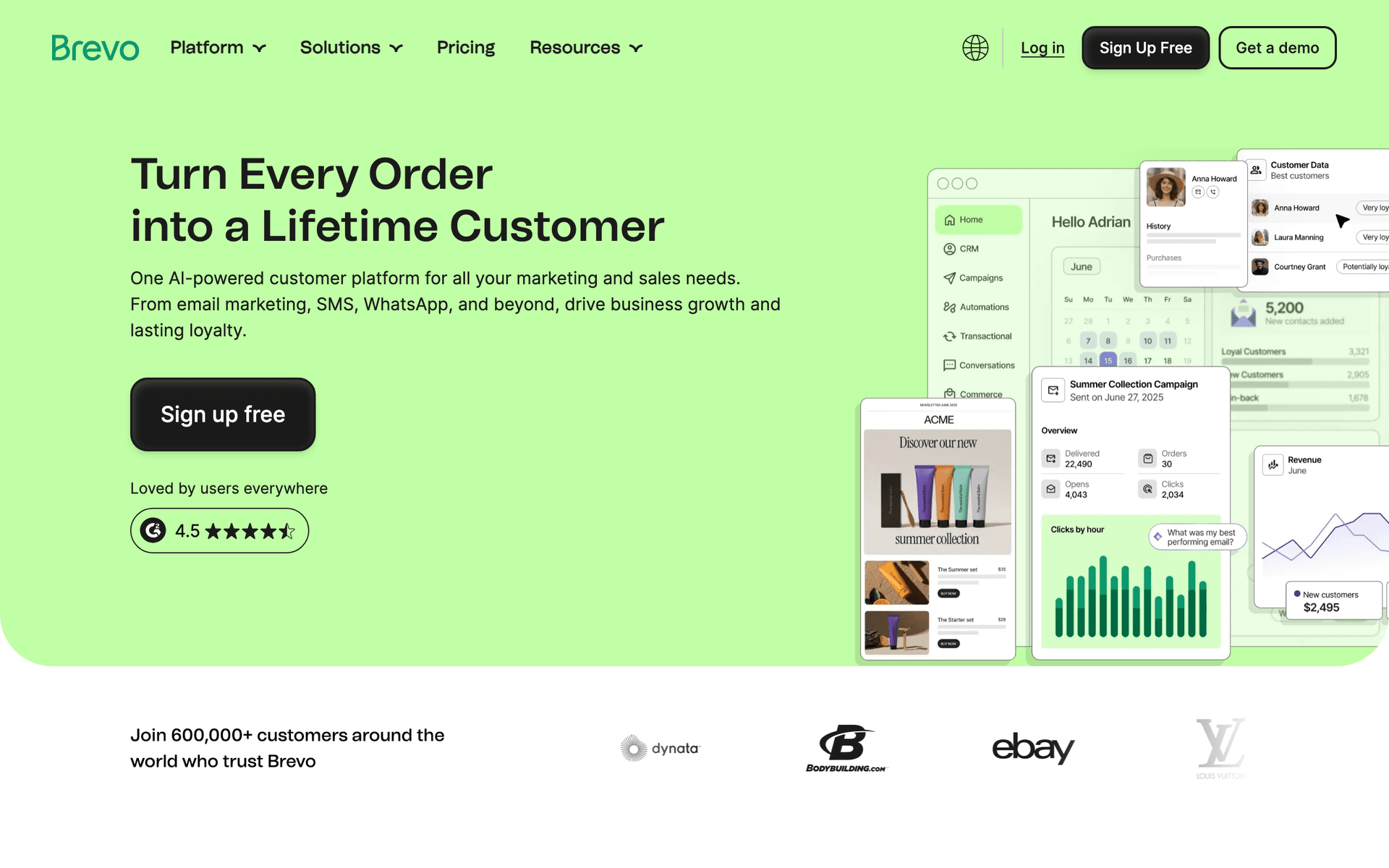
Brevo is a budget-friendly option for early-stage PLG companies that have not yet raised significant funding. The free tier covers basic needs with 300 emails per day and unlimited contacts, and per-email pricing on paid plans aligns with the PLG model where you have many contacts but only email a subset. The automation builder handles basic activation and upgrade sequences with event triggers via API. It is not sophisticated enough for complex PLG funnels with multi-stage activation and conditional branching, but it gets the core job done - welcome sequences, usage-triggered nudges, and simple upgrade prompts - at minimal cost while you figure out your PLG motion.

Best for
Early-stage PLG companies on a tight budget
Pricing
Free up to 300 emails/day, then $9/month

Pros

  • Generous free tier for getting started
  • Per-email pricing on paid plans
  • All-in-one platform with CRM included

Cons

  • Basic event tracking compared to purpose-built SaaS tools
  • Automation builder is limited for complex PLG funnels
  • Not designed for product-led companies specifically
#7
HubSpot

Enterprise CRM and marketing platform.

Visit
HubSpot dashboard screenshot

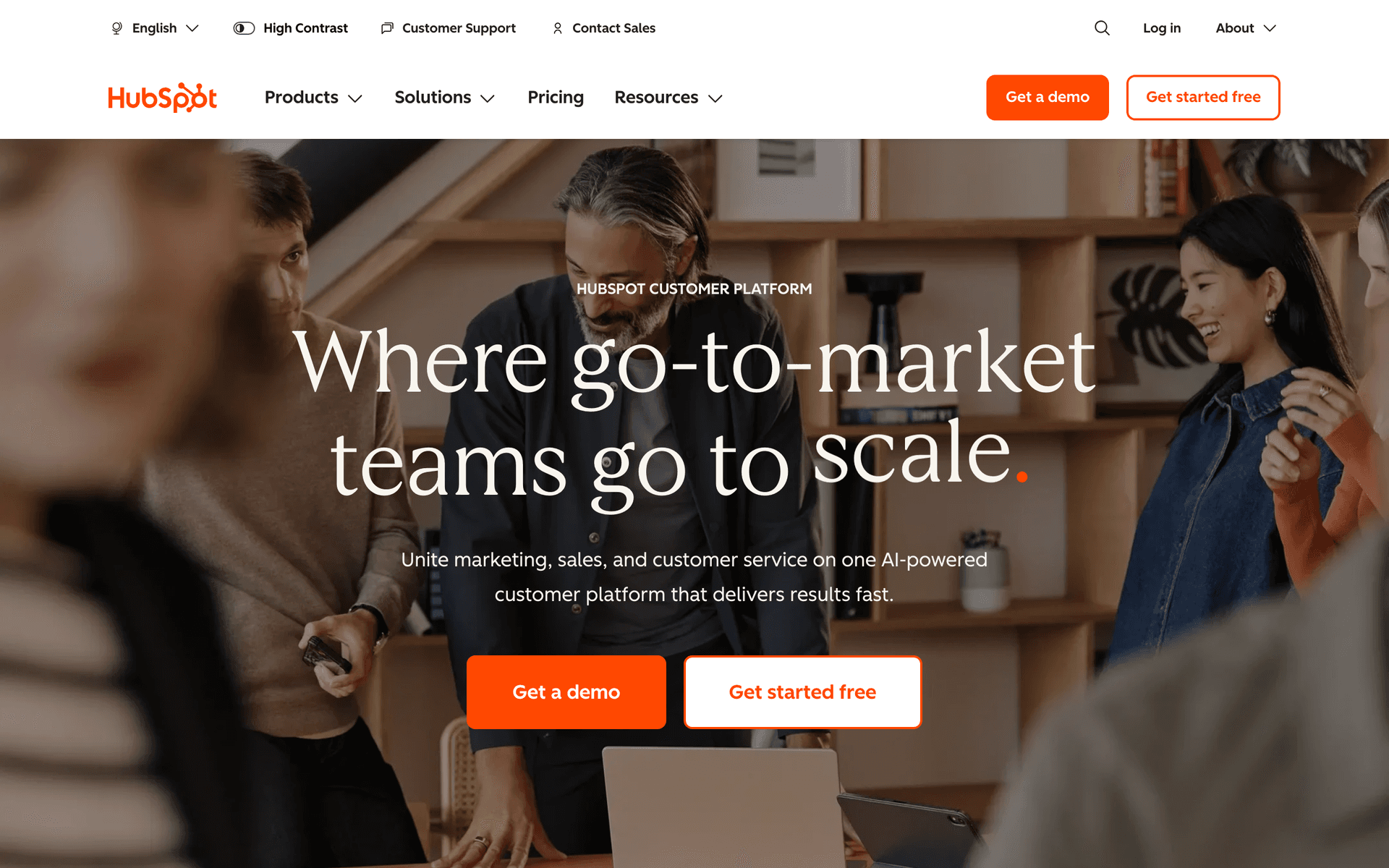
HubSpot matters for PLG companies that have a PLG-to-sales motion - where self-serve users start on free, grow their usage, and eventually need enterprise features that require a sales conversation. When that transition happens, HubSpot's CRM captures the handoff beautifully. Marketing automation is powerful with sophisticated workflows and reporting. But for the core PLG loop of activation, feature discovery, and self-serve upgrade, HubSpot is overkill. The product event integration requires custom API work or third-party connectors, and the pricing is steep - $800/month for the marketing features you actually need. Only consider HubSpot if your PLG motion has a meaningful sales-assisted component.

Best for
PLG companies with a PLG-to-sales motion and enterprise deals
Pricing
Free CRM, marketing hub from $800/month

Pros

  • Complete CRM for PLG-to-sales handoff
  • Powerful reporting and attribution
  • Large integration ecosystem

Cons

  • Extremely expensive for marketing features
  • Product event integration is clunky
  • Overkill for pure self-serve PLG
#8
Encharge

Event-driven email automation for SaaS products.

Visit
Encharge dashboard screenshot

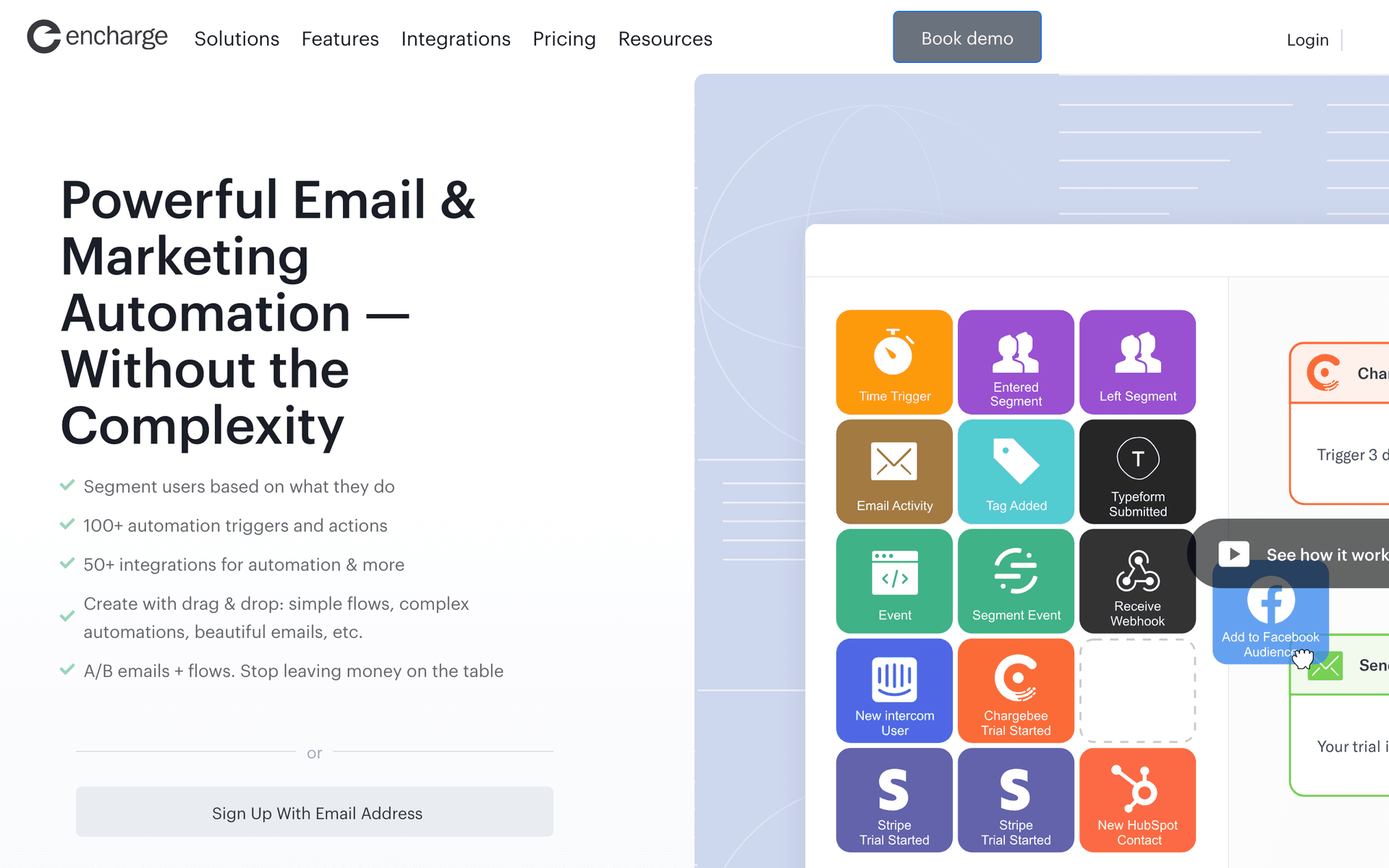
Encharge is purpose-built for the product-led growth model and understands the activation-to-conversion email flow better than most tools at its price point. For PLG SaaS teams that have graduated from basic time-based drips and want emails that fire when users complete specific product milestones - connecting their first data source, inviting a team member, hitting a feature usage threshold - Encharge handles the event-driven logic visually without writing code. The platform supports the full PLG email lifecycle from activation nudges to conversion prompts to expansion campaigns. At $49 per month for 2,000 users, it sits between basic tools and enterprise platforms in both capability and cost.

Best for
PLG SaaS teams who want event-driven lifecycle automation triggered by product activation milestones
Pricing
From $49/month for 2,000 users

Pros

  • Event-driven for PLG activation milestones
  • Visual flow builder
  • SaaS lifecycle features built-in
  • Accessible pricing

Cons

  • No transactional email
  • Costs grow with user count
  • Less powerful than Customer.io
#9
Userlist

SaaS email automation with user and company-level PLG tracking.

Visit
Userlist dashboard screenshot

PLG SaaS products with team accounts face a unique email challenge: individual users activate at different rates within the same account, and account-level health depends on the aggregate of user activations. Userlist tracks both individual user activation and account-level health, letting PLG teams send targeted emails to specific users within accounts who are lagging behind while sending account health summaries to the account owner. For PLG SaaS approaching $500K ARR with business accounts, this level of granularity in lifecycle email produces meaningfully better retention outcomes than user-only tracking.

Best for
PLG SaaS with team accounts where individual and account-level activation both drive conversion
Pricing
From $149/month

Pros

  • User and account tracking for PLG
  • Account health monitoring
  • Per-active-user pricing
  • SaaS lifecycle native

Cons

  • Higher monthly cost
  • Overkill for solo-user products
  • Setup investment
#10
Postmark

Best-in-class transactional email deliverability.

Visit
Postmark dashboard screenshot

PLG SaaS products depend on self-serve user journeys where every friction point matters. Transactional emails - welcome messages, password resets, feature notifications - are often the first emails a new user receives and they set the tone for the product experience. Postmark ensures these emails arrive instantly and land in the primary inbox rather than spam, which matters more for PLG than for sales-assisted models where a human can follow up. For PLG SaaS where the email experience is an extension of the product experience, Postmark's reliability contributes directly to first-impression quality.

Best for
PLG SaaS where transactional email delivery quality directly affects self-serve conversion
Pricing
$15/month for 10,000 emails

Pros

  • Best delivery quality for first impressions
  • Instant delivery
  • Reinforces PLG product quality
  • Detailed analytics

Cons

  • Marketing features limited
  • Need second tool for lifecycle sequences
  • Cost without free tier
#11
Vero

Event-driven email for PLG product teams.

Visit
Vero dashboard screenshot

Vero is a veteran event-driven email platform that PLG SaaS teams with technical resources can use to build precise behavioral sequences at a lower cost than Customer.io. The event model aligns with how PLG teams think about user behavior - send a tracking event when something happens in the product, and Vero handles the routing and trigger logic. For PLG SaaS teams approaching $1M ARR who want Customer.io-style behavioral automation without the full enterprise investment, Vero provides proven event-driven capability at more accessible pricing.

Best for
Technical PLG SaaS teams who want event-driven behavioral automation more affordable than Customer.io
Pricing
From $100/month

Pros

  • Event-driven for PLG conversion
  • Behavioral targeting
  • More affordable than Customer.io
  • Proven track record

Cons

  • Less modern interface
  • Smaller integration ecosystem
  • Still a significant cost
#12
Resend

Developer-first transactional email API.

Visit
Resend dashboard screenshot

PLG SaaS products built by engineering teams use Resend to handle the transactional email layer cleanly while focusing engineering effort on the product. The React Email component library produces polished transactional emails that match the product's design system, reinforcing the quality signal that PLG depends on. For PLG SaaS where the first product interaction - the welcome email, the setup guide, the activation prompt - sets the tone for conversion, Resend ensures that first impression is technically flawless. The free tier covers early-stage PLG products and the paid plans scale affordably.

Best for
Engineering-led PLG SaaS teams who want polished transactional email that reinforces product quality
Pricing
Free for 100 emails/day, then $20/month

Pros

  • Polished transactional emails
  • Reinforces PLG product quality
  • React Email integration
  • Clean developer experience

Cons

  • Transactional only
  • Daily cap on free tier
  • Need separate marketing tool
#13
Mailchimp

Popular email marketing platform.

Visit
Mailchimp dashboard screenshot

Mailchimp is frequently the starting point for PLG SaaS teams because of its familiarity, but it is poorly suited for the product-led growth model. PLG email depends on event-based triggers tied to product behavior - when a user completes setup, activates a core feature, or goes inactive. Mailchimp's automation is time-based, not event-based, meaning your PLG email sequences run on arbitrary schedules rather than responding to actual product behavior. The per-contact pricing also creates a problematic cost structure for PLG products with large free tiers. PLG SaaS teams using Mailchimp are typically either pre-PMF or using it as a temporary tool while evaluating better-fit alternatives.

Best for
PLG SaaS teams who have started with Mailchimp and want to understand what tools better fit their model
Pricing
Free up to 500 contacts, then from $13/month

Pros

  • Familiar starting point
  • Large integration ecosystem
  • Easy for non-technical users
  • Landing pages included

Cons

  • Time-based not event-based automation
  • Per-contact pricing punishes PLG free tiers
  • Not designed for PLG lifecycle
#14
Plunk

Open-source transactional email for developers.

Visit
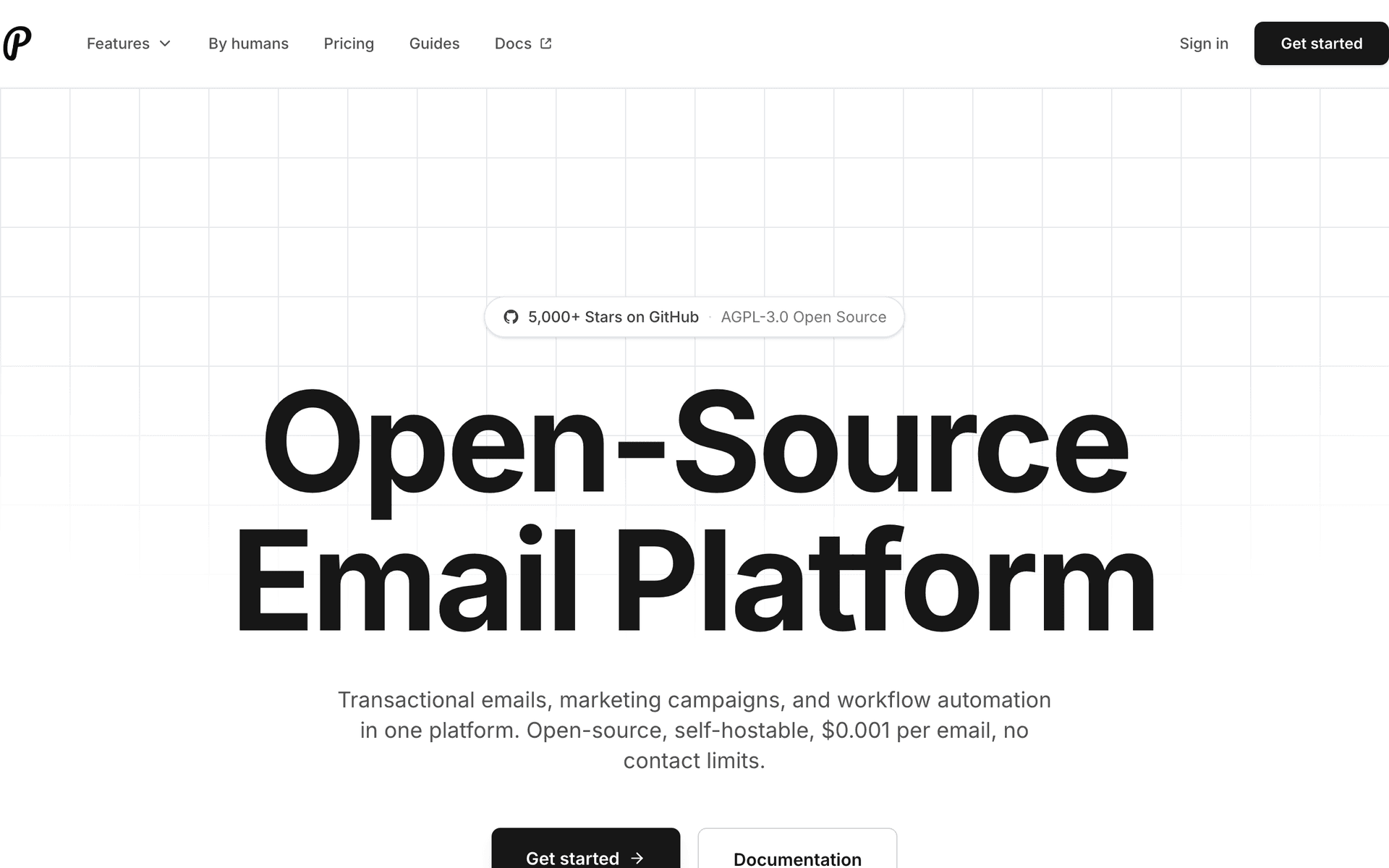
Plunk dashboard screenshot

PLG SaaS teams that self-host their infrastructure can eliminate transactional email costs with Plunk. For PLG products where free-tier user volumes make transactional email at scale expensive, controlling infrastructure costs through self-hosting is a meaningful advantage. Plunk's React Email integration and clean API match the quality standards of PLG products that differentiate on user experience. For engineering-led PLG teams with existing server infrastructure, Plunk provides free, owned transactional email that keeps costs aligned with revenue rather than user volume.

Best for
Technical PLG SaaS teams with large free tiers who want to own transactional infrastructure and control costs
Pricing
Free self-hosted, hosted tier available

Pros

  • Zero cost at scale if self-hosted
  • Scales with user volume freely
  • React Email templates
  • Full ownership

Cons

  • DevOps required
  • Transactional only
  • Not suitable for all teams
#15
Ortto

CDP and email marketing for data-driven PLG teams.

Visit
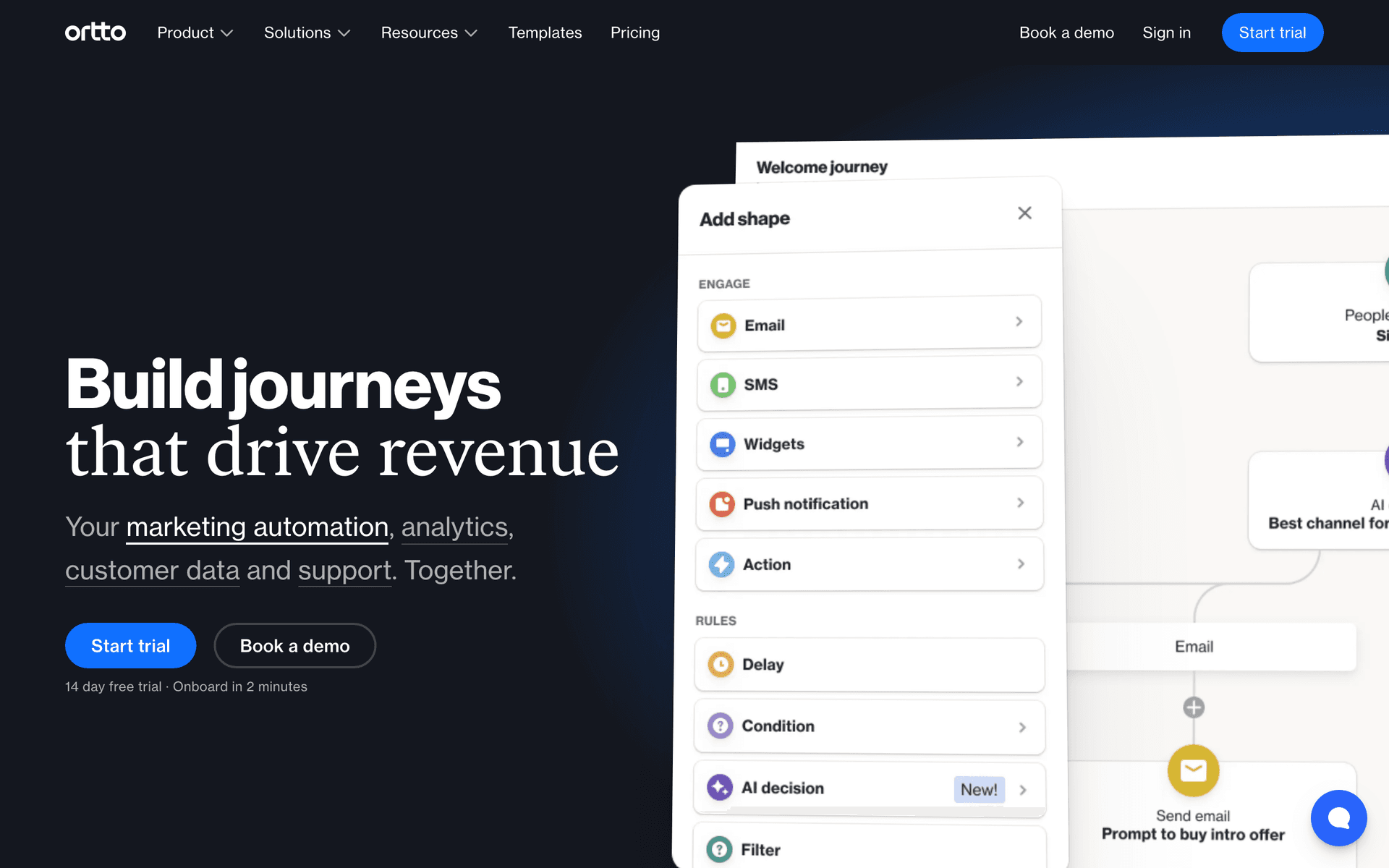
Ortto dashboard screenshot

PLG SaaS teams that run data-driven growth operations will find Ortto's combination of CDP and email marketing particularly valuable. In PLG, the decision to send an email - what to say, to whom, when - should be driven by behavioral data. Ortto stores behavioral events and lets you build email segments directly from that data without requiring a separate analytics tool. For PLG teams at growth stage where conversion rate optimization of the activation funnel is a primary activity, having email campaign decisions driven from the same data as product analytics removes a significant friction point.

Best for
PLG SaaS growth teams who make email decisions based on behavioral product data
Pricing
From $99/month

Pros

  • CDP and email unified for PLG
  • Data-driven segment building
  • Visual journey builder
  • Good analytics for funnel optimization

Cons

  • Priced for growth-stage teams
  • Complex initial setup
  • Overkill for early-stage PLG
#16
Sender

Email and SMS with a generous free tier.

Visit
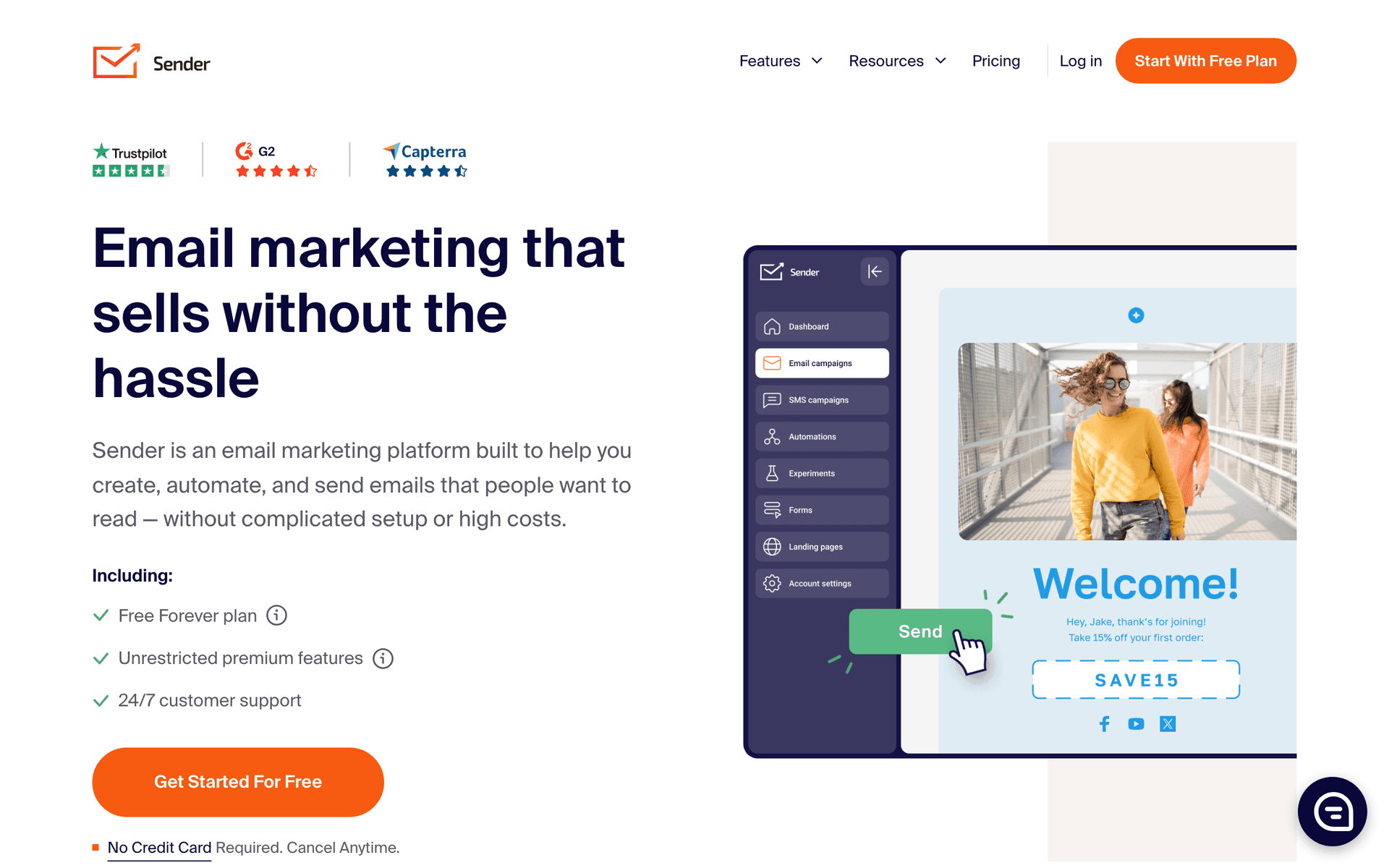
Sender dashboard screenshot

PLG SaaS teams in early stages can use Sender's generous free tier to handle basic lifecycle email while the product-led funnel is being established. The 2,500 contact free tier and 15,000 emails per month covers basic welcome, onboarding, and newsletter sequences without cost. For PLG teams that are still defining their activation sequence and want a low-stakes starting point before investing in event-driven tooling, Sender provides adequate capability. The SMS channel adds a useful option for time-sensitive PLG interventions like trial ending reminders.

Best for
Early-stage PLG teams who want a free starting point for basic lifecycle sequences before investing in behavioral tooling
Pricing
Free up to 2,500 contacts, paid from $8/month

Pros

  • Generous free tier for early PLG
  • SMS for time-sensitive PLG nudges
  • Simple to use
  • Low cost

Cons

  • Not event-driven
  • Basic automation
  • Limited for serious PLG programs
#17
MailerSend

Combined transactional and marketing email.

Visit
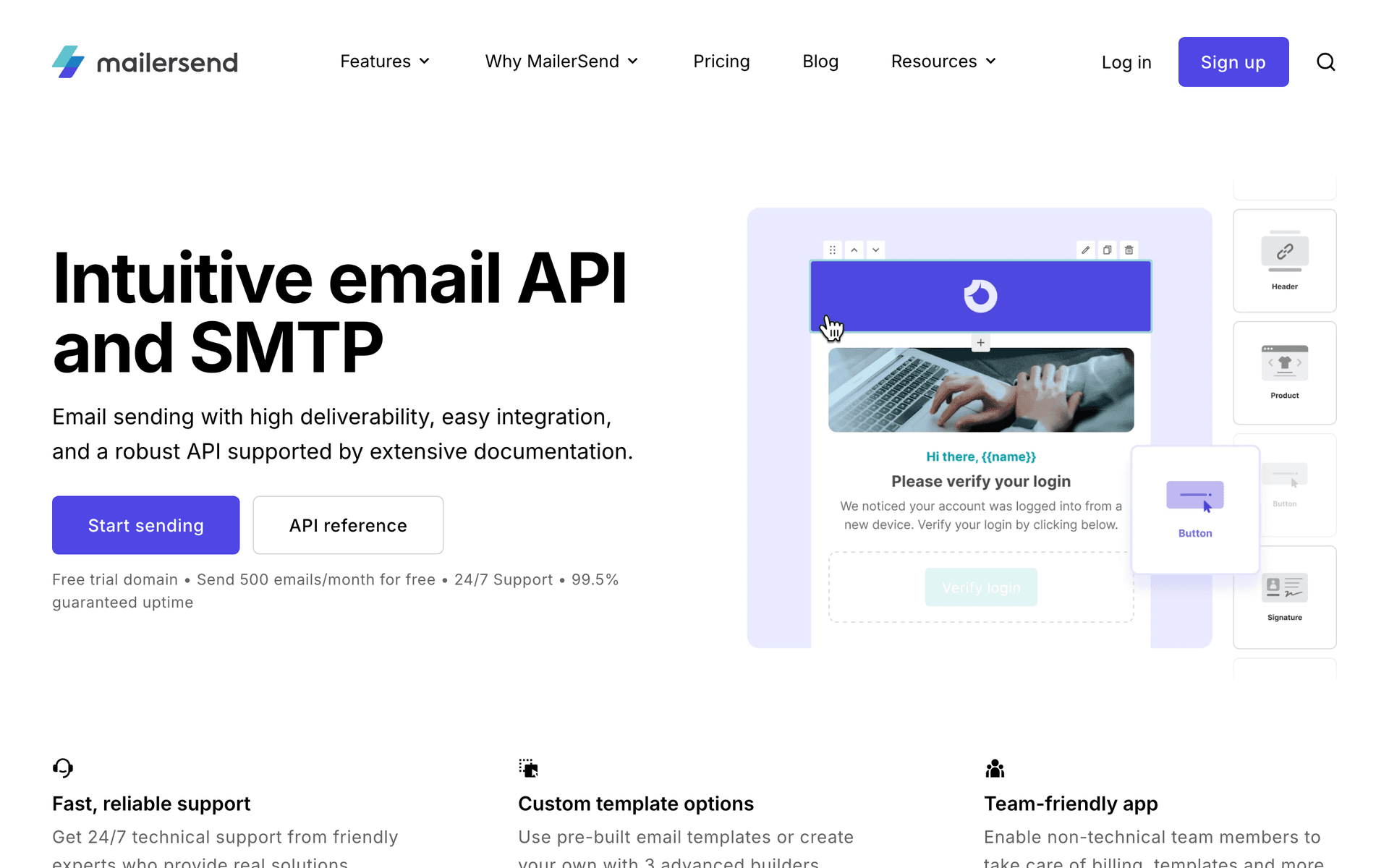
MailerSend dashboard screenshot

PLG SaaS teams that want one tool for both product transactional email and marketing lifecycle sequences can use MailerSend to reduce platform complexity during early stages. The 3,000 free emails per month covers combined transactional and marketing needs for small PLG products. For PLG teams with a non-technical growth person who needs access to email templates and campaigns alongside a developer managing transactional email, MailerSend's unified platform gives each person the interface they need from one subscription.

Best for
Early PLG SaaS teams who want one tool for transactional and marketing email before adding behavioral complexity
Pricing
Free for 3,000 emails/month, then from $25/month

Pros

  • One tool for all email types
  • 3,000 free emails monthly
  • Both API and visual builder
  • Competitive pricing

Cons

  • Basic lifecycle automation
  • Not event-driven
  • Monthly email cap
#18
Mailgun

Email API infrastructure for high-volume sending.

Visit
Mailgun dashboard screenshot

PLG SaaS products with large free user bases sometimes accumulate transactional email volumes that strain standard sending services. Mailgun's high-volume infrastructure handles large-scale transactional sending reliably, making it suitable for PLG products at the stage where transactional email volume becomes a meaningful operational concern. The API is developer-focused and the email validation tools help maintain deliverability as user lists scale. Mailgun functions well as infrastructure but requires building your own lifecycle automation layer on top - it does not replace a marketing tool.

Best for
High-volume PLG SaaS with large free user bases who need scalable transactional email infrastructure
Pricing
Free up to 100 emails/day, then from $15/month

Pros

  • Handles large-scale transactional volume
  • Developer API
  • Email validation
  • Enterprise infrastructure

Cons

  • No lifecycle automation
  • Build-your-own email logic
  • Complex pricing at scale
#19
Intercom

Customer messaging combining email, in-app, and support.

Visit
Intercom dashboard screenshot

PLG SaaS products depend on the product doing the work of selling and retaining users, and in-product messaging is often as important as email in the PLG model. Intercom combines both - automated email sequences run alongside in-app messages, tooltips, and chat, creating a unified lifecycle communication system. For PLG SaaS where the goal is to guide users to their aha moment as efficiently as possible, Intercom's product tours and behavioral in-app messages complement email sequences in ways that email-only tools cannot. At $74 per month, it is accessible for PLG products with meaningful MRR.

Best for
PLG SaaS who want email and in-product behavioral messaging working together in the activation funnel
Pricing
From $74/month

Pros

  • Email plus in-product messaging
  • Product tours for activation
  • Behavioral triggers across channels
  • Unified PLG communication

Cons

  • More expensive than email-only
  • Cost escalates with contacts
  • Complex setup

Feature Comparison

FeatureSequenzyCustomer.ioLoopsResend
Product behavior triggers
Yes
Advanced
Yes
API only
Native payment integration
Stripe, Paddle, Polar
No
No
No
Self-serve upgrade sequences
AI-powered
Advanced
Yes
Build yourself
Viral loop automation
Via events
Via workflows
Via events
Build yourself
Transactional emails
Yes
Yes
Yes
Yes
API quality
Excellent
Excellent
Good
Excellent
Free tier available
Starting price
Free
$100/mo
$49/mo
$20/mo

Common Mistakes to Avoid

We see these mistakes over and over. Skip the learning curve and avoid these from day one.

Using Per-Contact Pricing with a Large Free Tier

PLG companies often have 10x more free users than paid. Per-contact pricing means you pay the same for a user who never activated as for your highest-paying customer. Always choose per-email pricing for PLG.

Sending the Same Onboarding to Everyone

A developer signing up for a devtool and a product manager signing up for the same tool have different activation paths. Segment by role, company size, or use case from the first email.

Ignoring Post-Activation Engagement

Most PLG companies obsess over activation but forget about the period between activation and upgrade. Feature discovery emails during this phase increase the likelihood of a self-serve upgrade.

Hard-Selling in the First Email

PLG users chose your product because they want to explore on their own terms. Pushing for an upgrade in the welcome email kills trust. Focus on helping them reach their aha moment first.

Not Connecting Billing Events to Email

Failed payments, trial expirations, plan changes, and cancellations should all trigger email sequences. Without native billing integration, you are leaving revenue on the table.

Email Sequences Every Product-Led Growth SaaS Needs

These are the essential automated email sequences that will help you grow your business and keep clients coming back.

PLG Activation Sequence

New user signs up

Guide users to their activation moment as quickly as possible.

Immediate
One thing to do right now to get started

Welcome focused on the single most important setup step. Not a feature tour. Just the one action that predicts long-term retention.

Day 1
Did you get [key action] working?

Check if they completed the activation step. If yes, suggest the next feature. If not, offer troubleshooting help.

Day 3
Here is what [similar company] built in their first week

Social proof from a customer in their space. Show what is possible once they get past the initial setup.

Day 7
You are leaving value on the table

Highlight features they have not tried yet based on their usage data.

Self-Serve Upgrade Sequence

User hits plan limit or feature gate

Convert free users to paid when they experience natural friction.

At limit
You have hit the limit on [feature]

Factual notification about what limit they hit. Show what the paid plan unlocks. No hard sell, just clarity.

Day 2
What teams get on the paid plan

Feature comparison focused on what matters for their use case.

Day 5
Quick question about your setup

Personal email from founder. Low-pressure, high-signal.

Viral Loop Sequence

User creates a shareable project or workspace

Encourage users to invite teammates when they are most engaged.

After first project created
Your project is better with teammates

Prompt to invite collaborators. Include a direct invite link.

Day 3
Teams that collaborate are more likely to stick around

Data-driven nudge showing that collaborative usage correlates with retention.

The PLG Email Playbook

Product-led growth flips the traditional SaaS funnel. Instead of marketing to leads, demoing to prospects, and closing deals, you let users sign up, try the product, and upgrade themselves. Email's job in this model is not to sell. It is to remove friction.

The best PLG email programs are invisible to the user. They show up at exactly the right moment: when setup stalls, when a feature goes undiscovered, when usage hits a limit. They feel helpful, not promotional. And they are entirely driven by what the user did (or did not do) in the product.

If you are still sending the same onboarding drip to every new signup regardless of their behavior, you are leaving a lot of activation and conversion on the table.

Activation Emails That Actually Move the Needle

The single most impactful email you will ever send as a PLG company is the one that gets a new signup to complete their first key action. Not a feature tour. Not a "welcome to the platform" essay. Just one clear action that correlates with long-term retention.

Figure out what your activation event is (first project created, first integration connected, first team member invited), then build a tight sequence around getting users there. Measure success by activation rate, not open rate.

Finding Your Activation Event

Look at your retained users - the ones who have been paying for 6+ months. What did they all do in their first week? That pattern is your activation event. For Slack, it was sending 2,000 messages as a team. For Dropbox, it was putting a file in a shared folder. For your product, it might be connecting a data source, creating a dashboard, or inviting a teammate.

Once you know the event, work backwards. What stops users from getting there? Common blockers include confusing setup flows, missing integrations, unclear value propositions, and lack of social proof. Your activation emails should address each blocker at the right time.

Measuring Activation Email Impact

The only metric that matters for activation emails is the activation rate delta. Compare the activation rate of users who received and engaged with your activation sequence versus those who did not. If the difference is less than 10 percentage points, your sequence needs work. Top PLG companies see 20-30 point improvements from well-designed activation sequences.

Self-Serve Conversion Without Being Pushy

The biggest mistake PLG companies make with upgrade emails is sending them on a schedule instead of based on behavior. A user who signed up yesterday and has not set anything up does not need an upgrade email on day 7. A user who just hit their storage limit for the third time this week absolutely does.

Event-triggered upgrade emails convert at multiples of time-based ones. Tools like Sequenzy with native Stripe integration make this straightforward: when usage triggers a billing event, the corresponding email fires automatically.

The Natural Friction Model

The best PLG upgrade emails do not feel like sales pitches. They arrive at moments of natural friction - when the user wants to do something their current plan does not allow. This could be exceeding a usage limit, trying to access a gated feature, or needing team collaboration tools.

At these moments, the user already understands the value of upgrading. Your email just needs to make the path clear: here is what you are trying to do, here is what the paid plan gives you, and here is a one-click upgrade link. No paragraphs of copy needed.

Pricing Page Behavior as a Trigger

If a free user visits your pricing page, that is a strong buying signal. Trigger an email within an hour with a comparison of what they get on free versus paid, tailored to features they have actually used. This email typically converts 2-3x better than a generic upgrade nudge.

Viral Loop Email Optimization

PLG products grow through viral loops - users inviting teammates, sharing work, or collaborating with external partners. Email is the delivery mechanism for most of these loops.

Optimizing the Invite Email

Your invite email is one of the highest-leverage emails in your entire program. Every percentage point improvement in its conversion rate compounds through your viral coefficient. Test everything: subject lines, sender name (invited by vs. company name), preview text, CTA placement, and the amount of context you provide about what the inviter is working on.

The best invite emails include context about the specific project or workspace the person was invited to. "Sarah invited you to collaborate on Q2 Marketing Plan" converts far better than "Sarah invited you to try ProductName."

Timing Collaboration Nudges

Do not ask users to invite teammates the moment they sign up. Wait until they have created something worth sharing. After their first project, dashboard, or document is complete, prompt them to add collaborators. The conversion rate on invite prompts is 3-5x higher after the first meaningful creation event.

Building Your PLG Email Stack

For Early Stage (Under 1,000 Users)

Start with Sequenzy's free tier or Loops' free tier. Build three sequences: activation (behavior-triggered onboarding), upgrade (limit-triggered conversion), and dunning (payment failure recovery). This covers 80% of PLG email value.

For Growth Stage (1,000-50,000 Users)

Add segmentation by user persona and plan tier. Build feature discovery sequences for power users. Implement viral loop emails. Consider Customer.io if you need multi-channel (in-app + email) coordination.

For Scale Stage (50,000+ Users)

Implement send frequency caps across teams. Build sophisticated A/B testing for activation and upgrade sequences. Add lifecycle segmentation (new, activated, power user, at-risk, churned). At this stage, per-email pricing tools save significantly versus per-contact pricing.

Integration Recommendations for PLG

Essential Integrations

Connect your product analytics (Segment, Mixpanel, Amplitude) to your email tool so product events flow into email triggers automatically. Connect your payment provider (Stripe, Paddle) for billing lifecycle emails. These two integrations cover the majority of PLG email use cases.

Nice-to-Have Integrations

Connect your support tool (Intercom, Zendesk) to suppress marketing emails during active support conversations. Connect your feature flag tool (LaunchDarkly, Flagsmith) to trigger emails when users get access to new features.

What a Healthy PLG Email Program Looks Like

A healthy PLG email list has clear segmentation by lifecycle stage: new signups, activated free users, power users, trial users, paid users, and churned users. Each segment receives different communication. Open rates for behavior-triggered emails should be 30-40%. Free-to-paid conversion attributed to email should be 3-7%. Your unsubscribe rate should stay below 0.3% because your emails arrive at relevant moments, not on arbitrary schedules.

How We Evaluated These Tools

Tools were evaluated based on event-driven automation capabilities, pricing model compatibility with large free tiers, native payment provider integrations, and the ability to build behavior-triggered sequences without engineering involvement. We prioritized platforms that understand SaaS billing lifecycle events natively.

Frequently Asked Questions

Ready to grow your product-led growth saa practice?

Start your free trial today. Set up your first email sequence in minutes with AI-powered content generation.

Related Industries

Sequenzy - Complete Pricing Guide

Pricing Model

Sequenzy uses email-volume-based pricing. You only pay for emails you send. Unlimited contacts on all plans — storing subscribers is always free.

All Pricing Tiers

  • 2.5k emails/month: Free (Free annually)
  • 15k emails/month: $19/month ($205/year annually)
  • 60k emails/month: $29/month ($313/year annually)
  • 120k emails/month: $49/month ($529/year annually)
  • 300k emails/month: $99/month ($1069/year annually)
  • 600k emails/month: $199/month ($2149/year annually)
  • 1.2M emails/month: $349/month ($3769/year annually)
  • Unlimited emails/month: Custom pricing (Custom annually)

Yearly billing: All plans offer a 10% discount when billed annually.

Free Plan Features (2,500 emails/month)

  • Visual automation builder
  • Transactional email API
  • Reply tracking & team inbox
  • Goal tracking & revenue attribution
  • Dynamic segments
  • Payment integrations
  • API, MCP, and CLI access
  • Custom sending domain

Paid Plan Features (15k - 1.2M emails/month)

  • Visual automation builder
  • Transactional email API
  • Reply tracking & team inbox
  • Goal tracking & revenue attribution
  • Dynamic segments
  • Payment integrations (Stripe, Paddle, Lemon Squeezy)
  • API, MCP, and CLI access
  • Custom sending domain

Enterprise Plan Features (Unlimited emails)

  • Visual automation builder
  • Transactional email API
  • Reply tracking & team inbox
  • Goal tracking & revenue attribution
  • Dynamic segments
  • Payment integrations
  • API, MCP, and CLI access
  • Custom sending domain

Important Pricing Notes

  • You only pay for emails you send — unlimited contacts on all plans
  • No hidden fees - all features included in the price
  • No credit card required for free tier

Contact

  • Pricing Page: https://sequenzy.com/pricing
  • Sales: hello@sequenzy.com