Updated 2026-03-15

Best Email Marketing Tools for Horizontal SaaS

One product, many industries. Segment by persona, onboard by use case, and scale communication across verticals.

Horizontal SaaS products serve everyone, which makes email marketing both easier and harder. Easier because your total addressable market is huge. Harder because a project manager at a startup and a project manager at an enterprise bank have completely different needs, even if they use the same tool. Your email has to feel relevant to both. Here are the tools that handle multi-persona, multi-industry communication at scale.

TL;DR

Sequenzy is the best starting point for horizontal SaaS because its event-driven model supports multiple onboarding paths from a single trigger, and the AI sequence builder generates persona-specific flows without you writing each one manually. Customer.io is the better choice if you need deep multi-channel segmentation across email, push, and in-app messaging, but it starts at $100/month.

Why Horizontal SaaS Needs Email Marketing

Persona-Based Onboarding

Different users need different onboarding paths. A marketer using your analytics tool cares about dashboards. A developer cares about the API. Email sequences that branch by persona get each user to their specific value faster.

Use Case Discovery

Horizontal products are used in ways you never anticipated. Email helps users discover use cases relevant to their industry through targeted content, case studies, and feature highlights.

Scalable Segmentation

With a broad market, you cannot send the same email to everyone. Segmentation by industry, company size, role, and behavior lets you personalize at scale without maintaining thousands of individual sequences.

Expansion Revenue

Horizontal SaaS growth often comes from expanding within existing accounts. Email sequences that introduce new features, suggest team invites, and highlight premium capabilities drive expansion without a sales team.

Horizontal SaaS Email Marketing Benchmarks

Know these numbers before you start. They'll help you set realistic goals and pick the right tool.

25-35%
Average Open Rate

Horizontal SaaS onboarding emails should see 30-40% open rates in the first week. Marketing newsletters to broader segments typically land at 20-28%. If onboarding opens are below 25%, your subject lines or send timing need work.

3-6%
Average Click Rate

Persona-specific onboarding emails with a single clear CTA should achieve 5-8% click rates. Generic emails to unsegmented lists typically see 2-3%. The difference is entirely about relevance.

Behavior-triggered, not time-based
Best Send Time

Horizontal SaaS email should be event-driven. Onboarding emails trigger on signup, feature discovery on usage milestones, and expansion on behavior thresholds. Time-based sends work only for newsletters and product updates.

15-25%
Activation Rate Lift from Email

A well-designed persona-based onboarding sequence typically improves activation rates by 15-25% compared to no onboarding email. Measure this by comparing users who open and engage with onboarding emails vs. those who do not.

Important Tips Before You Choose

Lessons from horizontal saaswho've been doing this for years. Save yourself the trial and error.

Start with 3 personas, not 15

The biggest mistake horizontal SaaS companies make is trying to build a unique onboarding sequence for every possible user type. Identify your top 3 personas by signup volume and build their sequences first. Measure activation rates, then expand. Three well-crafted sequences outperform fifteen half-baked ones.

Use signup questions to route, not just enrich

Ask one or two questions during signup (role, company size, or primary use case) and use the answers to trigger different onboarding paths immediately. This simple branching decision in the first 5 minutes impacts everything downstream - activation, conversion, and retention.

Measure activation rate by segment, not overall

Your overall activation rate hides segment-level problems. A 40% activation rate might mean developers activate at 70% and marketers at 15%. Segment-level metrics reveal which personas need better onboarding email content.

Trigger expansion emails on behavior, not time

A team invite prompt after someone completes 50 tasks is far more effective than one sent on Day 14. Behavior-based triggers for expansion sequences mean users see the right message when they are actually ready to grow their usage.

Build industry-specific case studies into automated sequences

When a user signs up from a specific industry, their onboarding sequence should include a case study from a similar company. One well-placed case study email at Day 3 can double activation rates for that segment.

Use unsubscribe data to improve segmentation

When users unsubscribe, analyze which persona segments have the highest churn. High unsubscribe rates in a specific segment usually mean the content is irrelevant - either the persona routing is wrong or the sequence content misses the mark.

19 Best Email Marketing Tools for Horizontal SaaS

#ToolDescriptionBest ForPricing
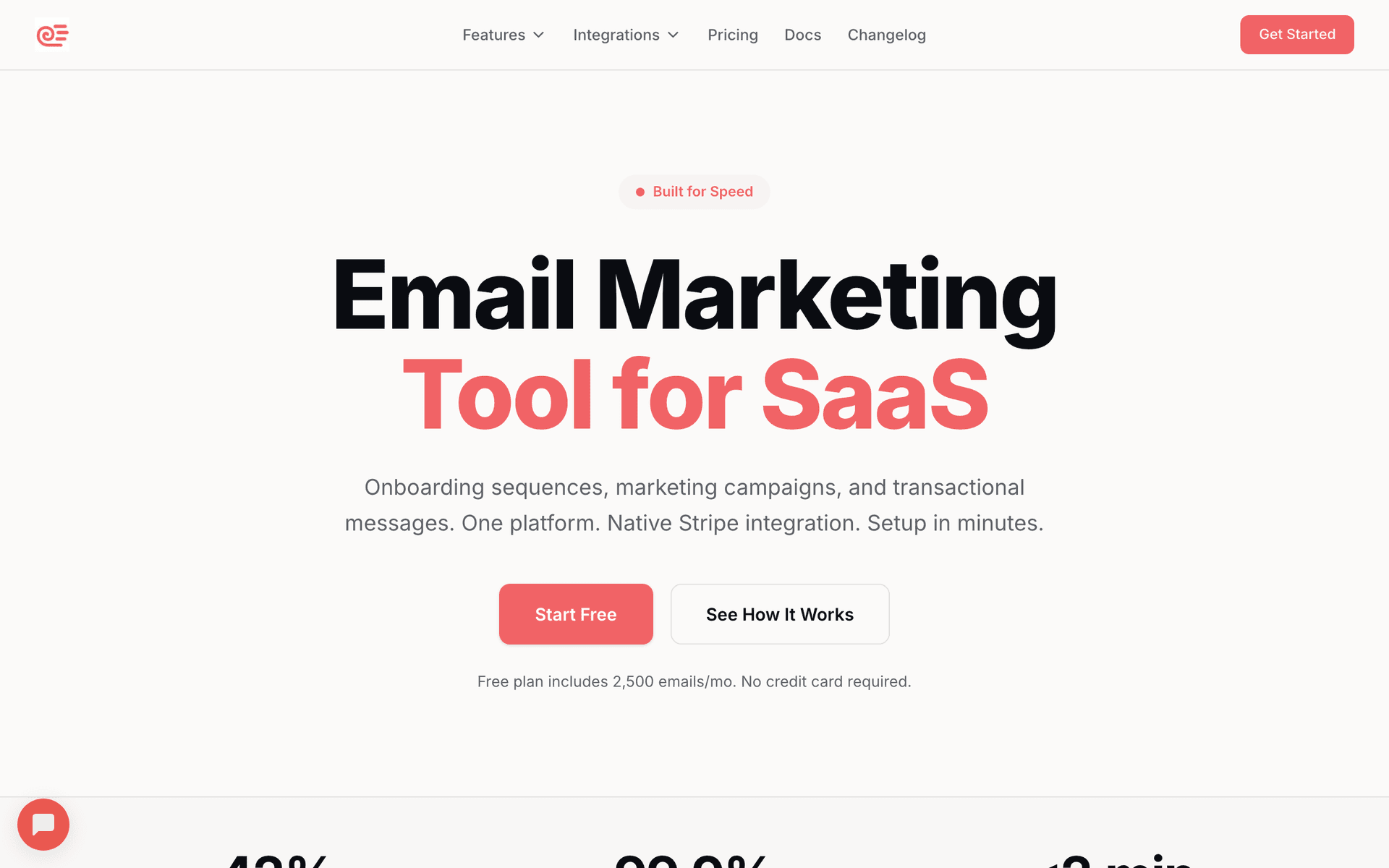
1SequenzyEmail marketing with event-driven automation and native payment integrations for SaaS.Horizontal SaaS wanting persona-based automation with AI-generated sequencesFree up to 2,500 emails/mo, then $19/mo (unlimited contacts)
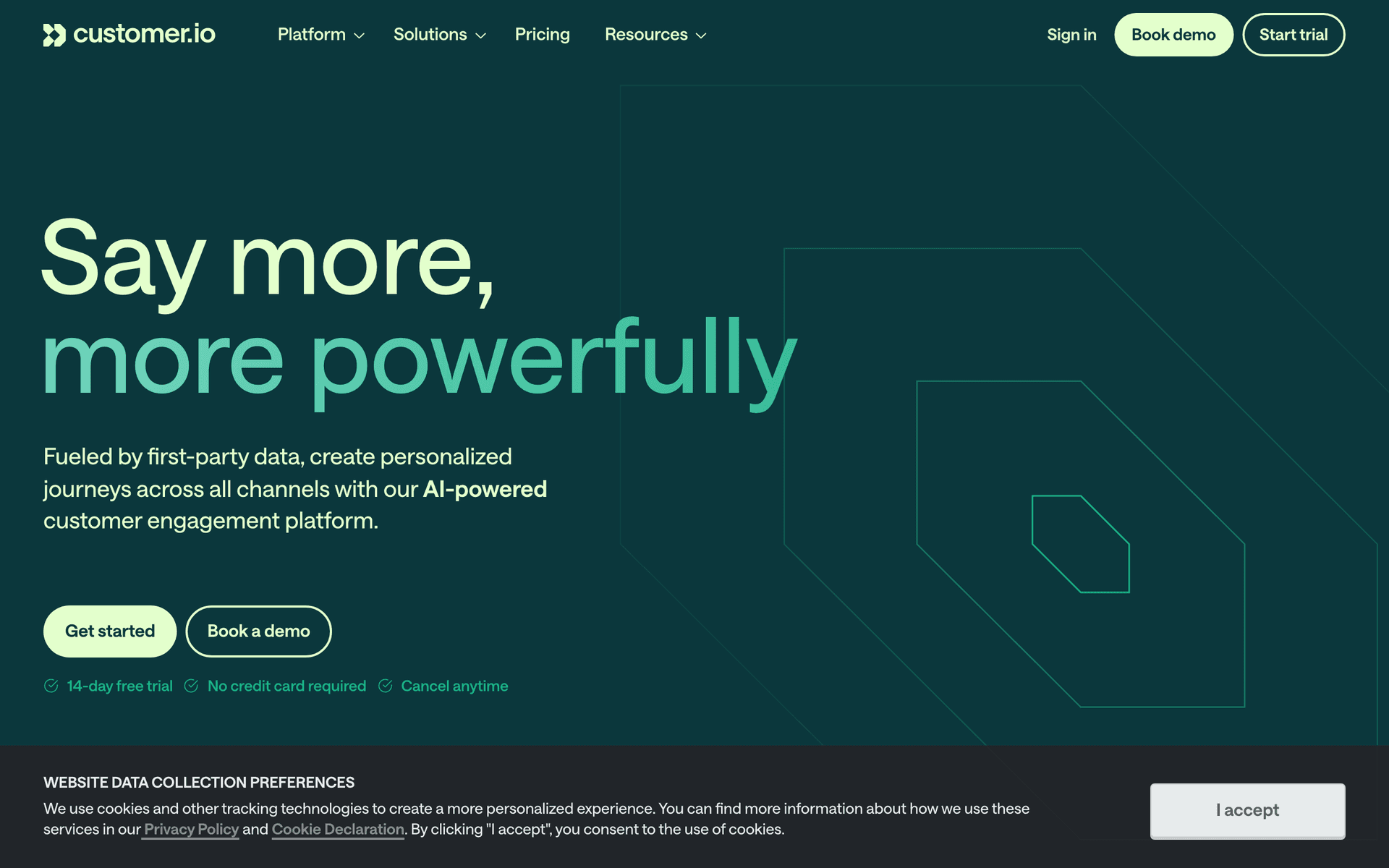
2Customer.ioPowerful event-driven messaging with advanced segmentation.Horizontal SaaS with complex segmentation and multi-persona automation$100/month for 5,000 profiles
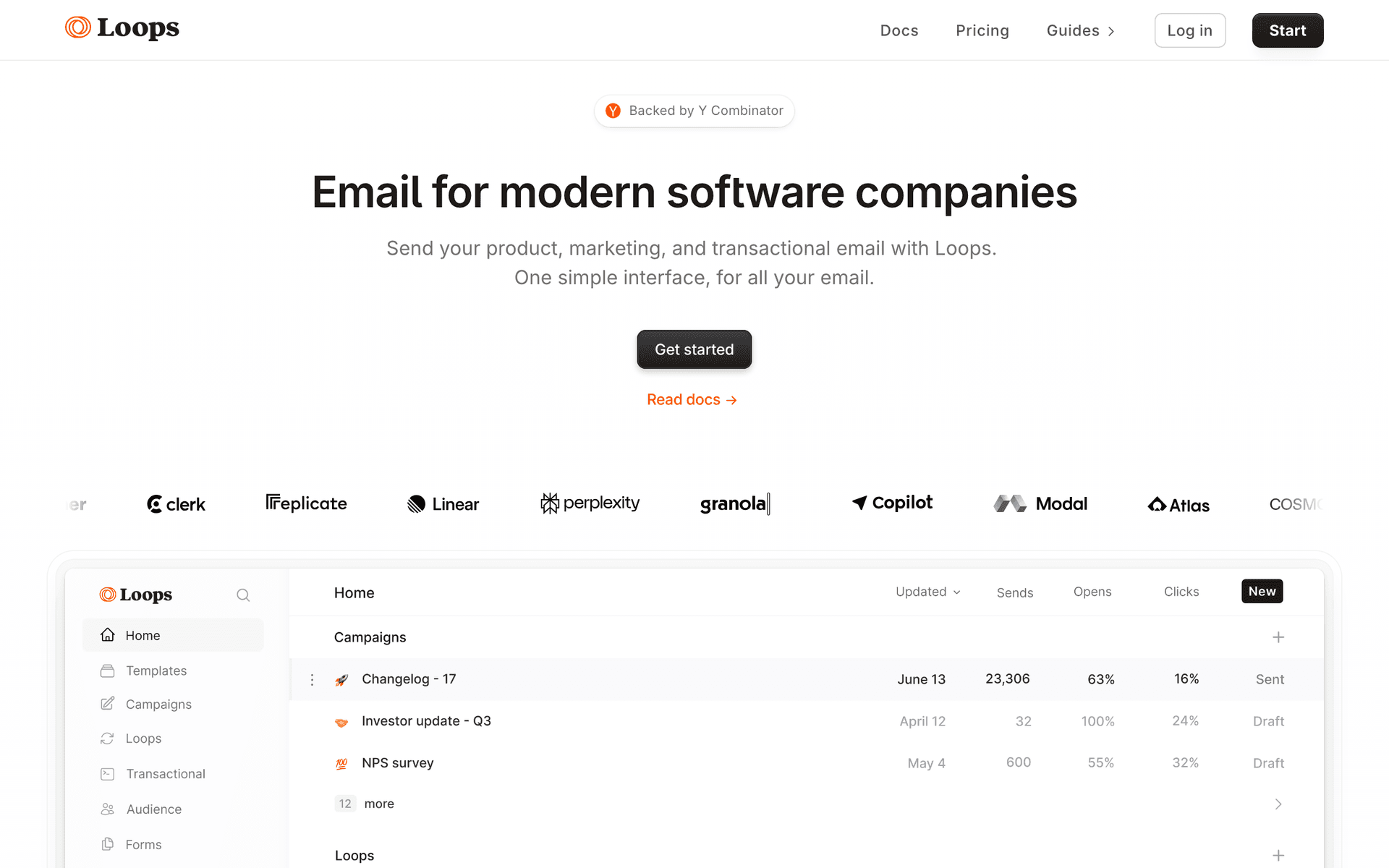
3LoopsModern email platform for SaaS with event-based automations.Horizontal SaaS wanting clean automation without enterprise complexityFree up to 1,000 contacts, then $49/month
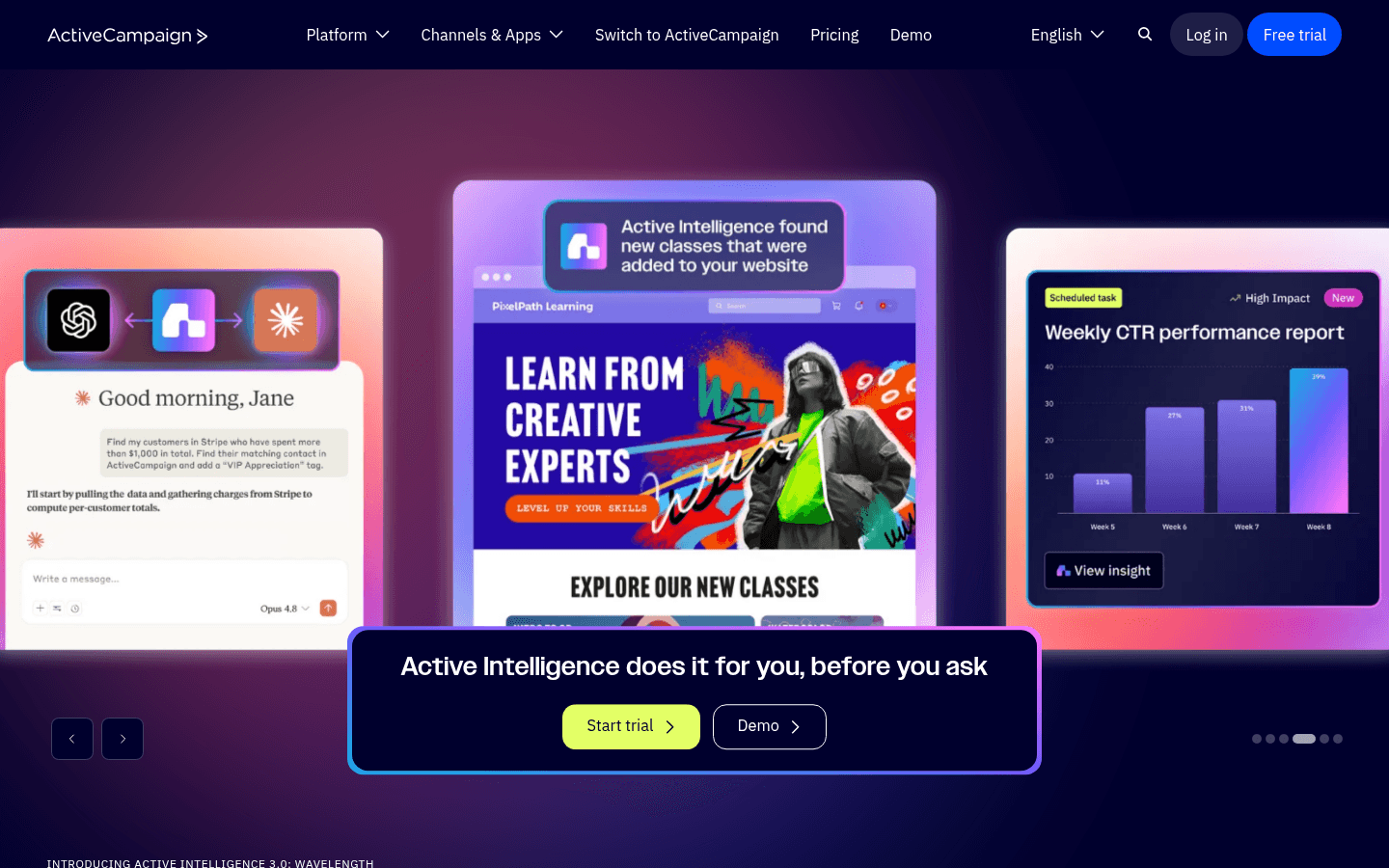
4ActiveCampaignAdvanced automation with CRM and visual workflow builder.Horizontal SaaS with sales-assisted conversion and complex automation$29/month for 1,000 contacts
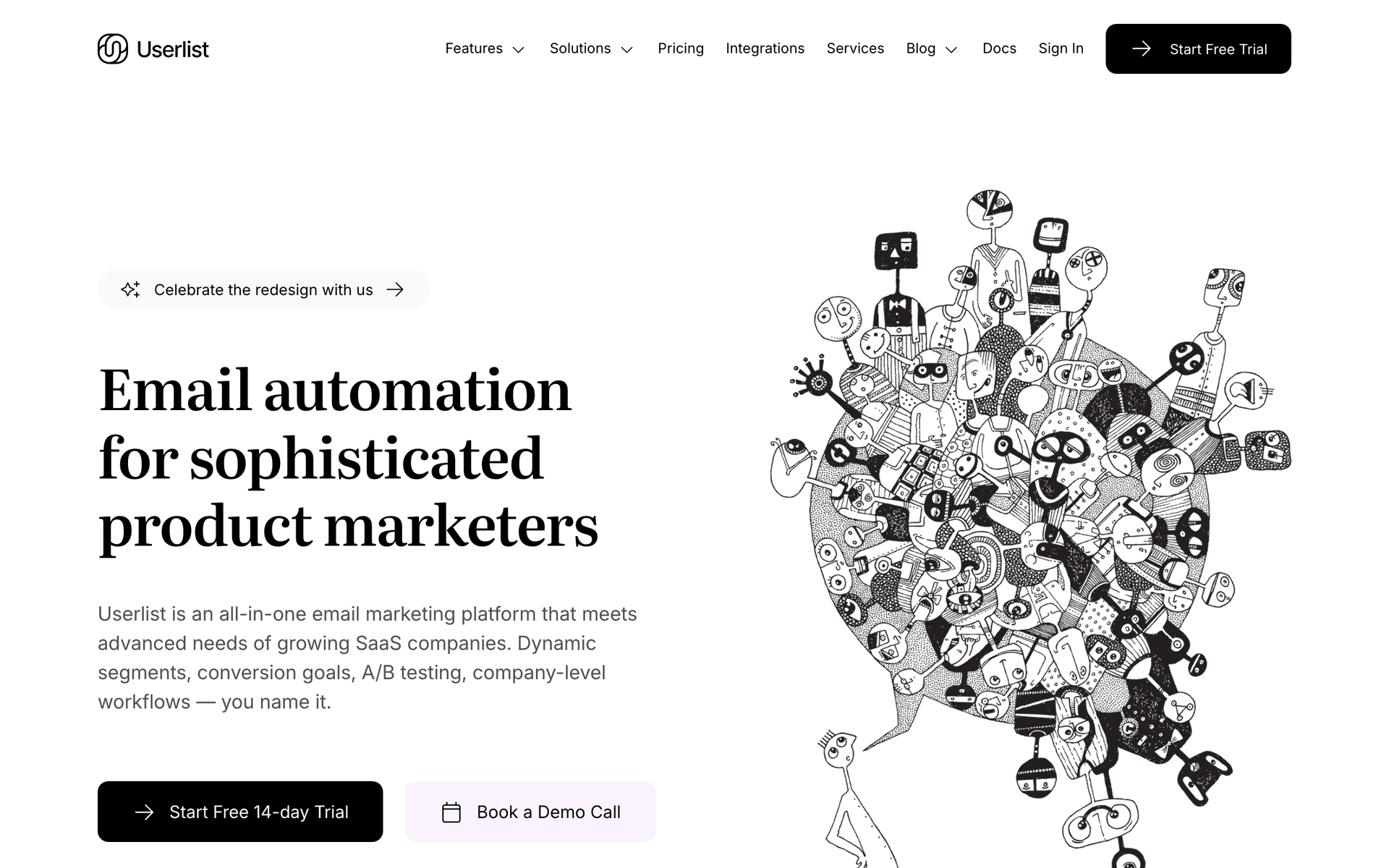
5UserlistEmail automation for SaaS with company-level tracking.Horizontal SaaS selling to teams that need company-level tracking$149/month for 5,000 users
6ResendDeveloper-first email API with React Email templates.Engineering teams building custom persona-based email systemsFree for 3,000 emails/month, then $20/month
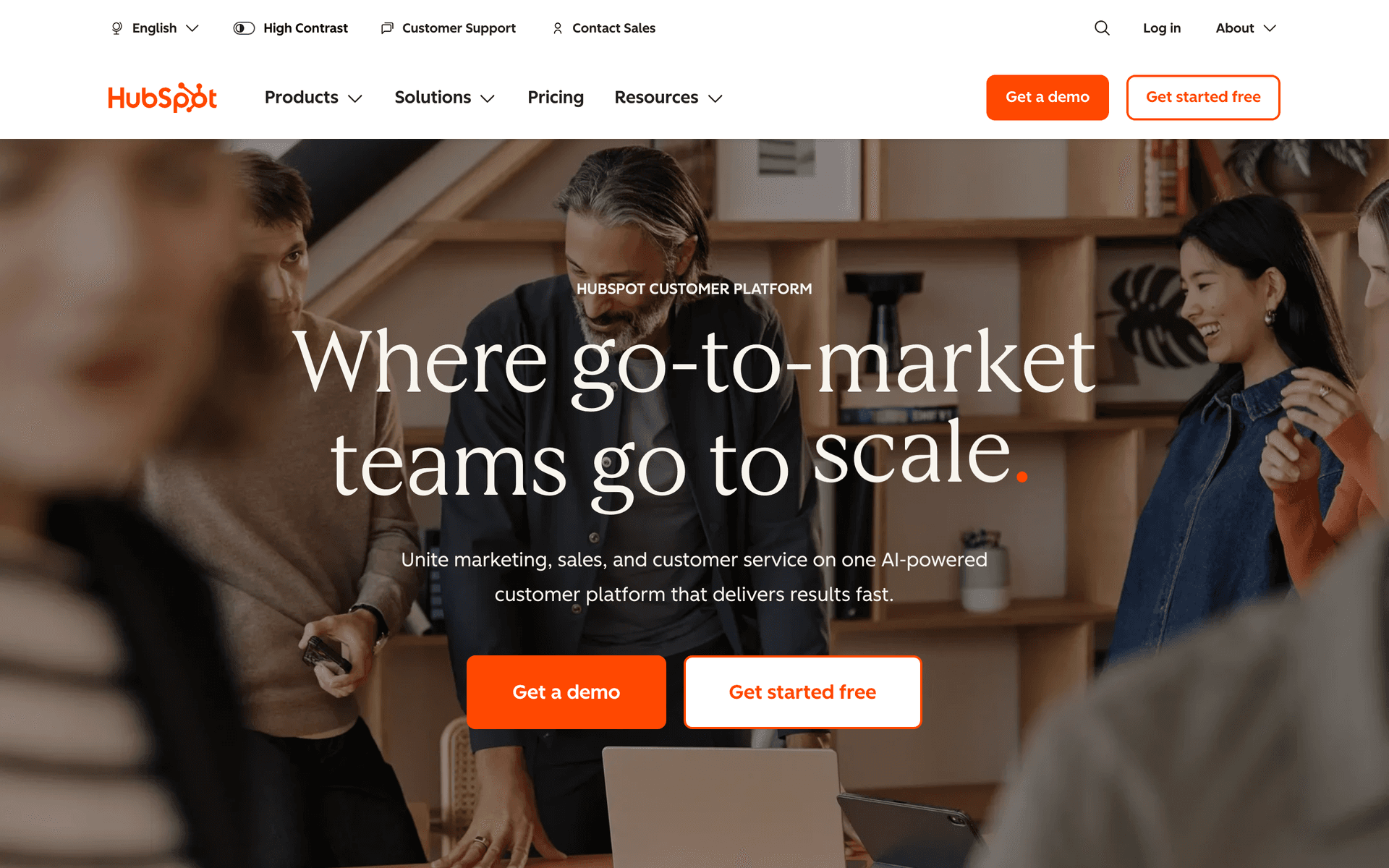
7HubSpotEnterprise CRM and marketing platform.Growth-stage horizontal SaaS with a sales teamFree CRM, marketing hub from $50/month
8Customer.ioEvent-driven messaging platform for multi-persona behavioral automation.Horizontal SaaS with multiple user personas needing distinct behavioral email journeys$100/month base, scales with profiles
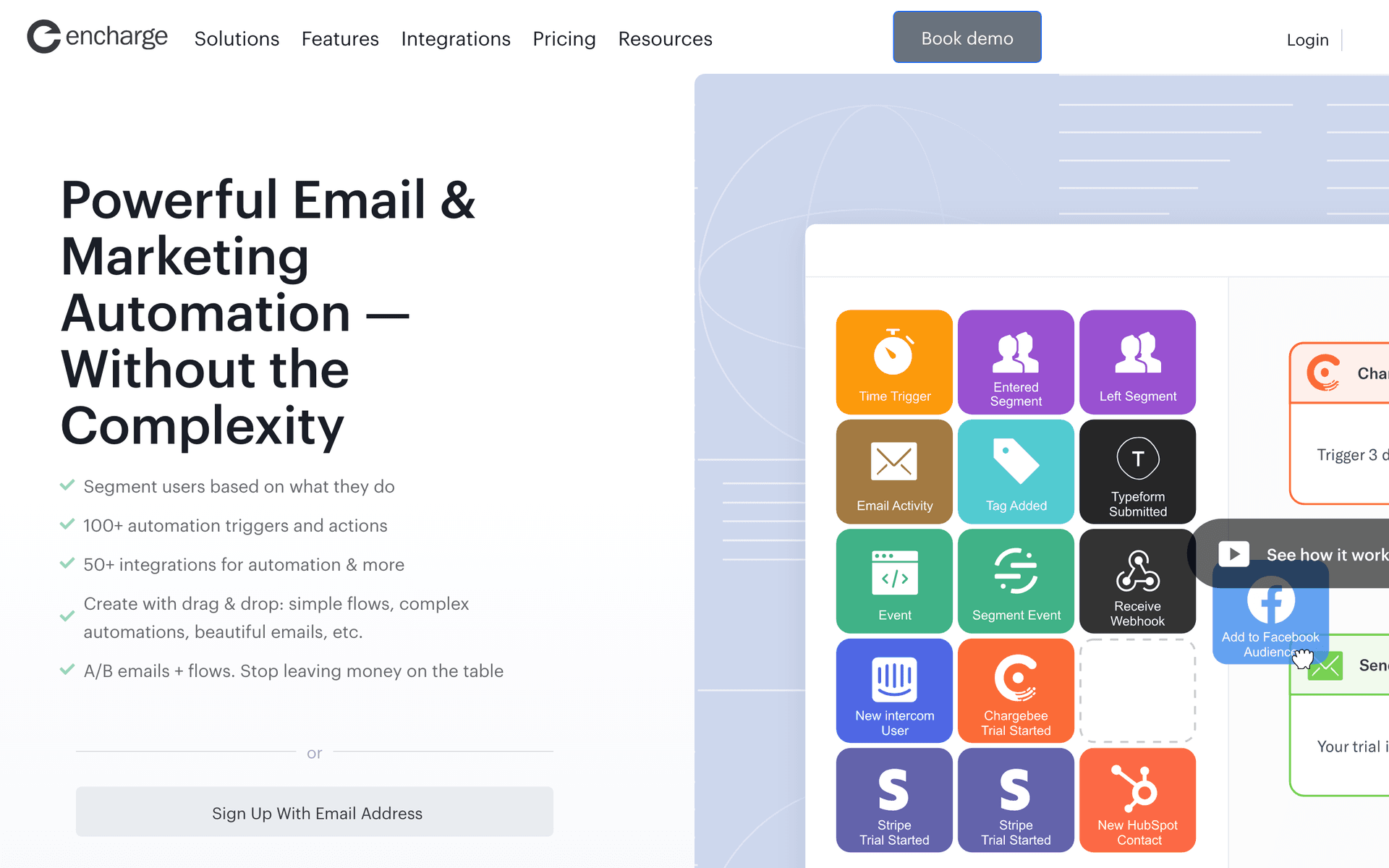
9EnchargeSaaS marketing automation with flexible segmentation.Growth-stage horizontal SaaS managing multi-segment lifecycle automation on a mid-market budgetFrom $79/month for 2,000 subscribers
10LoopsModern product email for SaaS teams with role-based workflows.Horizontal SaaS managing 2-4 user personas needing fast persona-based email setupFree tier available, paid from $49/month
11OrttoCDP with marketing automation for data-driven horizontal SaaS.Data-driven horizontal SaaS wanting analytics to guide segment prioritization and email strategyFrom $99/month
12PostmarkTransactional email with reliable delivery across user types.Horizontal SaaS needing consistent transactional email reliability across diverse user volumesFrom $15/month for 10,000 emails
13VeroBehavioral email with API-driven personalization for diverse audiences.Horizontal SaaS wanting dynamic role-based email personalization without template sprawlFrom $99/month
14UserlistB2B SaaS email automation with company-level tracking.Horizontal B2B SaaS managing company accounts across multiple industriesFrom $149/month for up to 5,000 users
15IntercomCustomer messaging platform for diverse user onboarding.Horizontal SaaS with high user diversity where in-app contextual onboarding drives activationFrom $74/month, scales with seats
16IterableCross-channel growth platform for enterprise horizontal SaaS.Enterprise horizontal SaaS with large diverse user bases needing intelligent cross-channel optimizationCustom pricing (typically $500-2,000/month)
17SendGridEmail delivery with transactional and marketing layers.Horizontal SaaS consolidating high-volume transactional and basic marketing email on one platformFree for 100 emails/day, paid from $19.95/month
18ResendDeveloper-first email API for custom transactional workflows.Technical horizontal SaaS teams with complex role-based transactional email logicFree for 3,000 emails/month, then $20/month
19BrazeEnterprise customer engagement for diverse large-scale user bases.Large-scale enterprise horizontal SaaS with multi-product lines and millions of diverse usersCustom pricing (typically $50K+/year)
Our Top Pick for Horizontal SaaS
#1
Sequenzy

Email marketing with event-driven automation and native payment integrations for SaaS.

Visit
Sequenzy dashboard screenshot

Sequenzy handles horizontal SaaS well because the event-driven model supports multiple onboarding paths from a single trigger. Tag new users by their role or industry during signup, then route them into persona-specific sequences automatically. The AI sequence builder is particularly useful for horizontal SaaS because it generates different onboarding flows for different personas without you writing each one manually - describe your product and target persona, and it produces a complete sequence you can review and edit. Native Stripe integration handles the billing lifecycle across all segments, triggering dunning emails, upgrade prompts, and cancellation win-backs automatically. The free tier gives you 2,500 emails per month to validate your sequences before paying. Pay-per-email pricing means your free-tier users cost nothing to store. The main gap is the lack of multi-channel support - you cannot send push notifications or in-app messages from Sequenzy, which matters for horizontal SaaS with mobile apps.

Best for
Horizontal SaaS wanting persona-based automation with AI-generated sequences
Pricing
Free up to 2,500 emails/mo, then $19/mo (unlimited contacts)

Pros

  • AI generates persona-specific onboarding sequences
  • Event-driven triggers for behavior-based routing
  • Native Stripe integration for billing lifecycle
  • Pay per email scales with actual usage

Cons

  • Newer platform with smaller community
  • Template library still growing
  • No multi-channel beyond email
#2
Customer.io

Powerful event-driven messaging with advanced segmentation.

Visit
Customer.io dashboard screenshot

Customer.io is the top choice for horizontal SaaS that needs deep segmentation across multiple dimensions simultaneously. Combine user attributes (role, industry, company size) with behavioral data (features used, engagement level, login frequency) to create granular segments that receive perfectly targeted emails. The workflow builder supports complex branching that routes users into different paths based on any combination of data points. Multi-channel support covers email, push notifications, in-app messages, and SMS - critical for horizontal SaaS with mobile apps or desktop products. Where Customer.io falls short for early-stage companies is the $100/month starting price and the engineering resources required for proper setup. You need someone comfortable with APIs and webhooks to integrate your product events.

Best for
Horizontal SaaS with complex segmentation and multi-persona automation
Pricing
$100/month for 5,000 profiles

Pros

  • Best segmentation for multi-persona use
  • Complex workflow branching
  • Multi-channel messaging
  • Flexible event pipeline

Cons

  • Expensive starting price
  • Complex to set up
  • Requires engineering resources
#3
Loops

Modern email platform for SaaS with event-based automations.

Visit
Loops dashboard screenshot

Loops provides a clean, modern platform that handles the core horizontal SaaS email needs well without the complexity of Customer.io. Event-based automations work for onboarding triggers, and user properties support basic persona routing. The combined transactional and marketing approach simplifies your stack - password resets and onboarding sequences live in the same tool. For horizontal SaaS that does not need Customer.io-level complexity or multi-channel messaging, Loops delivers a good experience at a lower price point. The per-contact pricing model is the main concern for horizontal SaaS with large free-tier user bases.

Best for
Horizontal SaaS wanting clean automation without enterprise complexity
Pricing
Free up to 1,000 contacts, then $49/month

Pros

  • Clean modern interface
  • SaaS-specific features
  • Combined transactional and marketing

Cons

  • Per-contact pricing
  • Less advanced segmentation
  • No multi-channel support
#4
ActiveCampaign

Advanced automation with CRM and visual workflow builder.

Visit
ActiveCampaign dashboard screenshot

ActiveCampaign gives horizontal SaaS the most powerful visual automation builder available in the mid-market. Model complex persona-based journeys with conditional branches, wait conditions, and goals. The CRM tracks account-level data alongside individual contacts, which matters when your horizontal SaaS sells to teams. For companies with a sales-assisted motion where some users self-serve and others need demos, ActiveCampaign bridges both paths. The downside is per-contact pricing that gets expensive at scale, and the interface has a steep learning curve that consumes engineering and marketing time during setup.

Best for
Horizontal SaaS with sales-assisted conversion and complex automation
Pricing
$29/month for 1,000 contacts

Pros

  • Powerful visual automation builder
  • Built-in CRM
  • Complex conditional logic

Cons

  • Per-contact pricing
  • Steep learning curve
  • Interface can feel cluttered
#5
Userlist

Email automation for SaaS with company-level tracking.

Visit
Userlist dashboard screenshot

Userlist stands out for horizontal SaaS serving teams because it tracks at both the user and company level natively. This matters when you sell to companies across industries - you can trigger emails based on company behavior (team adoption rate, feature usage across the org) while personalizing for individual roles. A company with 3 active users out of 20 seats triggers a different email than one with 18 active users. For horizontal SaaS where account-level health metrics drive retention and expansion, Userlist's company-level tracking solves a problem that most email tools require custom workarounds to address. The higher starting price and smaller community are the trade-offs.

Best for
Horizontal SaaS selling to teams that need company-level tracking
Pricing
$149/month for 5,000 users

Pros

  • Company-level tracking
  • SaaS-specific lifecycle patterns
  • Good for team-based products

Cons

  • Higher starting price
  • Smaller community
  • Email only
#6
Resend

Developer-first email API with React Email templates.

Visit
Resend dashboard screenshot

Resend works for horizontal SaaS engineering teams that want to own the email layer entirely in code. React Email templates can be dynamically personalized based on user attributes - render different content blocks based on role, industry, or usage data without maintaining separate template files. The API is clean and predictable. If your horizontal SaaS has a strong engineering team that wants full control over persona routing and template rendering, Resend delivers excellent developer experience. The trade-off is significant: you will need to build the automation layer yourself. No visual sequence builder, no audience management, no analytics dashboard. You are building on infrastructure, not a platform.

Best for
Engineering teams building custom persona-based email systems
Pricing
Free for 3,000 emails/month, then $20/month

Pros

  • Excellent developer experience
  • React Email for dynamic templates
  • Clean API

Cons

  • No built-in automation
  • Must build persona routing in code
  • No audience management
#7
HubSpot

Enterprise CRM and marketing platform.

Visit
HubSpot dashboard screenshot

HubSpot is the default for horizontal SaaS at the growth stage with a sales team and marketing budget. The CRM handles lead scoring across industries, marketing automation nurtures different personas, and reporting shows which segments convert best. Contact and company records track every interaction across sales and marketing touchpoints. For horizontal SaaS under $5M ARR or without a dedicated sales team, HubSpot is expensive overkill - you are paying for sales pipeline features you do not need. At scale with a sales-assisted motion, it is a reasonable choice despite the complexity. The free CRM gets you started, but meaningful marketing automation requires paid plans that escalate quickly.

Best for
Growth-stage horizontal SaaS with a sales team
Pricing
Free CRM, marketing hub from $50/month

Pros

  • Complete CRM for multi-segment sales
  • Lead scoring across personas
  • Powerful reporting

Cons

  • Expensive at scale
  • Complex for small teams
  • Not great for self-serve SaaS
#8
Customer.io

Event-driven messaging platform for multi-persona behavioral automation.

Visit
Customer.io dashboard screenshot

Horizontal SaaS serving diverse user roles across industries needs behavioral automation that adapts to each user type's activation pattern. Customer.io's event pipeline handles this elegantly - an HR manager activating a project management tool follows a different onboarding path than a developer using the same tool, and Customer.io branches the sequence based on role attributes passed with signup events. For horizontal SaaS at significant scale with 10+ distinct user personas each needing different email journeys, Customer.io's segmentation depth prevents the generic email problem that kills engagement across diverse audiences.

Best for
Horizontal SaaS with multiple user personas needing distinct behavioral email journeys
Pricing
$100/month base, scales with profiles

Pros

  • Role-based behavioral branching
  • Deep segmentation across personas
  • Multi-channel support

Cons

  • Engineering investment required
  • Per-profile pricing
  • Complex to maintain
#9
Encharge

SaaS marketing automation with flexible segmentation.

Visit
Encharge dashboard screenshot

Horizontal SaaS in the growth stage uses Encharge for persona-based lifecycle automation without the overhead of enterprise platforms. The flow builder connects to role and industry attributes from your product to route users into the appropriate onboarding and activation sequence for their use case. Lead scoring surfaces users from high-value industries or role types who are good expansion candidates. For horizontal SaaS serving 5-10 distinct customer segments from one product, Encharge's flexibility provides the segmentation needed at accessible pricing.

Best for
Growth-stage horizontal SaaS managing multi-segment lifecycle automation on a mid-market budget
Pricing
From $79/month for 2,000 subscribers

Pros

  • Flexible persona-based routing
  • Lead scoring across segments
  • SaaS-specific automation

Cons

  • Contact-based pricing
  • Less powerful than Customer.io
  • Smaller ecosystem
#10
Loops

Modern product email for SaaS teams with role-based workflows.

Visit
Loops dashboard screenshot

Horizontal SaaS teams that want to run distinct onboarding tracks for different user types without deep platform configuration find Loops' event-driven model clean and fast to implement. Pass role attributes at signup and Loops routes users to the appropriate sequence without complex branching logic in a visual builder. The unified transactional and lifecycle approach means the same platform handles both the 'account confirmation' email and the role-specific activation sequence. For horizontal SaaS with 2-4 major user personas, Loops delivers the segmentation needed without over-engineering.

Best for
Horizontal SaaS managing 2-4 user personas needing fast persona-based email setup
Pricing
Free tier available, paid from $49/month

Pros

  • Fast persona-based sequence setup
  • Clean event-driven routing
  • Unified transactional and lifecycle

Cons

  • Less advanced for many personas
  • Newer platform
  • Limited advanced segmentation
#11
Ortto

CDP with marketing automation for data-driven horizontal SaaS.

Visit
Ortto dashboard screenshot

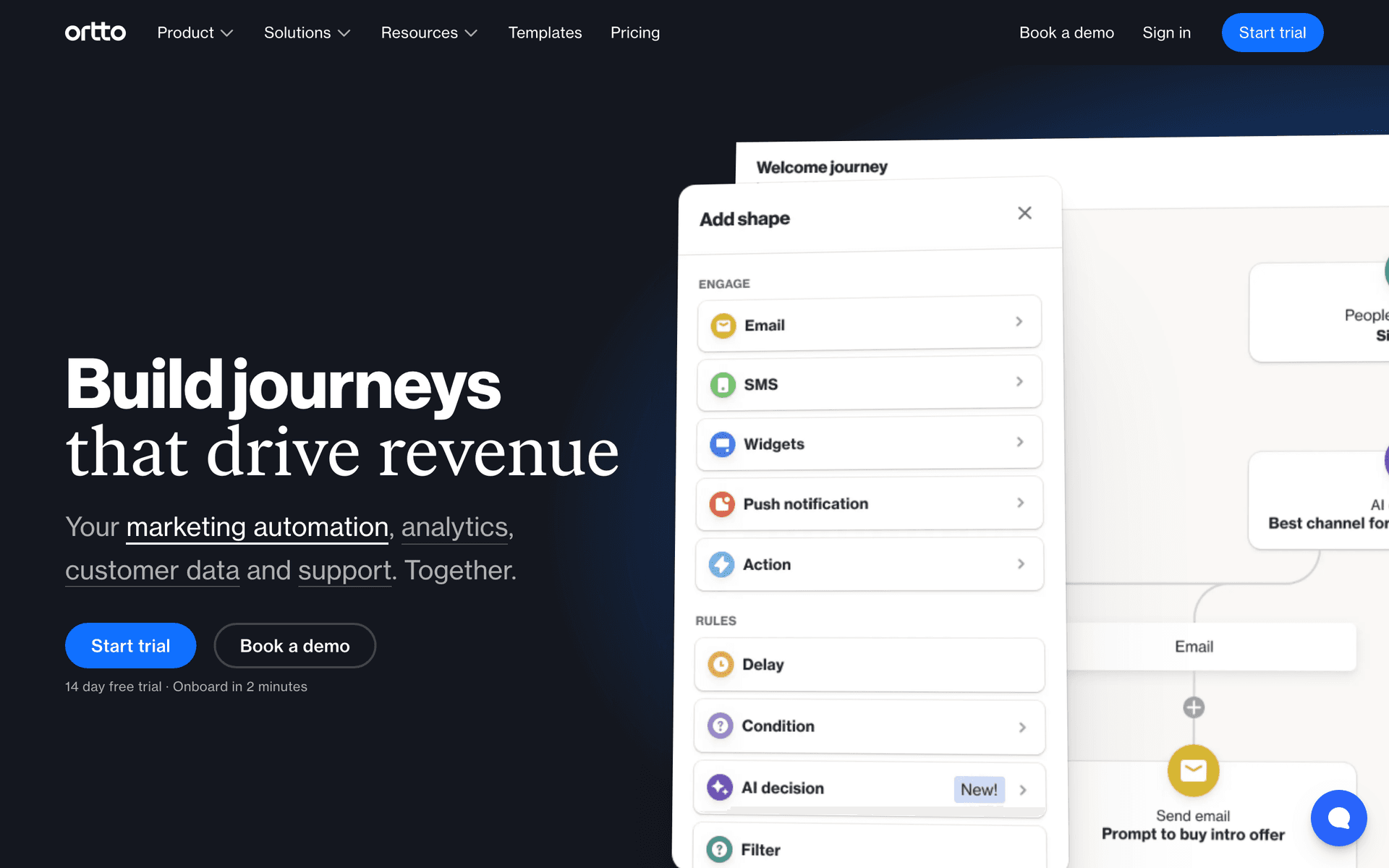
Horizontal SaaS generates a wide variety of user behaviors across personas and industries that are hard to analyze without a proper data layer. Ortto's built-in CDP helps horizontal SaaS teams understand which personas activate fastest, which industries churn most, and which product workflows correlate with long-term retention - then run targeted email journeys against those insights. The analytics-first approach is particularly valuable for horizontal SaaS trying to prioritize which segments to double down on during the growth phase.

Best for
Data-driven horizontal SaaS wanting analytics to guide segment prioritization and email strategy
Pricing
From $99/month

Pros

  • CDP for cross-segment behavioral analytics
  • Segment-prioritization insights
  • Journey automation

Cons

  • Complex setup
  • Higher cost
  • CDP work required upfront
#12
Postmark

Transactional email with reliable delivery across user types.

Visit
Postmark dashboard screenshot

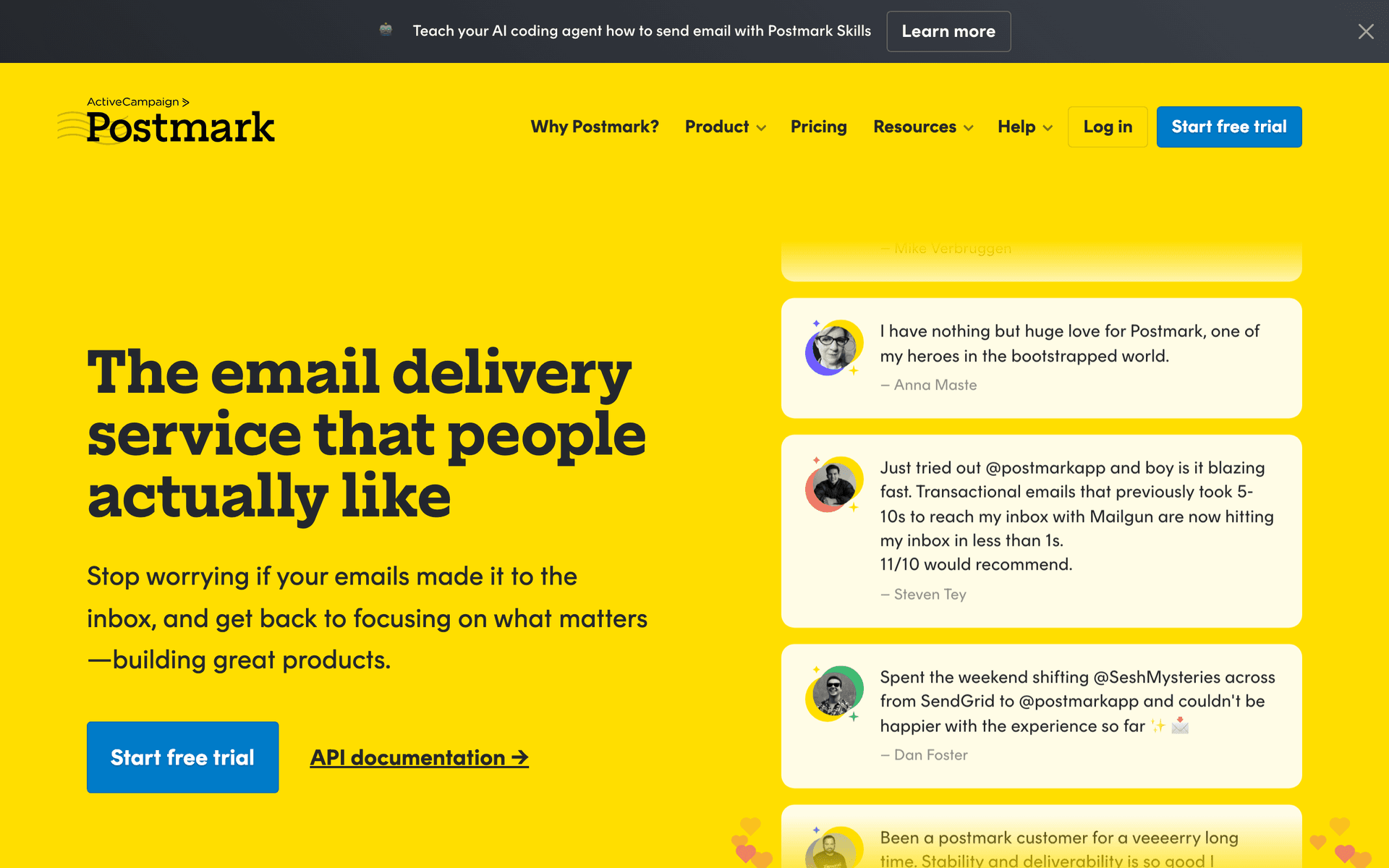
Horizontal SaaS handles significant transactional email volume across diverse user types - account confirmations, role-based notifications, billing emails, and system alerts for users ranging from individual freelancers to enterprise teams. Postmark's reliability ensures these transactional touchpoints arrive consistently regardless of user type or volume spikes driven by horizontal growth. The stream separation lets you keep transactional emails from different user categories organized and their deliverability tracked independently.

Best for
Horizontal SaaS needing consistent transactional email reliability across diverse user volumes
Pricing
From $15/month for 10,000 emails

Pros

  • Consistent delivery at scale
  • Stream separation by user type
  • Detailed analytics

Cons

  • Transactional only
  • No marketing automation
  • Need a dedicated lifecycle tool
#13
Vero

Behavioral email with API-driven personalization for diverse audiences.

Visit
Vero dashboard screenshot

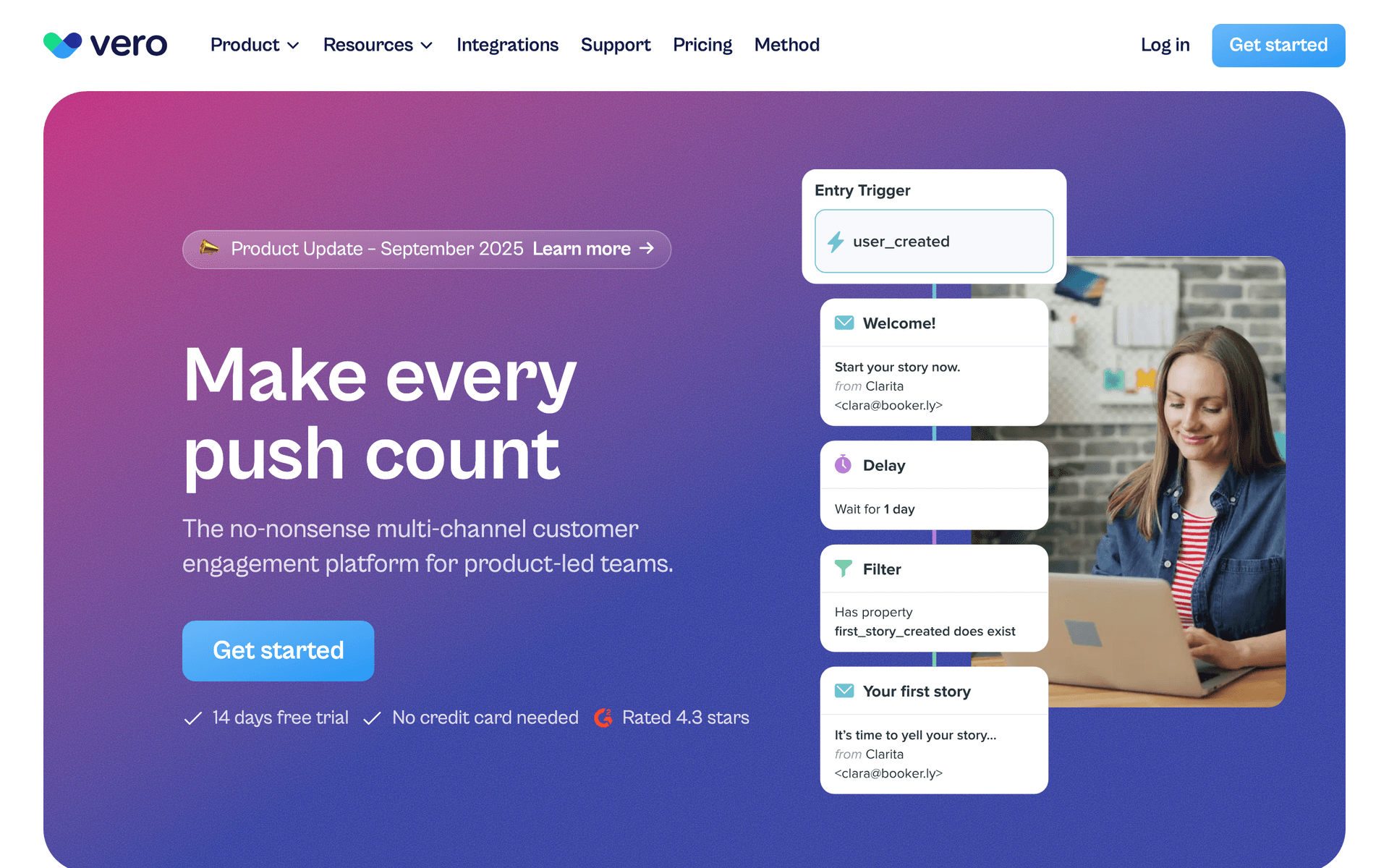
Horizontal SaaS serving users across industries and roles finds Vero's API-driven personalization valuable for making emails feel role-specific without maintaining dozens of separate templates. Inject the user's role, industry, and recent product activity into emails dynamically at send time, so a project manager and a developer receive emails with the same structure but content that speaks to their specific use case. The newsletter layer handles product updates broadcast to all user types while behavioral triggers handle role-specific lifecycle events. Proven at handling diverse audience volumes.

Best for
Horizontal SaaS wanting dynamic role-based email personalization without template sprawl
Pricing
From $99/month

Pros

  • Dynamic role-based personalization
  • Newsletter and lifecycle combined
  • Avoids template proliferation

Cons

  • Dated interface
  • Slower development pace
  • Less modern than alternatives
#14
Userlist

B2B SaaS email automation with company-level tracking.

Visit
Userlist dashboard screenshot

Horizontal B2B SaaS where teams purchase the product needs company-level lifecycle tracking to manage account health across diverse industries. Userlist's company object stores industry, team size, and account attributes that drive which email sequence each company receives. Account-level milestones - team invites sent, first project created, plan limits approached - trigger the appropriate message regardless of the industry context. For horizontal B2B SaaS managing hundreds of company accounts with different use cases, Userlist's structured data model keeps account lifecycle management clean.

Best for
Horizontal B2B SaaS managing company accounts across multiple industries
Pricing
From $149/month for up to 5,000 users

Pros

  • Company-level tracking across industries
  • Account attribute-based routing
  • Clean B2B data model

Cons

  • Email only
  • Higher starting price
  • Limited for individual user-focused horizontal SaaS
#15
Intercom

Customer messaging platform for diverse user onboarding.

Visit
Intercom dashboard screenshot

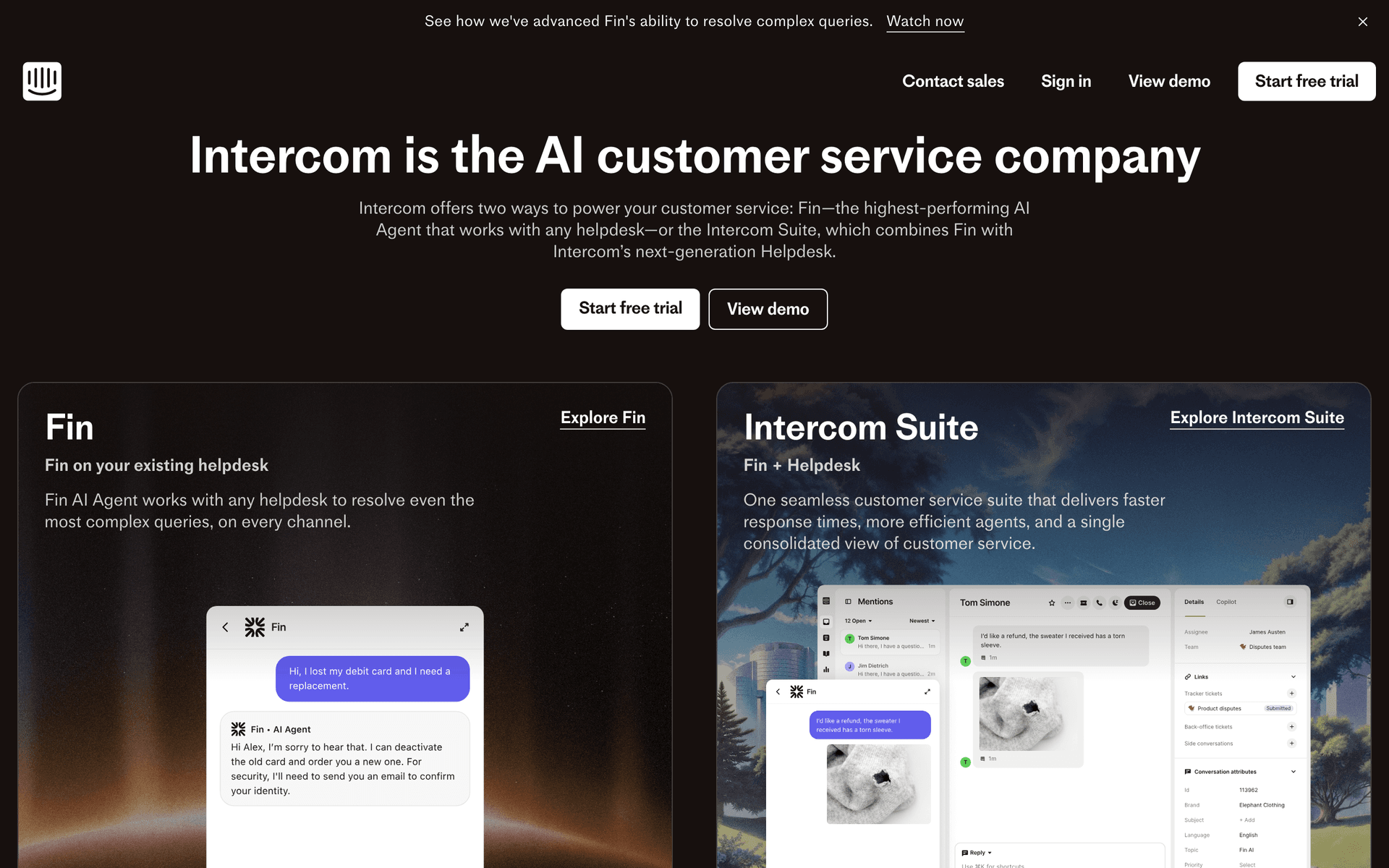
Horizontal SaaS with high user diversity benefits from Intercom's ability to provide contextual onboarding to different user types through in-app messaging alongside email. Product tours adapt to user roles and workflows, help documentation covers use cases across industries, and the bot layer handles common questions from diverse audiences without creating a support bottleneck. For horizontal SaaS where onboarding friction is high because users come from many different professional backgrounds, Intercom's multi-layer onboarding approach reduces activation time across segments.

Best for
Horizontal SaaS with high user diversity where in-app contextual onboarding drives activation
Pricing
From $74/month, scales with seats

Pros

  • In-app onboarding for diverse user types
  • Role-specific product tours
  • Bot handles common questions

Cons

  • Expensive
  • Email automation less advanced
  • Seat-based pricing scales quickly
#16
Iterable

Cross-channel growth platform for enterprise horizontal SaaS.

Visit
Iterable dashboard screenshot

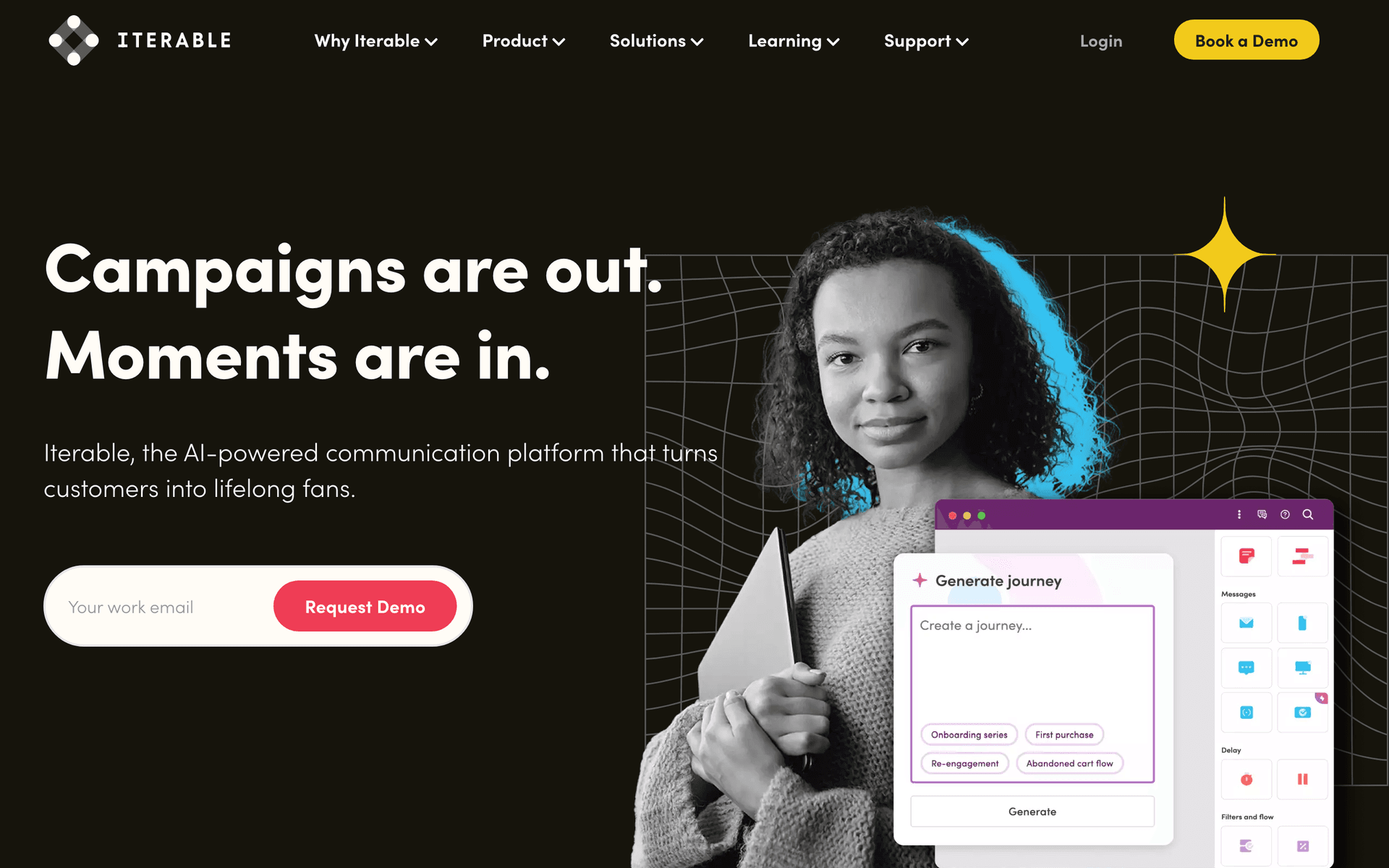
Large horizontal SaaS with millions of users across personas and channels uses Iterable for the cross-channel coordination that makes engagement effective across diverse audiences. AI-powered channel preference learning adapts the communication mix per user type - some professional segments respond better to email, others to push, others to in-app messages. For horizontal SaaS at enterprise scale investing in growth, Iterable's ability to optimize the channel mix per segment is a competitive advantage over single-channel tools.

Best for
Enterprise horizontal SaaS with large diverse user bases needing intelligent cross-channel optimization
Pricing
Custom pricing (typically $500-2,000/month)

Pros

  • AI channel optimization per segment
  • Cross-channel for diverse user preferences
  • Enterprise workflow studio

Cons

  • Expensive
  • Complex for smaller teams
  • Overkill for early-stage horizontal SaaS
#17
SendGrid

Email delivery with transactional and marketing layers.

Visit
SendGrid dashboard screenshot

Horizontal SaaS with high email volumes across user types benefits from SendGrid's infrastructure that scales reliably without per-contact pricing concerns. For horizontal SaaS already on SendGrid for transactional email and wanting to add basic lifecycle marketing without a second vendor, the Marketing Campaigns layer covers announcement emails and simple role-based drips. The template system handles multi-persona email variations and the API supports the custom delivery logic that horizontal SaaS teams sometimes need for role-based routing.

Best for
Horizontal SaaS consolidating high-volume transactional and basic marketing email on one platform
Pricing
Free for 100 emails/day, paid from $19.95/month

Pros

  • Scales at high volume across user types
  • Consolidated transactional and marketing
  • Template system for multi-persona emails

Cons

  • Basic marketing automation
  • Not persona-segmentation-specific
  • Interface less modern
#18
Resend

Developer-first email API for custom transactional workflows.

Visit
Resend dashboard screenshot

Horizontal SaaS engineering teams that build email flows as code use Resend for the transactional email layer where dynamic role-based content and custom rendering logic are handled in application code rather than a marketing tool. When a user's role determines what a notification email contains, implementing that logic in code and delivering via Resend is cleaner than configuring conditional blocks in a marketing platform. For horizontal SaaS with complex role-based notification requirements, engineering-owned email via Resend provides maximum flexibility.

Best for
Technical horizontal SaaS teams with complex role-based transactional email logic
Pricing
Free for 3,000 emails/month, then $20/month

Pros

  • Maximum flexibility for role-based email logic
  • React Email for dynamic templates
  • Clean API

Cons

  • No lifecycle automation
  • Build-it-yourself approach
  • Not for non-technical teams
#19
Braze

Enterprise customer engagement for diverse large-scale user bases.

Visit
Braze dashboard screenshot

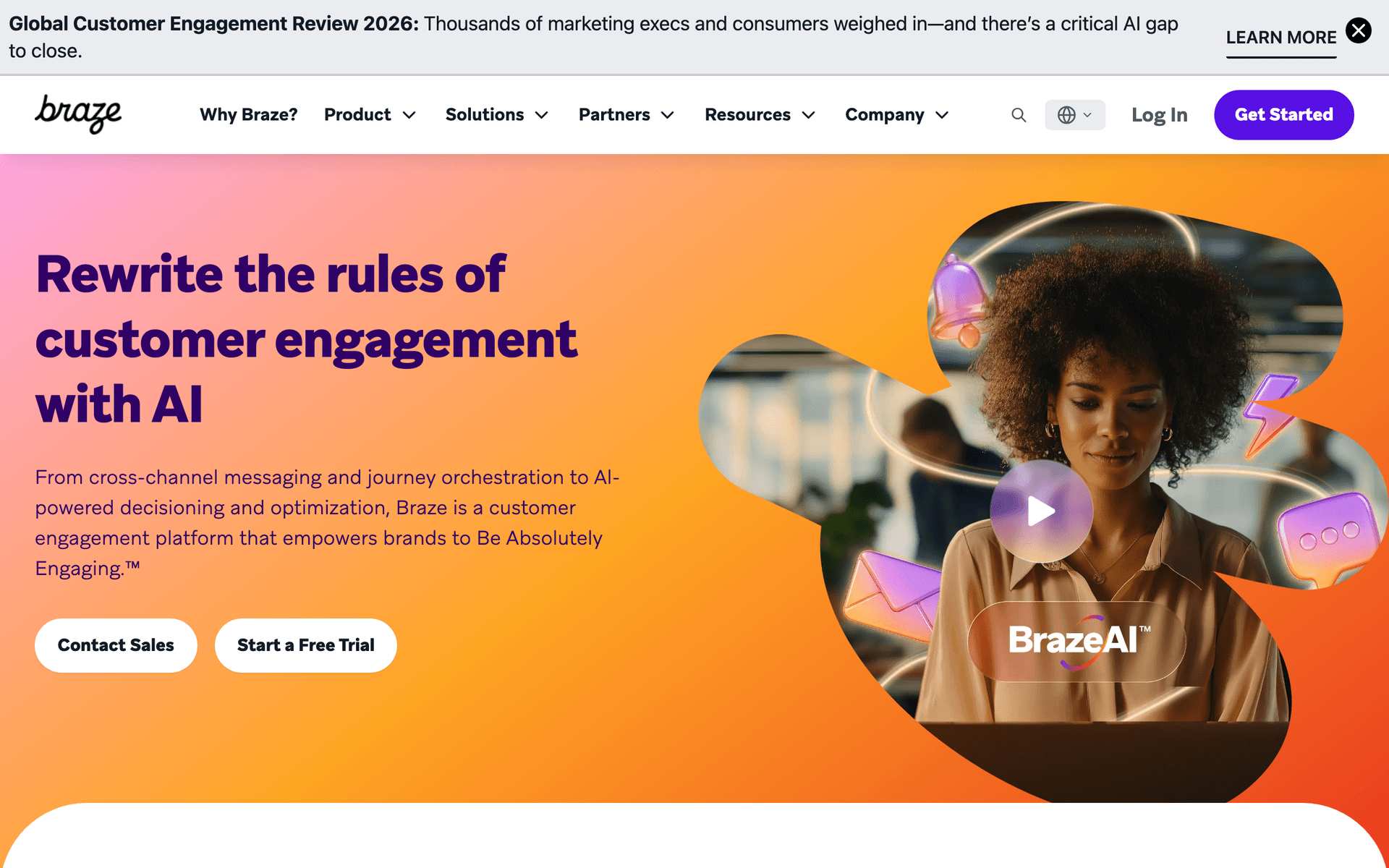
Large horizontal SaaS at enterprise scale with multi-product lines and millions of users across diverse professional segments finds Braze's real-time, AI-powered engagement infrastructure suited to the complexity. The Canvas visual builder handles multi-step journeys with real-time branching across email, push, in-app, and SMS for each user segment. Connected content pulls live role-specific product data into emails at delivery time. For horizontal SaaS at the upper end of the scale curve investing heavily in lifecycle marketing, Braze's performance at enterprise volume justifies the premium.

Best for
Large-scale enterprise horizontal SaaS with multi-product lines and millions of diverse users
Pricing
Custom pricing (typically $50K+/year)

Pros

  • Real-time engagement at enterprise scale
  • AI personalization across diverse segments
  • Full multi-channel orchestration

Cons

  • Very expensive
  • Complex implementation
  • Requires dedicated team

Feature Comparison

FeatureSequenzyCustomer.ioLoopsActiveCampaign
Persona-based routing
Via events/tags
Advanced
Basic
Advanced
Multi-industry segmentation
Via attributes
Advanced
Via properties
Via tags
Payment integration
Native Stripe
No
No
No
Company-level tracking
No
No
No
Via CRM
Event-based triggers
Yes
Advanced
Yes
Yes
Multi-channel
Email
Email, push, in-app
Email
Email
Starting price
Free
$100/mo
Free
$29/mo

Common Mistakes to Avoid

We see these mistakes over and over. Skip the learning curve and avoid these from day one.

Sending the same onboarding sequence to every user

A developer and a marketer using the same project management tool need completely different first experiences. Sending identical onboarding emails wastes the developer's time with UI walkthroughs and frustrates the marketer with API documentation. Route by persona from Day 1.

Over-segmenting before you have data

Creating 20 segments with 50 users each means your sample sizes are too small to learn anything. Start broad (3-5 segments), measure what works, then refine. You need at least 200-300 users per segment to draw meaningful conclusions about email performance.

Ignoring the default segment

Users who do not select a role or skip onboarding questions still need a good experience. Build a solid default onboarding sequence that works for anyone, then route users into persona-specific paths when behavioral data reveals their actual use case.

Treating expansion revenue as a sales problem only

Email drives expansion revenue in horizontal SaaS without requiring sales calls. Team invite prompts, feature discovery emails, and usage milestone celebrations all contribute to account expansion. If you only use email for marketing and onboarding, you are leaving money on the table.

Email Sequences Every Horizontal SaaS Needs

These are the essential automated email sequences that will help you grow your business and keep clients coming back.

Persona-Based Onboarding

New user signs up and selects role

Route users into role-specific onboarding paths that show features relevant to their job.

Immediate
Welcome - here is your personalized setup guide

Based on their role selection, send a tailored welcome with the specific features and workflows most relevant to their job function.

Day 1
The feature [role] users love most

Highlight the one feature that resonates most with their persona. Include a direct link and a quick walkthrough.

Day 3
How [Company in their industry] uses [Product]

Case study matching their industry or role. Show specific workflows and outcomes they can relate to.

Day 7
You have not tried [feature] yet

Based on their usage data, suggest the next feature that would add value for their specific use case.

Team Expansion Sequence

User reaches individual usage threshold

Encourage individual users to invite their team when they are getting value from the product.

After hitting usage milestone
You are getting a lot done - imagine what your team could do

Celebrate their usage milestone. Show what happens when teams collaborate in the product. Include a team invite link.

Day 3 after milestone
Teams that use [Product] together save [X] hours/week

Data-driven case for team adoption. Show collaboration features they have not used yet.

The Horizontal SaaS Email Challenge

When your product serves every industry, your email marketing faces a fundamental tension: you need to feel personal while reaching a broad audience. A project management tool used by agencies, startups, and enterprises cannot send the same onboarding email to all three. The agency cares about client management, the startup cares about speed, and the enterprise cares about compliance.

The solution is not to build hundreds of industry-specific sequences. It is to segment by behavior and persona, then let personalization variables fill in the industry-specific details. A well-segmented horizontal SaaS can feel as personal as a vertical product with a fraction of the email complexity.

Persona Routing Is Your Competitive Advantage

The horizontal SaaS companies that excel at email marketing all share one thing: they route users into the right experience within the first 24 hours. Ask a simple question during signup (What is your role? What will you use this for?) and use the answer to trigger a persona-specific onboarding sequence.

This one decision impacts everything downstream. Users who get role-relevant onboarding activate faster, convert at higher rates, and churn less. The investment in building 3-4 persona-specific onboarding sequences pays for itself many times over.

How to Implement Persona Routing

  1. Add a role or use-case question to your signup flow. Keep it to one question with 3-5 options. More granularity can come from behavioral data later.
  2. Map each answer to an onboarding sequence. Each sequence should highlight different features, use different case studies, and guide users to their specific first-value moment.
  3. Build a default sequence for users who skip the question. Use behavioral signals (which features they click first, which docs they read) to route them into a persona sequence within the first week.
  4. Measure activation rates by persona. If one segment activates at 15% while another hits 50%, the low-performing sequence needs work, not more sends.

Expansion Is Your Growth Flywheel

In horizontal SaaS, new revenue often comes from existing accounts rather than new logos. Email powers this flywheel. When an individual user hits a usage milestone, prompt them to invite teammates. When a team reaches its plan limit, suggest an upgrade. When a new feature ships that is relevant to their use case, tell them about it.

The key is triggering these expansion emails based on behavior, not time. A user who just completed their 50th project is ready to hear about team features. A user who signed up yesterday is not. Tools with event-driven automation handle this naturally.

The Expansion Email Playbook

Individual-to-team expansion: Trigger when a user hits a meaningful usage milestone (100 tasks completed, 10 projects created, 50 documents shared). The email should celebrate their achievement and show how team collaboration amplifies what they are already doing well.

Feature discovery: When a user has not tried a feature relevant to their persona after 14 days of active use, send a targeted introduction. Keep it to one feature per email with a specific example relevant to their role.

Plan upgrade: Trigger when usage approaches plan limits. Frame it as growth validation, not a sales pitch. "You are getting so much done that you are approaching your plan's project limit" feels better than "Upgrade now."

Building Your Multi-Persona Email Architecture

For horizontal SaaS, think about your email system in layers:

Layer 1 - Universal Lifecycle

Emails every user receives regardless of persona: welcome, account verification, billing notifications, major product updates, and security alerts. These form the foundation and require no segmentation.

Layer 2 - Persona-Specific Onboarding

3-5 onboarding sequences tailored to different roles or use cases. Each sequence runs for 7-14 days and guides users to their persona-specific first-value moment. This layer has the highest impact on activation rates.

Layer 3 - Behavioral Triggers

Event-driven emails that fire based on product behavior: feature adoption prompts, usage milestones, team expansion suggestions, and inactivity warnings. These are persona-aware but primarily behavior-driven.

Layer 4 - Segment-Specific Content

Newsletters, case studies, and product updates targeted to industry or role segments. Frequency varies - some segments get weekly product tips while others receive monthly digests. This layer maintains engagement over time.

Getting Started: The 30-Day Plan

Week 1: Define your top 3 personas based on current user data. Look at signup volume, activation rates, and retention by self-reported role or behavioral patterns.

Week 2: Build a persona-specific onboarding sequence for your highest-volume persona. Include a welcome email, one feature highlight, one case study, and one activation check-in.

Week 3: Build the default onboarding sequence for users who do not match a specific persona. Add behavioral routing rules that move users into persona sequences when their behavior signals a clear pattern.

Week 4: Set up your first expansion trigger - a team invite prompt that fires when individual users hit a meaningful usage milestone. Measure invite rates and team creation rates.

What a Healthy Email System Looks Like

For a horizontal SaaS with 10,000 active users across multiple industries:

  • 3-5 persona onboarding sequences running in parallel with clear routing logic
  • 30-40% open rates on onboarding emails (first 7 days)
  • 15-25% activation rate improvement from email vs. no email
  • Behavioral expansion triggers driving 10-20% of new team seats
  • Monthly segment-specific content maintaining engagement with active users
  • Under 0.3% unsubscribe rate on lifecycle emails (a sign of good segmentation)

The goal is not email volume - it is making every email relevant to the person receiving it. In horizontal SaaS, relevance comes from segmentation, not creativity.

How We Evaluated These Tools

We evaluated each platform by testing multi-persona onboarding workflows, measuring segmentation flexibility across industry and role dimensions, and assessing the effort required to build and maintain persona-specific sequences. We scored on event pipeline integration, workflow branching complexity, and cost at 10,000 active users sending lifecycle emails.

Frequently Asked Questions

Ready to grow your horizontal saa practice?

Start your free trial today. Set up your first email sequence in minutes with AI-powered content generation.

Related Industries

Sequenzy - Complete Pricing Guide

Pricing Model

Sequenzy uses email-volume-based pricing. You only pay for emails you send. Unlimited contacts on all plans — storing subscribers is always free.

All Pricing Tiers

  • 2.5k emails/month: Free (Free annually)
  • 15k emails/month: $19/month ($205/year annually)
  • 60k emails/month: $29/month ($313/year annually)
  • 120k emails/month: $49/month ($529/year annually)
  • 300k emails/month: $99/month ($1069/year annually)
  • 600k emails/month: $199/month ($2149/year annually)
  • 1.2M emails/month: $349/month ($3769/year annually)
  • Unlimited emails/month: Custom pricing (Custom annually)

Yearly billing: All plans offer a 10% discount when billed annually.

Free Plan Features (2,500 emails/month)

  • Visual automation builder
  • Transactional email API
  • Reply tracking & team inbox
  • Goal tracking & revenue attribution
  • Dynamic segments
  • Payment integrations
  • API, MCP, and CLI access
  • Custom sending domain

Paid Plan Features (15k - 1.2M emails/month)

  • Visual automation builder
  • Transactional email API
  • Reply tracking & team inbox
  • Goal tracking & revenue attribution
  • Dynamic segments
  • Payment integrations (Stripe, Paddle, Lemon Squeezy)
  • API, MCP, and CLI access
  • Custom sending domain

Enterprise Plan Features (Unlimited emails)

  • Visual automation builder
  • Transactional email API
  • Reply tracking & team inbox
  • Goal tracking & revenue attribution
  • Dynamic segments
  • Payment integrations
  • API, MCP, and CLI access
  • Custom sending domain

Important Pricing Notes

  • You only pay for emails you send — unlimited contacts on all plans
  • No hidden fees - all features included in the price
  • No credit card required for free tier

Contact

  • Pricing Page: https://sequenzy.com/pricing
  • Sales: hello@sequenzy.com