
Two People, Maximum Automation
When your entire company fits in a coffee shop booth, every tool needs to justify its existence by saving you time. Email marketing earns its place by automating communication that would otherwise require manual effort from one of you.
The three email sequences every two-person SaaS team needs: onboarding that gets customers started without hand-holding, dunning that recovers failed payments while you sleep, and a monthly update that keeps customers engaged and informed. Set up these three and you have a communication system that runs while you focus on product and customers.
The Setup Afternoon
Block 3-4 hours on a Tuesday afternoon. By the end, you should have:
- Your email tool connected to your app and payment provider
- An onboarding sequence with 3-4 emails
- A dunning sequence with 3 emails
- A template for your monthly product update
This is the entire investment. Everything after this is maintenance.
Two-Person SaaS Email Benchmark Table
| Email system area | Healthy range | What it indicates | Improvement lever |
|---|---|---|---|
| Onboarding completion | 50%+ setup completion | New users can reach value without a call | One action per email |
| Founder email reply rate | 3-8% | Customers believe a real person is listening | Ask one specific question |
| Dunning recovery rate | 20-40% | Failed payments are recoverable | Use direct payment update links |
| Monthly update open rate | 35%+ | Customers care about what changed | Lead with shipped value |
| Support deflection | Fewer repeated setup questions | Emails answer common blockers | Link to the exact setup step |
Personal Touch at Scale
Two-person teams have a secret weapon: authenticity. An email from the founder that says "hey, I saw you signed up yesterday, how can I help?" feels radically different from a corporate welcome email. Customers chose your product partly because it is not a faceless corporation.
Write your email sequences in your own voice. Reply to customer responses personally. Ask for feedback and actually act on it. This personal touch does not scale forever, but at two people with a few hundred customers, it builds loyalty that no marketing automation can replicate.
When Personal Stops Scaling
You will know it is time to professionalize your emails when you consistently cannot reply to all responses within 24 hours, or when your customer base exceeds 500-1,000. Until then, lean hard into the personal advantage.
| Team constraint | Email choice | Why it fits | Avoid |
|---|---|---|---|
| No marketer | Founder-written onboarding | Authenticity beats polish | Corporate nurture copy |
| Limited engineering time | Native billing integration | Avoids custom dunning work | Manual payment follow-up |
| Few customers | Direct replies | Every conversation teaches product insight | No-reply sender address |
| Fast product changes | Monthly update template | Keeps customers aware without big campaigns | Over-designed newsletters |
| Support overload | Setup email sequence | Handles repeated questions once | One-off replies only |
Pick One Tool and Move On
The biggest mistake two-person teams make with email is spending too long evaluating tools. You need something affordable that handles basic automation and ideally connects to your payment provider. Pick one, set it up in an afternoon, and get back to building your product.
You can always switch later when your needs are clearer. The cost of choosing the wrong email tool is a few hours of migration. The cost of spending weeks evaluating tools is weeks of lost product development and customer communication.
Decision Framework
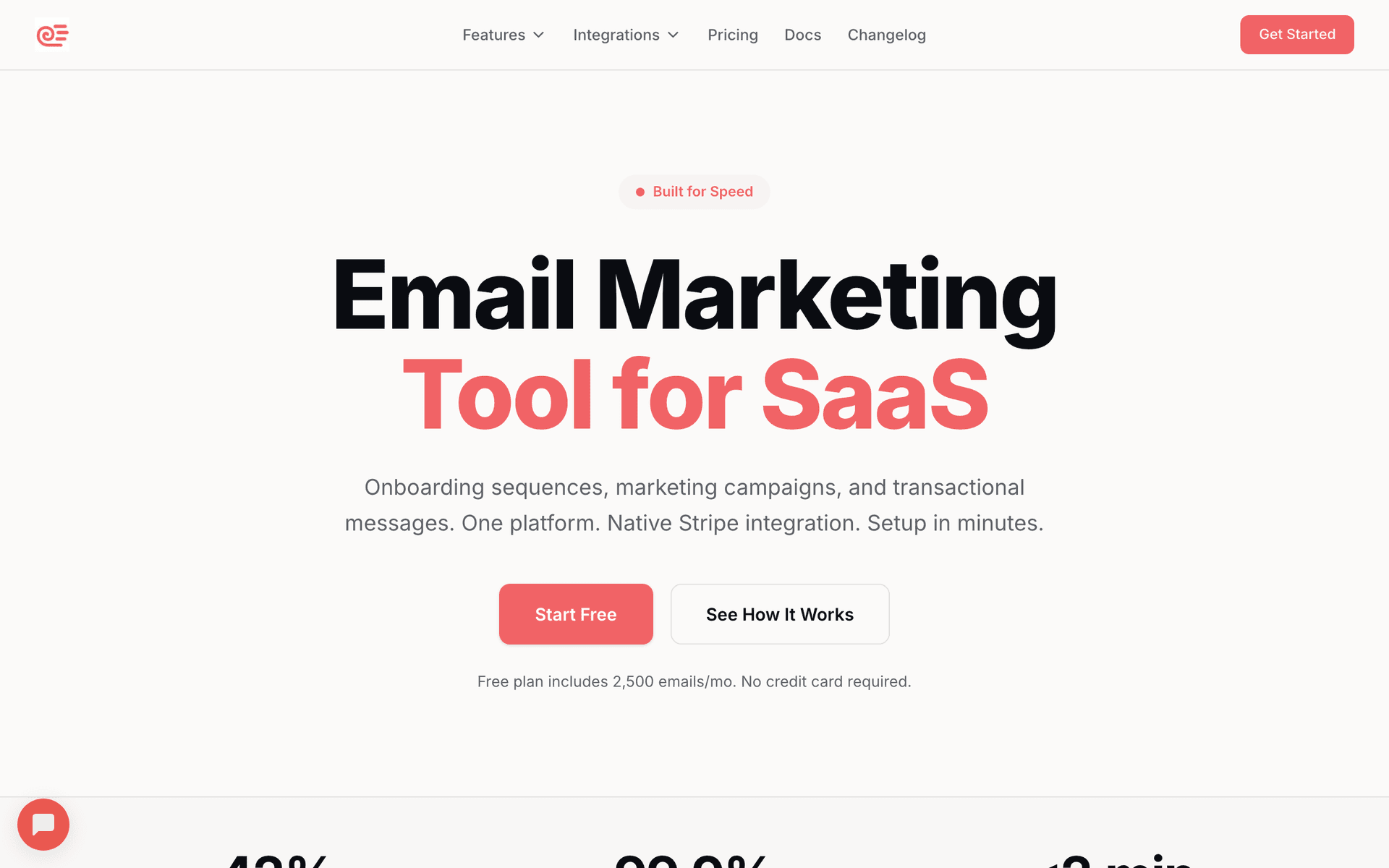
- Have a Stripe integration? Start with Sequenzy for automatic billing emails
- Prefer code over UI? Start with Resend for maximum developer control
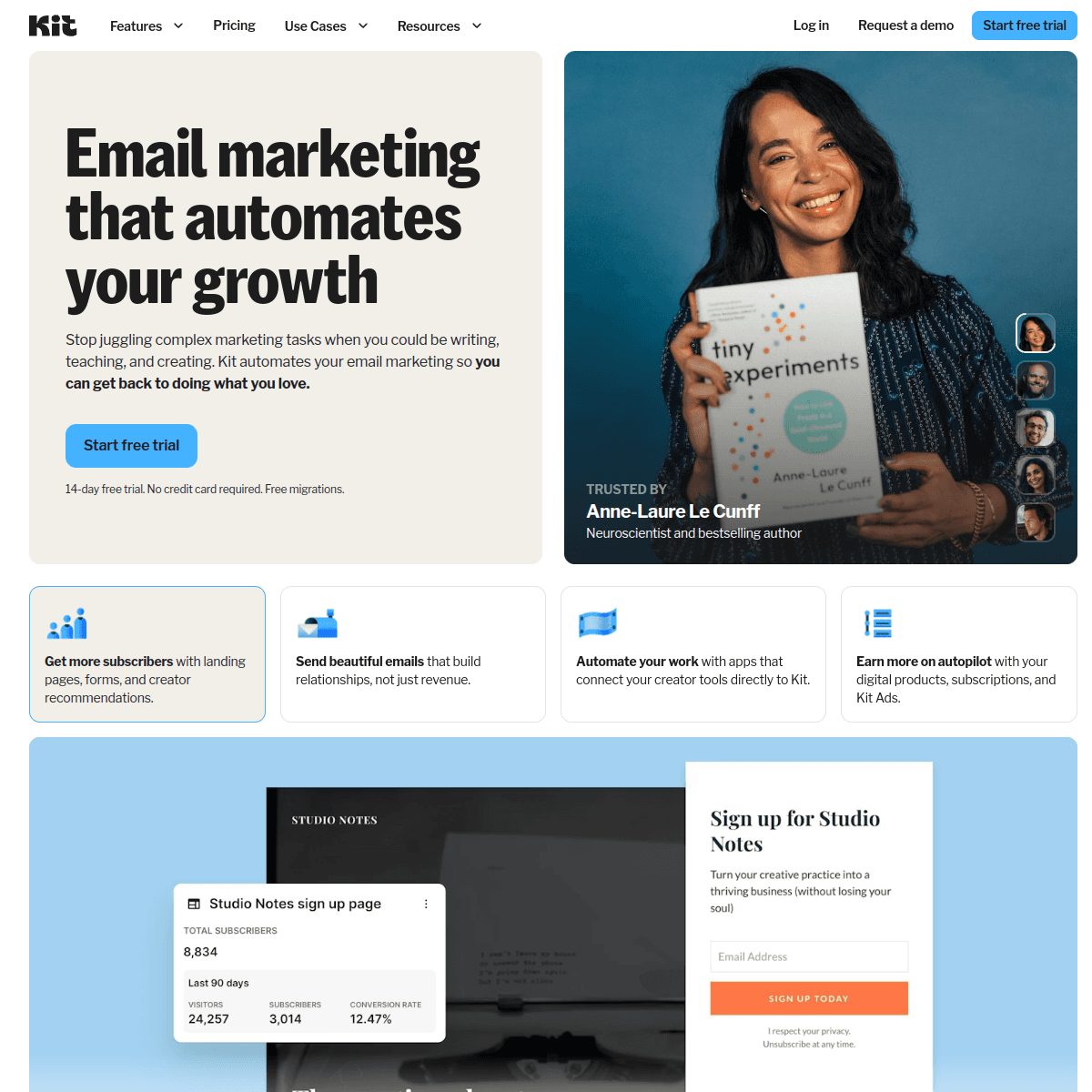
- Want the most generous free tier? Start with ConvertKit at 10,000 subscribers free
- Already know a tool? Use what you know and skip the evaluation entirely
- Need the absolute lowest cost? Start with Brevo at $9/month or free
Measuring What Matters
At two people, you do not need a sophisticated analytics dashboard. Track three things:
Onboarding completion rate - What percentage of new signups complete your setup steps? If it is below 50%, your onboarding emails need clearer guidance.
Dunning recovery rate - What percentage of failed payments recover from your automated sequence? Aim for 20-40%. Below 20% means your emails are not compelling or your payment update link is broken.
Monthly update open rate - Are customers reading your product updates? Aim for 35%+. Below 25% means your content is not relevant or your subject lines need work.
These three numbers tell you if your email program is working. Everything else is optimization you can worry about later.
| Sequence | Setup time | Trigger | Success metric |
|---|---|---|---|
| Founder onboarding | 60-90 minutes | New signup | Setup completion and replies |
| Payment recovery | 30-45 minutes | Failed payment | Recovery rate |
| Monthly product update | 30 minutes/month | Calendar send | Open and click rate |
| Feedback check-in | 20 minutes | Day 14 or usage milestone | Useful customer replies |
| Cancellation save | 45 minutes | Cancellation intent | Saved accounts or learning |
What Two-Person SaaS Teams should prioritize first
For Two-Person SaaS Teams, email works when it supports clear communication, consistent follow-up, and measurable customer action. The software matters, but the operating habit matters more: collect the right contacts, send messages at the right moments, and keep the content useful enough that people keep opening.
Start by comparing the ranked tools above around the workflows you will actually run. A good tool for Two-Person SaaS Teams should make it easy to segment contacts, write a campaign quickly, automate the obvious follow-ups, and see whether the email produced a booking, sale, reply, renewal, or return visit.
The first workflows to build are usually simple. Start with a welcome flow, one reminder flow, one promotional campaign, and one reactivation message. Do not build a complicated journey until those basics are working.
A practical rollout looks like this:
| Week | Focus |
|---|---|
| 1 | Import contacts, clean segments, and write the first useful campaign. |
| 2 | Launch the highest-value reminder or follow-up automation. |
| 3 | Add one educational or trust-building email that is not a promotion. |
| 4 | Review opens, clicks, replies, bookings, purchases, or returned customers. |
The most important page-specific ideas are Set up three sequences and stop; Use AI to write your sequences, then personalize the voice; Connect your payment provider on day one. Those should become your first campaigns before you worry about advanced automation.
Pick the tool that makes a weekly send realistic when you are two people with a product to ship. If a platform has more features but makes the weekly send harder, it is the wrong fit. If a simpler one lets you send consistently and see what each email did, it will usually produce more value.