
The Series B Email Maturity Curve
At Series B, email should be a mature, data-driven growth channel. You should know your key metrics: activation rate by segment, trial conversion rate by cohort, dunning recovery rate, and churn prevention effectiveness. If you do not have these numbers, your email infrastructure needs attention.
The common Series B mistake is over-engineering. You do not need 50 automated sequences running simultaneously. You need 5-10 well-optimized sequences that cover the critical lifecycle moments. Quality over quantity.
Segmentation at Scale
The biggest difference between seed-stage and Series B email is segmentation complexity. You might have 8-10 distinct user segments, each needing a different email experience. Building and maintaining these segments requires a tool with strong event-driven automation and an organized approach to content.
Start by mapping your user lifecycle: awareness, signup, activation, conversion, retention, expansion, and win-back. Each stage needs targeted communication for each plan tier.
Series B SaaS Email Benchmark Table
| Email type | Healthy open rate | Healthy revenue action rate | Operating metric to watch |
|---|---|---|---|
| Segment-specific lifecycle email | 32-48% | 10-20% target action rate | Activation or retention by segment |
| Expansion sequence | 40-58% | 8-18% sales or upgrade action | Expansion pipeline and MRR |
| Churn prevention | 34-50% | 7-14% reply or reactivation | Retained ARR |
| Product-critical notification | 50-70% | 20-40% completion clicks | Required action completion |
Managing Segment Complexity
At 8-10 segments with 5+ sequences each, you are managing 40-50 active automations. This requires:
| Governance item | What to document | Review cadence | Risk if ignored |
|---|---|---|---|
| Sequence purpose | Audience, trigger, goal, owner | At launch and quarterly | Orphaned automations keep sending |
| Entry and exit rules | Who enters, who leaves, suppressions | Quarterly | Users receive irrelevant emails |
| Success metric | Target action and business impact | Monthly for high-value sequences | Teams optimize vanity metrics |
| Content accuracy | Screenshots, pricing, feature names | Quarterly or before major launches | Outdated emails damage trust |
Documentation: Every sequence needs a documented purpose, target audience, entry/exit criteria, and expected metrics. Without documentation, sequences become orphaned when team members change roles.
Ownership: Assign each sequence to a specific person. Unowned sequences decay in quality over time and can start sending irrelevant content that damages engagement.
Regular Audits: Review each sequence quarterly. Are the metrics still healthy? Is the content still accurate? Does it still serve the documented purpose? Kill sequences that are not performing and consolidate overlapping ones.
Frequency Management: With multiple sequences running, implement global frequency capping. No user should receive more than 3-4 emails per week from automated sequences, regardless of how many they qualify for.
Multi-Channel or Email-First?
Some Series B companies rush to add push notifications, in-app messages, and SMS before mastering email. Unless your product requires multi-channel communication, master email first. A well-optimized email program outperforms a poorly implemented multi-channel approach every time.
Add channels when you have data showing users prefer or respond to other channels. Not because your email tool happens to support them.
When Multi-Channel Makes Sense
Multi-channel becomes valuable when:
- Your product has a mobile app with daily usage patterns (push notifications for real-time alerts)
- Users are in your app when you need to communicate with them (in-app messages for contextual guidance)
- Time-sensitive events need immediate attention (SMS for security alerts or payment failures)
- Email engagement is declining for specific user segments (try a different channel before giving up on the segment)
Building Your Series B Email Team
At Series B, email typically needs dedicated ownership. The most common structures:
Lifecycle Marketing Manager: Owns all automated sequences, A/B testing, and conversion optimization. Reports to the VP of Marketing or Growth.
Growth Engineer: Works alongside the lifecycle marketer to implement event tracking, build integrations, and maintain the technical email infrastructure.
Content Contributor (shared): Product marketers, content writers, or product managers contribute email content for product updates, feature announcements, and educational sequences.
This 2-3 person team (one dedicated plus one shared) can manage a sophisticated email program for a Series B company with 10,000-100,000 users.
Integration Architecture
At Series B, your email tool should integrate with:
| Integration | Email use case | Owner | Failure mode to monitor |
|---|---|---|---|
| Product analytics | Behavior-triggered lifecycle messages | Growth engineering | Missing or delayed events |
| Billing system | Dunning, plan changes, expansion triggers | RevOps or growth | Wrong plan segmentation |
| CRM | Enterprise handoff and account context | Sales ops | Duplicate or conflicting outreach |
| Support tool | Suppression during active issues | Customer success | Marketing emails during escalations |
| Data warehouse | Attribution and custom segmentation | Data or analytics | Metric mismatch across teams |
- Product analytics (Segment, Amplitude, Mixpanel) for behavioral event data
- Billing system (Stripe) for payment lifecycle triggers
- CRM (HubSpot, Salesforce) for enterprise account coordination
- Support tool (Intercom, Zendesk) for suppressing marketing emails during active support conversations
- Data warehouse (BigQuery, Snowflake) for custom analytics and attribution
The best Series B email setups use a customer data platform (like Segment) as the hub, routing events to both the email tool and the data warehouse. This creates a single source of truth for user behavior across all tools.
Best Fit by Series B Operating Model
Best email marketing tool for Series B lifecycle teams
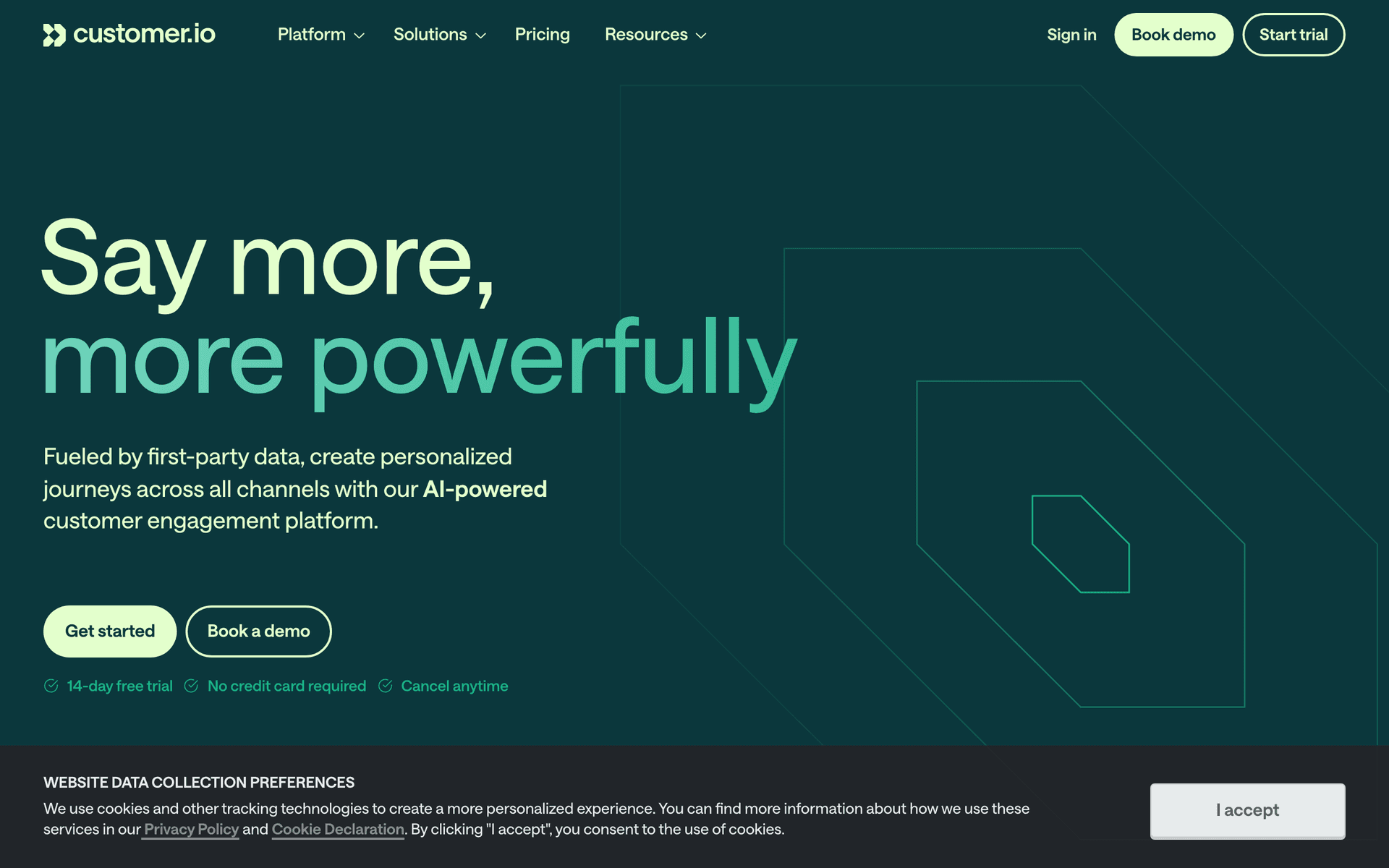
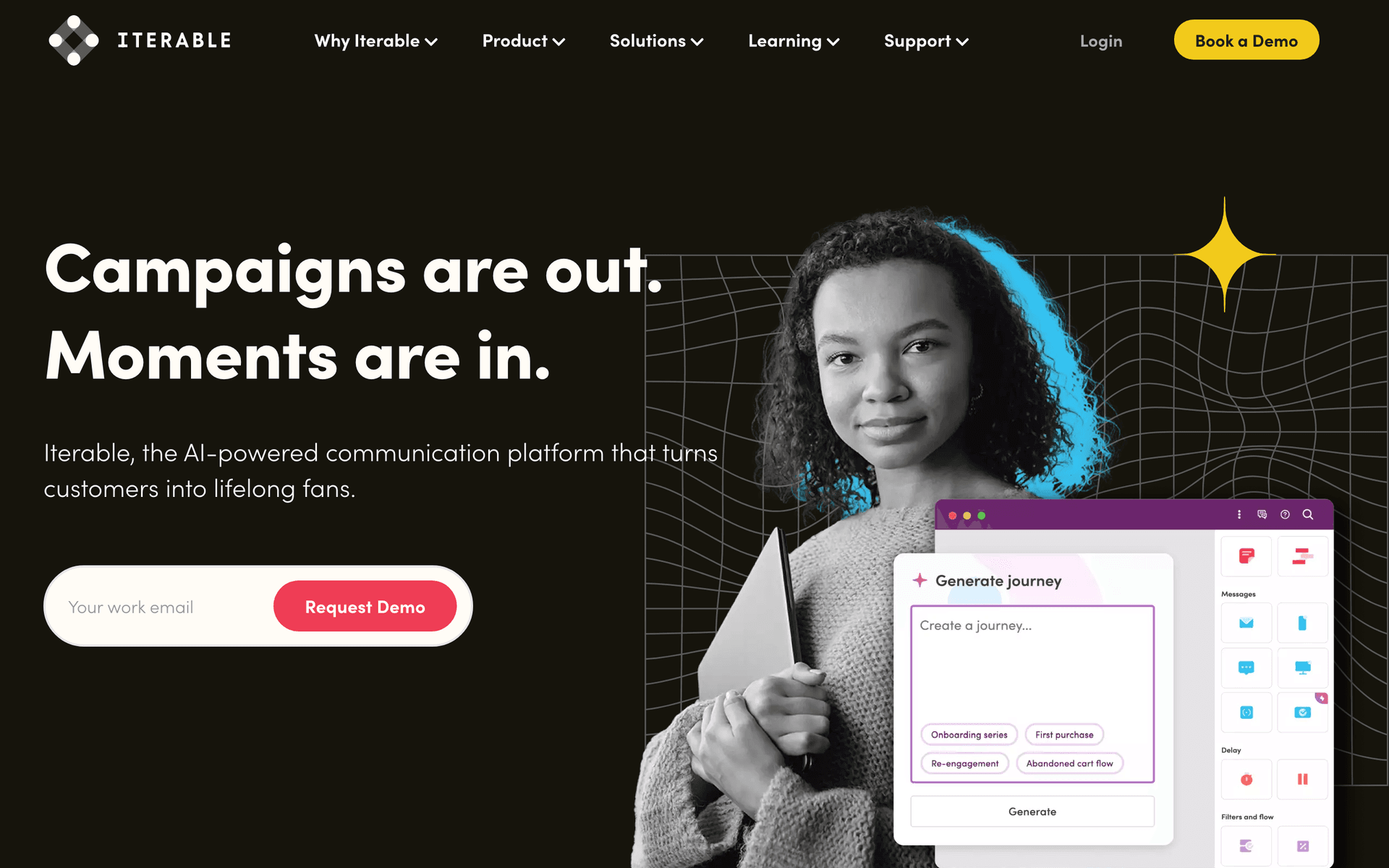
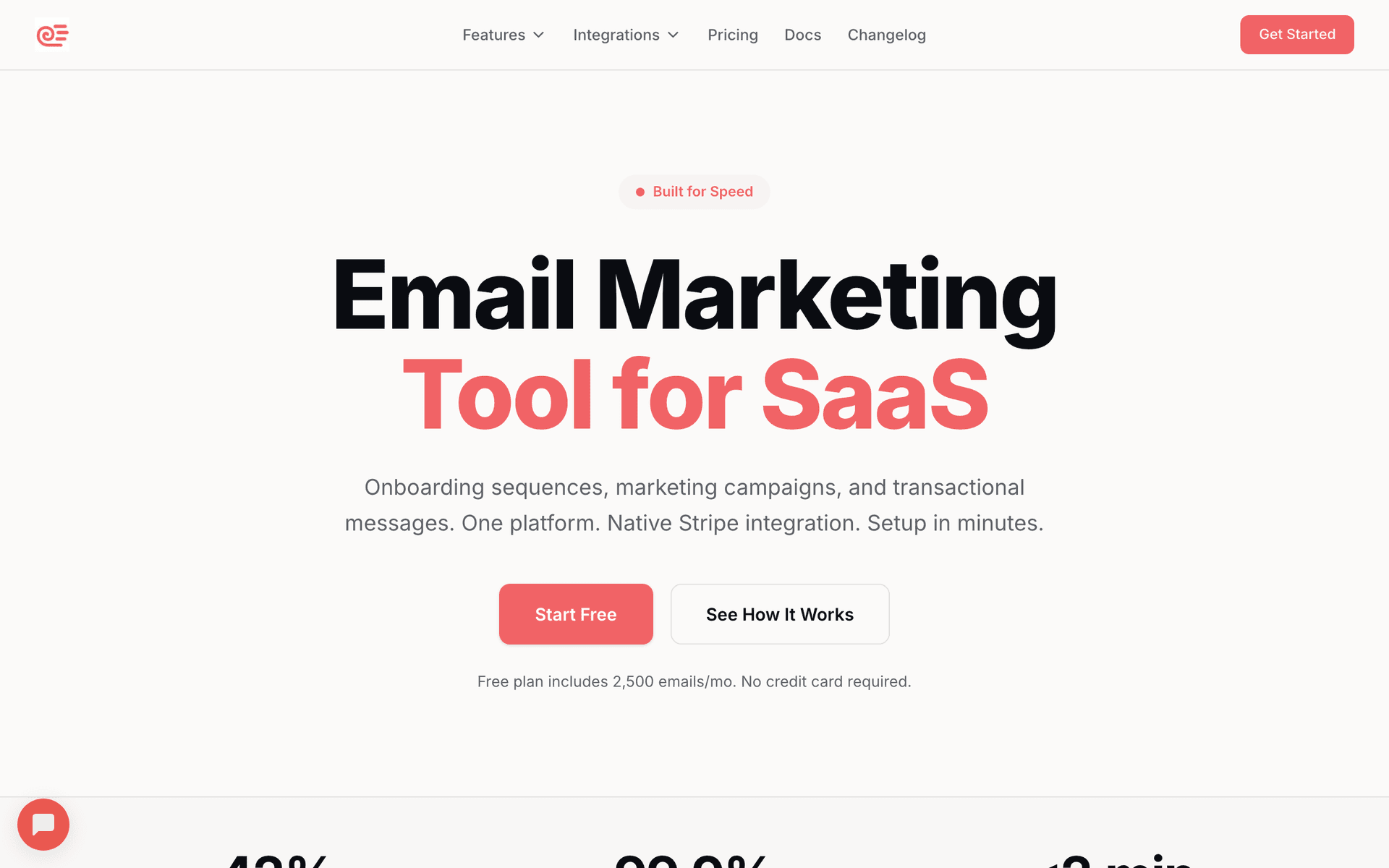
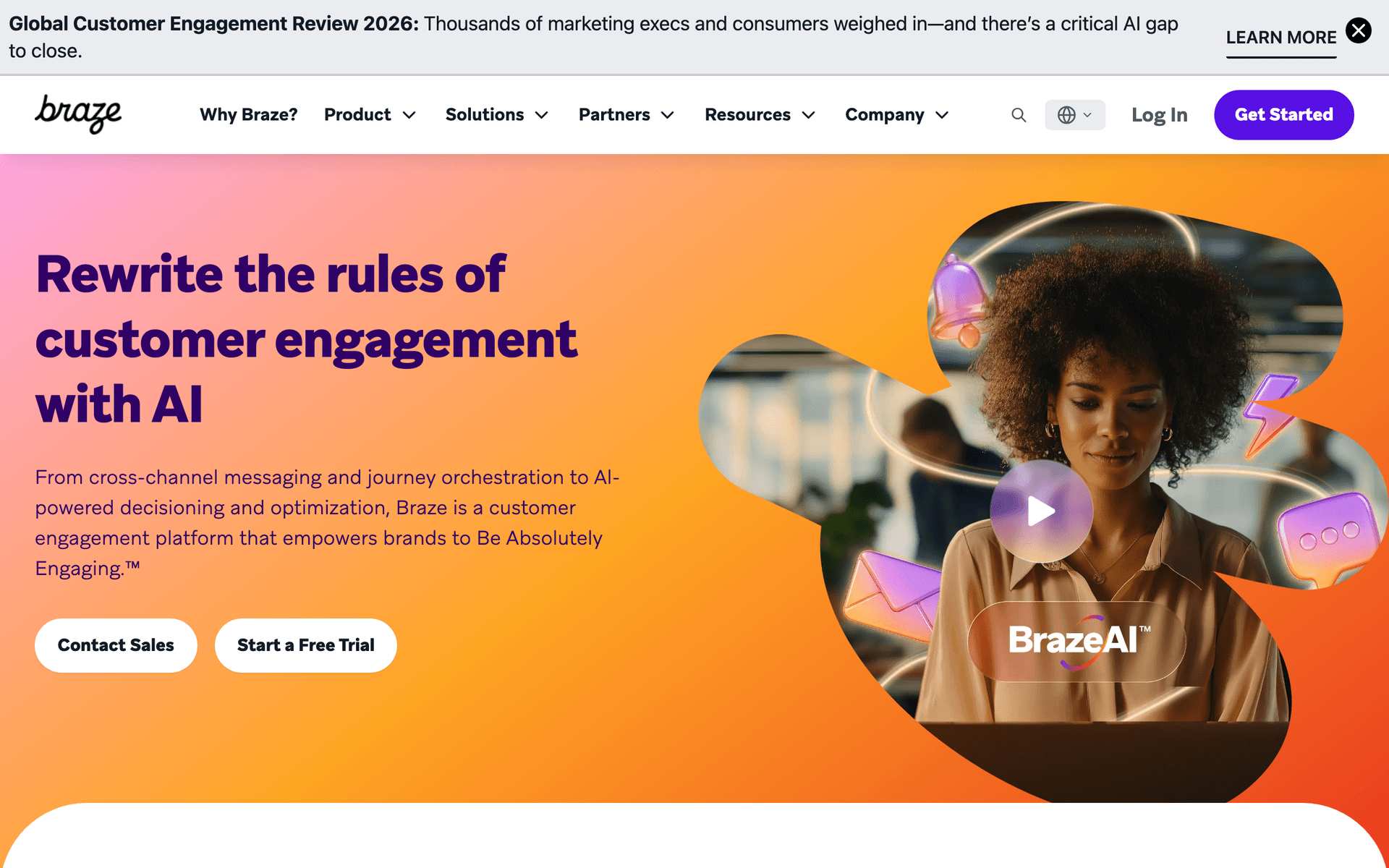
Choose Customer.io, Iterable, Braze, or Sequenzy when lifecycle marketing has dedicated ownership and needs event-triggered onboarding, conversion, expansion, and retention workflows with clear attribution.
Best email marketing tool for Series B multi-channel messaging
Choose Braze, Iterable, or Customer.io when push, in-app, SMS, and email are all proven channels for specific segments. Do not choose multi-channel only because the vendor supports it; choose it when user behavior proves email alone is not enough.
Best email marketing tool for Series B data warehouse workflows
Choose a stack that can accept clean events from Segment, sync with billing and CRM data, and support attribution in the warehouse. At Series B, broken data architecture creates more email problems than weak copy.
What a Healthy Series B Email Program Looks Like
Your email program is mature when:
- Every active sequence has documented goals, an owner, and quarterly review cycles
- You can measure revenue attributed to email across onboarding, conversion, expansion, and retention
- Frequency capping prevents email fatigue across all automated and campaign emails
- A/B testing runs systematically with results documented and shared across the team
- Your email tool integrates cleanly with your product analytics, billing, and CRM systems
- New sequences can be created and launched within days, not weeks