Updated 2026-03-15

Best Email Marketing Tools for Enterprise SaaS

Manage enterprise accounts at scale. Automate multi-stakeholder onboarding, renewal communication, and expansion sequences.

Enterprise SaaS email is a different game. Your accounts are worth six or seven figures annually. Each account has dozens or hundreds of users across multiple departments. Decisions involve procurement, legal, IT, and end users. The email challenge is not volume but precision: the right message to the right person at the right time within complex organizational structures. Most email tools are built for high-volume, low-touch communication. Here are the ones that handle enterprise complexity.

TL;DR

Sequenzy is the best fit for enterprise SaaS teams that want event-driven automation tied directly to Stripe billing events, with pay-per-email pricing that keeps costs predictable as your user base scales. HubSpot is the safer pick if you need full CRM with native account hierarchy modeling and have the budget. For engineering-heavy teams with complex multi-stakeholder flows, Customer.io offers the most flexibility.

Why Enterprise SaaS Needs Email Marketing

Multi-Stakeholder Onboarding

Enterprise accounts have champions, admins, power users, and casual users. Each needs a different onboarding path. Automated sequences tailored by role ensure every stakeholder gets to value without overwhelming anyone.

Renewal Preparation

Enterprise contracts have renewal dates, and losing one account can represent millions in ARR. Automated renewal sequences that start 90-120 days before expiration build the case for renewal through value documentation and stakeholder engagement.

Expansion Revenue

Enterprise accounts expand through new departments, new use cases, and upgraded tiers. Email sequences that identify expansion signals and nurture internal champions drive organic growth within accounts.

Executive Communication

Enterprise buyers expect executive-level communication: quarterly business reviews, industry insights, and strategic updates. Automated but personalized executive touch points maintain the relationship between formal review meetings.

Enterprise SaaS Email Marketing Benchmarks

Know these numbers before you start. They'll help you set realistic goals and pick the right tool.

28-35%
Average Open Rate

Enterprise SaaS emails to named accounts typically see 28-35% open rates due to high relevance and established relationships. Transactional and account-specific emails often exceed 50%.

3-6%
Average Click Rate

Click rates for enterprise SaaS lifecycle emails average 3-6%, with onboarding and feature announcement emails often reaching 8-12% when well-targeted by role.

Tuesday-Thursday, 10am-12pm recipient local time
Best Send Time

Enterprise decision-makers engage most during mid-morning business hours. Avoid Monday mornings (inbox overload) and Friday afternoons (low engagement).

70%+ should engage with value content
Renewal Influence Rate

At least 70% of champion-level contacts should open and engage with quarterly value reports. Lower engagement correlates with higher churn risk.

Important Tips Before You Choose

Lessons from enterprise saaswho've been doing this for years. Save yourself the trial and error.

Segment by Role Within Each Account

Enterprise accounts have champions, admins, power users, and casual users. Each role needs different email content. Your champion needs business value and ROI data. Your admin needs technical docs and release notes. End users need feature tips and workflow guides. Never send the same email to all three groups.

Start Renewal Communication 120 Days Out

Enterprise renewal cycles involve procurement, budget approval, and sometimes legal review. Starting at 120 days gives your champion time to build the internal business case, gather stakeholder input, and navigate procurement processes before the contract expires.

Document Value Continuously, Not Just at Renewal

Send quarterly value summaries showing usage metrics, time saved, and ROI calculations throughout the contract period. When the formal renewal sequence starts, you are reinforcing a narrative the champion has been absorbing all year rather than scrambling to prove value at the last minute.

Track Department-Level Adoption for Expansion Signals

When one department hits high adoption, that is your expansion signal. Trigger emails to the account champion showing how other departments at similar companies use your product. Internal case studies and department-specific use cases drive organic expansion.

Use Account Health Scores to Trigger Communication

Build a composite health score from login frequency, feature adoption, support ticket volume, and NPS responses. Trigger proactive outreach when health drops below thresholds rather than waiting for the customer to complain or churn.

Send Executive-Level Content Quarterly

Executive sponsors rarely use your product daily but they approve renewals and expansions. Quarterly emails with industry insights, benchmarks, and strategic trends keep them engaged with your brand even when they are not hands-on users.

19 Best Email Marketing Tools for Enterprise SaaS

#ToolDescriptionBest ForPricing
1SequenzyEmail marketing with event-driven automation and native payment integrations for SaaS.Enterprise SaaS wanting event-driven account automation with billing integrationFree up to 2,500 emails/mo, then $19/mo (unlimited contacts)
2HubSpotEnterprise CRM and marketing platform.Enterprise SaaS with dedicated sales, marketing, and customer success teamsFree CRM, marketing hub from $800/month
3Customer.ioEvent-driven messaging with advanced account segmentation.Enterprise SaaS with technical teams and complex account communication$100/month for 5,000 profiles
4UserlistEmail automation for SaaS with company-level tracking.Enterprise SaaS wanting purpose-built account-level email$149/month for 5,000 users
5ActiveCampaignAdvanced automation with CRM for enterprise account management.Enterprise SaaS wanting CRM and automation without HubSpot pricing$29/month for 1,000 contacts
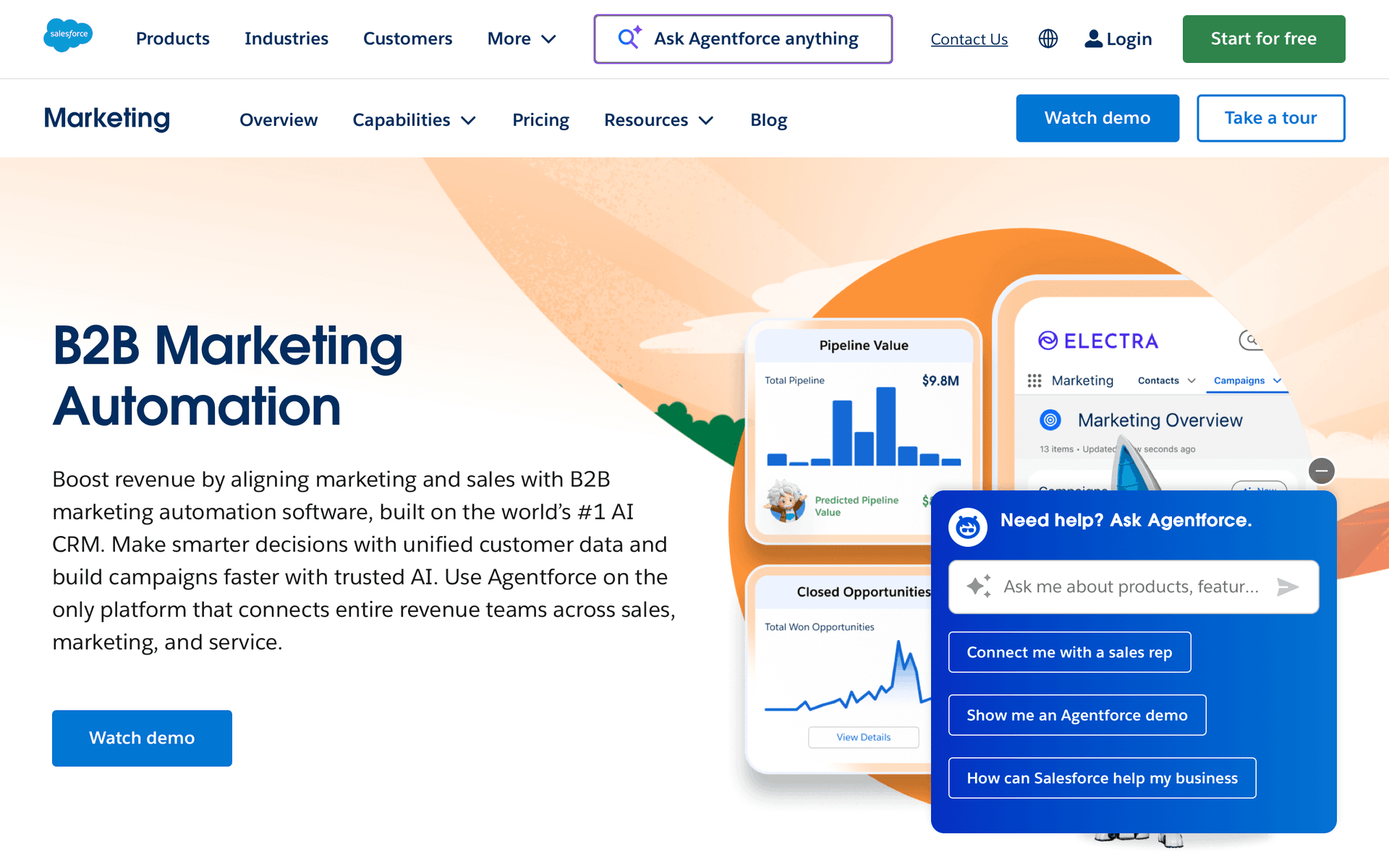
6Salesforce Marketing CloudEnterprise marketing automation within the Salesforce ecosystem.Enterprise SaaS deeply integrated with Salesforce CRMCustom pricing, typically $1,250+/month
7LoopsModern email platform for SaaS with event-based automations.Enterprise SaaS serving mid-market with simpler account structuresFree up to 1,000 contacts, then $49/month
8MarketoEnterprise B2B marketing automation and account-based marketing platform.Enterprise SaaS with ABM strategies and multi-stakeholder enterprise sales cyclesCustom pricing (typically $1,000-$5,000+/month)
9PardotSalesforce-native B2B marketing automation for enterprise teams.Enterprise SaaS running Salesforce CRM wanting native marketing automation integrationFrom $1,250/month for up to 10,000 contacts
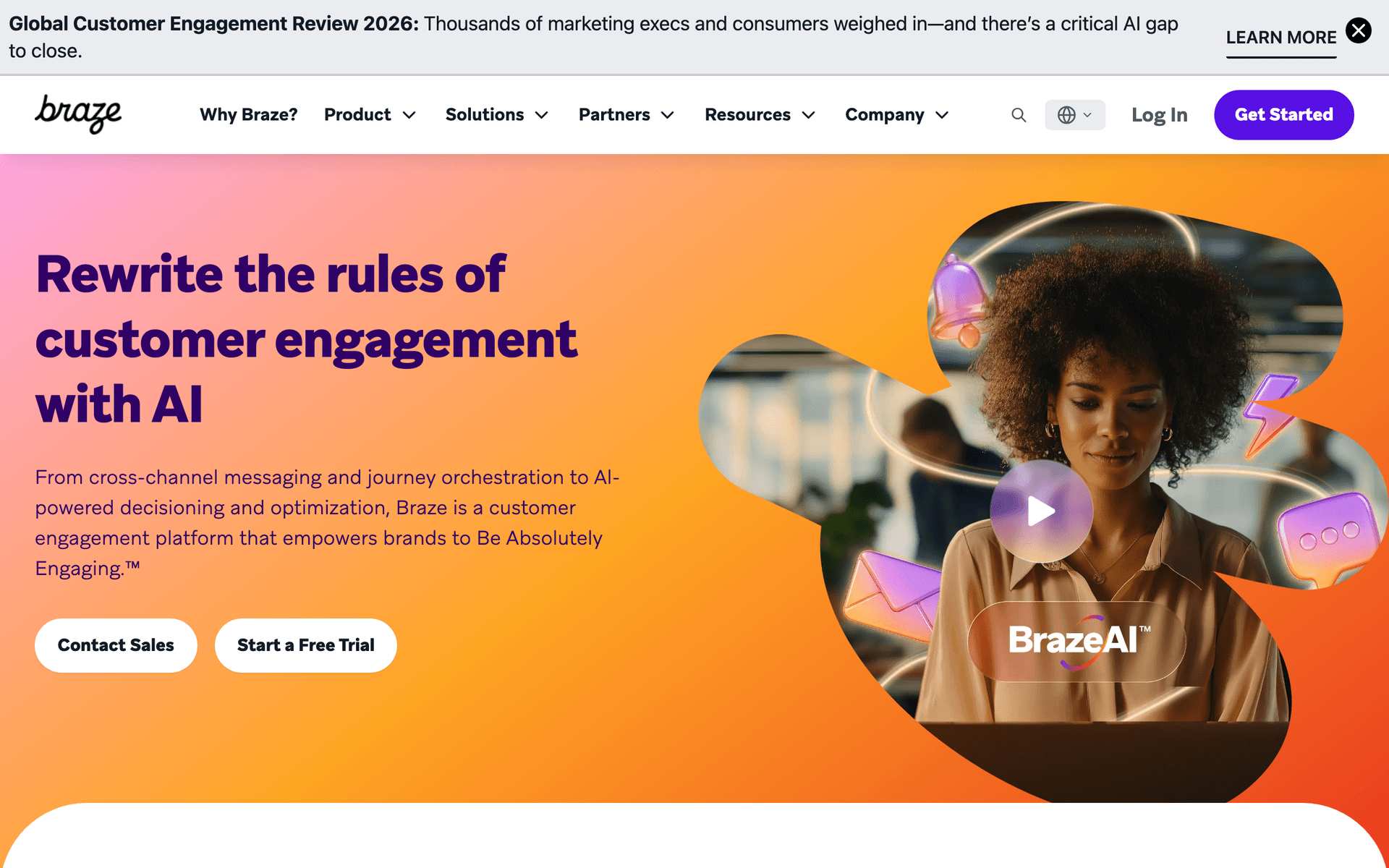
10BrazeEnterprise customer engagement platform for multi-channel communication.Enterprise SaaS with mobile apps needing real-time multi-channel engagement at scaleCustom pricing (typically $50K+/year)
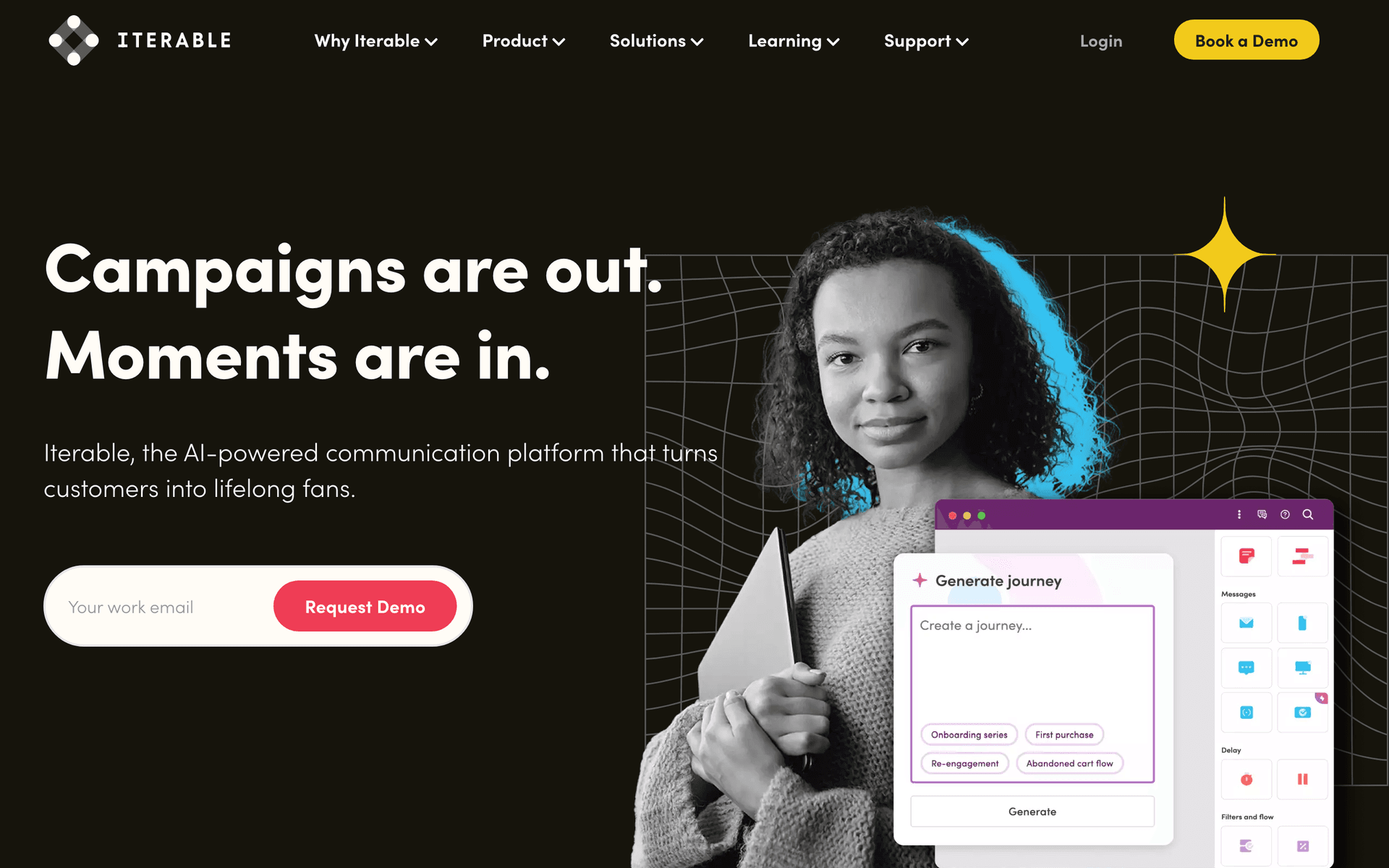
11IterableGrowth marketing platform for cross-channel enterprise engagement.Enterprise SaaS investing in cross-channel growth orchestrationCustom pricing (typically $500-3,000/month)
12Customer.ioEvent-driven lifecycle messaging for enterprise technical teams.Enterprise SaaS with technical growth teams needing flexible event-driven automation$100/month base, enterprise plans custom
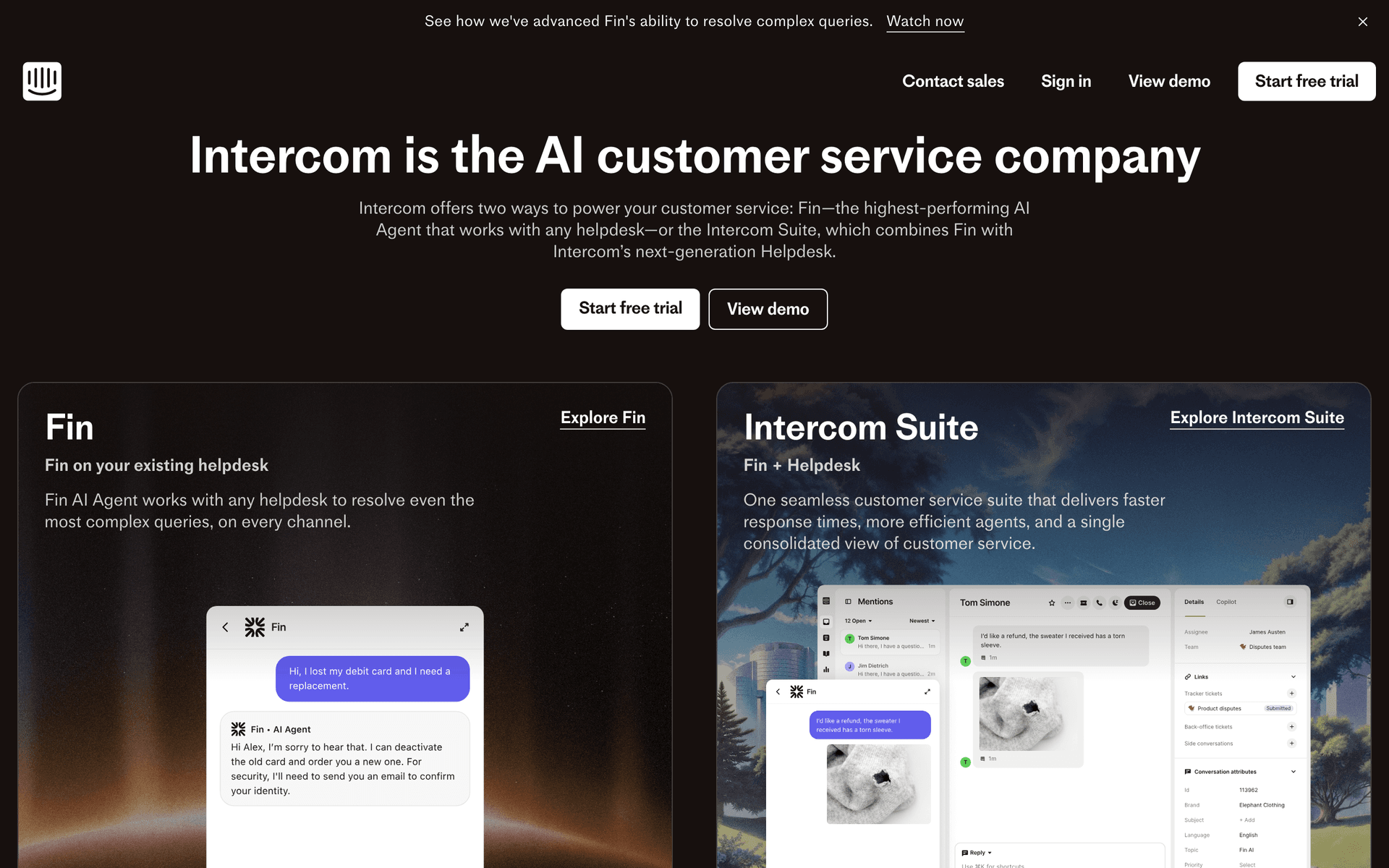
13IntercomEnterprise customer messaging platform with support and marketing.Enterprise SaaS where customer success and marketing coordinate on account communicationFrom $74/month, enterprise plans custom
14OrttoCDP with marketing automation and analytics.Enterprise SaaS building a data-driven lifecycle marketing infrastructureFrom $99/month, enterprise custom
15VeroBehavioral email platform with API-driven personalization.Enterprise SaaS wanting live account data injected into behavioral email sequencesFrom $99/month
16PostmarkTransactional email with enterprise-grade reliability.Enterprise SaaS needing contractual-grade transactional email reliabilityFrom $15/month for 10,000 emails
17EnchargeSaaS marketing automation with behavioral segmentation.Enterprise SaaS at SMB/mid-market scale needing SaaS-specific automation below enterprise pricingFrom $79/month for 2,000 subscribers
18UserlistEmail automation for B2B SaaS with company-level tracking.Enterprise SaaS managing company accounts needing account-aware lifecycle automationFrom $149/month for up to 5,000 users
19ResendDeveloper-first email API with React Email.Enterprise SaaS engineering teams building custom enterprise notification and reporting emailsFree for 3,000 emails/month, then $20/month
Our Top Pick for Enterprise SaaS
#1
Sequenzy

Email marketing with event-driven automation and native payment integrations for SaaS.

Visit
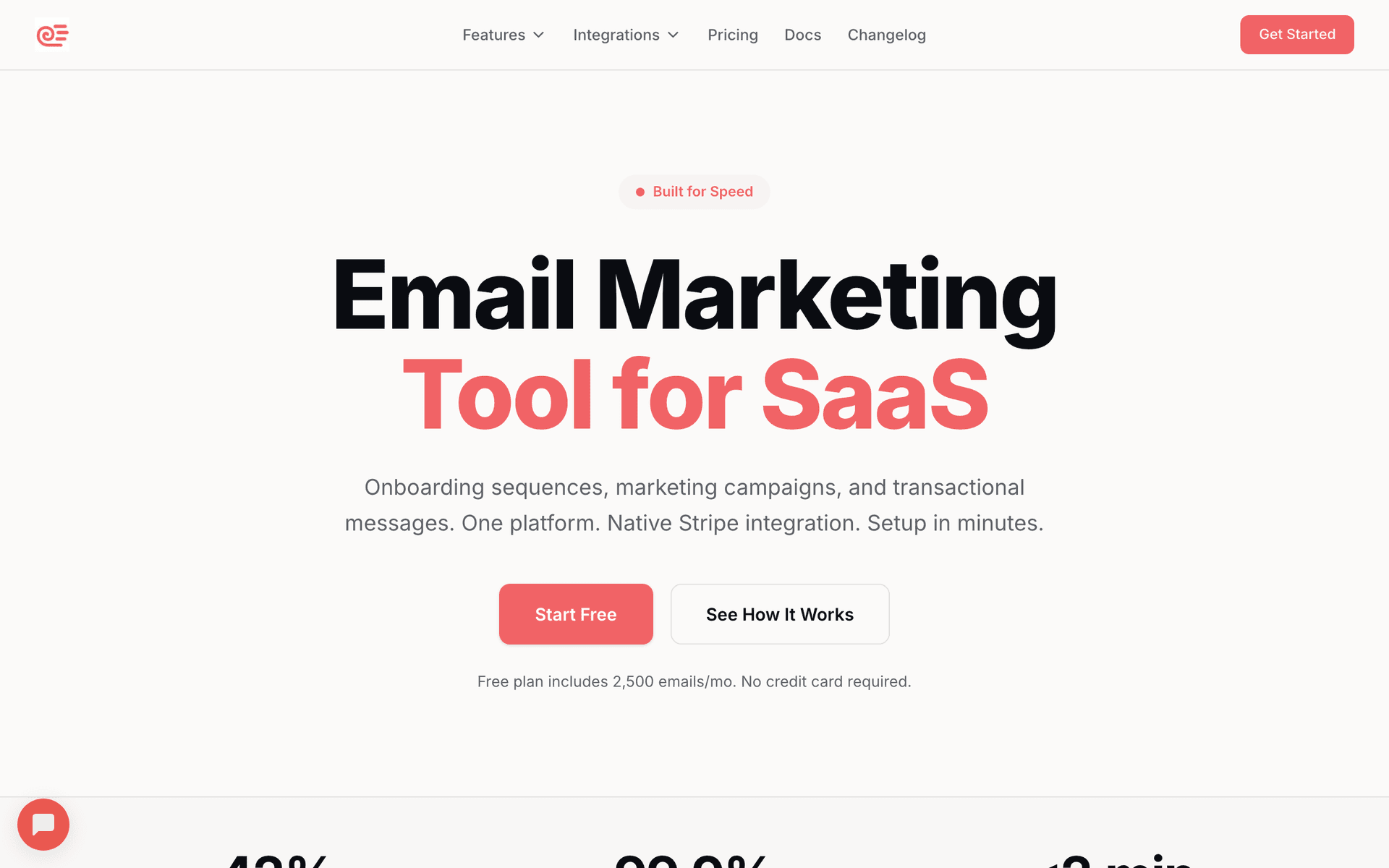
Sequenzy dashboard screenshot

Sequenzy handles enterprise SaaS communication well because the event-driven system tracks actions at both user and account levels. When a new department starts using your product, trigger department-specific onboarding. When account usage grows past plan thresholds, trigger expansion sequences to the account champion. The native Stripe integration is where Sequenzy differentiates most sharply - enterprise billing events like upgrades, seat additions, renewals, and payment failures trigger automated email flows without any custom integration work. For SaaS companies processing enterprise subscriptions through Stripe, this eliminates a significant amount of engineering work that would otherwise go into connecting your billing system to your email platform. The free tier covers up to 2,500 emails per month, which is useful for testing flows before scaling. At $29 per month for 50,000 emails, the pay-per-email model keeps costs predictable even as your user base grows - you pay for communication, not for contacts sitting in your database. The AI sequence builder generates complete enterprise lifecycle flows (onboarding, adoption, renewal, expansion) in minutes, which is genuinely useful when you need to create role-specific paths for multiple customer segments. The platform is newer, which means enterprise-specific features like SSO compliance reporting and native account hierarchy modeling are not yet available. For teams that need those features today, HubSpot or Customer.io are stronger options.

Best for
Enterprise SaaS wanting event-driven account automation with billing integration
Pricing
Free up to 2,500 emails/mo, then $19/mo (unlimited contacts)

Pros

  • Event-driven triggers for account and user actions
  • Native Stripe integration for enterprise billing
  • AI sequence builder for lifecycle flows
  • Pay per email keeps costs predictable

Cons

  • Newer platform, less enterprise track record
  • No native account hierarchy modeling
  • Template library still growing
#2
HubSpot

Enterprise CRM and marketing platform.

Visit
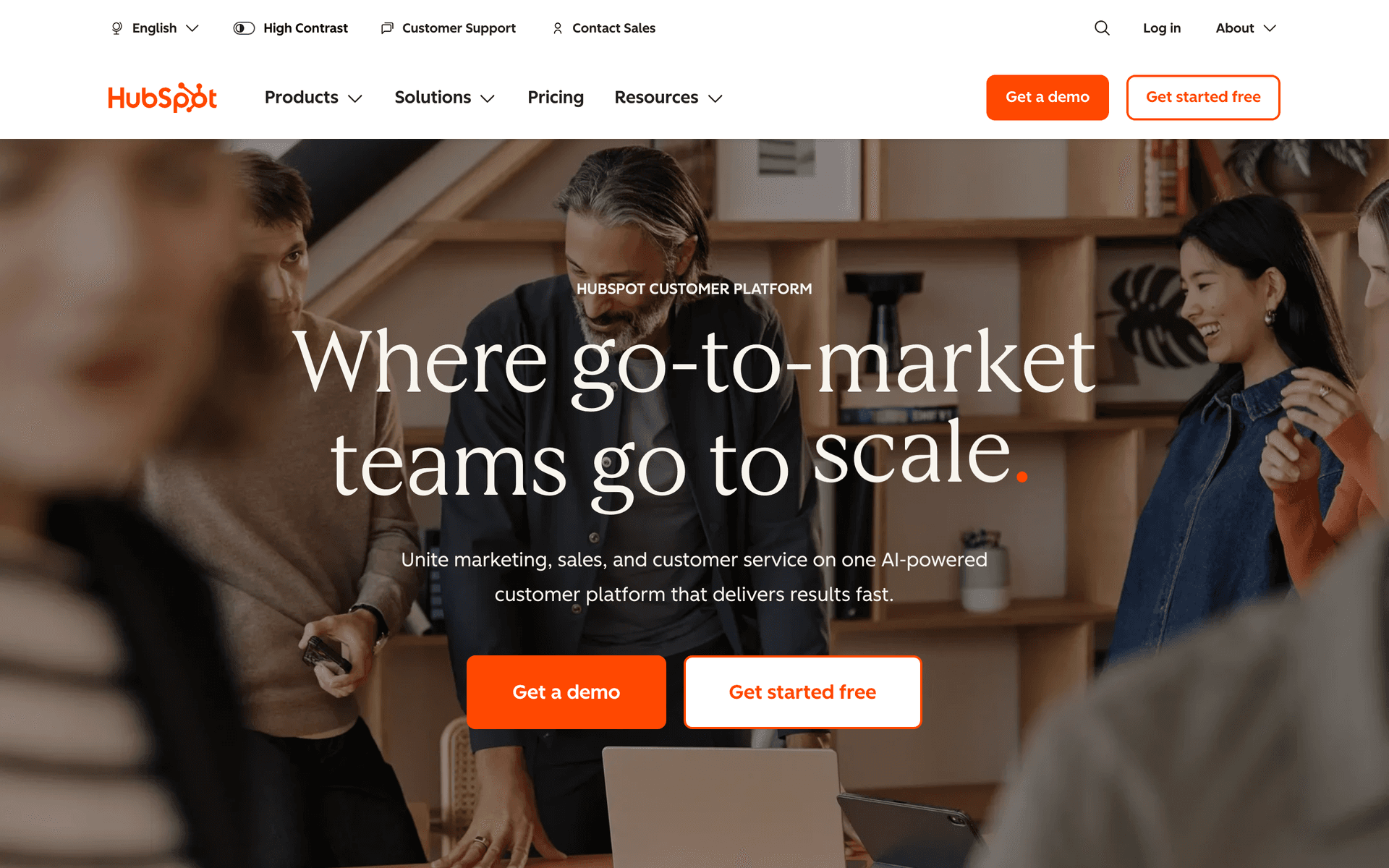
HubSpot dashboard screenshot

HubSpot is the enterprise standard for account-based SaaS communication because the CRM natively models complex account hierarchies. Parent companies, child companies, and associated contacts with defined roles create a data model that maps to how enterprise SaaS actually works. You can build automation that targets the VP of Engineering at the parent company with expansion content while simultaneously onboarding individual contributors at a subsidiary - all from the same platform. Marketing automation handles ABM campaigns with account-level scoring, lead qualification by buying committee role, and multi-touch attribution that shows which emails influenced which deal stage transitions. The integration ecosystem covers enterprise tools like Salesforce, Slack, Jira, and Gainsight. For enterprise SaaS with dedicated sales, marketing, and customer success teams, HubSpot provides the most complete infrastructure. The price tag is substantial though - Marketing Hub Enterprise starts at $3,600 per month, and you will likely add Sales and Service hubs, pushing total costs well above $6,000 per month before per-contact overage charges.

Best for
Enterprise SaaS with dedicated sales, marketing, and customer success teams
Pricing
Free CRM, marketing hub from $800/month

Pros

  • Complete enterprise CRM
  • ABM campaign support
  • Multi-touch attribution
  • Large enterprise integration ecosystem

Cons

  • Very expensive
  • Complex to configure and maintain
  • Requires dedicated admins
#3
Customer.io

Event-driven messaging with advanced account segmentation.

Visit
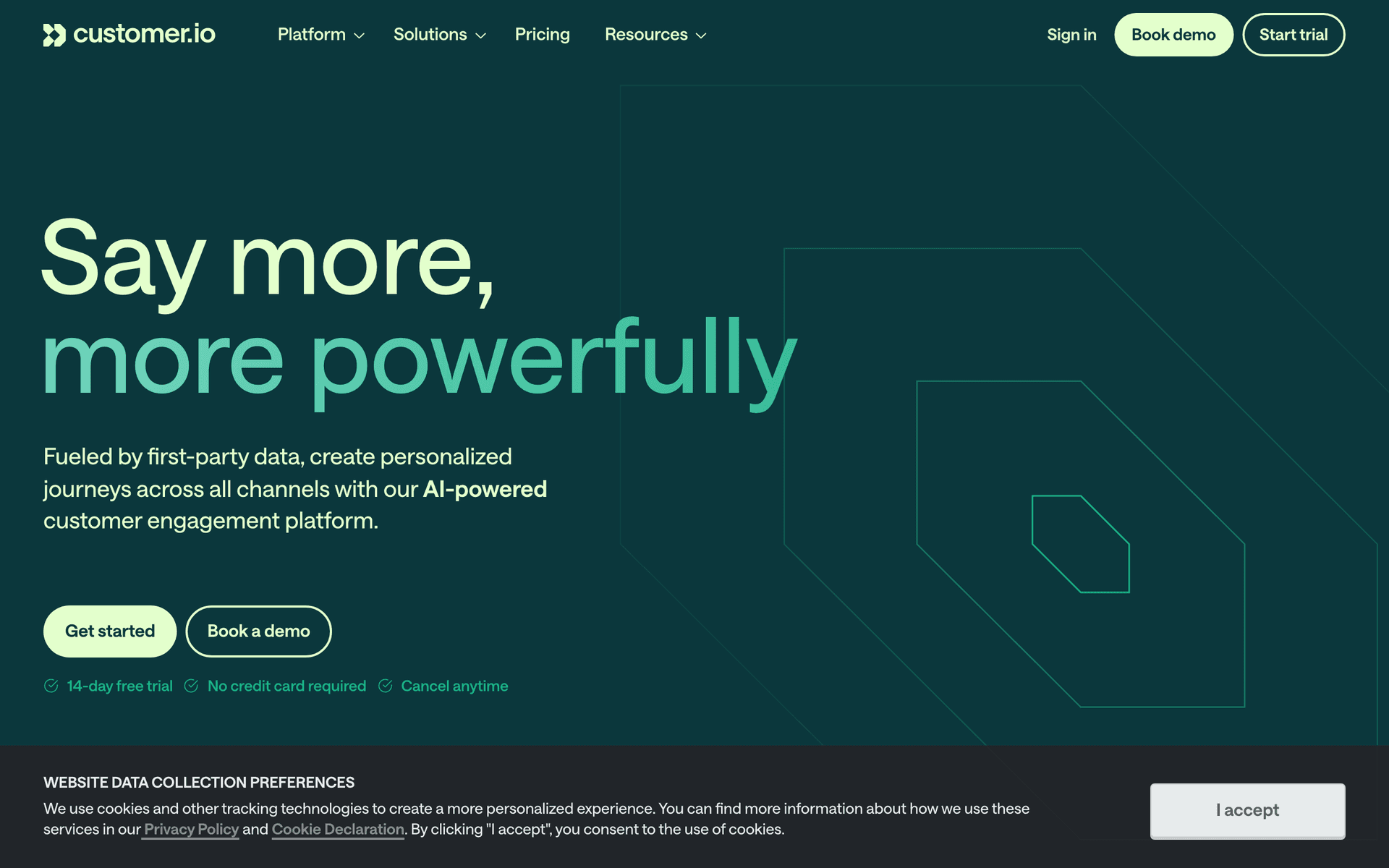
Customer.io dashboard screenshot

Customer.io provides the maximum flexibility for modeling complex enterprise account structures through its event-driven architecture. You can track any user behavior within accounts, aggregate it to account-level health scores using computed attributes, and trigger communication based on account-level dynamics rather than individual user actions. When average login frequency across an account drops below a threshold, trigger a health check email to the champion. When a new user type appears in an account, trigger role-specific onboarding. Multi-channel support handles enterprise communication across email, push, SMS, and in-app messaging. The event pipeline is flexible enough for virtually any enterprise use case you can model. The trade-off is that this flexibility requires meaningful engineering investment - you need developers to define events, build the data pipeline, and maintain the integration. Non-technical marketers will need support to create and modify workflows. For funded enterprise SaaS companies with engineering resources to invest in their communication infrastructure, Customer.io delivers unmatched flexibility.

Best for
Enterprise SaaS with technical teams and complex account communication
Pricing
$100/month for 5,000 profiles

Pros

  • Flexible account modeling
  • Multi-channel messaging
  • Advanced event pipeline

Cons

  • Requires engineering for setup
  • Per-profile pricing
  • No built-in CRM
#4
Userlist

Email automation for SaaS with company-level tracking.

Visit
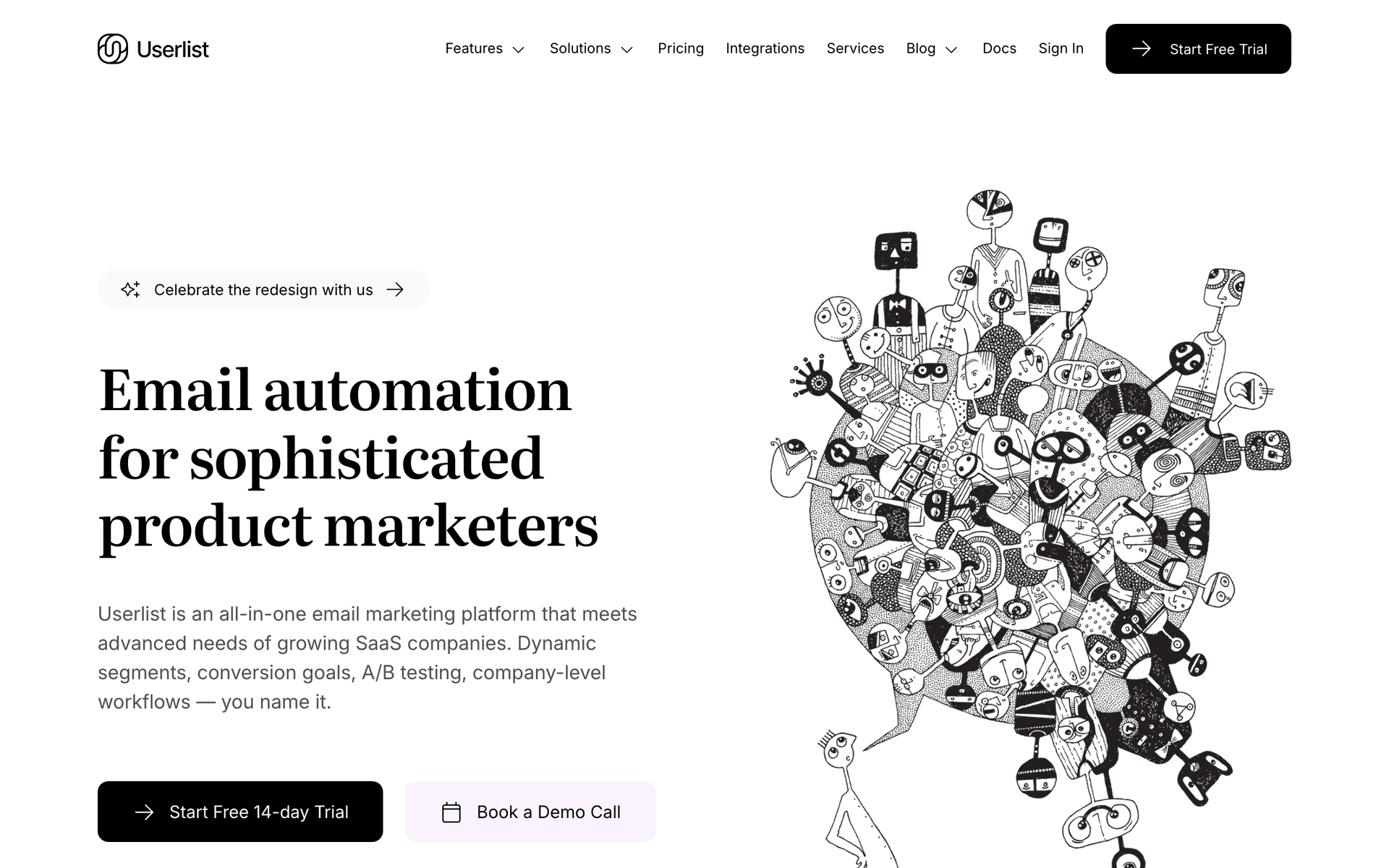
Userlist dashboard screenshot

Userlist's company-level tracking is purpose-built for the enterprise SaaS use case. The platform treats companies as first-class entities rather than forcing you to model account relationships through tags or custom fields. Track enterprise account health natively, trigger emails when account-level metrics change (usage drops, new departments activate, seat count increases), and communicate differently with different roles within the same account. The SaaS lifecycle focus means enterprise patterns like onboarding by role, adoption tracking by department, and renewal sequences work with minimal configuration rather than requiring custom engineering. The trade-off is a smaller feature set and ecosystem compared to HubSpot or Customer.io - you get depth in the SaaS use case but less breadth for general marketing. At $149 per month for 5,000 users, the price point positions it for funded SaaS companies, not bootstrapped startups.

Best for
Enterprise SaaS wanting purpose-built account-level email
Pricing
$149/month for 5,000 users

Pros

  • Native company-level tracking
  • Account health monitoring
  • SaaS-specific lifecycle patterns

Cons

  • Higher starting price
  • Email only
  • Smaller ecosystem
#5
ActiveCampaign

Advanced automation with CRM for enterprise account management.

Visit
ActiveCampaign dashboard screenshot

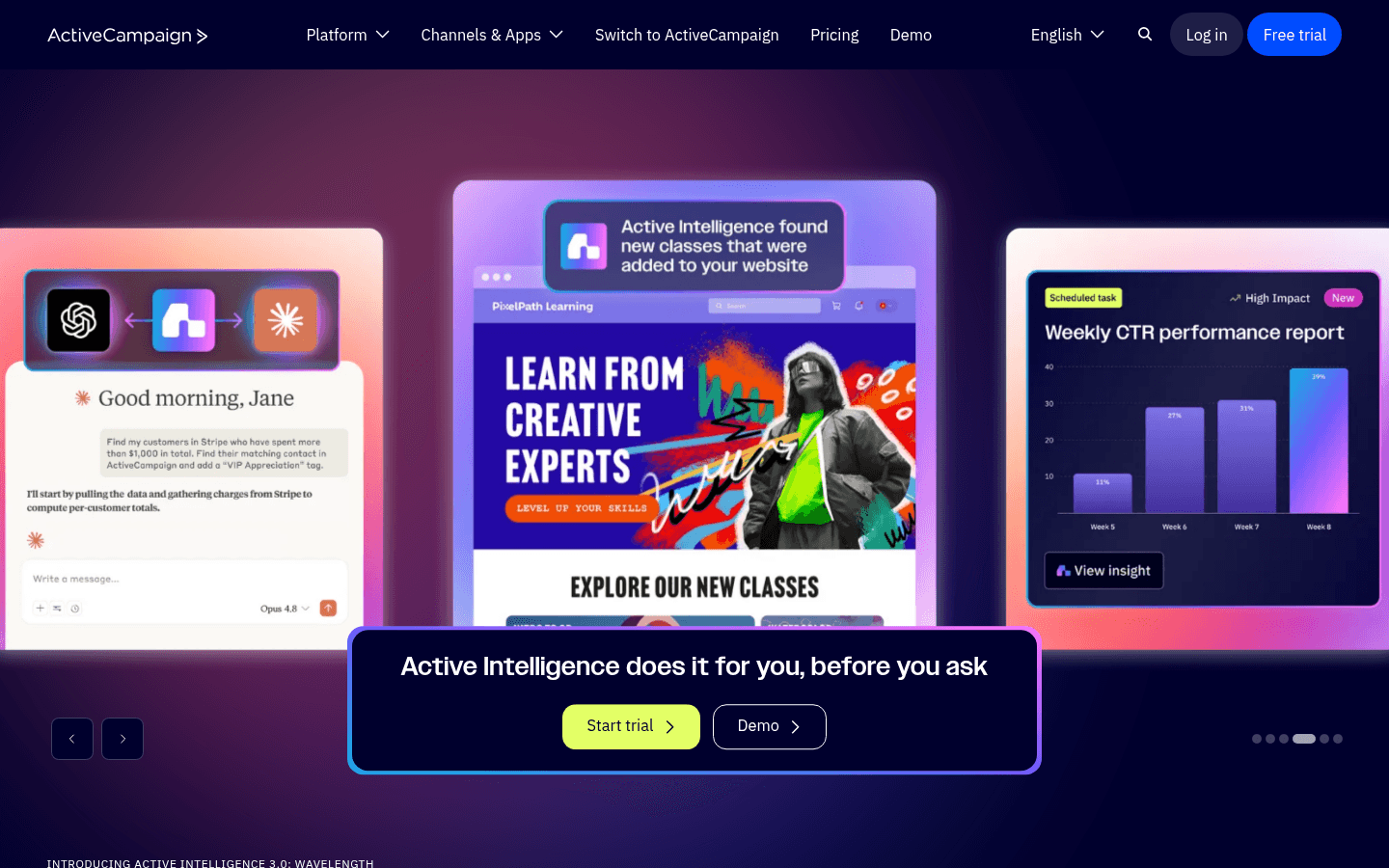
ActiveCampaign bridges the gap between HubSpot's enterprise features and more affordable tools. The CRM tracks enterprise deals and accounts with custom fields, deal stages, and pipeline visualization. The automation builder models complex enterprise journeys with conditional branching, scoring, and goal tracking. For enterprise SaaS that needs CRM and marketing automation without HubSpot's five-figure monthly price tag, ActiveCampaign delivers much of the functionality at roughly one-fifth the cost. The automation builder is genuinely best-in-class for complex conditional logic - you can build flows that branch based on account attributes, user behavior, deal stage, and engagement scores simultaneously. Where it falls short compared to HubSpot is in native account hierarchy modeling, ABM-specific features, and the depth of the integration ecosystem for enterprise tools.

Best for
Enterprise SaaS wanting CRM and automation without HubSpot pricing
Pricing
$29/month for 1,000 contacts

Pros

  • CRM for enterprise accounts
  • Powerful automation
  • More affordable than HubSpot

Cons

  • Less enterprise-grade than HubSpot
  • Per-contact pricing
  • Smaller enterprise ecosystem
#6
Salesforce Marketing Cloud

Enterprise marketing automation within the Salesforce ecosystem.

Visit
Salesforce Marketing Cloud dashboard screenshot

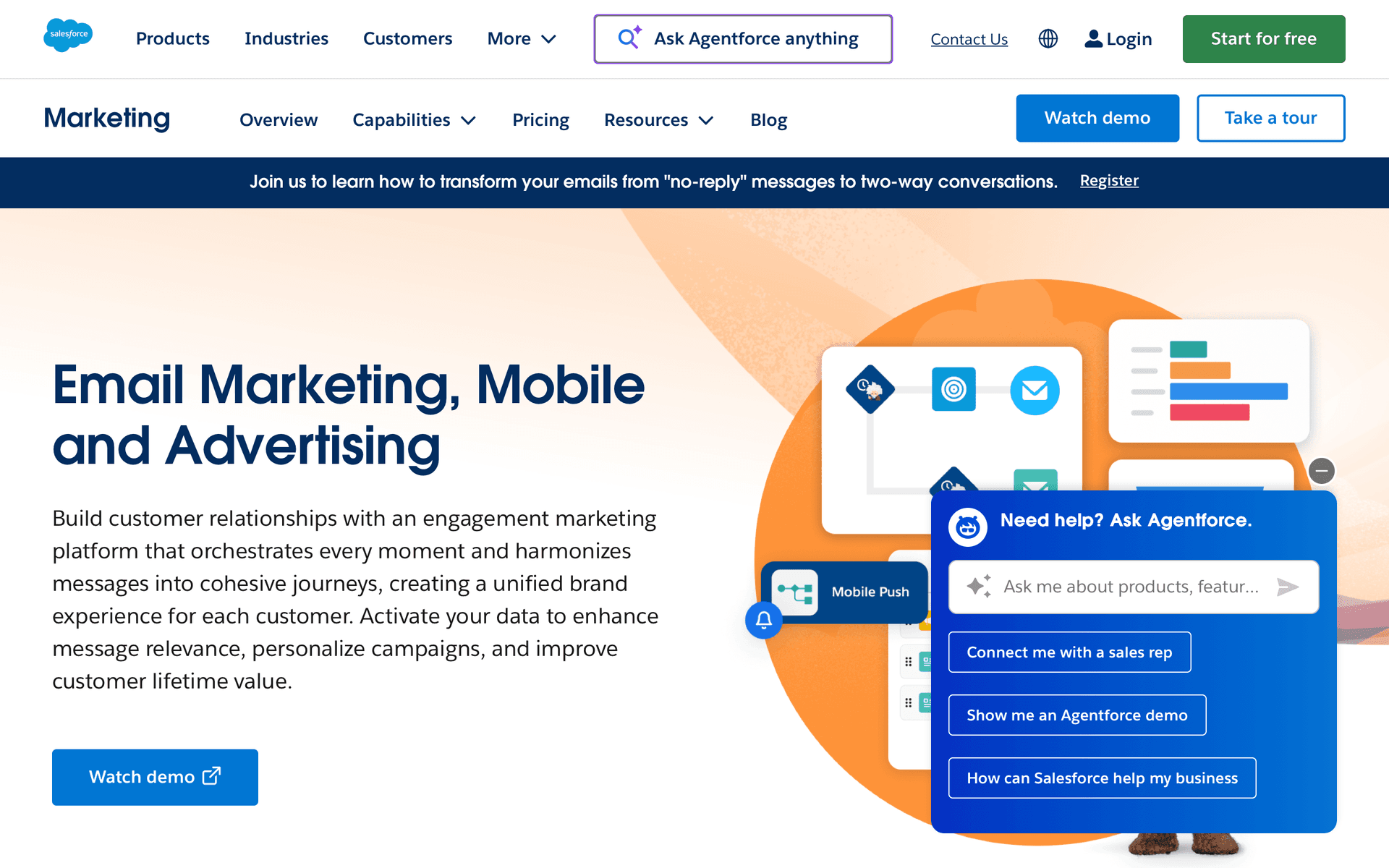
If your enterprise SaaS already uses Salesforce for CRM, Marketing Cloud integrates natively with your existing data model. Account hierarchies, opportunity data, contact relationships, and custom objects flow directly into your email automation without any integration work. You can trigger emails based on deal stage transitions, send account-specific content personalized with Salesforce data, and attribute marketing touches to revenue in the same system your sales team uses daily. For complex enterprise sales cycles with multiple stakeholders across different business units, the depth of the Salesforce integration is genuinely unmatched. The cost and complexity are significant even by enterprise standards - expect $1,250+ per month for the platform, plus $200-400 per hour for implementation consultants, plus months of configuration time. Only justified for enterprise SaaS companies deeply invested in the Salesforce ecosystem with dedicated marketing operations teams.

Best for
Enterprise SaaS deeply integrated with Salesforce CRM
Pricing
Custom pricing, typically $1,250+/month

Pros

  • Native Salesforce integration
  • Enterprise-grade compliance
  • Complex account journey modeling

Cons

  • Very expensive
  • Extremely complex to configure
  • Requires dedicated specialists
#7
Loops

Modern email platform for SaaS with event-based automations.

Visit
Loops dashboard screenshot

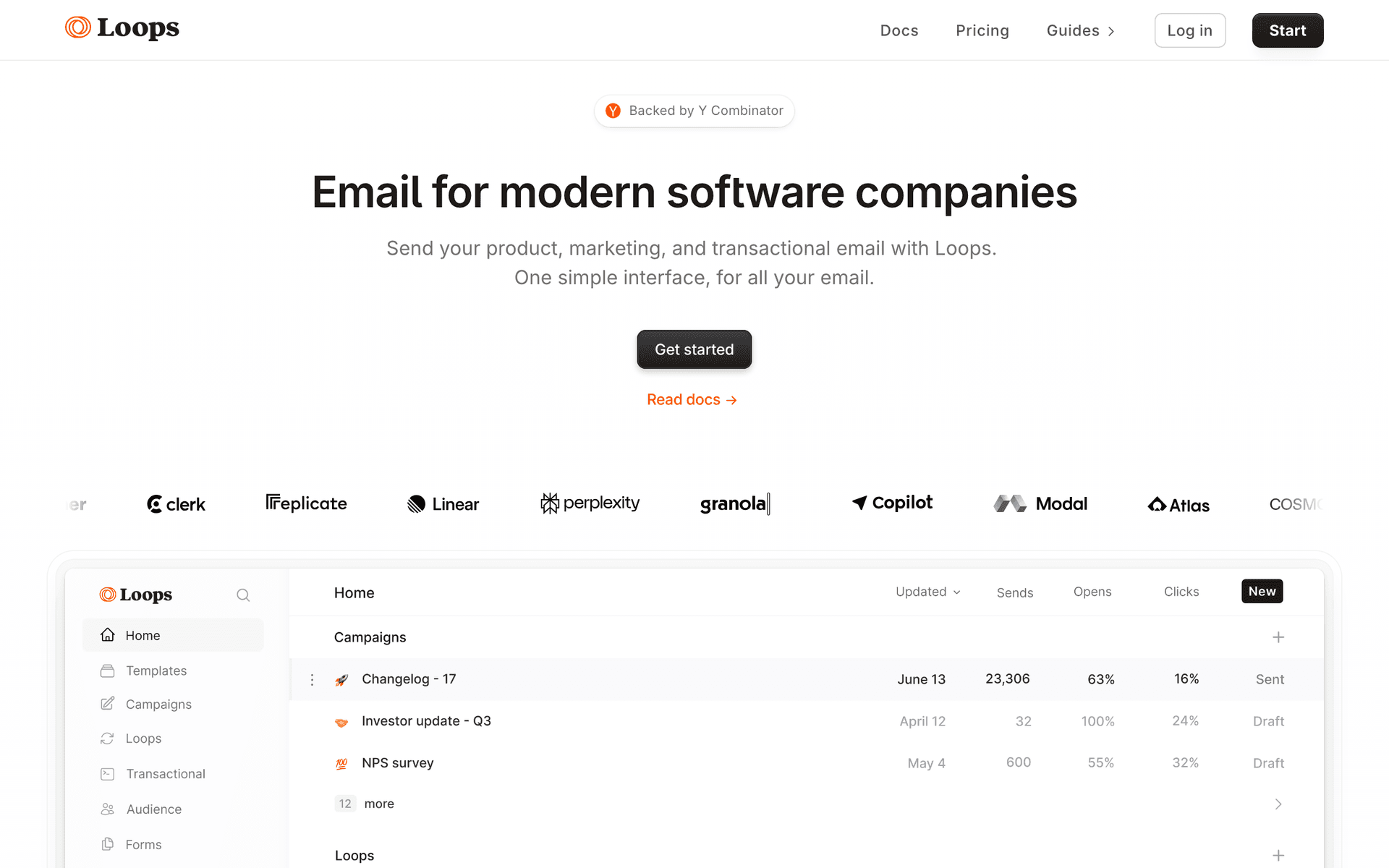
Loops can work for enterprise SaaS at the smaller end of the market, where account structures are simpler and the buying process involves fewer stakeholders. Event-based automations trigger on user actions, and the clean interface means your customer success team can manage emails without engineering support. The combined transactional and marketing email support is useful for SaaS where both are critical - onboarding emails and payment confirmations flow through the same system. For enterprise SaaS serving mid-market accounts with 50-200 employees, Loops provides a clean and affordable foundation. For true enterprise accounts with complex hierarchies, multi-department rollouts, and procurement-driven sales cycles, you will need the account modeling depth that HubSpot, Customer.io, or Userlist provide.

Best for
Enterprise SaaS serving mid-market with simpler account structures
Pricing
Free up to 1,000 contacts, then $49/month

Pros

  • Clean modern interface
  • Event-based automation
  • SaaS-focused

Cons

  • No account hierarchy modeling
  • Limited enterprise features
  • Per-contact pricing
#8
Marketo

Enterprise B2B marketing automation and account-based marketing platform.

Visit
Marketo dashboard screenshot

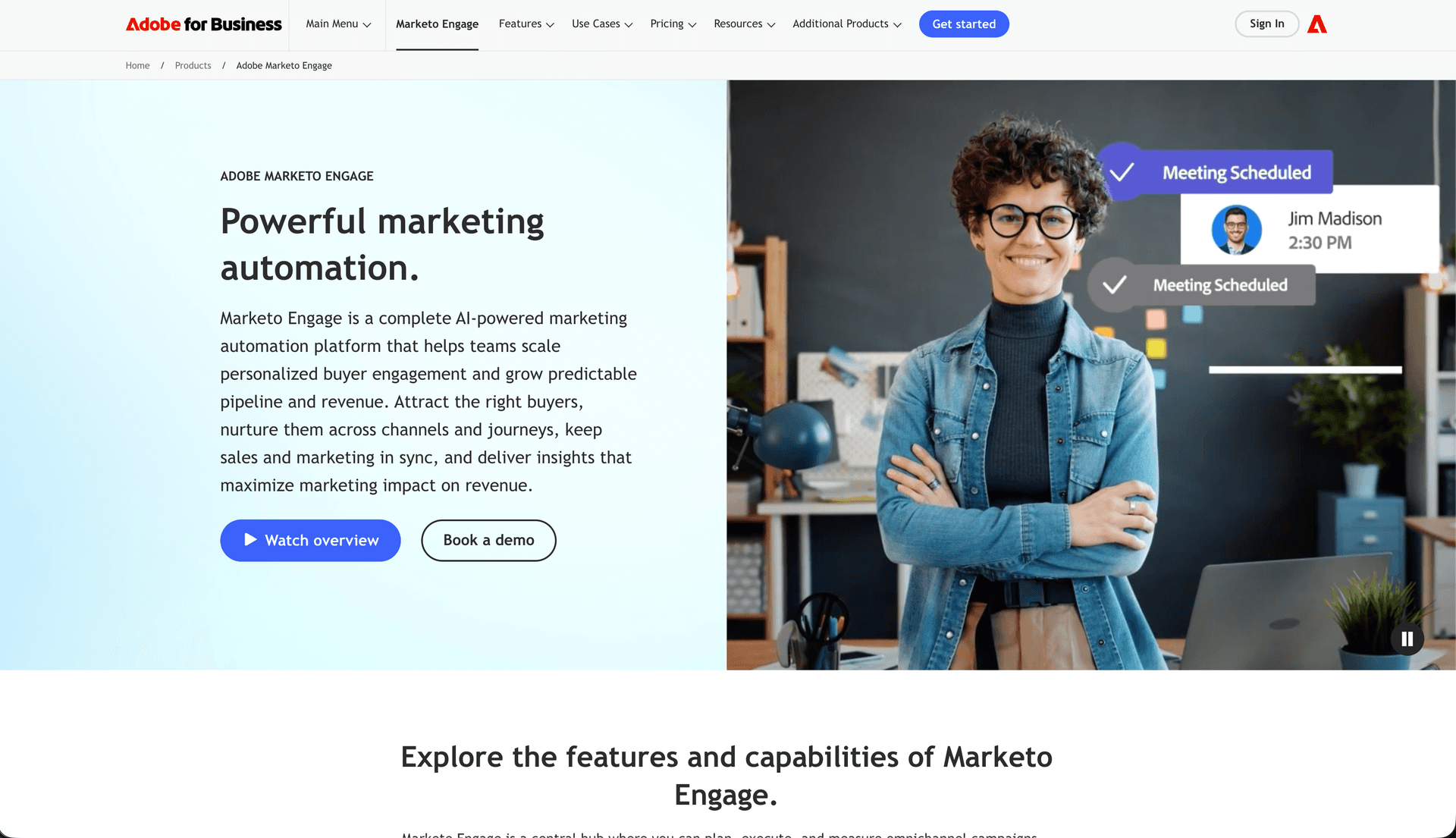
Marketo is the benchmark for enterprise SaaS marketing automation when the buying process involves multiple stakeholders, long evaluation cycles, and tight Salesforce integration. Account-based marketing features let you coordinate email campaigns targeting all decision-makers within a target account simultaneously - a critical capability when selling to enterprises where a single deal involves a VP of Engineering, a CISO, a procurement lead, and a finance approver. Revenue cycle modeling and multi-touch attribution satisfy CFO-level reporting requirements. The price and complexity are significant, but enterprise SaaS with a dedicated marketing operations function finds the investment justified.

Best for
Enterprise SaaS with ABM strategies and multi-stakeholder enterprise sales cycles
Pricing
Custom pricing (typically $1,000-$5,000+/month)

Pros

  • Best ABM for enterprise accounts
  • Multi-stakeholder coordination
  • Deep Salesforce integration

Cons

  • Very expensive
  • Requires dedicated marketing ops
  • Complex implementation
#9
Pardot

Salesforce-native B2B marketing automation for enterprise teams.

Visit
Pardot dashboard screenshot

Pardot (now Salesforce Marketing Cloud Account Engagement) is the natural choice for enterprise SaaS already on Salesforce CRM who want their marketing automation natively integrated without custom connectors. Prospect tracking, lead scoring, and engagement history sync bidirectionally with Salesforce records, giving sales reps full visibility into a prospect's email engagement history before every call. For enterprise SaaS where the sales team runs Salesforce and marketing automation must integrate at the field level, Pardot eliminates the translation layer that other tools require. Budget planning: expect $1,500+/month for the full enterprise tier.

Best for
Enterprise SaaS running Salesforce CRM wanting native marketing automation integration
Pricing
From $1,250/month for up to 10,000 contacts

Pros

  • Native Salesforce integration
  • Bidirectional data sync
  • Sales visibility into email engagement

Cons

  • Expensive
  • Requires Salesforce to be worthwhile
  • Less agile than standalone tools
#10
Braze

Enterprise customer engagement platform for multi-channel communication.

Visit
Braze dashboard screenshot

Braze handles enterprise SaaS at scale when multi-channel communication (email, push, in-app, SMS) is a strategic requirement and real-time event processing is critical. Enterprise SaaS with mobile applications alongside web products benefits from Braze's ability to coordinate notifications across both surfaces from a single workflow. The Canvas visual workflow builder supports complex multi-step journeys with real-time branching, and AI-powered personalization at enterprise scale goes beyond what mid-market tools offer. Plan for 2-3 months of implementation and a dedicated team to manage the platform.

Best for
Enterprise SaaS with mobile apps needing real-time multi-channel engagement at scale
Pricing
Custom pricing (typically $50K+/year)

Pros

  • Real-time processing for enterprise events
  • Full multi-channel orchestration
  • AI personalization at scale

Cons

  • Very expensive
  • Complex implementation timeline
  • Requires dedicated team
#11
Iterable

Growth marketing platform for cross-channel enterprise engagement.

Visit
Iterable dashboard screenshot

Iterable suits enterprise SaaS that has decided multi-channel communication is central to their customer engagement strategy and needs a platform that can handle the orchestration across email, push, SMS, and in-app without silos between channels. The AI-powered send time optimization and channel preference learning become genuinely valuable at enterprise scale where you have enough behavioral data to make these models meaningful. For enterprise SaaS with dedicated growth engineering teams and the budget for custom pricing, Iterable provides the cross-channel sophistication that mid-market tools cannot match.

Best for
Enterprise SaaS investing in cross-channel growth orchestration
Pricing
Custom pricing (typically $500-3,000/month)

Pros

  • Full cross-channel with AI optimization
  • Enterprise workflow studio
  • Strong analytics

Cons

  • Custom pricing
  • Complex to implement
  • Requires dedicated team
#12
Customer.io

Event-driven lifecycle messaging for enterprise technical teams.

Visit
Customer.io dashboard screenshot

Enterprise SaaS with dedicated lifecycle and growth engineering teams finds Customer.io's flexibility and power well-matched to the complexity of managing enterprise account communication. Account hierarchies, multi-stakeholder sequences, and event-driven triggers based on both user and company behavior are all handled natively. The data model's flexibility means you can model complex enterprise account structures without compromising the automation logic. Multi-channel support and the enterprise tier's advanced features (predictive send, custom reporting) justify the cost for enterprise teams with dedicated platform ownership.

Best for
Enterprise SaaS with technical growth teams needing flexible event-driven automation
Pricing
$100/month base, enterprise plans custom

Pros

  • Flexible enterprise data model
  • Multi-channel support
  • Advanced analytics and reporting

Cons

  • Requires technical team ownership
  • Complex to scale
  • Per-profile pricing at enterprise volumes
#13
Intercom

Enterprise customer messaging platform with support and marketing.

Visit
Intercom dashboard screenshot

Enterprise SaaS benefits from Intercom's combination of enterprise support and proactive marketing communication in one platform. Enterprise accounts expect premium support experiences - Intercom's SLA management, routing, and enterprise inbox tools deliver this while the marketing automation layer handles onboarding, adoption, and expansion communication. For enterprise SaaS where customer success and marketing both need to communicate with enterprise accounts, having both in one platform reduces coordination friction and provides a unified view of account engagement history.

Best for
Enterprise SaaS where customer success and marketing coordinate on account communication
Pricing
From $74/month, enterprise plans custom

Pros

  • Unified support and marketing
  • Enterprise SLA and routing
  • Account engagement history

Cons

  • Expensive at enterprise scale
  • Marketing automation less advanced than dedicated tools
  • Seat-based pricing
#14
Ortto

CDP with marketing automation and analytics.

Visit
Ortto dashboard screenshot

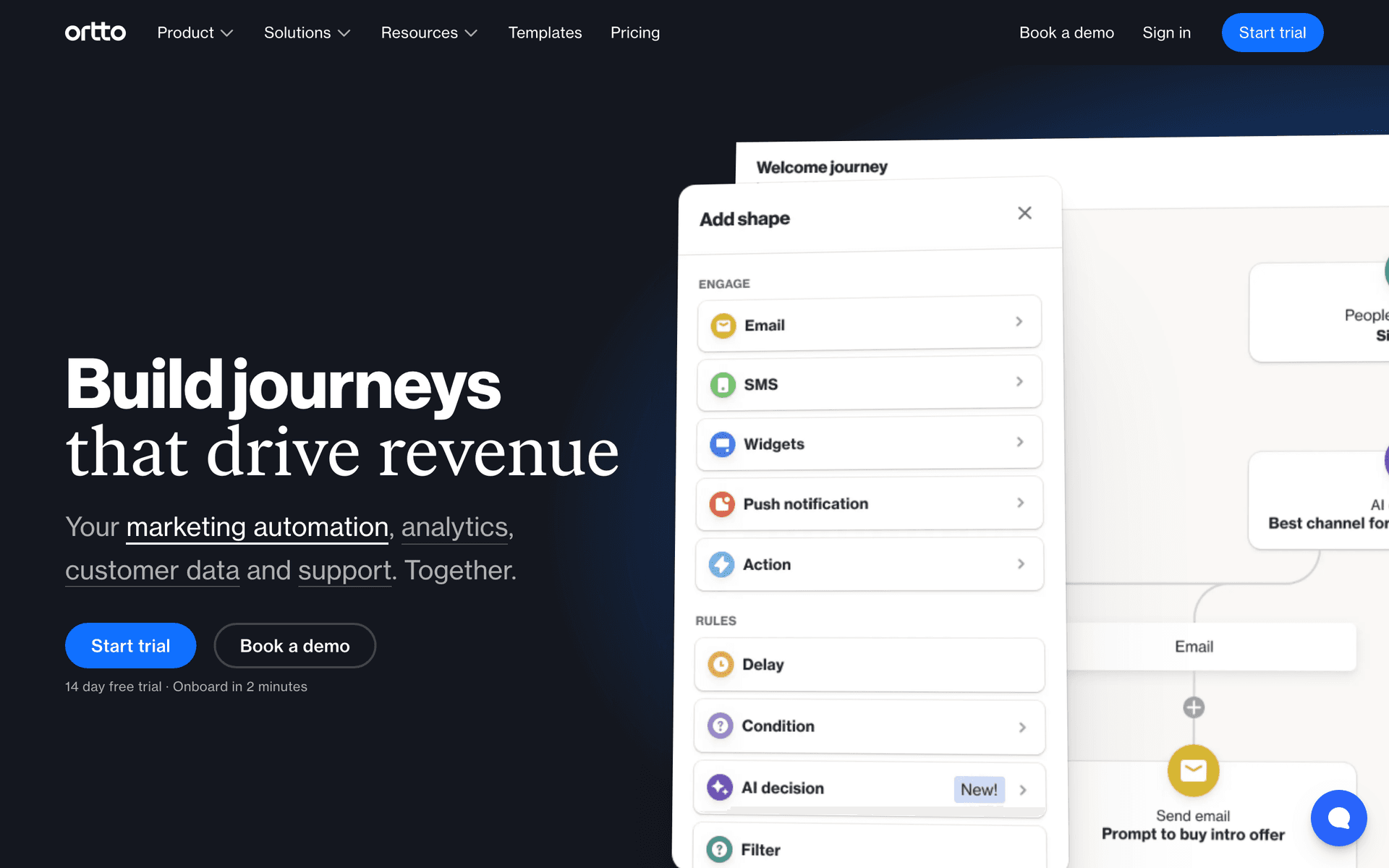
Enterprise SaaS with complex account data across multiple systems benefits from Ortto's CDP foundation that unifies user, company, and behavioral data before automation runs against it. Attribution modeling at the enterprise level answers which sequences drive expansion revenue, which campaigns prevent churn on high-value accounts, and where the email program is ROI-positive. For enterprise SaaS investing in data-driven lifecycle marketing with a dedicated analytics function, Ortto's built-in CDP eliminates the need for a separate customer data infrastructure layer.

Best for
Enterprise SaaS building a data-driven lifecycle marketing infrastructure
Pricing
From $99/month, enterprise custom

Pros

  • Built-in CDP for enterprise data
  • Multi-touch attribution
  • Analytics tied to account health

Cons

  • Complex implementation
  • Higher cost
  • Requires data engineering investment
#15
Vero

Behavioral email platform with API-driven personalization.

Visit
Vero dashboard screenshot

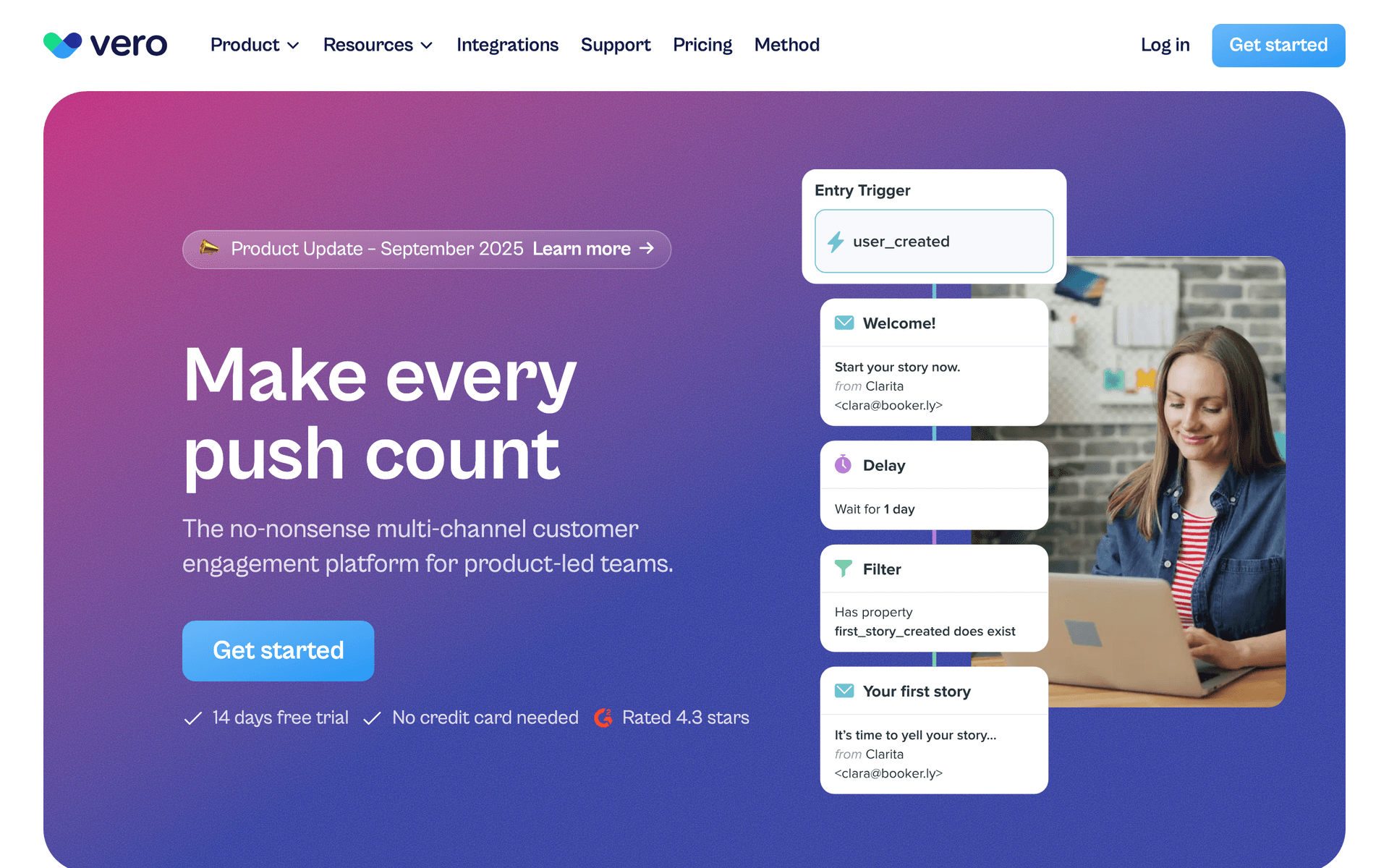
Enterprise SaaS sending high volumes of behavioral and transactional emails to large enterprise accounts finds Vero's API-driven personalization valuable for pulling live account data into emails - current contract status, recent usage metrics, upcoming renewal dates. This dynamic injection means enterprise account emails contain real data rather than generic content, which improves engagement and demonstrates attentiveness to the account relationship. Vero handles the newsletter plus behavioral combination for enterprise teams managing both product update broadcasts and individual account lifecycle sequences.

Best for
Enterprise SaaS wanting live account data injected into behavioral email sequences
Pricing
From $99/month

Pros

  • Live account data in email templates
  • Newsletter and lifecycle combined
  • Strong deliverability

Cons

  • Dated interface
  • Slower product development
  • Less modern than alternatives
#16
Postmark

Transactional email with enterprise-grade reliability.

Visit
Postmark dashboard screenshot

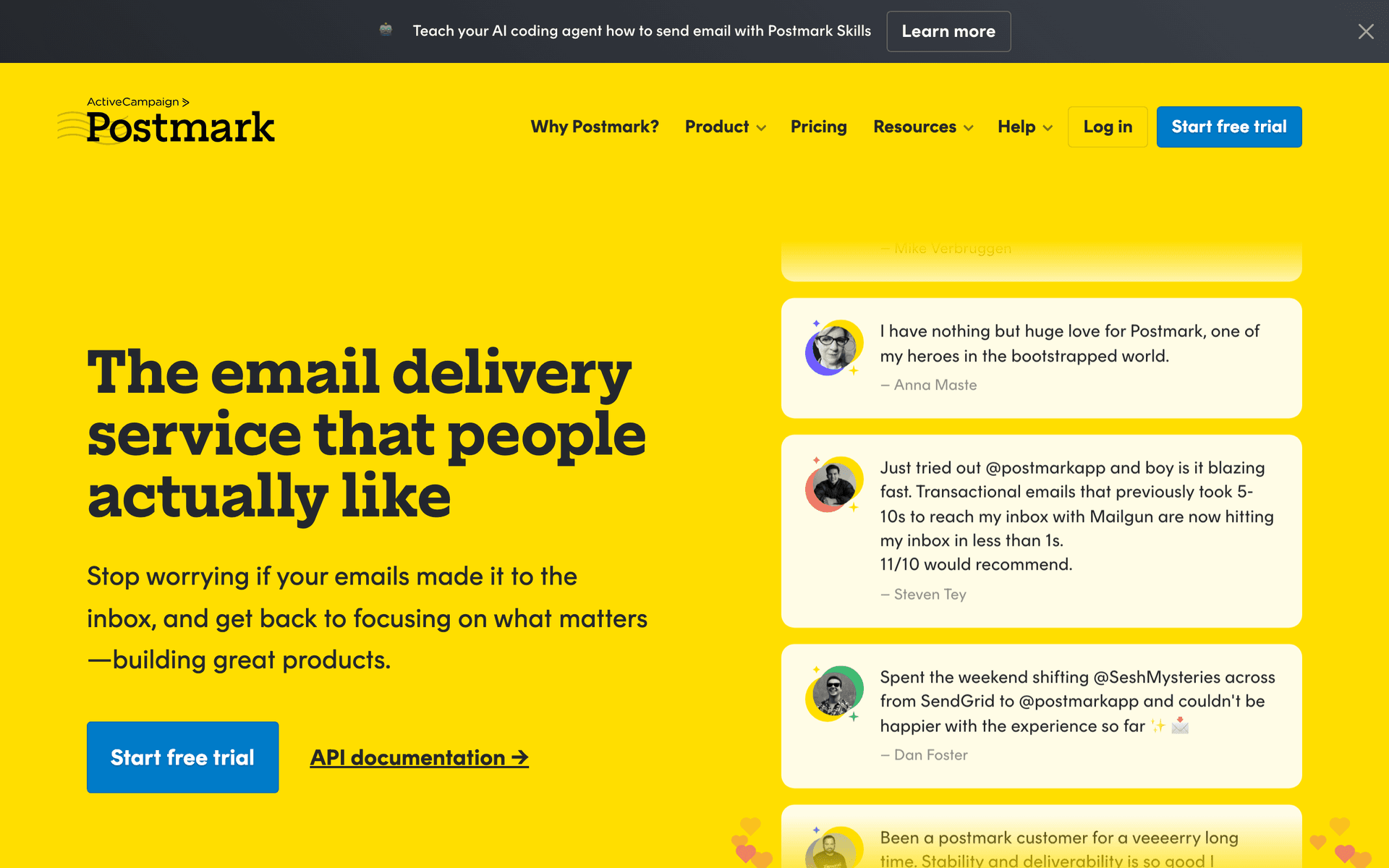
Enterprise SaaS must not miss transactional emails - a billing alert that fails to arrive, a security notification that gets delayed, or a contract renewal reminder that goes to spam creates enterprise account risk. Postmark's reliability, sub-10-second delivery, and detailed delivery analytics make it the trusted transactional layer for enterprise-facing SaaS. The enterprise support tier and SLA options satisfy procurement requirements from large customers. For enterprise SaaS where email reliability is a contractual obligation, Postmark delivers the reliability guarantees you can commit to customers.

Best for
Enterprise SaaS needing contractual-grade transactional email reliability
Pricing
From $15/month for 10,000 emails

Pros

  • Enterprise-grade reliability
  • SLA options
  • Detailed delivery proof for enterprise accounts

Cons

  • Transactional only
  • No lifecycle or marketing features
  • Need a dedicated marketing tool alongside
#17
Encharge

SaaS marketing automation with behavioral segmentation.

Visit
Encharge dashboard screenshot

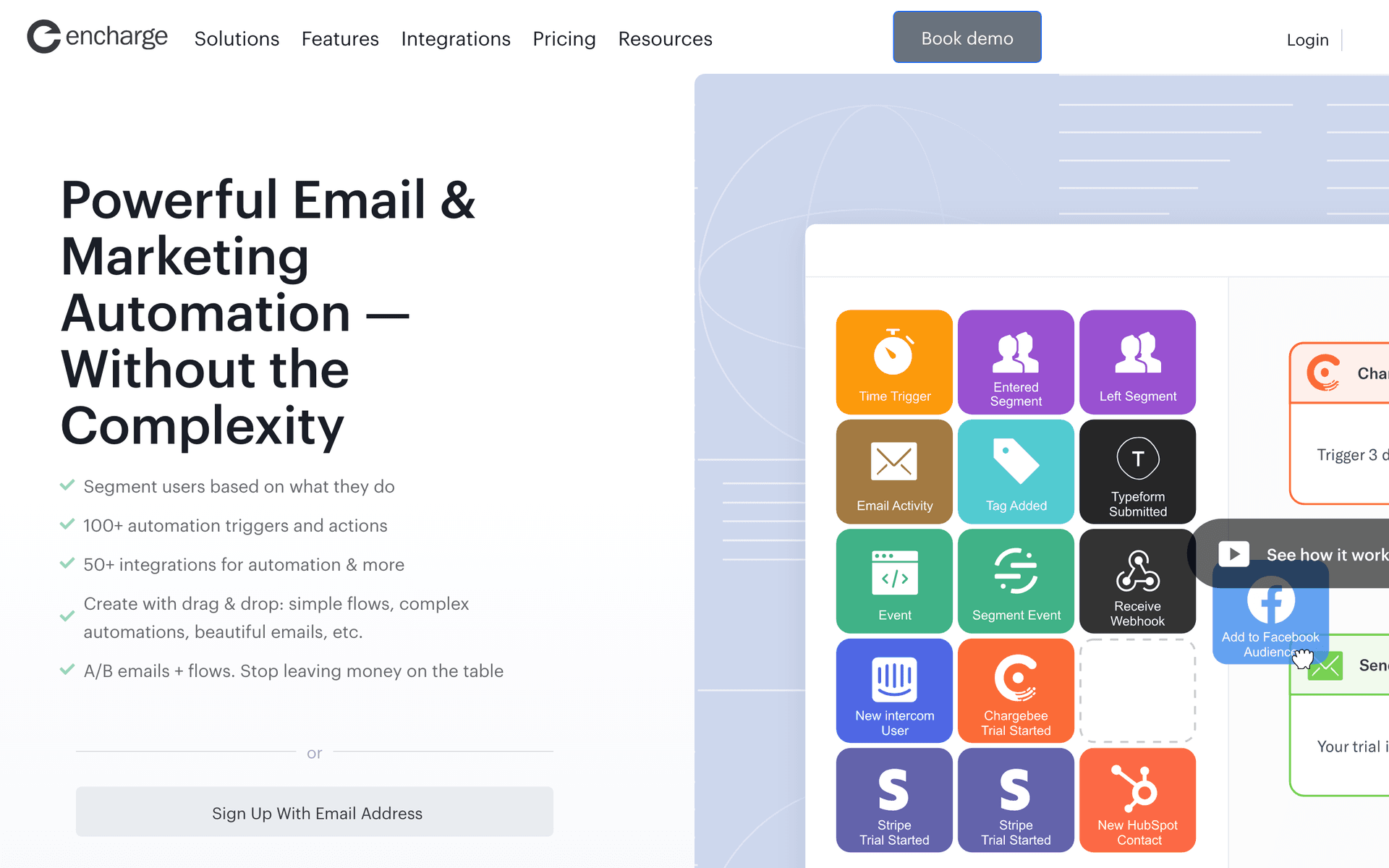
Enterprise SaaS at the smaller end of the market - teams selling to SMBs and mid-market rather than Fortune 500 - finds Encharge's combination of SaaS-specific automation and accessible pricing well-matched. The flow builder handles complex lifecycle sequences including account onboarding, expansion triggers based on seat counts, and renewal sequences timed to contract dates. Lead scoring surfaces enterprise upgrade candidates from mid-market accounts. For enterprise SaaS that has not yet grown to justify Marketo or Pardot costs, Encharge provides solid enterprise-aware automation at a realistic budget.

Best for
Enterprise SaaS at SMB/mid-market scale needing SaaS-specific automation below enterprise pricing
Pricing
From $79/month for 2,000 subscribers

Pros

  • SaaS-specific enterprise features
  • Lead scoring for expansion
  • Accessible pricing

Cons

  • Contact-based pricing
  • Less powerful than enterprise tools
  • Limited for true Fortune 500 scale
#18
Userlist

Email automation for B2B SaaS with company-level tracking.

Visit
Userlist dashboard screenshot

Enterprise SaaS selling to teams and organizations finds Userlist's company-user data model particularly well-suited. Account-level lifecycle sequences fire when a company reaches seat milestones, approaches plan limits, or has a renewal date approaching - while user-level sequences handle individual onboarding and feature adoption. For enterprise SaaS managing hundreds of accounts with distinct lifecycle stages, Userlist's account-aware automation prevents the common problem of individual users in enterprise accounts getting generic single-user emails that miss the account context.

Best for
Enterprise SaaS managing company accounts needing account-aware lifecycle automation
Pricing
From $149/month for up to 5,000 users

Pros

  • Native account lifecycle management
  • Company-level milestones and triggers
  • Clean B2B-focused interface

Cons

  • Higher starting price
  • Email only
  • Limited for complex enterprise requirements
#19
Resend

Developer-first email API with React Email.

Visit
Resend dashboard screenshot

Enterprise SaaS with engineering-owned email infrastructure uses Resend for the transactional layer where custom email templates, dynamic data injection, and API-level control are priorities. React Email templates let your engineering team build sophisticated enterprise account notification emails - contract summaries, usage reports, compliance notifications - with the precision that enterprise customers expect. The clean API handles high-volume enterprise notification sends reliably. For enterprise SaaS where product engineering owns critical transactional email flows, Resend provides the cleanest foundation.

Best for
Enterprise SaaS engineering teams building custom enterprise notification and reporting emails
Pricing
Free for 3,000 emails/month, then $20/month

Pros

  • Best developer experience for custom email
  • React Email for enterprise-grade templates
  • Reliable API at scale

Cons

  • No lifecycle automation
  • Build-it-yourself approach
  • Not for non-technical teams

Feature Comparison

FeatureSequenzyHubSpotCustomer.ioUserlist
Account hierarchy
Via events
Native
Via attributes
Native
Multi-stakeholder communication
Via tags
Advanced
Via segments
Via roles
Payment integration
Native Stripe
Via integration
No
No
Renewal automation
AI-powered
Yes
Via workflows
Yes
ABM support
No
Yes
No
No
CRM integration
No
Built-in
No
No
Free tier available
Starting price
$29/mo
$800/mo
$100/mo
$149/mo

Common Mistakes to Avoid

We see these mistakes over and over. Skip the learning curve and avoid these from day one.

Treating All Users in an Account the Same

Sending the same onboarding email to the CTO, the IT admin, and a junior analyst is a missed opportunity at best and annoying at worst. Role-based communication paths are essential for enterprise SaaS. Each persona has different goals, different feature needs, and different definitions of success.

Waiting Until Renewal to Demonstrate Value

If the first time your champion hears about ROI is 90 days before renewal, you are negotiating from a weak position. Value documentation should be ongoing throughout the contract. Quarterly business reviews via email build the renewal case incrementally.

Ignoring the Champion Transition Risk

When your internal champion leaves the company or changes roles, the account is immediately at risk. Most enterprise SaaS teams do not have automated detection for this. Monitor engagement patterns and trigger re-engagement when your champion goes dark.

Over-Communicating During Onboarding

Enterprise users are busy professionals. Sending five emails in the first three days overwhelms them. Space onboarding emails based on actual usage milestones rather than arbitrary timers. Trigger the next email when they complete the previous step, not on a fixed schedule.

Email Sequences Every Enterprise SaaS Needs

These are the essential automated email sequences that will help you grow your business and keep clients coming back.

Enterprise Account Onboarding

Enterprise contract signed and account created

Onboard the champion, admin, and end users through role-specific paths.

Immediate (to champion)
Your account is live - here is the rollout plan

Send the champion a structured rollout plan with milestones, key contacts, and a link to schedule a kickoff call.

Day 1 (to admin)
Admin setup guide: SSO, permissions, and team configuration

Technical setup guide for the IT admin. Cover SSO configuration, role permissions, and team structure. Include links to technical docs.

Day 3 (to end users)
[Champion name] set up [Product] for your team - here is how to get started

End user welcome that references who set it up and why. Quick start guide focused on daily workflows, not admin configuration.

Day 14 (to champion)
Your first 2 weeks: adoption report

Account-level adoption metrics: active users, features used, engagement trends. Give the champion data to justify the investment internally.

Renewal Preparation

120 days before contract renewal

Build the renewal case through value documentation.

120 days before renewal
Your annual value report from [Product]

Comprehensive ROI report showing usage metrics, time saved, and business outcomes. Designed to be forwarded to the budget holder.

90 days before renewal
What is new since your last renewal

Highlight features and improvements released during their contract period. Show continued investment in the product.

60 days before renewal
Let us plan for your next year with [Product]

Invitation to a renewal discussion. Include the current contract details and options for the next term.

Enterprise Email Is Relationship Management

Enterprise email is not about volume or conversion rates. It is about managing high-value relationships across complex organizations. One enterprise account might be worth more than 1,000 SMB customers combined. The email that goes to that account's executive sponsor deserves the same strategic consideration as a handwritten letter.

This does not mean enterprise email cannot be automated. It means the automation needs to feel personal and contextually relevant. A value report that uses actual account usage data and addresses the champion by name. A renewal email that references specific features their team adopted during the contract period. An onboarding sequence that adapts to the account's specific technical configuration and deployment model. The automation handles the mechanics and timing. The content feels crafted for the individual.

The Champion Is Your Lifeline

In enterprise SaaS, your internal champion is the most important person in the account. They chose your product, they advocate for it in budget meetings, they fight for headcount to manage the implementation, and they stake their professional reputation on the decision. If the champion leaves the company, loses organizational influence, or gets frustrated with your product, the account is at risk.

Email supports champions by making them look good internally. The adoption report they can forward to their VP with the subject line "Look at these results." The ROI calculation that justifies the budget request to finance. The case study that shows what is possible when the team fully adopts the platform. Every email to the champion should give them something they can use to build and maintain internal support for your product.

Detecting Champion Risk

Monitor your champion's email engagement patterns. If they consistently opened and clicked your emails for months and then suddenly go dark, that is an early warning signal. They may have left the company, changed roles, or lost interest. Set up automated alerts when champion engagement drops below historical averages and trigger proactive outreach from your customer success team. Catching a champion transition early can save an account. Discovering it during the renewal conversation is often too late.

Renewal Starts Day One

Enterprise churn prevention does not start 90 days before renewal. It starts on day one of the contract. Every email you send during the contract period either builds the case for renewal or weakens it.

Onboarding emails that get users active build adoption metrics. Feature tips that increase engagement build stickiness. Value reports that document ROI build the business case. Quarterly executive summaries keep the budget holder aware of the value being delivered.

By the time your formal renewal sequence starts at 120 days before expiration, the decision should already be clear. If you have been documenting value consistently throughout the contract, renewal is a formality with the conversation focused on expansion. If you only start communicating value at renewal time, you are negotiating from a weak position and the conversation focuses on justification.

Role-Based Communication Architecture

Enterprise SaaS accounts typically contain four distinct personas that need different communication paths:

The Executive Sponsor

This person approved the budget but rarely uses your product directly. They care about ROI, strategic value, and competitive advantage. Send quarterly strategic updates with industry benchmarks, usage summaries showing organizational impact, and thought leadership that positions your product within their broader strategy. Keep emails brief and focused on business outcomes.

The Champion

Your day-to-day advocate who manages the relationship. They need adoption data to justify the investment, feature announcements to plan rollouts, and best practice guides to drive deeper usage. Monthly communication is appropriate, with additional emails triggered by account milestones or health changes.

The Admin

The technical person who manages configuration, permissions, and integrations. They need release notes, API documentation updates, security advisories, and technical best practices. Focus on operational content that helps them do their job better. Trigger emails around platform updates and maintenance windows.

End Users

The people using your product daily. They need onboarding guidance, feature tips, and workflow suggestions relevant to their role. Space these emails based on usage milestones rather than calendar time. When a user completes one workflow, suggest the next one. When they have not logged in for a week, send a gentle re-engagement with a relevant use case.

Building Your Enterprise SaaS Email Stack

For most enterprise SaaS companies, the ideal setup includes three components:

  1. A marketing automation platform (Sequenzy, HubSpot, or Customer.io) for lifecycle sequences, newsletters, and campaign communication
  2. A transactional email service (built into your marketing platform or a dedicated service like Postmark) for account notifications, security alerts, and system messages
  3. A CRM (HubSpot built-in, Salesforce, or your own system) for account data, deal tracking, and relationship management

The key is clean data flow between these systems. Account-level events in your product should trigger both CRM updates and marketing automation flows. Payment events from Stripe should update account status across all systems. Sequenzy's native Stripe integration handles this for the marketing layer, while HubSpot provides it across CRM and marketing.

Getting Started

If you are setting up enterprise SaaS email for the first time, start here:

  1. Map your account personas (executive sponsor, champion, admin, end users)
  2. Build role-specific onboarding sequences for each persona
  3. Create a quarterly value report template that pulls account usage data
  4. Set up a renewal sequence starting 120 days before expiration
  5. Implement champion engagement monitoring with automated alerts
  6. Build expansion triggers based on usage thresholds

Start with onboarding and renewal - these have the most direct impact on revenue retention and expansion.

How We Evaluated These Tools

These platforms were evaluated based on their ability to model enterprise account hierarchies, support role-based communication within accounts, integrate with payment and CRM systems, and handle the multi-stakeholder complexity that enterprise SaaS requires. I prioritized event-driven architecture, account-level tracking, and cost-effectiveness at enterprise scale.

Frequently Asked Questions

Ready to grow your enterprise saa practice?

Start your free trial today. Set up your first email sequence in minutes with AI-powered content generation.

Related Industries

Sequenzy - Complete Pricing Guide

Pricing Model

Sequenzy uses email-volume-based pricing. You only pay for emails you send. Unlimited contacts on all plans — storing subscribers is always free.

All Pricing Tiers

  • 2.5k emails/month: Free (Free annually)
  • 15k emails/month: $19/month ($205/year annually)
  • 60k emails/month: $29/month ($313/year annually)
  • 120k emails/month: $49/month ($529/year annually)
  • 300k emails/month: $99/month ($1069/year annually)
  • 600k emails/month: $199/month ($2149/year annually)
  • 1.2M emails/month: $349/month ($3769/year annually)
  • Unlimited emails/month: Custom pricing (Custom annually)

Yearly billing: All plans offer a 10% discount when billed annually.

Free Plan Features (2,500 emails/month)

  • Visual automation builder
  • Transactional email API
  • Reply tracking & team inbox
  • Goal tracking & revenue attribution
  • Dynamic segments
  • Payment integrations
  • API, MCP, and CLI access
  • Custom sending domain

Paid Plan Features (15k - 1.2M emails/month)

  • Visual automation builder
  • Transactional email API
  • Reply tracking & team inbox
  • Goal tracking & revenue attribution
  • Dynamic segments
  • Payment integrations (Stripe, Paddle, Lemon Squeezy)
  • API, MCP, and CLI access
  • Custom sending domain

Enterprise Plan Features (Unlimited emails)

  • Visual automation builder
  • Transactional email API
  • Reply tracking & team inbox
  • Goal tracking & revenue attribution
  • Dynamic segments
  • Payment integrations
  • API, MCP, and CLI access
  • Custom sending domain

Important Pricing Notes

  • You only pay for emails you send — unlimited contacts on all plans
  • No hidden fees - all features included in the price
  • No credit card required for free tier

Contact

  • Pricing Page: https://sequenzy.com/pricing
  • Sales: hello@sequenzy.com