Updated 2026-03-15

Best Email Marketing Tools for Fintech Startups

Onboard customers, send transaction alerts, and grow your fintech with compliant, reliable email marketing.

Fintech email marketing operates under constraints that most industries do not face. Regulatory compliance means you cannot just blast promotional emails. Transaction notifications need instant, reliable delivery. Customer onboarding involves KYC, document verification, and account setup flows that require carefully sequenced communication. Here are 19 tools ranked by their fit for fintech - reliability, compliance support, and transaction-triggered automation.

TL;DR

For most fintech startups, Sequenzy is the best value - native Stripe integration automates the entire payment lifecycle, the AI generates onboarding sequences in seconds, and the free tier covers up to 2,500 emails/month. Customer.io is the strongest option for funded fintech with complex multi-step workflows and multi-channel needs. For rock-solid transactional email delivery, pair your marketing tool with Postmark.

Why Fintech Startups Need Email Marketing

Regulated Customer Communication

Financial services require specific disclosures, terms updates, and regulatory notifications. Your email tool needs to handle these alongside marketing communication without mixing streams.

Transaction Notifications

Payment confirmations, transfer alerts, and balance updates need instant, reliable delivery. Users trust your fintech with their money - they expect timely communication.

Complex Onboarding Flows

Fintech onboarding involves identity verification, document uploads, and account setup. Email sequences guide users through each step and recover those who drop off mid-process.

Trust Building

Financial products require high trust. Educational email sequences about security features, insurance coverage, and regulatory protections build confidence in your platform.

Fintech Startups Email Marketing Benchmarks

Know these numbers before you start. They'll help you set realistic goals and pick the right tool.

25-35%
Average Open Rate

Fintech emails see 25-35% open rates. Transaction notifications and security alerts approach 50%+ because of their importance. Marketing emails targeting active users perform better than those targeting dormant accounts.

3-6%
Average Click Rate

Click rates of 3-6% are typical for fintech. Onboarding completion prompts and feature education emails drive the most clicks. Include direct action links rather than generic landing pages.

Transactional: immediate. Marketing: Tuesday-Thursday, 10am-12pm
Best Send Time

Transactional emails must send immediately upon trigger. Marketing emails perform best during business hours mid-week. Onboarding nudges should send based on user behavior timing, not calendar schedules.

40-60% with email recovery sequences
Onboarding Completion Rate

Fintech startups with behavior-triggered onboarding recovery sequences see 40-60% completion rates, compared to 25-35% for those relying on basic welcome drips. Each recovered signup represents significant lifetime value.

Important Tips Before You Choose

Lessons from fintech startupswho've been doing this for years. Save yourself the trial and error.

Separate transactional and marketing email streams

Transaction confirmations, security alerts, and account notifications must arrive instantly and reliably. Marketing emails can tolerate lower priority. Use separate email streams or dedicated transactional tools like Postmark alongside your marketing platform. This protects your transactional deliverability from marketing reputation fluctuations.

Build your onboarding around incomplete step recovery

Fintech has the highest onboarding drop-off in SaaS because of KYC requirements. Build email sequences that follow up on each incomplete step: verification pending, documents needed, bank account not linked. Users who are 80% through setup need a nudge, not a fresh start. These recovery emails can recapture 20-30% of abandoned signups.

Use financial value in re-engagement campaigns

Fintech re-engagement works best when you show users what they are missing financially. Show potential interest earned, fees saved, or returns generated if they were active. Financial motivation is more compelling for fintech users than feature-based re-engagement.

Prioritize trust-building in every email

Users trust your fintech with their money. Every email either builds or erodes that trust. Transaction confirmations build trust. Security alerts build trust. Spammy promotional emails erode trust. Audit your email program through the lens of trust impact.

Maintain audit trails for regulatory emails

Terms changes, privacy updates, and regulatory notifications need verifiable delivery records. Choose email tools that provide detailed delivery logs and timestamps. When a regulator asks for proof that users received a notification, you need to produce it.

19 Best Email Marketing Tools for Fintech Startups

#ToolDescriptionBest ForPricing
1SequenzyEmail marketing with native Stripe integration and event-driven automation for fintech.Fintech startups using Stripe for payments and needing event-driven automationFree up to 2,500 emails/mo, then $19/mo (unlimited contacts)
2Customer.ioPowerful event-driven messaging for technical teams.Funded fintech startups with complex onboarding and notification needs$100/month for 5,000 profiles
3LoopsModern email platform with event-based automations.Early-stage fintech wanting clean event-based emailFree up to 1,000 contacts, then $49/month
4PostmarkReliable transactional email with best-in-class deliverability.Fintech needing rock-solid transactional email delivery$15/month for 10,000 emails
5SendGridHigh-volume email infrastructure from Twilio.Fintech with high-volume transactional email needsFree for 100 emails/day, plans from $19.95/month
6ResendDeveloper-first email API.Fintech teams building custom email infrastructureFree for 3,000 emails/month, then $20/month
7ActiveCampaignAdvanced automation with CRM.B2B fintech with sales teams and complex funnels$29/month for 1,000 contacts
8BrevoAffordable marketing platform.Pre-revenue fintech on a budgetFree up to 300 emails/day, then $25/month
9MailchimpWell-known email platform.Fintech companies needing only a basic newsletterFree up to 500 contacts, then $13/month
10UserlistSaaS email automation.B2B fintech products selling to companies$149/month for 5,000 users
11ConvertKitCreator email marketing.Not recommended for fintechFree up to 10,000 subscribers, then $25/month
12HubSpotEnterprise CRM and marketing.Enterprise fintech with dedicated sales teamsMarketing hub from $50/month
13KnockNotification infrastructure.Fintech needing multi-channel transaction notificationsFree up to 10,000 messages, then $250/month
14Customer.ioEvent-driven messaging for financial products.Funded fintech companies with complex event-driven communication needs$100/month for 5,000 profiles
15IntercomCustomer messaging with email, in-app, and chat support.Consumer fintech apps needing in-app messaging and supportFrom $74/month, scales with active users
16HubSpotEnterprise CRM and marketing platform.B2B fintech companies selling to financial institutions with sales teamsFree CRM, marketing hub from $50/month
17EnchargeSaaS lifecycle automation with Stripe integration.Fintech SaaS companies with subscription billing needing lifecycle automation$99/month for 2,000 users
18ActiveCampaignAdvanced automation with CRM for B2B.B2B fintech companies with dedicated marketing teams and complex nurture needs$29/month for 1,000 contacts
19OrttoCDP and journey-based marketing automation.Fintech companies needing to unify fragmented customer data before automating$99/month for 5,000 contacts
Our Top Pick for Fintech Startups
#1
Sequenzy

Email marketing with native Stripe integration and event-driven automation for fintech.

Visit
Sequenzy dashboard screenshot

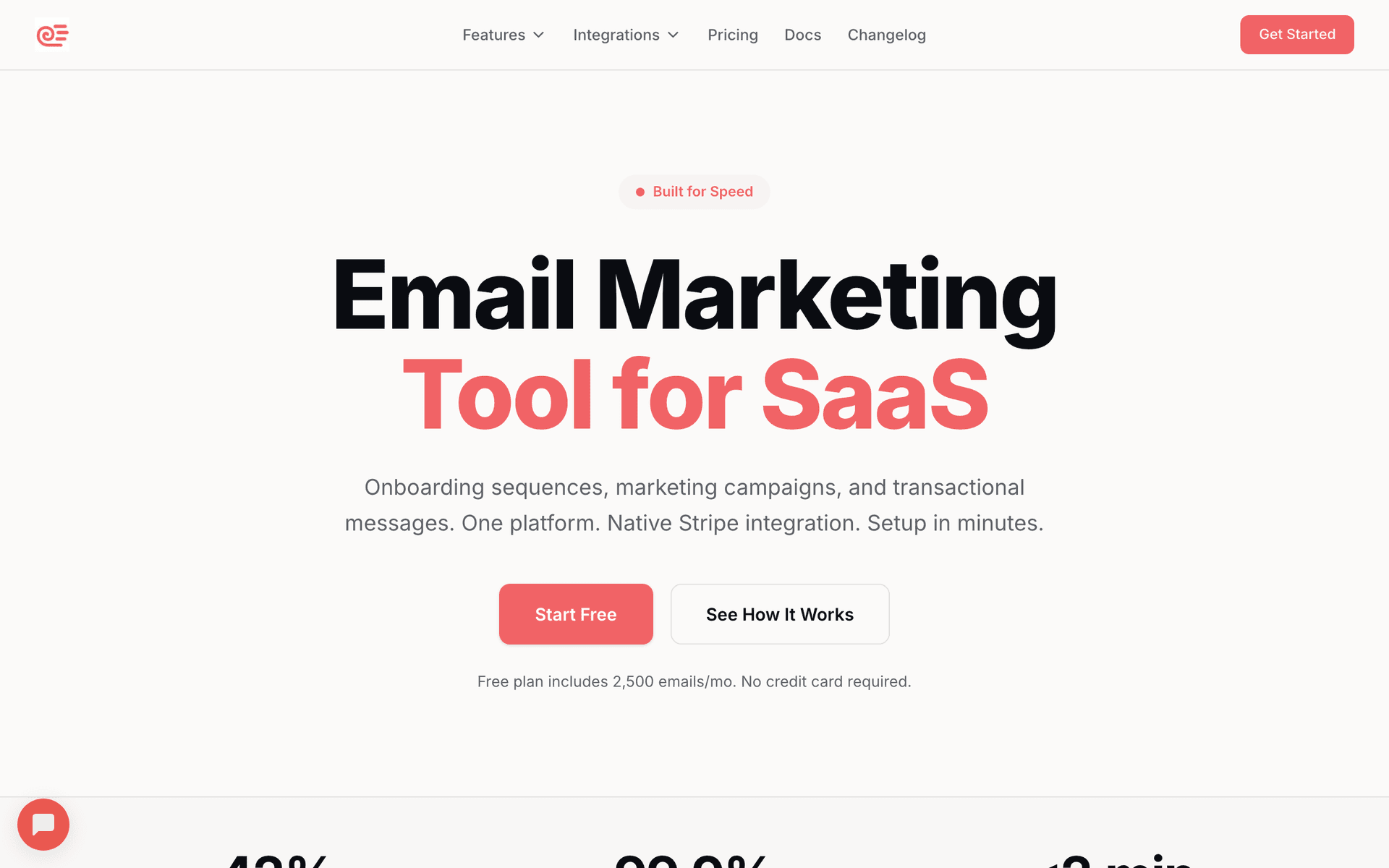
Sequenzy's native Stripe integration makes it the most practical choice for fintech startups processing payments through Stripe. Transaction events, subscription changes, payment failures, and refunds trigger emails automatically without custom integration work. The event-driven architecture handles complex fintech flows - KYC completion triggers account activation emails, deposit events trigger confirmation, usage milestones trigger upgrade offers, and payment failures trigger dunning sequences. The AI sequence builder generates complete onboarding and lifecycle flows in seconds. The free tier covers up to 2,500 emails per month for early-stage fintech. The $29/month paid plan covers 50,000 emails with unlimited contacts. Pay-per-email pricing works well for fintech with large user bases where many accounts are dormant. Being honest: Sequenzy is not built specifically for fintech and lacks compliance-specific templates. For fintech needing multi-channel (email + push + in-app) and complex conditional workflows, Customer.io is more capable.

Best for
Fintech startups using Stripe for payments and needing event-driven automation
Pricing
Free up to 2,500 emails/mo, then $19/mo (unlimited contacts)

Pros

  • Native Stripe integration for financial event triggers
  • Event-driven automation for complex fintech flows
  • AI-powered sequence generation
  • Pay per email pricing

Cons

  • Newer platform
  • No built-in compliance templates
  • No dedicated fintech features
#2
Customer.io

Powerful event-driven messaging for technical teams.

Visit
Customer.io dashboard screenshot

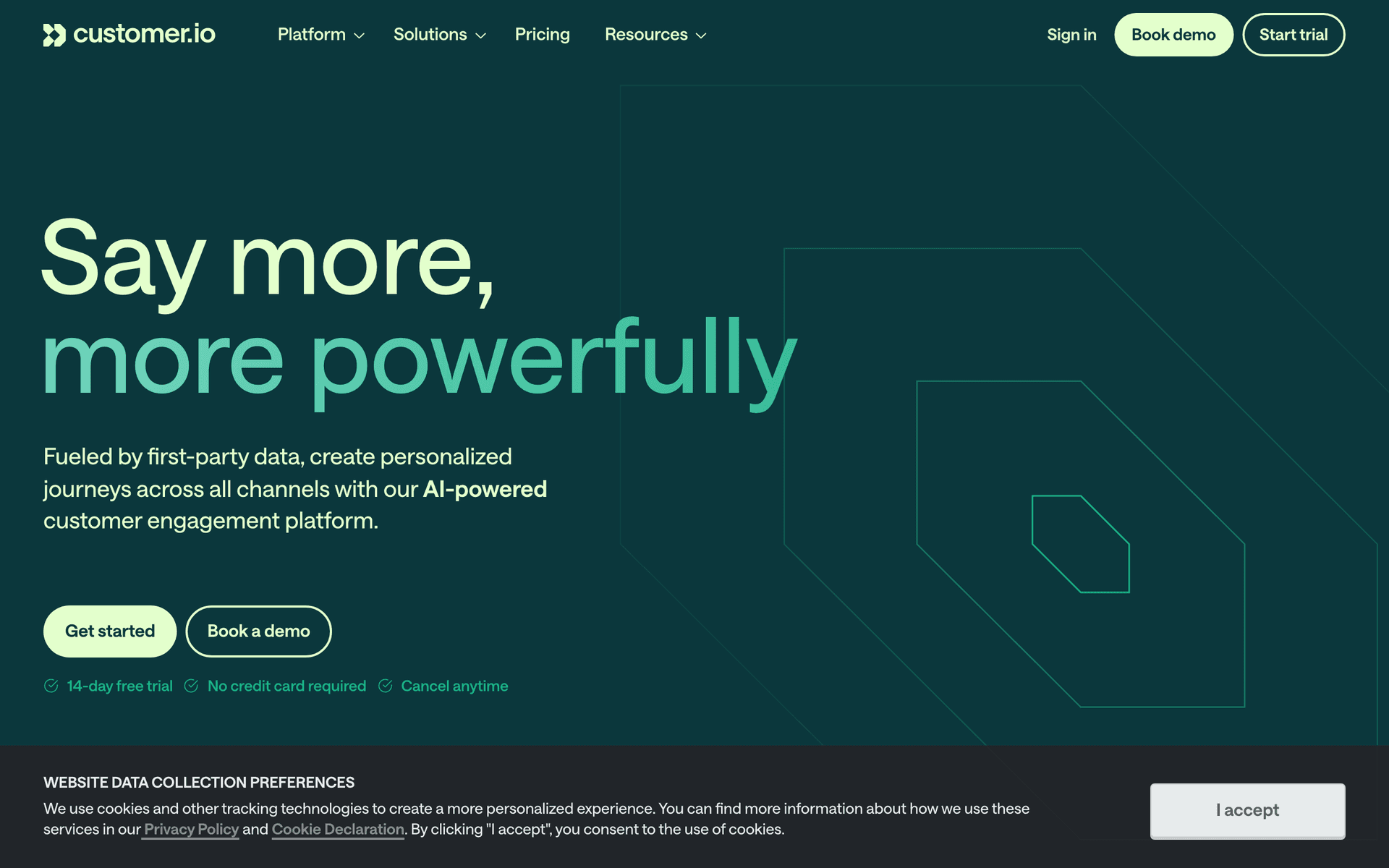
Customer.io is the strongest option for funded fintech startups with complex user journeys. The event pipeline handles multi-step onboarding flows with conditional branching based on verification status, account type, activity level, and dozens of custom attributes. Multi-channel support covers email, push, SMS, and in-app messaging - important for fintech where in-app notifications often work better for active users. Several prominent fintech companies use Customer.io. The data pipeline is flexible enough for fintech's unique combination of product usage, financial activity, and regulatory events. The price ($100/month for 5,000 profiles) is justified for funded fintech where each activated user has high lifetime value.

Best for
Funded fintech startups with complex onboarding and notification needs
Pricing
$100/month for 5,000 profiles

Pros

  • Excellent event-driven automation
  • Complex multi-step workflows
  • Multi-channel messaging
  • Used by major fintech companies

Cons

  • Expensive
  • Complex setup requiring engineering
  • No native payment integration
#3
Loops

Modern email platform with event-based automations.

Visit
Loops dashboard screenshot

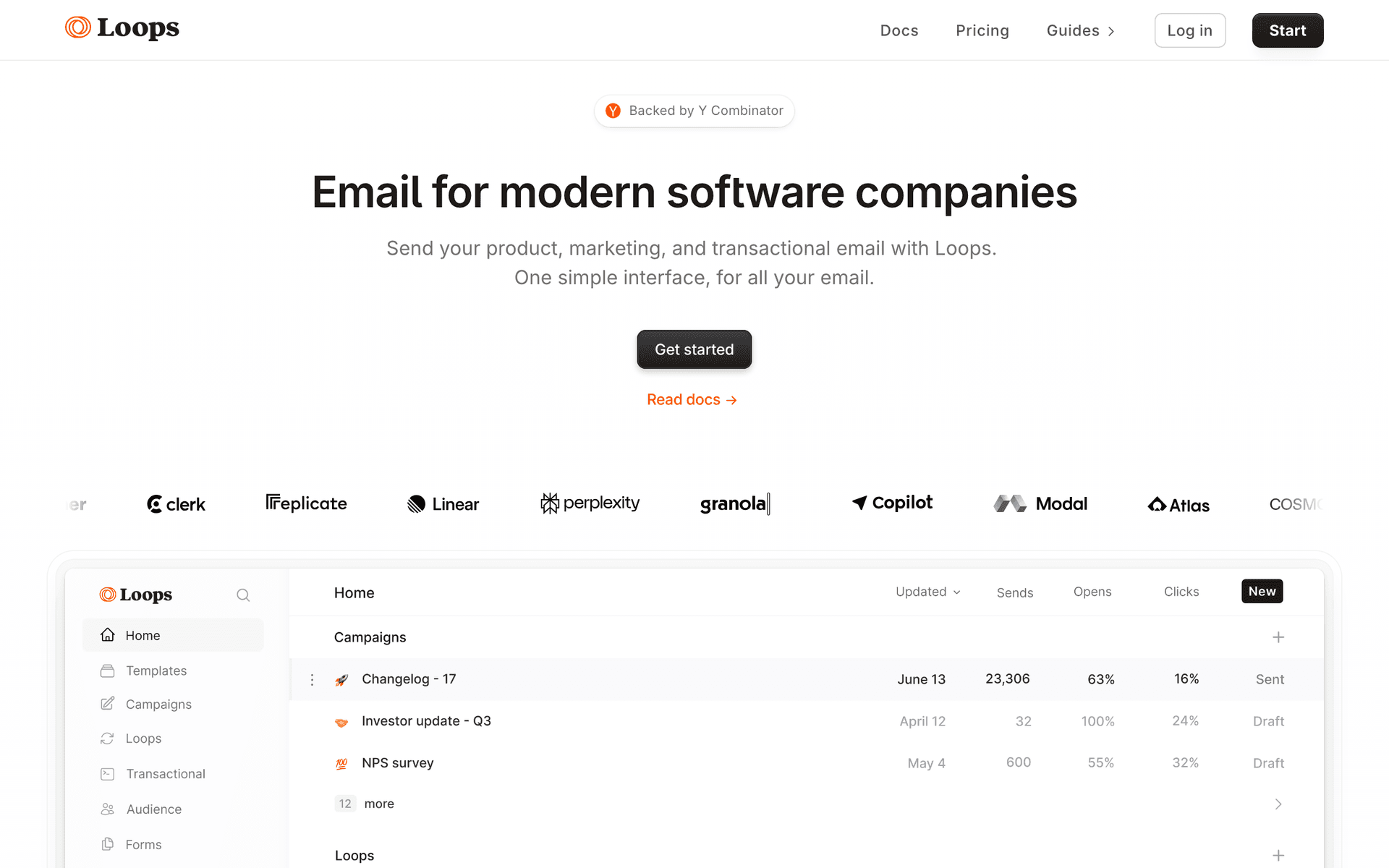
Loops offers a clean middle ground for fintech that wants event-based automation without Customer.io's complexity. Combined transactional and marketing email support is useful for fintech where both are critical. The clean interface means your growth team can iterate on onboarding sequences quickly. Per-contact pricing is the concern for fintech with large user bases.

Best for
Early-stage fintech wanting clean event-based email
Pricing
Free up to 1,000 contacts, then $49/month

Pros

  • Clean interface
  • Event-based automations
  • Transactional support

Cons

  • Per-contact pricing
  • Less powerful than Customer.io
  • No fintech-specific features
#4
Postmark

Reliable transactional email with best-in-class deliverability.

Visit
Postmark dashboard screenshot

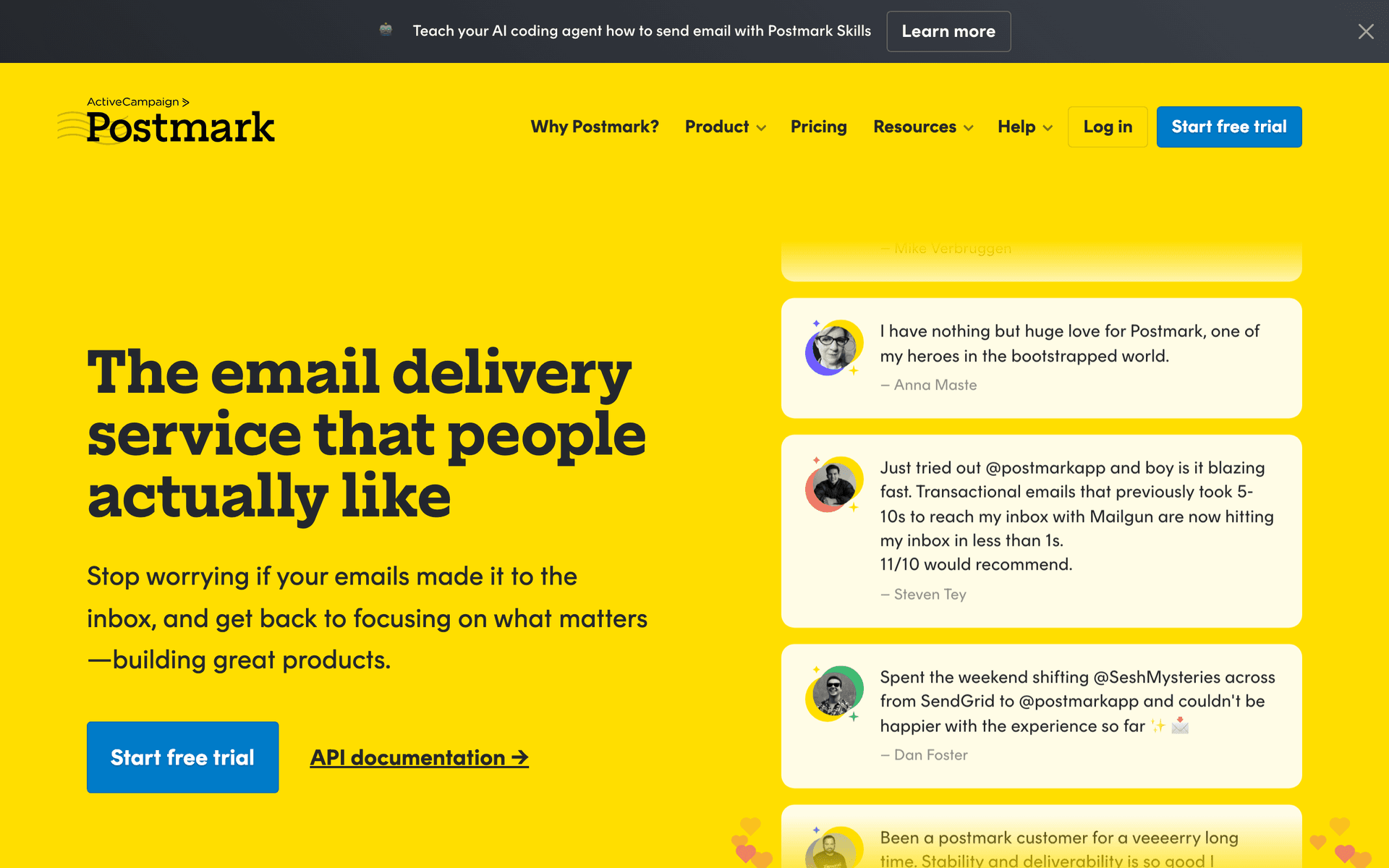
For fintech, transactional email reliability is non-negotiable. Payment confirmations, security alerts, and account notifications must arrive within seconds. Postmark delivers the fastest, most reliable transactional email in the industry. Separate message streams protect transactional delivery from marketing reputation. Not a marketing tool - pair it with Sequenzy or Customer.io for campaigns.

Best for
Fintech needing rock-solid transactional email delivery
Pricing
$15/month for 10,000 emails

Pros

  • Best deliverability
  • Fastest delivery times
  • Separate message streams

Cons

  • Not a marketing tool
  • No automation
  • No segmentation
#5
SendGrid

High-volume email infrastructure from Twilio.

Visit
SendGrid dashboard screenshot

SendGrid handles the volume that scaling fintech generates. Transaction notifications, account statements, and regulatory emails at scale. The infrastructure is battle-tested and the API is mature. Marketing features are basic, but the sending infrastructure is reliable for high volume.

Best for
Fintech with high-volume transactional email needs
Pricing
Free for 100 emails/day, plans from $19.95/month

Pros

  • Handles high volume
  • Mature infrastructure
  • Reliable delivery

Cons

  • Basic marketing features
  • Complex pricing
#6
Resend

Developer-first email API.

Visit
Resend dashboard screenshot

Resend's clean API appeals to fintech engineering teams building custom notification systems. React Email templates support dynamic content for transaction receipts and account summaries. No marketing automation - use alongside a marketing tool or build custom sequence logic.

Best for
Fintech teams building custom email infrastructure
Pricing
Free for 3,000 emails/month, then $20/month

Pros

  • Clean API
  • Developer-first
  • Good deliverability

Cons

  • No marketing automation
  • No sequence builder
#7
ActiveCampaign

Advanced automation with CRM.

Visit
ActiveCampaign dashboard screenshot

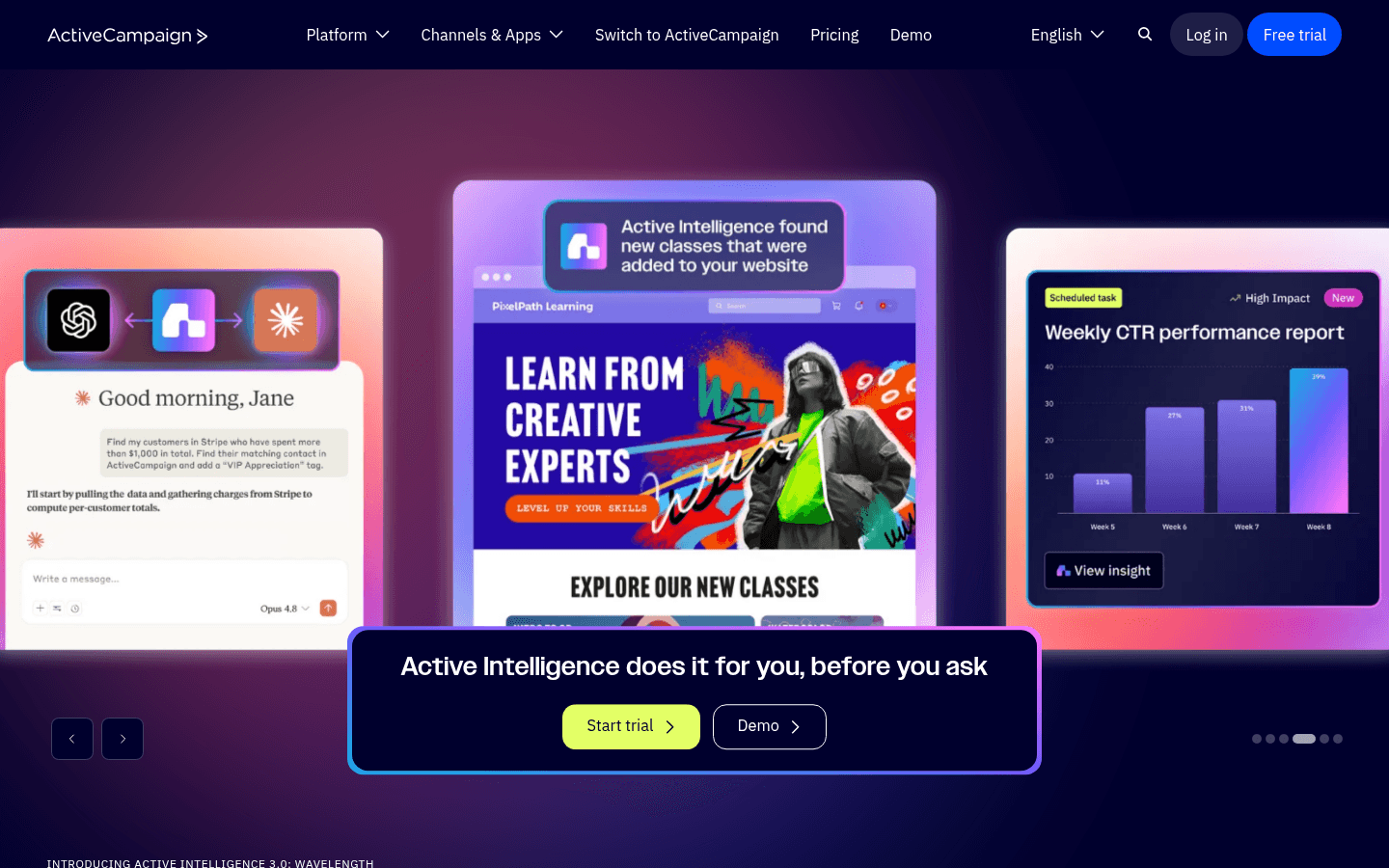
ActiveCampaign's automation builder can model complex fintech customer journeys. The CRM tracks leads through sales pipelines for B2B fintech. Not fintech-specific and the interface is complex, but the automation capability is unmatched in the mid-market.

Best for
B2B fintech with sales teams and complex funnels
Pricing
$29/month for 1,000 contacts

Pros

  • Powerful automation
  • CRM integration

Cons

  • Complex interface
  • Not fintech-focused
  • Expensive at scale
#8
Brevo

Affordable marketing platform.

Visit
Brevo dashboard screenshot

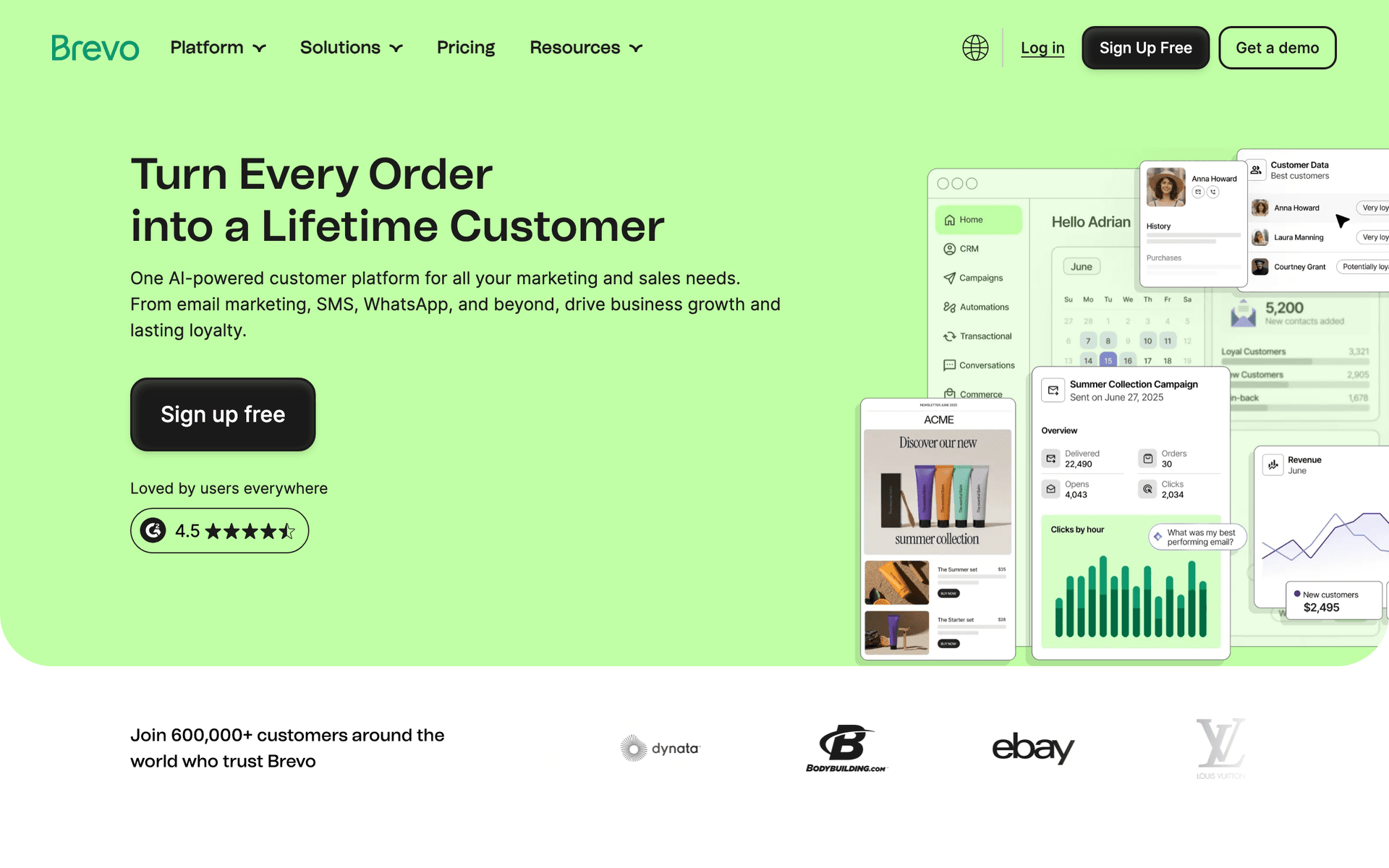
Brevo is a budget option for pre-revenue fintech. The free tier covers basic needs. Not built for fintech-specific requirements like compliance or real-time transaction triggers, but covers basic email marketing needs at minimal cost.

Best for
Pre-revenue fintech on a budget
Pricing
Free up to 300 emails/day, then $25/month

Pros

  • Affordable
  • Generous free tier

Cons

  • Not fintech-focused
  • Basic features
#9
Mailchimp

Well-known email platform.

Visit
Mailchimp dashboard screenshot

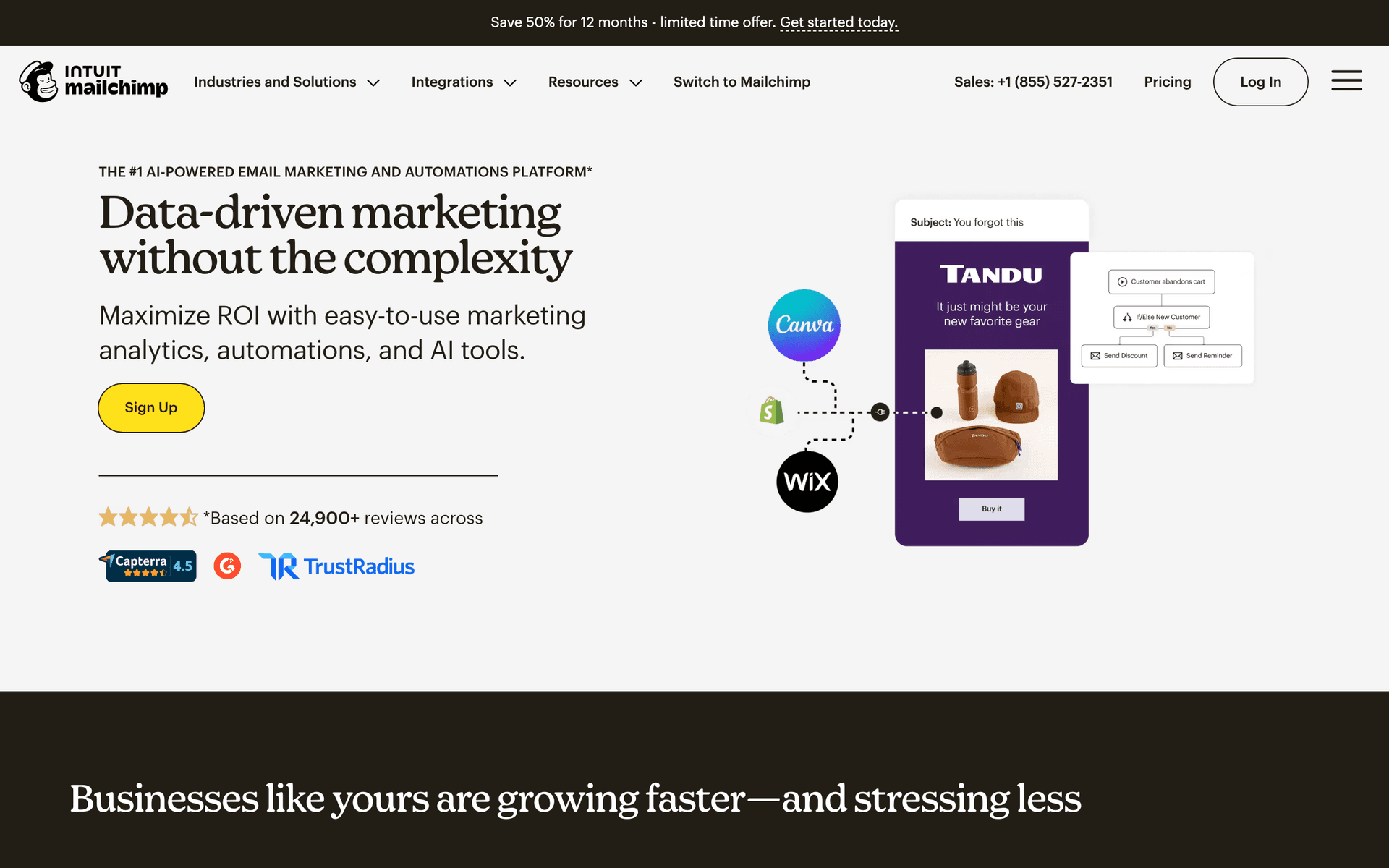
Mailchimp works for basic fintech newsletters but lacks the event-driven automation, transactional reliability, and compliance features that fintech requires for core operations. Suitable only if your email needs are limited to occasional newsletters.

Best for
Fintech companies needing only a basic newsletter
Pricing
Free up to 500 contacts, then $13/month

Pros

  • Easy to use

Cons

  • Not suitable for fintech automation
  • Per-contact pricing
#10
Userlist

SaaS email automation.

Visit
Userlist dashboard screenshot

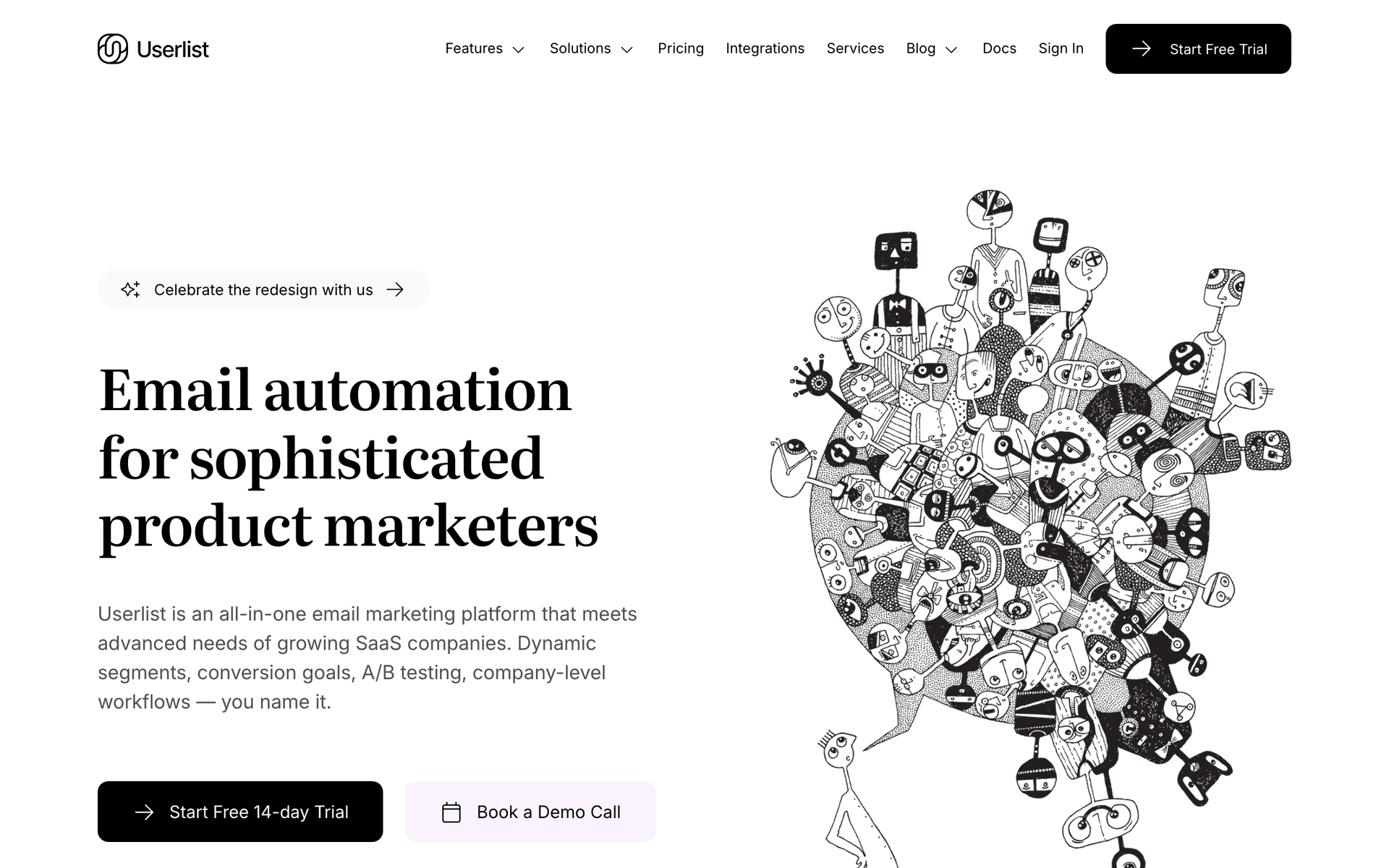
Userlist's SaaS focus and company-level tracking work for B2B fintech targeting teams. Track adoption by company, department, and individual user. Behavior-based automation handles onboarding flows well.

Best for
B2B fintech products selling to companies
Pricing
$149/month for 5,000 users

Pros

  • Company tracking
  • SaaS-focused

Cons

  • Expensive
  • Smaller ecosystem
#11
ConvertKit

Creator email marketing.

Visit
ConvertKit dashboard screenshot

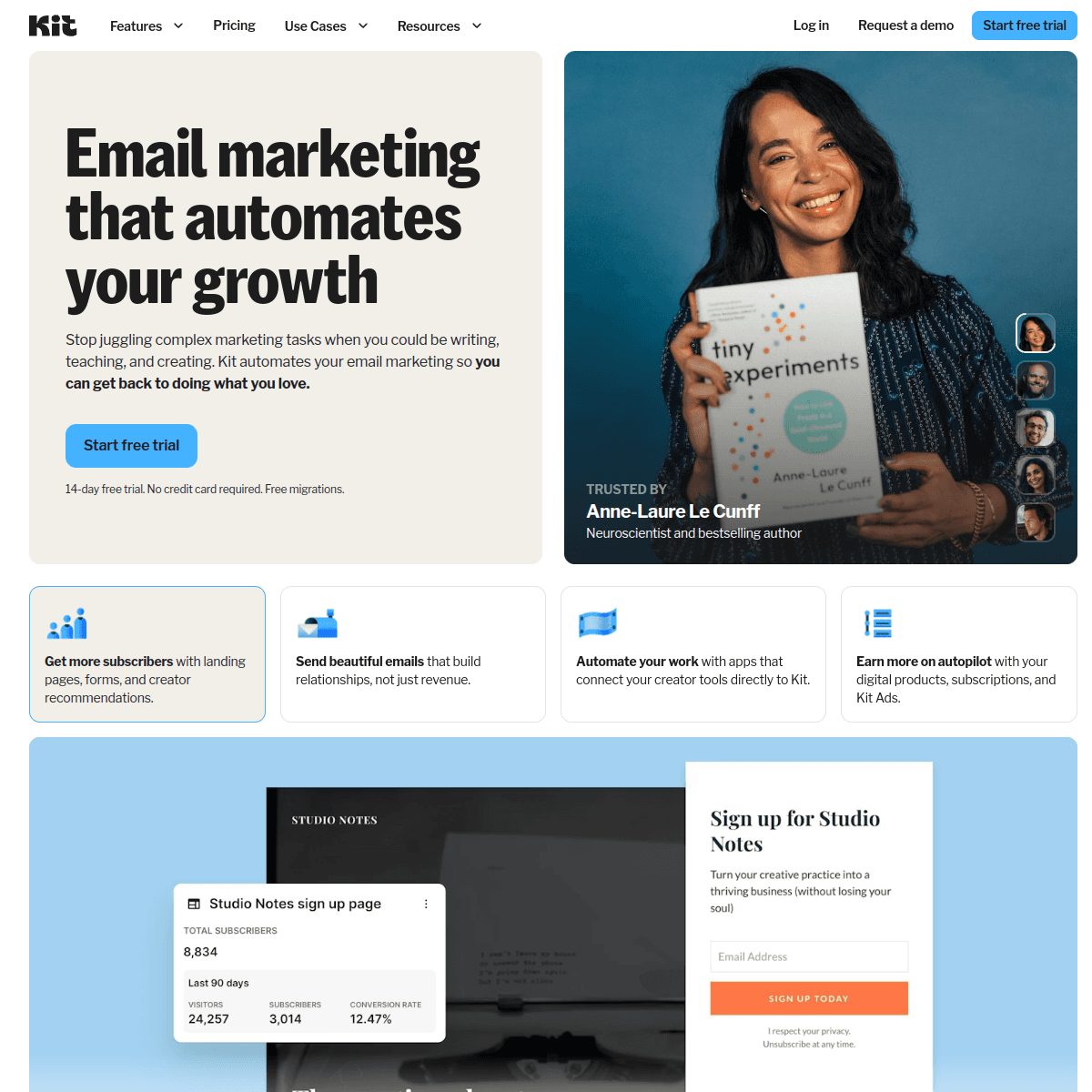
Kit is not suitable for fintech. No transactional email support, no event-driven automation, no compliance features. Only consider if you need a newsletter tool completely separate from your product email.

Best for
Not recommended for fintech
Pricing
Free up to 10,000 subscribers, then $25/month

Pros

  • Free tier

Cons

  • Not suitable for fintech
#12
HubSpot

Enterprise CRM and marketing.

Visit
HubSpot dashboard screenshot

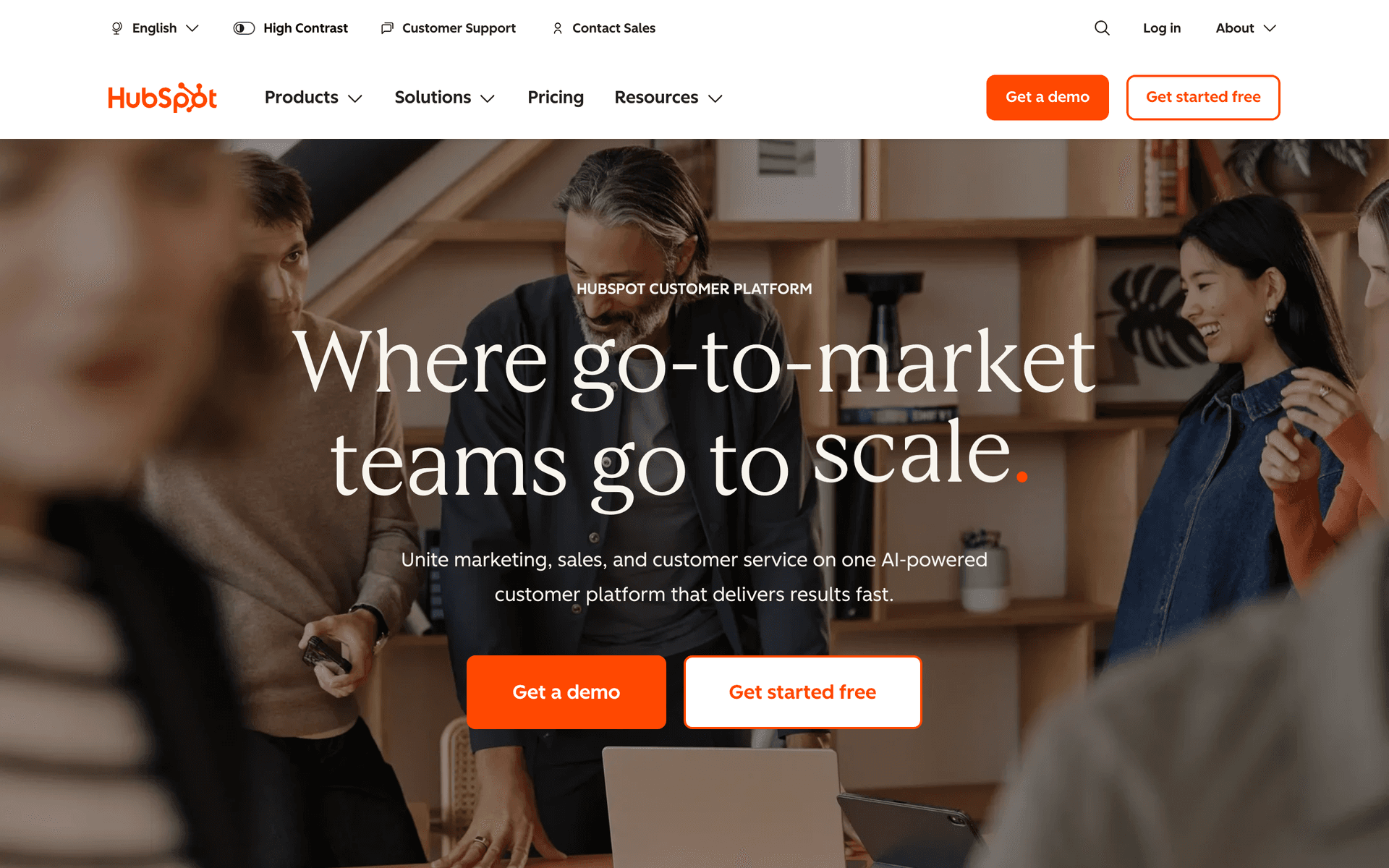
HubSpot works for enterprise fintech with large sales teams managing complex B2B deals. The CRM is excellent for institutional sales. For most fintech startups, it is significant overkill.

Best for
Enterprise fintech with dedicated sales teams
Pricing
Marketing hub from $50/month

Pros

  • Complete CRM

Cons

  • Expensive
  • Overkill
#13
Knock

Notification infrastructure.

Visit
Knock dashboard screenshot

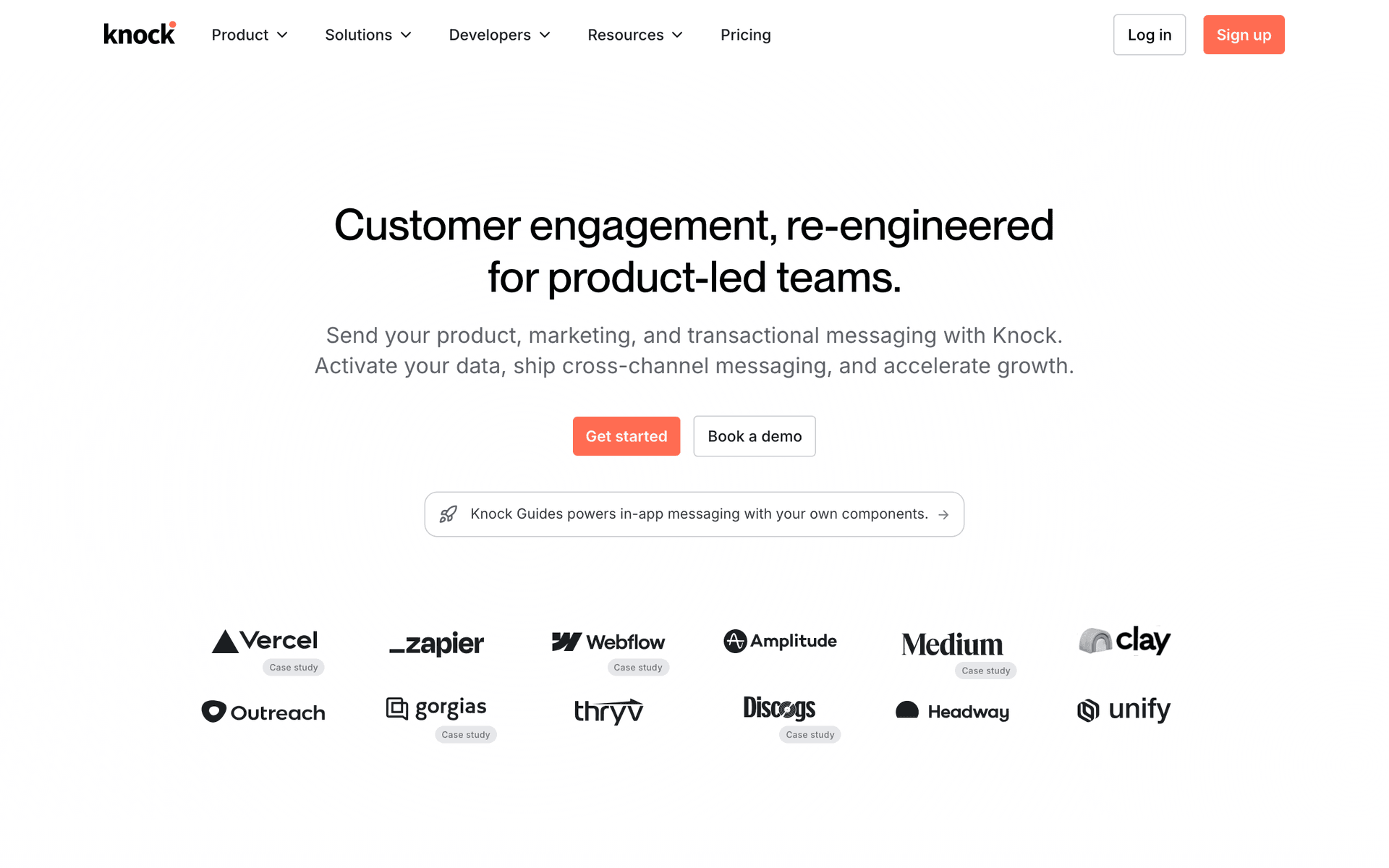
Knock provides multi-channel notification infrastructure for transaction alerts across email, push, SMS, and in-app. Use alongside an email marketing tool for campaigns. The API-first approach appeals to engineering teams building custom notification systems.

Best for
Fintech needing multi-channel transaction notifications
Pricing
Free up to 10,000 messages, then $250/month

Pros

  • Multi-channel notifications
  • API-first

Cons

  • Not a marketing tool
  • Expensive
#14
Customer.io

Event-driven messaging for financial products.

Visit
Customer.io dashboard screenshot

Customer.io's event-driven architecture is well-suited to fintech companies where every financial transaction, balance change, or account event should trigger communication. For digital banks, lending platforms, and investment apps, Customer.io handles the complexity of routing the right message to the right user at the right time based on their financial activity. Multi-channel support covers email, push, and in-app messaging for a complete communication layer. The $100/month starting price is reasonable for funded fintech companies, but the compliance setup requires careful configuration to avoid inadvertently sending regulated financial communications through the wrong channels.

Best for
Funded fintech companies with complex event-driven communication needs
Pricing
$100/month for 5,000 profiles

Pros

  • Best-in-class event-driven automation
  • Multi-channel messaging
  • Complex branching logic
  • Strong API for financial events

Cons

  • Expensive starting price
  • Compliance requires careful setup
  • Steep learning curve
#15
Intercom

Customer messaging with email, in-app, and chat support.

Visit
Intercom dashboard screenshot

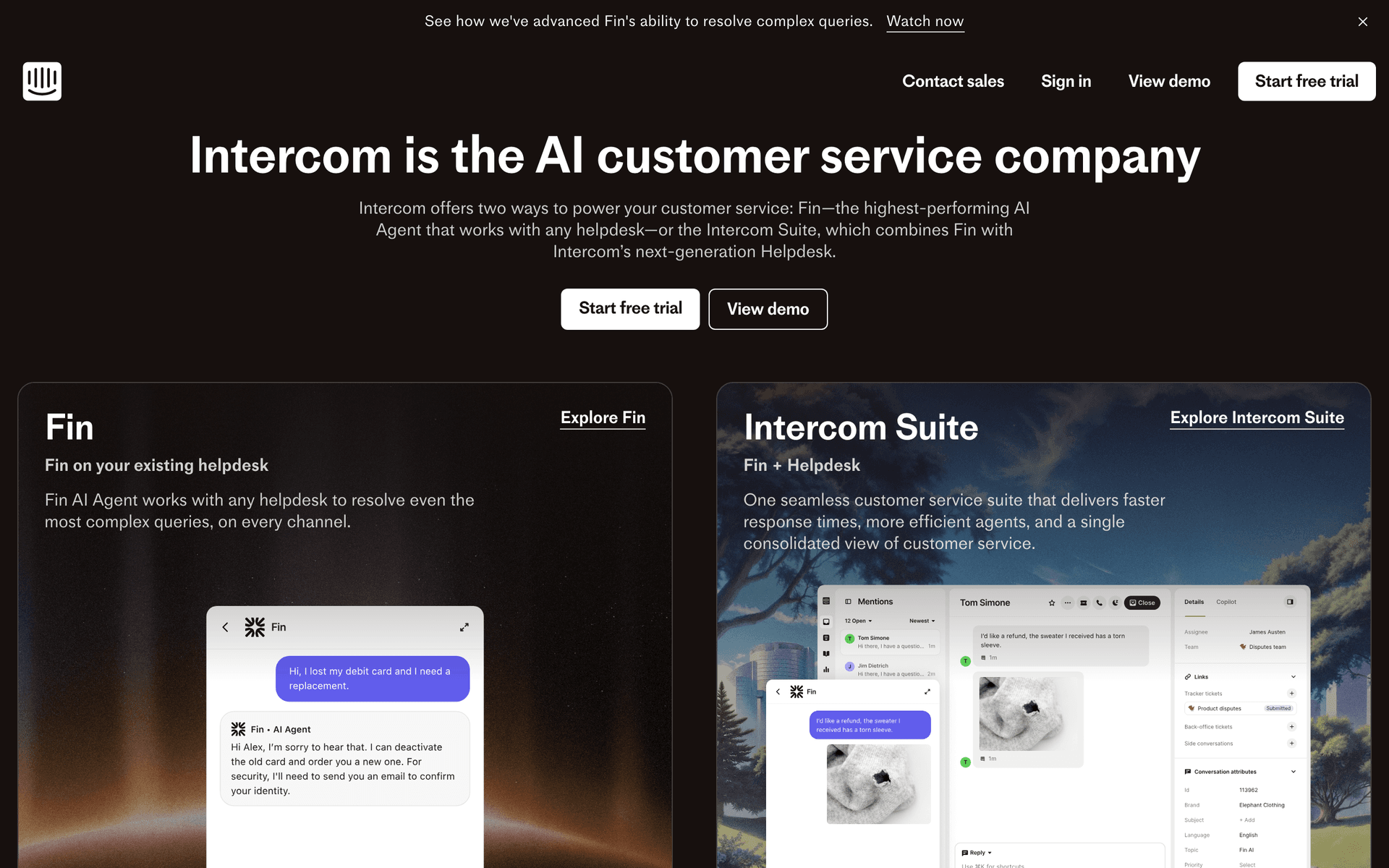
Fintech companies with consumer-facing apps benefit from Intercom's combination of in-app messaging, email, and support chat. When a customer has a question about a transaction or needs help with account verification, Intercom provides the support layer that builds trust in financial products. Product tours and in-app onboarding combined with email sequences create a complete activation experience for new financial product users. The per-active-user pricing can be expensive for fintech apps with large user bases and thin margins.

Best for
Consumer fintech apps needing in-app messaging and support
Pricing
From $74/month, scales with active users

Pros

  • In-app messaging and email combined
  • Support chat for financial questions
  • Product tour and onboarding tools
  • Good event integration

Cons

  • Expensive at scale
  • Per-active-user pricing
  • Not compliance-specialized
#16
HubSpot

Enterprise CRM and marketing platform.

Visit
HubSpot dashboard screenshot

B2B fintech companies pursuing enterprise financial institution clients benefit from HubSpot's CRM and deal pipeline management. Track prospects through lengthy procurement and compliance review cycles, automate nurture content with regulatory updates and compliance guides, and manage the multi-stakeholder buying process typical of financial software deals. For fintech selling payment infrastructure, risk software, or compliance tools to banks and enterprises, HubSpot's sales and marketing alignment is practical. Consumer fintech or PLG models do not need HubSpot.

Best for
B2B fintech companies selling to financial institutions with sales teams
Pricing
Free CRM, marketing hub from $50/month

Pros

  • CRM for enterprise financial deals
  • Pipeline tracking for long sales cycles
  • Powerful reporting
  • Good for multi-stakeholder deals

Cons

  • Expensive for full features
  • Overkill for consumer fintech
  • Not compliance-specialized
#17
Encharge

SaaS lifecycle automation with Stripe integration.

Visit
Encharge dashboard screenshot

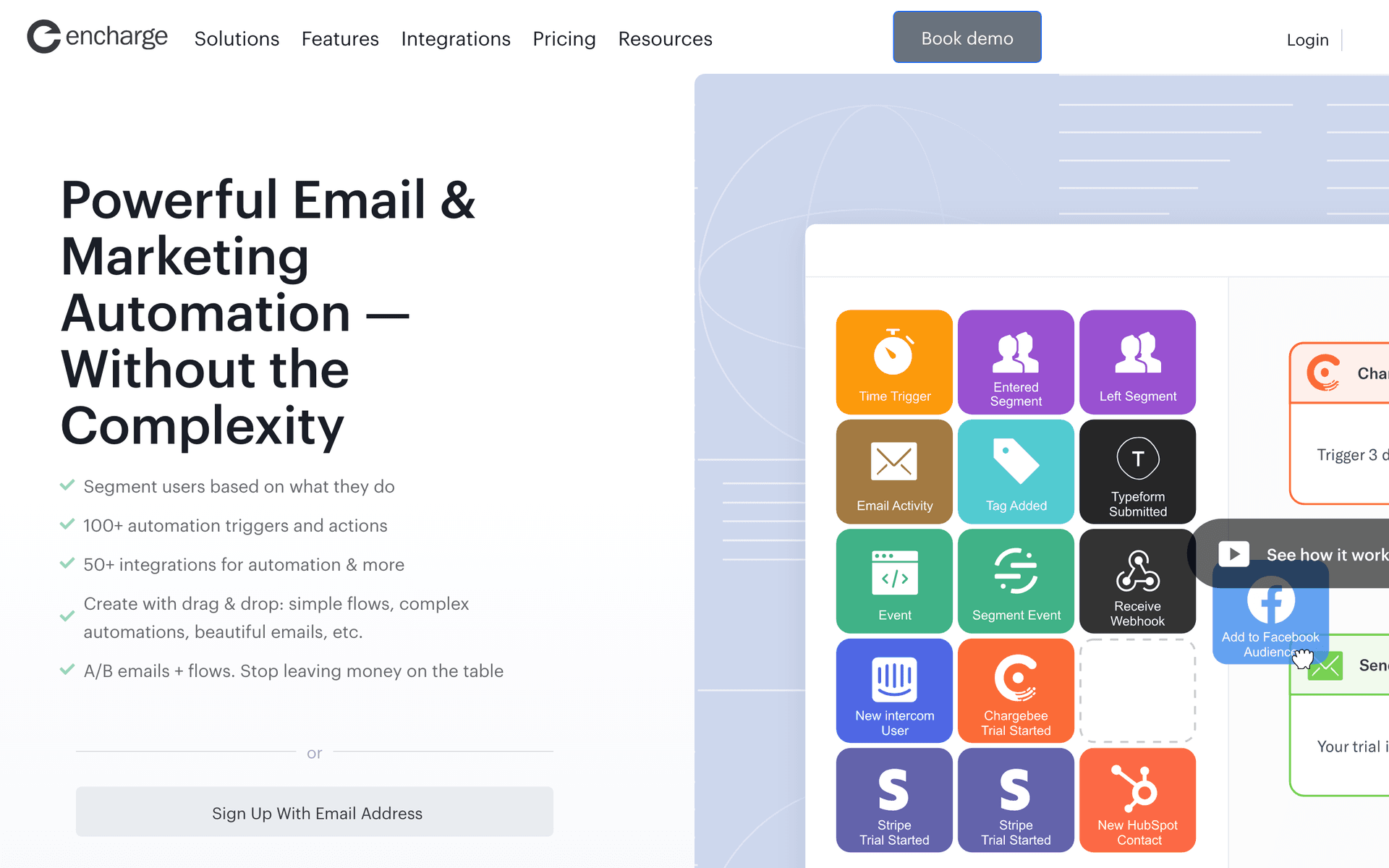
Encharge works well for fintech companies with subscription or transaction-based business models. The native Stripe integration is particularly relevant for fintech startups where billing events should trigger communication - payment successful, payment failed, subscription upgraded, trial ending. For B2B fintech SaaS products, the SaaS-focused lifecycle automation handles the journey from free trial through paid subscription to enterprise expansion. Pricing is reasonable for funded fintech companies.

Best for
Fintech SaaS companies with subscription billing needing lifecycle automation
Pricing
$99/month for 2,000 users

Pros

  • Native Stripe billing integration
  • SaaS-focused automation
  • Subscription lifecycle management
  • Behavior-based segmentation

Cons

  • Per-user pricing
  • Not compliance-specialized
  • Smaller ecosystem
#18
ActiveCampaign

Advanced automation with CRM for B2B.

Visit
ActiveCampaign dashboard screenshot

ActiveCampaign's automation power handles the complex multi-step nurture sequences common in B2B fintech, where a prospect might go through a security review, compliance evaluation, and technical assessment before purchasing. Lead scoring identifies prospects engaging with regulatory content, case studies from financial peers, and pricing pages. The built-in CRM tracks complex deals with multiple stakeholders across long buying cycles. Not ideal for consumer fintech, but strong for B2B financial software companies with dedicated marketing teams.

Best for
B2B fintech companies with dedicated marketing teams and complex nurture needs
Pricing
$29/month for 1,000 contacts

Pros

  • Powerful automation builder
  • Lead scoring for long B2B cycles
  • CRM for complex deals
  • Conditional logic

Cons

  • Not compliance-focused
  • Complex interface
  • Not ideal for consumer fintech
#19
Ortto

CDP and journey-based marketing automation.

Visit
Ortto dashboard screenshot

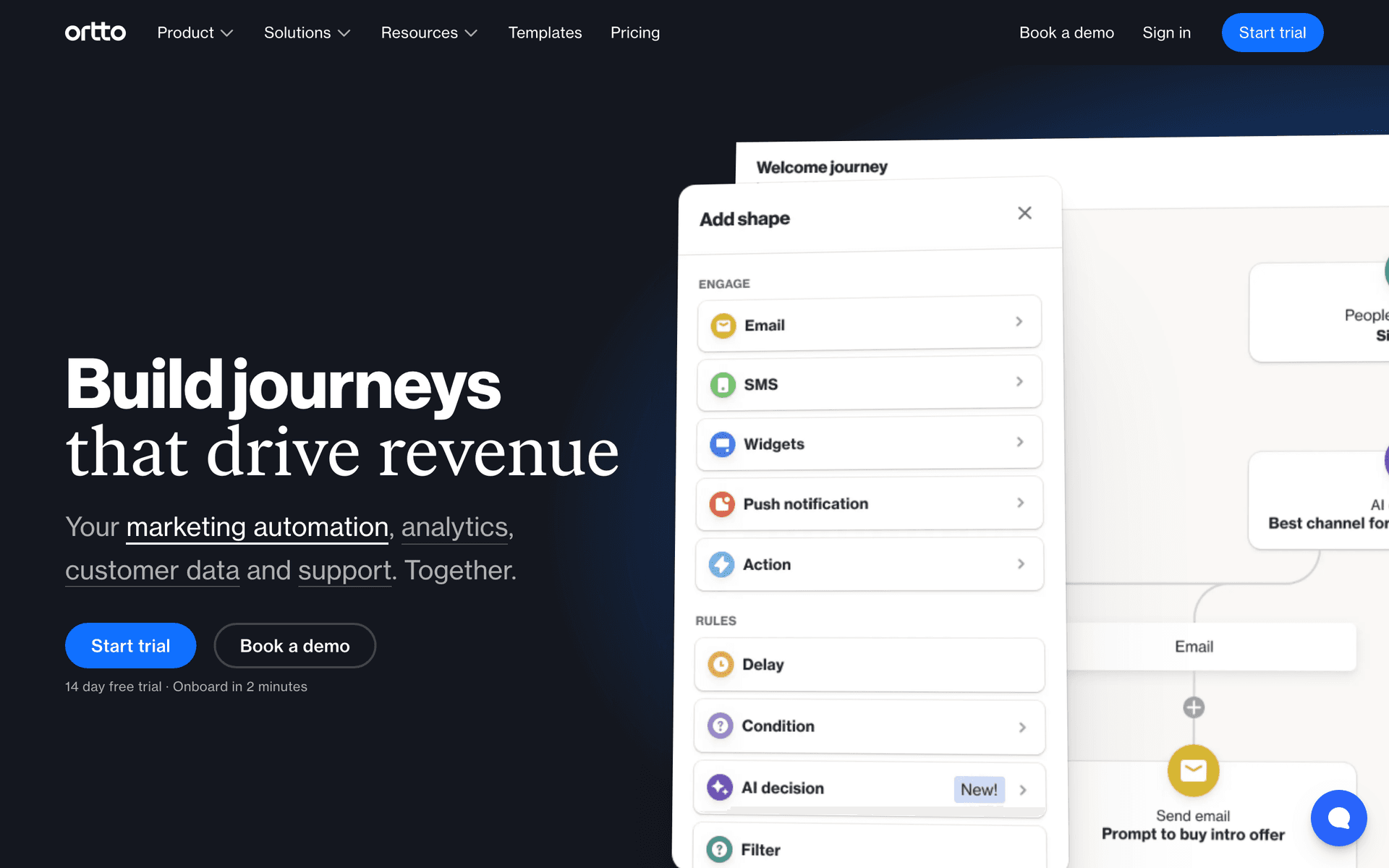
Ortto's CDP capabilities benefit fintech companies that need to unify financial behavior data from multiple sources before triggering communications. Combine transaction data, account activity, support history, and CRM data into a unified customer profile, then build journeys based on the complete financial picture. The journey builder handles complex branching for different customer financial segments and product usage patterns. For fintech companies with fragmented customer data architectures, Ortto's data unification layer is a genuine differentiator.

Best for
Fintech companies needing to unify fragmented customer data before automating
Pricing
$99/month for 5,000 contacts

Pros

  • CDP unifies financial behavior data
  • Journey builder with complex branching
  • Good analytics
  • Multi-source data integration

Cons

  • Expensive
  • Learning curve
  • Per-contact pricing

Feature Comparison

FeatureSequenzyCustomer.ioPostmarkSendGrid
Transaction triggers
Via Stripe
Via events
No (transactional only)
Basic
Payment integration
Native Stripe
No
No
No
Transactional reliability
Good
Good
Best
Very good
Marketing automation
AI-powered
Advanced
No
Basic
Multi-channel
Email
Email, push, in-app
Email
Email
Starting price
$29/mo
$100/mo
$15/mo
$19.95/mo

Common Mistakes to Avoid

We see these mistakes over and over. Skip the learning curve and avoid these from day one.

Using the same tool for transactional and marketing email

Marketing email reputation fluctuates based on engagement and spam complaints. If your transaction confirmations share the same sending infrastructure, a marketing campaign that gets poor engagement can hurt the deliverability of critical financial notifications. Separate these streams.

Sending generic onboarding emails that ignore completion state

A user who completed KYC but has not linked a bank account needs a different email than one who has not started verification. Calendar-based drip sequences ignore the most important variable: what the user has actually done. Build behavior-triggered sequences based on completion state.

Over-promoting during the trust-building phase

New fintech users are cautious with their money. Heavy promotional emails during the first 30 days erode the trust you need for long-term engagement. Lead with education, security reassurance, and helpful onboarding content before introducing marketing.

Not having a real-time alert infrastructure

Users expect instant confirmation for financial transactions. A 5-minute delay on a payment confirmation feels like an eternity when money is involved. Ensure your transactional email stack delivers within seconds, not minutes.

Email Sequences Every Fintech Startup Needs

These are the essential automated email sequences that will help you grow your business and keep clients coming back.

Fintech Onboarding Sequence

New account created

Guide users through account setup, verification, and first transaction.

Immediate
Welcome to [Product] - let's set up your account

Welcome with clear next steps: complete profile, verify identity, link bank account.

Day 1
Complete your verification to unlock all features

KYC reminder for users who have not completed verification. Explain why it is needed and how long it takes.

On verification
Your account is verified - here is what you can do

Celebrate verification completion. Introduce key features and suggest first actions.

Day 3
Your first [transaction/transfer/investment] - a quick guide

Walk through the first transaction step by step. Include tips for success.

Transaction Confirmation Sequence

Transaction completed

Confirm transactions and build trust through transparent communication.

Immediate
Transaction confirmed: $[amount] [description]

Transaction receipt with amount, description, date, and reference number. Link to transaction details.

Security Alert Sequence

Unusual account activity detected

Alert users to suspicious activity and protect their accounts.

Immediate
Security alert: unusual activity on your account

Clear description of what was detected, what to do if it was them, and how to secure their account if it was not.

Inactive Account Re-engagement

No activity for 30 days

Re-engage dormant fintech accounts with financial value messaging.

Day 30
Your [Product] account is waiting for you

Highlight new features, improved rates, or product updates since they were last active.

Day 45
What you could be earning with [Product]

Show potential financial value - interest earned, fees saved, or returns generated if they were active.

The Fintech Email Challenge

Fintech email marketing balances two worlds: the reliability of banking communication and the engagement of modern SaaS marketing. Your transaction confirmations need to arrive in seconds. Your onboarding emails need to guide users through complex KYC flows. Your marketing emails need to build trust in a category where trust is everything.

The right email stack separates these concerns - reliable transactional delivery for account notifications, and smart automation for marketing and lifecycle communication.

Onboarding Is Your Biggest Lever

Fintech has some of the highest onboarding drop-off rates of any SaaS category. Users start account creation, encounter KYC requirements, and abandon. A targeted email sequence that follows up on each incomplete step can recover a significant portion of these abandoned signups.

Building the Recovery Flow

Map every onboarding step in your product: account creation, email verification, KYC submission, document upload, bank account linking, first transaction. For each step, build a recovery email triggered when the user stalls. The email should acknowledge where they stopped, explain why the next step matters, and provide a direct link to continue. Personalized recovery emails convert at 3-5x the rate of generic reminder drips.

Trust Through Communication

Financial products live or die on trust. Every email you send either builds or erodes that trust. Transaction confirmations build trust because they show transparency. Security alerts build trust because they show vigilance. Helpful onboarding emails build trust because they show you care about the user's experience. Spammy promotional emails erode trust because they signal that you prioritize revenue over relationship.

The Trust Audit

Review every email in your automated sequences and ask: does this build trust or erode it? If an email exists only to promote a feature or upsell, consider whether it belongs in the first 30 days of the user relationship. Front-load trust-building content and save promotional messaging for after users have experienced your product's value.

The Transactional-Marketing Separation

Mixing transactional and marketing emails on the same infrastructure is one of the most common fintech email mistakes. A marketing campaign with poor engagement can hurt your sender reputation, which then affects the deliverability of your payment confirmations and security alerts. Use Postmark or a dedicated transactional service for critical financial notifications, and a separate platform for marketing campaigns.

Real-Time Financial Notifications

Users expect immediate confirmation for financial transactions. A 5-minute delay on a $500 transfer confirmation creates anxiety. Build your transactional email stack for sub-second delivery. Postmark, Resend, and SendGrid all handle real-time delivery effectively. Monitor delivery times and set up alerts for any latency above your threshold.

Getting Started

  1. Set up a dedicated transactional email service for financial notifications
  2. Connect your payment and user event pipeline to your marketing platform
  3. Build a behavior-triggered onboarding sequence with recovery for each incomplete step
  4. Create trust-building educational content for the first 30 days
  5. Design a re-engagement sequence using financial value messaging

Start with the onboarding recovery sequence - each recovered signup has the highest immediate impact on your activation metrics and revenue.

How We Evaluated These Tools

Tools were evaluated based on their fit for fintech requirements - event-driven automation for complex onboarding flows, transactional email reliability, native payment integration, multi-channel capability, compliance-friendly features, and pricing that works with large user bases.

Frequently Asked Questions

Ready to grow your fintech startup practice?

Start your free trial today. Set up your first email sequence in minutes with AI-powered content generation.

Related Industries

Sequenzy - Complete Pricing Guide

Pricing Model

Sequenzy uses email-volume-based pricing. You only pay for emails you send. Unlimited contacts on all plans — storing subscribers is always free.

All Pricing Tiers

  • 2.5k emails/month: Free (Free annually)
  • 15k emails/month: $19/month ($205/year annually)
  • 60k emails/month: $29/month ($313/year annually)
  • 120k emails/month: $49/month ($529/year annually)
  • 300k emails/month: $99/month ($1069/year annually)
  • 600k emails/month: $199/month ($2149/year annually)
  • 1.2M emails/month: $349/month ($3769/year annually)
  • Unlimited emails/month: Custom pricing (Custom annually)

Yearly billing: All plans offer a 10% discount when billed annually.

Free Plan Features (2,500 emails/month)

  • Visual automation builder
  • Transactional email API
  • Reply tracking & team inbox
  • Goal tracking & revenue attribution
  • Dynamic segments
  • Payment integrations
  • API, MCP, and CLI access
  • Custom sending domain

Paid Plan Features (15k - 1.2M emails/month)

  • Visual automation builder
  • Transactional email API
  • Reply tracking & team inbox
  • Goal tracking & revenue attribution
  • Dynamic segments
  • Payment integrations (Stripe, Paddle, Lemon Squeezy)
  • API, MCP, and CLI access
  • Custom sending domain

Enterprise Plan Features (Unlimited emails)

  • Visual automation builder
  • Transactional email API
  • Reply tracking & team inbox
  • Goal tracking & revenue attribution
  • Dynamic segments
  • Payment integrations
  • API, MCP, and CLI access
  • Custom sending domain

Important Pricing Notes

  • You only pay for emails you send — unlimited contacts on all plans
  • No hidden fees - all features included in the price
  • No credit card required for free tier

Contact

  • Pricing Page: https://sequenzy.com/pricing
  • Sales: hello@sequenzy.com