Updated 2026-03-15

Best Email Marketing Tools for B2C SaaS

Engage millions of individual users with behavioral email that scales. Automate onboarding, retention, and win-back at consumer volume.

B2C SaaS means high volume, thin margins, and short attention spans. Your users signed up because your product solves a personal problem, and they will leave the moment it stops being useful. Email is your primary lever for keeping users engaged between app sessions. It reminds them why they signed up, helps them get more value from the product, and brings them back when they drift away. The challenge is doing this at scale without blowing your budget on per-contact pricing. Here are the tools that handle B2C SaaS economics.

TL;DR

Sequenzy is the best fit for B2C SaaS because pay-per-email pricing aligns perfectly with the high-volume, low-ARPU model - the free tier covers up to 2,500 emails/mo to start. Customer.io is the most powerful alternative for funded B2C SaaS with complex behavioral automation needs, though per-profile pricing hurts at consumer scale.

Why B2C SaaS Needs Email Marketing

Activation at Scale

B2C SaaS gets thousands of signups but most never activate. Automated onboarding sequences that fire based on user behavior turn signups into active users at scale without manual intervention.

Retention Through Engagement

Consumer users churn fast. A user who does not open your app for a week is halfway gone. Email sequences that trigger on inactivity, celebrate milestones, and suggest new use cases keep users coming back.

Monetization of Free Users

Most B2C SaaS has a large free tier. Email sequences that demonstrate premium value at the right moment (when users hit limits, discover locked features, or achieve results) convert free users to paid.

Win-Back at Volume

When you have millions of users, even small improvements in win-back rates produce significant revenue. Automated re-engagement sequences that fire after inactivity periods recover users at scale.

B2C SaaS Email Marketing Benchmarks

Know these numbers before you start. They'll help you set realistic goals and pick the right tool.

22-30%
Average Open Rate

B2C SaaS onboarding and feature tip emails see 22-30% open rates. Win-back emails trend lower at 15-20%.

3-6%
Average Click Rate

Emails with a single clear CTA driving users back into the product see the highest click rates for B2C SaaS.

Matches product usage patterns
Best Send Time

For daily-use products, mornings work best. For evening/leisure products, 6-9 PM performs better. Match your email timing to when users naturally use your product.

+15-30%
Activation Rate Impact

Well-designed onboarding email sequences improve activation rates by 15-30% compared to no onboarding email, which cascades to improved retention and LTV.

Important Tips Before You Choose

Lessons from b2c saaswho've been doing this for years. Save yourself the trial and error.

Focus onboarding on one activation action

Do not overwhelm new users with a feature tour. Your first onboarding email should drive one specific action that delivers the first moment of value. If users complete this action, downstream retention improves dramatically.

Trigger re-engagement at 7 days of inactivity

In B2C SaaS, a user who has not logged in for 7 days is at serious risk of churning. Trigger a re-engagement email highlighting new features, their saved data, or use cases from similar users.

Convert free users at moments of natural friction

Trigger conversion emails when users hit plan limits, try locked features, or achieve results that premium features could enhance. These behavioral triggers convert much better than time-based upgrade campaigns.

Match email frequency to product usage frequency

Daily-use products can email 2-3 times per week. Weekly-use products should email once a week. Monthly-use products should email twice a month. Mismatched frequency causes unsubscribes.

Run the pricing math on your email tool

With 500,000 users and per-contact pricing, your email tool costs more than many B2C SaaS generate per user. Per-email pricing can save thousands monthly. Run the math before choosing.

Use loss aversion in win-back emails

Reminding inactive users of their saved data, progress, and achievements is more effective than offering discounts. People are more motivated by what they might lose than what they might gain.

19 Best Email Marketing Tools for B2C SaaS

#ToolDescriptionBest ForPricing
1SequenzyEmail marketing with event-driven automation and native payment integrations for SaaS.B2C SaaS with large user bases wanting affordable event-driven automationFree up to 2,500 emails/mo, then $19/mo (unlimited contacts)
2Customer.ioEvent-driven messaging with advanced behavioral segmentation.Funded B2C SaaS with complex behavioral automation needs$100/month for 5,000 profiles
3BrevoAffordable all-in-one platform with per-email pricing.B2C SaaS wanting affordable email at consumer scaleFree for 300 emails/day, then $9/month
4LoopsModern email platform for SaaS with event-based automations.Smaller B2C SaaS wanting clean event-based automationFree up to 1,000 contacts, then $49/month
5OneSignalMulti-channel messaging with push notifications, email, and in-app.B2C SaaS wanting multi-channel consumer engagementFree up to 10,000 subscribers, paid from $9/month
6MailchimpPopular email platform with consumer-friendly features.Early-stage B2C SaaS getting started with emailFree up to 500 contacts, then $13/month
7SendGridEmail infrastructure for high-volume sending.B2C SaaS needing high-volume email infrastructureFree for 100 emails/day, plans from $19.95/month
8Customer.ioEvent-driven messaging platform for behavioral lifecycle automation.B2C SaaS needing behavioral automation at large user volumes$100/month base, scales with profiles
9BrazeEnterprise customer engagement platform for consumer-scale apps.Funded B2C SaaS with mobile apps and large consumer user basesCustom pricing (typically $50K+/year)
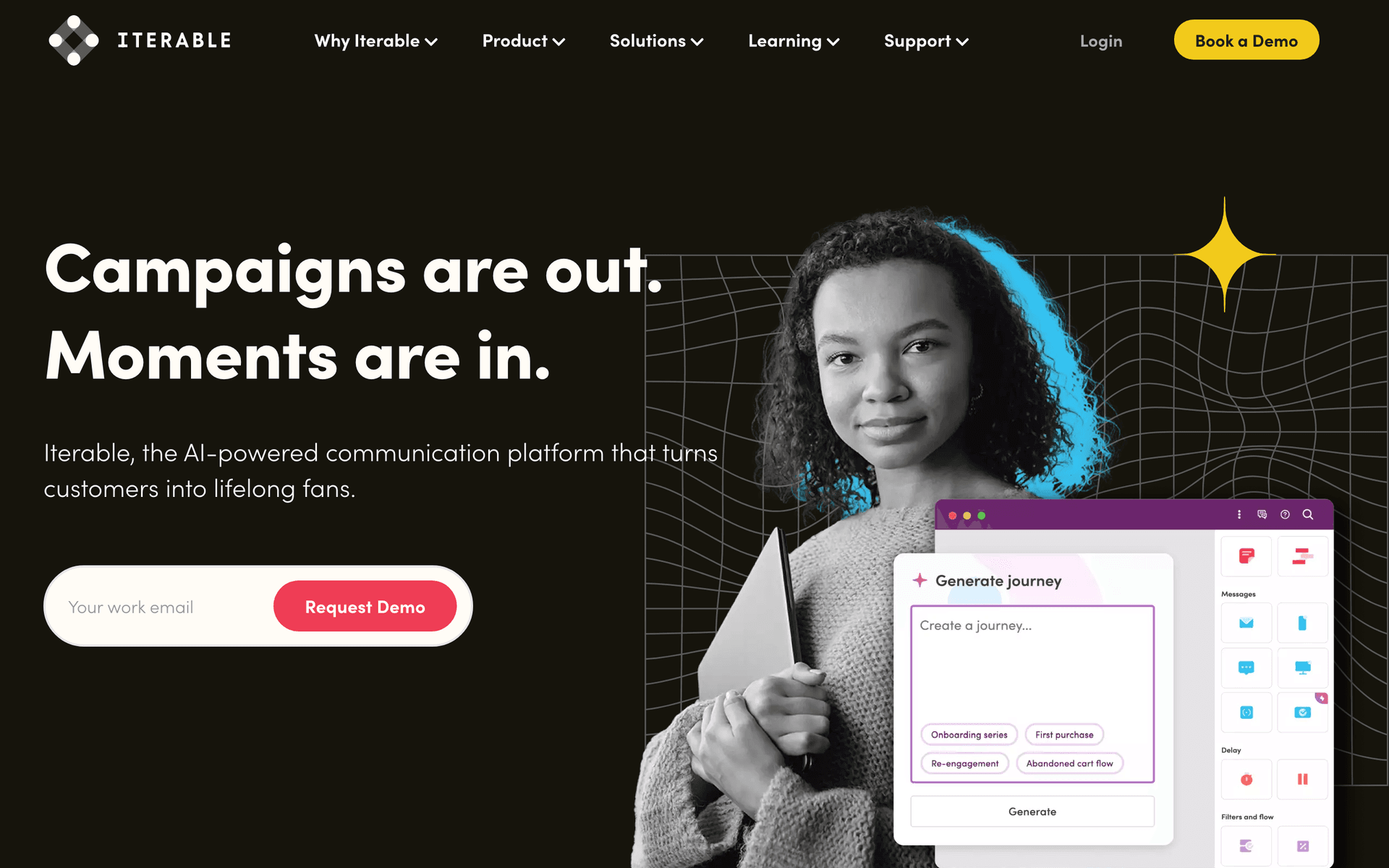
10IterableCross-channel growth marketing platform for consumer companies.B2C SaaS with cross-channel mobile and web user engagement needsCustom pricing (typically $500-2,000/month)
11LoopsModern product email for SaaS teams.Early to mid-stage B2C SaaS wanting clean event-driven emailFree tier available, paid from $49/month
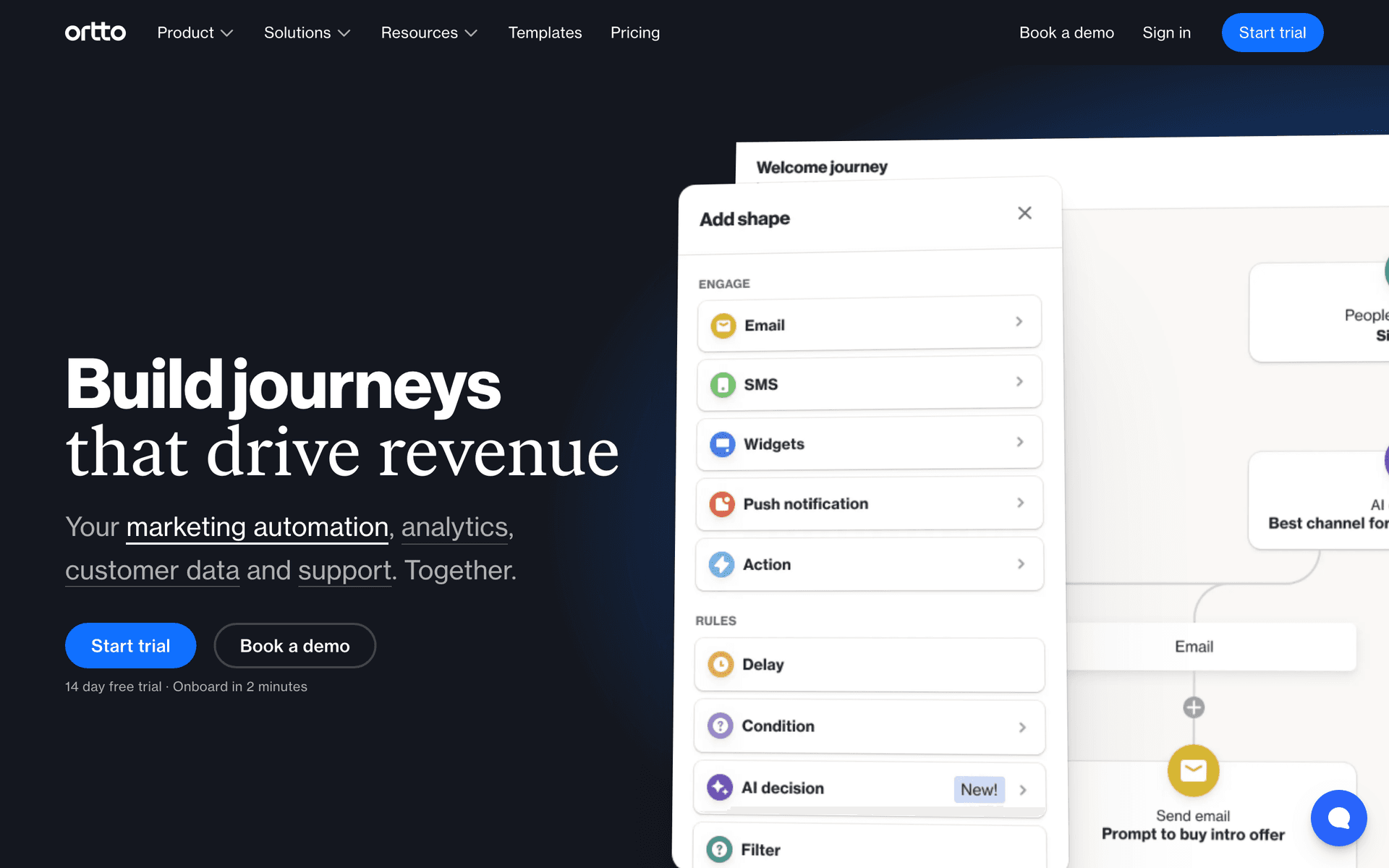
12OrttoCustomer data platform with marketing automation.Growth-stage B2C SaaS needing behavioral analytics alongside lifecycle automationFrom $99/month
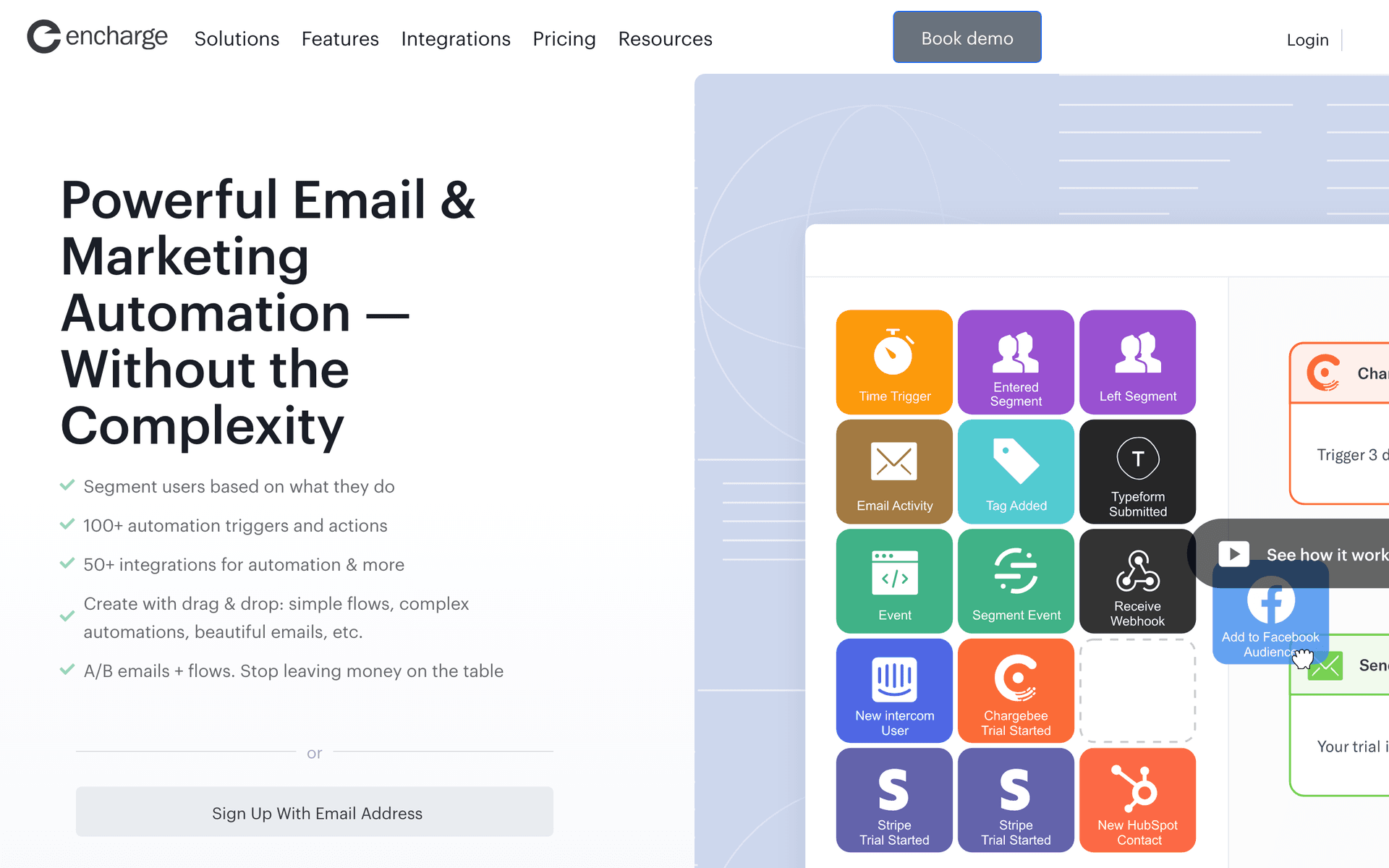
13EnchargeSaaS-native behavioral email automation.Mid-stage B2C SaaS needing behavioral automation at accessible pricingFrom $79/month for 2,000 subscribers
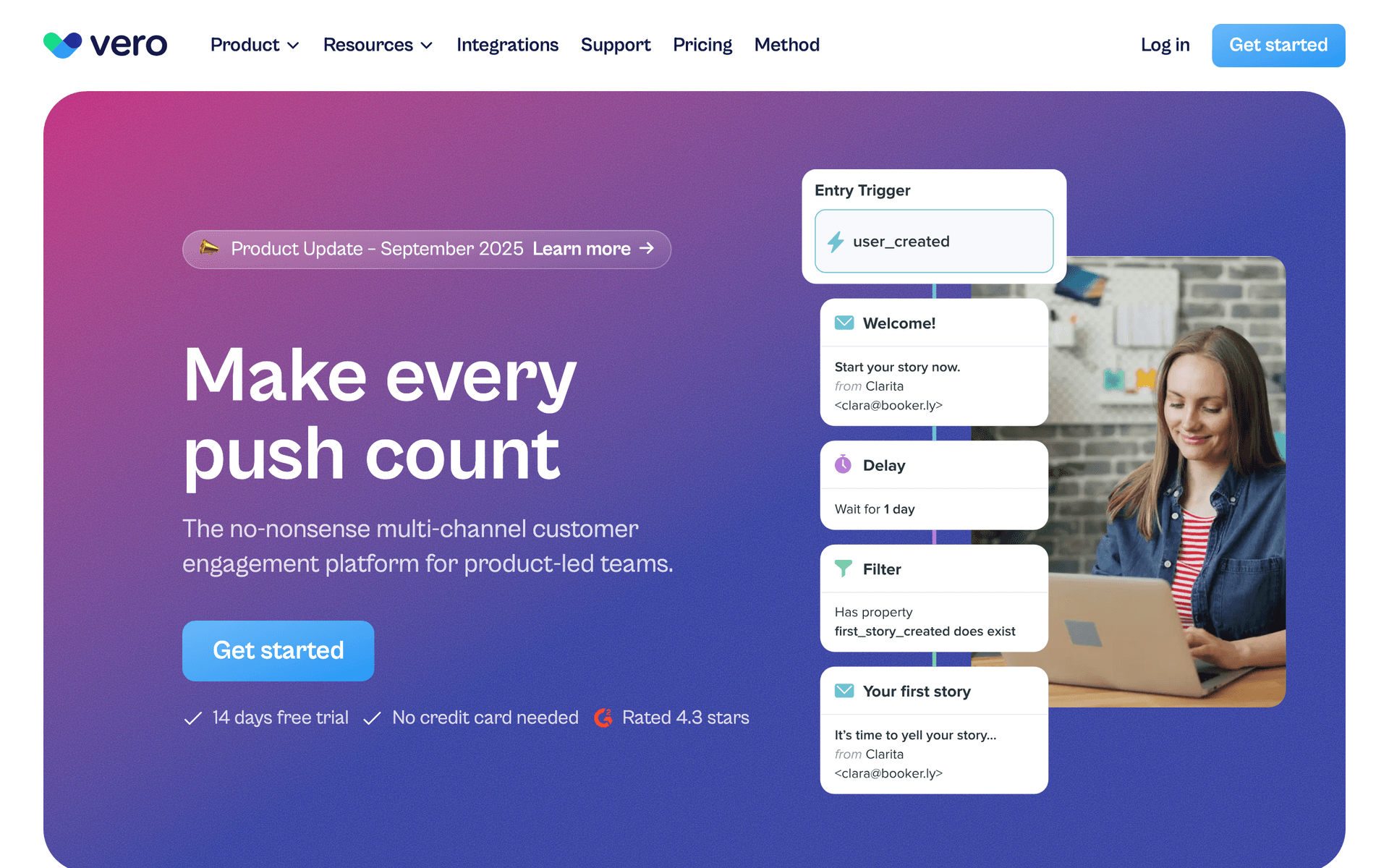
14VeroBehavioral email platform for product-centric teams.B2C SaaS wanting behavioral triggers and newsletter capability in one toolFrom $99/month
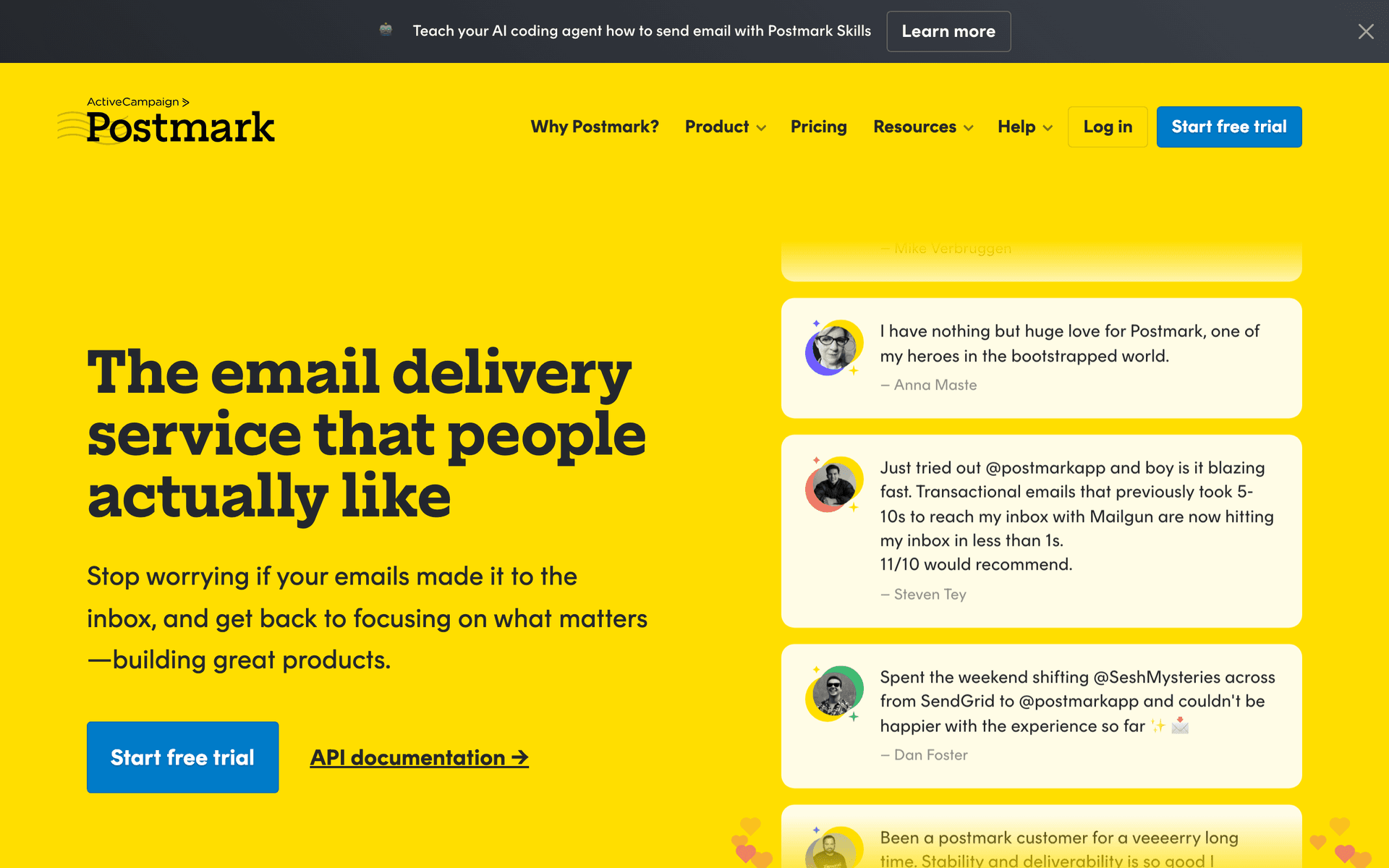
15PostmarkTransactional email service with best-in-class deliverability.B2C SaaS needing reliable, fast transactional email at any scaleFrom $15/month for 10,000 emails
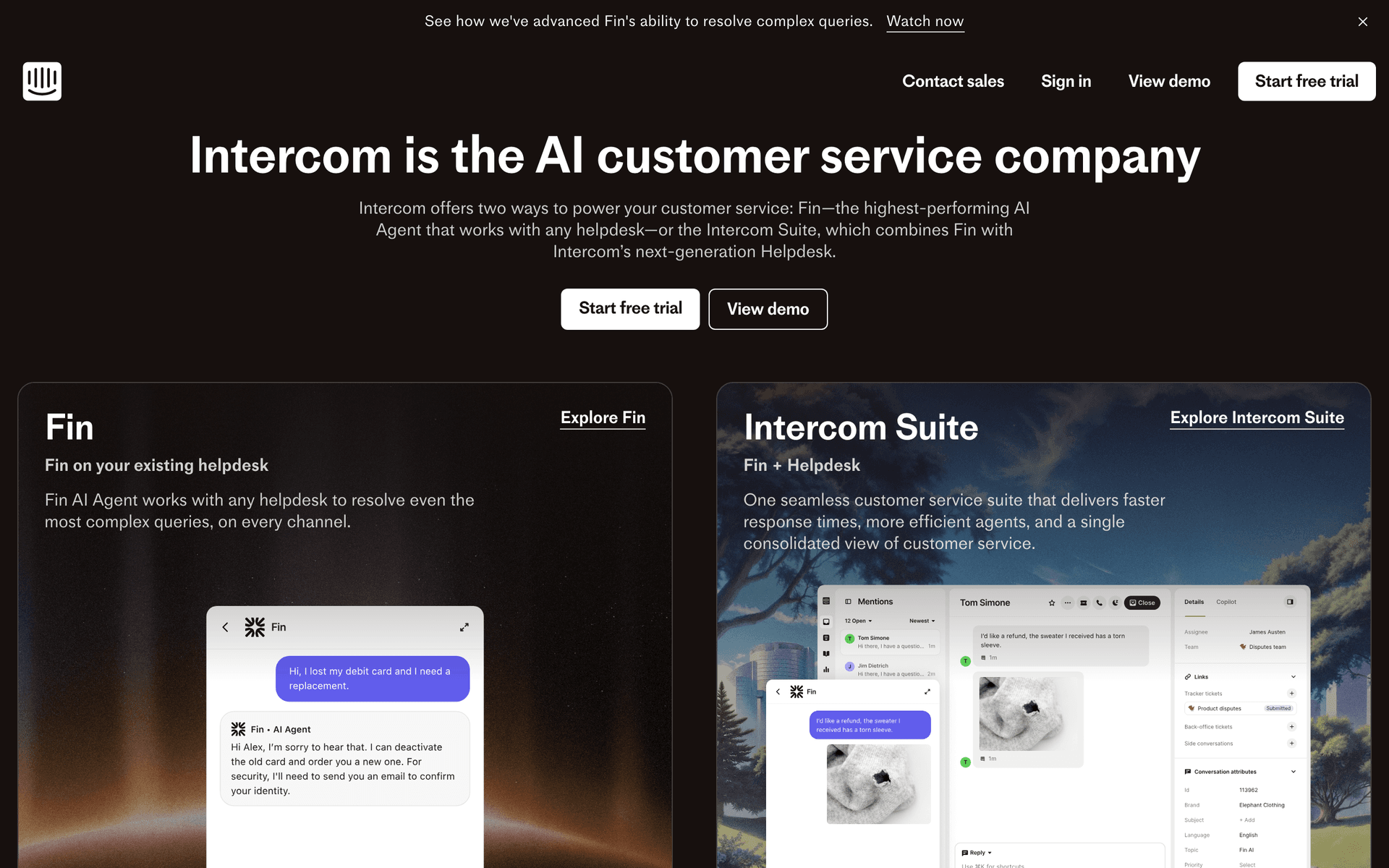
16IntercomCustomer messaging platform combining support, marketing, and onboarding.B2C SaaS with significant consumer support needs alongside lifecycle emailFrom $74/month, scales with seats
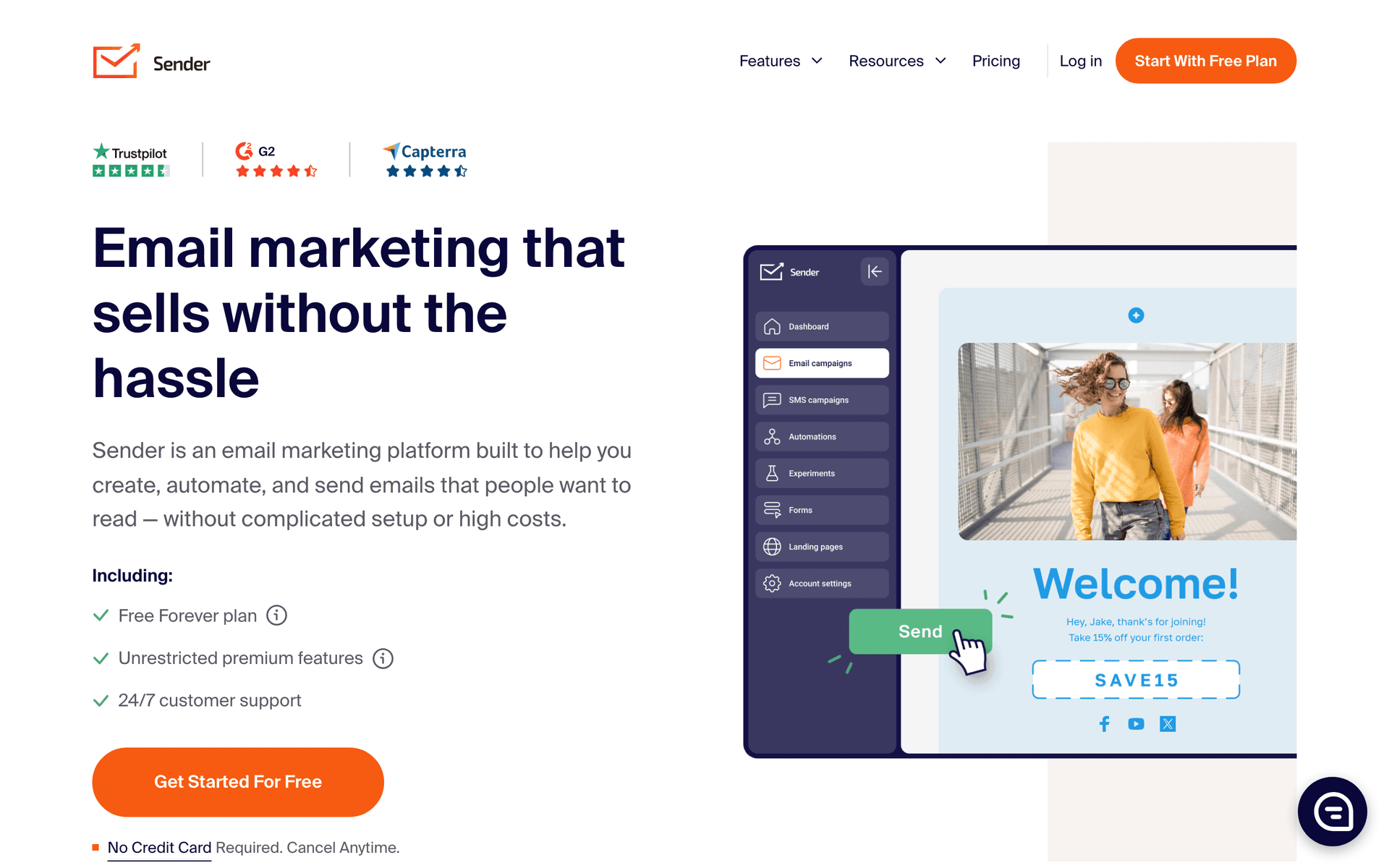
17SenderAffordable email and SMS marketing platform.Budget-conscious B2C SaaS with large user bases needing affordable emailFree for 2,500 subscribers, paid from $15/month
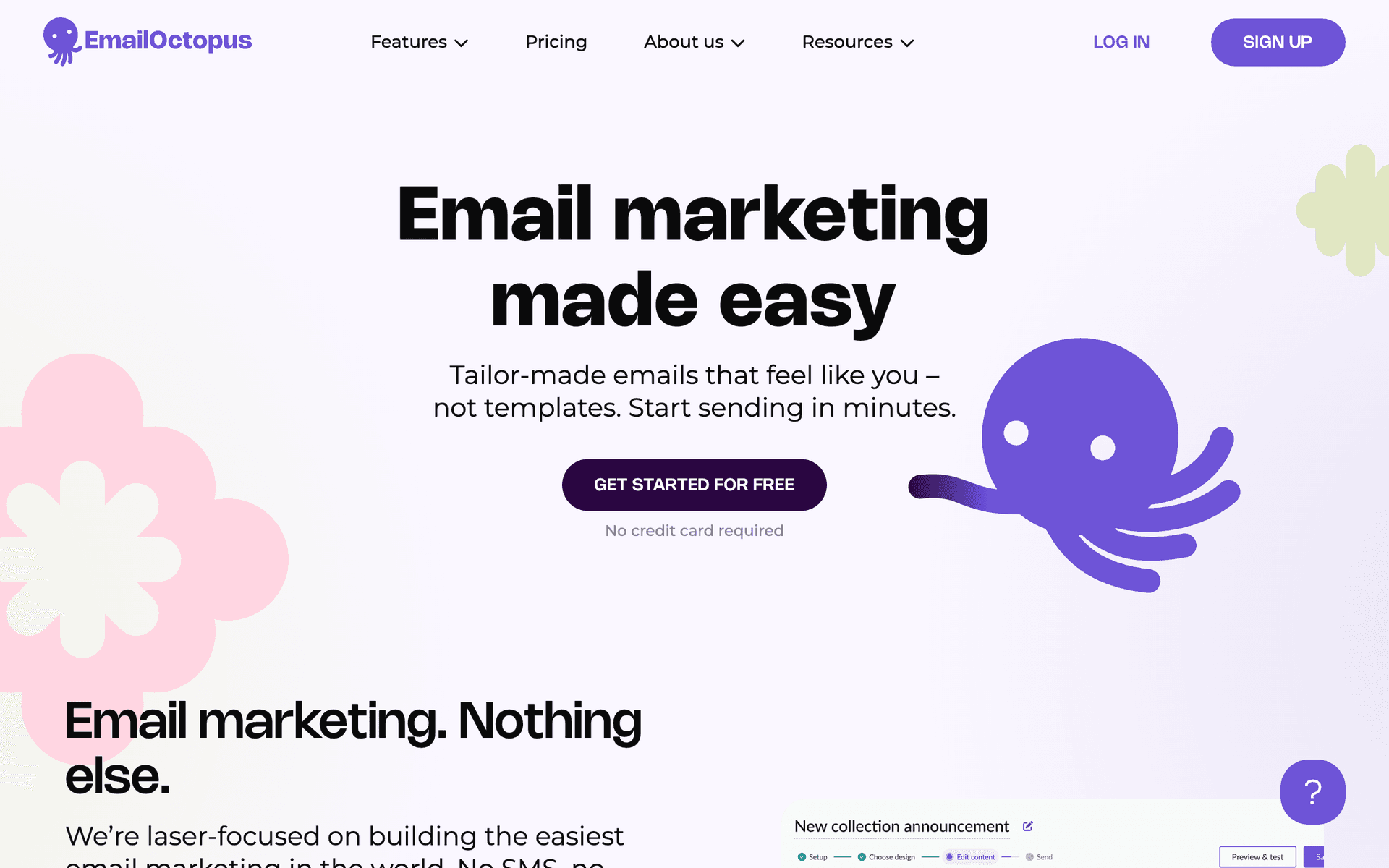
18EmailOctopusSimple, affordable email marketing with Amazon SES infrastructure.B2C SaaS with large lists needing cheap broadcast emailFree for 2,500 subscribers, paid from $9/month
19MauticOpen-source marketing automation platform.B2C SaaS teams with DevOps capability wanting full email infrastructure controlFree (open source), hosting costs apply
Our Top Pick for B2C SaaS
#1
Sequenzy

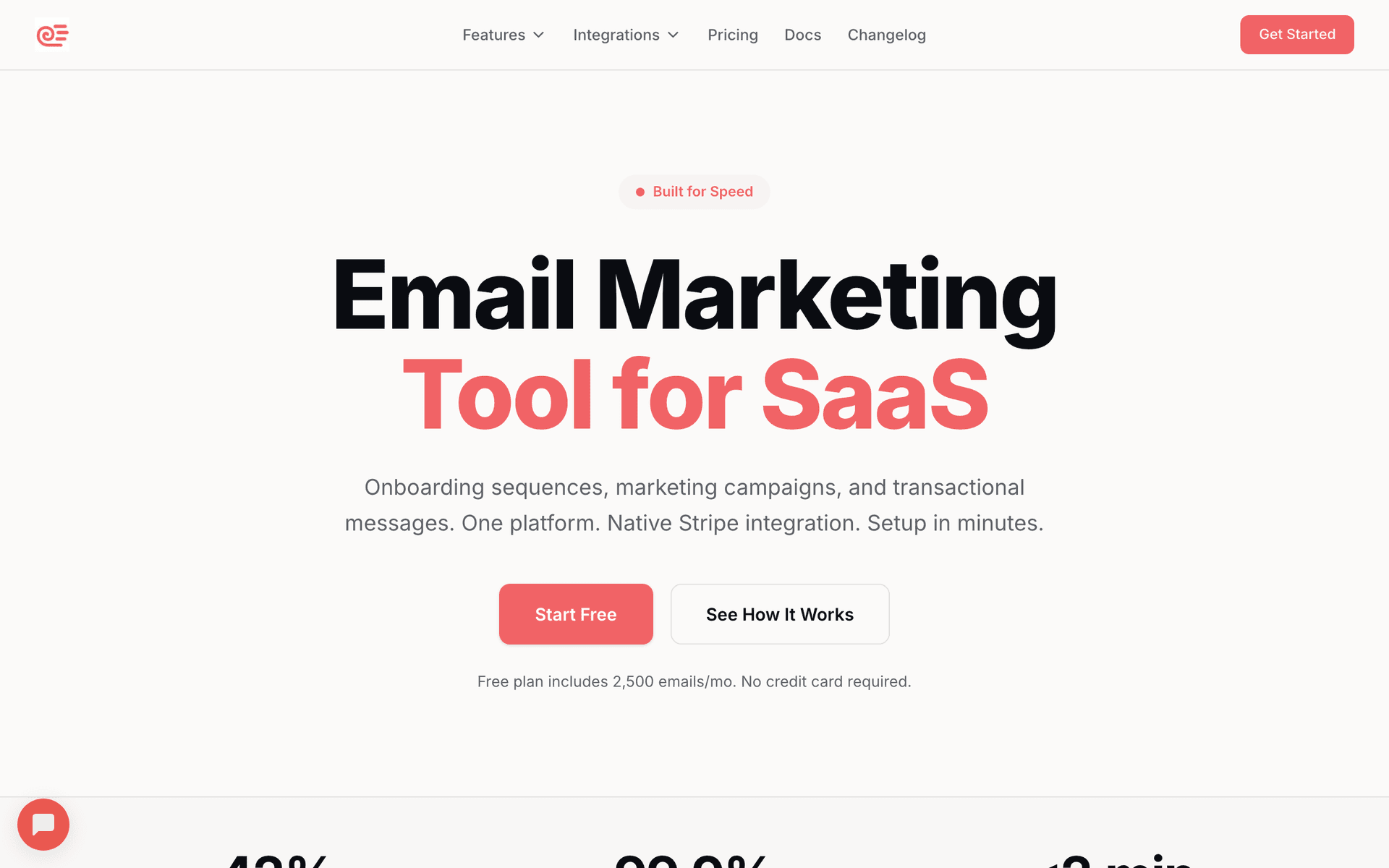
Email marketing with event-driven automation and native payment integrations for SaaS.

Visit
Sequenzy dashboard screenshot

Sequenzy's pay-per-email pricing is the standout advantage for B2C SaaS. When you have 500,000 users but only email a fraction of them on any given day, paying per email instead of per contact saves enormous amounts. The free tier supports up to 2,500 emails per month, which covers early-stage B2C SaaS onboarding at zero cost. Event-driven triggers fire based on user behavior: inactivity, feature adoption, plan limit hits, and payment events via the native Stripe integration. AI sequences generate onboarding and retention flows in seconds rather than hours of manual writing.

Best for
B2C SaaS with large user bases wanting affordable event-driven automation
Pricing
Free up to 2,500 emails/mo, then $19/mo (unlimited contacts)

Pros

  • Pay per email, not per contact, is ideal for B2C
  • Event-driven behavioral triggers
  • Native Stripe integration
  • AI sequence builder

Cons

  • Newer platform with smaller community
  • No push notifications or in-app messaging
  • Template library still growing
#2
Customer.io

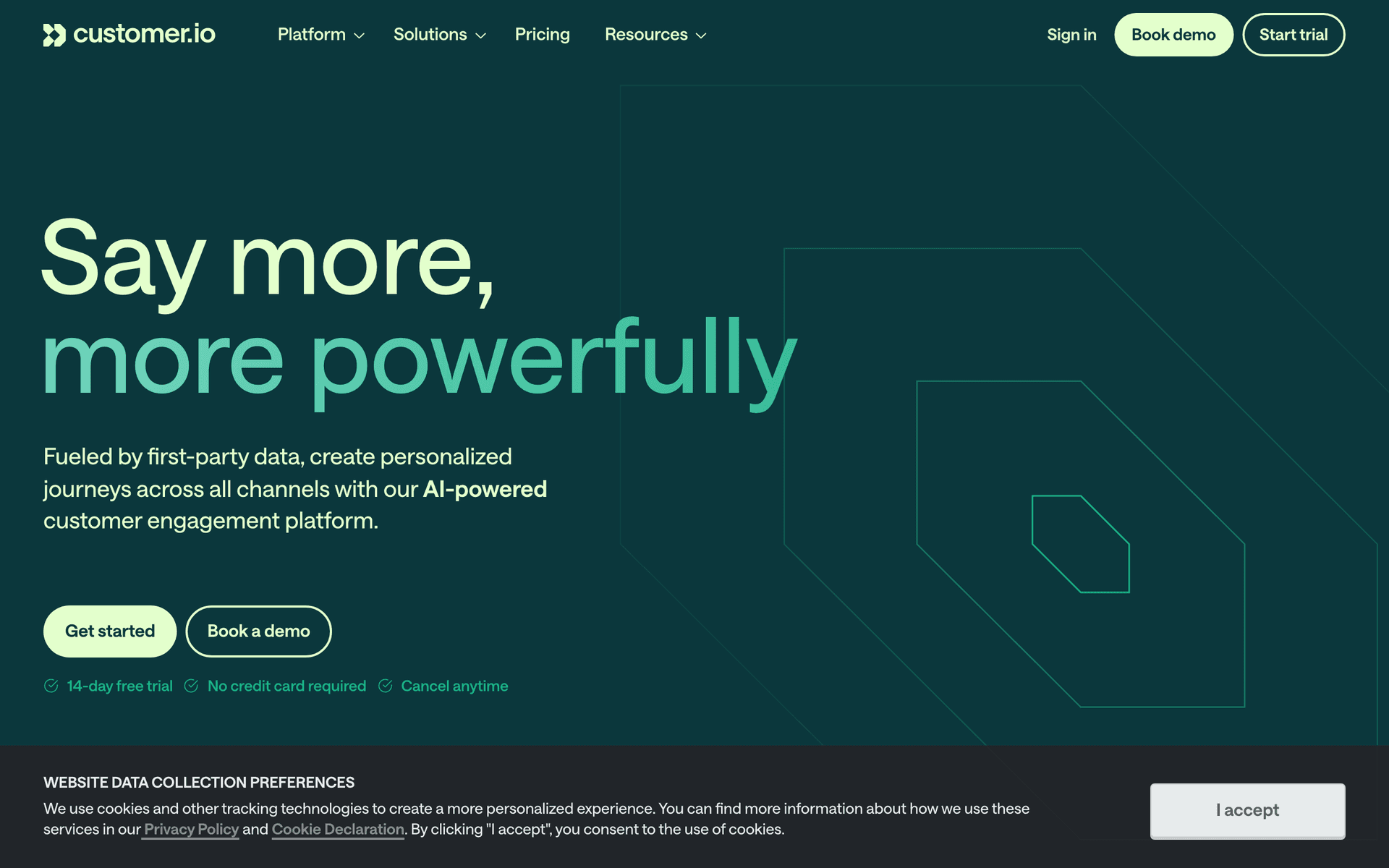
Event-driven messaging with advanced behavioral segmentation.

Visit
Customer.io dashboard screenshot

Customer.io provides the most sophisticated behavioral messaging for B2C SaaS. Track every user action and build segments that update in real time. Multi-channel support (email, push, in-app, SMS) reaches consumers wherever they are. The automation builder handles complex behavioral flows with branching and conditions. The cost per profile is the challenge at B2C scale.

Best for
Funded B2C SaaS with complex behavioral automation needs
Pricing
$100/month for 5,000 profiles

Pros

  • Advanced behavioral segmentation
  • Multi-channel messaging
  • Real-time segment updates

Cons

  • Per-profile pricing hurts at B2C scale
  • Complex to configure
  • Expensive for large user bases
#3
Brevo

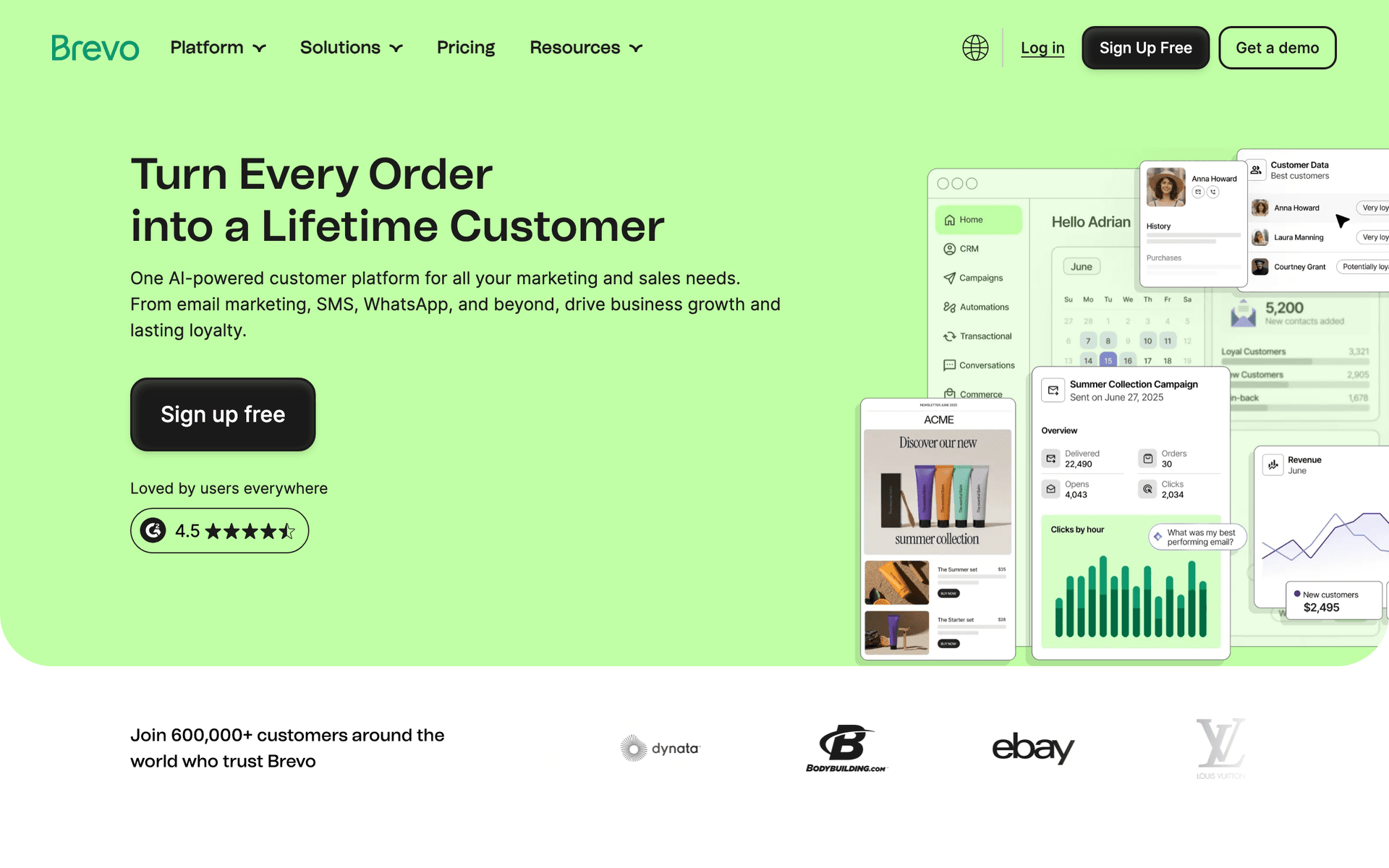
Affordable all-in-one platform with per-email pricing.

Visit
Brevo dashboard screenshot

Brevo is one of the most practical choices for B2C SaaS because of the per-email pricing model. Store unlimited contacts on the free plan and only pay when you send. For B2C companies with large free tiers, this pricing alignment is critical. The automation builder handles basic onboarding, retention, and win-back sequences. Not as sophisticated as Customer.io, but the economics work at consumer scale.

Best for
B2C SaaS wanting affordable email at consumer scale
Pricing
Free for 300 emails/day, then $9/month

Pros

  • Per-email pricing for B2C economics
  • Unlimited contacts on free plan
  • Basic but functional automation

Cons

  • Basic behavioral segmentation
  • Limited event-driven automation
  • Not SaaS-specific
#4
Loops

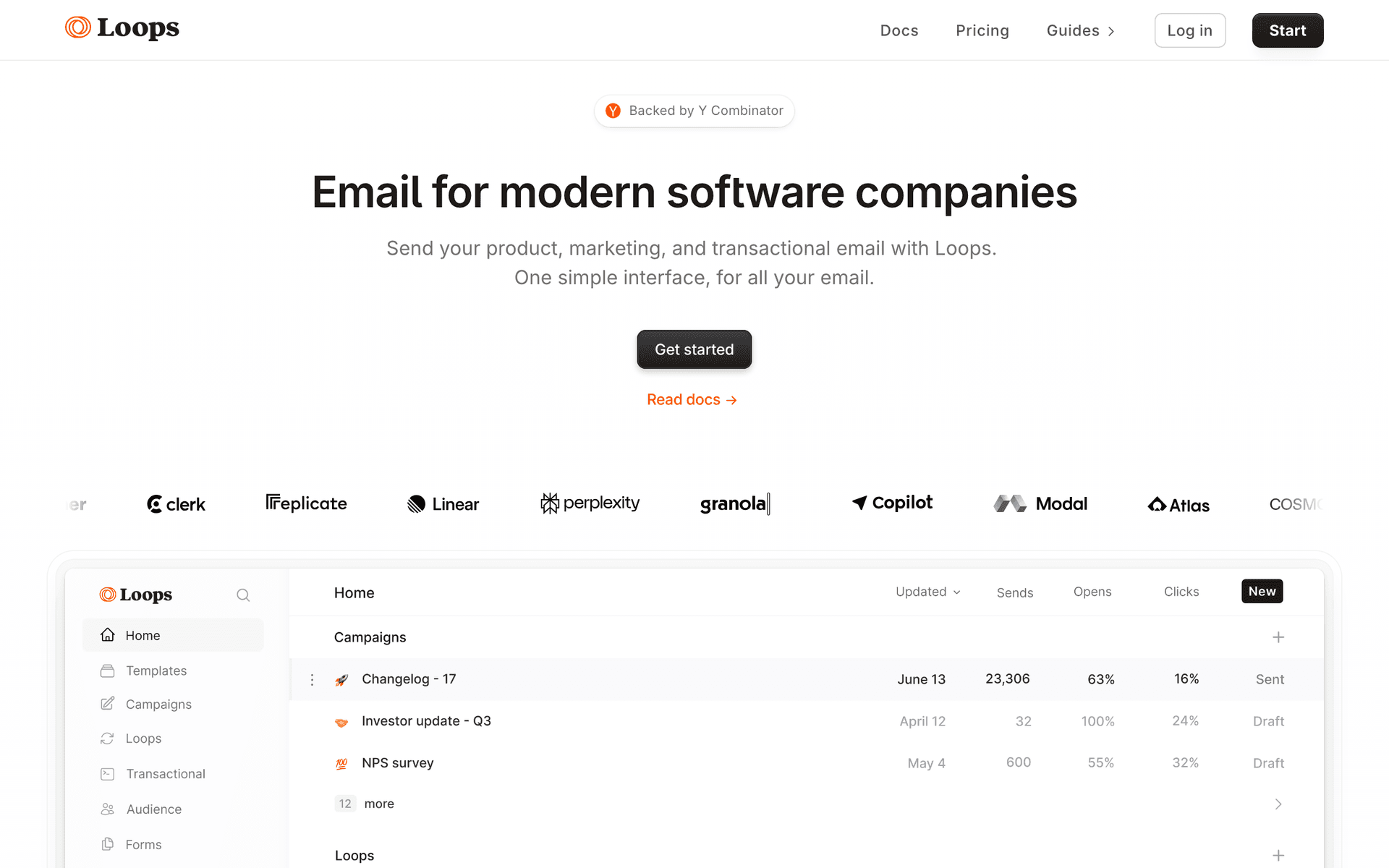
Modern email platform for SaaS with event-based automations.

Visit
Loops dashboard screenshot

Loops provides a clean SaaS-focused email experience for B2C. Event-based automations trigger on user behavior. The combined transactional and marketing approach reduces tool complexity. The interface is fast and approachable. Per-contact pricing is the concern for B2C, where user bases grow quickly. For smaller B2C SaaS (under 10,000 users), Loops provides a good experience at reasonable cost.

Best for
Smaller B2C SaaS wanting clean event-based automation
Pricing
Free up to 1,000 contacts, then $49/month

Pros

  • Clean modern interface
  • Event-based automation
  • SaaS-focused features

Cons

  • Per-contact pricing at B2C scale
  • Limited multi-channel
  • Less suited for very large user bases
#5
OneSignal

Multi-channel messaging with push notifications, email, and in-app.

Visit
OneSignal dashboard screenshot

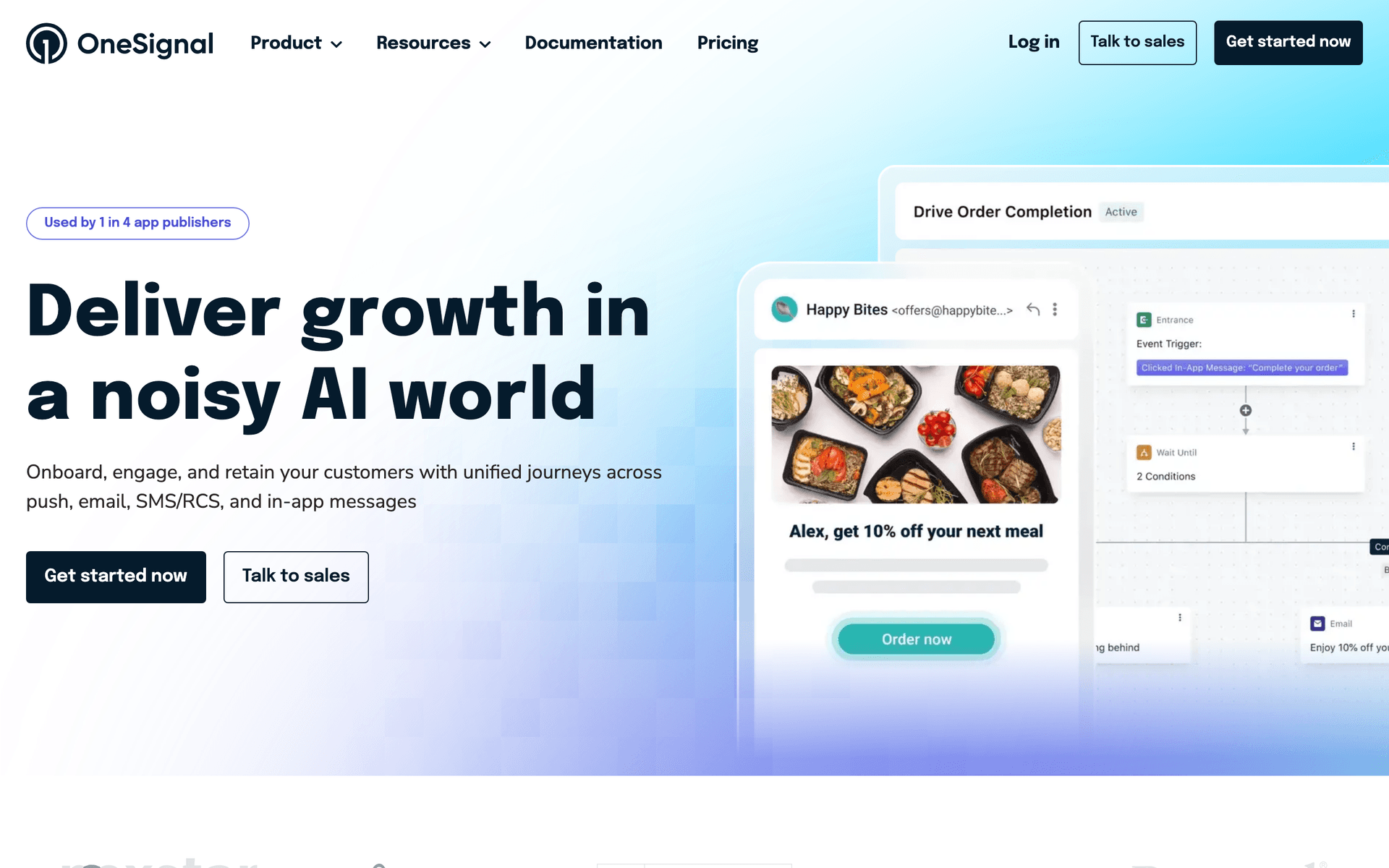
OneSignal is relevant for B2C SaaS because consumer users respond well to multi-channel engagement. Push notifications for time-sensitive alerts, in-app messages for contextual prompts, and email for lifecycle sequences. The free tier is generous. Email is not the strongest channel here compared to dedicated email tools, but the multi-channel combination can drive higher engagement for consumer products.

Best for
B2C SaaS wanting multi-channel consumer engagement
Pricing
Free up to 10,000 subscribers, paid from $9/month

Pros

  • Multi-channel (push, email, in-app, SMS)
  • Generous free tier
  • Good for mobile-first B2C

Cons

  • Email features less polished than dedicated tools
  • Not SaaS-lifecycle focused
  • Basic email automation
#6
Mailchimp

Popular email platform with consumer-friendly features.

Visit
Mailchimp dashboard screenshot

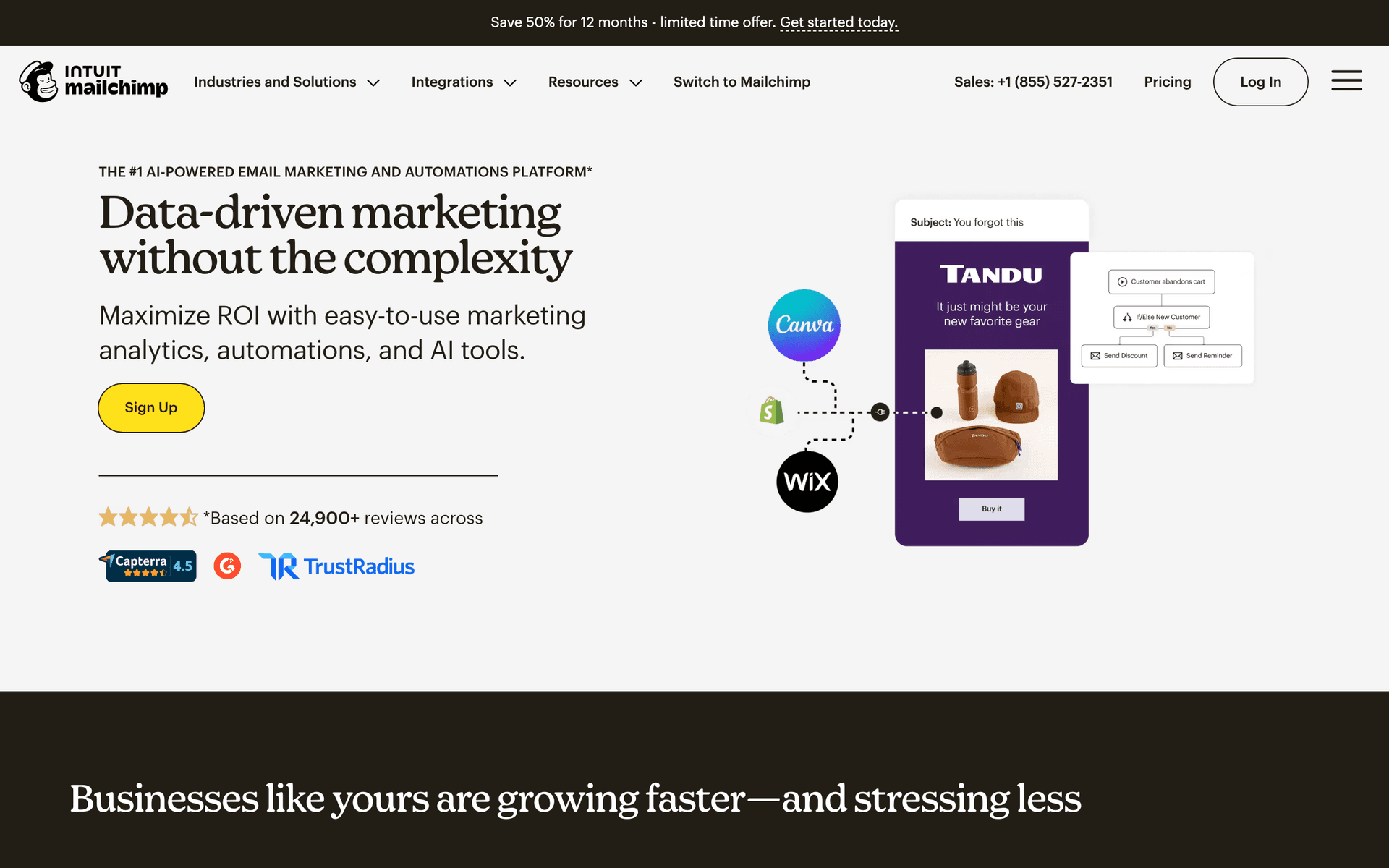
Mailchimp is a common starting point for B2C SaaS. The templates look consumer-grade. The automation handles basic onboarding and re-engagement. Audience management supports behavioral segmentation. The issue for B2C SaaS is that Mailchimp's per-contact pricing gets expensive fast as your user base grows. Many B2C companies start with Mailchimp and migrate when costs escalate.

Best for
Early-stage B2C SaaS getting started with email
Pricing
Free up to 500 contacts, then $13/month

Pros

  • Easy to start with
  • Consumer-grade templates
  • Basic behavioral automation

Cons

  • Per-contact pricing scales poorly
  • Limited SaaS-specific features
  • Gets expensive fast
#7
SendGrid

Email infrastructure for high-volume sending.

Visit
SendGrid dashboard screenshot

SendGrid handles the infrastructure side of B2C email at scale. When you need to send millions of emails per month, SendGrid's infrastructure is built for it. The pricing is volume-friendly. The deliverability at scale is proven. Marketing automation is basic, so most B2C companies using SendGrid pair it with a separate tool for lifecycle sequences or build their own automation layer.

Best for
B2C SaaS needing high-volume email infrastructure
Pricing
Free for 100 emails/day, plans from $19.95/month

Pros

  • Built for high volume
  • Proven deliverability at scale
  • Volume-friendly pricing

Cons

  • Basic marketing automation
  • Not SaaS-specific
  • Need a second tool for lifecycle
#8
Customer.io

Event-driven messaging platform for behavioral lifecycle automation.

Visit
Customer.io dashboard screenshot

B2C SaaS at scale requires behavioral automation that fires based on what users do - or stop doing - inside your product. Customer.io's event pipeline handles this with precision: trigger sequences when users hit specific milestones, drop off after day 3, or exhibit usage patterns that predict churn. Multi-channel support (email, push, SMS, in-app) matters especially in B2C where users are often more reachable via mobile push than email alone. For B2C SaaS with hundreds of thousands of free users generating diverse behavioral signals, Customer.io provides the segmentation depth to make communication feel personal at scale.

Best for
B2C SaaS needing behavioral automation at large user volumes
Pricing
$100/month base, scales with profiles

Pros

  • Precise behavioral triggers
  • Multi-channel including push
  • Scales to large user bases

Cons

  • Per-profile pricing expensive with large free tiers
  • Engineering investment required
  • Complex to maintain
#9
Braze

Enterprise customer engagement platform for consumer-scale apps.

Visit
Braze dashboard screenshot

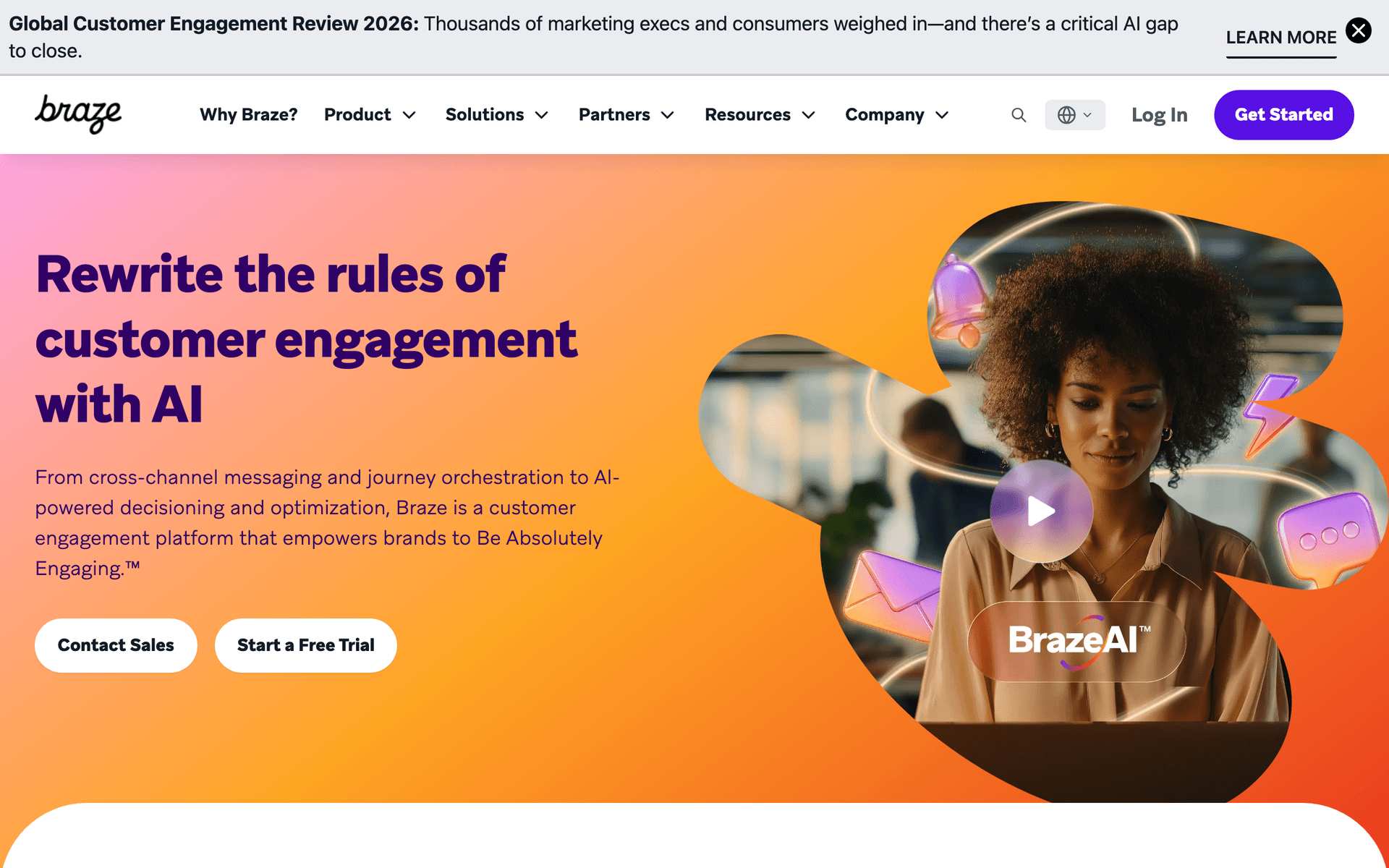
Braze is purpose-built for B2C companies with mobile apps and millions of users. In B2C SaaS, where users expect real-time, contextual communication across apps and email, Braze's real-time event processing (responses within seconds, not minutes) and cross-channel canvas deliver at a level that mid-market tools cannot. AI-powered personalization and predictive churn models become genuinely valuable at B2C scale where manual segmentation is impossible. Best for funded B2C SaaS with a dedicated growth team and the budget to match the enterprise pricing.

Best for
Funded B2C SaaS with mobile apps and large consumer user bases
Pricing
Custom pricing (typically $50K+/year)

Pros

  • Real-time event processing
  • AI personalization at scale
  • Best for B2C mobile apps

Cons

  • Very expensive
  • Requires dedicated team
  • Overkill for early-stage
#10
Iterable

Cross-channel growth marketing platform for consumer companies.

Visit
Iterable dashboard screenshot

Iterable was built with B2C in mind - its cross-channel workflow studio handles the email, push, SMS, and in-app coordination that consumer apps require for effective lifecycle communication. AI-powered channel preference learning routes messages to the channel each user responds to most, which improves engagement without manual segmentation work. For B2C SaaS where users span mobile and web and have varying communication preferences, Iterable's channel intelligence is a real advantage. Custom pricing typically makes sense for B2C SaaS at $5M+ ARR.

Best for
B2C SaaS with cross-channel mobile and web user engagement needs
Pricing
Custom pricing (typically $500-2,000/month)

Pros

  • Cross-channel channel intelligence
  • AI-driven channel preference
  • Strong for B2C workflows

Cons

  • Expensive
  • Complex to implement
  • Not ideal for early stage
#11
Loops

Modern product email for SaaS teams.

Visit
Loops dashboard screenshot

Loops offers a clean event-driven email platform that works well for B2C SaaS in the early to mid growth stage where behavioral automation is needed but enterprise complexity is not. The event-based model connects to your product and sends emails triggered by user actions without the overhead of managing a complex platform. For B2C SaaS with a product-focused team that wants transactional and lifecycle email from one tool, Loops eliminates the common two-tool problem. The free tier makes testing straightforward before scaling.

Best for
Early to mid-stage B2C SaaS wanting clean event-driven email
Pricing
Free tier available, paid from $49/month

Pros

  • Clean, modern interface
  • Unified transactional and lifecycle
  • Simple event integration

Cons

  • Less advanced automation logic
  • No push or SMS
  • Newer platform
#12
Ortto

Customer data platform with marketing automation.

Visit
Ortto dashboard screenshot

B2C SaaS generates enormous behavioral data from free users, and Ortto's built-in CDP layer helps turn that data into actionable segments without a separate analytics tool. Journey automation fires sequences based on cohort behavior, and the built-in analytics tie email campaigns to downstream outcomes like conversion or churn. For B2C SaaS where understanding the free-to-paid conversion path is critical, having the data layer and automation in one platform reduces engineering overhead and gives the growth team self-serve access to behavioral insights.

Best for
Growth-stage B2C SaaS needing behavioral analytics alongside lifecycle automation
Pricing
From $99/month

Pros

  • Built-in CDP for behavioral data
  • Analytics tied to outcomes
  • Self-serve audience building

Cons

  • More complex setup
  • Higher cost
  • Can be over-featured for smaller teams
#13
Encharge

SaaS-native behavioral email automation.

Visit
Encharge dashboard screenshot

Encharge's behavioral automation works well for B2C SaaS in the $500K-$5M range where you need event-driven sequences but cannot justify Customer.io's cost or complexity. The flow builder connects to product events and fires sequences based on real user behavior, and lead scoring helps prioritize which free users are most likely to convert. For B2C SaaS with a lean team, the balance of behavioral automation capability and simpler management makes Encharge a practical middle ground between basic newsletter tools and enterprise platforms.

Best for
Mid-stage B2C SaaS needing behavioral automation at accessible pricing
Pricing
From $79/month for 2,000 subscribers

Pros

  • Behavioral triggers without complexity
  • Lead scoring included
  • SaaS-specific features

Cons

  • Contact-based pricing
  • Less powerful than Customer.io
  • Smaller ecosystem
#14
Vero

Behavioral email platform for product-centric teams.

Visit
Vero dashboard screenshot

Vero's behavioral trigger system suits B2C SaaS that needs to combine newsletter content with behavioral lifecycle sequences from one platform. The newsletter layer handles product updates and content digests while triggered sequences fire based on user actions. API-driven personalization lets you inject live product data - current usage stats, recent activity, personalized recommendations - which boosts relevance in B2C where generic emails see rapidly declining engagement. Mature platform with a strong deliverability track record.

Best for
B2C SaaS wanting behavioral triggers and newsletter capability in one tool
Pricing
From $99/month

Pros

  • Behavioral and newsletter combined
  • API-driven personalization
  • Good deliverability

Cons

  • Dated interface
  • Slower product development
  • Less modern than newer tools
#15
Postmark

Transactional email service with best-in-class deliverability.

Visit
Postmark dashboard screenshot

B2C SaaS generates high volumes of transactional email - account confirmations, password resets, activity notifications, billing alerts - and every missed or delayed email is a direct user experience problem. Postmark's sub-10-second average delivery time and obsessive deliverability focus make it the strongest option for B2C transactional email where reliability directly impacts user trust and retention. The per-email pricing is straightforward and scales cleanly as your user base grows. Pair with a behavioral automation tool for lifecycle.

Best for
B2C SaaS needing reliable, fast transactional email at any scale
Pricing
From $15/month for 10,000 emails

Pros

  • Best deliverability and speed
  • Reliable at high volume
  • Straightforward pricing

Cons

  • Transactional only
  • No lifecycle automation
  • Need a second tool for marketing
#16
Intercom

Customer messaging platform combining support, marketing, and onboarding.

Visit
Intercom dashboard screenshot

B2C SaaS with consumer-facing support needs benefits from Intercom's combination of in-app messaging, email, and help content in one platform. The live chat and bot layer handles real-time consumer support while email handles async lifecycle communication. Product tours and checklists reduce activation friction without requiring custom engineering. For B2C SaaS where consumer support volume is high alongside lifecycle email needs, the consolidation value is real even with Intercom's premium pricing.

Best for
B2C SaaS with significant consumer support needs alongside lifecycle email
Pricing
From $74/month, scales with seats

Pros

  • Unified support and messaging
  • In-app onboarding tools
  • Reduces tool sprawl

Cons

  • Expensive at B2C scale
  • Email automation less advanced
  • Seat-based pricing
#17
Sender

Affordable email and SMS marketing platform.

Visit
Sender dashboard screenshot

Sender provides solid email automation at budget-friendly pricing - relevant for B2C SaaS with large free user bases where per-contact pricing quickly becomes expensive. The automation builder handles behavioral sequences triggered by user actions, and the SMS layer adds a second channel for time-sensitive B2C notifications. For bootstrapped or early-stage B2C SaaS where email budget is constrained but the user base is already substantial, Sender's pricing model offers more headroom than contact-based alternatives.

Best for
Budget-conscious B2C SaaS with large user bases needing affordable email
Pricing
Free for 2,500 subscribers, paid from $15/month

Pros

  • Very affordable
  • Email and SMS together
  • Good automation for the price

Cons

  • Less sophisticated than premium tools
  • Smaller feature set
  • Limited behavioral depth
#18
EmailOctopus

Simple, affordable email marketing with Amazon SES infrastructure.

Visit
EmailOctopus dashboard screenshot

EmailOctopus connects to Amazon SES for infrastructure, delivering very competitive per-email pricing that makes sense for B2C SaaS with high-volume, broadcast-heavy email programs. If your B2C model involves weekly product digests, re-engagement campaigns, or promotional emails to large lists, EmailOctopus delivers this at a fraction of the cost of premium tools. Automation is basic - suitable for simple welcome sequences and time-based drips but not complex behavioral triggers. Best as a complement to a behavioral tool rather than a replacement.

Best for
B2C SaaS with large lists needing cheap broadcast email
Pricing
Free for 2,500 subscribers, paid from $9/month

Pros

  • Very cheap at scale
  • Amazon SES reliability
  • Simple to use

Cons

  • Basic automation only
  • No behavioral triggers
  • Limited segmentation
#19
Mautic

Open-source marketing automation platform.

Visit
Mautic dashboard screenshot

Mautic gives B2C SaaS with technical teams full control over their email infrastructure without per-contact or per-email fees. Self-hosting means no vendor lock-in and no surprises as your user base scales - important for B2C where contact counts grow fast. The marketing automation features cover lead scoring, dynamic segmentation, and multi-step campaigns. The trade-off is setup and maintenance overhead: you own the hosting, deliverability management, and updates. For B2C SaaS that has already validated email as a channel and wants to own the infrastructure, Mautic is a strong long-term option.

Best for
B2C SaaS teams with DevOps capability wanting full email infrastructure control
Pricing
Free (open source), hosting costs apply

Pros

  • No per-contact fees at scale
  • Full data ownership
  • Comprehensive automation features

Cons

  • Self-hosting overhead
  • Requires technical maintenance
  • No SaaS-specific features out of the box

Feature Comparison

FeatureSequenzyCustomer.ioBrevoLoops
Behavioral automation
Yes
Advanced
Basic
Yes
Per-email pricing
Yes
No
Yes
No
Payment integration
Native Stripe
No
No
No
Multi-channel
Email
Email, push, in-app
Email, SMS
Email
High-volume support
Good
Yes
Good
Moderate
Free tier
Yes
No
300/day free
1,000 contacts
Starting price
$29/mo
$100/mo
$9/mo
$49/mo

Common Mistakes to Avoid

We see these mistakes over and over. Skip the learning curve and avoid these from day one.

Choosing per-contact pricing for large user bases

If you have 500,000 users but only email 50,000 monthly, per-contact pricing charges for all 500,000. Per-email pricing from tools like Sequenzy and Brevo charges only for actual sends, saving dramatically at B2C scale.

Sending calendar-based campaigns to behavioral users

B2C users do not care about your marketing calendar. An email about a new feature is irrelevant if they have not finished onboarding. Use behavioral triggers that respond to each user's individual journey.

Waiting too long to trigger win-back sequences

A 30-day inactivity trigger is too late for most B2C SaaS. By then, users have found alternatives. Start win-back at 7 days with a soft touch and escalate urgency at 14 and 21 days.

Not testing activation email content

Your onboarding emails directly impact activation rate, which cascades to retention and revenue. A/B test subject lines, activation CTAs, and email timing relentlessly. Small improvements in activation have outsized business impact.

Email Sequences Every B2C SaaS Needs

These are the essential automated email sequences that will help you grow your business and keep clients coming back.

B2C Activation Sequence

New user signs up

Get new users to their first value moment before they forget about you.

Immediate
You are in - do this first

Single clear action that delivers the first moment of value. Not a feature tour. One thing to do right now.

Day 1
Did you try [key feature] yet?

Follow up on whether they completed the activation action. If yes, suggest the next step. If not, offer a simplified path.

Day 3
People like you use [Product] for this

Show use cases from users with similar profiles. Social proof plus inspiration for what is possible.

Day 7
You are missing out on [feature]

Highlight a feature they have not tried based on their usage data. Make it relevant to what they have already done.

Inactivity Win-Back

User has not logged in for 7 days

Bring inactive users back before they churn.

After 7 days inactive
We miss you - here is what is new

Highlight a new feature or improvement since their last visit. Give them a reason to come back.

After 14 days inactive
Your [data/progress] is waiting for you

Remind them of what they built or achieved in the product. Loss aversion is powerful.

After 30 days inactive
Should we keep your account active?

Gentle ultimatum. Let them know what happens to their data if they stay inactive. Give a clear re-engagement path.

B2C Email Economics

The fundamental challenge of B2C SaaS email is scale versus cost. You have hundreds of thousands of users, many of them free, and your average revenue per user is low. If your email tool charges per contact, your email costs can exceed the revenue those contacts generate.

This is why pricing model matters more than feature set for B2C SaaS. A tool that charges $0.001 per email sent is dramatically cheaper than one that charges $0.01 per contact per month when you have 500,000 users but only email 50,000 of them in any given month. Run the math on your specific volumes before choosing a platform.

Behavioral Email Beats Calendar Email

B2C users do not care about your marketing calendar. They care about their own experience. An email about a new feature is irrelevant if they have not finished onboarding. A re-engagement email is wasted if they logged in yesterday.

Behavioral triggers solve this by sending the right email at the right moment in each user's individual journey. The activation email fires when they stall during setup. The feature tip arrives when they use a related feature. The win-back email sends when their activity drops. This approach requires more setup than calendar-based campaigns, but it performs dramatically better at B2C scale.

The Win-Back Opportunity

In B2C SaaS, churned users represent your largest untapped audience. You already know who they are, what they used, and when they left. A well-crafted win-back sequence that highlights product improvements, reminds them of their data, and offers an easy return path recovers a meaningful percentage of churned users.

The math works in your favor. Even a 5% win-back rate on 100,000 churned users is 5,000 recovered accounts. At B2C scale, win-back email is one of the highest-ROI email programs you can run.

Pricing Model Comparison for B2C SaaS

The email pricing decision is make-or-break for B2C SaaS. Here is a concrete comparison:

Scenario: 200,000 users, 20,000 emails sent per month

  • Per-contact pricing (Customer.io): $400-800/month for 200,000 profiles
  • Per-contact pricing (Loops): $500+/month for 200,000 contacts
  • Per-email pricing (Sequenzy): $29/month for 50,000 emails (covers 20,000 easily)
  • Per-email pricing (Brevo): $25-65/month depending on tier

The difference is $300-700 per month, which is $3,600-8,400 per year. At B2C scale, per-email pricing almost always wins.

The Activation Imperative

In B2C SaaS, activation is the metric that matters most. If your onboarding email gets more signups to their first value moment, every downstream metric improves - retention, conversion, lifetime value. A 10% improvement in activation rate can mean 20-30% improvement in revenue.

Structure your activation sequence around your product's specific first-value-moment:

Immediate: One clear action. "Do this now to get started." No feature tours. No company history.

Day 1: Check if they completed the action. If yes, suggest the next step. If no, offer a simplified path or help.

Day 3: Show what other users with similar profiles accomplish with the product. Social proof plus inspiration.

Day 7: Highlight an unused feature relevant to what they have already done. Bridge from activation to habit formation.

Multi-Channel Considerations

B2C users respond well to multi-channel engagement. Consider adding push notifications for time-sensitive re-engagement (faster than email) and in-app messages for contextual feature prompts. Email remains best for onboarding, longer-form education, and win-back sequences.

Tools like OneSignal and Customer.io handle multi-channel orchestration where you can define rules like: "If user does not re-engage after push notification, send email 24 hours later." This layered approach drives higher overall engagement than either channel alone.

Check your email authentication with our SPF checker to ensure your B2C emails reach user inboxes reliably.

How We Evaluated These Tools

I evaluated these 7 tools based on behavioral automation capabilities, pricing alignment with B2C economics (high volume, low ARPU), event-driven trigger quality, and scalability to hundreds of thousands of users. Each tool was assessed with real B2C SaaS activation and win-back workflows.

Frequently Asked Questions

Ready to grow your b2c saa practice?

Start your free trial today. Set up your first email sequence in minutes with AI-powered content generation.

Related Industries

Sequenzy - Complete Pricing Guide

Pricing Model

Sequenzy uses email-volume-based pricing. You only pay for emails you send. Unlimited contacts on all plans — storing subscribers is always free.

All Pricing Tiers

  • 2.5k emails/month: Free (Free annually)
  • 15k emails/month: $19/month ($205/year annually)
  • 60k emails/month: $29/month ($313/year annually)
  • 120k emails/month: $49/month ($529/year annually)
  • 300k emails/month: $99/month ($1069/year annually)
  • 600k emails/month: $199/month ($2149/year annually)
  • 1.2M emails/month: $349/month ($3769/year annually)
  • Unlimited emails/month: Custom pricing (Custom annually)

Yearly billing: All plans offer a 10% discount when billed annually.

Free Plan Features (2,500 emails/month)

  • Visual automation builder
  • Transactional email API
  • Reply tracking & team inbox
  • Goal tracking & revenue attribution
  • Dynamic segments
  • Payment integrations
  • API, MCP, and CLI access
  • Custom sending domain

Paid Plan Features (15k - 1.2M emails/month)

  • Visual automation builder
  • Transactional email API
  • Reply tracking & team inbox
  • Goal tracking & revenue attribution
  • Dynamic segments
  • Payment integrations (Stripe, Paddle, Lemon Squeezy)
  • API, MCP, and CLI access
  • Custom sending domain

Enterprise Plan Features (Unlimited emails)

  • Visual automation builder
  • Transactional email API
  • Reply tracking & team inbox
  • Goal tracking & revenue attribution
  • Dynamic segments
  • Payment integrations
  • API, MCP, and CLI access
  • Custom sending domain

Important Pricing Notes

  • You only pay for emails you send — unlimited contacts on all plans
  • No hidden fees - all features included in the price
  • No credit card required for free tier

Contact

  • Pricing Page: https://sequenzy.com/pricing
  • Sales: hello@sequenzy.com