Updated 2026-03-15

Best Email Marketing Tools for B2B2C SaaS

Three audiences, one platform. Engage your business clients, their customers, and your own team from a single email system.

B2B2C SaaS has the most complex email challenge in the industry. You are communicating with three distinct audiences: your business clients (the B), their end consumers (the C), and sometimes even your own internal team. Each layer needs different messaging, different branding, and different triggers. Your business clients need onboarding and success emails from your brand. Their consumers need transactional and engagement emails that look like they come from the business, not you. Here are the tools that handle this multi-layer communication without making you lose your mind.

TL;DR

Sequenzy is the best starting point for B2B2C SaaS because its event-driven architecture handles multi-layer triggers and the free tier (up to 2,500 emails/mo) lets you validate your approach. Customer.io is the most powerful option for funded B2B2C companies needing sophisticated multi-audience segmentation and cross-layer workflows.

Why B2B2C SaaS Needs Email Marketing

Business Client Onboarding

Your B2B clients need structured onboarding to set up the product, configure their branding, and start serving their customers through your platform. Automated sequences ensure every client launches successfully.

End Consumer Engagement

The consumers using your platform through your B2B clients need welcome emails, transactional notifications, and engagement sequences. These must be branded for each business client, not your platform.

Client Success Communication

Keeping your B2B clients engaged means sharing usage analytics, best practices, and product updates. Automated success sequences reduce churn at the business level, which protects the consumer base beneath.

Revenue Expansion Across Layers

Growth comes from expanding both your B2B client base and the consumer volume flowing through existing clients. Email drives both: nurturing new business leads while helping existing clients grow their consumer base.

B2B2C SaaS Email Marketing Benchmarks

Know these numbers before you start. They'll help you set realistic goals and pick the right tool.

B2B: 25-35%, Consumer: 20-30%
Average Open Rate

B2B client success emails see higher engagement than consumer-facing transactional emails due to the direct business relationship.

B2B: 4-7%, Consumer: 2-4%
Average Click Rate

B2B onboarding emails with setup instructions see the highest click rates. Consumer engagement varies by client industry.

B2B: Tuesday-Thursday 9-11 AM, Consumer: varies by client
Best Send Time

B2B client communication follows standard business hours. Consumer email timing should be optimized per client's audience.

60-80%
Client Onboarding Completion

B2B2C platforms with well-designed onboarding email sequences see 60-80% of clients complete full platform setup within 14 days.

Important Tips Before You Choose

Lessons from b2b2c saaswho've been doing this for years. Save yourself the trial and error.

Treat each communication layer as a separate track

Your B2B client onboarding uses your brand and domain. Consumer-facing emails use the client's brand and domain. Platform communications (outages, security) go to everyone with appropriate context. Never mix these tracks.

Invest heavily in B2B client success sequences

If a client fails to onboard properly, their consumers never engage. Your most important email sequences are the ones that ensure business clients set up correctly, configure their branding, and start serving consumers effectively.

Use per-email pricing for consumer volume

A single business client might generate thousands of consumer emails per month. Per-contact pricing breaks down when you are responsible for both B2B contacts and their consumer bases. Per-email pricing aligns with B2B2C economics.

Set up multi-domain sending for client-branded email

Consumers should see their provider's brand, not your platform's brand. Configure each client's sending domain with proper DNS records. Tools like SendGrid and Resend handle multi-domain sending well.

Monitor client consumer metrics proactively

Track each client's consumer engagement metrics. When a client's consumer engagement drops 30% week-over-week, trigger a proactive success outreach. The cost of losing a B2B client includes all the consumers beneath them.

Plan for client churn communication

When a business client leaves, their consumers need to know what happens to their accounts. Have a pre-built communication plan for this scenario so consumers are never left in the dark.

19 Best Email Marketing Tools for B2B2C SaaS

#ToolDescriptionBest ForPricing
1SequenzyEmail marketing with event-driven automation and native payment integrations for SaaS.B2B2C SaaS wanting multi-layer automation with payment trackingFree up to 2,500 emails/mo, then $19/mo (unlimited contacts)
2Customer.ioPowerful event-driven messaging for complex multi-audience use cases.B2B2C SaaS with complex multi-layer automation and funded teams$100/month for 5,000 profiles
3SendGridHigh-volume email infrastructure with multi-domain support.B2B2C SaaS needing high-volume, multi-domain consumer emailFree for 100 emails/day, plans from $19.95/month
4LoopsModern email platform for SaaS with event-based automations.Simpler B2B2C models with straightforward consumer communicationFree up to 1,000 contacts, then $49/month
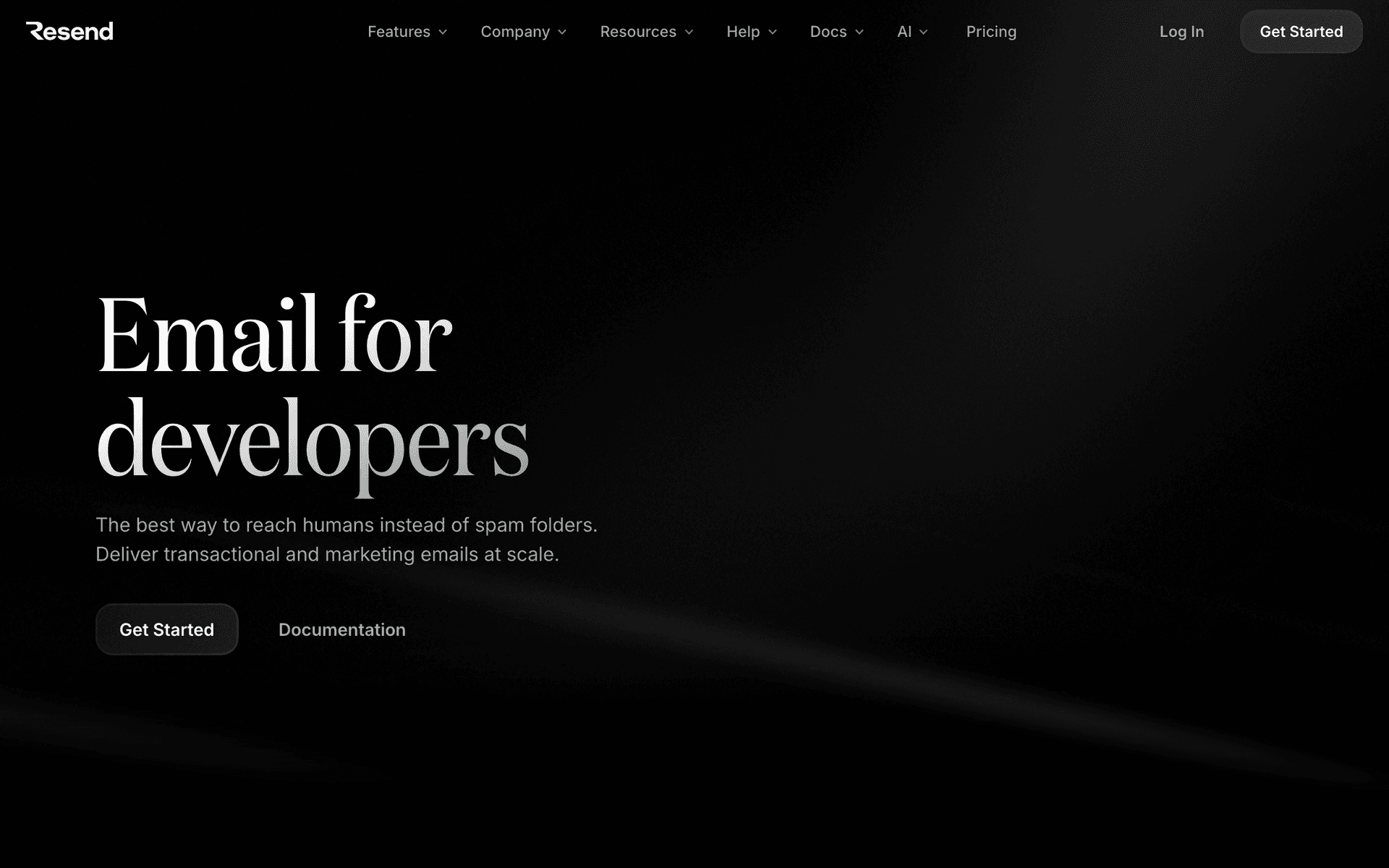
5ResendDeveloper-first email API with multi-domain support.Technical B2B2C teams building custom multi-layer email systemsFree for 3,000 emails/month, then $20/month
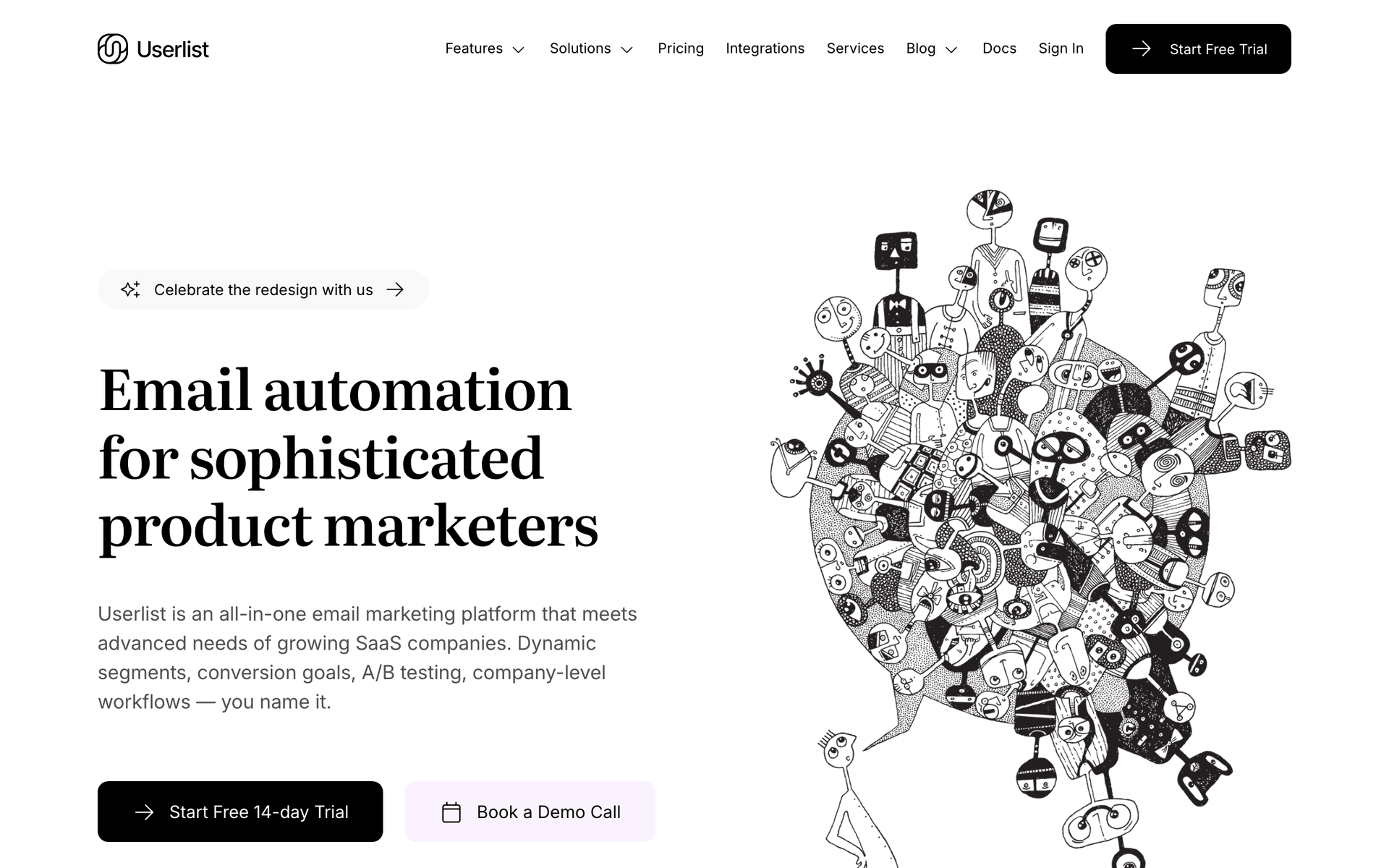
6UserlistEmail automation for SaaS with company-level tracking.B2B2C SaaS wanting business-level tracking for client success$149/month for 5,000 users
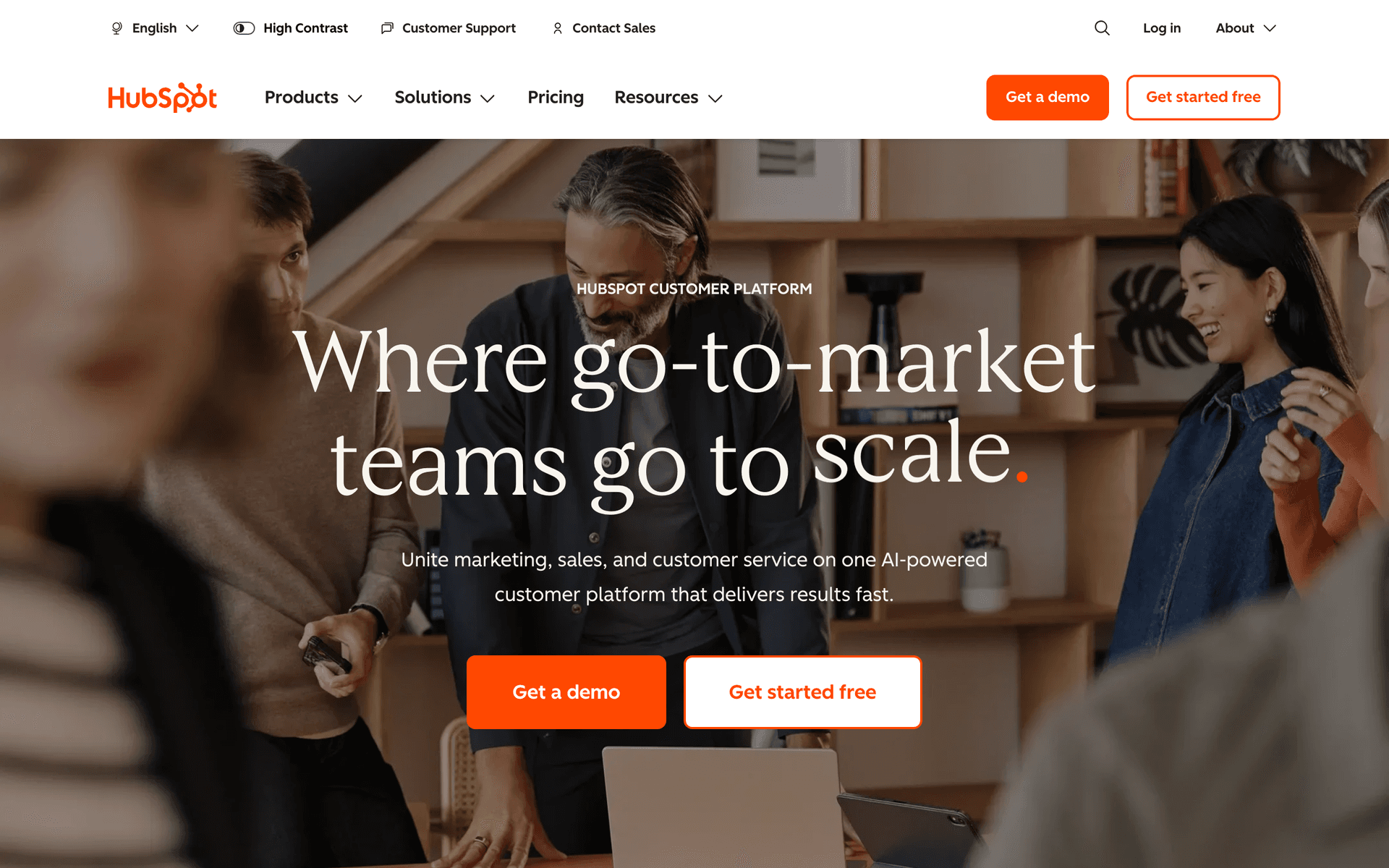
7HubSpotEnterprise CRM and marketing platform.B2B2C with sales-led client acquisition and dedicated account managementFree CRM, marketing hub from $50/month
8Customer.ioEvent-driven messaging platform supporting complex multi-layer workflows.B2B2C SaaS with complex dual-layer automation and multi-channel needs$100/month base, scales with profiles
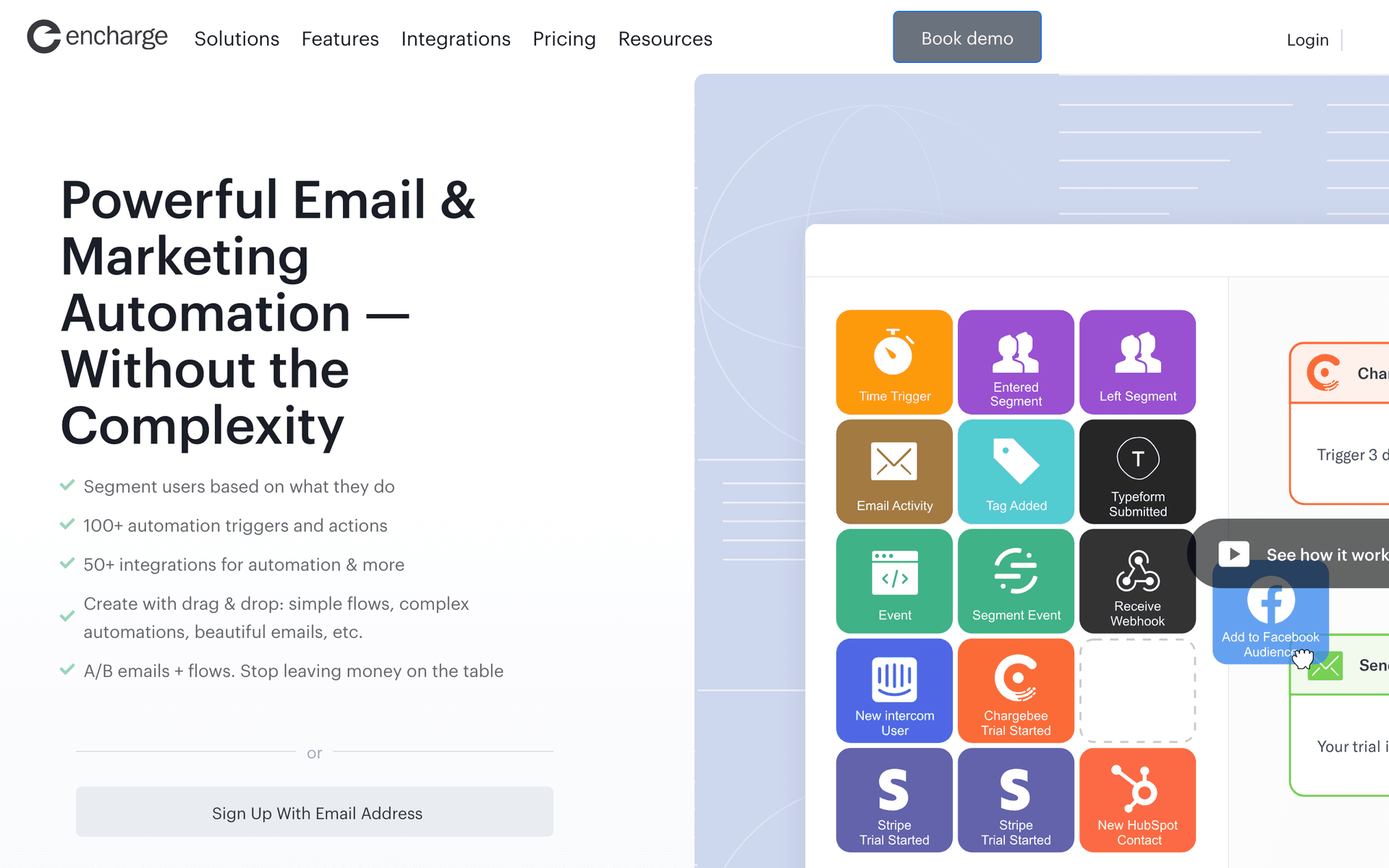
9EnchargeSaaS-native marketing automation with company-level tracking.B2B2C teams needing SaaS-specific automation at a mid-market budgetFrom $79/month for 2,000 subscribers
10IntercomCustomer messaging platform for support, onboarding, and marketing.B2B2C companies needing unified support and lifecycle messaging across both layersFrom $74/month, scales with seats
11VeroBehavioral email platform with flexible data model.B2B2C teams needing flexible data structures for nested user-account relationshipsFrom $99/month
12UserlistEmail automation designed for SaaS with company-level tracking.B2B2C SaaS teams wanting native company-user dual tracking without complexityFrom $149/month for up to 5,000 users
13PostmarkTransactional email service with best-in-class deliverability.B2B2C teams needing reliable delivery for high-stakes transactional emailFrom $15/month for 10,000 emails
14OrttoCustomer data platform with integrated marketing automation.Growth-stage B2B2C SaaS needing data infrastructure alongside email automationFrom $99/month
15LoopsModern product email platform for SaaS teams.B2B2C teams wanting simple, fast event-driven email without platform complexityFree tier available, paid from $49/month
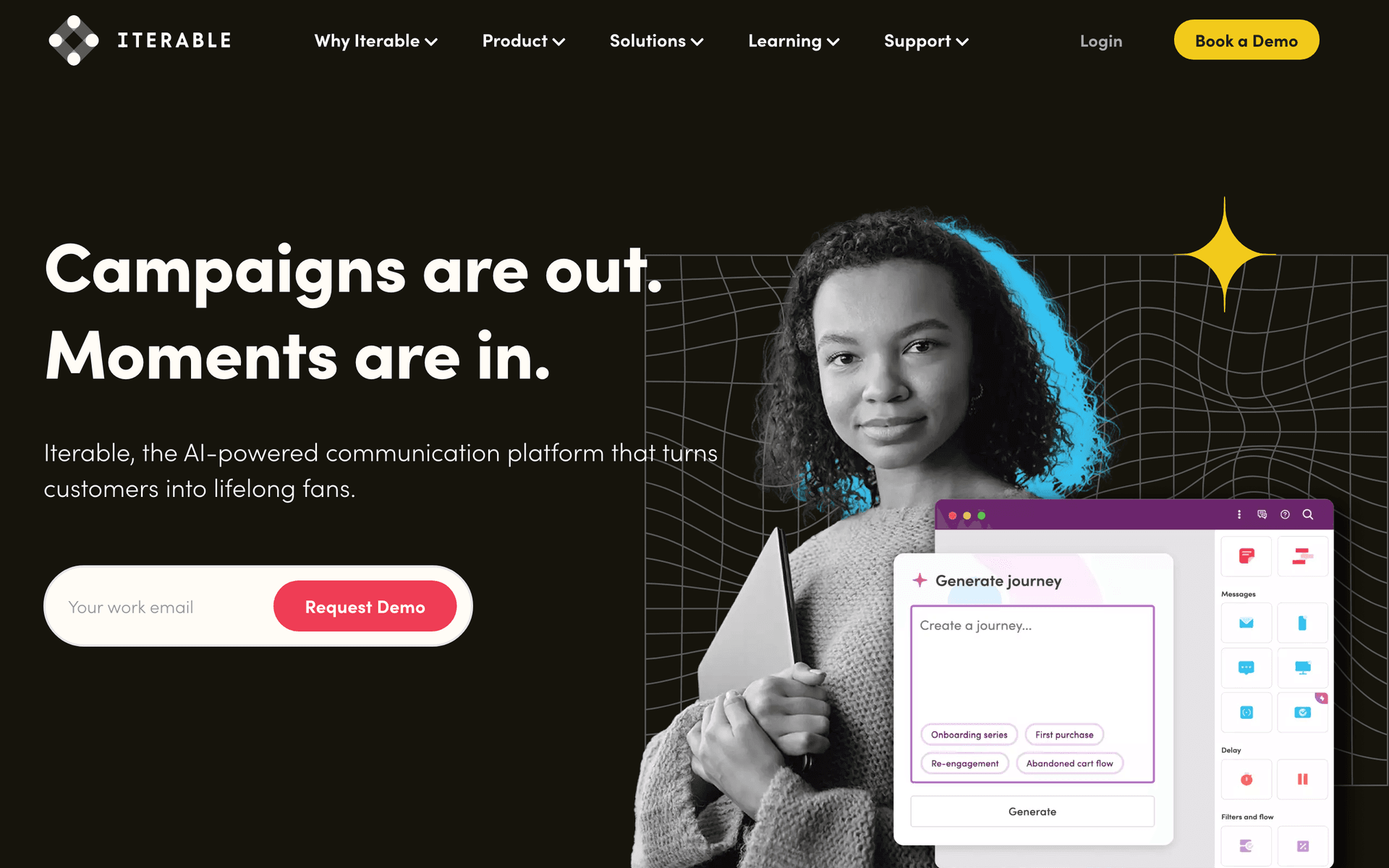
16IterableCross-channel growth marketing platform.Scaled B2B2C SaaS with mobile apps and cross-channel communication needsCustom pricing (typically $500-2,000/month)
17SendGridEmail delivery platform with transactional and marketing capabilities.B2B2C teams already on SendGrid wanting to consolidate high-volume email deliveryFree for 100 emails/day, paid from $19.95/month
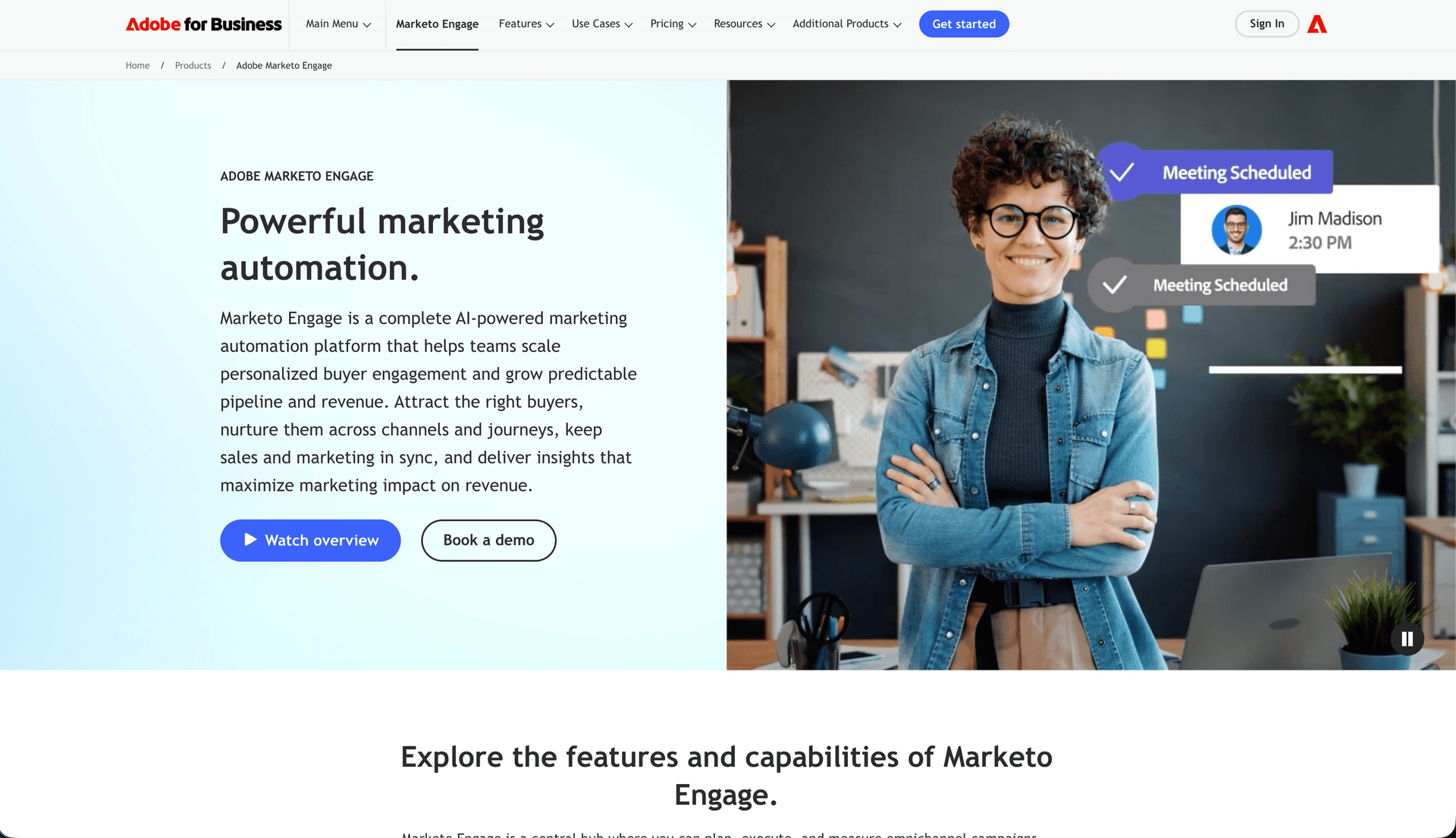
18MarketoEnterprise B2B marketing automation platform.Enterprise B2B2C where the client acquisition side involves ABM and long sales cyclesCustom pricing (typically $1,000+/month)
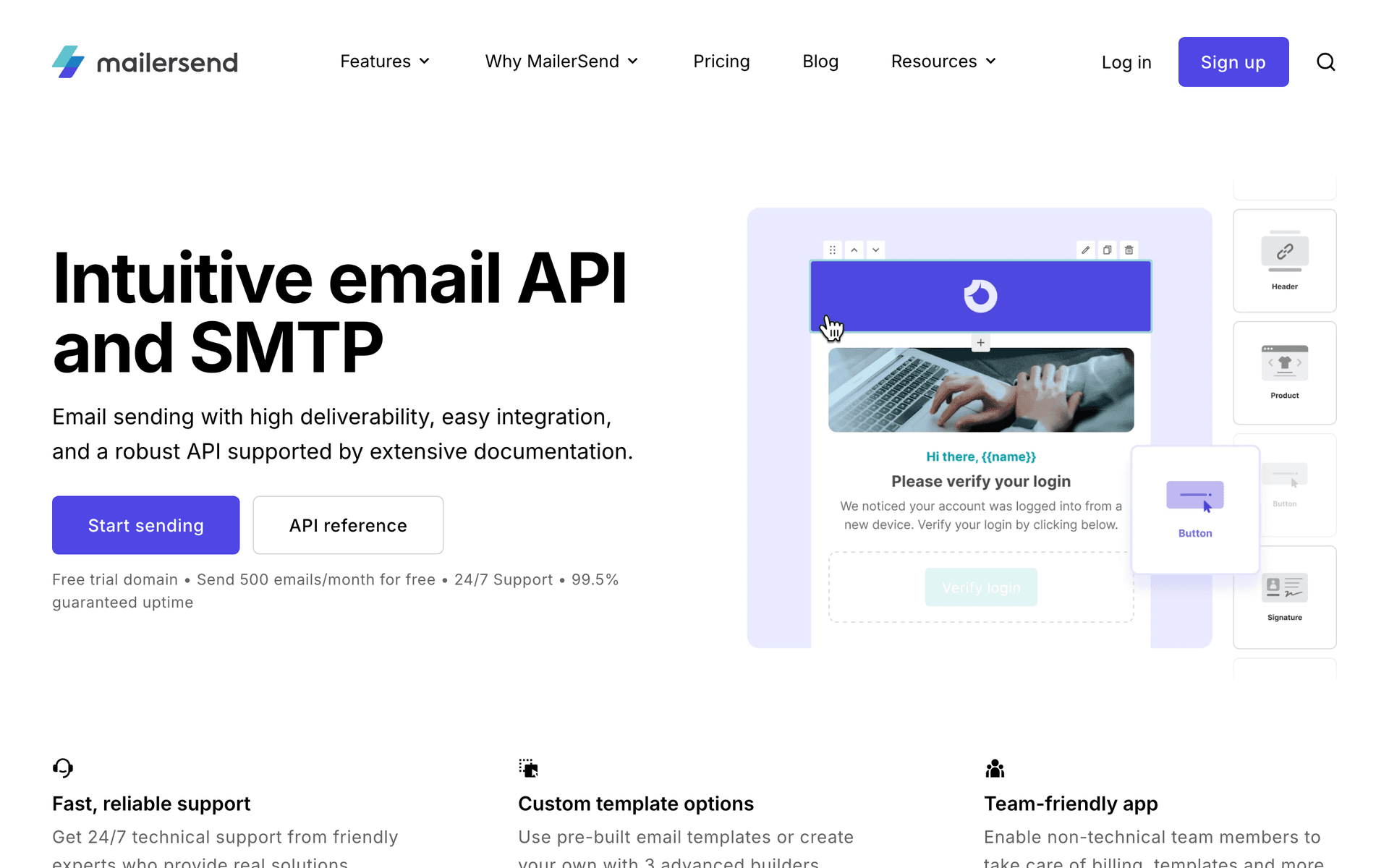
19MailerSendTransactional email and SMS API for product teams.Early-stage B2B2C teams needing affordable transactional email infrastructureFree for 3,000 emails/month, then $25/month
Our Top Pick for B2B2C SaaS
#1
Sequenzy

Email marketing with event-driven automation and native payment integrations for SaaS.

Visit
Sequenzy dashboard screenshot

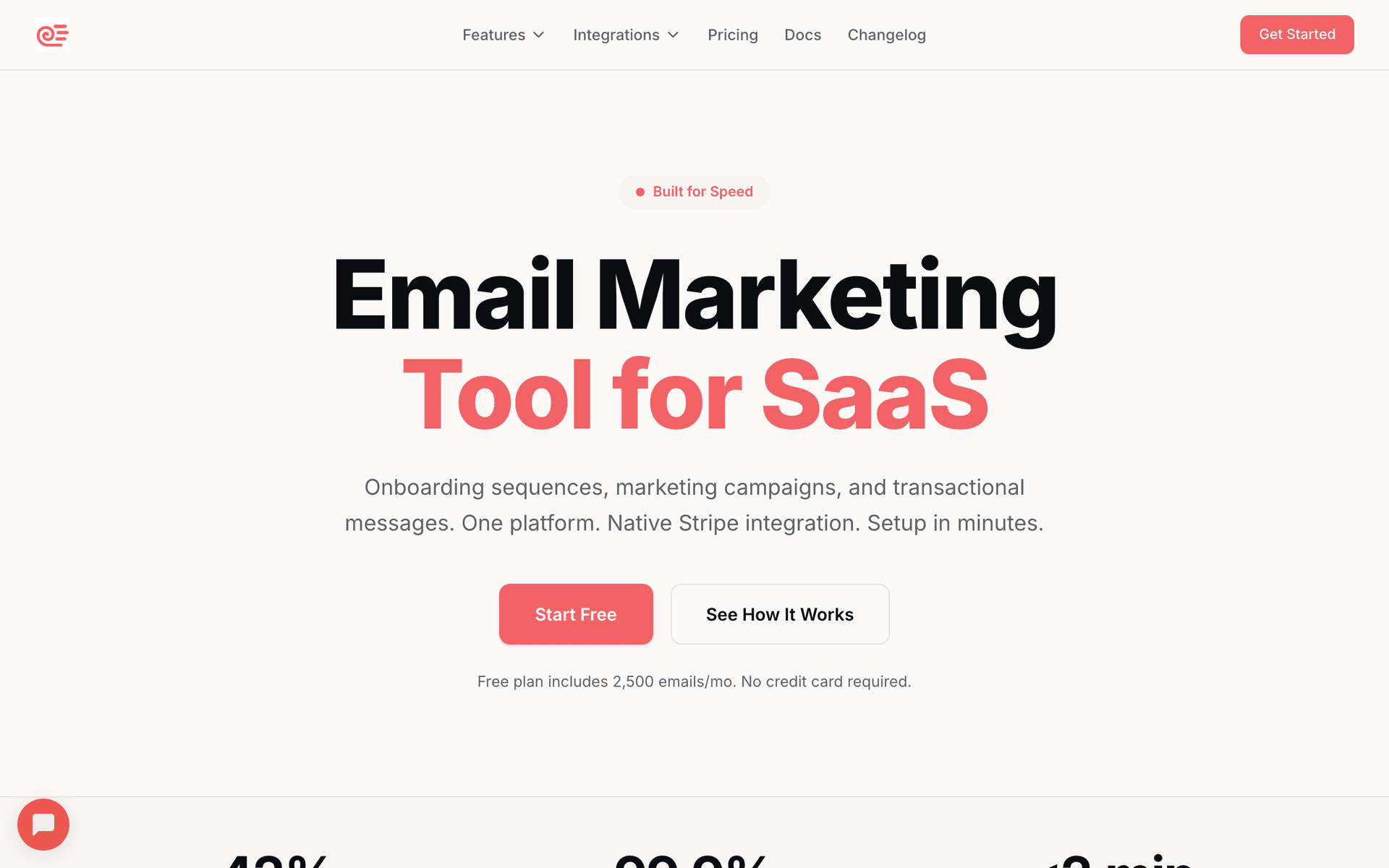
Sequenzy handles B2B2C because the event system supports multi-layer triggers. When a business client signs up, trigger their onboarding sequence. When one of their consumers activates, trigger the consumer welcome flow. When payment events occur at either layer, the native Stripe integration handles it automatically. The free tier supports up to 2,500 emails per month, which lets you validate your B2B client communication before scaling. The AI sequence builder generates separate flows for your B2B and consumer audiences in seconds. Pay-per-email pricing ($29 for 50,000 emails) aligns with the B2B2C model where consumer email volumes can be high but per-unit revenue is low. You only pay for actual sends, not for the total consumer database.

Best for
B2B2C SaaS wanting multi-layer automation with payment tracking
Pricing
Free up to 2,500 emails/mo, then $19/mo (unlimited contacts)

Pros

  • Event-driven triggers for both B2B and consumer layers
  • Native Stripe integration for multi-layer billing
  • AI generates separate B2B and consumer sequences
  • Pay per email for high consumer volumes

Cons

  • Newer platform with smaller community
  • No built-in co-branding for consumer emails
  • Template library still growing
#2
Customer.io

Powerful event-driven messaging for complex multi-audience use cases.

Visit
Customer.io dashboard screenshot

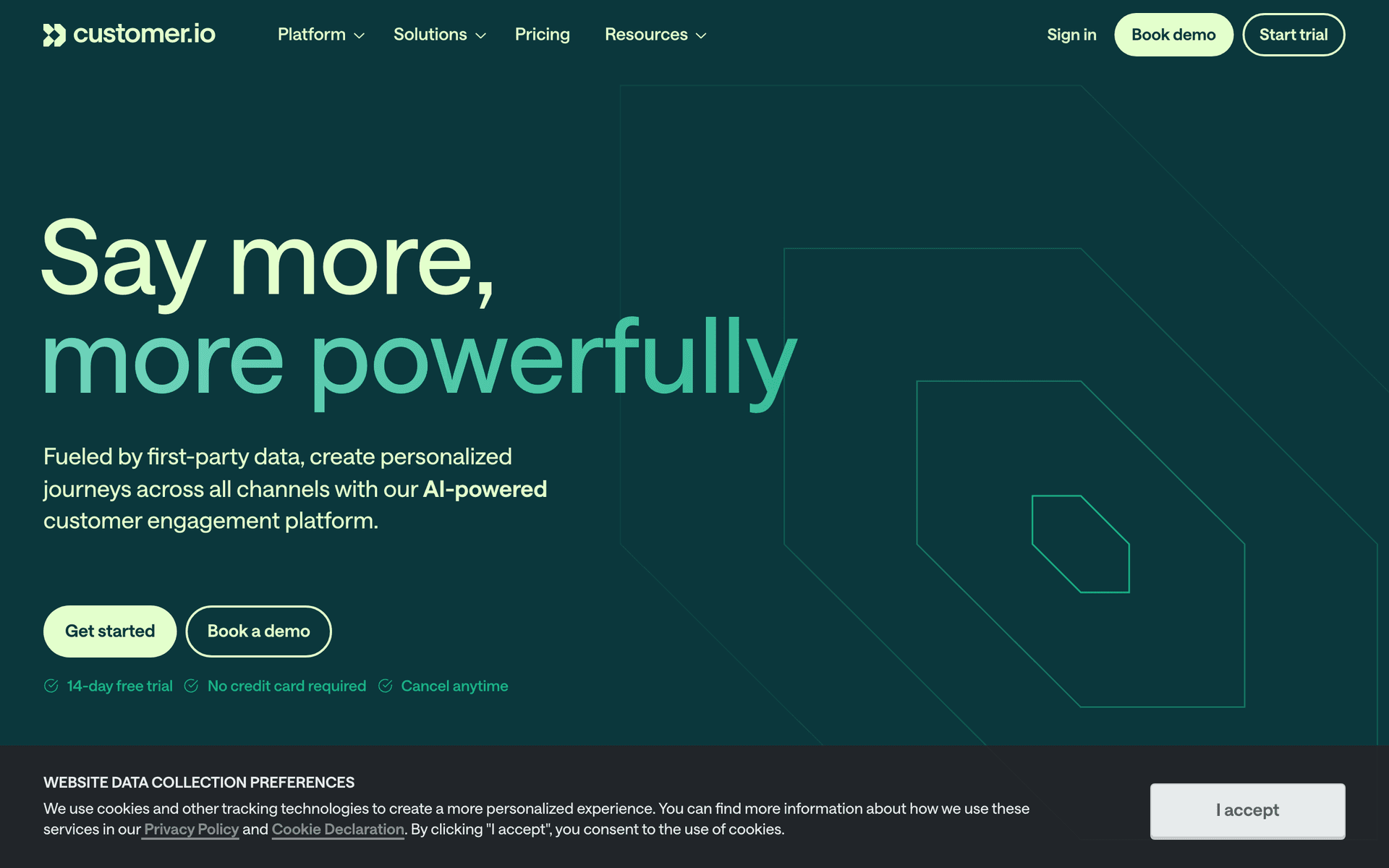
Customer.io is the strongest option for B2B2C companies with complex multi-layer needs. The segmentation engine can model the three-layer hierarchy (your platform, business clients, consumers) with attributes and relationships. Events at the consumer layer can trigger workflows at the business layer and vice versa - when consumer engagement drops for a specific client, trigger a proactive success email to that client. Multi-channel support (email, push, in-app, SMS) matters when consumers interact through mobile apps. Data warehouse sync keeps everything in sync with your analytics stack. The complexity and $100/month price are the tradeoffs.

Best for
B2B2C SaaS with complex multi-layer automation and funded teams
Pricing
$100/month for 5,000 profiles

Pros

  • Best multi-audience segmentation
  • Complex cross-layer workflow triggers
  • Multi-channel messaging
  • Flexible event pipeline

Cons

  • Expensive starting price
  • Complex setup requires engineering
  • No native payment integration
#3
SendGrid

High-volume email infrastructure with multi-domain support.

Visit
SendGrid dashboard screenshot

SendGrid handles the infrastructure side of B2B2C email well. When you need to send consumer-facing emails from dozens of different business client domains, SendGrid's subuser feature manages separate sending reputations per client. This reputation isolation is critical - one client's poor practices should not affect another client's deliverability. The API handles the volume that B2B2C generates. Marketing automation is basic, so you likely need a separate tool for B2B lifecycle sequences.

Best for
B2B2C SaaS needing high-volume, multi-domain consumer email
Pricing
Free for 100 emails/day, plans from $19.95/month

Pros

  • Multi-domain sending for client-branded email
  • Handles high consumer email volumes
  • Subuser feature for reputation isolation

Cons

  • Basic marketing automation
  • Complex pricing
  • Need separate tool for B2B lifecycle
#4
Loops

Modern email platform for SaaS with event-based automations.

Visit
Loops dashboard screenshot

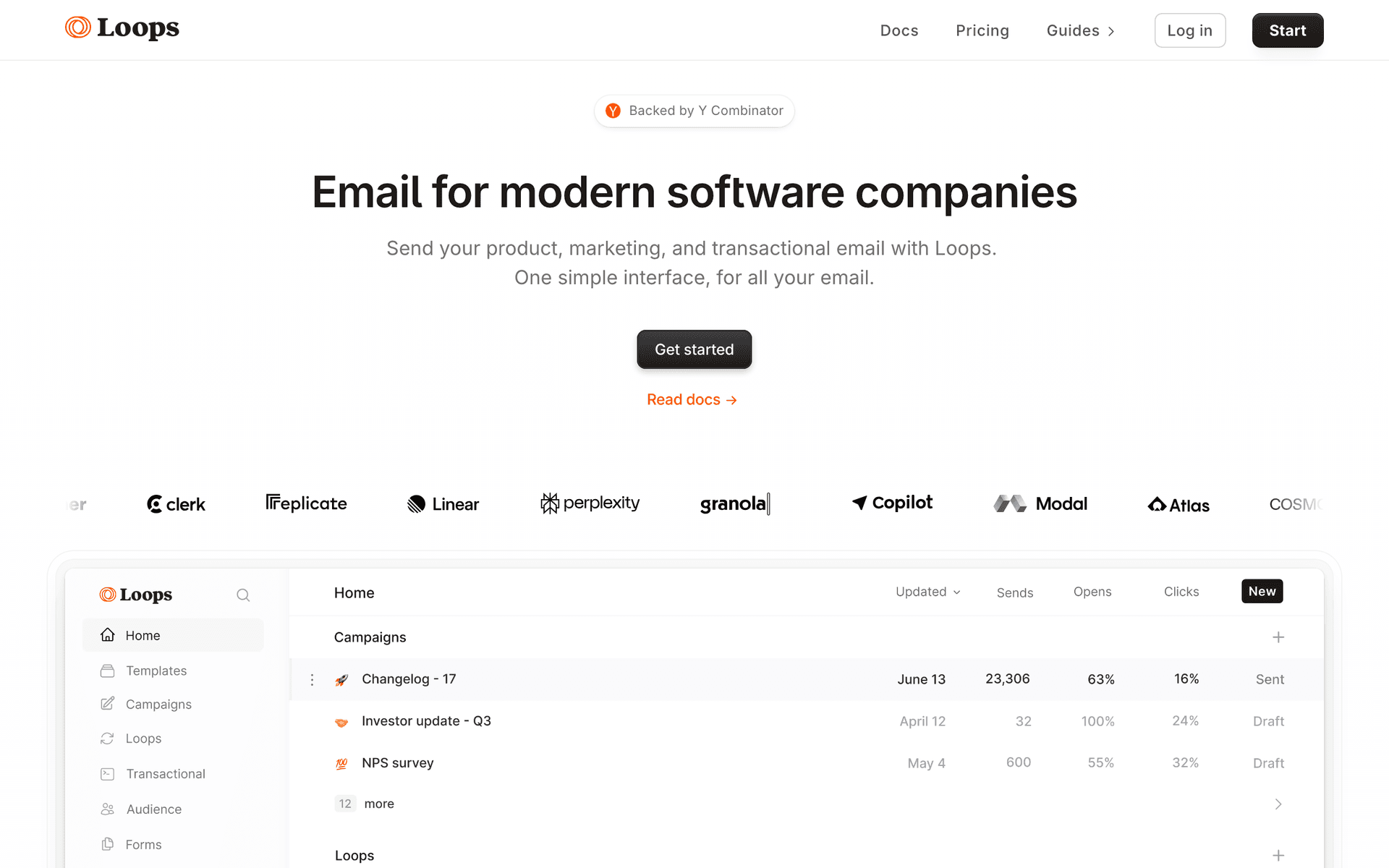
Loops can work for simpler B2B2C models where the consumer communication is straightforward. Event-based automations handle both B2B onboarding and consumer triggers. The combined transactional and marketing approach reduces tool complexity. Where Loops struggles with B2B2C is modeling the multi-layer hierarchy, since it was designed for direct SaaS, not intermediary models. Best suited for B2B2C companies with simple consumer communication.

Best for
Simpler B2B2C models with straightforward consumer communication
Pricing
Free up to 1,000 contacts, then $49/month

Pros

  • Clean, SaaS-native interface
  • Event-based automations
  • Combined transactional and marketing

Cons

  • Not designed for multi-layer hierarchies
  • Per-contact pricing includes all consumers
  • Limited co-branding support
#5
Resend

Developer-first email API with multi-domain support.

Visit
Resend dashboard screenshot

Resend gives B2B2C engineering teams the multi-domain support needed for client-branded consumer emails. Add each business client's domain and send consumer emails that look like they come from the client rather than your platform. React Email templates handle dynamic branding with client-specific colors, logos, and styles. The API is clean for high-volume consumer email. You build the automation layer yourself, but you get full control over the multi-layer routing logic.

Best for
Technical B2B2C teams building custom multi-layer email systems
Pricing
Free for 3,000 emails/month, then $20/month

Pros

  • Multi-domain for client-branded email
  • React Email for dynamic templates
  • Clean API for high volumes

Cons

  • No built-in automation
  • Must build routing logic in code
  • No audience management
#6
Userlist

Email automation for SaaS with company-level tracking.

Visit
Userlist dashboard screenshot

Userlist's company-level tracking is useful for B2B2C because it lets you track behavior at the business client level while communicating with individual users beneath. When a business client's consumer engagement drops, you can trigger a success intervention at the business level. The SaaS focus means lifecycle patterns work naturally. The price and limited multi-domain support are the constraints.

Best for
B2B2C SaaS wanting business-level tracking for client success
Pricing
$149/month for 5,000 users

Pros

  • Company-level tracking for B2B clients
  • Behavior-based automation
  • SaaS-specific lifecycle patterns

Cons

  • Higher starting price
  • Limited multi-domain support
  • Smaller community
#7
HubSpot

Enterprise CRM and marketing platform.

Visit
HubSpot dashboard screenshot

HubSpot makes sense for B2B2C companies where the B2B layer involves a sales team managing client relationships with dedicated account management. The CRM tracks client deals, health scores, and lifecycle stages. Marketing automation handles lead nurturing for new business prospects. For the consumer layer, HubSpot is not the right tool - most B2B2C companies using HubSpot pair it with a transactional email tool for consumer-facing communication.

Best for
B2B2C with sales-led client acquisition and dedicated account management
Pricing
Free CRM, marketing hub from $50/month

Pros

  • Complete CRM for client management
  • Lead nurturing for B2B sales
  • Client health scoring

Cons

  • Not designed for consumer-layer email
  • Expensive at scale
  • Need a second tool for consumer communication
#8
Customer.io

Event-driven messaging platform supporting complex multi-layer workflows.

Visit
Customer.io dashboard screenshot

Customer.io handles the dual complexity of B2B2C well because its data model supports both individual users and company-level objects simultaneously. You can trigger a sequence when a business client reaches a usage threshold while also running a separate consumer-layer onboarding flow - all from the same event pipeline. Multi-channel support (email, push, SMS, in-app) is valuable in B2B2C where consumer-facing communication often benefits from push notifications alongside email. For B2B2C teams with engineering resources to invest in setup, Customer.io is the most capable platform for the unique messaging challenges this model creates.

Best for
B2B2C SaaS with complex dual-layer automation and multi-channel needs
Pricing
$100/month base, scales with profiles

Pros

  • Handles both B2B and consumer layers
  • Multi-channel messaging
  • Powerful event pipeline

Cons

  • Requires engineering investment
  • Per-profile pricing at scale
  • Complex to maintain
#9
Encharge

SaaS-native marketing automation with company-level tracking.

Visit
Encharge dashboard screenshot

Encharge's native understanding of users and companies makes it a practical choice for B2B2C SaaS where you need to segment communication by both the business client and the end consumer. The flow builder connects to product events via Segment or direct API, enabling you to trigger client-side sequences (new business onboarding, health alerts) separately from consumer-side flows (activation, feature discovery). For B2B2C teams that cannot afford Customer.io's complexity or cost, Encharge provides solid behavioral automation at a more accessible price point.

Best for
B2B2C teams needing SaaS-specific automation at a mid-market budget
Pricing
From $79/month for 2,000 subscribers

Pros

  • SaaS-specific data model
  • Company and user segmentation
  • Accessible pricing

Cons

  • Smaller ecosystem
  • Less powerful than Customer.io
  • Contact-based pricing
#10
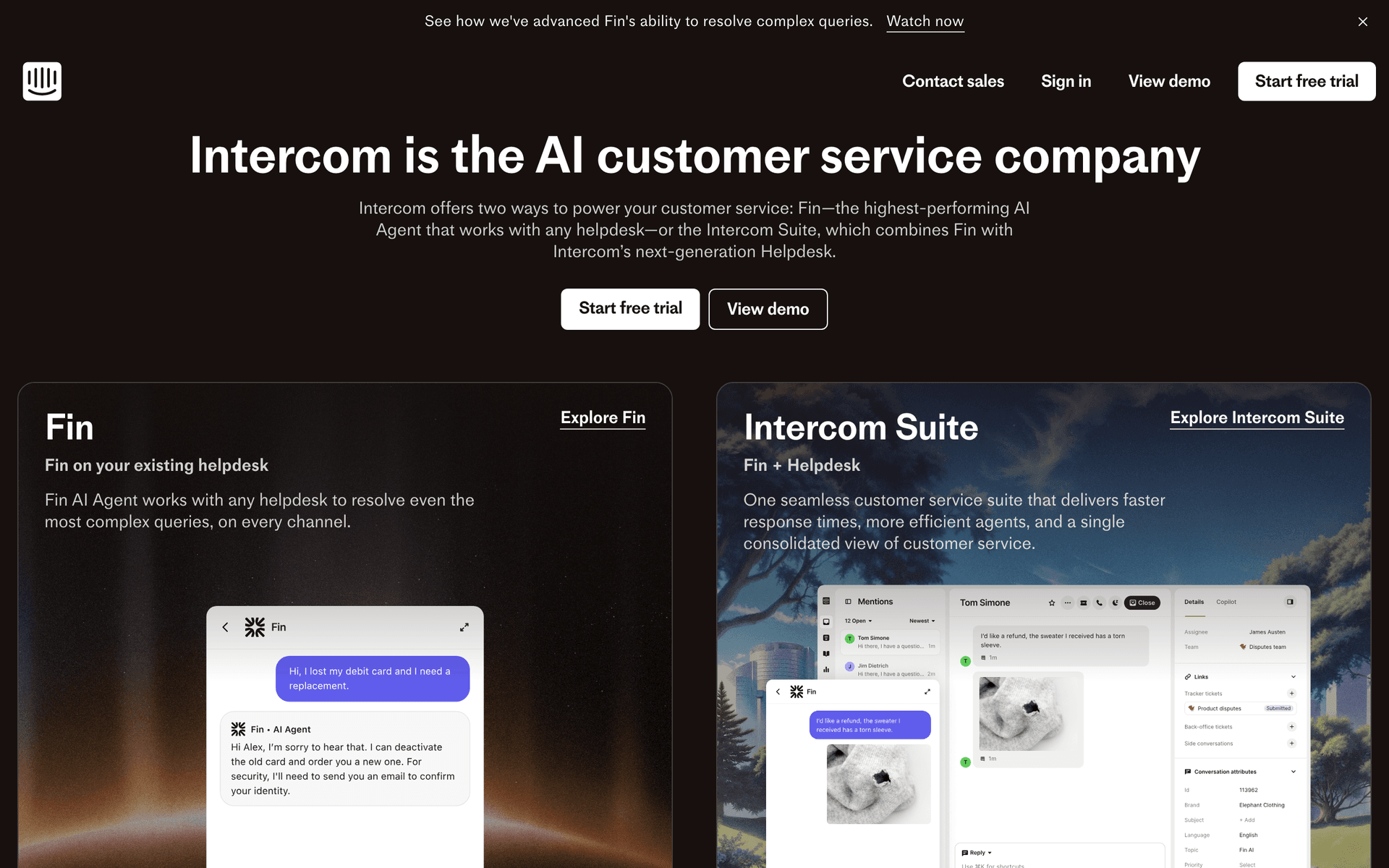
Intercom

Customer messaging platform for support, onboarding, and marketing.

Visit
Intercom dashboard screenshot

Intercom is particularly strong for B2B2C where the client-facing relationship involves support alongside onboarding. In-app messaging handles real-time consumer guidance while email handles async lifecycle communication for both layers. For B2B2C teams managing both client relationships and consumer engagement from the same platform, Intercom's unified inbox avoids context-switching between tools. The account-level segmentation lets you customize messaging based on which business client a consumer belongs to - a critical requirement for white-label or marketplace B2B2C models.

Best for
B2B2C companies needing unified support and lifecycle messaging across both layers
Pricing
From $74/month, scales with seats

Pros

  • Unified support and messaging
  • In-app and email combined
  • Account-level segmentation

Cons

  • Expensive at scale
  • Email automation less advanced than dedicated tools
  • Seat-based pricing
#11
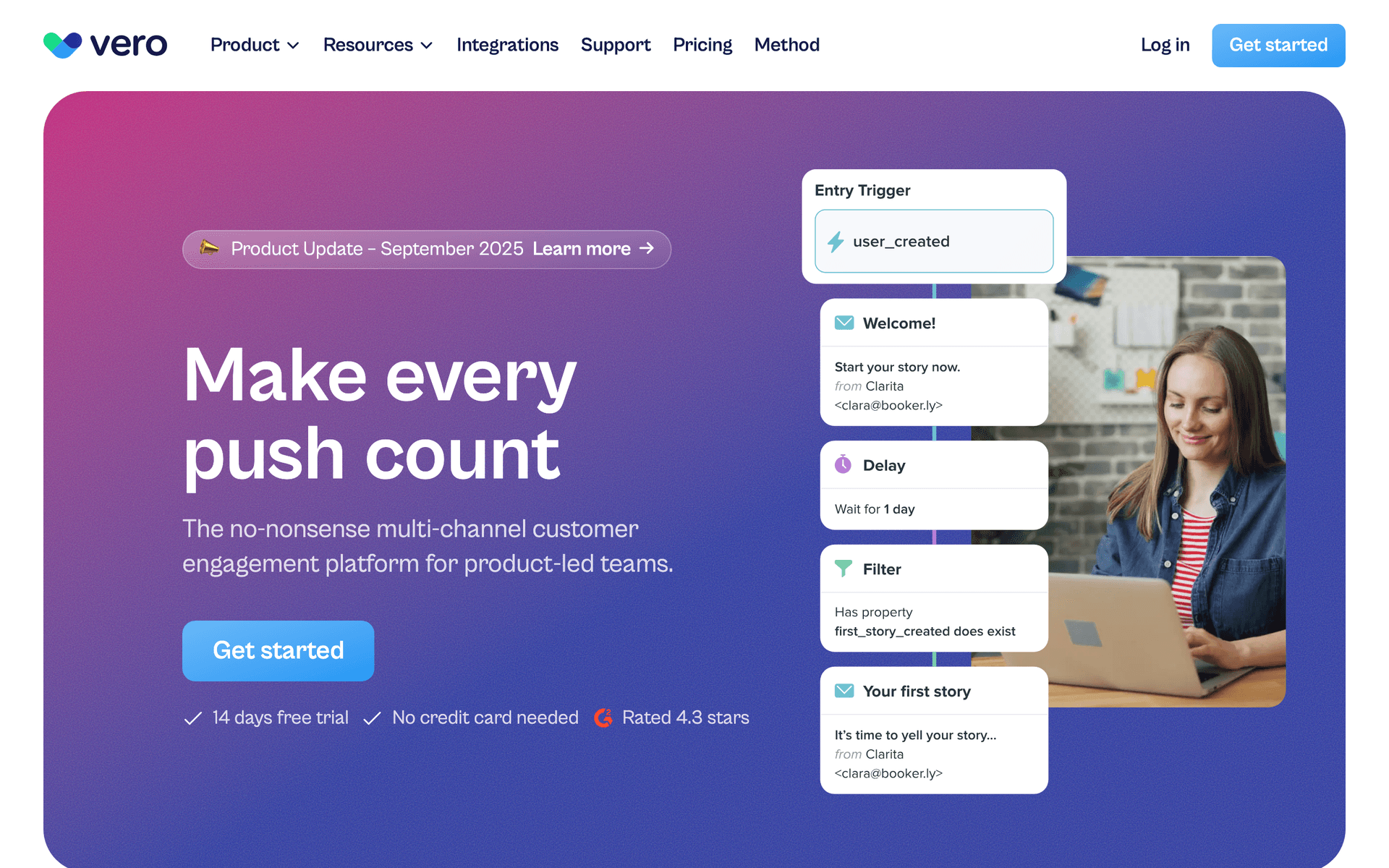
Vero

Behavioral email platform with flexible data model.

Visit
Vero dashboard screenshot

Vero's flexible data model handles the nested user-account structure common in B2B2C, where a consumer belongs to a business client who in turn has a relationship with your platform. Behavioral triggers fire based on consumer actions, but you can segment and personalize based on the parent account's attributes - enabling messaging that is contextually relevant to both layers. The newsletter plus triggered email approach in one platform reduces tool sprawl for B2B2C teams managing both client newsletters and consumer lifecycle sequences simultaneously.

Best for
B2B2C teams needing flexible data structures for nested user-account relationships
Pricing
From $99/month

Pros

  • Flexible user-account data model
  • Behavioral and newsletter combined
  • API-driven personalization

Cons

  • Dated interface
  • Slower feature development
  • Less modern than newer tools
#12
Userlist

Email automation designed for SaaS with company-level tracking.

Visit
Userlist dashboard screenshot

Userlist natively models the company-user relationship that is fundamental to B2B2C SaaS - you track both the business client (company object) and the end consumers (user objects) and can trigger sequences at either level. Client onboarding sequences fire at the company level when a new business client activates; consumer activation sequences fire at the user level. This built-in duality means you are not fighting the data model the way you would with e-commerce-focused email tools. Clean setup and focused feature set suit B2B2C teams that want clarity over complexity.

Best for
B2B2C SaaS teams wanting native company-user dual tracking without complexity
Pricing
From $149/month for up to 5,000 users

Pros

  • Native company/user data model
  • Company and user-level triggers
  • Clean, intuitive interface

Cons

  • Higher starting price
  • Email only
  • Limited advanced features
#13
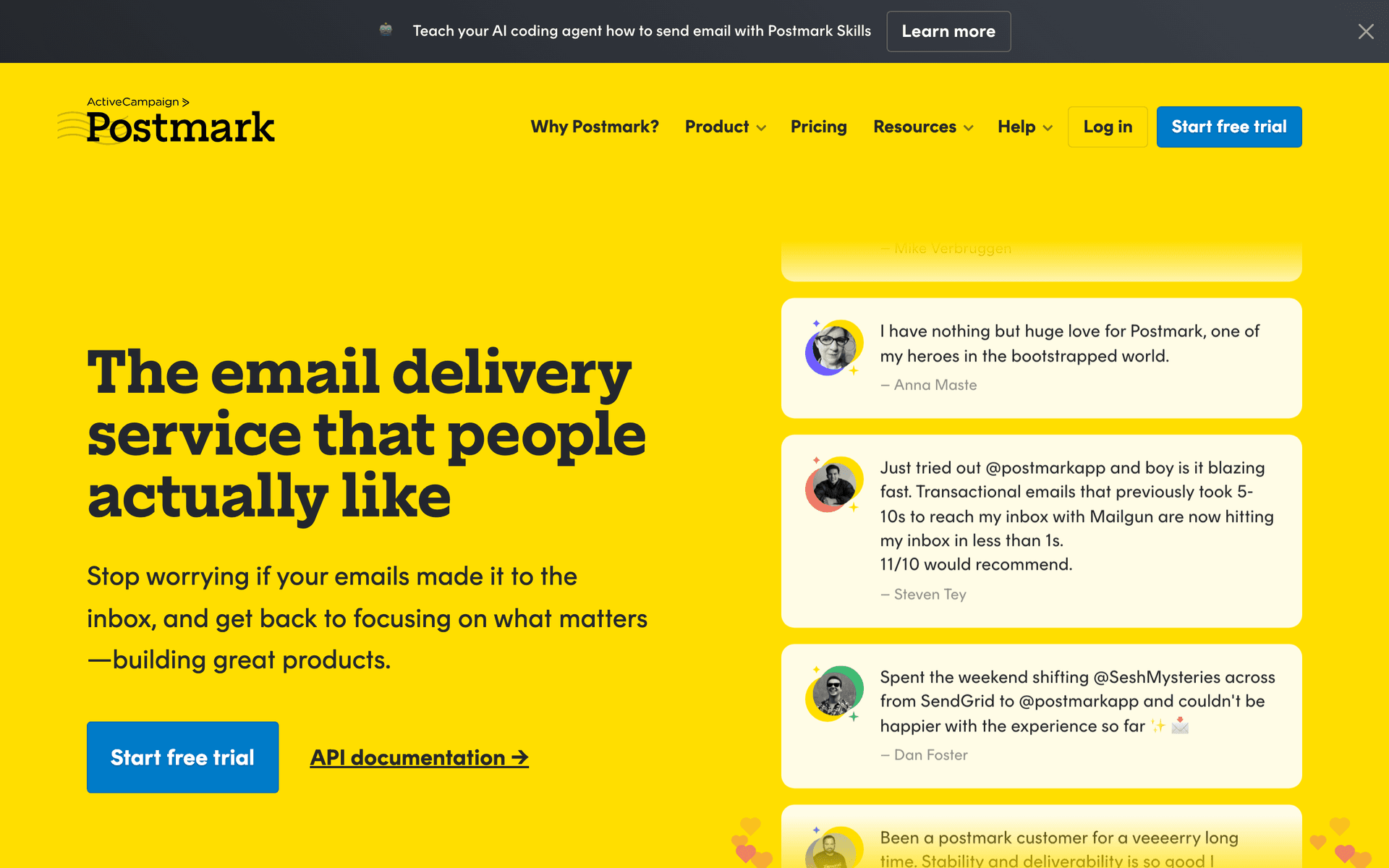
Postmark

Transactional email service with best-in-class deliverability.

Visit
Postmark dashboard screenshot

In B2B2C SaaS, transactional emails often serve both layers - client billing notifications, consumer account alerts, password resets, and activity digests. Postmark's deliverability focus ensures these critical emails arrive reliably, which is especially important when they touch the business client relationship. Delayed or failed transactional emails in a B2B2C context can damage both the consumer experience and the client relationship simultaneously. Postmark's speed and reliability handle this high-stakes transactional email layer cleanly.

Best for
B2B2C teams needing reliable delivery for high-stakes transactional email
Pricing
From $15/month for 10,000 emails

Pros

  • Best deliverability and speed
  • Handles high-stakes transactional email
  • Detailed delivery analytics

Cons

  • Transactional only
  • No lifecycle automation
  • Need a second tool for marketing email
#14
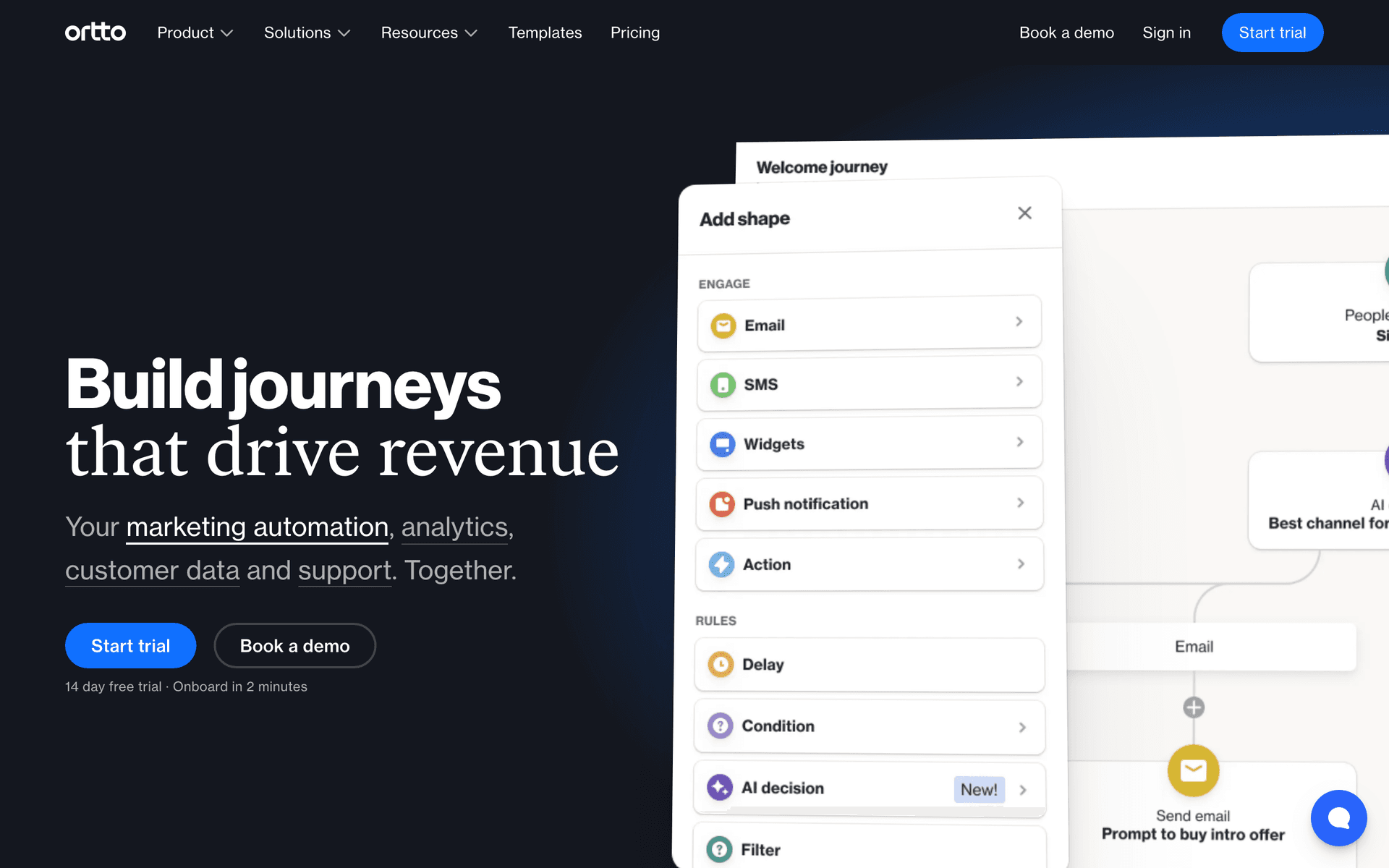
Ortto

Customer data platform with integrated marketing automation.

Visit
Ortto dashboard screenshot

Ortto's built-in CDP layer handles the complex data requirements of B2B2C, where you need to unify consumer behavior data with business client context for meaningful segmentation. Journey automation works across email, SMS, and in-app while the analytics connect activity to outcomes at both the consumer and client level. For B2B2C teams that have outgrown basic email tools and need to build sophisticated audiences from combined B2B and consumer data, Ortto provides the data infrastructure without requiring a separate CDP. Best for growth-stage B2B2C companies investing in data-driven communication.

Best for
Growth-stage B2B2C SaaS needing data infrastructure alongside email automation
Pricing
From $99/month

Pros

  • Built-in CDP eliminates separate data tools
  • Multi-layer analytics
  • Journey automation across channels

Cons

  • More complex to set up
  • Higher cost
  • Potentially over-featured for early-stage
#15
Loops

Modern product email platform for SaaS teams.

Visit
Loops dashboard screenshot

Loops provides clean, event-driven email sending that works across both layers of B2B2C without requiring custom middleware. Connect your product events via API, define loops for each major workflow (client onboarding, consumer activation, billing events), and the platform routes the right email to the right layer automatically. For B2B2C teams fatigued by complex platforms, Loops' simplicity is genuinely valuable - you can add a new client-side or consumer-side email sequence in minutes rather than hours.

Best for
B2B2C teams wanting simple, fast event-driven email without platform complexity
Pricing
Free tier available, paid from $49/month

Pros

  • Simple event-driven setup
  • Works across both B2B and consumer layers
  • Fast to implement new sequences

Cons

  • Less advanced automation logic
  • Newer platform
  • Limited analytics depth
#16
Iterable

Cross-channel growth marketing platform.

Visit
Iterable dashboard screenshot

Iterable's cross-channel orchestration suits B2B2C companies at scale where both the client-facing and consumer-facing communication spans email, push, and in-app. The data model supports complex segmentation across nested account-user hierarchies, and the workflow studio handles branching logic that adapts based on whether you are communicating at the client or consumer layer. For B2B2C companies with mobile apps and significant consumer volume, Iterable's channel breadth is a genuine differentiator. The custom pricing reflects the enterprise orientation.

Best for
Scaled B2B2C SaaS with mobile apps and cross-channel communication needs
Pricing
Custom pricing (typically $500-2,000/month)

Pros

  • Full cross-channel orchestration
  • Handles account-user hierarchy
  • AI optimization at scale

Cons

  • Expensive
  • Complex implementation
  • Overkill for early-stage B2B2C
#17
SendGrid

Email delivery platform with transactional and marketing capabilities.

Visit
SendGrid dashboard screenshot

SendGrid handles the high-volume transactional email requirements common in B2B2C where consumer-layer notifications (activity summaries, alerts, account events) generate significant email volume. The Marketing Campaigns layer adds broadcast and basic automation for client-facing communication. For B2B2C companies already using SendGrid for transactional delivery, extending it to handle client newsletter and announcement emails consolidates vendors without adding tool complexity. Marketing automation is basic though - behavioral lifecycle sequences still need a dedicated tool.

Best for
B2B2C teams already on SendGrid wanting to consolidate high-volume email delivery
Pricing
Free for 100 emails/day, paid from $19.95/month

Pros

  • Handles high-volume transactional
  • Consolidated transactional and marketing
  • Reliable at scale

Cons

  • Basic marketing automation
  • Interface not optimized for SaaS workflows
  • Need a dedicated lifecycle tool
#18
Marketo

Enterprise B2B marketing automation platform.

Visit
Marketo dashboard screenshot

Marketo suits the B2B layer of enterprise-focused B2B2C SaaS where marketing to business clients involves long sales cycles, account-based marketing, and sophisticated lead nurturing. Account-based marketing features target the right stakeholders within client organizations, and the CRM integration with Salesforce gives the sales team visibility into engagement history. For the consumer layer, Marketo is not the right tool and most companies using it for the B2B layer will run a separate email platform for consumer communication.

Best for
Enterprise B2B2C where the client acquisition side involves ABM and long sales cycles
Pricing
Custom pricing (typically $1,000+/month)

Pros

  • Best ABM for enterprise client acquisition
  • Deep Salesforce integration
  • Sophisticated lead nurturing

Cons

  • Expensive and complex
  • Not designed for consumer layer
  • Requires dedicated marketing ops
#19
MailerSend

Transactional email and SMS API for product teams.

Visit
MailerSend dashboard screenshot

MailerSend provides a cost-effective transactional email layer for B2B2C companies in the early to mid growth stage where every infrastructure dollar counts. Consumer-layer emails (account confirmations, activity notifications, data exports) generate consistent transactional volume that MailerSend handles reliably. The clean API and competitive pricing relative to SendGrid make it a sensible choice for B2B2C teams that have not yet scaled to volumes where Postmark's premium becomes clearly justified. Works best paired with a dedicated lifecycle automation tool for the marketing layer.

Best for
Early-stage B2B2C teams needing affordable transactional email infrastructure
Pricing
Free for 3,000 emails/month, then $25/month

Pros

  • Affordable at early scale
  • Clean API
  • Good deliverability

Cons

  • Transactional focus
  • Less proven at very high volume
  • Limited marketing automation

Feature Comparison

FeatureSequenzyCustomer.ioSendGridUserlist
Multi-layer messaging
Via events
Advanced
Infrastructure only
Via companies
Client-branded sending
Via custom setup
Via setup
Subuser feature
Limited
Payment integration
Native Stripe
No
No
No
Consumer volume handling
Good
Excellent
Excellent
Moderate
B2B onboarding automation
AI-powered
Visual builder
No
Yes
Company-level tracking
No
No
No
Yes
Free tier available
Yes
No
Yes
No

Common Mistakes to Avoid

We see these mistakes over and over. Skip the learning curve and avoid these from day one.

Using one tool for both B2B and high-volume consumer email

If consumer email volume exceeds 50,000 per month, consider a two-tool approach: a lifecycle tool for B2B communication and an infrastructure tool for consumer-facing email. Single tools often struggle with the volume and domain complexity.

Letting clients control email infrastructure

Give clients customization over messaging and branding, but maintain control over email infrastructure, deliverability practices, and compliance. Poor client practices can damage the entire platform's sender reputation.

Blending B2B and consumer metrics

Track different success metrics for each layer. B2B clients: onboarding completion, engagement with success emails, expansion revenue. Consumers: activation rate, transactional delivery speed, engagement. Blended metrics are meaningless.

Ignoring consumer communication during client churn

When a business client leaves your platform, their consumers are affected. Having no communication plan for this scenario damages trust with consumers who may encounter your platform through a different client.

Email Sequences Every B2B2C SaaS Needs

These are the essential automated email sequences that will help you grow your business and keep clients coming back.

B2B Client Onboarding

New business client signs up

Walk business clients through platform setup, branding configuration, and launching their first consumer-facing experience.

Immediate
Welcome - let us get your account set up

Welcome email with account credentials, a link to the setup wizard, and the key steps to go live.

Day 1
Step 1: Configure your branding and domain

Guide them through branding setup so their consumers see their brand, not yours.

Day 3
Step 2: Invite your first customers

Show them how to onboard their consumers through the platform. Include templates and best practices.

Day 7
Your first week in numbers

Usage dashboard showing consumer signups, engagement, and key metrics. Celebrate early wins and suggest optimization tips.

Client Success Monitoring

Client's consumer engagement drops 30% week over week

Proactive outreach when a client's consumer metrics decline.

When drop detected
Your consumer engagement dipped this week - here is what might help

Flag the metric drop with specific data. Share tips for re-engaging consumers. Offer a quick call to review their setup.

7 days later if no improvement
Let us help you get engagement back on track

Personal outreach from customer success. Offer a hands-on review of their consumer experience and suggest specific improvements.

The Three-Layer Communication Challenge

B2B2C is the hardest email marketing model in SaaS. You are not just managing one relationship. You are managing three: your platform to business clients, business clients to their consumers, and sometimes your platform directly to consumers. Each layer has different triggers, different branding, and different success metrics.

The companies that handle this well treat each layer as a separate communication track with shared infrastructure. Your B2B client onboarding uses your brand and your domain. Consumer-facing emails use the client's brand and domain. And platform-level communications (outages, security updates) go to everyone with appropriate context.

Your Clients' Success Is Your Success

In B2B2C, your most important email sequences are not the ones you send to consumers. They are the ones you send to business clients. If a client fails to onboard properly, their consumers never engage. If a client does not understand the platform's capabilities, they cannot serve their consumers well. If a client's engagement drops, the consumer base follows.

Invest heavily in B2B client success sequences. Track their consumer metrics and proactively reach out when things look off. The cost of losing a B2B client includes all the consumers beneath them - a churn event that cascades through both layers.

Consumer Volume Economics

B2B2C creates interesting email economics. A single business client might generate thousands of consumer emails per month. Per-contact pricing models break down fast when you are responsible for both B2B contacts and their consumer bases. Look for per-email pricing or negotiate volume rates that account for the two-layer structure.

Tools like Sequenzy with pay-per-email pricing align naturally with B2B2C economics. You pay for actual email usage rather than for the total number of consumers in your system, which keeps costs proportional to actual activity.

Multi-Domain Sending Architecture

Consumer emails in B2B2C must look like they come from the business client, not your platform. This requires multi-domain sending where each client has their own authenticated sending domain.

DNS setup per client: Configure SPF, DKIM, and DMARC records for each client's domain. Use our SPF checker and DMARC checker to verify each client's configuration.

Reputation isolation: Use subusers or separate sending environments so one client's poor practices do not affect another client's deliverability.

Dynamic branding: Templates should dynamically pull client branding (logo, colors, footer text) so consumer emails feel native to the client's brand.

Proactive Client Success Through Email Metrics

Build monitoring that tracks consumer-level metrics per business client. When a client's consumer engagement drops significantly, trigger proactive outreach before the client even notices:

Consumer activation rate drops: "We noticed fewer of your new users are completing setup this week. Here are some best practices that other clients use to improve activation."

Consumer churn increases: "Your customer retention dipped this month. Let us schedule a call to review your onboarding flow and identify improvements."

Consumer support tickets spike: "We have seen an increase in support requests from your customers. Here are resources that might help address common questions."

This proactive approach demonstrates platform value and prevents B2B client churn by showing you are invested in their success.

How We Evaluated These Tools

I evaluated these 7 tools based on multi-layer messaging capabilities, client-branded sending support, event-driven automation across B2B and consumer layers, pricing alignment with B2B2C volume economics, and ability to maintain separate communication tracks for different audiences.

Frequently Asked Questions

Ready to grow your b2b2c saa practice?

Start your free trial today. Set up your first email sequence in minutes with AI-powered content generation.

Related Industries

Sequenzy - Complete Pricing Guide

Pricing Model

Sequenzy uses email-volume-based pricing. You only pay for emails you send. Unlimited contacts on all plans — storing subscribers is always free.

All Pricing Tiers

  • 2.5k emails/month: Free (Free annually)
  • 15k emails/month: $19/month ($205/year annually)
  • 60k emails/month: $29/month ($313/year annually)
  • 120k emails/month: $49/month ($529/year annually)
  • 300k emails/month: $99/month ($1069/year annually)
  • 600k emails/month: $199/month ($2149/year annually)
  • 1.2M emails/month: $349/month ($3769/year annually)
  • Unlimited emails/month: Custom pricing (Custom annually)

Yearly billing: All plans offer a 10% discount when billed annually.

Free Plan Features (2,500 emails/month)

  • Visual automation builder
  • Transactional email API
  • Reply tracking & team inbox
  • Goal tracking & revenue attribution
  • Dynamic segments
  • Payment integrations
  • API, MCP, and CLI access
  • Custom sending domain

Paid Plan Features (15k - 1.2M emails/month)

  • Visual automation builder
  • Transactional email API
  • Reply tracking & team inbox
  • Goal tracking & revenue attribution
  • Dynamic segments
  • Payment integrations (Stripe, Paddle, Lemon Squeezy)
  • API, MCP, and CLI access
  • Custom sending domain

Enterprise Plan Features (Unlimited emails)

  • Visual automation builder
  • Transactional email API
  • Reply tracking & team inbox
  • Goal tracking & revenue attribution
  • Dynamic segments
  • Payment integrations
  • API, MCP, and CLI access
  • Custom sending domain

Important Pricing Notes

  • You only pay for emails you send — unlimited contacts on all plans
  • No hidden fees - all features included in the price
  • No credit card required for free tier

Contact

  • Pricing Page: https://sequenzy.com/pricing
  • Sales: hello@sequenzy.com