
Making Angel Funding Work for Email
Angel funding typically gives you 12-18 months of runway. In that time, you need to build a product, find users, and prove traction. Email marketing should not be a major line item in your budget, but it should be working from month one.
The angel-stage email priority is simple: get a basic onboarding sequence running, add dunning when you start charging, and measure everything. These three things give you the metrics investors want to see and the revenue protection you need.
| Angel-stage priority | Email sequence | Investor metric it supports | Keep it lean by |
|---|---|---|---|
| Prove activation | Founder-led onboarding | Activation rate and time to value | Focusing on one core action instead of a full product tour |
| Convert trials | Trial midpoint and expiry sequence | Trial-to-paid conversion | Showing usage value before asking for payment |
| Protect revenue | Dunning and payment recovery | Net revenue retention and recovery rate | Automating retries before founder intervention |
| Learn from users | Reply-friendly feedback email | Qualitative traction signals | Sending from the founder inbox |
| Show progress | Monthly product update to early users | Engagement and retention trend | Sharing concrete improvements, not generic newsletters |
Choosing Your First Email Tool
At angel stage, the decision framework is straightforward:
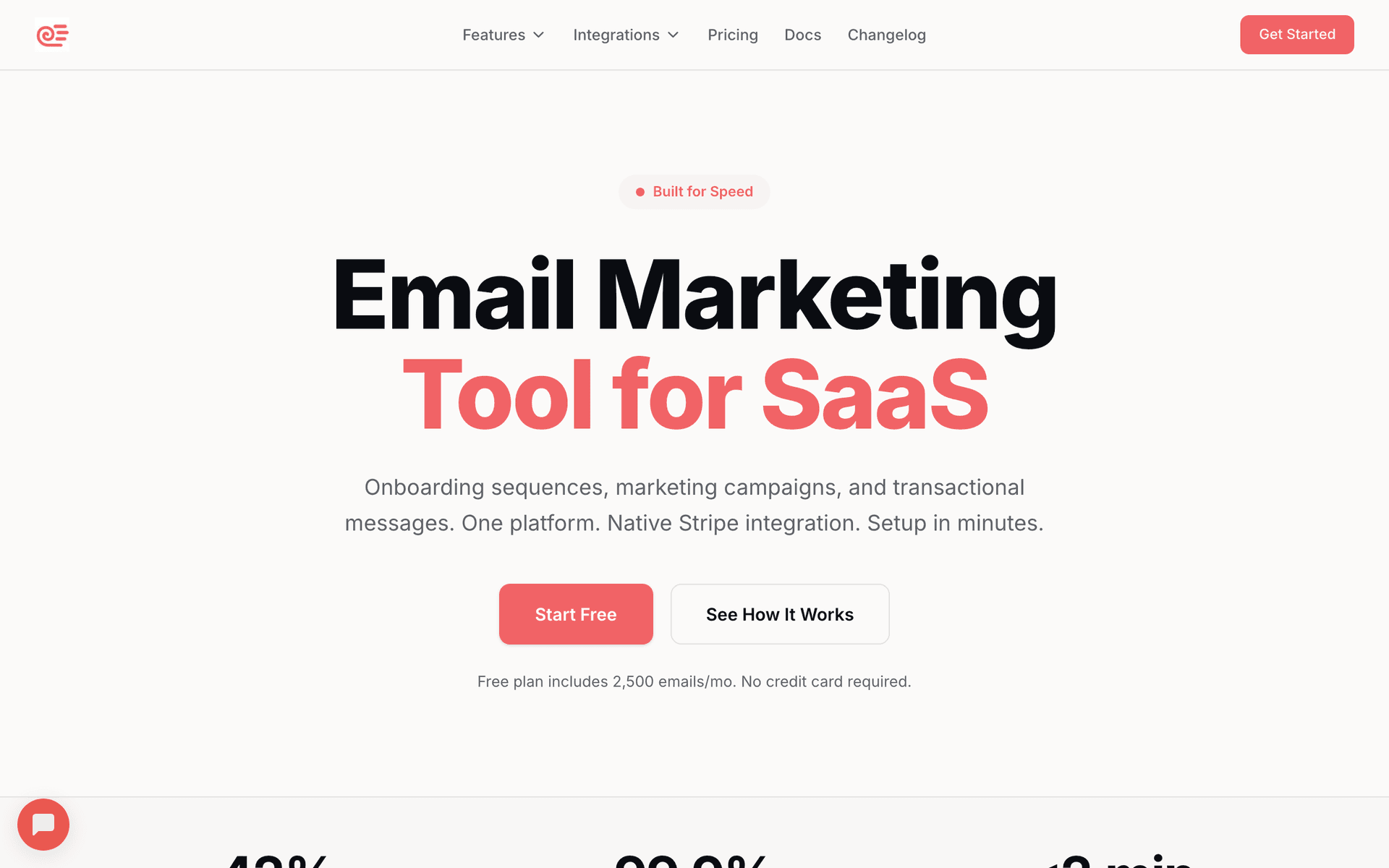
If you have a SaaS product with Stripe billing: Start with Sequenzy's free tier. You get AI-generated sequences, native Stripe integration for dunning, and combined transactional and marketing email at no cost for your first 2,500 emails per month.
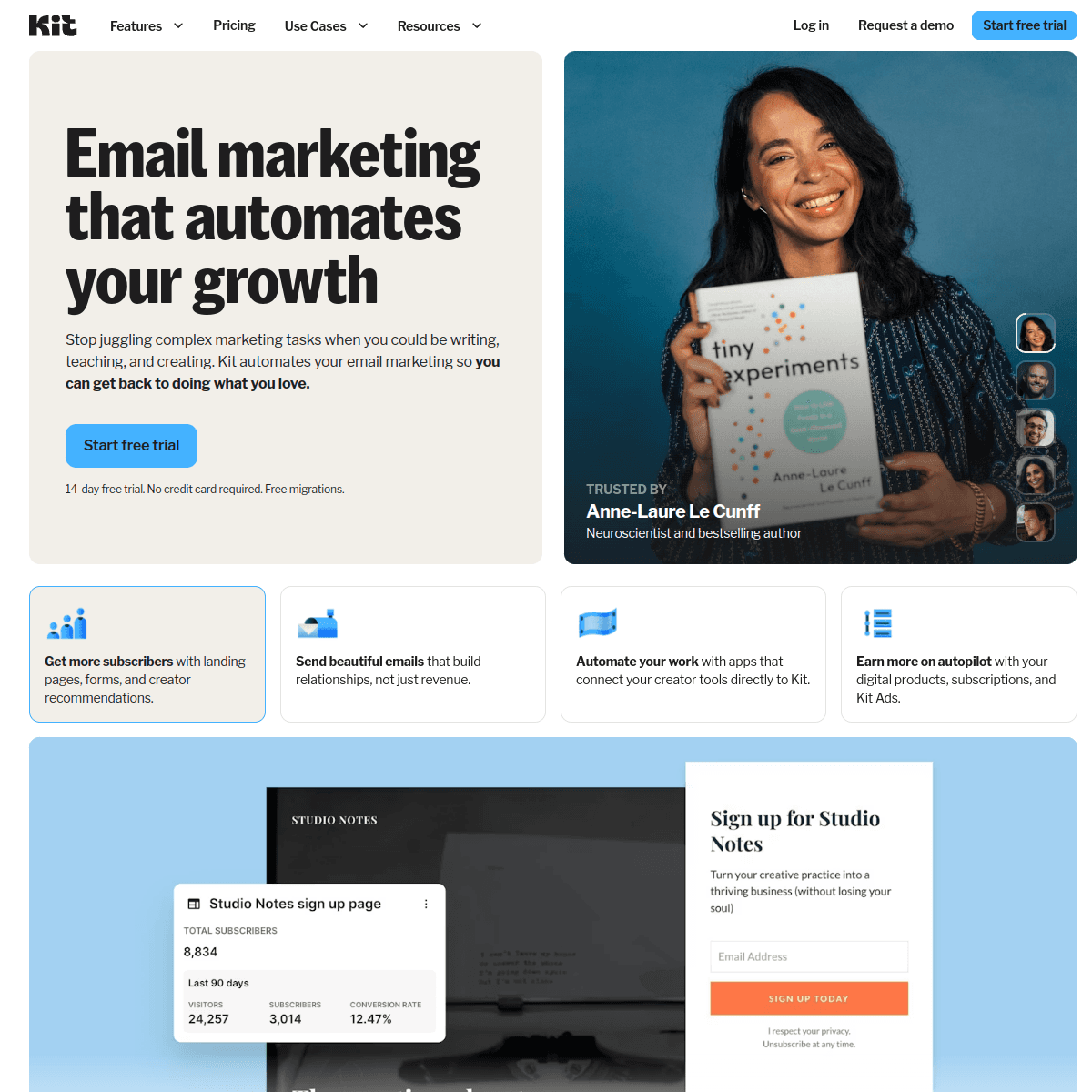
If you are building an audience first: Start with Kit's free tier for 10,000 subscribers. Landing pages and newsletter tools help you build an audience before or alongside your product.
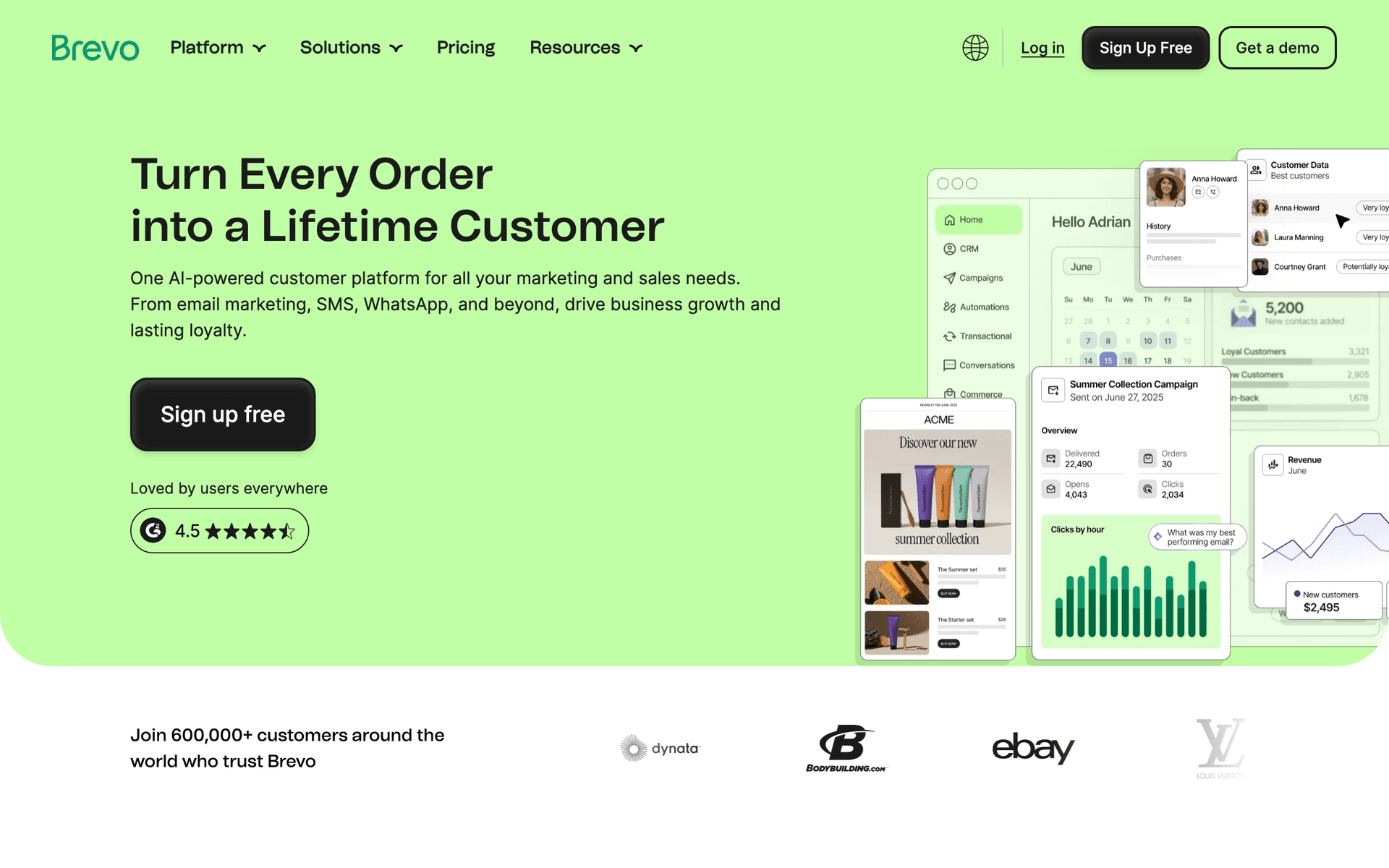
If budget is the absolute top priority: Start with Brevo's free tier. Unlimited contacts with 300 emails per day covers early-stage needs at zero cost.
Personal Touch at Scale
At angel stage, you probably have fewer than 500 users. This is small enough to send personal emails but large enough to benefit from automation. The sweet spot is automated sequences that feel personal: emails from the founder, in a conversational tone, with reply-to set to your actual inbox.
When users reply to your automated emails (and they will), respond personally. This builds relationships that drive retention and generate referrals, which is how angel-funded startups grow without paid acquisition budgets.
The Minimum Viable Email Stack
You need exactly three email sequences at angel stage:
| Sequence | Emails | Trigger | Outcome |
|---|---|---|---|
| Onboarding | Welcome, core feature tutorial, feedback request | New signup | More users reach the activation event |
| Trial conversion | Midpoint value summary, pre-expiry prompt, post-expiry data preservation | Trial start and trial deadline | More trials convert without aggressive selling |
| Dunning | Payment failed, retry reminder, final warning | Failed payment | Recover revenue before cancellation |
Everything else - newsletters, product updates, re-engagement campaigns - can wait until you have more users and more revenue.
Building for Your Seed Round
Your email metrics become part of your seed-round pitch deck. A 15% trial-to-paid conversion rate, 85% 30-day retention, and 30% dunning recovery rate tell investors your funnel works and your product has traction.
Set up the tracking now so you have 3-6 months of trending data when you need it. Investors want to see improvement over time, not just a snapshot. A chart showing activation rate climbing from 20% to 40% over four months tells a powerful growth story.
| Pitch-deck metric | Healthy early signal | Email influence | What to show investors |
|---|---|---|---|
| Activation rate | Improving cohort over cohort | Onboarding nudges users to the core action | Cohort chart before and after onboarding changes |
| Trial-to-paid conversion | 10-20% depending on product and price | Trial emails remind users of value and deadline | Conversion trend by month |
| 30-day retention | 70-85% for strong early SaaS | Education and feedback emails reduce early churn | Retention by activated vs non-activated users |
| Dunning recovery | 25-40% | Payment recovery emails save failed charges | Recovered MRR and failed-payment recovery rate |
| Reply rate to founder emails | 2-8% | Personal automated emails create conversations | Examples of feedback that shaped product decisions |
When to Upgrade Your Email Tool
Stay on free tiers until one of these happens: you exceed the free tier limits, you need features the free tier does not offer (like advanced segmentation or complex branching), or your revenue comfortably supports the upgrade. For most angel-funded startups, the free tier lasts 3-9 months.
When you upgrade, choose a tool you can grow into for the next 12-18 months. Migrating email tools is painful and time-consuming. Pick something that scales from 500 to 50,000 users without requiring another migration.
What Angel-Funded Startups should prioritize first
For Angel-Funded Startups, email works when it supports clear communication, consistent follow-up, and measurable customer action. The software matters, but the operating habit matters more: collect the right contacts, send messages at the right moments, and keep the content useful enough that people keep opening.
Start by comparing the ranked tools above around the workflows you will actually run. A good tool for Angel-Funded Startups should make it easy to segment contacts, write a campaign quickly, automate the obvious follow-ups, and see whether the email produced a booking, sale, reply, renewal, or return visit.
The first workflows to build are usually simple. For this page, the natural starting points are Angel-Stage Onboarding, Trial Conversion. Do not build a complicated journey until those basics are working.
A practical rollout looks like this:
| Week | Focus |
|---|---|
| 1 | Import contacts, clean segments, and write the first useful campaign. |
| 2 | Launch the highest-value reminder or follow-up automation. |
| 3 | Add one educational or trust-building email that is not a promotion. |
| 4 | Review opens, clicks, replies, bookings, purchases, or returned customers. |
The most important page-specific ideas are Set up onboarding automation before you have 50 users; Make your founder email the 'from' address; Track the three metrics investors want. Those should become your first campaigns before you worry about advanced automation.
Choose the tool that makes this cadence realistic for a lean angel-funded team. If a platform has more features but makes weekly sending harder, it is the wrong fit. If a simpler one lets you send consistently and track activation for your next raise, it will usually produce more value.