Overview
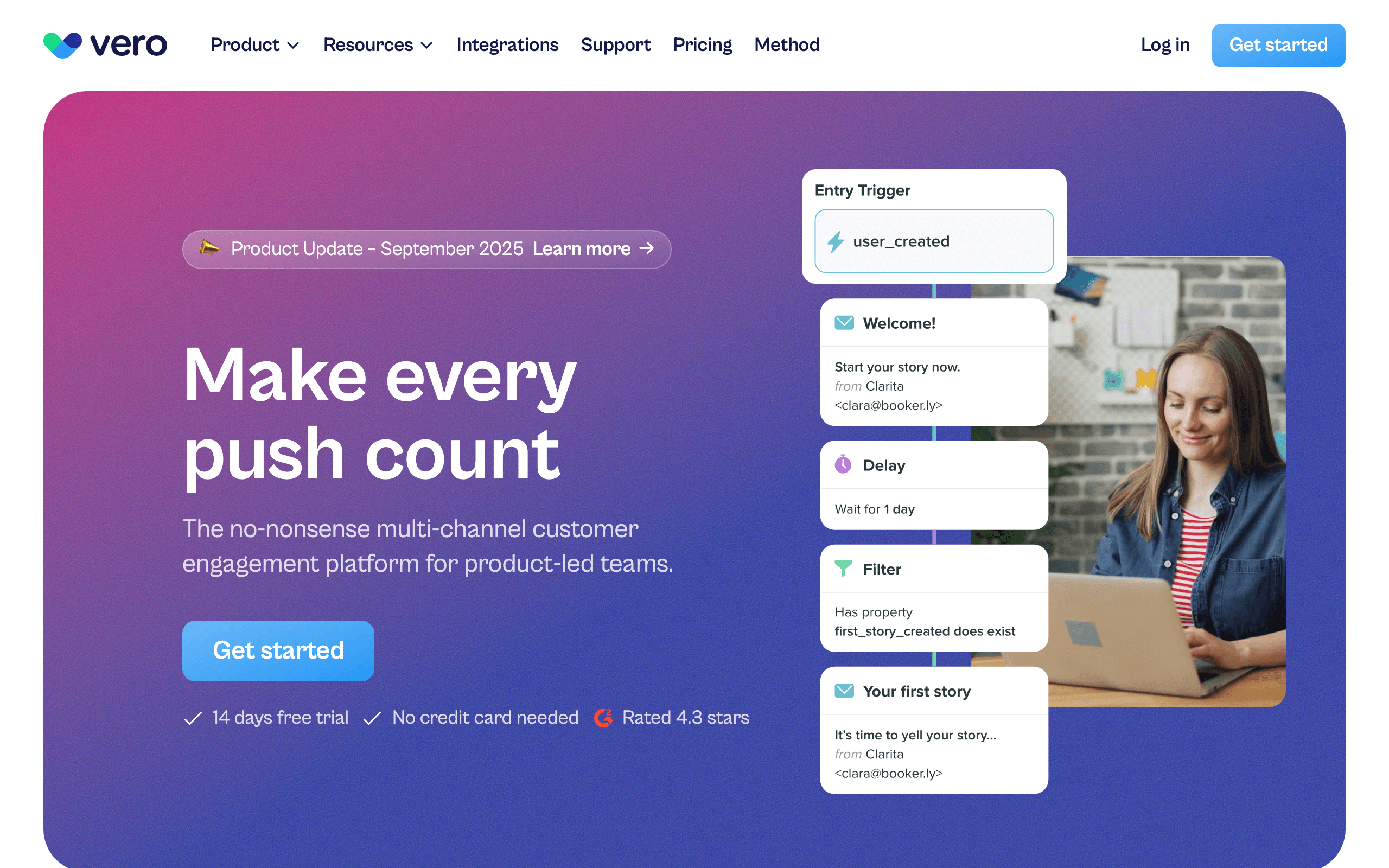
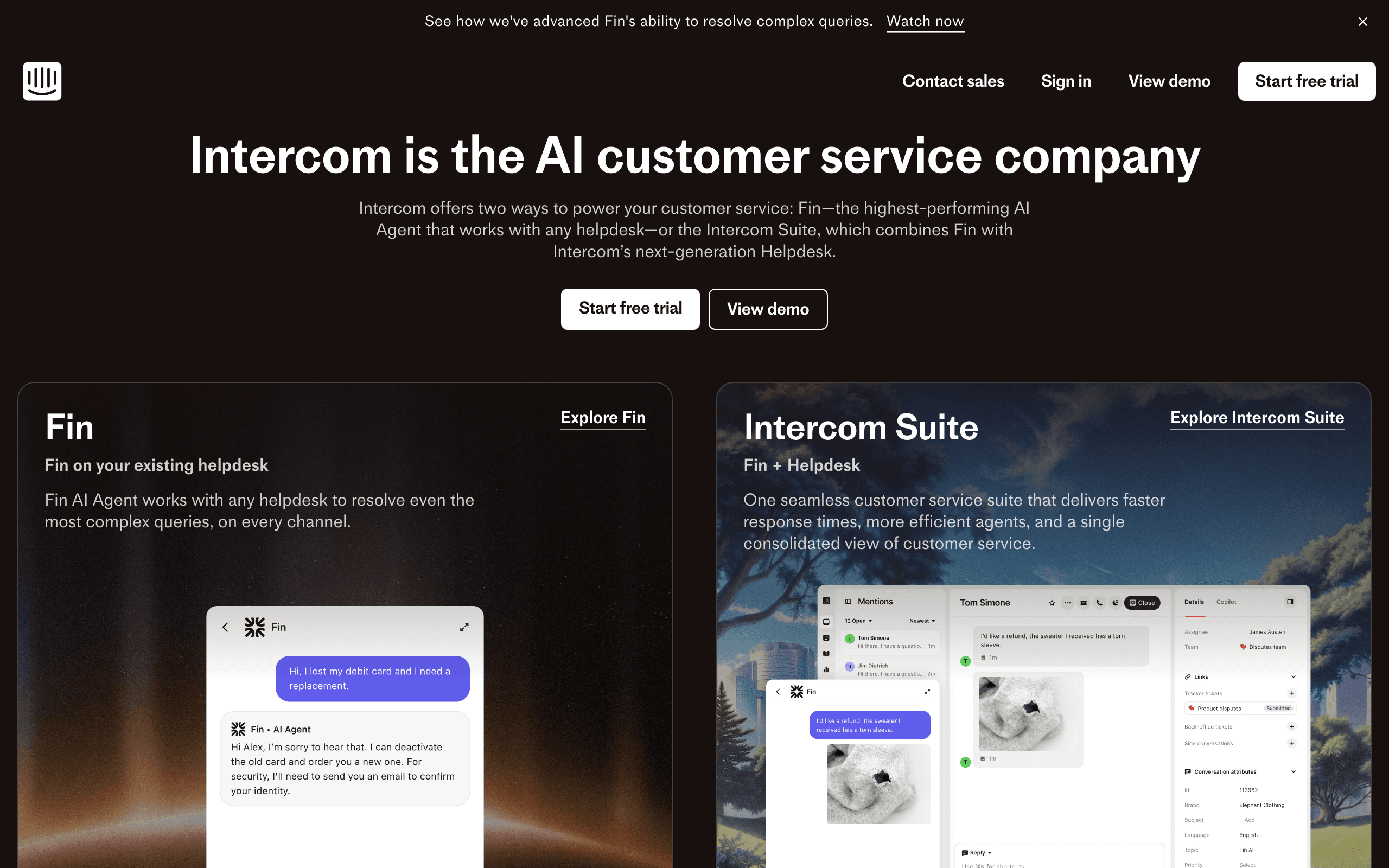
Vero focuses on email automation. Intercom is a full customer messaging platform. They solve different problems. See our Vero comparison and Intercom comparison for details.
Pricing Comparison
Vero: ~$100+/month
Intercom: $200-500+/month
Sequenzy: Free tier available, then $19/month
Compare on our pricing page.
Where Vero Wins
Better email value - no per-email charges like Intercom.
Where Intercom Wins
Full messaging platform with chat, bots, and product tours.
Why Sequenzy Beats Both for Email
If you just need email, Sequenzy offers a free tier, Stripe integration and all email marketing features from $19/month.
Different Tools for Different Problems
Comparing Vero and Intercom is like comparing a kitchen appliance to an entire kitchen. Vero does one thing well: event-driven email automation. Intercom does many things: live chat, support ticketing, help center, AI chatbot, product tours, and email messaging.
The comparison only makes sense when a company is deciding whether to invest in a full customer platform or build a stack of focused tools. Companies that choose Vero typically pair it with separate tools for chat and support. Companies that choose Intercom get everything in one place at a higher total cost.
Neither approach is inherently better. Focused tools give you best-in-class capability in each area. Unified platforms give you data consistency and workflow simplicity. Your team size, budget, and communication needs determine which path makes sense.
Email Cost: The Hidden Intercom Expense
Intercom charges per email for campaigns. This is in addition to the platform fee, seat charges, and AI resolution costs. For companies sending significant email volume, this per-email charge adds up quickly. A company sending 50,000 emails per month could easily pay $200+ just for email on top of the Intercom platform fee.
Vero includes email in its pricing without per-message surcharges. You pay for the platform and send as many emails as your plan allows. For email-heavy strategies, this pricing model is significantly more predictable and often cheaper.
The cost difference is most noticeable for companies that rely on behavioral email campaigns as a primary engagement channel. If email is just an occasional supplement to chat-based support, Intercom's per-email charges are negligible.
When Chat Is the Primary Channel
For products where real-time chat is the main customer interaction point, Intercom's approach makes sense. The chat widget, automated responses, AI-powered suggestions, and seamless handoff to human agents create a cohesive support experience. Email is a secondary channel for follow-ups and notifications.
Vero cannot replace any of these chat and support capabilities. If you need live chat, you need either Intercom or a dedicated chat tool regardless of your email choice.
The question is whether Intercom's email capabilities are sufficient for your marketing needs or whether you need a more capable email automation tool alongside chat. Many companies find Intercom's email adequate for basic notifications but insufficient for sophisticated behavioral campaigns.
Building a Stack vs Buying a Platform
The stack approach (Vero + chat tool + help center) gives you flexibility. You can swap any component without affecting the others. Each tool specializes in its domain. Total cost is often lower than Intercom alone, especially for small teams.
The platform approach (Intercom) gives you unified data and simpler operations. Every customer interaction is visible in one place. There is one vendor to manage, one bill to pay, and one system to learn. For companies that can afford it, this simplicity has real value.
For SaaS companies that want focused email automation with Stripe billing integration without the cost of either approach, Sequenzy fills the gap. At $19/month to start, it handles transactional and marketing email for subscription businesses.
User Behavior Tracking
SaaS email marketing depends on understanding how users interact with your product. Vero and Intercom track user events differently. The depth of behavioral data determines how targeted your email automation can be.
Event tracking, feature usage monitoring, and activity scoring help you identify which users need onboarding help, which are ready to upgrade, and which are at risk of churning. Compare how each platform ingests and acts on this behavioral data.
Trial and Onboarding Optimization
Converting trial users to paid customers is critical for SaaS growth. Vero and Intercom handle onboarding email sequences differently. The ability to trigger emails based on specific product milestones creates more relevant communication.
Effective onboarding emails guide users to their activation moment. Compare how each platform lets you define milestones, segment by trial progress, and personalize onboarding content based on user behavior and plan type. For deeper billing integration, see Sequenzy's Stripe features.
Company-Level vs User-Level Communication
SaaS products often have multiple users within a single account. Vero and Intercom handle company-level targeting differently. Being able to group users by organization and trigger emails based on account-level events is essential for B2B SaaS.
Consider how each platform manages company attributes, aggregate usage data, and role-based communication. The ability to send different onboarding emails to admins vs team members, or trigger expansion revenue emails based on company-level metrics, matters for B2B growth.
Use-case matchups
| Situation | Best first look | Why |
|---|---|---|
| SaaS team wants event-driven lifecycle messaging and customer messaging workflows | Vero | Vero is the baseline here when that product-led lifecycle job is central. |
| Team wants support, chat, in-app engagement, and customer communication | Intercom | Intercom deserves the first demo when that specialist capability matters more. |
| SaaS or subscription team wants email plus transactional paths | Sequenzy | Sequenzy is stronger when Stripe events, transactional messages, campaigns, and subscriber automation should live together. |
| Product team has clean event instrumentation | Vero or Intercom | Event-driven tools only pay off when product events, traits, and lifecycle definitions are reliable. |
| Team wants fewer tools and a lower-cost email workflow | Sequenzy | Sequenzy is more relevant when email lifecycle automation is enough and support chat or complex engagement channels are out of scope. |
Best Fit by SaaS Communication Surface
Best lifecycle messaging tool for event-driven SaaS email
Choose Vero when product events, user traits, companies, and lifecycle stages drive most customer communication. It is the better fit for teams that want behavioral campaigns and messaging workflows without making live chat the center of the customer communication stack.
Best customer messaging platform for chat-led SaaS support
Choose Intercom when customer conversations, support routing, in-app guidance, product tours, and help center workflows matter as much as outbound messages. It is the stronger fit when the team wants one place for support context and customer communication, not just email automation.
Best SaaS email platform for Stripe and transactional workflows
Choose Sequenzy when the team wants lifecycle and transactional email without buying a larger support or customer messaging platform. Trial, upgrade, payment, renewal, cancellation, and product-triggered messages are the right fit when email is the primary surface.
Pricing reality
The pricing signals on this page list Vero at ~$100+/month, Intercom at $200-500+/month, and Sequenzy at $19/month. The right comparison depends on the workflow being purchased, not just the monthly number.
Vero's value depends on whether the team uses event-driven lifecycle messaging and customer messaging workflows. Intercom's real cost depends on whether the team needs support, chat, in-app engagement, and customer communication.
Sequenzy should be evaluated when the team wants lifecycle and transactional email without buying a broader support, CRM, or product-messaging suite.
Review signals
This page has existing review data from G2, Capterra, Trustpilot. Keep those sources in the decision because SaaS messaging tools differ in event setup, support, editor quality, deliverability, segmentation, reporting, and pricing.
For Vero, validate review themes around event-driven lifecycle messaging and customer messaging workflows. For Intercom, focus review research on whether users praise support, chat, in-app engagement, and customer communication.
Use reviews to prepare demo tasks: identify users and companies, send a product-event-triggered message, test transactional email, update suppression status, and compare reporting.
Migration checklist
| Workstream | Moving toward Vero | Moving toward Intercom | Simplifying to Sequenzy |
|---|---|---|---|
| Data model | Map users, companies, events, traits, segments, suppressions, and lifecycle stages. | Map the users, events, traits, records, and channels needed for support, chat, in-app engagement, and customer communication. | Import subscribers, attributes, tags, suppressions, Stripe events, and transactional paths. |
| Instrumentation | Validate identity resolution, event names, timestamps, and company/account relationships. | Validate instrumentation and channel setup before rebuilding journeys. | Connect only the events needed for campaigns, lifecycle automations, and transactional messages. |
| Automations | Rebuild onboarding, activation, retention, expansion, and winback journeys. | Rebuild the workflows that prove Intercom's advantage. | Rebuild lifecycle and transactional email flows. |
| Templates and channels | Move email templates, in-app content where relevant, sender identities, and brand rules. | Move templates, chat or in-app surfaces where relevant, and brand assets. | Move email templates and transactional message content. |
| Reporting | Validate activation, conversion, churn, engagement, deliverability, and journey reporting. | Validate reporting for support, chat, in-app engagement, and customer communication. | Validate campaign, automation, transactional, and subscription lifecycle reporting. |
Decision checklist
- Is the team buying SaaS lifecycle messaging, support/chat, CRM automation, or simpler email workflows?
- Which platform best matches the current event and customer data model?
- Does Intercom's strength in support, chat, in-app engagement, and customer communication matter more than Vero's focus?
- Are the listed prices still realistic after contacts, seats, channels, and event volume are included?
- Would Sequenzy cover the lifecycle and transactional email job with less setup?