
Overview
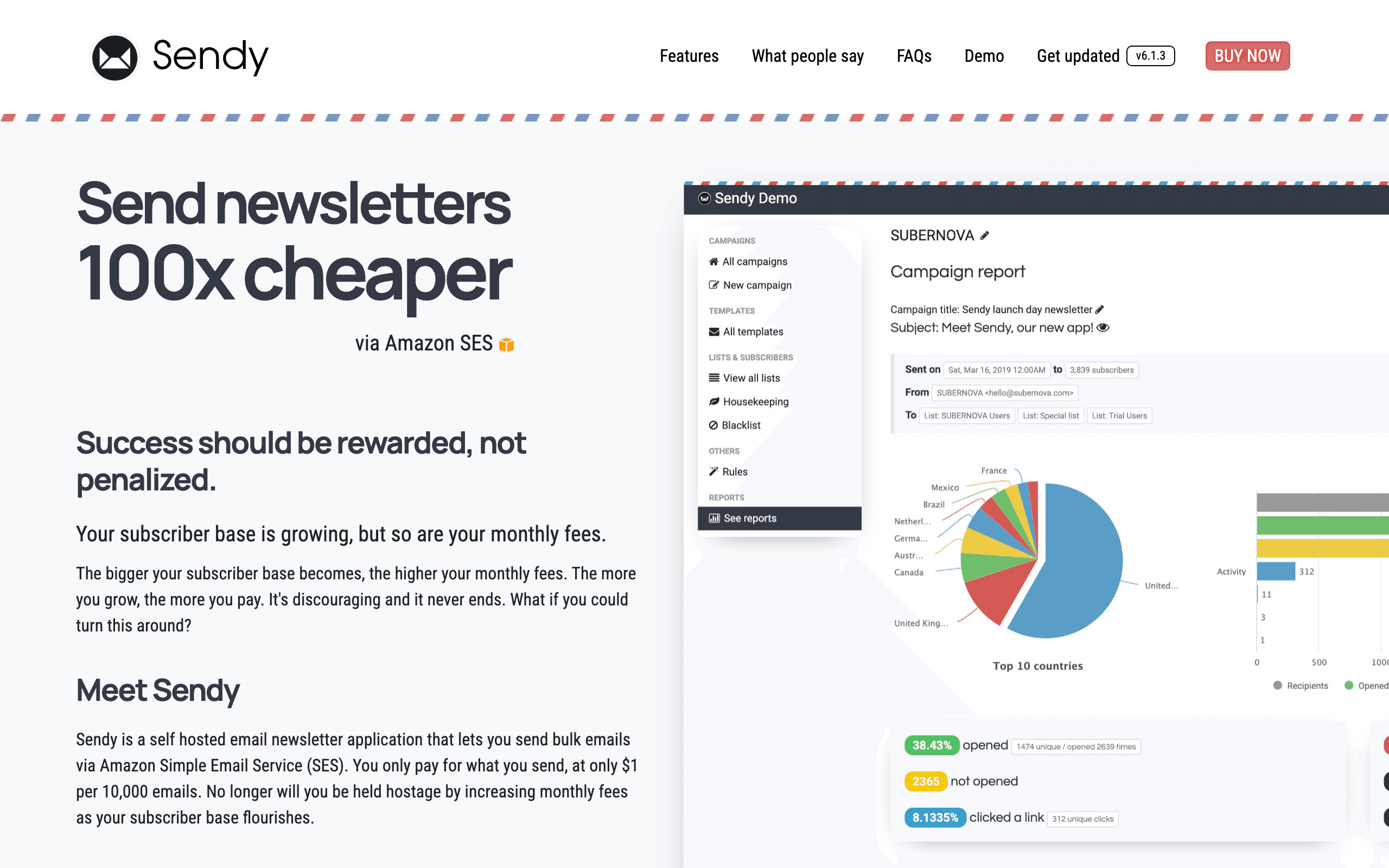
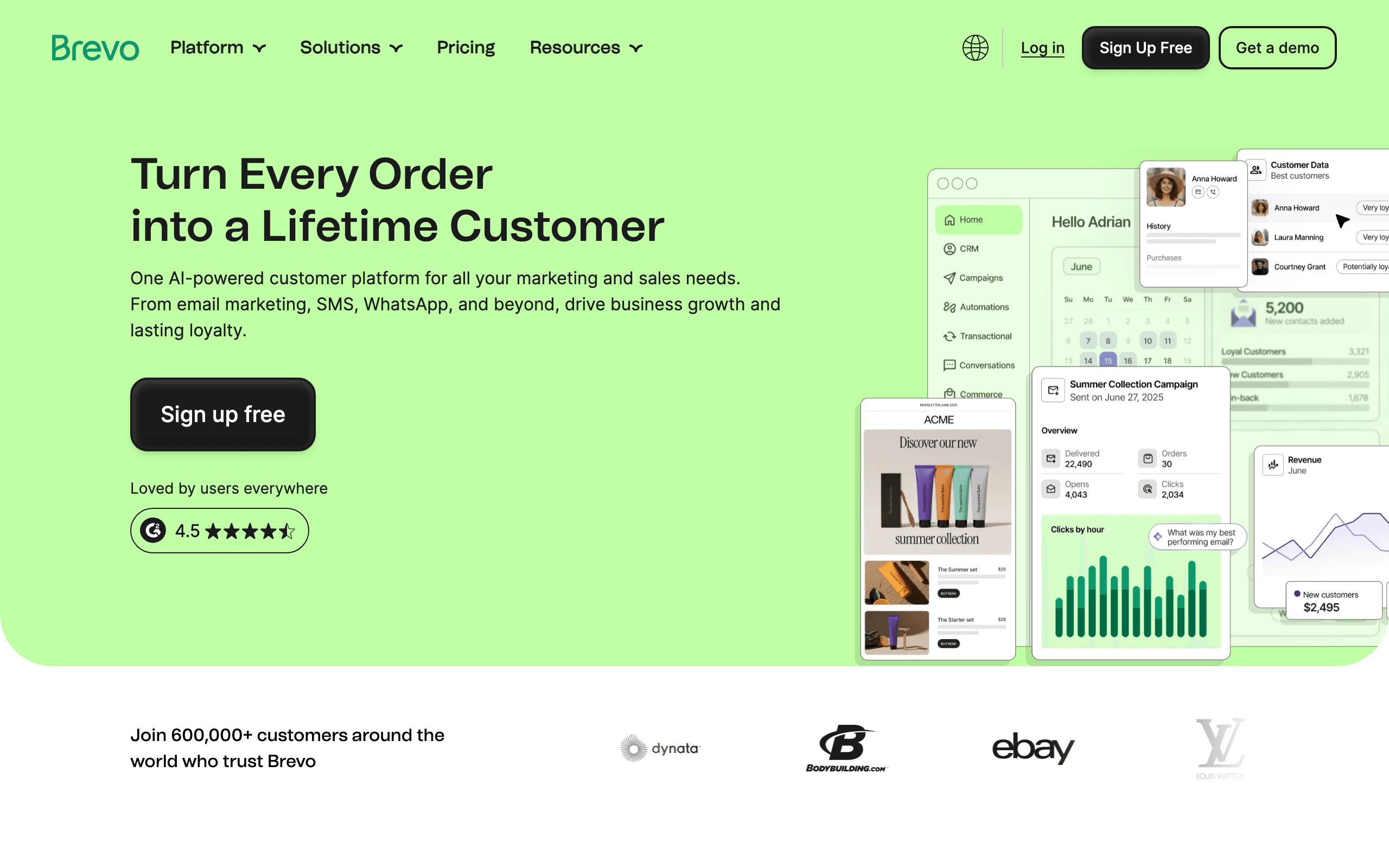
Sendy and Brevo (formerly Sendinblue) both target cost-conscious email marketers, but with opposite approaches. Sendy maximizes savings through self-hosting. Brevo offers affordable SaaS with multichannel features. See our Brevo comparison for more alternatives.
The Core Trade-off
Sendy saves money but costs time. Brevo saves time but costs money. The right choice depends on your technical skills and how you value the trade-off between cost savings and convenience.
Sendy's Cost Advantage
At 100,000 emails/month, Sendy costs roughly $10 (Amazon SES fees only). Brevo would charge $89-129 for similar volume. Over a year, that's $900-1,400 in savings. At higher volumes, savings become even more significant.
Brevo's Feature Advantage
Brevo offers visual automation builders, multichannel marketing (SMS, WhatsApp, live chat), built-in CRM, landing pages, and modern templates. Sendy offers basic campaigns, simple autoresponders, and dated interfaces. The feature gap is substantial.
Multichannel Matters
If you want to combine email with SMS or WhatsApp, Brevo includes this natively. Sendy is email-only. Adding SMS to a Sendy setup means integrating separate services, which adds complexity and cost.
Technical Reality
Sendy requires server administration skills. You need PHP/MySQL hosting, Amazon SES with production access, DNS configuration, and ongoing maintenance. Brevo is sign-up-and-start with automatic updates.
For SaaS Companies
Neither platform is built specifically for SaaS. Sendy lacks the automation modern SaaS needs. Brevo is general-purpose without Stripe integration. For subscription businesses wanting payment-triggered automation, consider Sequenzy.
Making the Choice
Choose Sendy if you're technical, sending high volumes, have basic email-only needs, and want to minimize costs. Choose Brevo if you want modern features, multichannel marketing, and no server hassle. For SaaS companies, consider Sequenzy.
Multichannel Marketing: Brevo's Defining Advantage
Brevo's built-in SMS, WhatsApp, and live chat capabilities transform it from an email tool into a multichannel marketing platform. Businesses can coordinate campaigns across email and messaging channels from a single dashboard, using shared contact data and unified analytics. Sendy is strictly email-only with no path to other channels.
For businesses operating in markets where WhatsApp is a primary communication channel -- much of Latin America, Europe, and Asia -- Brevo's native WhatsApp campaigns provide reach that email alone cannot achieve. Combining WhatsApp for immediate engagement with email for detailed content creates a communication strategy that covers both real-time and asynchronous touchpoints.
The multichannel capability also includes live chat for websites. Brevo's chat widget connects directly to your contact database, so conversations with visitors create or update contact records automatically. This integration between marketing and customer communication is something self-hosted tools like Sendy fundamentally cannot provide without significant custom development.
The Pricing Model That Changes the Calculation
Brevo charges per email sent with unlimited contacts. Sendy charges per email via SES with no contact limits either. Both models favor different usage patterns. For businesses with large contact databases that send selectively, Brevo's model works well. For businesses that send frequently to their entire list, SES costs through Sendy are dramatically lower.
At 100,000 emails per month, Sendy costs roughly $10 (SES fees). Brevo charges $89-129 depending on the plan. The gap is significant -- $900-1,400 per year. But Brevo includes transactional email, multichannel messaging, CRM, and automation in that price. Adding equivalent capabilities to a Sendy setup through separate services often costs more than the Brevo subscription.
The break-even point depends on which additional services you need. If you only need basic email campaigns, Sendy wins at any volume. If you need transactional email, automation, and even one additional channel, Brevo's all-in-one pricing frequently comes out ahead when you account for the total cost of separate tools.
Transactional Email: A Critical Differentiator
Brevo includes transactional email on every plan, including the free tier. Password resets, order confirmations, and account notifications all send through the same platform as your marketing campaigns. This unification simplifies branding, analytics, and deliverability management.
Sendy handles marketing email through its interface but transactional email requires using the Amazon SES API directly. This means managing two separate systems -- Sendy for marketing, raw SES for transactional -- with no unified analytics or template management. For teams that need both types of email, this fragmentation adds operational complexity.
For SaaS companies that depend on both marketing and transactional email, this distinction matters significantly. Welcome emails, trial expiration notices, payment confirmations, and feature announcements all need to work together as part of a cohesive user communication strategy. Sequenzy takes this further with Stripe-integrated transactional and marketing email in one platform.
When Self-Hosting Still Makes Sense
Despite Brevo's advantages in features and convenience, self-hosting with Sendy remains the right choice in specific scenarios. Organizations with strict data residency requirements may need email infrastructure in specific geographic locations. Companies sending millions of emails monthly save enough with SES pricing to justify dedicated infrastructure management. And technical teams that value complete control over their email stack find Sendy's simplicity appealing.
The self-hosting advantage also extends to privacy considerations. Sendy stores all subscriber data on your servers. Brevo stores data on their infrastructure, subject to their privacy policy and data processing agreements. For organizations in regulated industries, the ability to control where subscriber data lives may override convenience considerations.
However, the trend in email marketing is clearly toward managed platforms. As email authentication requirements grow more complex with DMARC, DKIM, and BIMI standards, maintaining proper deliverability becomes increasingly difficult for self-hosted solutions. Managed platforms like Brevo and Sequenzy handle these evolving requirements automatically.
Use-case matchups
| Situation | Best first look | Why |
|---|---|---|
| Team wants the lowest visible email sending cost and can self-host | Sendy | Sendy is the baseline here for teams comfortable operating their own app layer on top of a sending service. |
| Team wants hosted multi-channel marketing | Brevo | Brevo replaces Sendy's self-hosted model with a broader hosted SaaS platform. |
| SaaS or subscription team wants lifecycle and transactional email | Sequenzy | Sequenzy is stronger when Stripe events, transactional messages, and campaigns need a hosted lifecycle workflow. |
| Technical team already owns servers and AWS email operations | Sendy | Sendy can make sense when maintenance, updates, deliverability setup, and backup ownership are acceptable. |
| Team needs the specialist capability | Brevo | Brevo deserves the first demo when the main requirement is multi-channel SaaS marketing with email, SMS, CRM-like tools, and transactional options. |
| Team wants hosted workflows without self-hosting | Sequenzy | Sequenzy removes Sendy-style app maintenance while staying focused on email automation and transactional messages. |
Pricing reality
The pricing signals on this page list Sendy at ~$10/month or equivalent operating cost, Brevo at $89-129/month, and Sequenzy at $99/month. Sendy's number should never be read as the whole cost.
Sendy usually shifts cost from the vendor invoice to operations: hosting, updates, backups, SES or SMTP setup, bounce handling, deliverability monitoring, and internal troubleshooting. Brevo's real cost depends on whether the team needs multi-channel SaaS marketing with email, SMS, CRM-like tools, and transactional options.
Review signals
For Sendy, validate reviews around setup, updates, SES integration, bounce handling, deliverability, and the amount of technical maintenance required. For Brevo, focus review research on whether users praise the reason you would choose it: multi-channel SaaS marketing with email, SMS, CRM-like tools, and transactional options.
Best Fit by Cost and Operations
Best low-cost email tool for AWS SES users
Sendy fits technical teams that can manage a self-hosted app and want very low sending costs through Amazon SES. It is strongest when volume economics justify owning setup, monitoring, bounces, and deliverability details.
Best hosted multi-channel platform for small businesses
Brevo is the better fit when marketers need campaigns, transactional email, SMS, WhatsApp, CRM basics, and support without owning infrastructure. It works better when convenience and channel breadth are worth paying more than raw SES cost.
Best SaaS lifecycle platform for managed product email
Sequenzy fits SaaS teams that want managed lifecycle email connected to product and billing events. It avoids self-hosting while staying more focused on subscription customer journeys than a general marketing platform.
Migration checklist
| Workstream | Moving toward Sendy | Moving toward Brevo | Simplifying to Sequenzy |
|---|---|---|---|
| Hosting and ownership | Provision hosting, backups, updates, SSL, cron jobs, sending service credentials, and admin access. | Map contacts, attributes, lists, SMS consent, automations, transactional sends, forms, and CRM fields. | Import subscribers, attributes, tags, suppressions, and lifecycle events into a hosted workflow. |
| Sending setup | Configure SES or SMTP, SPF, DKIM, DMARC, bounce processing, complaint handling, and suppression logic. | Confirm sender authentication, deliverability tooling, and plan limits. | Configure sending domains and transactional paths without self-hosting. |
| Contacts and consent | Import lists, custom fields, segments, unsubscribes, bounces, and suppression records. | Import the data model Brevo needs for multi-channel SaaS marketing with email, SMS, CRM-like tools, and transactional options. | Import subscriber data and lifecycle attributes. |
| Automations | Rebuild simple autoresponders and campaigns; custom lifecycle logic may need outside code. | Rebuild the workflows that prove Brevo's advantage. | Rebuild campaign, lifecycle, and transactional email flows. |
| Reporting | Decide which analytics are built in and which require outside tooling. | Validate reporting for multi-channel SaaS marketing with email, SMS, CRM-like tools, and transactional options before committing. | Validate campaign, automation, transactional, and subscription lifecycle reporting. |
Decision checklist
- Is your team ready to run Sendy's PHP/MySQL server, apply updates by hand, and keep backups current instead of relying on Brevo's automatic updates?
- Does Brevo's strength in multi-channel SaaS marketing with email, SMS, CRM-like tools, and transactional options matter more than Sendy's low visible cost?
- Who will watch bounces and complaints from the Amazon SES setup and keep suppression lists clean once contacts move off Sendy?
- Does the $69 license plus about $10 in SES fees still beat Brevo's $89-129 once server time and engineering hours are counted?
- Would hosted lifecycle email with Stripe triggers and transactional sends in one product serve you better than a self-hosted newsletter tool?
- Brevo can be easier operationally, but confirm send limits and plan gates.









