
Overview
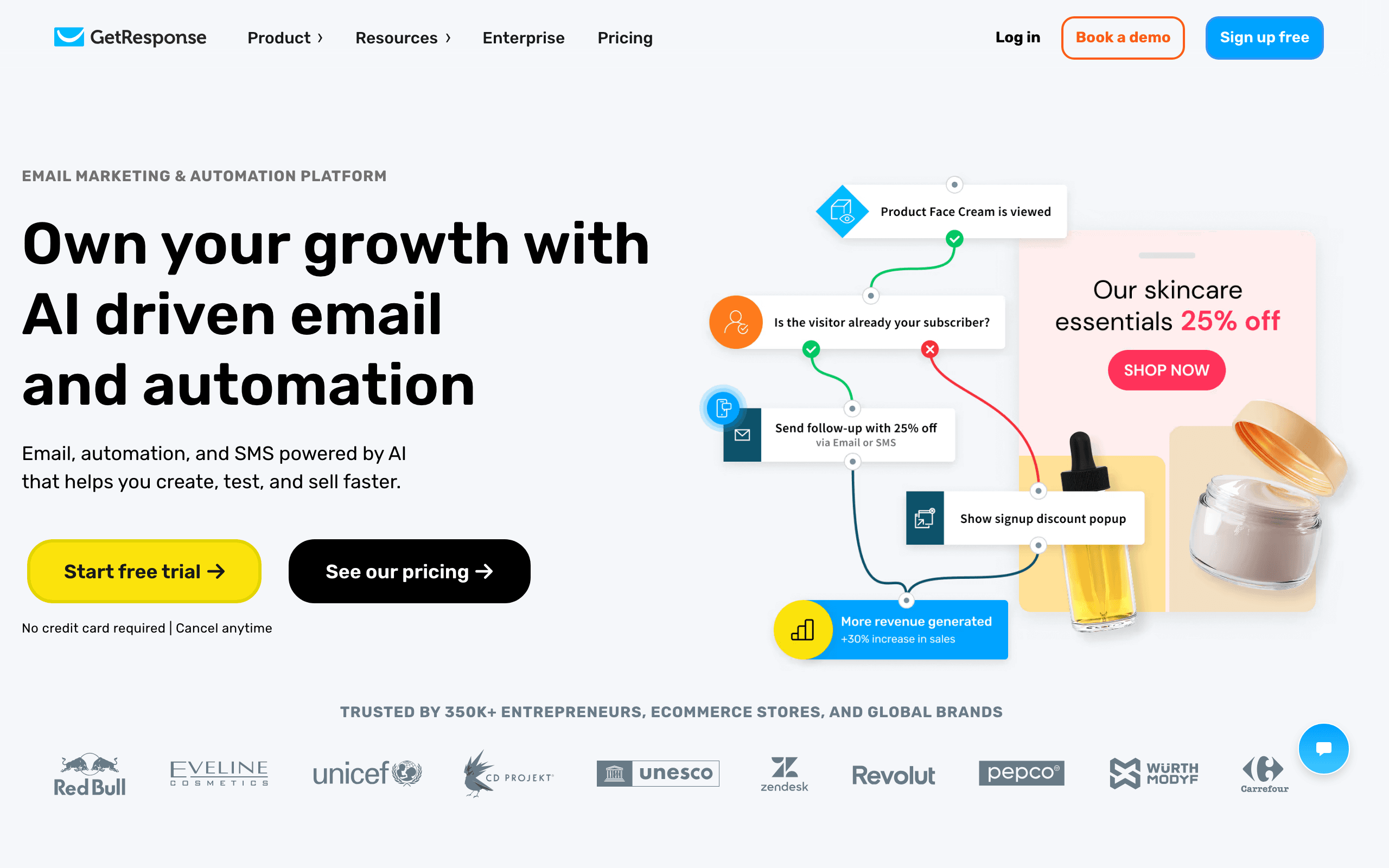
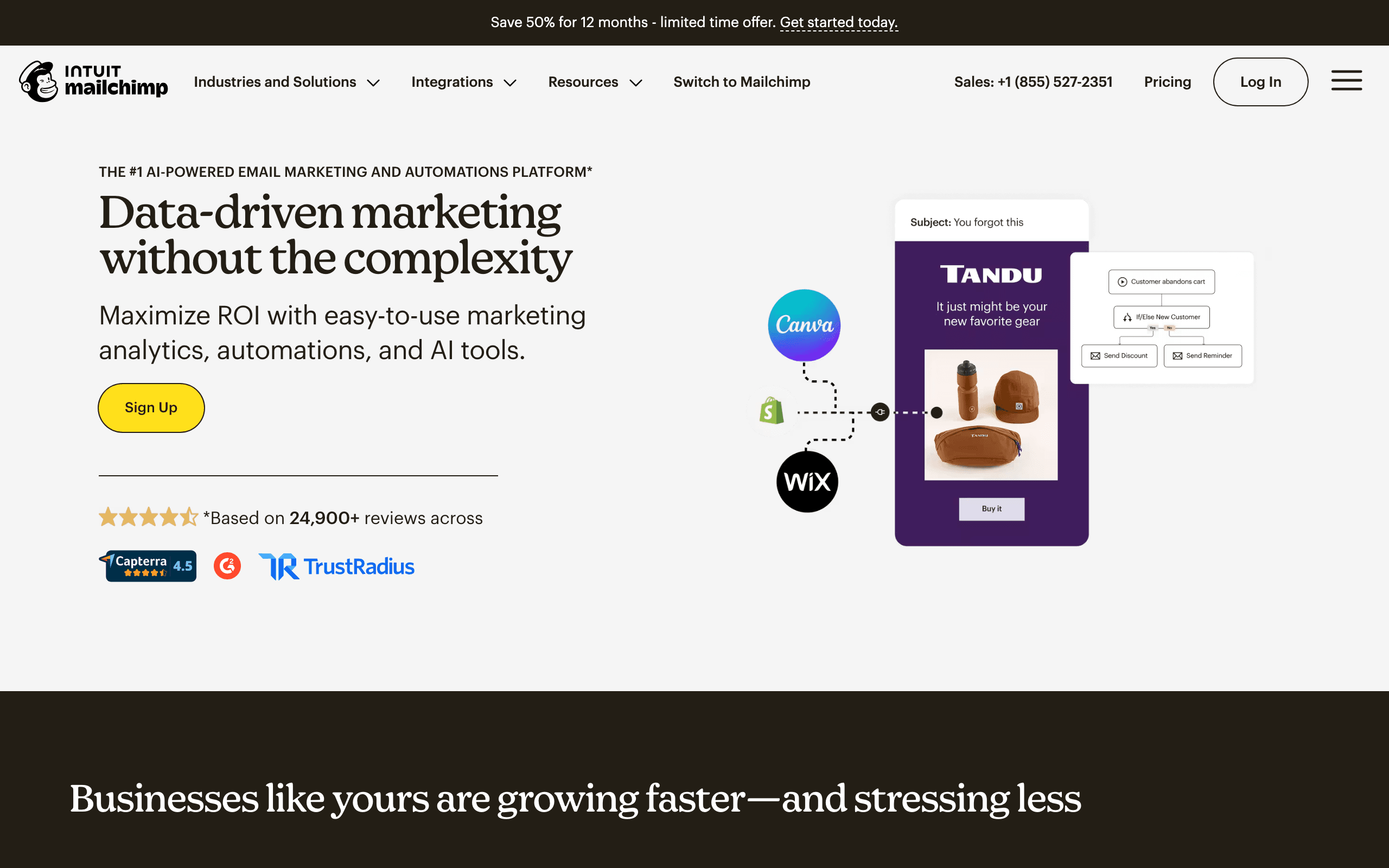
GetResponse and Mailchimp both offer email marketing, but they've evolved differently. GetResponse has become an all-in-one marketing platform with unique features like webinars and conversion funnels. Mailchimp is the email marketing giant with unmatched brand recognition. Check our Mailchimp comparison for detailed analysis.
The choice depends on whether you need GetResponse's webinar-centric marketing or Mailchimp's ecosystem strength.
The Core Difference
GetResponse is one of the few email marketing platforms that includes native webinar hosting. You can run live webinars, on-demand recordings, and even paid webinar events - all integrated with your email lists and automation. This makes GetResponse particularly valuable for coaches, educators, and B2B marketers.
Mailchimp has invested in becoming the email marketing ecosystem. With 300+ integrations, extensive templates, and household name recognition, it's the safe choice for businesses wanting maximum connectivity and proven reliability.
Pricing: €69 vs $135 at 10K
At 10,000 contacts, GetResponse costs €69/month (~$75 USD) for the Starter plan with unlimited email sends. Mailchimp's Standard plan costs $135/month with a 120,000 email limit.
GetResponse is about 45% cheaper while including unlimited sends. However, webinar features require the Creator plan (€114/month at 10k), which narrows the gap.
GetResponse only charges for active subscribers. Mailchimp counts all contacts including unsubscribed ones. If you have list churn, the cost difference can be larger than the list prices suggest.
Use-case matchups
| Use case | Better fit | Why |
|---|---|---|
| Webinar-led lead generation | GetResponse | Webinars, webinar funnels, and landing pages are part of the product instead of separate tools. |
| Broad app ecosystem | Mailchimp | Mailchimp has the larger integration ecosystem and more third-party familiarity. |
| Creator courses or digital products | GetResponse | Creator-oriented plans can combine email, landing pages, webinars, and course-style workflows. |
| Ecommerce marketing with many integrations | Mailchimp | Mailchimp is easier to fit into common ecommerce and SMB marketing stacks. |
| SaaS billing-triggered lifecycle email | Sequenzy | Neither GetResponse nor Mailchimp is built around Stripe subscription events. |
Best Fit by Funnel Strategy
Best email marketing tool for webinar-led funnels
GetResponse is the stronger fit when webinars, registrations, reminders, replays, landing pages, and follow-up funnels are part of the same sales motion. It can replace several tools when the funnel is built around live or evergreen teaching.
Best email marketing tool for broad ecommerce and SMB integrations
Mailchimp is the better fit when the buyer values app familiarity, ecommerce connectors, campaign templates, and a broad SMB marketing ecosystem. It works best when integrations and general marketing operations matter more than webinar depth.
Best email marketing tool for SaaS billing-triggered lifecycle emails
Sequenzy is the better fit when the funnel is not a webinar or ecommerce journey, but a subscription lifecycle. Stripe trials, failed payments, upgrades, and churn risk need billing-aware automation that neither GetResponse nor Mailchimp handles natively.
Pricing reality
At 10,000 contacts, the page data lists GetResponse at €69/month, about $75, and Mailchimp Standard at $135/month. That headline gap is real, but it only tells part of the story.
GetResponse is cheaper at this comparison point and includes unlimited sends on paid plans. If webinars, funnels, and landing pages are part of the same workflow, GetResponse can also reduce the number of separate tools you need. Mailchimp may still be worth the premium when its integration ecosystem, ecommerce connectors, templates, and team familiarity reduce operational friction.
Before buying, compare the exact plan, contact count, active versus total contact billing, send limits, webinar requirements, ecommerce integrations, annual discounts, and any add-ons. Mailchimp's contact model can matter if your list contains many unsubscribed or non-subscribed contacts.
Review signals
The reviews on this page point to the same tradeoff as the feature comparison. GetResponse reviewers like the savings, webinars, and funnels, while warning that integration gaps can matter. Mailchimp reviewers like the ecosystem and connectivity, while warning about pricing increases and contact-counting frustration.
Use those signals as prompts for your own demo. If your buying reason is webinars, test the full registration-to-follow-up flow in GetResponse. If your buying reason is ecosystem fit, test the exact Mailchimp integrations your team uses every week.
Migration checklist
| Step | What to confirm |
|---|---|
| Contacts and billing | Export active contacts, unsubscribed contacts, tags, segments, custom fields, and consent records; compare how each platform counts billable contacts. |
| Campaign assets | Move templates, images, landing pages, forms, signup pages, and campaign archives. |
| Funnels and webinars | If leaving GetResponse, decide where webinar registrations, evergreen funnels, recordings, and paid webinar flows will live. |
| Ecommerce and integrations | Reconnect Shopify, WooCommerce, CRM, analytics, payment, and Zapier workflows before the first send. |
| Reporting continuity | Save baseline engagement, revenue, funnel, webinar, and automation reports so performance does not reset blindly. |
Where GetResponse Wins
Built-in Webinars: This is GetResponse's killer feature. No other major email marketing platform offers native webinar hosting. You can run live events, create evergreen webinar funnels, and monetize with paid webinars - all in one platform.
Landing Pages & Funnels: GetResponse's landing page builder is AI-powered with 30+ conversion funnel templates. It's more sophisticated than Mailchimp's basic landing pages.
Unlimited Sends: GetResponse includes unlimited email sends on all plans. Mailchimp limits sends to 12x your contact count. High-volume senders save money with GetResponse.
Creator Economy Features: The Creator plan includes course hosting and paid newsletters. GetResponse is positioning for creators selling digital products.
Where Mailchimp Wins
Integration Ecosystem: 300+ integrations vs 170+. Mailchimp connects to more tools, and its e-commerce integrations (Shopify, WooCommerce) are deeper.
Brand Recognition: Everyone knows Mailchimp. This matters for agencies, enterprise procurement, and team stakeholders who want "safe" choices.
Email Templates: Mailchimp has invested heavily in email design with an extensive template library and polished editor.
E-commerce Features: Product recommendations, revenue tracking, and abandoned cart automations are more mature in Mailchimp.
For SaaS Companies
GetResponse and Mailchimp were both built for general marketing, not for tracking a subscription business. Neither ties automation to Stripe events like a failed charge or a plan upgrade, so SaaS teams end up bolting on a separate billing integration regardless of which one they pick. GetResponse's webinars and funnels or Mailchimp's larger integration list do not change that gap; if usage-based or subscription triggers matter to you, plan for extra tooling on either platform.
If you're running a SaaS company and want automation that triggers based on Stripe events - trial expiry, failed payments, plan upgrades - consider Sequenzy. It's designed specifically for software businesses with transactional email and billing integration built in.
At $99/month for 120,000 emails, unlimited subscribers, it costs less than both GetResponse and Mailchimp while offering SaaS-specific features neither has.
Decision checklist
- Choose GetResponse if webinars, conversion funnels, landing pages, and lower contact-tier pricing are important.
- Choose Mailchimp if the larger integration ecosystem, ecommerce workflow, templates, and brand familiarity matter more.
- Avoid GetResponse if a missing integration would break the team's operating workflow.
- Avoid Mailchimp if contact-count billing and send limits make the real cost hard to justify.
- Consider Sequenzy if the core job is SaaS lifecycle email triggered by Stripe and product events.
The Integration Ecosystem Factor
Mailchimp has the largest integration ecosystem in email marketing - virtually every business tool connects natively. CRM systems, e-commerce platforms, analytics tools, social media managers - Mailchimp integrates with all of them. GetResponse has a respectable but smaller integration library. For businesses with complex tool stacks, Mailchimp's ecosystem reduces the friction of data flow between platforms. This practical advantage often matters more than feature comparisons on paper.
Contact Counting Practices
Mailchimp counts unsubscribed and non-subscribed contacts toward billing tiers, effectively charging for contacts who cannot receive emails. GetResponse counts active contacts only. This difference can be significant - a business with 10,000 active subscribers might have 15,000 total contacts in Mailchimp and pay the higher-tier price. GetResponse's cleaner counting means you pay only for contacts you can actually email.
Feature Value vs Brand Trust
GetResponse objectively offers more features per dollar - webinars, conversion funnels, AI tools, and unlimited sends at lower prices. But Mailchimp's brand dominance means more resources, tutorials, community support, and third-party expertise. Finding a GetResponse consultant is harder than finding a Mailchimp expert. This ecosystem of knowledge and support has practical value that feature lists do not capture.








