Overview
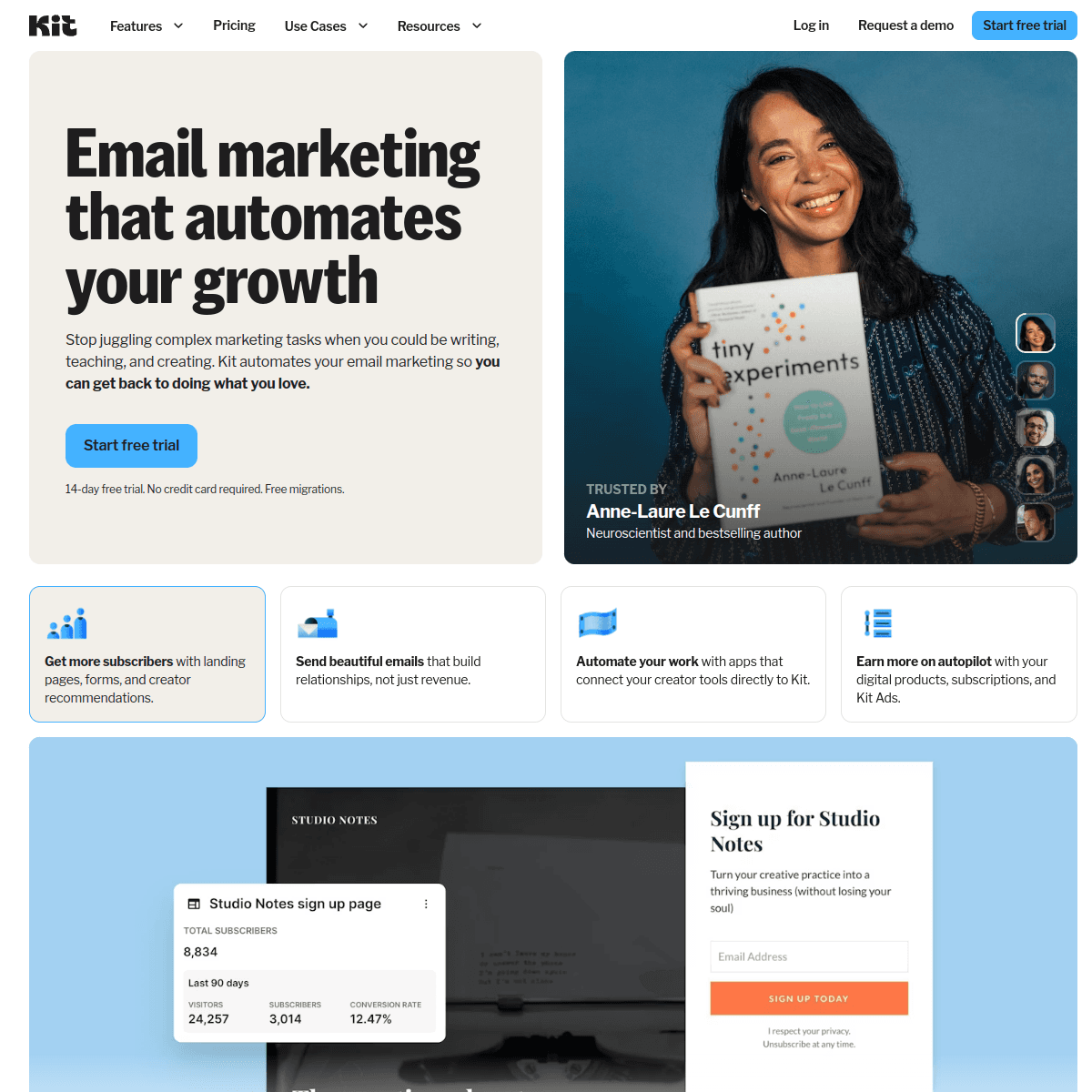
Emma and ConvertKit (now Kit) serve completely different users. ConvertKit is for individual creators. Emma is for organizations with distributed teams. For our take on each, see our Emma comparison and ConvertKit comparison.
Different Worlds
ConvertKit is built for bloggers, YouTubers, podcasters, and course creators who want simple, effective email with paid newsletter features. Emma is built for franchises and organizations needing brand governance. These platforms don't compete because they serve different people.
Pricing reality
Emma and ConvertKit are close at the 10,000-subscriber full-feature point, but their entry paths are very different. ConvertKit has a free plan with limits, while Emma starts as a sales-led governance product at $99+/month.
The right comparison is not only monthly price. Emma's value is brand control across teams; ConvertKit's value is creator monetization and audience growth.
Review signals
Emma's reviews on this page support the franchise-governance fit, while also saying the email feature set feels behind modern marketing tools.
ConvertKit's reviews support the creator-business case: paid newsletters, visual automations, tags, referrals, and creator monetization. The caution is price once a side project needs automation beyond the free plan.
ConvertKit's Creator Tools
Paid newsletters with Stripe, digital product sales, newsletter referral programs, creator landing pages - ConvertKit is purpose-built for individual creators monetizing their audience. Emma offers none of these features.
Emma's Organizational Focus
Emma solves a problem individual creators don't have: brand governance across distributed teams. For organizations with multiple locations sending email, Emma's locked templates and approval workflows maintain brand consistency.
Use-case matchups
| Use case | Better fit | Why |
|---|---|---|
| Franchise or multi-location brand email | Emma | Emma is built for brand governance, locked templates, approvals, and distributed teams. |
| Creator newsletter and monetization | ConvertKit | ConvertKit is stronger for paid newsletters, creator commerce, referrals, and audience relationships. |
| Brand approval workflows | Emma | Emma is the better fit when central marketing must review or constrain local sends. |
| Solo creator automation | ConvertKit | ConvertKit's tag model, landing pages, and visual automations are made for individual creators. |
| SaaS lifecycle email | Sequenzy | Sequenzy is better when transactional email, Stripe events, and subscription lifecycle campaigns matter. |
| Free starting point | ConvertKit | ConvertKit is far more accessible for creators who need to start without a sales-led plan. |
Why This Comparison Rarely Matters
In practice, Emma and ConvertKit almost never compete for the same customer. A solo blogger evaluating newsletter tools will never consider Emma - it is designed for organizations with teams and locations. A franchise with 30 locations will never consider ConvertKit - it is designed for individual creators. Recognizing that these platforms solve fundamentally different problems is the most important insight in this comparison.
If you are reading this comparison, it likely means you are trying to understand the email marketing landscape broadly rather than choosing between these two specific tools. Consider what category you fall into - individual creator or multi-team organization - and that answer should immediately narrow your focus.
The Monetization Gap
ConvertKit provides creators with multiple ways to generate revenue from their audience - paid newsletters, digital product sales, tip jars, and commerce pages. Emma offers no monetization features at all because organizations using Emma are typically monetizing through their products and services, not through their email lists directly.
This is not a weakness of Emma per se - it is a reflection of different business models. But it does highlight how purpose-built each platform is for its target audience. Trying to use either tool for the other's intended purpose would be a frustrating experience.
Subscriber Management Philosophy
ConvertKit uses a subscriber-centric model where each person exists once with tags describing their interests and behaviors. This approach is intuitive for creators who think about their audience as individuals with varied interests. Emma uses a more traditional organizational approach with lists and segments, designed for teams managing marketing to distinct customer groups.
The difference matters because it affects how you think about your audience. ConvertKit encourages personal, relationship-based communication. Emma encourages brand-consistent, organizationally approved messaging. Both approaches work - for their intended audiences.
Best Fit by Audience Ownership Model
Best email platform for brand-controlled organizations
Emma fits universities, franchises, associations, and multi-location teams that need template governance, brand consistency, and coordinated campaign creation. It is strongest when many people send email under one brand system.
Best creator email platform for individual monetization
ConvertKit is the better fit when a creator needs forms, broadcasts, sequences, paid newsletters, and digital-product monetization around a personal audience. It works best when one creator or small creator team owns the voice.
Best lifecycle email platform for product-led teams
Sequenzy fits teams whose customer emails should respond to product activity, subscriptions, invoices, and retention signals. It is more relevant when customer lifecycle state matters more than brand governance or creator monetization.
Migration checklist
- Decide whether the destination model is organization-controlled brand sending or creator-owned audience monetization.
- Export subscribers, lists, tags, segments, custom fields, templates, forms, landing pages, automations, approvals, sub-accounts, products, referral data, and reports.
- If moving to Emma, map ConvertKit tags, forms, creator products, automations, and landing pages into brand-approved templates, lists, and team workflows.
- If moving to ConvertKit, map Emma lists, sub-accounts, brand templates, approvals, and segments into tags, forms, sequences, products, and creator funnels.
- Rebuild priority flows first: welcome, newsletter, lead magnet delivery, paid subscriber onboarding, local brand campaigns, approvals, and re-engagement.
- Reconnect forms, landing pages, payment links, referral programs, team permissions, analytics, and suppression syncing.
- Authenticate sending domains, test unsubscribe behavior, and send one controlled campaign before migrating all subscribers.
- Preserve historical campaign, monetization, approval, location, and audience reports so the team can compare governance against creator growth.
Decision checklist
- Is the buyer an individual creator or a distributed organization?
- Are paid newsletters, digital products, tips, or referrals central to the business model?
- Does central marketing need locked templates and approval workflows?
- Is ConvertKit's paid plan justified once automation is needed?
- Would SaaS lifecycle and transactional email make Sequenzy more relevant?