
Overview
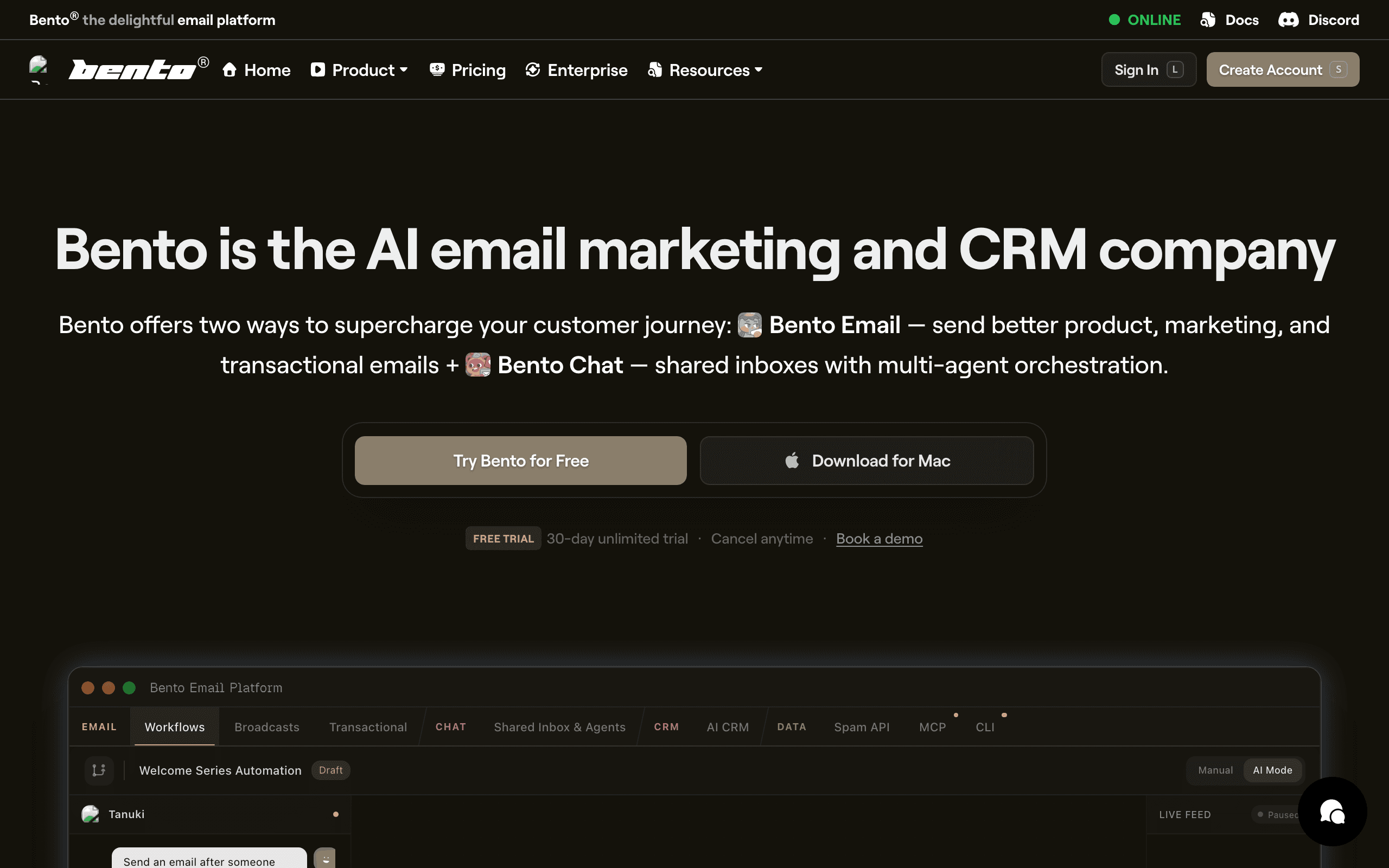
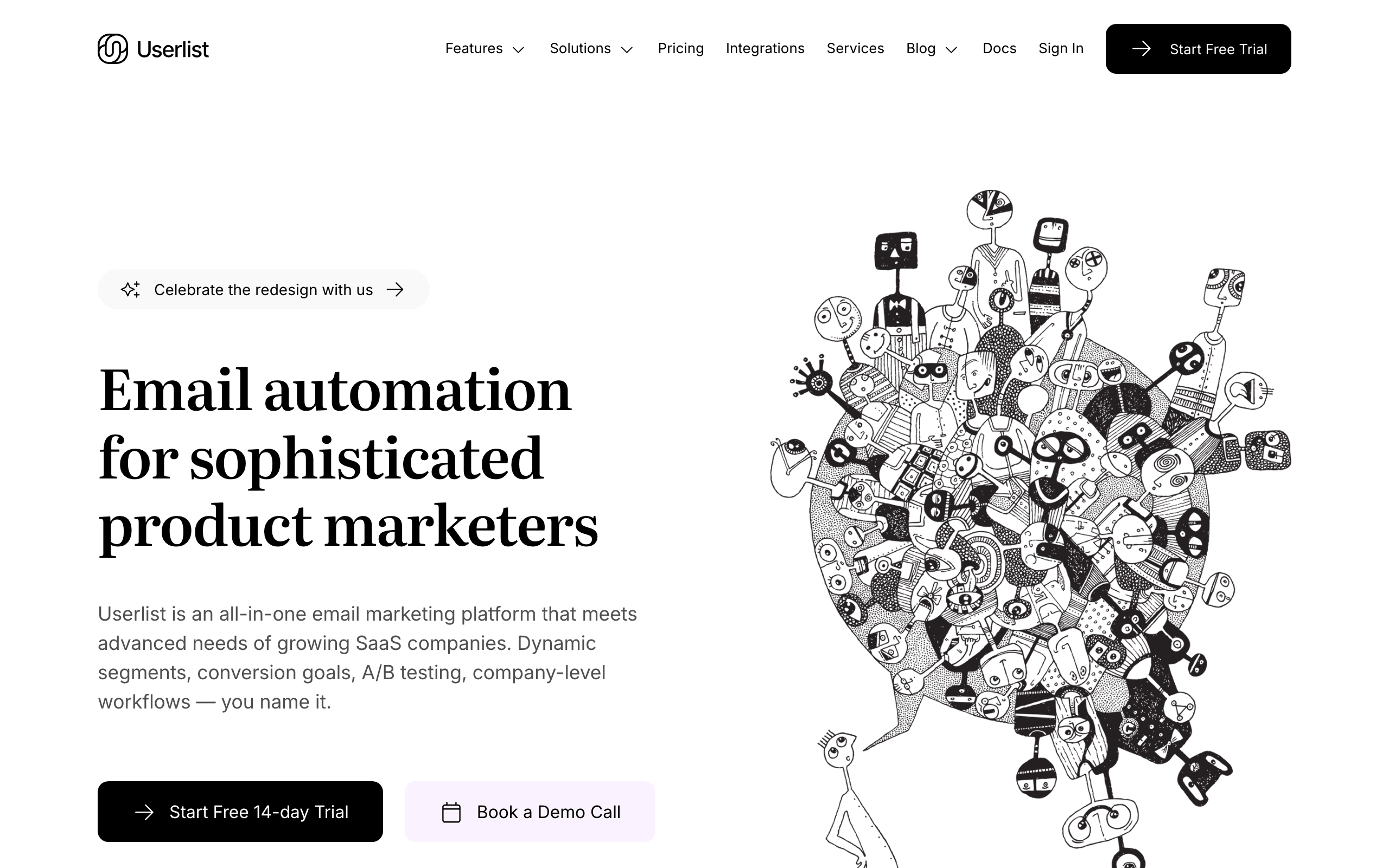
Bento and Userlist are both built specifically for SaaS companies. They share the same target market but take different approaches. Bento emphasizes simplicity and AI features. Userlist emphasizes B2B SaaS features like company accounts and in-app messaging. See our Userlist alternatives for more options.
B2B SaaS Features
Userlist treats companies and team members as first-class objects. You can segment by company attributes, trigger automations when companies reach milestones, and coordinate messaging across team members.
Bento tracks users individually. Company data can be stored as attributes but lacks the native hierarchy Userlist provides. For complex B2B SaaS with team-based products, Userlist's data model fits better.
Pricing reality
Bento is usually evaluated around tracked users, events, included sends, and behavioral email needs.
Userlist should be evaluated around base plan, message volume, user/company objects, in-app messaging, and SaaS workflow needs. For high-frequency senders, message volume matters.
If you send many emails per user through onboarding sequences, feature announcements, and behavior triggers, model the real monthly message volume before choosing.
AI and Email Creation
Bento offers an AI-powered email builder that helps create emails automatically. Userlist focuses on automation workflows without AI assistance.
If AI help with email creation matters to you, Bento has the advantage. If you prefer traditional email editing, both work well.
In-App Messaging
Userlist offers in-app messages alongside email. This lets you coordinate user communication across channels. Bento is email-only.
For SaaS products where in-app guidance matters, Userlist's multi-channel approach adds value.
Making the Decision
Choose Bento for simpler lifecycle email, product-event messaging, and AI email building. Choose Userlist for B2B SaaS with company hierarchies and in-app messaging. For SaaS with Stripe integration, consider Sequenzy as a third option.
The Sequenzy Alternative
If you run a SaaS with Stripe billing, Sequenzy offers native Stripe integration, smart segmentation, and AI sequences without requiring account-model or in-app messaging complexity.
The B2B Data Model Question
The most significant architectural difference between Bento and Userlist is how they model B2B relationships. In most B2B SaaS products, users belong to companies, companies have subscription plans, and marketing decisions need to account for both individual user behavior and company-level attributes. Userlist treats this hierarchy as a first-class concept with native company objects, team member relationships, and company-level segmentation.
Bento treats every user as an individual entity. You can store company data as custom attributes on user records, but there is no native relationship between a user and their company account. This means you cannot easily segment by company attributes, trigger automations when all team members complete onboarding, or coordinate messaging across a company's user base.
For B2C SaaS or simple B2B where each user operates independently, this distinction does not matter. For team-based products where buying decisions involve multiple stakeholders and usage patterns are company-wide, Userlist's data model provides genuine operational advantage.
Pricing Model Economics at Scale
The tracked-user versus message-volume pricing debate becomes increasingly important as your SaaS grows. Bento's model is simpler to reason about when costs track the user base. If you have aggressive onboarding sequences, weekly product updates, and behavioral triggers, send volume is an important part of the comparison.
Userlist's message-volume economics mean your costs can depend on how often you communicate, not only audience size. A SaaS that sends a few emails per user per month has a different cost profile from one with extensive automation sequences and frequent campaigns.
The break-even point depends on your sending patterns. Calculate average monthly emails per user, multiply by your user count, include in-app messaging needs, and compare that scenario against current vendor pricing.
In-App Plus Email Coordination
Userlist's in-app messaging capability addresses a real gap in most email-only platforms. SaaS onboarding works best when in-product guidance and email communication are coordinated. A user who completes a tutorial in your product should not receive an email nudging them to start that same tutorial. Userlist handles this coordination natively.
Bento's email-only approach means you need a separate tool for in-app messaging and must build your own coordination logic between the two systems. Tools like Intercom or Appcues can fill this gap, but adding another vendor introduces integration complexity, data synchronization challenges, and additional cost.
For SaaS products where in-product onboarding is critical to activation and retention, Userlist's integrated approach eliminates an entire category of tooling decisions. For products where email is the primary communication channel and in-app messaging is secondary, Bento's focused approach avoids paying for capabilities you do not need.
Use-case matchups
| Use case | Better fit | Why |
|---|---|---|
| User-level SaaS lifecycle email | Bento | It is simpler when individual product events drive messaging. |
| B2B SaaS with company accounts and team members | Userlist | Companies and team members are first-class concepts. |
| High-frequency email where included sends matter | Bento | The tracked-user model can be easier to model. |
| Coordinated email and in-app onboarding | Userlist | In-app messages are part of the product. |
| Stripe-triggered subscription lifecycle | Sequenzy | Billing events are the central fit. |
Best Fit by SaaS Data Model
Best SaaS email platform for user-level lifecycle campaigns
Bento is the better fit when individual user events are enough to drive onboarding, activation, and retention messages. It stays simpler when company-account hierarchy is not central.
Best SaaS messaging tool for B2B accounts and in-app onboarding
Userlist is the better fit when companies, team members, roles, account milestones, and in-app messages are part of the lifecycle strategy. It is stronger for account-based B2B SaaS communication.
Best email platform for Stripe-triggered subscription lifecycle
Sequenzy is the better fit when the lifecycle should follow billing state. Subscription changes, failed payments, receipts, trials, and churn-risk campaigns should trigger directly from Stripe.
Review signals
The Bento reviews on this page praise unlimited sends, simple pricing, and AI email creation, while noting the lack of native account hierarchy. That fits B2C SaaS or simpler B2B use cases.
The Userlist reviews praise company accounts, team-member tracking, company milestones, and coordinated in-app messaging, while warning about message-volume cost. That points to B2B SaaS with account-level lifecycle needs.
Migration checklist
Before moving between Bento and Userlist, export users, companies, custom attributes, events, suppression lists, templates, campaign history, automations, and message history. If moving to Userlist, model company objects, team-member relationships, lifecycle stages, and in-app message triggers. If moving to Bento, flatten company data into user attributes and simplify account-level workflows into user-event based email flows.
Decision checklist
- Choose Bento if lifecycle messaging is mostly user-level email with predictable tracked-user pricing.
- Choose Userlist if company accounts, team members, and in-app messages are central to onboarding and retention.
- Avoid Bento if account-level segmentation and team relationships are first-class requirements.
- Avoid Userlist if in-app messaging and company hierarchy will not be used enough to justify complexity.
- Consider Sequenzy if Stripe billing events should drive the lifecycle program.









