

Updated 2026-01-11

12 MagicBell Alternatives Worth Considering

MagicBell's in-app notification components are excellent, but usage-based pricing can be unpredictable. Here are 12 alternatives for different needs.

TL;DR

Quick answer: For SaaS email marketing, Sequenzy ($49/mo) has Stripe integration and AI content. For in-app notifications with predictable pricing, Knock ($250/mo). For open-source, Novu. For push-first mobile apps, OneSignal.

12 Best MagicBell Alternatives

Our Pick for SaaS Companies
#1
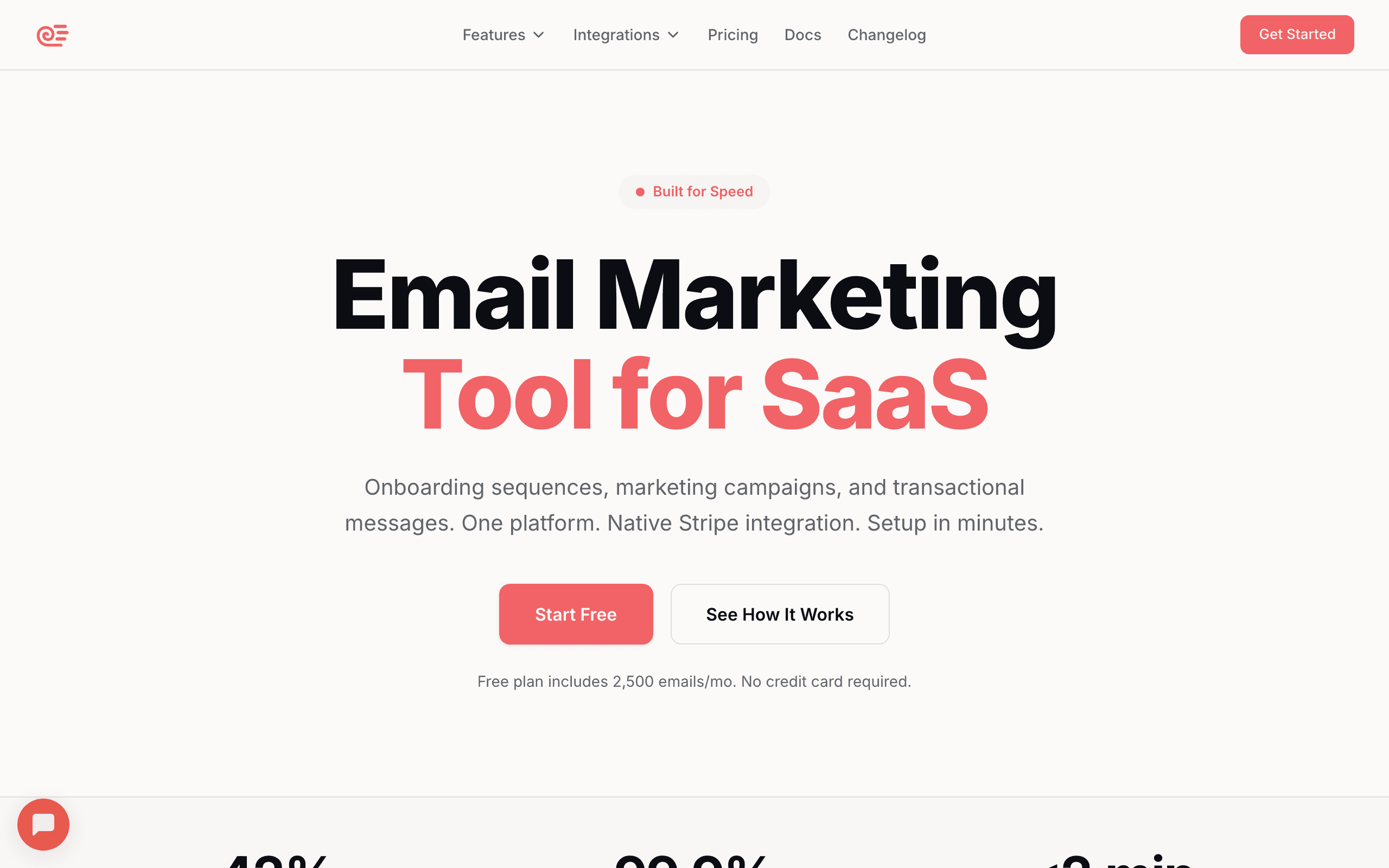
Sequenzy

Email marketing for SaaS with AI content generation and native Stripe integration. Not multi-channel like MagicBell, but purpose-built for SaaS email marketing.

If you're using MagicBell primarily to send email notifications and marketing campaigns, Sequenzy does that specific job far better — AI generates complete onboarding, conversion, and retention sequences from a product description, and Stripe integration automatically syncs subscription events. Predictable per-subscriber pricing means no usage-based surprises like MagicBell's per-MAU model. The clear trade-off: no in-app notification bells, no push, no real-time delivery. Email only, done well.

Visit
Best for
SaaS teams needing email marketing with Stripe sync
Pricing
$49/month for 10k subscribers

Pros

  • Purpose-built for SaaS email marketing
  • AI generates entire email sequences
  • Native Stripe integration
  • Predictable per-subscriber pricing
  • Unified transactional + marketing

Cons

  • No in-app notifications
  • No push or real-time delivery
  • Email only - not multi-channel
  • Different purpose than MagicBell
#2
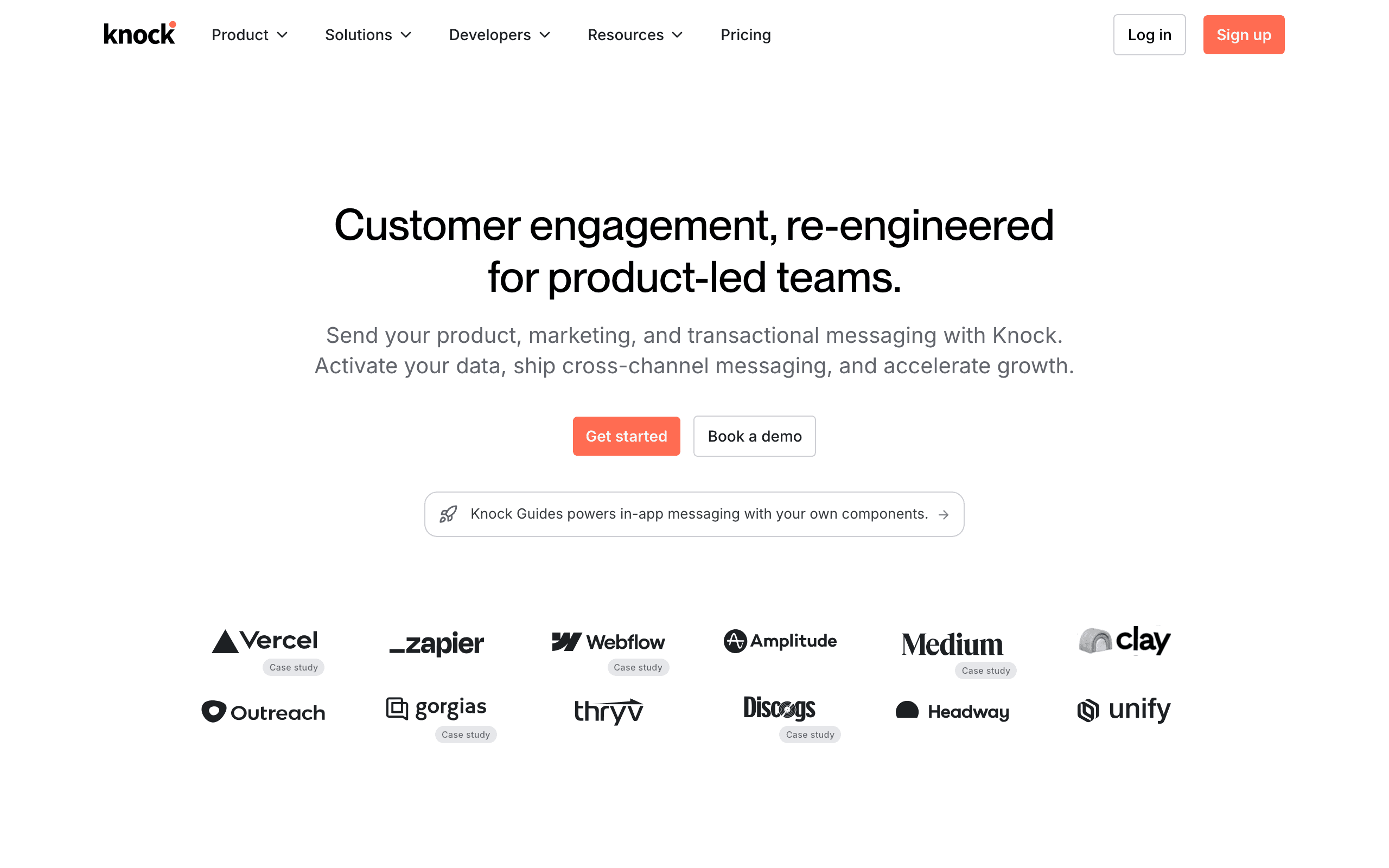
Knock

The most polished MagicBell competitor. Similar in-app notification features with predictable flat-rate pricing instead of usage-based.

Knock offers pre-built notification bell components, notification feeds, and preference management — essentially the same core value proposition as MagicBell, but backed by a larger team with more enterprise customers. The flat $250/month Starter tier means your costs don't fluctuate with monthly active users the way MagicBell's per-MAU pricing does. Multi-channel support covers email, push, SMS, and in-app from the same workflow engine. The trade-off: Knock is more expensive at low volume (MagicBell's free tier is more generous), and the $250 jump from free is steep with no middle ground.

Visit
Best for
Teams wanting premium in-app notifications with predictable pricing
Pricing
$250/month (Starter), Free tier available

Pros

  • In-app notification UI components like MagicBell
  • Predictable pricing ($250/mo flat)
  • More mature platform
  • Multi-channel (email, push, SMS, in-app)
  • Better enterprise features

Cons

  • More expensive than MagicBell at low volume
  • $250/mo jump after free tier
  • No middle pricing tier
  • Developer-focused setup
#3
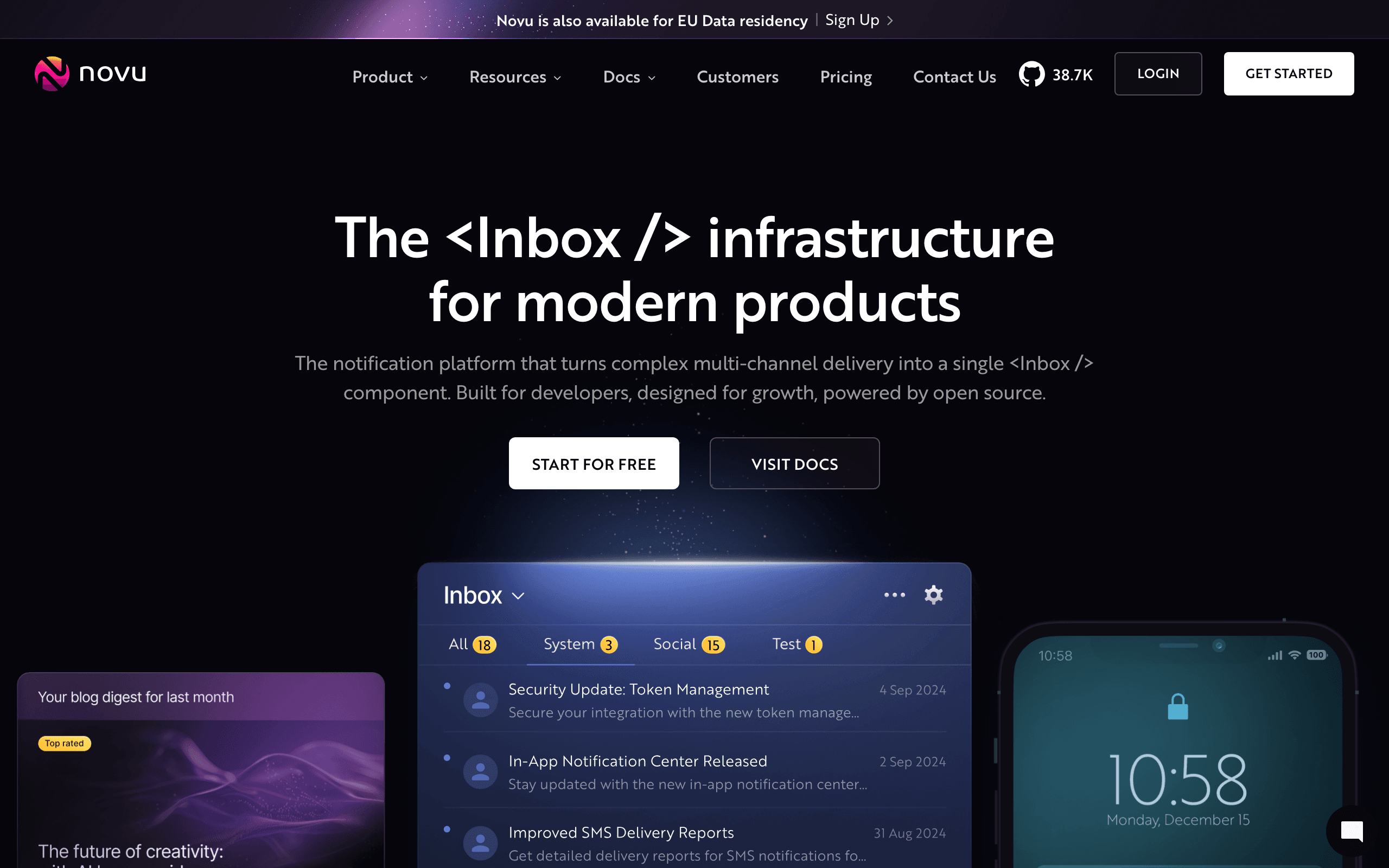
Novu

Open-source notification infrastructure. Self-hostable if you want control, or use their cloud.

Multi-channel with in-app support. Novu provides an open-source notification center component that you can drop into your app — similar to MagicBell's notification bell, but with the ability to self-host the entire stack for full control. Multi-channel delivery covers email, push, SMS, in-app, and chat. Cloud pricing starts at $30/month after a free tier, which is significantly more predictable than MagicBell's per-MAU model at scale. The growing community means regular updates and improving documentation. The in-app UI components aren't as polished as MagicBell's drop-in widgets, and self-hosting requires real DevOps commitment, but for teams that value open-source control it's the only serious option.

Visit
Best for
Teams wanting open-source notification infrastructure
Pricing
Free (open-source) or $30/mo cloud

Pros

  • Open-source and self-hostable
  • Multi-channel (email, push, SMS, in-app)
  • More affordable cloud than MagicBell
  • Full control if self-hosted
  • Growing community

Cons

  • In-app UI less polished than MagicBell
  • Self-hosting requires DevOps
  • Documentation still improving
  • Smaller company
#4
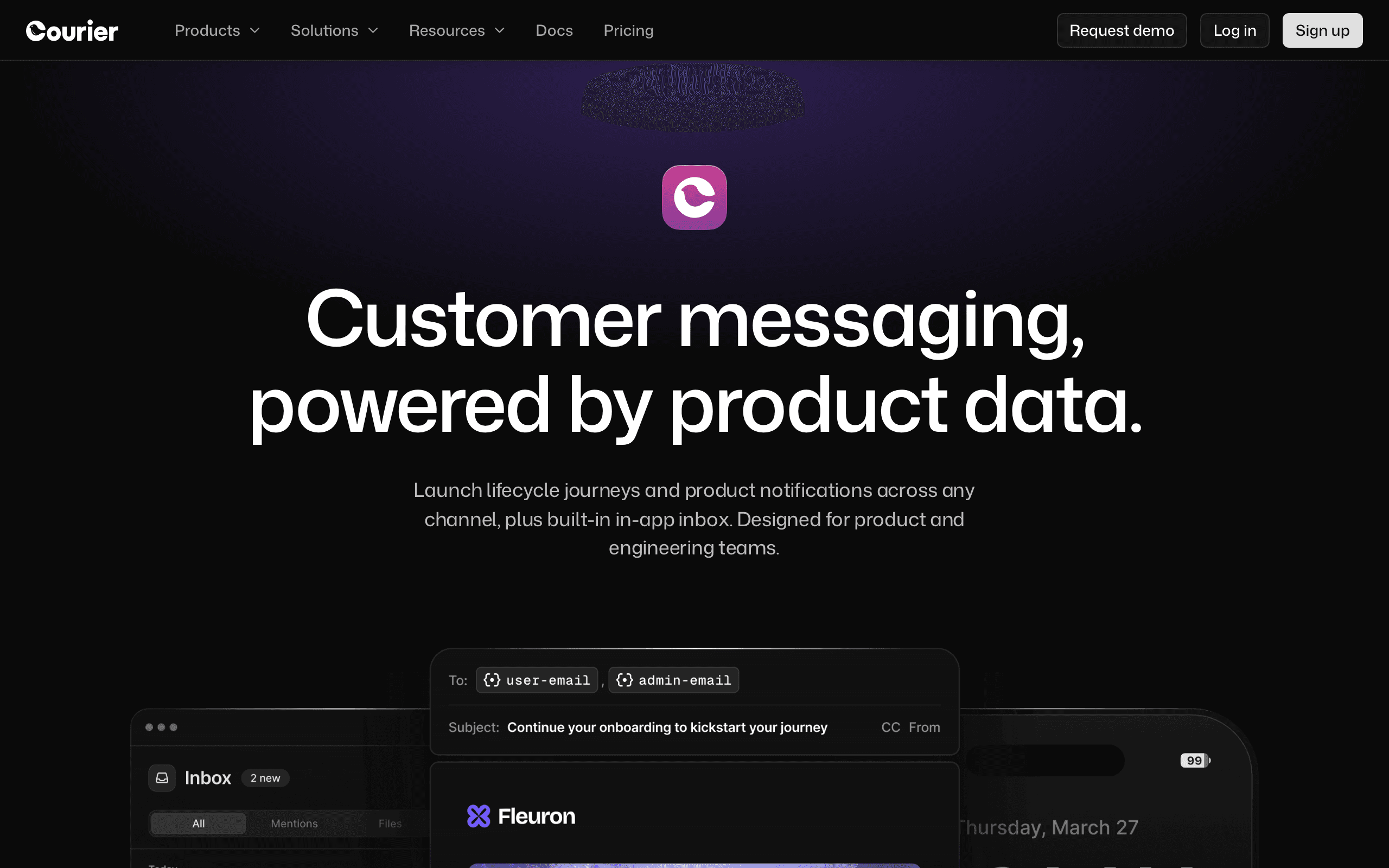
Courier

Multi-channel notification orchestration with visual template designer. Good for teams wanting no-code notification design.

Courier differentiates from MagicBell with its visual template builder that lets non-technical team members design notification content across channels without touching code. The routing engine handles channel fallbacks (try push first, fall back to email) and respects user preferences automatically. Integration options are broad, connecting to dozens of delivery providers. The free tier covers 10k notifications, but the jump to $500+/month for paid plans is steeper than both MagicBell and Knock. Unlike MagicBell, Courier doesn't provide pre-built notification bell UI components — it's focused on the orchestration layer rather than the in-app display.

Visit
Best for
Teams wanting visual notification design
Pricing
Free up to 10k notifications, then $500+/mo

Pros

  • Multi-channel notifications
  • Visual template designer
  • Good integration options
  • Notification history
  • Preference management

Cons

  • Expensive after free tier
  • Less in-app focus than MagicBell
  • No pre-built notification bell UI
  • $500/mo jump from free
#5
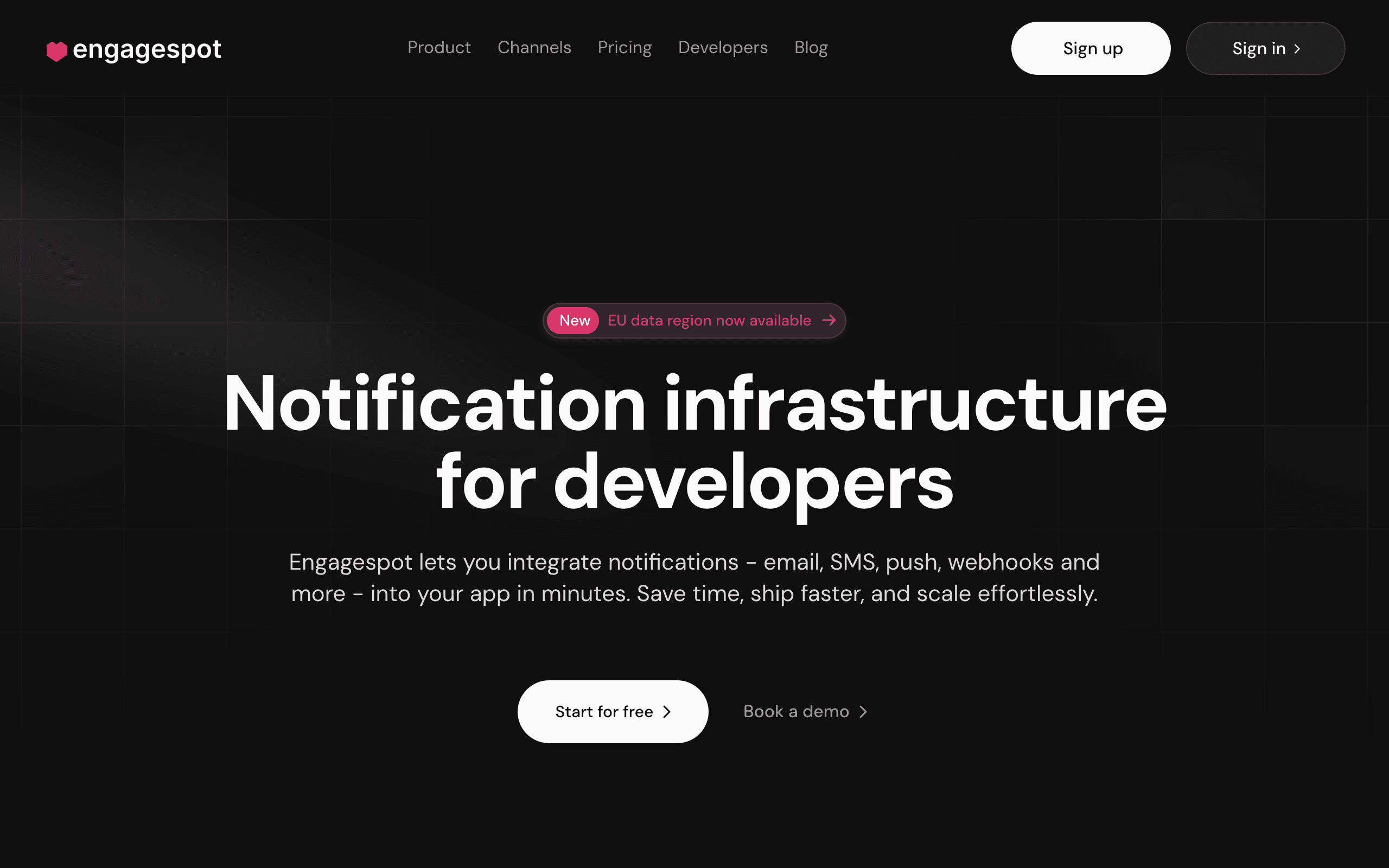
Engagespot

In-app notification bell and multi-channel notifications. More affordable than MagicBell with similar in-app focus.

Engagespot targets the same in-app notification use case as MagicBell but at a lower price point, with a $49/month starter plan and a 1k MAU free tier. The notification center components support real-time updates, read/unread states, categorization, and preference management — functionality that closely mirrors MagicBell's core offering. Multi-channel routing handles email and push alongside in-app notifications. Developer documentation is solid with SDKs for popular frameworks. The platform is less mature with a smaller community, and the UI components aren't as polished as MagicBell's, but for teams prioritizing cost over polish it's the most direct budget alternative.

Visit
Best for
Budget-conscious teams needing in-app notifications
Pricing
Free up to 1k MAU, $49/mo starter

Pros

  • In-app notification components
  • More affordable than MagicBell
  • Multi-channel support
  • Preference center included
  • Good documentation

Cons

  • Less mature than MagicBell
  • Smaller community
  • Fewer integrations
  • Less polished UI components
#6
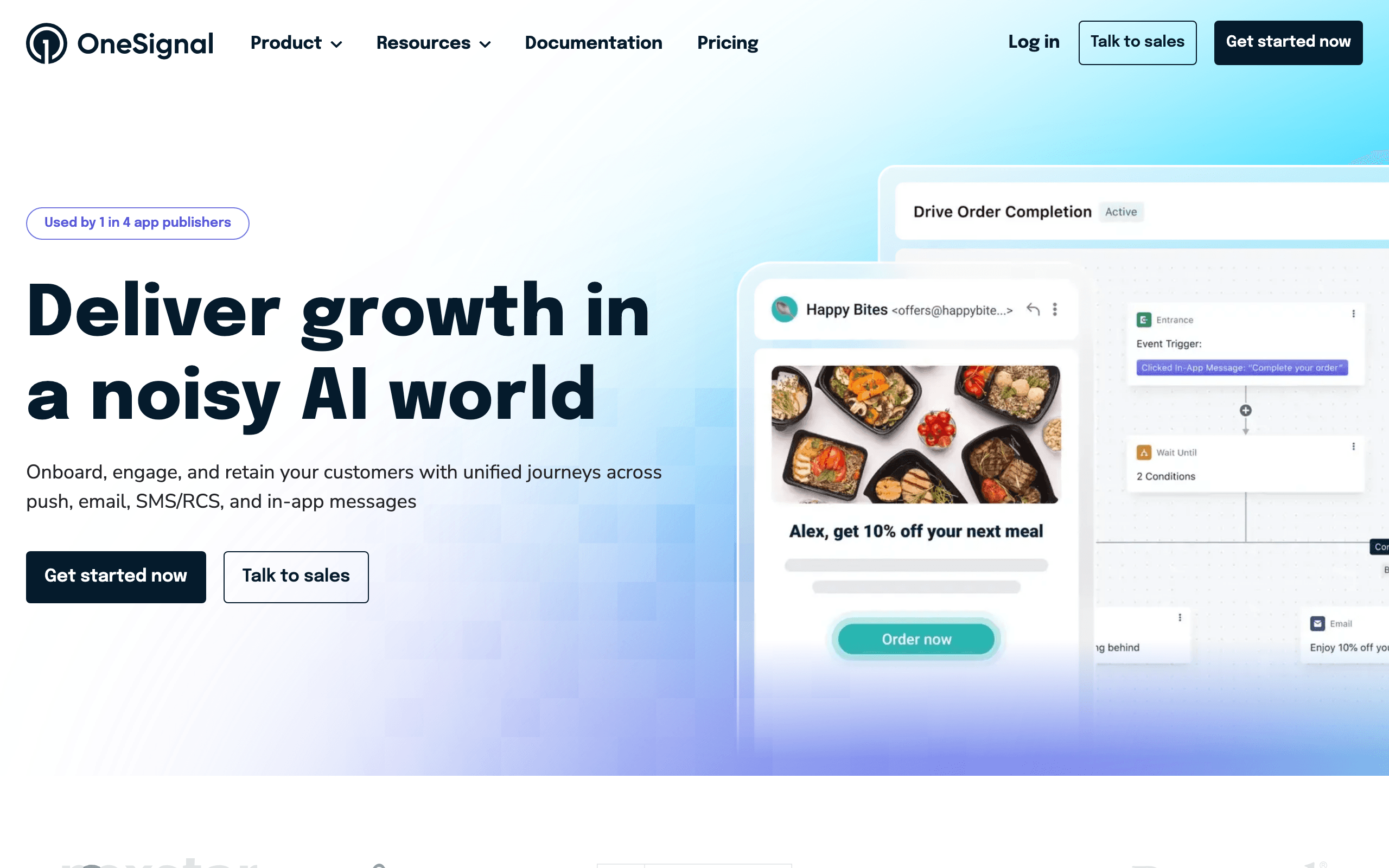
OneSignal

Push notification pioneer that added email and in-app messaging. Strong for mobile apps prioritizing push.

OneSignal has been doing push notifications since 2014 with some of the most battle-tested mobile SDKs in the industry. The in-app messaging supports banners and modals for targeted messages, though it lacks MagicBell's notification inbox/feed concept. The generous free tier includes unlimited push for up to 10k subscribers. Email and SMS have been added as channels, making it a more complete multi-channel platform. At $9+/month for paid plans, it's significantly more affordable than MagicBell at scale. The main gap: OneSignal's in-app is interstitial-style messages, not a persistent notification center like MagicBell provides.

Visit
Best for
Mobile apps prioritizing push notifications
Pricing
Free up to 10k subscribers, then $9+/mo

Pros

  • Strong push notification platform
  • Generous free tier
  • Good mobile SDKs
  • In-app messaging (banners/modals)
  • Email support

Cons

  • No in-app notification feeds like MagicBell
  • Push is primary focus
  • In-app is banners, not notification inbox
  • Less sophisticated than MagicBell for in-app
#7
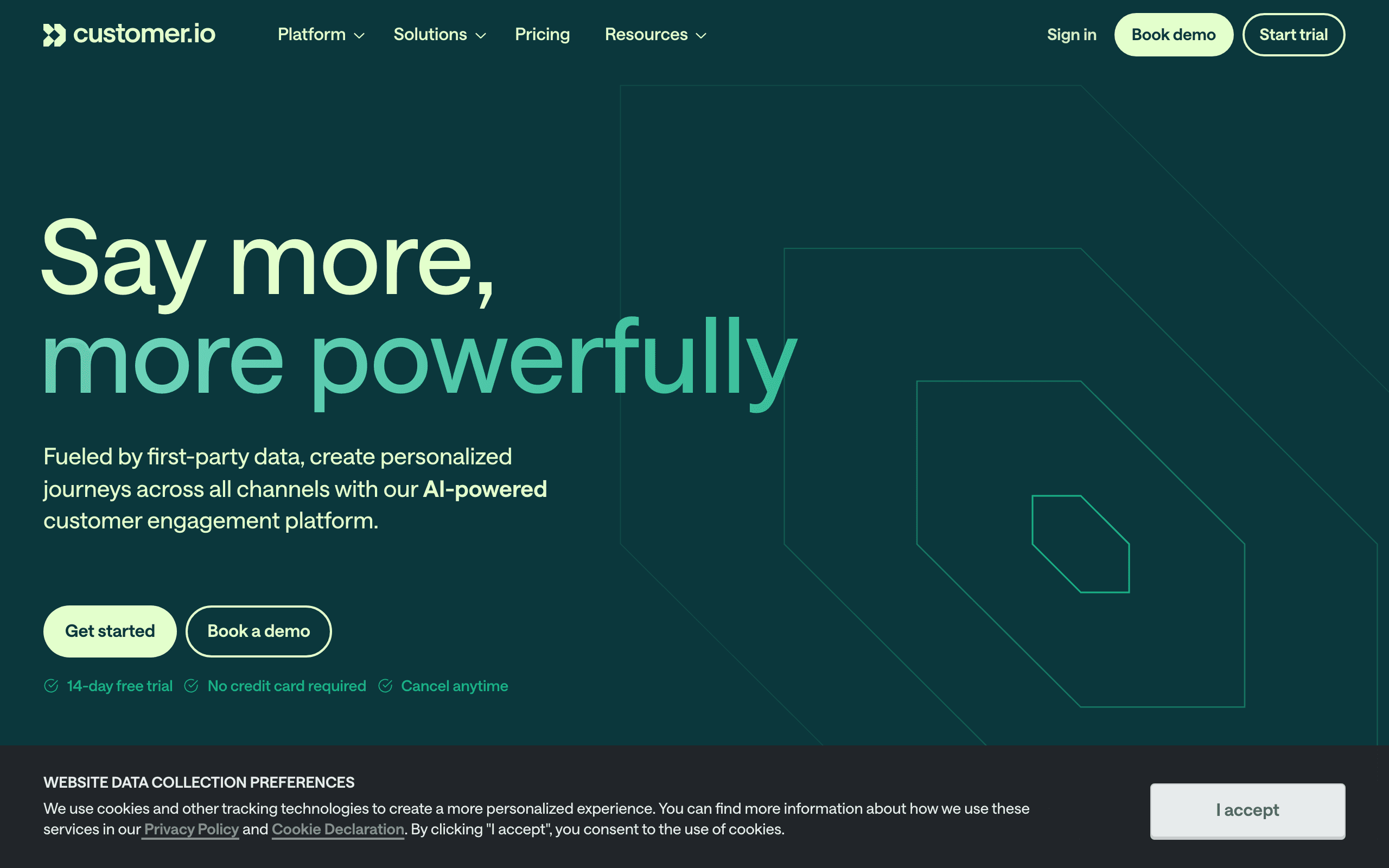
Customer.io

Enterprise behavioral messaging platform. Multi-channel with marketing automation.

More expensive but more marketing features. Customer.io takes a fundamentally different approach from MagicBell — where MagicBell is notification infrastructure, Customer.io is behavioral marketing automation that happens to send across multiple channels. You build complex workflows triggered by user actions, with conditional branches, delays, and A/B testing. Email, push, SMS, and in-app messages are all supported. The in-app messaging is targeted messages (like tooltips and modals), not a notification inbox. At $100/month for 5k profiles, it's more expensive but gives you marketing automation that MagicBell doesn't offer. Best for teams that need behavioral email marketing alongside notifications.

Visit
Best for
PLG companies with complex behavioral automation
Pricing
$100/month for 5,000 profiles (Essentials)

Pros

  • Multi-channel (email, push, SMS, in-app)
  • Powerful behavioral automation
  • Marketing + notifications in one
  • Excellent API
  • Complex user journeys

Cons

  • No pre-built notification UI like MagicBell
  • More expensive
  • Steep learning curve
  • In-app is messaging, not notification center
#8
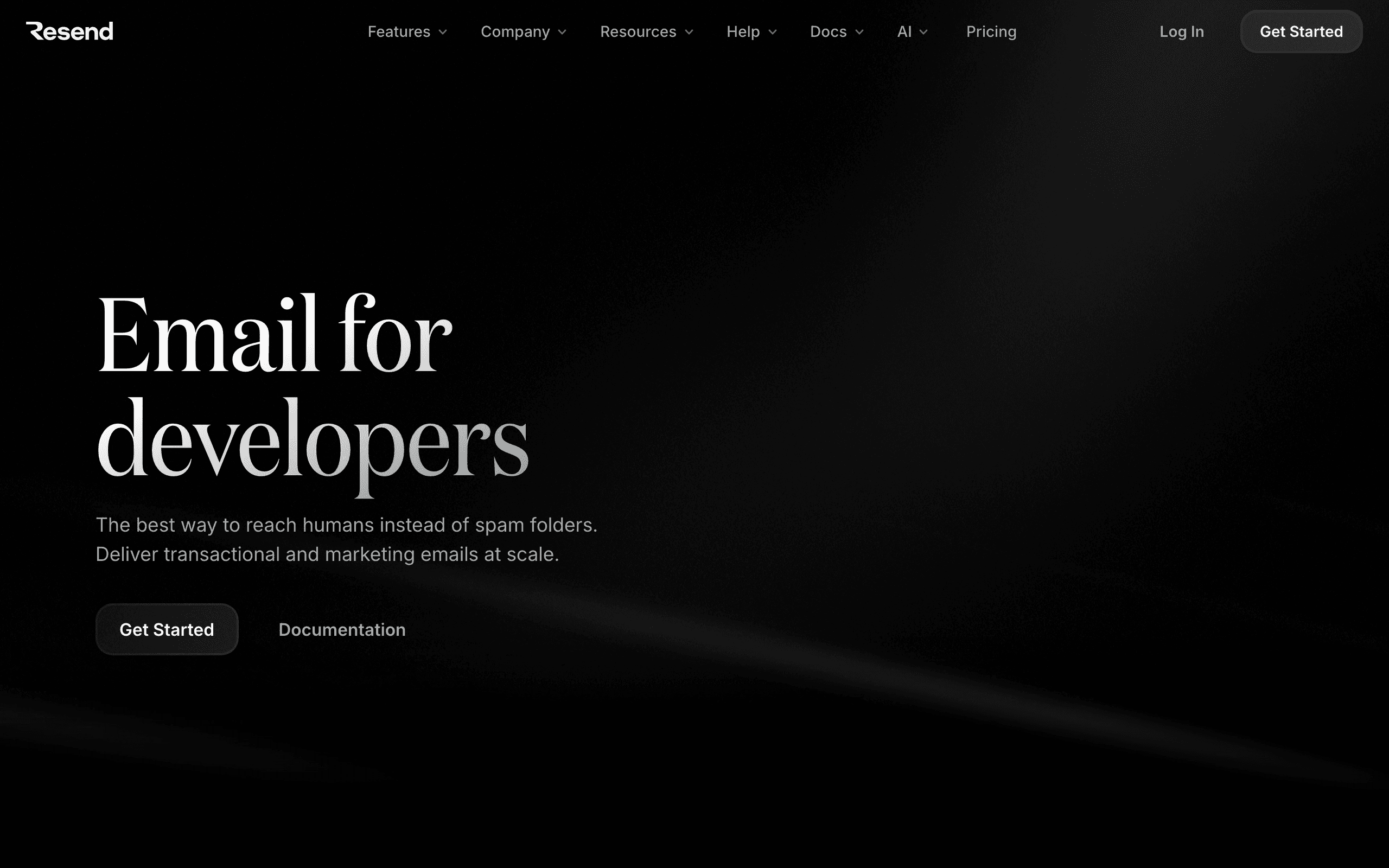
Resend

Modern transactional email API. Best developer experience for email. Good if you only need email notifications.

Resend was built by developers frustrated with clunky email APIs, delivering the cleanest SDK design in the space — TypeScript-first, React Email for component-based templates, and documentation that developers genuinely enjoy. At $20/month for 50k emails, it's a fraction of MagicBell's cost if your notification needs are email-only. If you're using MagicBell but realize most of your notifications go through email anyway, Resend does that channel better and cheaper. The limitation is absolute: email only — no in-app notifications, no push, no SMS. A different tool for a different problem.

Visit
Best for
Developers wanting best-in-class email API
Pricing
$20/month for 50,000 emails

Pros

  • Best developer experience in email
  • React Email integration
  • Modern SDKs
  • Clean API design
  • Great documentation

Cons

  • Email only - no in-app
  • No notification UI components
  • No push or SMS
  • Different purpose than MagicBell
#9
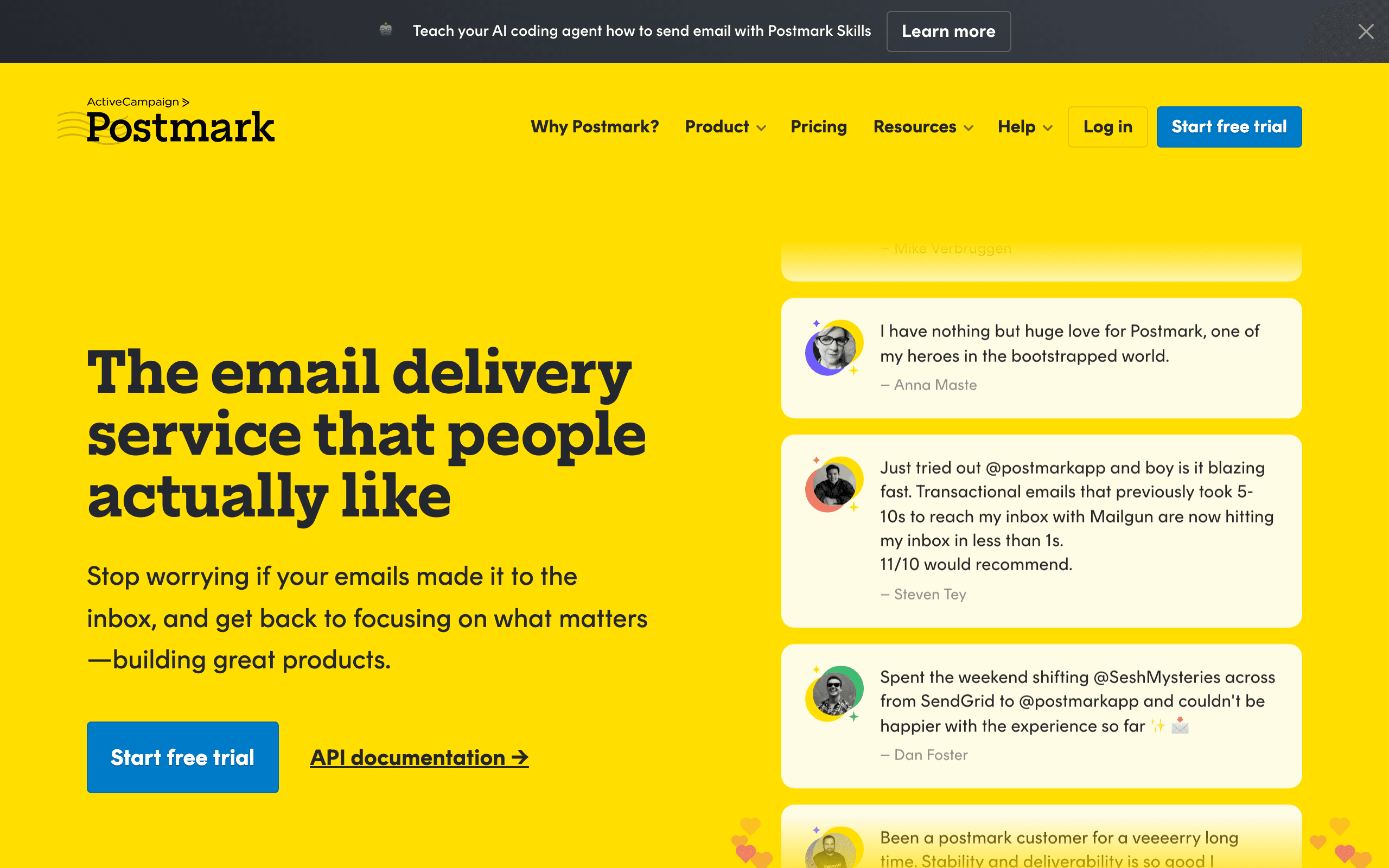
Postmark

Transactional email with exceptional deliverability. Strict customer vetting protects reputation.

For email-only notifications. Postmark deliberately rejects bulk marketing senders, keeping their IP reputation pristine with 99%+ inbox placement rates published publicly. For time-sensitive email notifications — password resets, two-factor codes, payment confirmations — Postmark's deliverability focus is unmatched. Delivery times are measured in seconds, and message streams keep transactional and broadcast email separate. At $15/month for 10k emails, it's dramatically cheaper than MagicBell for email-only use cases. Like Resend, the limitation is clear: email only, no in-app, no push, no SMS. Useful if you're splitting your notification stack by channel.

Visit
Best for
Apps where email deliverability is critical
Pricing
$15/month for 10,000 emails

Pros

  • Exceptional deliverability
  • Strict customer vetting
  • Clean developer API
  • Fast delivery times
  • Human support

Cons

  • Email only
  • No in-app notifications
  • No push or SMS
  • Transactional only
#10
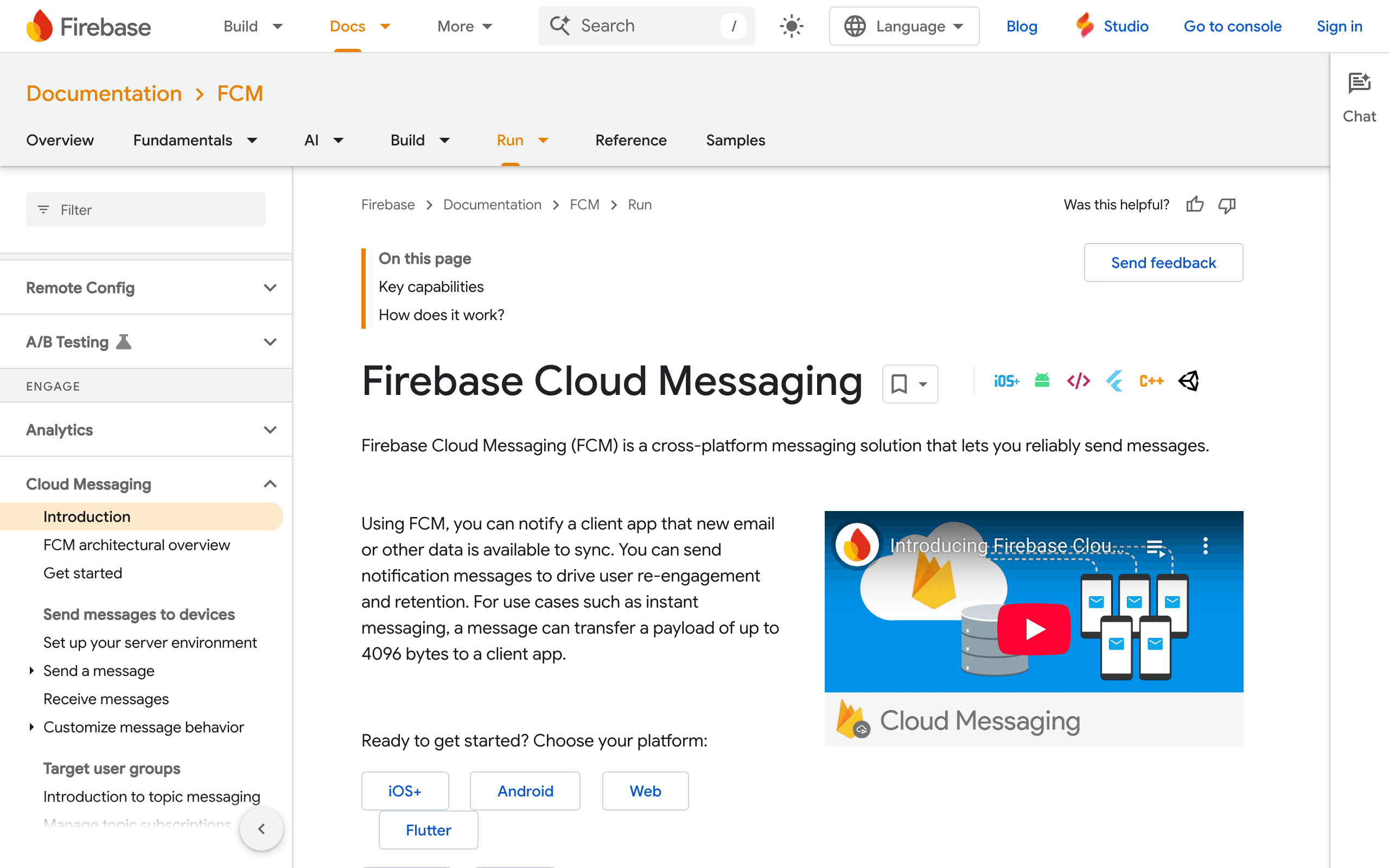
Firebase Cloud Messaging

Google's free push notification service. Free at any scale but requires building your own in-app UI.

FCM is the raw delivery infrastructure that most notification services (including MagicBell) use under the hood — using it directly eliminates the middleman and the cost. There are no volume limits or per-message fees, and Google's infrastructure ensures reliable delivery at any scale. Cross-platform support covers iOS, Android, and web push. The fundamental trade-off: FCM gives you delivery, not a product. No notification center UI, no preference management, no analytics dashboard, no multi-channel routing. You'd need to build all of MagicBell's in-app features yourself, which is why most teams use a service layer like MagicBell rather than FCM directly.

Visit
Best for
Mobile apps on Google ecosystem wanting free push
Pricing
Free

Pros

  • Completely free
  • Scales infinitely
  • Google reliability
  • Good mobile SDKs
  • Cross-platform

Cons

  • No in-app notification UI
  • Push only - no email
  • Requires building own infrastructure
  • No preference management
#11
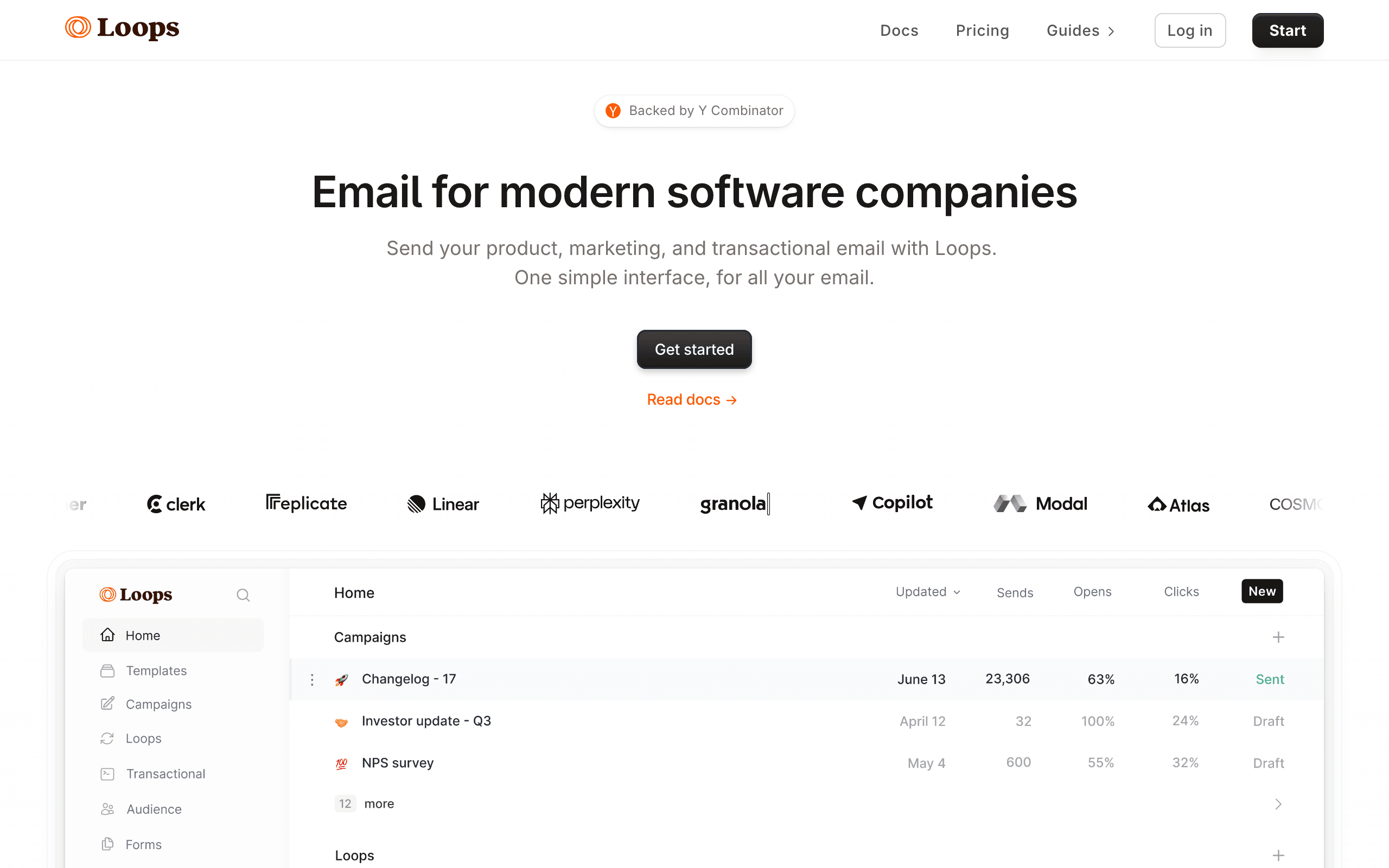
Loops

SaaS-focused email platform. Transactional + marketing in one. Not multi-channel but good for SaaS email.

Loops was designed from scratch for SaaS companies, combining transactional and marketing emails in one platform with a clean, modern interface. The event-based automation system triggers emails based on user actions in your product, which is the email equivalent of what MagicBell does for in-app notifications. All features are available on every plan with no tier-gating. If your notification needs are primarily email-based (welcome sequences, trial reminders, feature announcements), Loops handles that well at a predictable price. No in-app notifications, no push, no multi-channel — just email for SaaS.

Visit
Best for
SaaS teams wanting simple email marketing
Pricing
$49/mo for 5k, ~$99/mo for 10k

Pros

  • Built for SaaS from day one
  • Transactional + marketing together
  • Clean, modern interface
  • Good deliverability
  • All features on all plans

Cons

  • Email only
  • No in-app notifications
  • No multi-channel
  • Gets expensive past 10k
#12
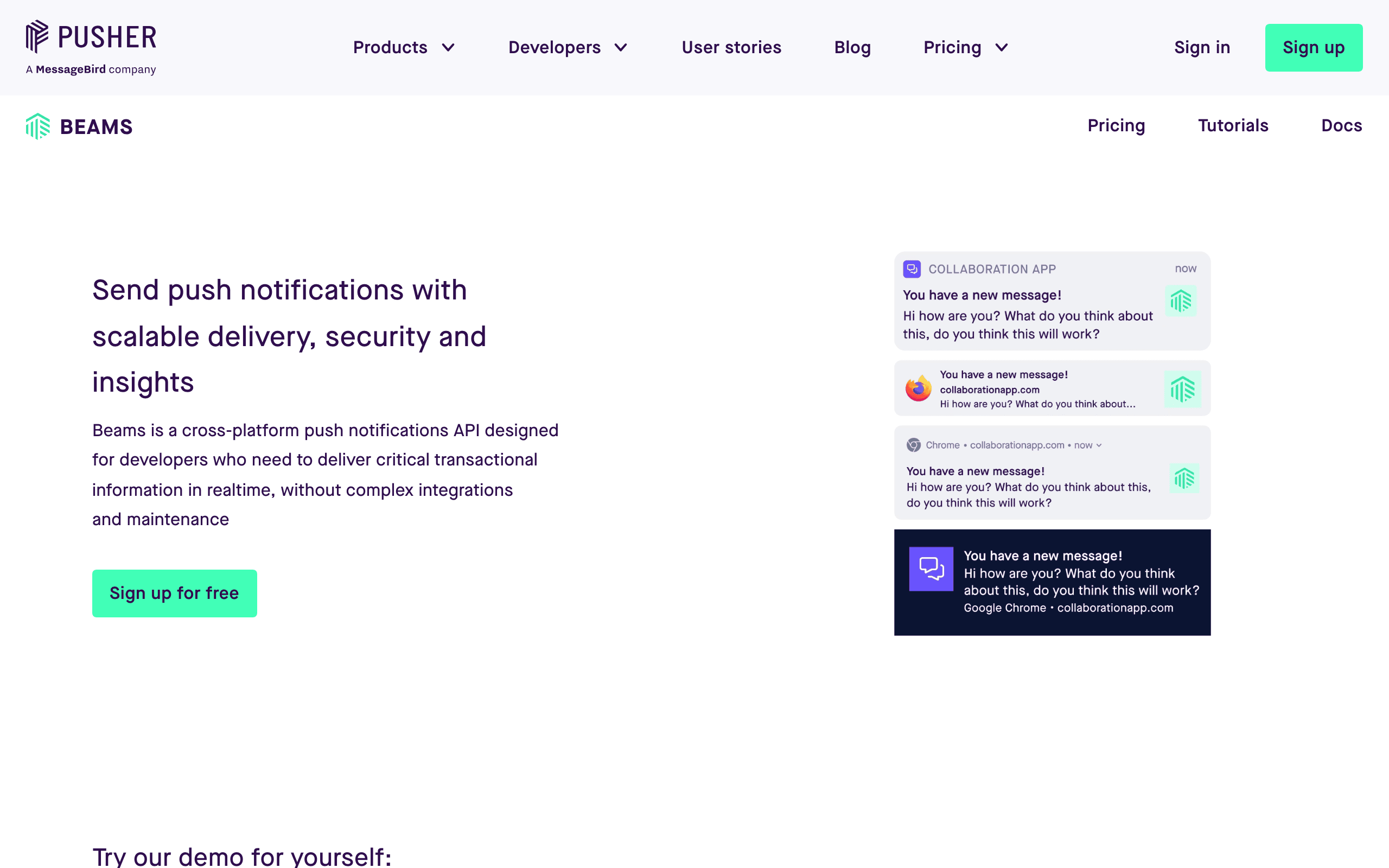
Pusher Beams

Push notifications from Pusher. Simple to integrate, good for basic push needs. Less feature-rich than MagicBell.

Pusher Beams is part of the broader Pusher ecosystem for real-time communication — if you're already using Pusher Channels for WebSockets and real-time features, adding Beams for push is a natural extension with familiar SDKs and dashboard. The integration is straightforward with good documentation and cross-platform support. At $29/month after a 1k device free tier, it's affordable for basic push. However, Beams is push-only with no in-app notification UI, no email, no SMS, and none of the notification center features that make MagicBell valuable. It's a simple push add-on, not a notification platform replacement.

Visit
Best for
Teams already using Pusher wanting push
Pricing
Free up to 1k devices, then $29/mo

Pros

  • Simple integration
  • Good documentation
  • Reliable infrastructure
  • Part of Pusher ecosystem
  • Real-time capability

Cons

  • Push only
  • No in-app notification UI
  • No email or SMS
  • Basic feature set

Why Consider Alternatives to MagicBell

Usage-based pricing can surprise at scale

MagicBell charges per monthly active user (MAU). At low volume it's affordable, but costs can spike unexpectedly. Knock's flat $250/mo may be more predictable.

You only need email, not in-app

If you don't need in-app notification bells, you're paying for MagicBell's core feature. Email-focused platforms like Sequenzy, Resend, or Postmark are purpose-built and cheaper.

You want open-source control

MagicBell is proprietary. If you want to self-host or have full control over your notification infrastructure, Novu offers an open-source alternative.

You want more predictable pricing

Per-MAU pricing means costs fluctuate with usage. Per-subscriber (Sequenzy) or flat-rate (Knock) pricing is more predictable for budgeting.

Feature Comparison

FeatureMagicBellSequenzyKnockNovuOneSignalEngagespot
In-app UI
Partial
Push
Email
SMS
Free tier
100 MAU
100 subs
10k msgs
10k runs
10k subs
1k MAU
Open-source
Pricing model
Per-MAU
Per-subscriber
Flat-rate
Per-run
Usage-based
Per-MAU

When to Use Each Platform

Choose Sequenzy if...
  • You primarily need SaaS email marketing
  • Native Stripe integration is valuable
  • AI-generated email sequences sounds appealing
  • Predictable per-subscriber pricing preferred
Choose Stay with MagicBell if...
  • In-app notification bell is core to your product
  • You need beautiful pre-built notification UI
  • Your MAU-based costs are acceptable
  • Real-time in-app updates are important
Choose Knock if...
  • You want in-app notifications like MagicBell
  • Predictable $250/mo flat pricing preferred
  • You want the most mature platform
  • Enterprise features matter
Choose Novu if...
  • You want open-source notification infrastructure
  • Self-hosting is important to you
  • Budget is a concern
  • You have DevOps resources
Choose OneSignal if...
  • Push notifications are your primary channel
  • Mobile app is your main product
  • You want generous free tier
  • In-app banners (not inbox) are sufficient

Why people look for MagicBell alternatives

MagicBell is excellent for in-app notification UI, but it's not right for everyone. The drop-in notification bell components and real-time notification feeds are genuinely polished, but per-MAU pricing can surprise at scale — costs jump from free (100 MAU) to $99/month for 2k MAU and keep climbing steeply. If in-app notifications aren't your core need, or if predictable pricing matters for your budget, alternatives may fit better. Here's why teams look elsewhere.

Usage-based pricing surprises

MagicBell charges per monthly active user. This can be cost-effective at low volume, but costs can spike unexpectedly as you grow. If predictable pricing matters, Knock's flat $250/mo or per-subscriber models may be better. Check our MagicBell comparison for pricing details.

You only need email

MagicBell's value is in the in-app notification UI. If you primarily need email notifications, you're paying for features you won't use. Email-focused platforms like Sequenzy, Resend, or Postmark are purpose-built and more affordable.

You want open-source

MagicBell is proprietary. If self-hosting or open-source matters to your team, Novu is the best alternative. Full control, no vendor lock-in, growing community. See our Novu comparison for details.

The alternatives, honestly

For SaaS email marketing: Sequenzy

If you don't need in-app notifications, why pay for them? Sequenzy is purpose-built for SaaS email marketing with AI-generated sequences and native Stripe integration. At $49/mo with predictable per-subscriber pricing, it's straightforward budgeting.

The catch: email only. No in-app notification bells or real-time updates. If you need those, Sequenzy isn't the answer.

For in-app with flat pricing: Knock

Knock is MagicBell's closest competitor. Similar in-app notification UI components, but with predictable $250/mo flat pricing instead of per-MAU. More mature platform with better enterprise features.

The trade-off: $250/mo is expensive if your MAU count would make MagicBell cheaper. Do the math based on your actual usage.

For open-source control: Novu

Novu is the leading open-source notification infrastructure. Self-host for free or use their cloud starting at $30/mo. Multi-channel support including in-app components.

The trade-off: less polished in-app UI than MagicBell. Self-hosting requires DevOps resources. But for teams wanting control, it's the best option.

For budget in-app: Engagespot

Engagespot offers similar in-app notification components at lower price points. Per-MAU pricing like MagicBell but more affordable. Good middle ground.

Trade-off: smaller company, less mature platform, fewer integrations than MagicBell.

The pricing comparison

At 5,000 monthly active users:

  • MagicBell Startup Max: $199/mo
  • Knock Starter: $250/mo
  • Sequenzy: $49/mo for 10k subscribers (email only)
  • Novu Cloud Pro: $30/mo
  • OneSignal: Usage-based, varies
  • Engagespot: ~$99/mo

Note: Different platforms count differently (MAU, subscribers, messages). Compare based on your actual usage patterns. Check our pricing page for Sequenzy's simple per-subscriber model.

When MagicBell is still the right choice

MagicBell wins if:

  • In-app notification bell UI is critical for your product
  • Usage-based pricing works for your usage patterns
  • You want excellent developer experience for in-app
  • Pre-built React/Vue components save you time

Don't switch just to save money if MagicBell's in-app components are core to your product. The time to rebuild that UI elsewhere isn't worth it. But if you're primarily using MagicBell for email, the alternatives are significantly cheaper. Use our email validator tool to ensure list quality when evaluating any platform.

Frequently Asked Questions

Ready to try Sequenzy?

Start your free trial today. AI-generated sequences, Stripe integration, and direct founder support included.

Sequenzy vs MagicBell: Direct Comparison

See a detailed side-by-side comparison of features, pricing, and when to choose each platform.

Compare →

More Alternatives

Sequenzy - Complete Pricing Guide

Pricing Model

Sequenzy uses subscriber-based pricing. You only pay for subscribers active in sequences (automations). Inactive subscribers are free to store.

All Pricing Tiers

  • 0-100 subscribers: Free (Free annually) - 3k emails/month
  • 101-1,000 subscribers: $19/month ($205/year annually) - 15k emails/month
  • 1,001-5,000 subscribers: $29/month ($313/year annually) - 60k emails/month
  • 5,001-10,000 subscribers: $49/month ($529/year annually) - 120k emails/month
  • 10,001-25,000 subscribers: $99/month ($1069/year annually) - 300k emails/month
  • 25,001-50,000 subscribers: $199/month ($2149/year annually) - 600k emails/month
  • 50,001-100,000 subscribers: $349/month ($3769/year annually) - 1.2M emails/month
  • 100,000+ subscribers: Custom pricing (Custom annually) - Unlimited emails/month

Yearly billing: All plans offer a 10% discount when billed annually.

Free Plan Features (2,500 emails/month)

  • Visual automation builder
  • Transactional email API
  • Reply tracking & team inbox
  • Goal tracking & revenue attribution
  • Dynamic segments
  • Payment integrations
  • Full REST API access
  • Custom sending domain

Paid Plan Features (1,000 - 100,000 subscribers)

  • Visual automation builder
  • Transactional email API
  • Reply tracking & team inbox
  • Goal tracking & revenue attribution
  • Dynamic segments
  • Payment integrations (Stripe, Paddle, Lemon Squeezy)
  • Full REST API access
  • Custom sending domain

Enterprise Plan Features (100,000+ subscribers)

  • Visual automation builder
  • Transactional email API
  • Reply tracking & team inbox
  • Goal tracking & revenue attribution
  • Dynamic segments
  • Payment integrations
  • Full REST API access
  • Custom sending domain

Important Pricing Notes

  • You only pay for subscribers who are active in automations/sequences
  • Storing inactive subscribers is free
  • No hidden fees - all features included in the price
  • No credit card required for free tier

Contact

  • Pricing Page: https://sequenzy.com/pricing
  • Sales: hello@sequenzy.com