


Why people leave Amazon SES
Amazon SES is the cheapest way to send email. At $0.10 per 1,000 emails, nothing comes close at scale. But "cheapest" often doesn't mean "best value." You're getting raw SMTP infrastructure with no dashboard, no templates, no subscriber management, and no automation - everything beyond sending bytes has to be built from scratch. For many teams, the engineering time spent building email features on top of SES costs far more than just paying for a platform that includes them. To understand what complete email platforms offer, read our guide to best email marketing tools for SaaS.
The DIY trap
SES is raw infrastructure. There's no dashboard, no email builder, no subscriber management, no campaigns, no automation. You get an API that sends HTML. Everything else - bounce handling, analytics, templates, unsubscribe flows - you build yourself.
That $5/month sending cost often turns into months of engineering work. Check our Amazon SES comparison for the full breakdown. If you're a SaaS founder, the time spent building email infrastructure is time not spent on your actual product.
| What SES makes you build | Typical hidden work | Better fit if you do not want to build it |
|---|---|---|
| Email templates | Editor, previews, testing, versioning | Sequenzy, SendGrid, Brevo, Sendy |
| Bounce and complaint handling | SNS wiring, suppression logic, dashboards | Postmark, Mailtrap, SendGrid |
| Marketing campaigns | Lists, unsubscribe flows, segmentation, scheduling | Sequenzy, Mailchimp, Brevo |
| Product lifecycle automations | Event tracking, workflow engine, retries | Sequenzy, Customer.io, Loops |
| Deliverability monitoring | Reputation dashboards, alerts, IP warmup | Postmark, Mailtrap, SMTP2GO |
AWS complexity
Using SES means living in AWS. You need IAM roles, domain verification through Route53, SNS topics for webhooks, CloudWatch for monitoring. If you're not already an AWS shop, this learning curve is steep.
Alternatives like Resend or Postmark take minutes to set up. No AWS account required. No IAM policy debugging. Our email deliverability glossary explains what matters without the AWS jargon.
The hidden costs
SES is $0.10/1k emails. But add dedicated IPs ($24.95/mo), Virtual Deliverability Manager ($0.07/1k), attachment fees ($0.12/GB), and the math changes. Factor in engineer time to build features, and that "cheap" option gets expensive. Use our email warmup calculator to plan properly.
The alternatives, honestly
Best Amazon SES alternative with features: SendGrid or Mailgun
SendGrid and Mailgun are SES with features attached. Dashboard, templates, basic marketing, better documentation. More expensive per email, but you're not building infrastructure. SendGrid is $19.95/mo for 50k emails. See our SendGrid comparison.
Best Amazon SES alternative for developers: Resend
Resend is SES if AWS cared about developers. Beautiful API, React Email integration, modern SDKs. $20/mo for 50k emails - more expensive than SES but includes actual features. Transactional only, no marketing. Check our Resend comparison.
Best Amazon SES alternative for SaaS email: Sequenzy
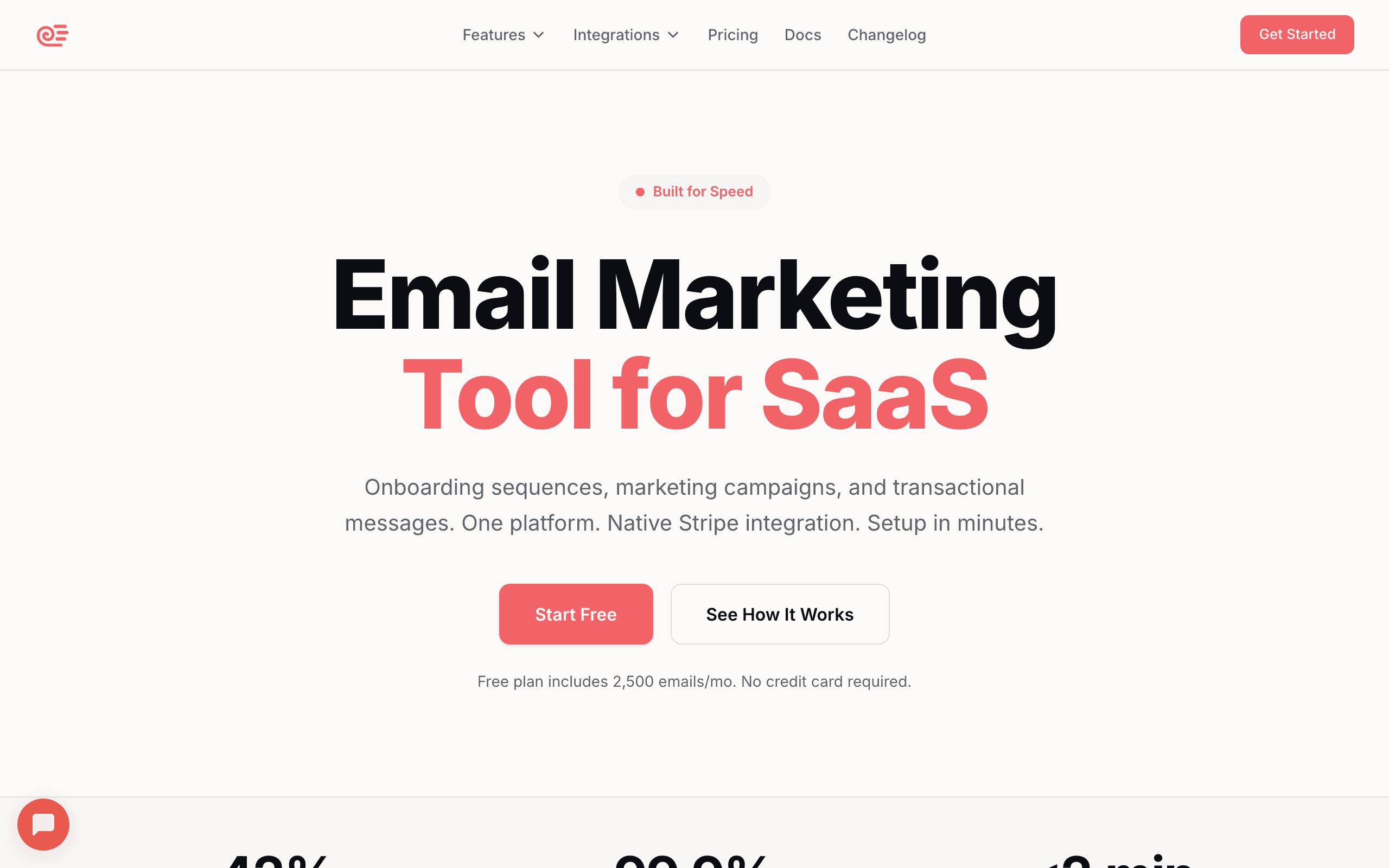
Sequenzy is the opposite of SES - complete platform with AI-powered sequences, visual email builders, Stripe integration, and marketing automation. $49/mo for 60k emails. Higher per-email cost, but you're not building anything.
Built for SaaS founders who want to send email, not build email infrastructure. See our Amazon SES comparison.
| Team profile | Best SES replacement | Why |
|---|---|---|
| Solo SaaS founder | Sequenzy | Removes campaign, automation, and transactional setup work |
| Developer building transactional only | Resend | Keeps API-first sending without AWS overhead |
| Laravel or self-hosting team | Mailcoach | Uses provider-agnostic sending with more control |
| Newsletter operator on a tight budget | Sendy | Keeps SES pricing with a basic campaign layer |
| Enterprise transactional team | Postmark or Mailtrap | Better managed deliverability and support |
Best Amazon SES alternative with SES pricing: Sendy or Mailcoach
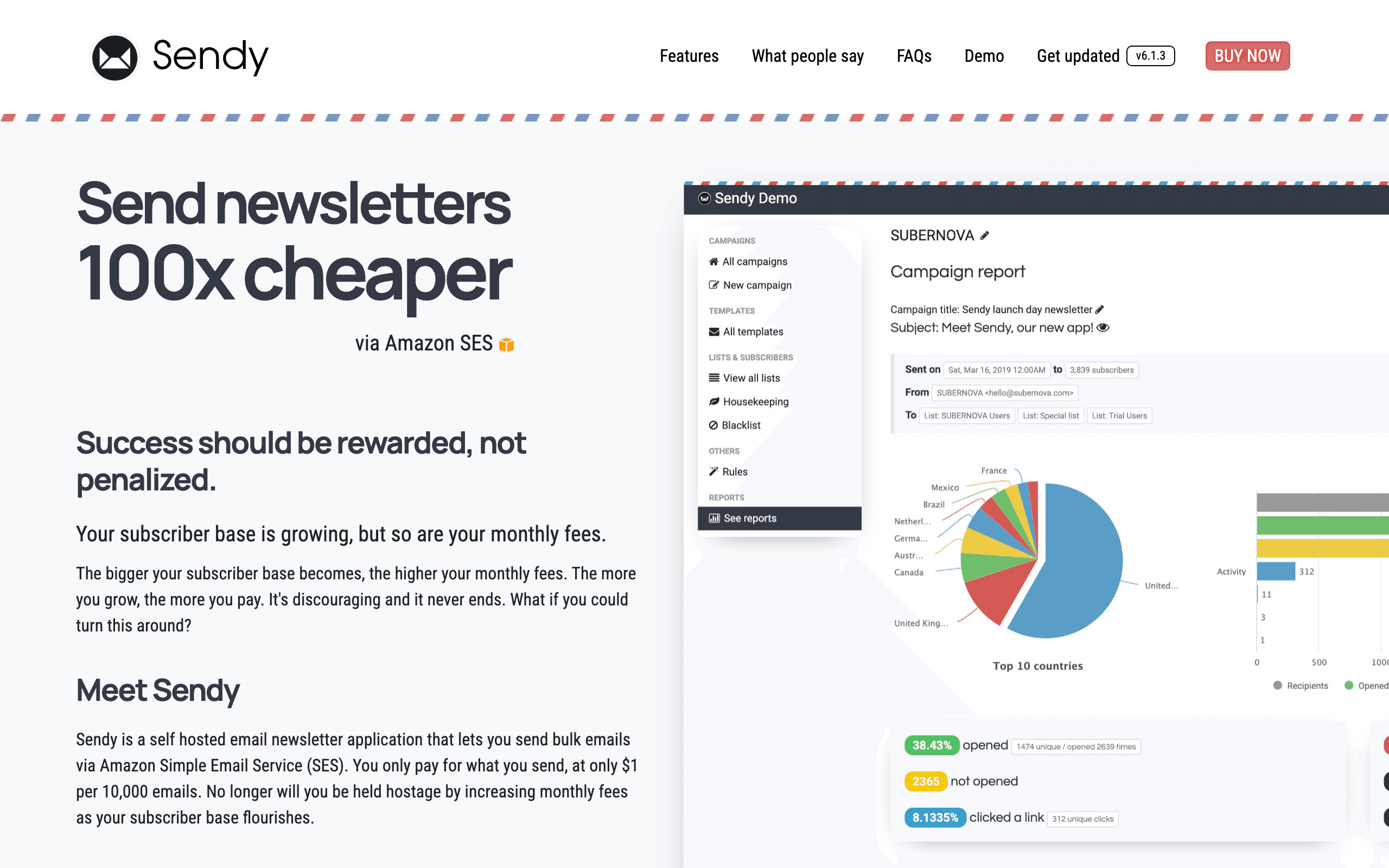
Sendy is the clever middle ground. Self-hosted newsletter platform ($69 one-time) that sends via Amazon SES. You get SES's $0.10/1k pricing plus an actual email builder, subscriber management, and campaigns. The catch: you host it yourself. Mailcoach offers a similar approach built on Laravel with more features.
Best Amazon SES alternative for deliverability: Postmark
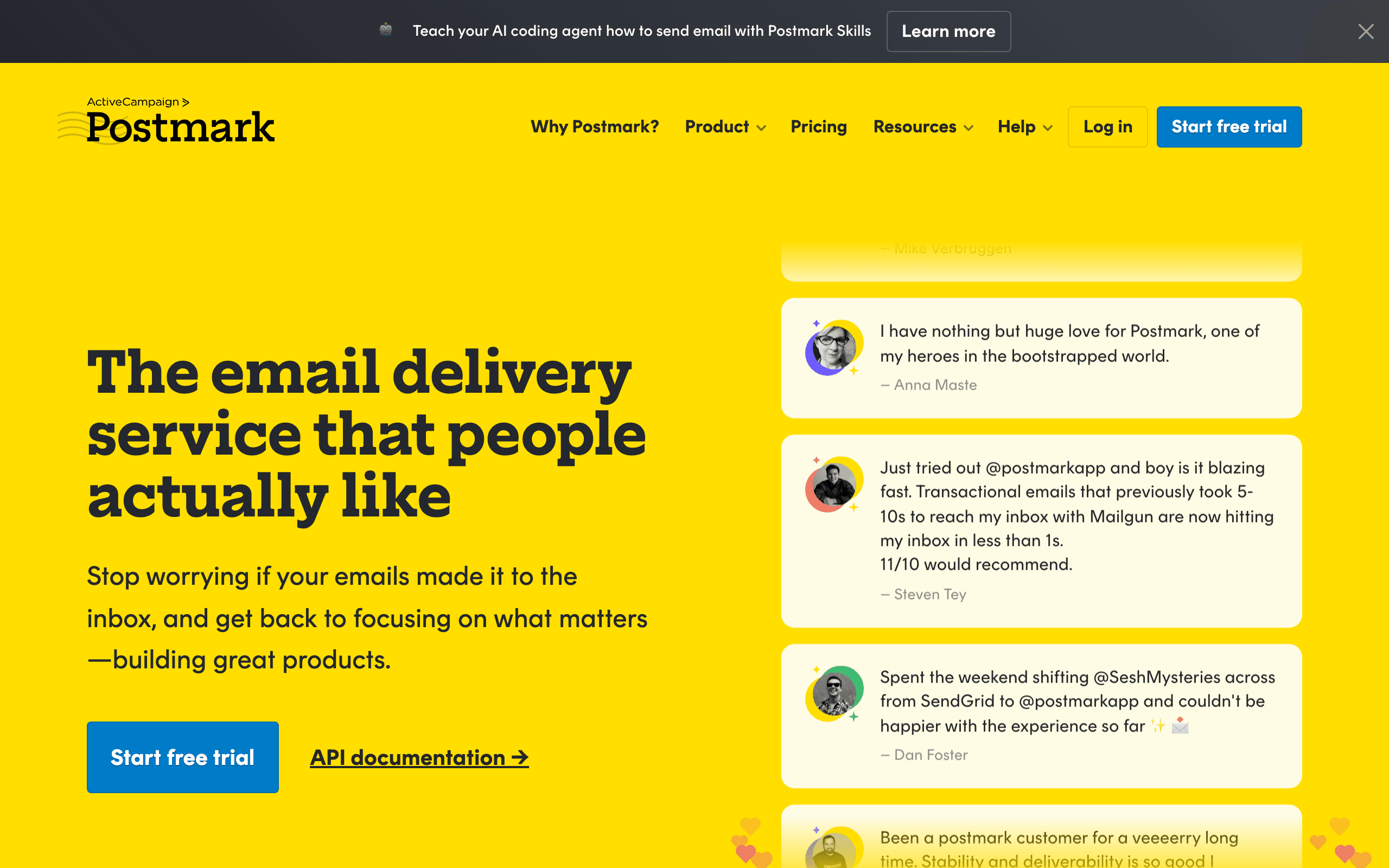
Postmark has the best deliverability because they're strict about customers. $15/mo for 10k emails - more than SES but includes a dashboard, analytics, and human support. For critical transactional emails (password resets, 2FA), the reliability is worth it. See our Postmark comparison.
Best Amazon SES alternative for managed email infrastructure: Mailtrap
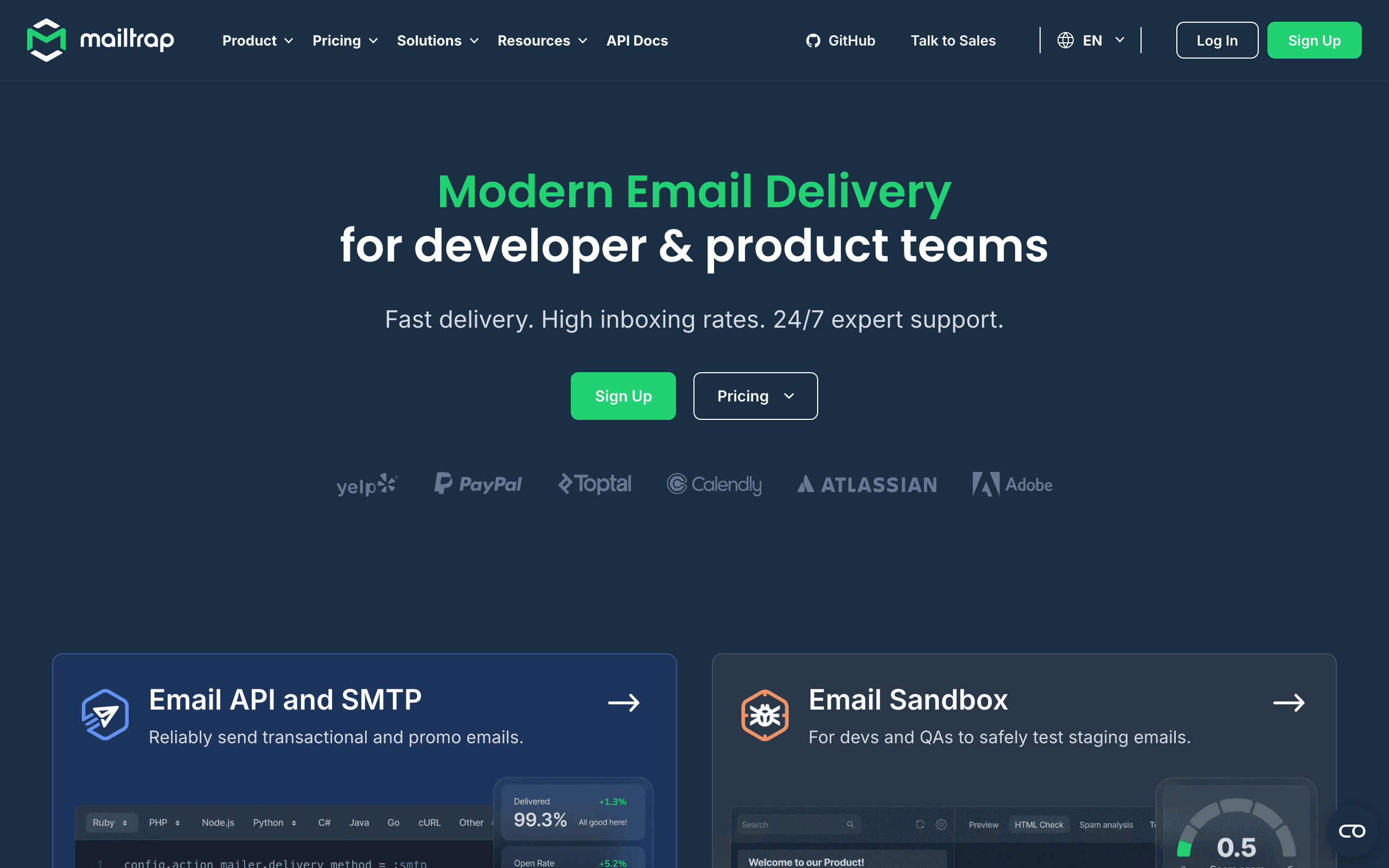
Mailtrap runs transactional and bulk emails on completely separate IP pools with deliverability fully managed for you: no bounce handling to build, no reputation monitoring to wire up yourself. You get a real dashboard, per-mailbox-provider analytics, SMTP relay, and marketing email on one plan, all at a fraction of the engineering time SES requires.
The pricing comparison
At 50,000 emails/month:
| Provider | Approx. cost at 50k emails/mo | What is included beyond raw sending |
|---|---|---|
| Amazon SES | $5 | Sending infrastructure only |
| Mailtrap | $20 | Managed deliverability, dashboards, separate transactional/bulk streams |
| Resend | $20 | Modern API, React Email, logs, developer-friendly setup |
| Postmark | $50 | Strong transactional deliverability and support |
| SendGrid Essentials | $19.95 | Templates, analytics, basic marketing plus transactional |
| Sequenzy | $49/mo at 10k subs | Complete SaaS marketing and transactional platform |
| Sendy + SES | $5 + $69 one-time | Self-hosted campaigns on top of SES |
| Mailcoach + SES | $5 + $199/year | Self-hosted Laravel campaign management |
| Elastic Email | $25 | Near-SES pricing with basic API and dashboard features |
Note: SES looks cheapest, but add dedicated IPs, engineer time, and feature development - the total cost often exceeds platforms with features included. See our pricing page and check our DMARC checker before any migration.
When Amazon SES is still the right choice
SES wins if:
| Stay with Amazon SES when... | Switch when... |
|---|---|
| Cost per email is your only metric | Engineer time is the real bottleneck |
| You have engineers assigned to email infrastructure | Your product team owns email as a growth channel |
| You are already deep in AWS | IAM, SNS, and CloudWatch are slowing the team down |
| You send millions monthly and every cent matters | You send enough to matter, but not enough to justify custom tooling |
| You need specific AWS regions for data residency | You mainly need campaigns, automations, templates, and reporting |
Don't switch if SES is working and you have the engineering resources. But if you're spending engineer time building features that exist elsewhere, or if the DIY approach is slowing you down - the alternatives provide more value. Use our email warmup calculator to plan your transition and verify your SPF records before switching providers.









