
Overview
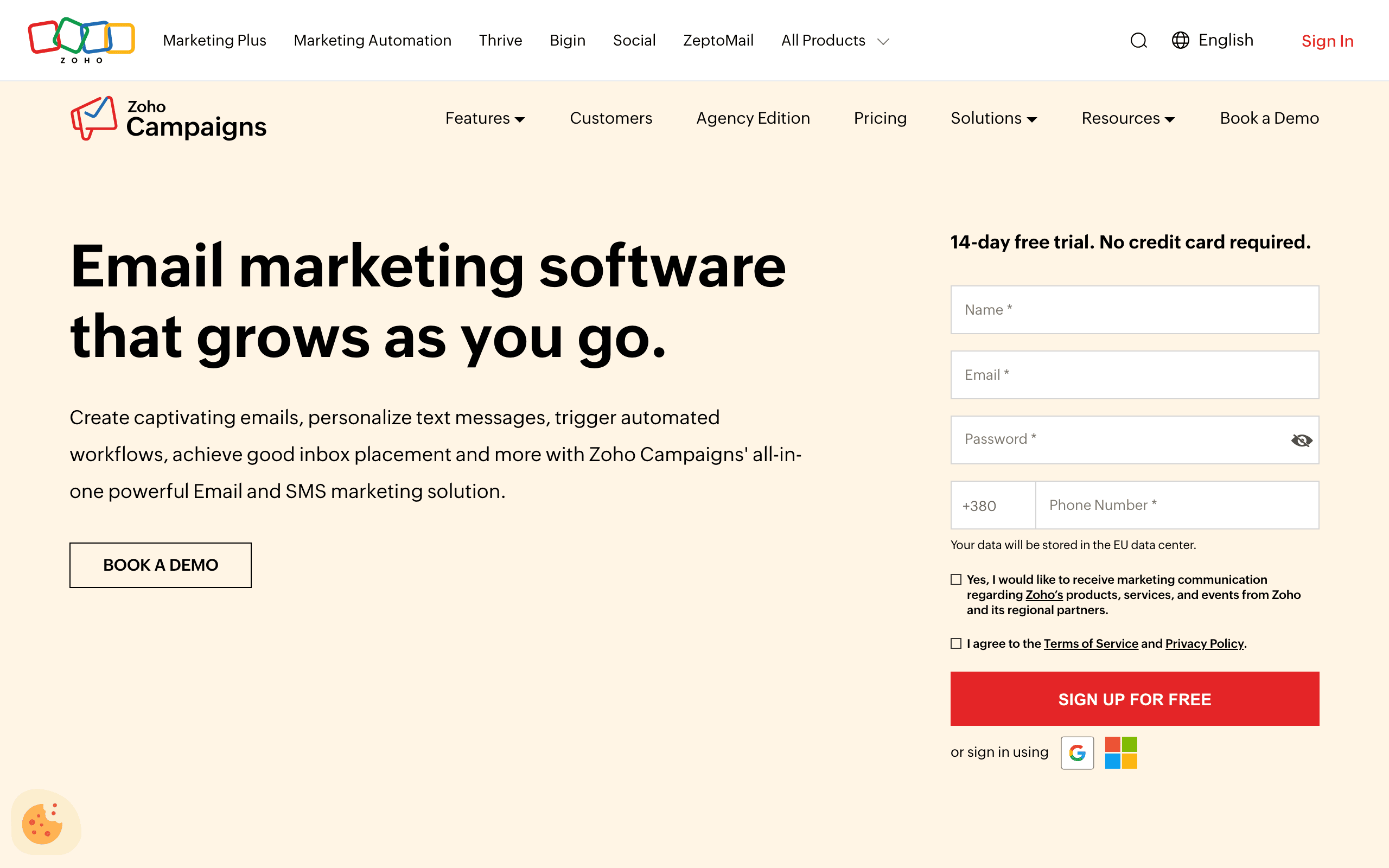
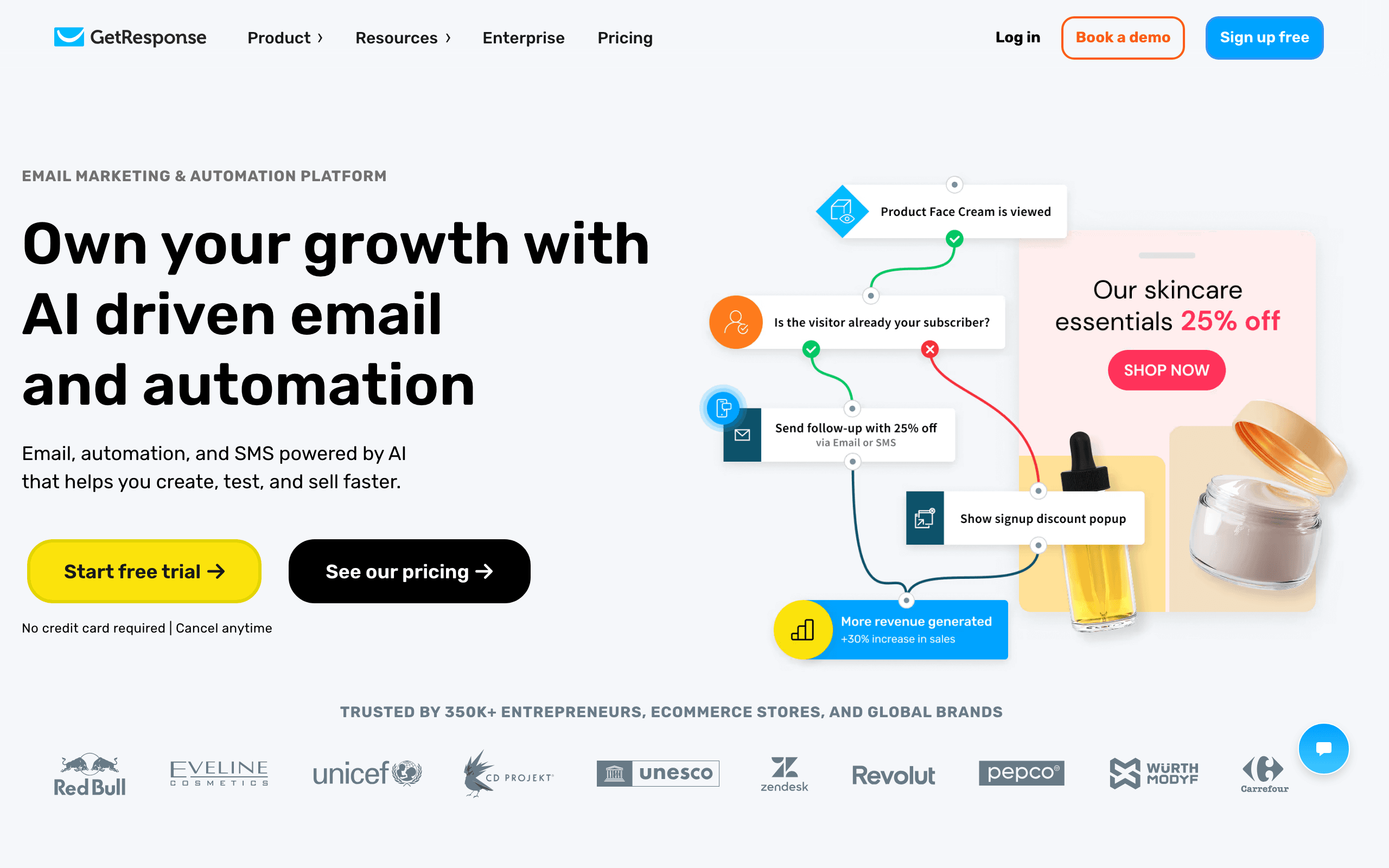
Zoho Campaigns and GetResponse both offer email marketing and automation, but GetResponse stands out with built-in webinar hosting. Zoho Campaigns is more affordable and excels within the Zoho ecosystem. See our GetResponse comparison for more context.
Your choice depends largely on whether webinar marketing is part of your strategy.
The Webinar Advantage
GetResponse is unique among email platforms for including webinar hosting:
- Live webinar hosting for up to 1,000 attendees
- Registration pages integrated with email
- Automated webinar follow-up sequences
- On-demand recorded webinars
- Webinar analytics tied to email campaigns
Zoho can do webinars through Zoho Meeting, but it is a separate product requiring integration. For webinar-centric marketing, GetResponse is more seamless.
Pricing Comparison
At 10,000 contacts:
- Zoho Campaigns: ~$40/month
- GetResponse: $59/month
The difference is not huge, but Zoho is more budget-friendly. Zoho's free plan (2,000 contacts) is also more generous than GetResponse's (500 contacts).
CRM Integration
Zoho Campaigns integrates natively with Zoho CRM, providing:
- Bidirectional contact sync
- Campaign engagement tracked on CRM records
- Lead scoring based on email behavior
- Deal-based segmentation
GetResponse has basic built-in CRM features but lacks the depth of Zoho CRM. For CRM-driven marketing, Zoho wins.
Conversion Funnels
GetResponse offers built-in conversion funnels that guide prospects from landing page through email nurturing. Zoho requires combining multiple products to achieve similar results.
For marketers focused on conversion optimization, GetResponse provides a more unified experience.
When Each Platform Shines
Choose Zoho Campaigns when: You use Zoho CRM. You do not need webinar marketing. Budget is a priority. You prefer the Zoho ecosystem.
Choose GetResponse when: Webinars are important for lead generation. You want email + webinar in one platform. Conversion funnels matter. Landing pages are a key part of your strategy.
For SaaS Companies
Neither platform is specifically designed for SaaS. GetResponse's webinar features can be useful for product demos and onboarding. Both lack subscription-aware automation. If you are building software, Sequenzy offers Stripe integration with automation designed for SaaS use cases.
Webinar Marketing: GetResponse's Unique Advantage
No other email marketing platform includes webinar hosting. GetResponse lets you run live webinars for up to 1,000 attendees, create evergreen on-demand recordings, and automatically follow up with attendees through email sequences. The registration pages, reminder emails, and post-webinar nurture campaigns are all integrated.
For businesses where webinars drive lead generation, this integration eliminates the need for separate tools like Zoom + Eventbrite + email platform. You build the registration page, host the webinar, and nurture attendees from one dashboard. The analytics connect webinar attendance to email engagement and eventual conversion.
Zoho can replicate parts of this workflow using Zoho Meeting for hosting and Zoho Campaigns for email follow-up, but the integration requires manual configuration and the experience is not seamless. If webinar marketing is a significant part of your strategy, GetResponse removes a real operational headache. If you do not use webinars, you are paying for a feature that adds no value.
Conversion Funnels and Lead Capture
GetResponse's conversion funnel builder guides prospects through a multi-step journey: landing page, opt-in form, email nurture sequence, and optional sales page. The visual builder shows each stage and its conversion rate, helping you identify where prospects drop off.
Zoho Campaigns can achieve similar outcomes, but you assemble the pieces manually. Build a landing page (basic), create a form, set up an automation workflow, and configure follow-ups separately. There is no unified funnel view showing the complete prospect journey and conversion rates at each stage.
For marketing teams that think in terms of funnels and conversion optimization, GetResponse's structured approach is more intuitive. For teams that prefer building individual components and connecting them, Zoho's flexibility might actually be preferable. The right approach depends on how your team plans and measures marketing campaigns.
When the Feature Breadth Becomes a Liability
GetResponse has expanded aggressively: email, webinars, landing pages, website builder, conversion funnels, AI generator, SMS, and push notifications. This breadth means the platform tries to serve many use cases but excels at few. The webinar feature is genuinely differentiated. The email editor, automation builder, and CRM are adequate but not best-in-class in any category.
Zoho Campaigns is focused on email marketing with CRM integration. It does less but what it does, it does reliably. The automation builder handles common workflows. The email editor builds standard campaigns. The CRM sync connects marketing to sales. No feature feels half-finished because the scope is deliberately narrow.
For SaaS companies specifically, both platforms lack subscription-aware automation. GetResponse's webinar feature can be useful for product demos and onboarding sessions, which adds some value. But neither platform connects to Stripe or understands trial conversions, plan changes, or MRR. Sequenzy fills that gap with native Stripe integration and billing-event triggers at a price point between these two platforms.
Use-case matchups
| Situation | Best first look | Why |
|---|---|---|
| Team already uses Zoho and wants low-cost email campaigns | Zoho Campaigns | Zoho Campaigns is the baseline when Zoho ecosystem fit and affordable campaigns matter most. |
| Team wants a broader marketing suite | GetResponse | GetResponse is stronger when funnels, landing pages, and webinars matter. |
| SaaS or commerce team wants lifecycle and transactional email | Sequenzy | Sequenzy is stronger when Stripe events, transactional messages, and lifecycle automation matter more than Zoho suite alignment. |
| Team wants straightforward newsletters inside a familiar business suite | Zoho Campaigns | Zoho Campaigns should be tested first if contacts and CRM data already live in Zoho. |
| Team needs the specialist capability | GetResponse | GetResponse deserves the first demo when the main requirement is all-in-one marketing with funnels, landing pages, and webinars. |
| Team wants focused email workflows without a broader business suite | Sequenzy | Sequenzy is more relevant when app, store, and billing events drive the email program. |
Pricing reality
The pricing signals on this page list Zoho Campaigns at $40/month, GetResponse at $59/month, and Sequenzy at $49/month. Compare total workflow cost, not only list price.
Zoho Campaigns can be a strong value when the team already uses Zoho CRM or Zoho apps. GetResponse's real cost depends on whether the team needs all-in-one marketing with funnels, landing pages, and webinars.
Review signals
This page has existing review data from G2, Trustpilot, Capterra. Keep those sources in the decision because buyers often discover differences in support, editor quality, deliverability, integration depth, pricing, and day-to-day usability through reviews.
For Zoho Campaigns, validate review themes around Zoho CRM integration, campaign editor workflow, support, deliverability, and list management. For GetResponse, focus review research on whether users praise the reason you would choose it: all-in-one marketing with funnels, landing pages, and webinars.
Best Fit by Zoho Ecosystem and Funnel Breadth
Best email marketing tool for Zoho CRM users
Zoho Campaigns is the better fit when contacts, fields, forms, and sales context already live inside Zoho. It suits teams that want affordable campaigns and CRM-connected newsletters without buying a broader marketing funnel suite.
Best all-in-one marketing platform for webinars and funnels
GetResponse is the better fit when the team needs landing pages, webinars, automations, funnels, templates, and campaign assets in one product. It is strongest when acquisition workflows matter more than staying inside Zoho.
Best lifecycle email platform for app, store, and billing events
Sequenzy fits when email should respond to product usage, store behavior, Stripe events, and transactional needs. It is relevant when lifecycle automation matters more than Zoho suite alignment or webinar-led marketing.
Migration checklist
| Workstream | Moving toward Zoho Campaigns | Moving toward GetResponse | Simplifying to Sequenzy |
|---|---|---|---|
| Contacts and consent | Import contacts, lists, segments, Zoho CRM fields, consent, unsubscribes, and suppressions. | Map contacts, lists, funnels, landing pages, webinars, automations, templates, and suppressions. | Import subscribers, attributes, tags, suppressions, store events, Stripe events, and transactional paths. |
| Ecosystem fit | Confirm Zoho CRM, Zoho Forms, Zoho Commerce, or other Zoho apps are actually part of the workflow. | Confirm whether GetResponse replaces or integrates with the existing CRM and store stack. | Keep CRM-suite features outside scope unless they feed lifecycle email. |
| Automations | Rebuild welcome, newsletter, CRM nurture, ecommerce, and reactivation flows. | Rebuild the workflows that prove GetResponse's advantage in all-in-one marketing with funnels, landing pages, and webinars. | Rebuild lifecycle and transactional email flows. |
| Templates and forms | Move templates, signup forms, sender identities, brand assets, and preference paths. | Move templates, forms, brand assets, and workflow-specific content. | Move email templates and transactional message content. |
| Reporting | Validate campaign reports, CRM attribution, exports, segment performance, and deliverability. | Validate reporting for all-in-one marketing with funnels, landing pages, and webinars before committing. | Validate campaign, automation, transactional, and lifecycle reporting. |
Decision checklist
- Does Zoho CRM sync, with lead scoring and deal-based segmentation, make the ecosystem worth more than the $40 vs $59 price gap?
- Does GetResponse's strength in all-in-one marketing with funnels, landing pages, and webinars matter more than Zoho Campaigns' low-cost suite fit?
- Which import path needs less cleanup for consent and suppressions? Both migration checklists require carrying suppressions over.
- Do the $40 and $59 quotes at 10,000 contacts still hold once you add volume and add-ons? GetResponse's advanced features need pricier tiers.
- Would Sequenzy's Stripe billing triggers and transactional email add more value than a general newsletter tool like Zoho or GetResponse?
- GetResponse should be evaluated on suite features the team will actually use.









