
Overview
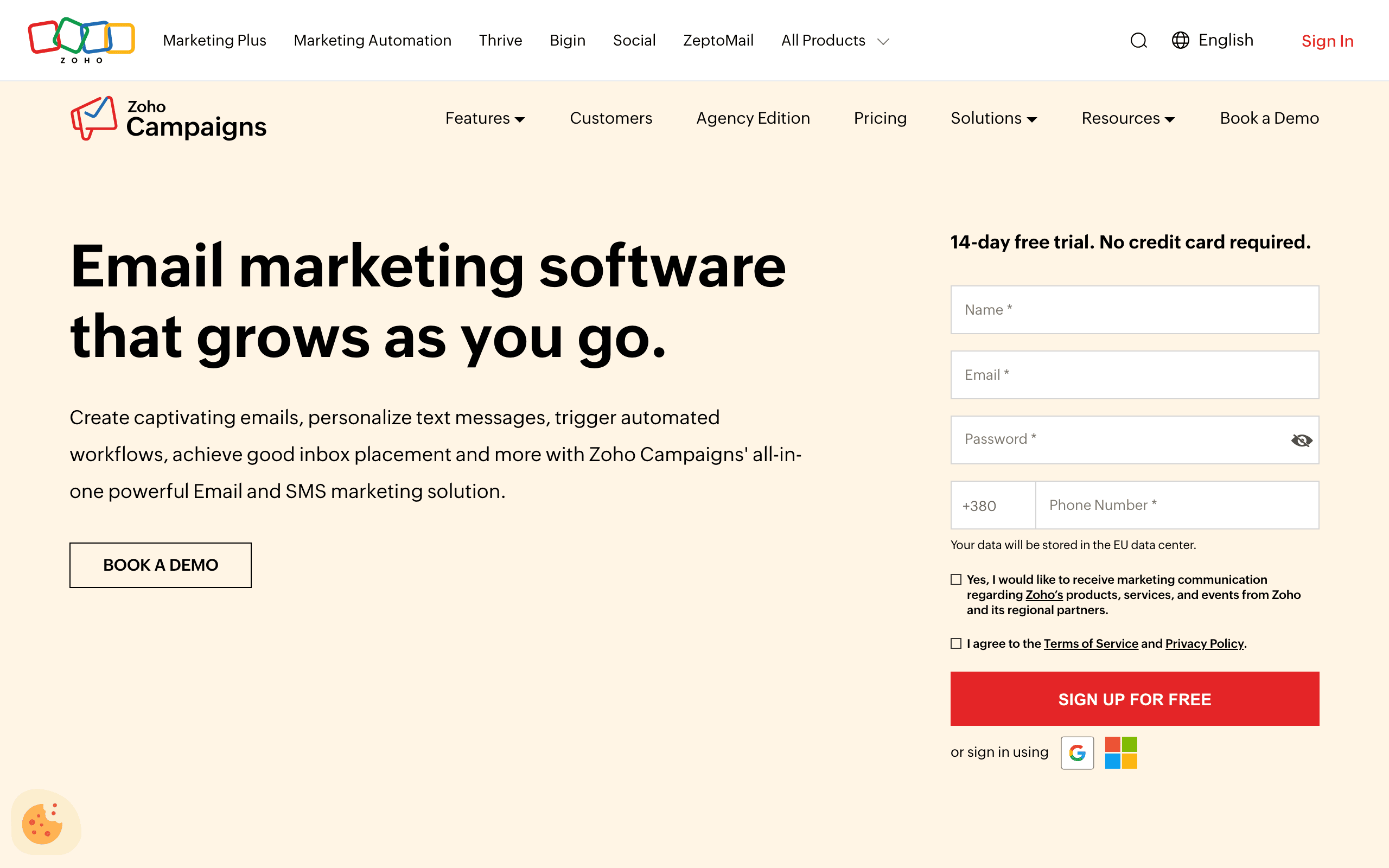
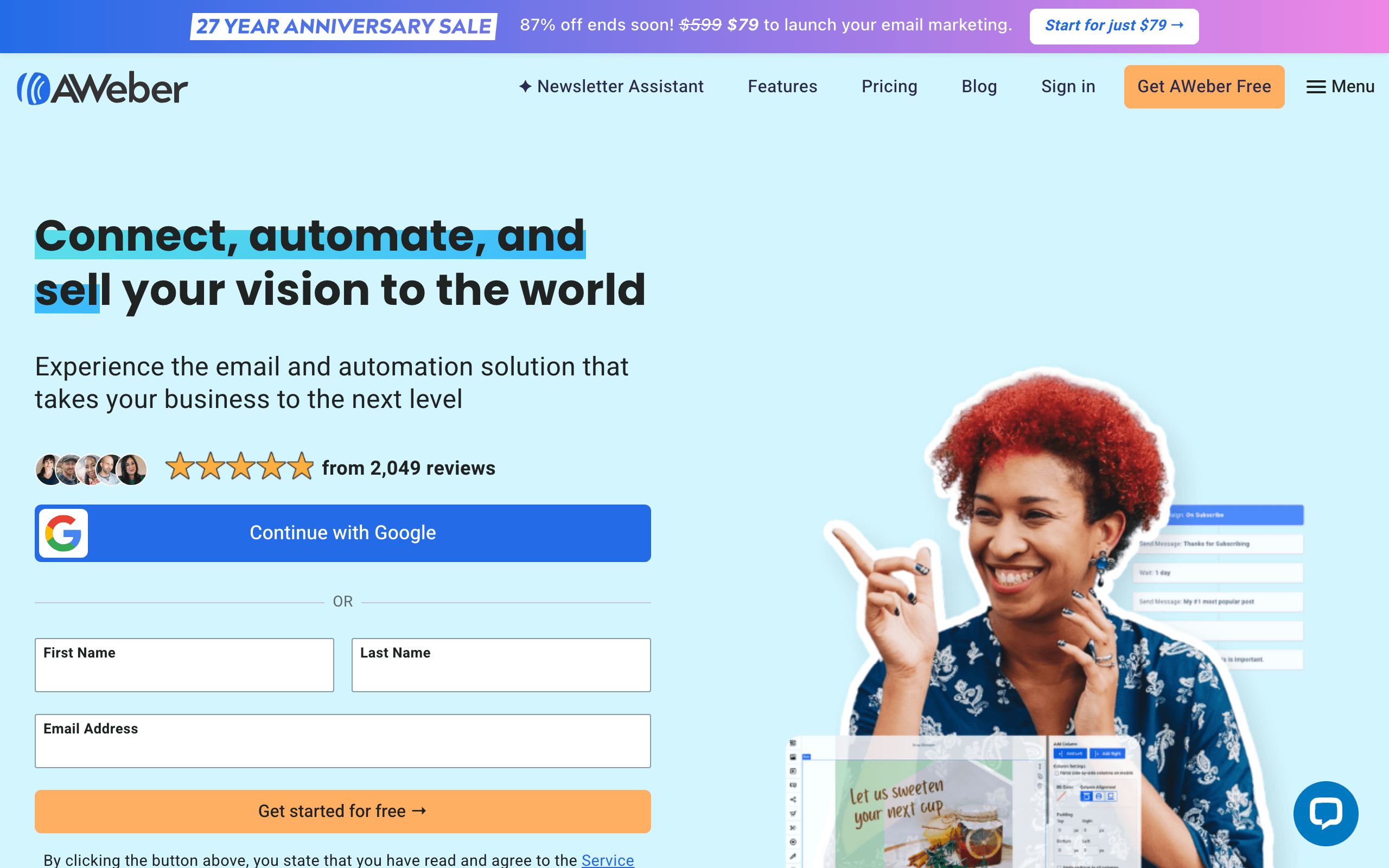
Zoho Campaigns and AWeber both serve small to medium businesses, but from different angles. Zoho Campaigns is part of the larger Zoho ecosystem with deep CRM integration. AWeber is a dedicated email platform with decades of experience. Your choice depends on whether you value ecosystem integration or standalone simplicity.
The Ecosystem Question
If you're already using Zoho CRM, Zoho Desk, or other Zoho apps, Zoho Campaigns is the obvious choice. Contact syncing is automatic. Data flows between systems without setup. You get one bill for everything.
AWeber doesn't have this advantage. It's a standalone email tool that connects to other apps through integrations, but nothing as seamless as Zoho's native connections.
Pricing: Half the Cost
At 10,000 contacts, Zoho Campaigns costs $35/month. AWeber costs $70/month. That's a meaningful difference, especially for small businesses watching their budget.
Zoho's free plan also covers 2,000 contacts vs AWeber's 500. If you're testing the waters, Zoho gives you more room to grow before paying.
Support and Track Record
AWeber has been in the email game since 1998. That's a long track record of deliverability and reliability. They also offer 24/7 live chat support on all plans.
Zoho is a larger company but Campaigns is one product among many. Support quality varies based on your Zoho subscription level. For dedicated email support, AWeber is more focused.
For SaaS Companies
Neither Zoho Campaigns nor AWeber is built for SaaS or subscription businesses. They don't understand trials, MRR, or payment events.
If you're building a SaaS product on Stripe, consider Sequenzy. Native Stripe integration means you can trigger emails based on subscription changes, trial endings, and payment events. Both transactional and marketing emails work from one platform.
Support Quality and Reliability
AWeber built its reputation partly on customer support. Every plan, including the free tier, gets access to 24/7 live chat and phone support. For small businesses without dedicated marketing staff, having a real person available at any hour is genuinely valuable. The support team has deep product knowledge given the platform's narrow focus.
Zoho's support depends on your subscription level across the Zoho ecosystem. Basic Zoho Campaigns plans get email support with slower response times. Priority support requires higher-tier Zoho subscriptions. If you are a solo operator or small team that might need hand-holding during setup, AWeber's support model is more accessible.
Both platforms maintain strong uptime records. AWeber's infrastructure has been battle-tested over two decades with minimal outages. Zoho operates enterprise-grade infrastructure across its product suite. Reliability should not be a deciding factor between these two.
Deliverability and Inbox Placement
AWeber has one of the longest track records for email deliverability in the industry. Their IP reputation, built over 25 years, means your emails are more likely to land in the primary inbox. AWeber proactively monitors sending patterns and will flag accounts that could harm shared IP reputation.
Zoho Campaigns uses Zoho's email infrastructure, which is solid but carries less historical weight with ISPs than AWeber's dedicated email reputation. Zoho's deliverability is adequate for most use cases, but high-volume senders sometimes report lower inbox placement rates compared to AWeber or dedicated ESPs.
If deliverability is your top concern and you send to cold or mixed-quality lists, AWeber's track record gives it an edge. For warm lists with engaged subscribers, the difference between platforms is minimal. Using an email validator before importing contacts helps both platforms perform at their best.
Scaling Beyond Basic Email Marketing
Both Zoho Campaigns and AWeber hit limitations when your marketing needs grow beyond basic newsletters and autoresponders. AWeber's automation caps out at sequential autoresponders, there are no conditional branches, no lead scoring, and no behavior-based triggers beyond email opens and clicks.
Zoho Campaigns offers more room to grow thanks to the broader Zoho ecosystem. You can connect Zoho Analytics for custom reporting, Zoho SalesIQ for website chat, and Zoho Social for coordinated social media campaigns. Each addition increases complexity and cost, but the option exists within one vendor.
For SaaS companies that outgrow either platform, the migration question becomes whether to move to a general-purpose automation tool like ActiveCampaign or a purpose-built SaaS email platform. Sequenzy's Stripe integration means you skip building custom webhook pipelines, and the AI sequence builder generates trial conversion and onboarding emails based on your product data.
Use-case matchups
| Situation | Best first look | Why |
|---|---|---|
| Team already uses Zoho and wants low-cost email campaigns | Zoho Campaigns | Zoho Campaigns is the baseline when Zoho ecosystem fit and affordable campaigns matter most. |
| Small business wants traditional newsletter workflows | AWeber | AWeber is stronger when conventional email marketing and support matter more than Zoho ecosystem fit. |
| SaaS or commerce team wants lifecycle and transactional email | Sequenzy | Sequenzy is stronger when Stripe events, transactional messages, and lifecycle automation matter more than Zoho suite alignment. |
| Team wants straightforward newsletters inside a familiar business suite | Zoho Campaigns | Zoho Campaigns should be tested first if contacts and CRM data already live in Zoho. |
| Team needs the specialist capability | AWeber | AWeber deserves the first demo when the main requirement is classic small-business newsletters. |
| Team wants focused email workflows without a broader business suite | Sequenzy | Sequenzy is more relevant when app, store, and billing events drive the email program. |
Best Fit by Small-Business Ecosystem and Support Needs
Best email marketing tool for teams already using Zoho CRM
Choose Zoho Campaigns when contacts, sales activity, support data, and reporting already live inside Zoho. It is the better fit for small businesses that want affordable campaigns connected to the broader Zoho suite instead of another standalone vendor.
Best classic newsletter platform for small-business support
Choose AWeber when the priority is a long-running email platform with templates, landing pages, autoresponders, and accessible support. It is stronger for businesses that want dedicated email help and a familiar newsletter workflow without committing to Zoho's broader ecosystem.
Best lifecycle email platform for SaaS and subscription workflows
Choose Sequenzy when app, store, Stripe, or transactional events define the email program. Subscription lifecycle messages, payment recovery, product onboarding, and customer campaigns are a better match than Zoho suite alignment or traditional newsletter support.
Pricing reality
The pricing signals on this page list Zoho Campaigns at $35/month, AWeber at $70/month, and Sequenzy at $49/month. Compare total workflow cost, not only list price.
Zoho Campaigns can be a strong value when the team already uses Zoho CRM or Zoho apps. AWeber's real cost depends on whether the team needs classic small-business newsletters.
Review signals
This page has existing review data from Capterra, G2, Trustpilot. Keep those sources in the decision because buyers often discover differences in support, editor quality, deliverability, integration depth, pricing, and day-to-day usability through reviews.
For Zoho Campaigns, validate review themes around Zoho CRM integration, campaign editor workflow, support, deliverability, and list management. For AWeber, focus review research on whether users praise the reason you would choose it: classic small-business newsletters.
Migration checklist
| Workstream | Moving toward Zoho Campaigns | Moving toward AWeber | Simplifying to Sequenzy |
|---|---|---|---|
| Contacts and consent | Import contacts, lists, segments, Zoho CRM fields, consent, unsubscribes, and suppressions. | Map lists, subscribers, tags, forms, automations, templates, and unsubscribes. | Import subscribers, attributes, tags, suppressions, store events, Stripe events, and transactional paths. |
| Ecosystem fit | Confirm Zoho CRM, Zoho Forms, Zoho Commerce, or other Zoho apps are actually part of the workflow. | Confirm whether AWeber replaces or integrates with the existing CRM and store stack. | Keep CRM-suite features outside scope unless they feed lifecycle email. |
| Automations | Rebuild welcome, newsletter, CRM nurture, ecommerce, and reactivation flows. | Rebuild the workflows that prove AWeber's advantage in classic small-business newsletters. | Rebuild lifecycle and transactional email flows. |
| Templates and forms | Move templates, signup forms, sender identities, brand assets, and preference paths. | Move templates, forms, brand assets, and workflow-specific content. | Move email templates and transactional message content. |
| Reporting | Validate campaign reports, CRM attribution, exports, segment performance, and deliverability. | Validate reporting for classic small-business newsletters before committing. | Validate campaign, automation, transactional, and lifecycle reporting. |
Decision checklist
- Does Zoho's automatic CRM and suite syncing outweigh AWeber's simplicity, or is the choice really about email cost?
- Does AWeber's strength in classic small-business newsletters matter more than Zoho Campaigns' low-cost suite fit?
- Which platform needs less cleanup when importing consent records, unsubscribes, and suppressions from your current list?
- Do the $35 and $70 figures at 10,000 contacts still hold once unsubscribed contacts count toward AWeber's billing?
- Would lifecycle and transactional email, like trial-ending or failed-payment messages, add more value than another general newsletter platform?
- AWeber should be judged on newsletter workflow and support.









