
Overview
Sender and AWeber represent different eras of email marketing. Sender is a modern, budget-friendly platform with SMS and e-commerce focus. AWeber has been around since 1998 with a proven track record of reliability and excellent support.
The choice comes down to value vs established reliability.
The Core Difference
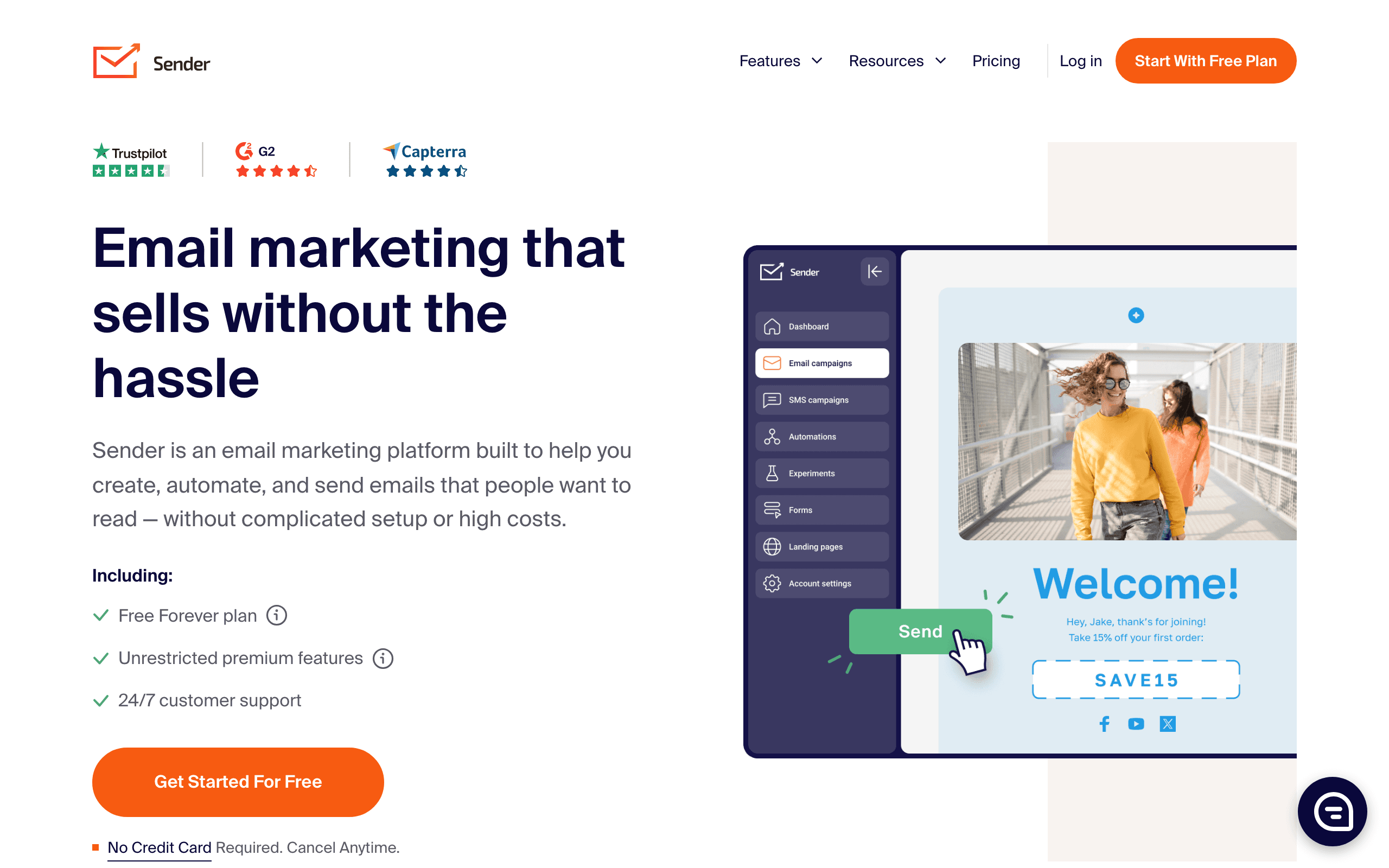
Sender focuses on value. With a generous free tier, lower pricing, 1600+ templates, and SMS marketing, it delivers comprehensive features without premium costs. E-commerce integrations make it particularly useful for online stores.
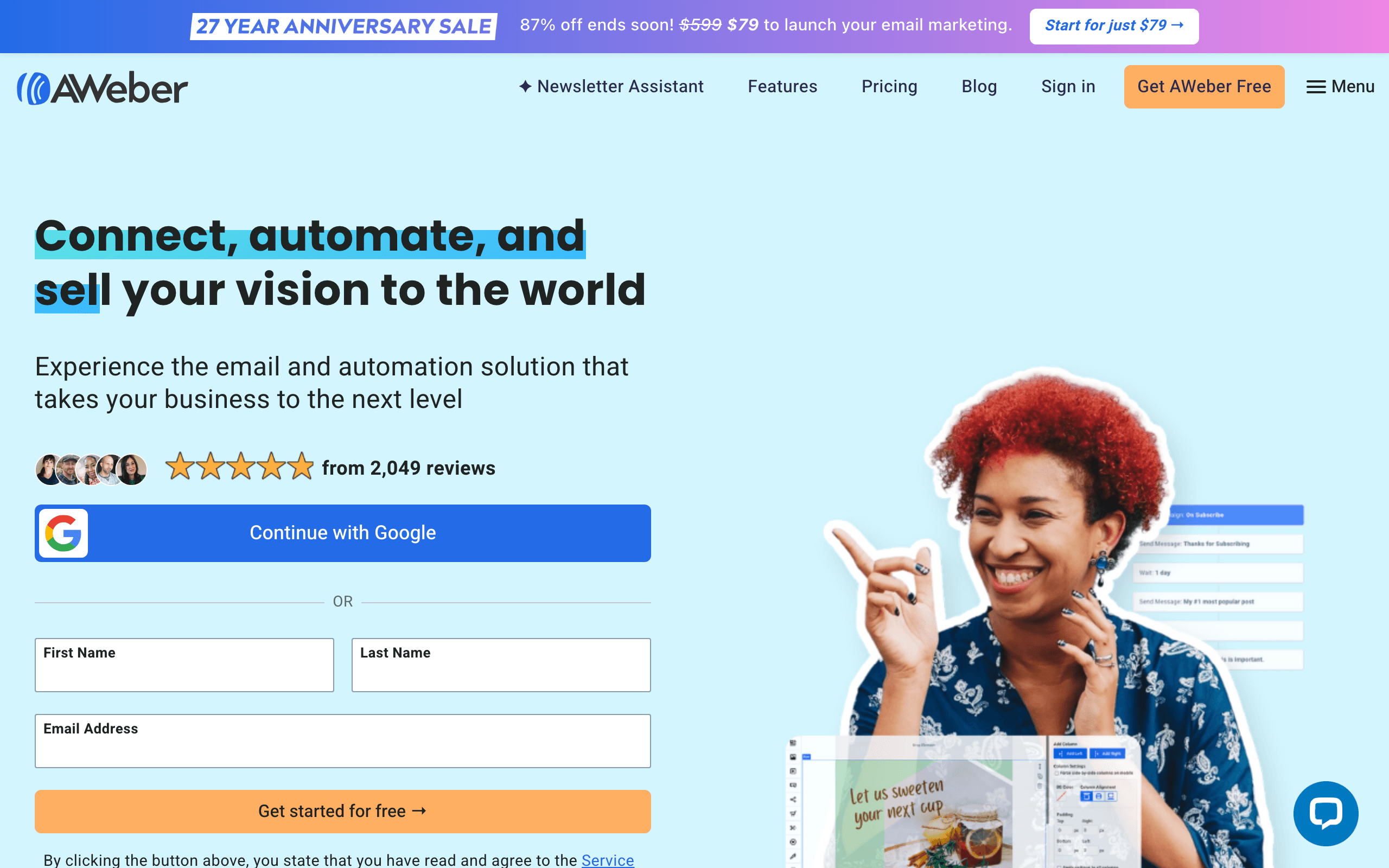
AWeber focuses on doing email marketing well, consistently, for over 25 years. Excellent deliverability, award-winning support, and a reputation for reliability. Less flashy but proven.
Pricing: ~$45 vs $70 at 10K
At 10,000 contacts, Sender costs around $45/month and AWeber costs $70/month. That is a significant 35% savings with Sender.
The free tier difference is even more dramatic. Sender offers 2,500 subscribers with 15,000 emails/month. AWeber offers only 500 contacts. For bootstrapped businesses, Sender is far more generous.
Where Sender Wins
Pricing: Significantly cheaper at every tier. 35% savings at 10k contacts.
Free Tier: 2,500 subscribers vs 500. Sender lets you grow much longer before paying.
SMS Marketing: Built-in SMS capabilities. AWeber does not offer SMS.
Templates: 1600+ templates vs 700+. More than double the design options.
E-commerce: Deeper Shopify and WooCommerce integrations with better product automations.
Where AWeber Wins
Reliability: 25+ years in business with a proven track record. Sender is a newer platform.
Deliverability: Excellent reputation built over decades. AWeber is known for high deliverability rates.
Customer Support: Award-winning support with phone support available. AWeber takes customer service seriously.
Stability: For organizations that value established platforms, AWeber's longevity matters.
For SaaS Companies
Neither Sender nor AWeber is built for SaaS. Both are general marketing tools without subscription billing awareness.
The Trust Factor in Email Marketing
AWeber's 25-year track record is not just a marketing talking point. It represents decades of maintaining sender reputation, building relationships with ISPs, and resolving deliverability issues. When your business depends on emails reaching inboxes, this history provides a safety net that newer platforms cannot replicate overnight.
Sender has built a solid platform with good deliverability, but it lacks the institutional knowledge and ISP relationships that come from operating for over two decades. For businesses in regulated industries or those sending critical communications, AWeber's proven reliability reduces risk. For most small businesses sending newsletters and promotions, both platforms deliver reliably.
The trust factor extends to support. AWeber's phone support means a human voice during a crisis. When an email campaign goes wrong, being able to call someone and get immediate help has tangible value. Sender's support is responsive but lacks the phone channel that some businesses consider essential.
E-commerce Integration Depth
Sender's e-commerce integrations with Shopify and WooCommerce go deeper than AWeber's basic connections. Product blocks in emails pull items directly from your store catalog. Abandoned cart automations include product images and prices. Purchase-triggered sequences recommend complementary products based on order history.
AWeber connects to e-commerce platforms at a more basic level. Contact syncing, basic purchase tracking, and simple follow-up emails work fine for stores with straightforward needs. But Sender's product-aware automations generate more revenue per email for stores that use them actively.
The difference is particularly noticeable in abandoned cart recovery. Sender's sequences include the actual products left behind with images and current prices. AWeber's version is more generic. For e-commerce businesses where cart recovery directly impacts revenue, Sender's deeper integration pays for itself quickly.
Modern Features vs Proven Fundamentals
Sender represents the modern approach to email marketing: lots of templates, SMS integration, heatmap analytics, and aggressive pricing. AWeber represents the proven approach: excellent deliverability, outstanding support, steady reliability, and continuous improvement to a core product.
The choice often correlates with business stage and risk tolerance. Startups and bootstrapped businesses gravitate toward Sender's value proposition because every dollar matters during early growth. Established businesses with existing AWeber accounts rarely switch because the reliability premium is worth paying when revenue depends on consistent email delivery.
Both platforms handle the fundamentals well: responsive email design, automation workflows, segmentation, and analytics. The differences emerge at the edges. Sender adds channels like SMS and richer e-commerce tools. AWeber adds trust signals like phone support and decades of uptime. Use our email warmup calculator to plan your sending ramp-up when migrating between platforms, and our email validator to clean your list during the transition.
Use-case matchups
| Need | Better fit | Why |
|---|---|---|
| Budget email and SMS campaigns | Sender | Sender is stronger when the buyer wants low-cost email/SMS with practical campaign tools. |
| Classic email marketing and autoresponders | AWeber | AWeber is stronger when classic email marketing and autoresponders are the main requirements. |
| SaaS lifecycle and transactional email | Sequenzy | Sequenzy fits when the team needs Stripe-aware lifecycle campaigns, newsletters, and transactional email in one product. |
Best Fit by Newsletter Workflow
Best budget email and SMS tool for small teams
Sender fits buyers that want affordable email and SMS campaigns without paying for a more established newsletter platform.
Best classic email platform for autoresponders and support
AWeber is the better fit when classic autoresponders, traditional newsletters, templates, and small-business email support matter most.
Best email platform for SaaS lifecycle and transactionals
Sequenzy fits when Stripe-aware lifecycle campaigns, newsletters, and transactional email are more important than classic autoresponders.
Pricing reality
The page data lists Sender at ~$45/month, AWeber at $70/month, and Sequenzy at $49/month for the cited comparison tier. Keep the original pricing context rather than turning these into generic equivalents.
Sender should be priced as a budget email/SMS platform. AWeber should be priced around classic email marketing and autoresponders. Sequenzy should be compared when SaaS lifecycle, transactional email, and Stripe-aware workflows matter more than general email/SMS pricing.
Review signals
For Sender, pay attention to affordability and whether email/SMS depth is enough. For AWeber, pay attention to classic email marketing and autoresponders, onboarding effort, support quality, and pricing as the list grows.
Migration checklist
| Workstream | What to verify |
|---|---|
| Subscriber data | Export subscribers, tags, custom fields, segments, consent, unsubscribes, bounces, and suppressions. |
| Channel consent | Preserve email consent, SMS consent if used, opt-out history, and suppression rules. |
| Automations | Rebuild welcome, nurture, cart, post-purchase, reactivation, newsletter, and promotional workflows manually. |
| Templates and forms | Recreate templates, forms, landing pages, coupons, dynamic content, and mobile rendering. |
| Integrations | Reconnect ecommerce, CRM, analytics, forms, billing, webhooks, and Zapier-style handoffs. |
| Reporting | Export campaign, automation, deliverability, revenue, and list-growth reports before cutover. |
Decision checklist
- Choose Sender if low-cost email/SMS is the main requirement.
- Choose AWeber if classic email marketing and autoresponders matter more than budget email/SMS basics.
- Avoid Sender if the team needs deeper specialization or enterprise workflow depth.
- Avoid AWeber if the buyer only needs practical low-cost campaigns.
- Consider Sequenzy if SaaS lifecycle, transactional email, and Stripe-triggered messages are the core jobs.









