
Overview
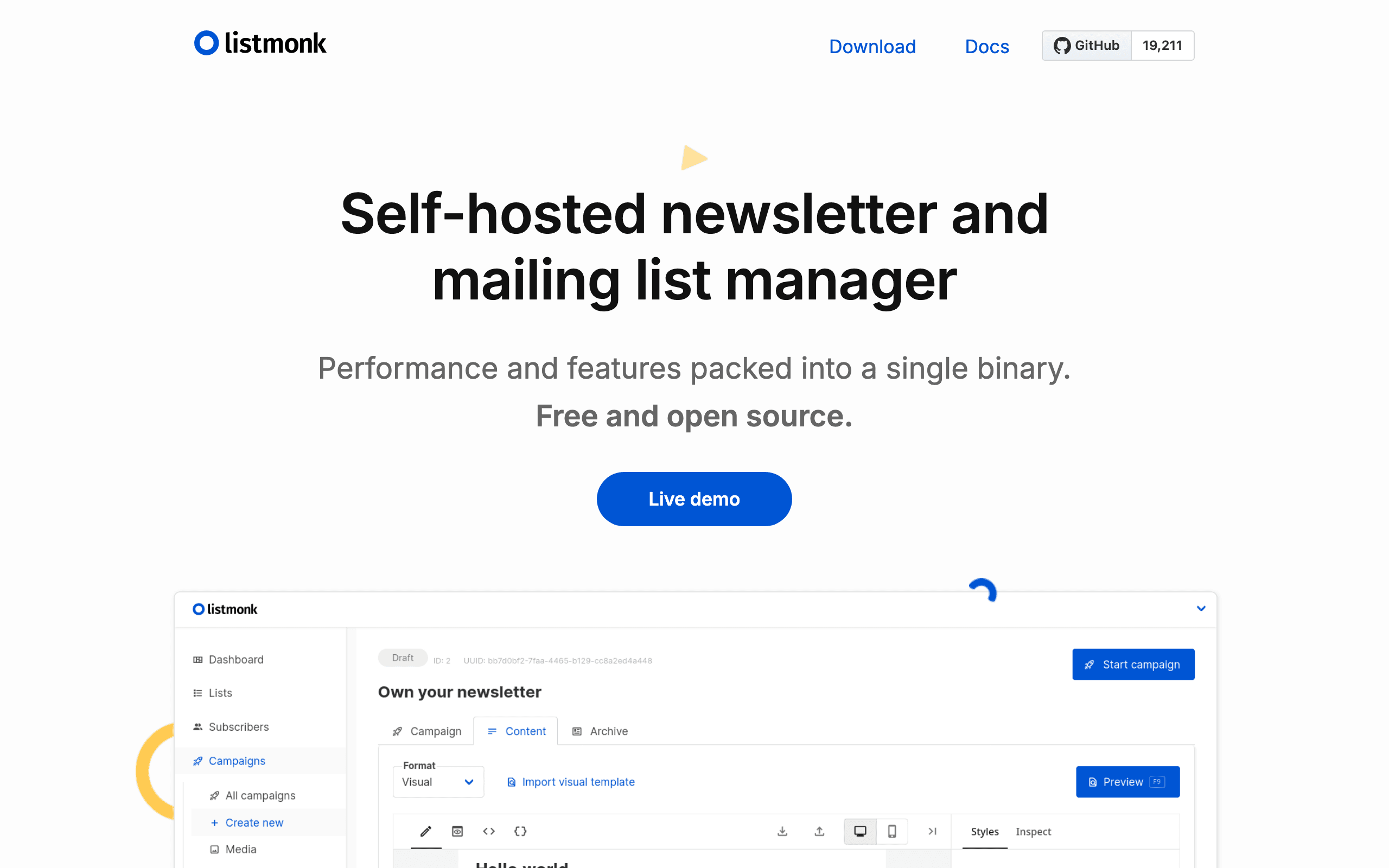
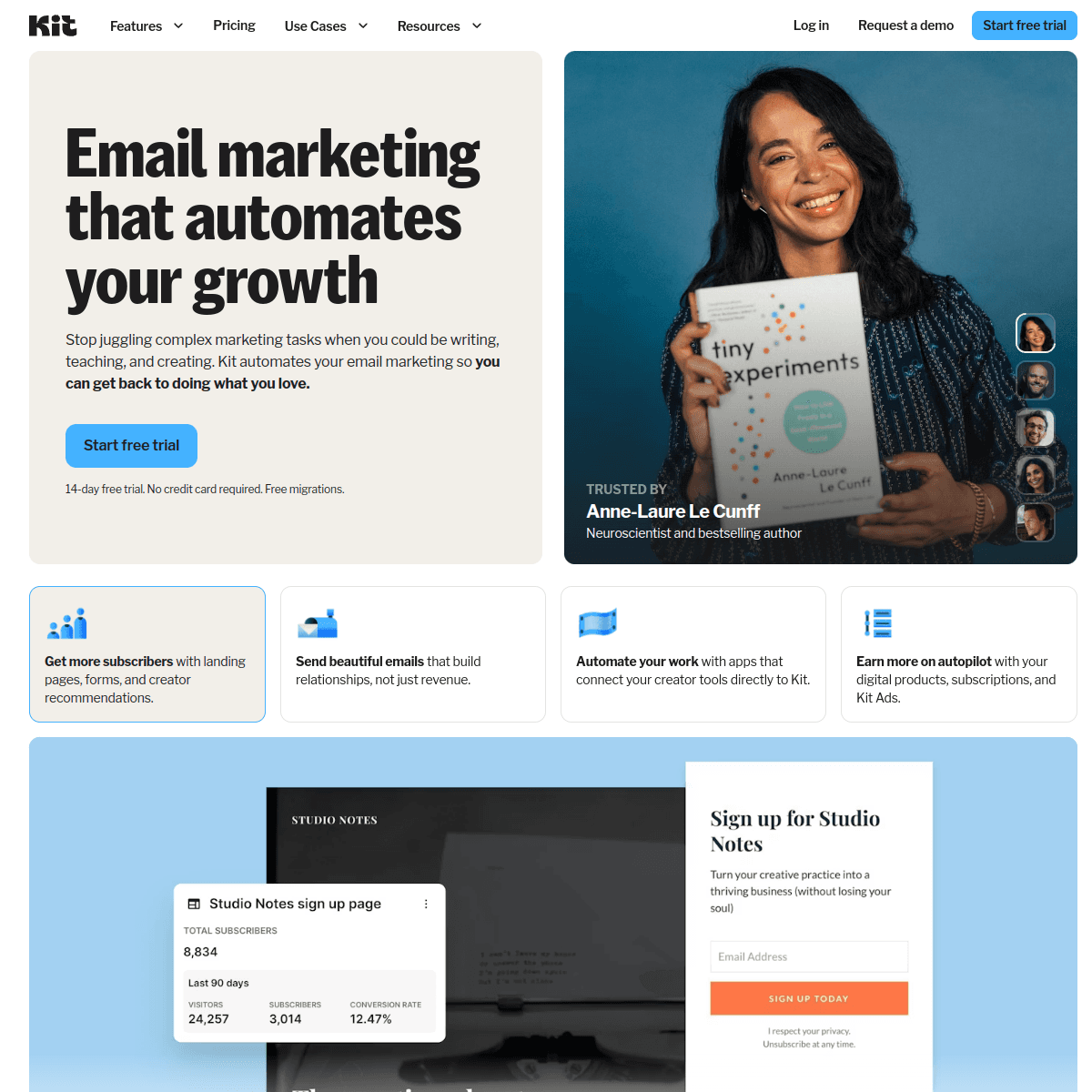
Listmonk and Kit (formerly ConvertKit) serve fundamentally different audiences. Listmonk is for technical users wanting free, simple newsletters. Kit is for creators building businesses around content, courses, and digital products. One prioritizes cost savings and control. The other prioritizes commerce and growth.
The Creator Question
Are you a content creator? Do you want to sell digital products, paid newsletters, or courses? Do you need landing pages and growth tools?
If yes, Kit is designed for you. Commerce features, creator network, monetization tools.
If no, and you just want to send newsletters, Listmonk does that for free.
Cost Comparison
Listmonk: ~$15/month total (hosting + SMTP). Kit: $89/month at 5k subscribers (after October 2025 price increase).
Difference: ~$74/month or ~$888/year.
Kit's free tier offers 10k subscribers with limitations. For testing, it's generous. For business, paid plans are needed.
Commerce Features
Kit offers: digital product sales, paid newsletters, tip jars, commerce integrations.
Listmonk offers: campaigns and list management.
If you're monetizing content, Kit has native tools. Listmonk would require external solutions.
Growth Tools
Kit provides landing pages, advanced forms, creator network for cross-promotion, and referral integrations (Spark Loop).
Listmonk provides basic embed forms. No landing pages. No growth features.
For building an audience, Kit offers more help.
Technical Reality
Kit: Sign up, start writing, sell products. No technical skills required.
Listmonk: Install Docker, configure PostgreSQL, set up SMTP, manage server. Technical skills required.
For creators (who are usually not DevOps engineers), Kit removes friction.
Kit's Price Increase
Kit raised prices ~35% in October 2025, their first increase in 12 years. At 5k subscribers, Creator plan went from ~$66 to $89/month. This makes the cost difference with Listmonk even more significant.
For SaaS Companies
Neither is ideal. Kit lacks transactional email and user event tracking. Listmonk lacks automation. For SaaS companies with Stripe billing, consider Sequenzy. Built for subscriptions at lower cost than Kit.
Making the Choice
Choose Listmonk if you're technical, want free software, and just need basic newsletters. Choose Kit if you're a creator, want commerce features, and prefer managed simplicity. For SaaS companies needing subscription lifecycle features, consider Sequenzy.
The Impact of Kit's Price Increase
Kit's October 2025 price increase of approximately 35% has reshaped the conversation. At $89/month for 5,000 subscribers, the gap between Kit and free Listmonk is now $74 per month, nearly $900 per year. For established creators earning significantly from their content, this is manageable. For emerging creators still building their audience, it is a meaningful cost that competes with other business expenses.
The price increase has pushed some creators to reconsider simpler alternatives. Kit's generous free tier at 10,000 subscribers still provides a good starting point, but the jump to paid plans now requires more revenue to justify. This makes Listmonk an increasingly attractive option for technically capable creators who are not yet earning enough to offset Kit's higher prices.
Automation and Subscriber Journeys
Kit's visual automation builder allows creators to build welcome sequences, nurture campaigns, and purchase follow-ups with conditional logic and branching. You can tag subscribers based on behavior, segment by interest, and deliver personalized content paths. This is essential for creators selling multiple products to different audience segments.
Listmonk has zero automation capabilities. Every email is a one-time campaign sent to a list. If you need to drip content over time, respond to subscriber actions, or build conditional journeys, Listmonk cannot do it without custom development. This is the single biggest functional gap between the two platforms.
Long-Term Cost Trajectory
At 50,000 subscribers, Kit costs around $259/month. At 100,000 subscribers, it is over $400/month. These costs grow steadily and represent a significant overhead for creator businesses. Listmonk's costs remain under $30/month at any scale since you are only paying for hosting and SMTP.
For creators whose businesses scale to large audiences, the cumulative savings of Listmonk over years are substantial. However, most creators at that scale are also earning enough that Kit's automation, commerce, and growth tools generate revenue that exceeds their cost. The decision depends on whether you will actively use Kit's premium features or simply pay for them out of habit. Check our email warmup calculator if you are planning a migration between platforms.
Use-case matchups
| Situation | Best first look | Why |
|---|---|---|
| Technical team wants free self-hosted newsletters | Listmonk | Listmonk keeps software cost low if the team can operate it. |
| Creator wants landing pages, automations, and paid products | Kit | Kit is built around creator monetization and audience growth. |
| Large list sends simple newsletters | Listmonk | Costs stay low when automation and commerce are not needed. |
| Creator needs launches, tags, sequences, and product sales | Kit | Kit's managed creator workflow is much richer. |
| SaaS team needs subscription lifecycle email | Sequenzy | Sequenzy is built around Stripe and product lifecycle messages. |
Pricing reality
Listmonk is free software, but total cost includes hosting, SMTP, backups, updates, deliverability, and technical ownership. It is cheapest when your team already has those skills.
Kit's $89/month signal at 5,000 subscribers should be evaluated against creator revenue features: landing pages, paid newsletters, digital products, automations, tags, and audience growth.
Sequenzy's $49/month price is relevant when the business is SaaS and needs subscription-triggered emails rather than creator commerce or self-hosted newsletters.
Review signals
| Platform | What reviews in this page suggest | What to validate |
|---|---|---|
| Listmonk | Buyers value free self-hosting, control, simple newsletters, privacy, and low scale cost. | Confirm technical ownership, lack of automations, and template workflow. |
| Kit | Buyers value creator commerce, automation, landing pages, segmentation, and managed simplicity. | Confirm paid-plan jump, creator feature usage, and whether it fits non-creator use cases. |
Best Fit by Hosting and Creator Monetization
Best self-hosted newsletter tool for technical teams
Listmonk fits teams that want high-volume newsletters, full data control, and the ability to operate their own email software. It is strongest when developers can manage hosting, deliverability, backups, and monitoring.
Best creator email platform for paid audience products
ConvertKit is the better fit when the creator needs forms, landing pages, paid newsletters, digital products, and simple automations without self-hosting. It works best when the platform should help monetize the audience.
Best SaaS lifecycle platform for product and billing events
Sequenzy fits SaaS teams that need managed lifecycle email connected to signups, usage, subscriptions, invoices, and failed payments. It is more relevant when event-triggered customer journeys matter more than self-hosted newsletter control.
Migration checklist
| Workstream | Moving toward Listmonk | Moving toward Kit | Moving toward Sequenzy |
|---|---|---|---|
| Infrastructure | Set up hosting, database, SMTP, DNS, backups, updates, and monitoring. | Configure domains, forms, landing pages, products, tags, and automations. | Configure domains, Stripe, app events, transactional routes, and subscriber sync. |
| Subscribers | Import subscribers, lists, custom fields, consent, and suppressions. | Import subscribers, tags, forms, products, purchases, and suppressions. | Import subscribers, attributes, tags, suppressions, and billing identifiers. |
| Automations | Accept that sequences need custom tooling or will be lost. | Rebuild welcome, launch, product, paid-newsletter, and nurture sequences. | Rebuild onboarding, trial, upgrade, dunning, transactional, and campaign flows. |
| Assets | Recreate HTML templates and signup embeds. | Recreate landing pages, forms, products, newsletters, and sequence emails. | Recreate lifecycle and transactional templates. |
| Reporting | Track campaign, bounce, list, and delivery metrics. | Track subscriber growth, launches, purchases, paid conversion, and engagement. | Track lifecycle, billing, transactional, and campaign reporting. |
Decision checklist
- Is low cost more important than creator automation and commerce?
- Who will maintain the self-hosted system?
- Will Kit's paid features generate enough revenue to justify the subscription?
- Are you building a creator business or a software product?
- Would Stripe-triggered lifecycle email be a better fit than creator tooling?









