Overview
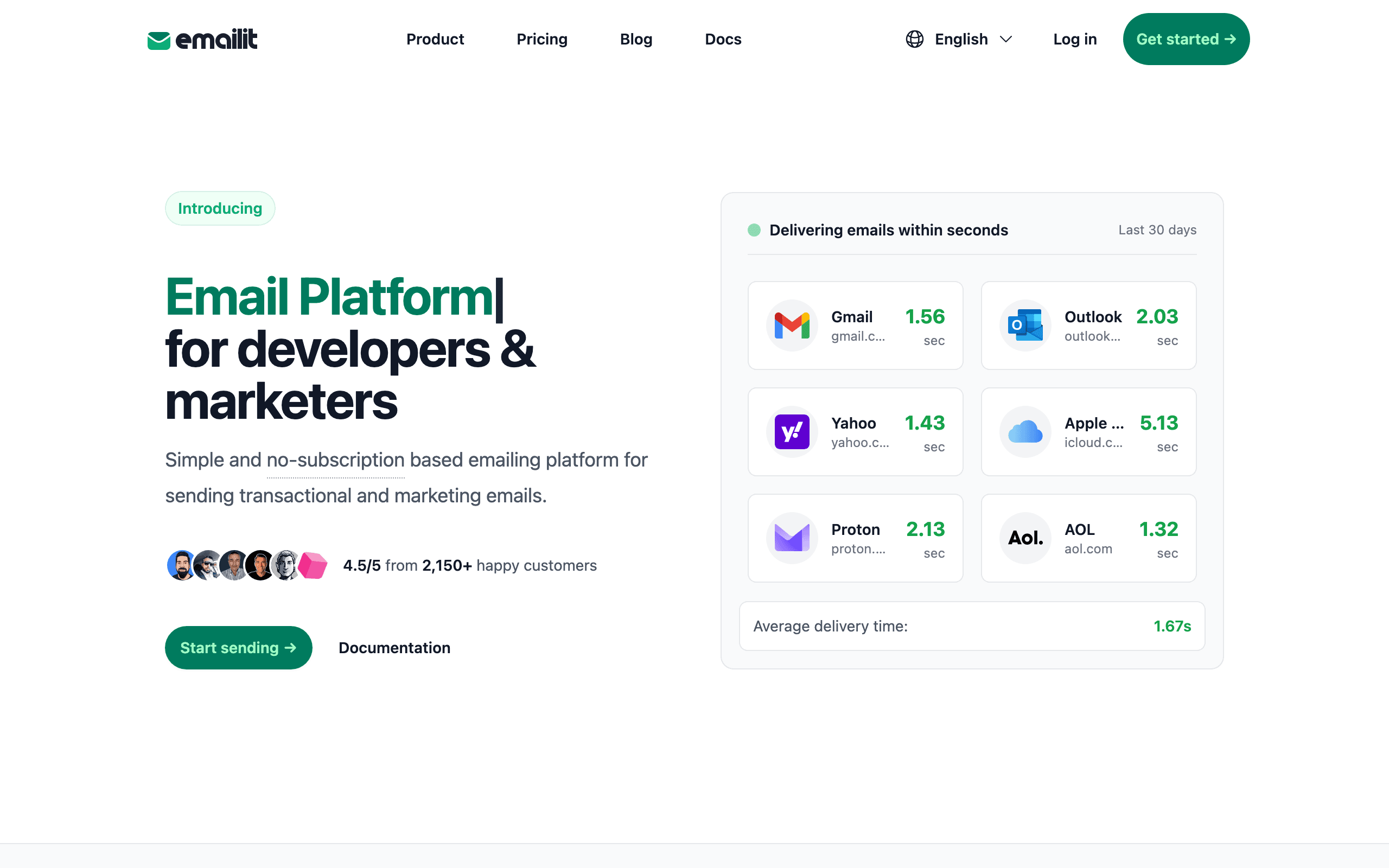
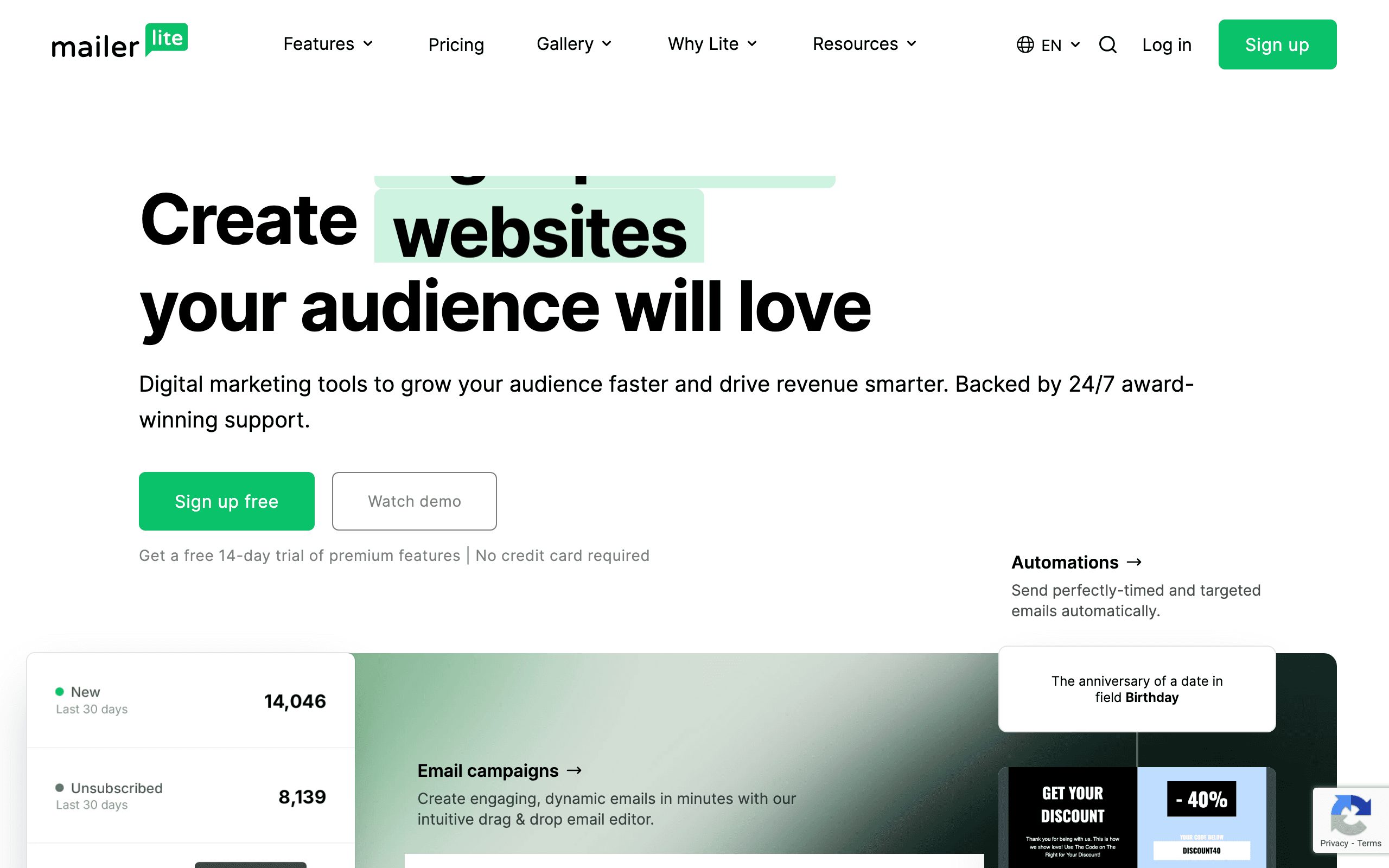
EmailIt and MailerLite serve different needs in the email space. EmailIt is a budget pay-per-email delivery service. MailerLite is a affordable managed email marketing with landing pages.
The choice depends on what you need: cheapest per-email pricing (EmailIt) or no server management (MailerLite). For SaaS businesses specifically, Sequenzy offers purpose-built features that neither tool provides.
Pricing reality
- EmailIt: ~$1-2/10k emails - Pay-per-email, no subscription. SMTP and API.
- MailerLite: $73/month - Landing pages, website builder. 500 sub free tier.
- Sequenzy: $49/month for 60,000 emails, with 10% off when you bill yearly. See pricing.
Review signals
The EmailIt reviews on this page support pure transactional sending. One reviewer says EmailIt is cheaper and simpler for app notifications because the team does not need MailerLite's marketing features.
The negative EmailIt review shows the two-tool problem: the team uses EmailIt for transactional email and MailerLite for marketing because neither product covers both needs well for them.
MailerLite's reviews support its strength for newsletters, creators, and small marketing teams. Reviewers praise the editor and paid newsletter features, while also flagging the approval process as a real source of friction.
Where EmailIt Wins
Cheapest per-email pricing
EmailIt offers cheapest per-email pricing, which is a genuine advantage for teams that need it.
No monthly subscription
EmailIt offers no monthly subscription, which is a genuine advantage for teams that need it.
Simple SMTP/API
EmailIt offers simple smtp/api, which is a genuine advantage for teams that need it.
Fast delivery
EmailIt offers fast delivery, which is a genuine advantage for teams that need it.
Where MailerLite Wins
No server management
MailerLite offers no server management, which matters for teams that prioritize this.
Landing pages + websites
MailerLite offers landing pages + websites, which matters for teams that prioritize this.
Good email editor
MailerLite offers good email editor, which matters for teams that prioritize this.
User-friendly
MailerLite offers user-friendly, which matters for teams that prioritize this.
Email Design and Template Flexibility
Emailit and MailerLite take different approaches to email design. Template variety, customization depth, and mobile responsiveness all affect how your emails look across inboxes. The right email editor can save hours of design time per campaign.
List Management and Segmentation
Effective email marketing depends on reaching the right subscribers with the right message. Emailit and MailerLite handle list management differently, from how they count subscribers to how they manage bounces and unsubscribes.
Deliverability and Sender Reputation
Your email marketing investment is wasted if messages land in spam. Both Emailit and MailerLite provide deliverability tools, but their approaches to shared vs dedicated IPs, authentication, and compliance differ significantly.
The Approval Process Trade-off
MailerLite's strict account approval process is both a strength and a weakness. By rejecting spammers and low-quality senders during signup, MailerLite maintains cleaner shared IP pools and better deliverability for approved senders. This benefits every legitimate user on the platform.
EmailIt has no meaningful approval process. Sign up, get credentials, start sending. This speed is an advantage for developers who need to integrate quickly, but it also means sharing infrastructure with a potentially less curated sender pool. For transactional emails where deliverability is critical, the quality of your sending neighbors matters.
The practical impact: if you send marketing email and value inbox placement, MailerLite's gated approach protects your reputation. If you send transactional emails where delivery speed matters more than marketing metrics, EmailIt's instant access gets you sending faster without the approval wait.
The Transactional Email Blind Spot
MailerLite is a marketing email platform that does not support transactional email. Password resets, order confirmations, verification codes, and system notifications require a separate tool. MailerLite's sister product, MailerSend, handles transactional email, but it means managing two platforms with separate billing and dashboards.
EmailIt is the opposite -- transactional only with no marketing capabilities. No campaign builder, no newsletter templates, no subscriber management. If you need both marketing and transactional email, neither platform covers both independently.
This creates an interesting scenario where teams might run MailerLite for marketing alongside EmailIt for transactional, paying for two simple tools instead of one complex one. Whether this two-tool approach is better than a unified platform depends on your comfort with managing separate services and whether the combined cost stays competitive.
The Creator Economy Angle
MailerLite has carved a strong niche in the creator economy with paid newsletter support, digital product selling, and website building. Bloggers, newsletter writers, and content creators find MailerLite's feature set well-matched to their needs at a fraction of Mailchimp's cost. EmailIt offers nothing for this audience.
For SaaS businesses specifically, neither MailerLite's creator tools nor EmailIt's bare sending API provides subscription-aware automation. Sequenzy bridges this gap with native Stripe integration for billing events, AI-powered sequences for lifecycle email, and unified transactional plus marketing capabilities. At $49/month, it provides the SaaS-specific features that both MailerLite and EmailIt lack. See pricing for details.
Use-case matchups
| Situation | Best first look | Why |
|---|---|---|
| Developer needs cheap transactional SMTP/API delivery | EmailIt | EmailIt is the simpler choice when there is no newsletter, landing page, or audience-building workflow. |
| Small marketing team needs newsletters and landing pages | MailerLite | MailerLite is built for non-technical campaign creation, forms, landing pages, and list management. |
| Creator wants paid newsletter or digital product support | MailerLite | MailerLite has creator-oriented features that EmailIt does not attempt to provide. |
| App needs both transactional and marketing but wants low complexity | Sequenzy | Sequenzy is better aligned when campaign and system email should share one subscriber record. |
| Team currently considering MailerLite plus EmailIt together | Sequenzy | A unified platform may reduce duplicate setup, DNS, billing, and reporting work. |
Pricing reality details
EmailIt is cheap because it is narrow. It can be the right choice for application notifications, but the team must bring its own subscriber management, campaign editor, forms, and marketing workflows.
MailerLite costs more because it includes the managed marketing layer: editor, forms, landing pages, automations, subscriber management, and creator features. It is not a transactional email product.
Sequenzy's price is most relevant when the buyer would otherwise combine a marketing platform with a transactional sender. The value is consolidation, not creator-newsletter monetization.
Best Fit by Sending Layer
Best email API for low-cost transactional sending
EmailIt fits teams that mainly need SMTP/API delivery and want a simple, low-cost sending layer. It is strongest when developers own implementation and marketing features like landing pages or newsletters are not the core requirement.
Best affordable email platform for creators and small businesses
MailerLite is the better fit when the team needs newsletters, forms, landing pages, automations, digital products, and a polished editor in one hosted product. It works better when marketers or creators need to own campaigns without building around an API.
Best SaaS lifecycle platform for product and billing events
Sequenzy fits SaaS teams that need newsletters, onboarding, transactionals, and billing-triggered lifecycle messages tied to one subscriber record. It is the stronger fit when product and revenue events should drive the workflow.
Migration checklist
| Workstream | Moving toward EmailIt | Moving toward MailerLite | Simplifying to Sequenzy |
|---|---|---|---|
| Audience data | Export only the recipient data needed for transactional sends and suppression handling. | Export subscribers, groups, segments, forms, automations, and unsubscribes. | Export subscribers, attributes, tags, suppressions, and product or billing identifiers. |
| Templates | Convert transactional templates to API/SMTP variables and test all edge cases. | Rebuild newsletter, landing page, form, and automation templates. | Rebuild transactional, campaign, and lifecycle templates in one workflow. |
| Sending setup | Configure DNS, SMTP/API keys, bounces, complaints, and delivery tracking. | Complete sender approval, DNS authentication, forms, landing pages, and automation rules. | Configure domains, sender identity, Stripe/product events, and campaign flows. |
| Automations | Keep automations in application code or another marketing tool. | Recreate welcome, newsletter, creator, and nurture automations. | Recreate product, billing, onboarding, and transactional automations together. |
| Reporting | Monitor delivery and errors from the application side. | Track campaign engagement, list growth, forms, and automation performance. | Track delivery, lifecycle, and campaign reporting in one place. |
Decision checklist
- Is this mostly transactional email or mostly newsletter marketing?
- Does the team need landing pages, forms, and subscriber management?
- Is MailerLite's approval process acceptable for the sender profile?
- Would two simple tools be easier or harder than one unified platform?
- Are Stripe events and product lifecycle triggers part of the email plan?