Overview
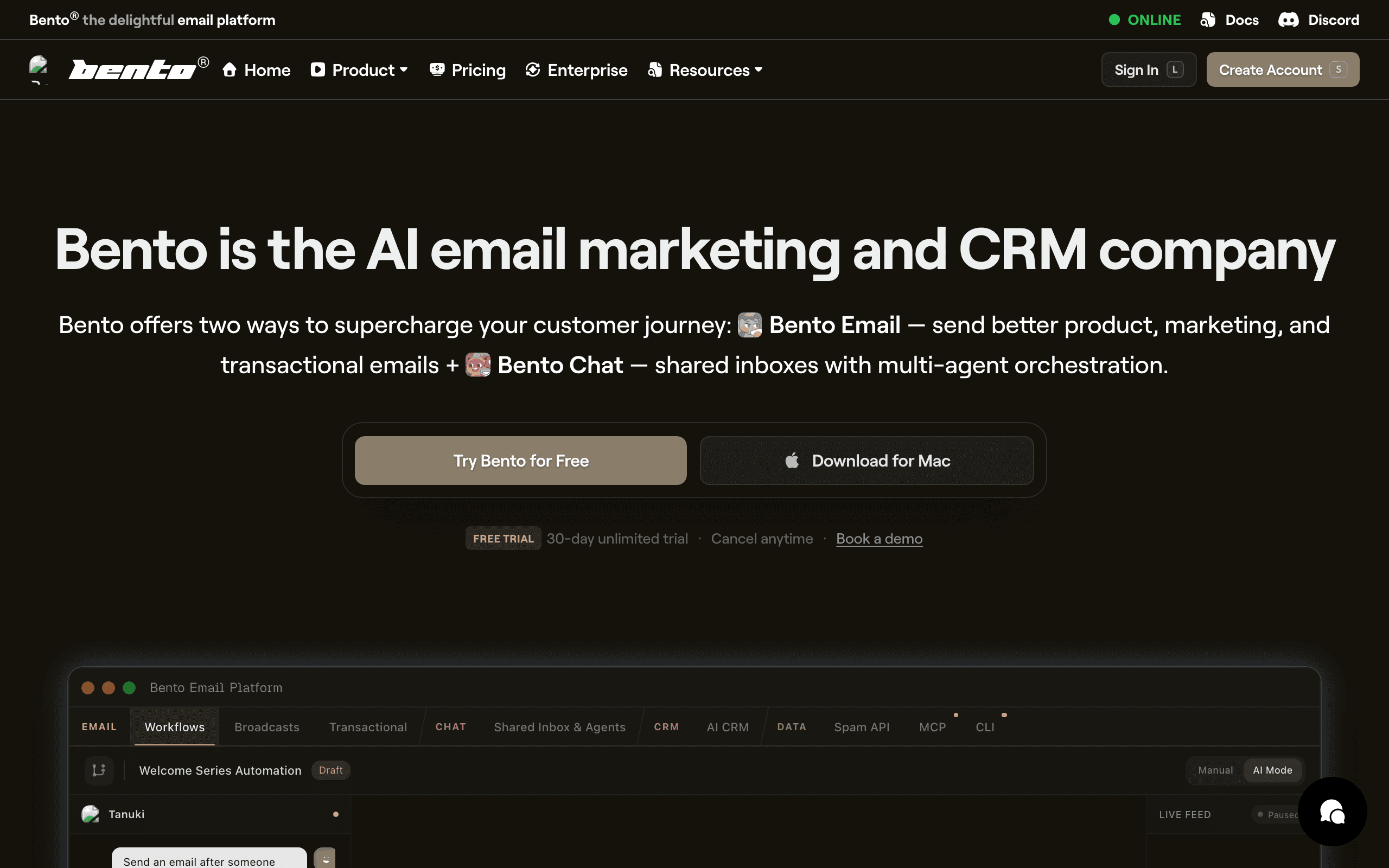
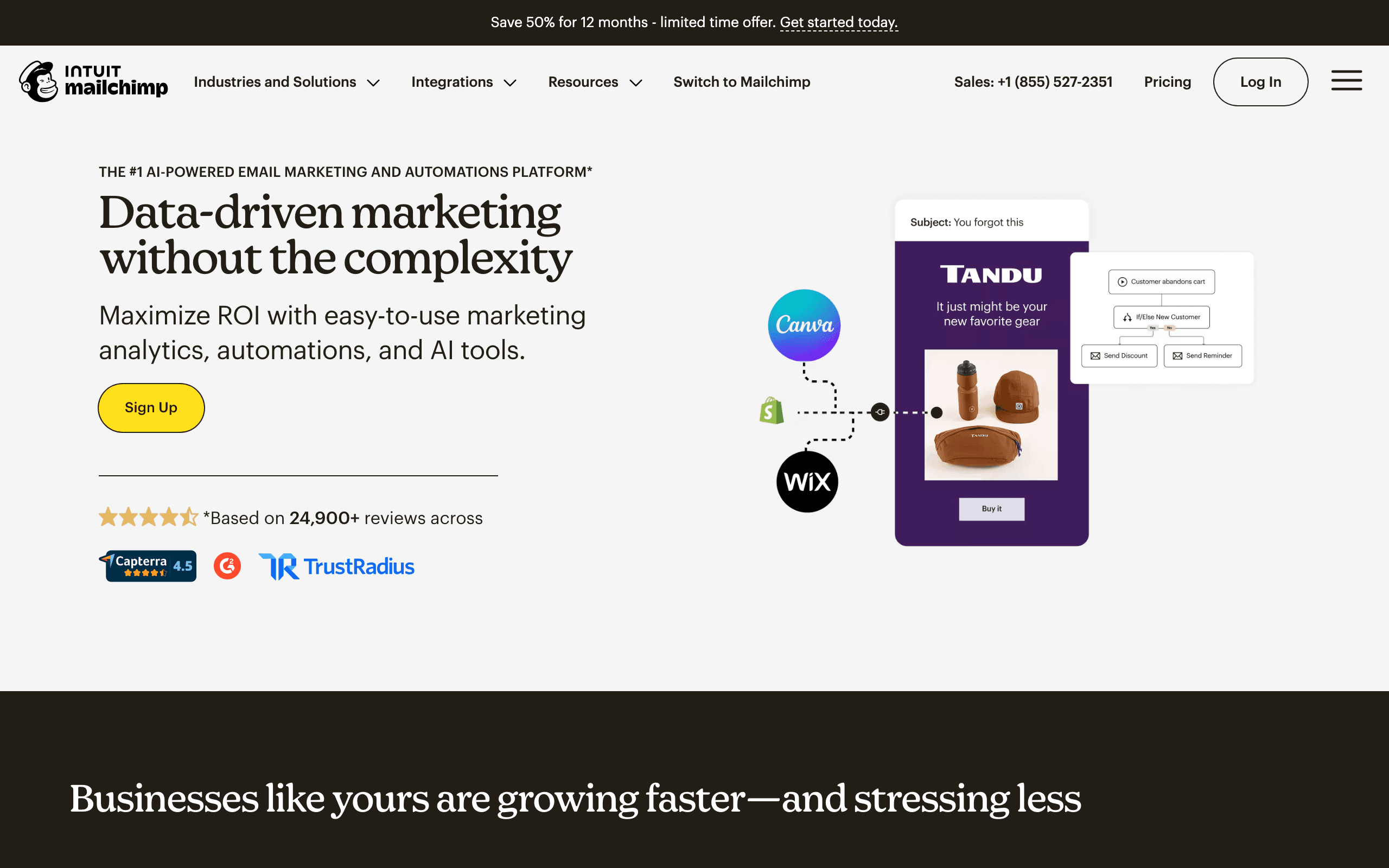
Bento and Mailchimp represent different approaches to email marketing. Bento is built for SaaS companies with behavioral tracking. Mailchimp is a broad marketing platform with extensive features and a larger ecosystem. See our Mailchimp comparison for more alternatives.
Pricing reality
Bento is usually evaluated around tracked users, behavioral events, and included email capabilities. Mailchimp is usually evaluated around contacts, send limits, plan tier, landing pages, automation access, and add-ons such as transactional email.
For a focused SaaS email program, Bento is easier to reason about. For feature breadth, Mailchimp offers more marketing tools. Compare current vendor pricing against your specific scenario before choosing.
SaaS Focus vs General Marketing
Bento was built for SaaS from day one. It tracks user behavior via JavaScript snippet and API, triggering automations based on product events. This is exactly what product-led growth companies need.
Mailchimp was built for newsletters and evolved toward e-commerce. Its automation works well for traditional marketing flows but lacks deep product behavior tracking. For SaaS companies, Bento fits the use case better.
Feature Comparison
Mailchimp offers landing pages, social media tools, CRM features, and more. It is a complete marketing platform. Bento focuses purely on email with behavioral capabilities.
If you need an all-in-one marketing solution, Mailchimp delivers. If you need focused email with product behavior tracking, Bento excels. For SaaS with Stripe integration, consider Sequenzy as a third option.
Making the Decision
Choose Bento for SaaS-focused email and behavioral tracking. Choose Mailchimp for broad marketing capabilities and an established ecosystem. For SaaS with payment integration needs, Sequenzy combines lifecycle email with native payment data.
The Sequenzy Alternative
If you run a SaaS with Stripe billing, Sequenzy offers native payment integration, smart segmentation, and AI sequences without needing a broad all-in-one marketing suite.
The All-in-One vs Best-of-Breed Decision
Mailchimp's greatest strength is also its core trade-off. Having landing pages, social media tools, CRM, and email marketing in one platform means fewer tools to manage, fewer logins, and unified data. But it also means you are using a platform that tries to do many things adequately rather than one thing exceptionally.
Bento made the opposite bet: do email with behavioral tracking extremely well and nothing else. This means you need separate tools for landing pages, social media, and CRM. But the email experience, particularly for SaaS companies, is more purposeful. Event-based automation triggers on actual product behavior rather than email engagement alone.
The right approach depends on your team. Small teams with limited technical resources benefit from Mailchimp's consolidation. Product-led SaaS companies with engineering capacity benefit from Bento's focused behavioral capabilities paired with best-of-breed tools for other channels.
Deliverability Track Record
Mailchimp's deliverability infrastructure has been built over two decades. They maintain relationships with major ISPs, operate dedicated IP pools, and have sophisticated reputation management systems. When your emails need to reach inboxes reliably, Mailchimp's track record provides confidence.
Bento can work for SaaS email, but Mailchimp has a longer operating history and broader infrastructure. For high volumes or heavily filtered industries, compare onboarding, authentication, support, suppression management, and reputation tools carefully.
Both platforms benefit from proper email validation and list hygiene. No platform can overcome poor sending practices, but Mailchimp's infrastructure provides more margin for error.
The Hidden Cost of Mailchimp Add-ons
Mailchimp's base pricing can look competitive until you factor in add-ons and feature gates. Transactional email, advanced automation, send limits, and support tier can change the real cost. Each addition to the base price narrows the gap with dedicated SaaS tools.
Bento's simpler model reduces this add-on calculation. For SaaS companies that need both marketing and transactional email, verify Bento's current plan terms and compare them against the Mailchimp setup you would actually buy.
Sequenzy takes a focused approach with native Stripe integration. For SaaS businesses evaluating total cost of ownership, the comparison extends beyond the base subscription price to include every integration and add-on required to achieve the same functionality.
Use-case matchups
| Use case | Better fit | Why |
|---|---|---|
| Product-event behavioral email | Bento | Bento is stronger when product usage should trigger lifecycle messages. |
| Broad small-business marketing suite | Mailchimp | Mailchimp is stronger when landing pages, social tools, CRM-style workflows, and templates matter. |
| SaaS email with transactional needs | Bento | Bento is more focused than Mailchimp when email is tied to product behavior. |
| Familiar marketing operations | Mailchimp | Mailchimp is easier when contractors or teammates already know the ecosystem. |
| Stripe lifecycle messaging | Sequenzy | Sequenzy is more focused when billing events drive messaging. |
Best Fit by Audience and Stack Breadth
Best SaaS email platform for product-event behavioral email
Bento is the better fit when the audience is a user base and product behavior should trigger lifecycle messages. It is more focused than a broad SMB marketing suite.
Best email marketing platform for familiar small-business campaigns
Mailchimp is the better fit when the team needs templates, landing pages, ecommerce integrations, social tools, and a familiar contractor-friendly marketing workflow. Its breadth is the reason to use it.
Best email platform for Stripe lifecycle messaging
Sequenzy is the better fit when billing events should drive the email program. Trials, failed payments, upgrades, cancellations, transactional messages, and subscriber automation need subscription context.
Review signals
The reviews favor Bento when SaaS behavioral tracking is the buying reason, with a clear warning that it does not replace Mailchimp's landing pages or social tools. Mailchimp reviews praise consolidation and familiarity, while the caution is pricing creep, add-ons, and weaker product-event depth.
Migration checklist
Before moving between Bento and Mailchimp, export contacts, audiences, suppression lists, tags, custom fields, templates, campaign history, automations, forms, landing page dependencies, and transactional email configuration. If moving to Mailchimp, map product events into available customer journey triggers and verify add-ons. If moving to Bento, replace landing pages, social posting, CRM-style fields, and general marketing assets with separate tools where needed.
Decision checklist
| Question | Why it matters |
|---|---|
| Do you need product-event behavioral email? | Bento is stronger when product usage should trigger lifecycle messages. |
| Do you need landing pages, social tools, or broad marketing features? | Mailchimp is stronger as an all-in-one marketing platform. |
| What is the real send volume? | Mailchimp plans can depend on sends and add-ons; Bento needs tracked-user and event-volume checks. |
| Is transactional email part of the same system? | Verify add-ons, logs, domains, and plan access before consolidating. |
| Is Stripe lifecycle email central? | Sequenzy is more focused when billing events drive messaging. |