Overview
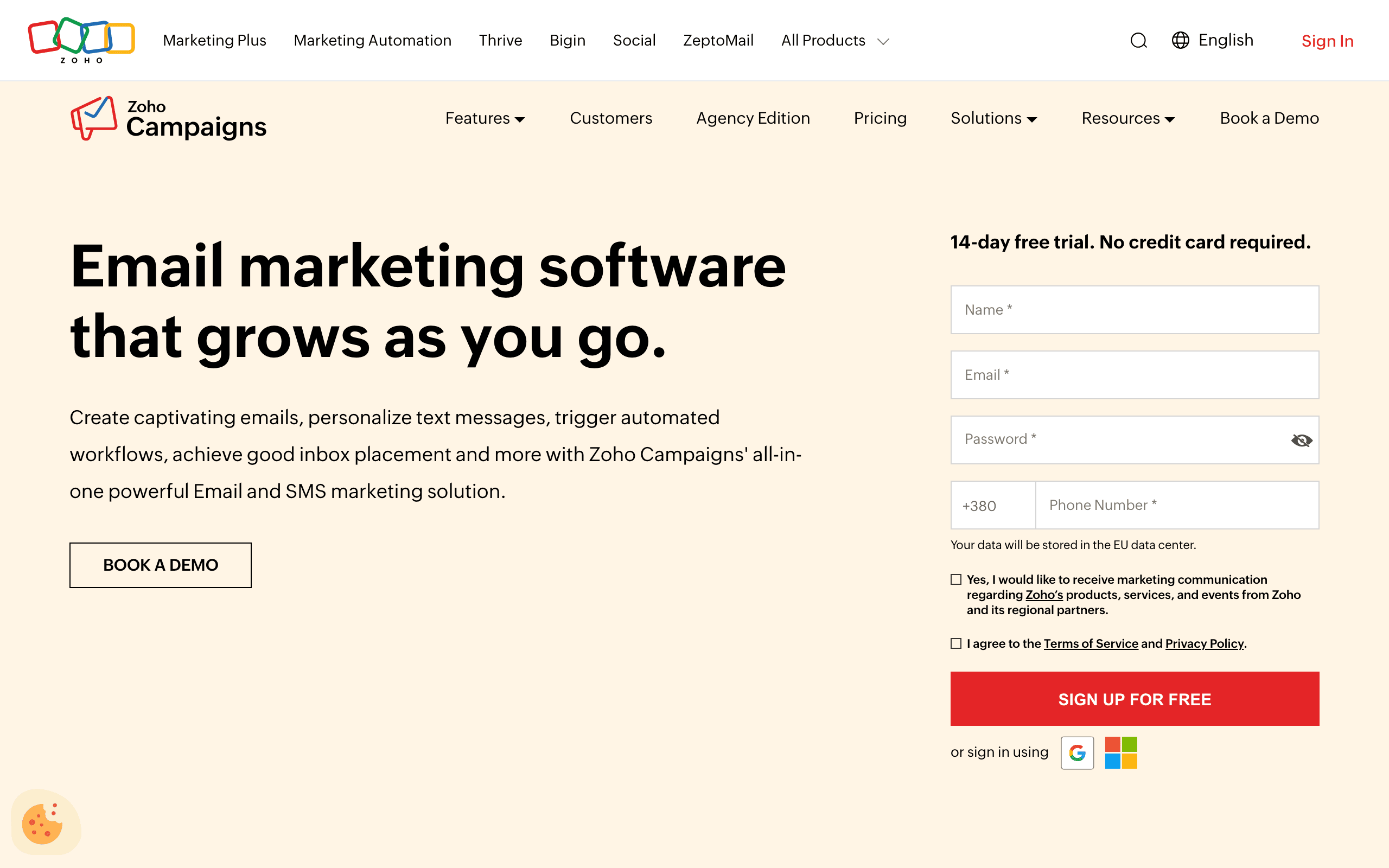
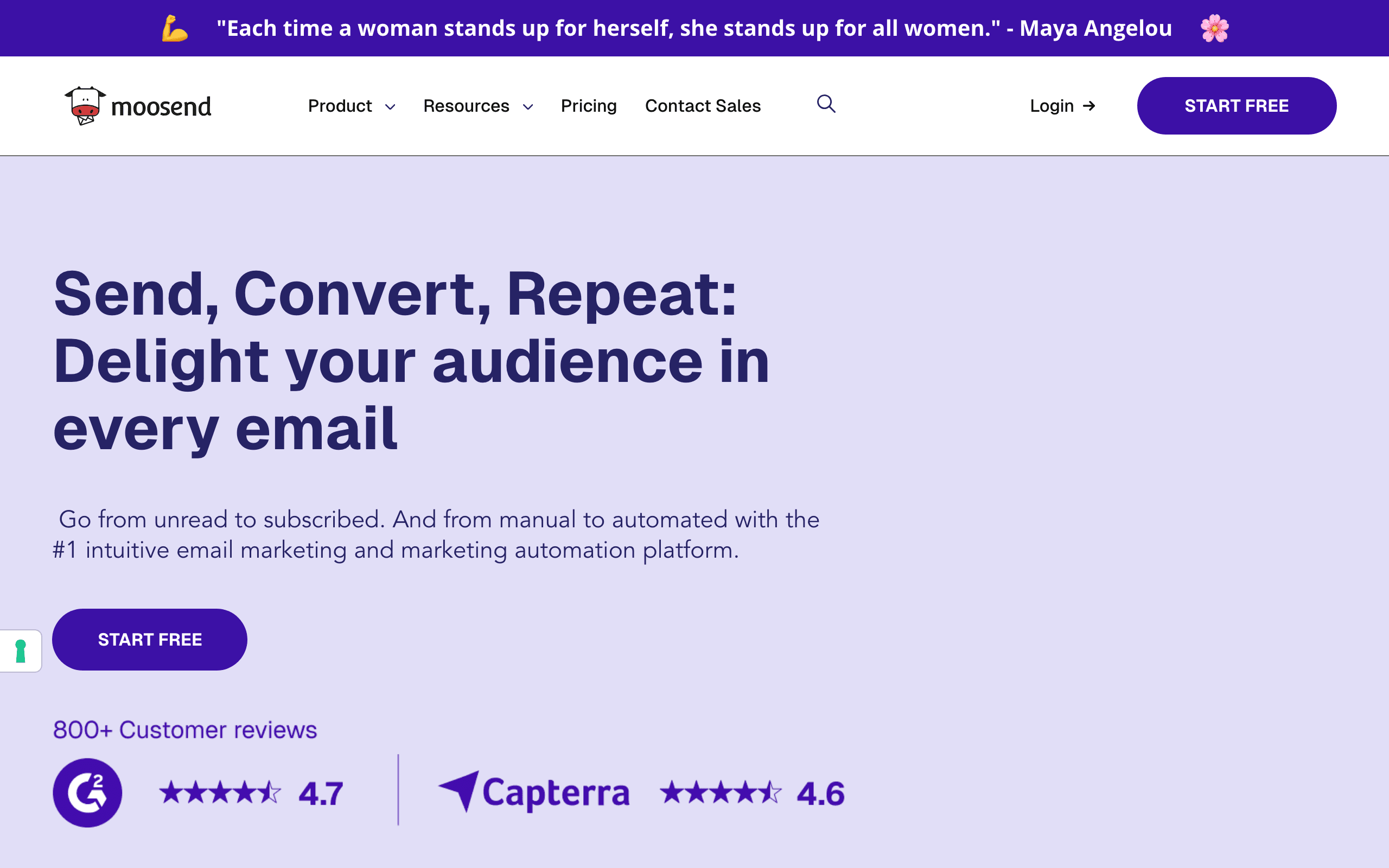
Zoho Campaigns and Moosend both offer affordable email marketing for small businesses. The pricing is nearly identical: $35/month vs $32/month at 10k contacts. The choice comes down to whether you value Zoho's ecosystem integration or Moosend's standalone simplicity.
Price: Basically the Same
At 10,000 contacts, Zoho costs $35/month and Moosend costs $32/month. This $3 difference won't influence your decision. Both are budget-friendly compared to platforms like Mailchimp or ActiveCampaign.
The real pricing difference is the free tier. Zoho offers a free plan with 2,000 contacts. Moosend only has a 30-day trial. For very small businesses or those testing email marketing, Zoho's free plan is more generous.
Interface and Ease of Use
Moosend has the edge here. The interface is cleaner and more modern. The email editor is particularly smooth with a better drag-and-drop experience.
Zoho's interface is functional but feels more enterprise-focused. It works, but Moosend is more pleasant to use day-to-day.
The Ecosystem Question
If you use Zoho CRM, Zoho Desk, or other Zoho products, Zoho Campaigns is the obvious choice. Everything syncs automatically. Contacts flow between CRM and email campaigns without configuration.
Moosend stands alone. It connects to other tools through integrations, but nothing as seamless as Zoho's native connections.
Features Comparison
Both offer the basics well: email campaigns, automation workflows, landing pages, sign-up forms, and A/B testing. Neither has advanced features like predictive analytics or AI content generation.
Moosend has slightly better e-commerce integrations with Shopify and WooCommerce plugins. Zoho's e-commerce support is more basic.
For SaaS Companies
Neither Zoho nor Moosend is built for SaaS businesses. They're general email marketing tools without subscription awareness.
If you're running a SaaS product on Stripe, consider Sequenzy. Native Stripe integration enables automation based on trials, upgrades, and churn. AI sequences help you create email content faster. Both transactional and marketing emails work from one platform.
Interface and Day-to-Day Usability
Moosend provides a noticeably smoother daily experience than Zoho Campaigns. Pages load faster, the drag-and-drop email builder responds without lag, and the navigation structure is cleaner. Building an email campaign in Moosend takes fewer clicks and less time than the equivalent workflow in Zoho.
Zoho Campaigns carries the weight of enterprise software design. The interface has more menus, more options, and more configuration screens. This depth supports powerful features like CRM integration and multi-product workflows, but it makes simple tasks take longer than they should. For teams that build and send emails daily, this friction adds up.
If you value a pleasant tool experience and do not need CRM integration, Moosend offers a better daily workflow. If CRM sync and ecosystem integration outweigh interface polish, Zoho's functional-but-heavier approach is the trade-off worth making.
E-Commerce Capabilities Comparison
Moosend has invested in e-commerce features that put it ahead of Zoho in this specific area. Shopify and WooCommerce integrations sync product catalogs, track purchases, and enable abandoned cart recovery automation. The AI-powered product recommendation engine suggests items based on purchase and browse history.
Zoho Campaigns has basic e-commerce plugins but cannot match Moosend's depth. Product recommendations, browse abandonment tracking, and dynamic product content blocks are either absent or require custom development. For businesses with online stores, this gap matters.
Neither platform approaches the e-commerce depth of Klaviyo, Drip, or Omnisend. Moosend's e-commerce features suit small stores that want basic purchase-triggered automation without premium pricing. Zoho suits businesses where e-commerce is a secondary channel behind CRM-driven sales. For SaaS companies, neither platform's e-commerce features are relevant. Sequenzy's Stripe integration handles subscription revenue tracking instead.
Long-Term Platform Stability
Moosend was acquired by Sitecore, a large enterprise content management company, in 2021. This acquisition raises questions about the platform's future direction. Will Moosend maintain its affordable positioning, or will it gradually shift toward enterprise pricing to align with Sitecore's market? The uncertainty is a legitimate concern for businesses planning their email infrastructure for the next three to five years.
Zoho Campaigns is part of Zoho Corporation, a privately held company known for maintaining stable pricing and long-term product commitments. Zoho has operated profitably without external investors, reducing the pressure to increase prices aggressively. For businesses that value predictability in their tool stack, Zoho's corporate stability offers reassurance.
This stability consideration is often overlooked when comparing features and prices. Choosing a platform is a multi-year commitment. Migration costs include not just data transfer but rebuilt automations, retrained teams, and disrupted reporting baselines. The email deliverability impact of switching sending infrastructure is also a factor worth planning for with the warmup calculator.
Use-case matchups
| Situation | Best first look | Why |
|---|---|---|
| Team already uses Zoho and wants low-cost email campaigns | Zoho Campaigns | Zoho Campaigns is the baseline when Zoho ecosystem fit and affordable campaigns matter most. |
| Team wants low-cost automation | Moosend | Moosend is stronger when budget automations matter more than Zoho ecosystem fit. |
| SaaS or commerce team wants lifecycle and transactional email | Sequenzy | Sequenzy is stronger when Stripe events, transactional messages, and lifecycle automation matter more than Zoho suite alignment. |
| Team wants straightforward newsletters inside a familiar business suite | Zoho Campaigns | Zoho Campaigns should be tested first if contacts and CRM data already live in Zoho. |
| Team needs the specialist capability | Moosend | Moosend deserves the first demo when the main requirement is budget email marketing and automation. |
| Team wants focused email workflows without a broader business suite | Sequenzy | Sequenzy is more relevant when app, store, and billing events drive the email program. |
Pricing reality
The pricing signals on this page list Zoho Campaigns at $35/month, Moosend at $32/month, and Sequenzy at $49/month. Compare total workflow cost, not only list price.
Zoho Campaigns can be a strong value when the team already uses Zoho CRM or Zoho apps. Moosend's real cost depends on whether the team needs budget email marketing and automation.
Review signals
This page has existing review data from G2, Trustpilot, Capterra. Keep those sources in the decision because buyers often discover differences in support, editor quality, deliverability, integration depth, pricing, and day-to-day usability through reviews.
For Zoho Campaigns, validate review themes around Zoho CRM integration, campaign editor workflow, support, deliverability, and list management. For Moosend, focus review research on whether users praise the reason you would choose it: budget email marketing and automation.
Best Fit by Ecosystem and Usability
Best email platform for Zoho-centered businesses
Zoho Campaigns fits teams already using Zoho CRM, Books, Desk, or other Zoho apps and wanting affordable email inside that ecosystem. It is strongest when vendor alignment and shared customer data matter more than standalone email UX.
Best budget email platform for day-to-day campaign usability
Moosend is the better fit when the team wants affordable campaigns, landing pages, templates, automation, web push, and a cleaner standalone email workflow. It works better when ease of email execution matters more than Zoho suite alignment.
Best SaaS lifecycle platform for product and billing automation
Sequenzy fits SaaS teams where lifecycle email should react to signups, product behavior, subscriptions, invoices, and failed payments. It is more focused when revenue events matter more than either Zoho ecosystem fit or budget campaign tooling.
Migration checklist
| Workstream | Moving toward Zoho Campaigns | Moving toward Moosend | Simplifying to Sequenzy |
|---|---|---|---|
| Contacts and consent | Import contacts, lists, segments, Zoho CRM fields, consent, unsubscribes, and suppressions. | Map lists, segments, automations, templates, forms, ecommerce events, and reports. | Import subscribers, attributes, tags, suppressions, store events, Stripe events, and transactional paths. |
| Ecosystem fit | Confirm Zoho CRM, Zoho Forms, Zoho Commerce, or other Zoho apps are actually part of the workflow. | Confirm whether Moosend replaces or integrates with the existing CRM and store stack. | Keep CRM-suite features outside scope unless they feed lifecycle email. |
| Automations | Rebuild welcome, newsletter, CRM nurture, ecommerce, and reactivation flows. | Rebuild the workflows that prove Moosend's advantage in budget email marketing and automation. | Rebuild lifecycle and transactional email flows. |
| Templates and forms | Move templates, signup forms, sender identities, brand assets, and preference paths. | Move templates, forms, brand assets, and workflow-specific content. | Move email templates and transactional message content. |
| Reporting | Validate campaign reports, CRM attribution, exports, segment performance, and deliverability. | Validate reporting for budget email marketing and automation before committing. | Validate campaign, automation, transactional, and lifecycle reporting. |
Decision checklist
- Is Zoho ecosystem alignment a real advantage, or is the team only comparing email price?
- Does Moosend's strength in budget email marketing and automation matter more than Zoho Campaigns' low-cost suite fit?
- Which platform handles consent, suppressions, and imports with the least manual cleanup?
- Are the listed prices still realistic at real contact count, send volume, and required add-ons?
- Would lifecycle and transactional email create more value than another general newsletter platform?
- Moosend can win on price, but validate support and integration needs.