
Overview
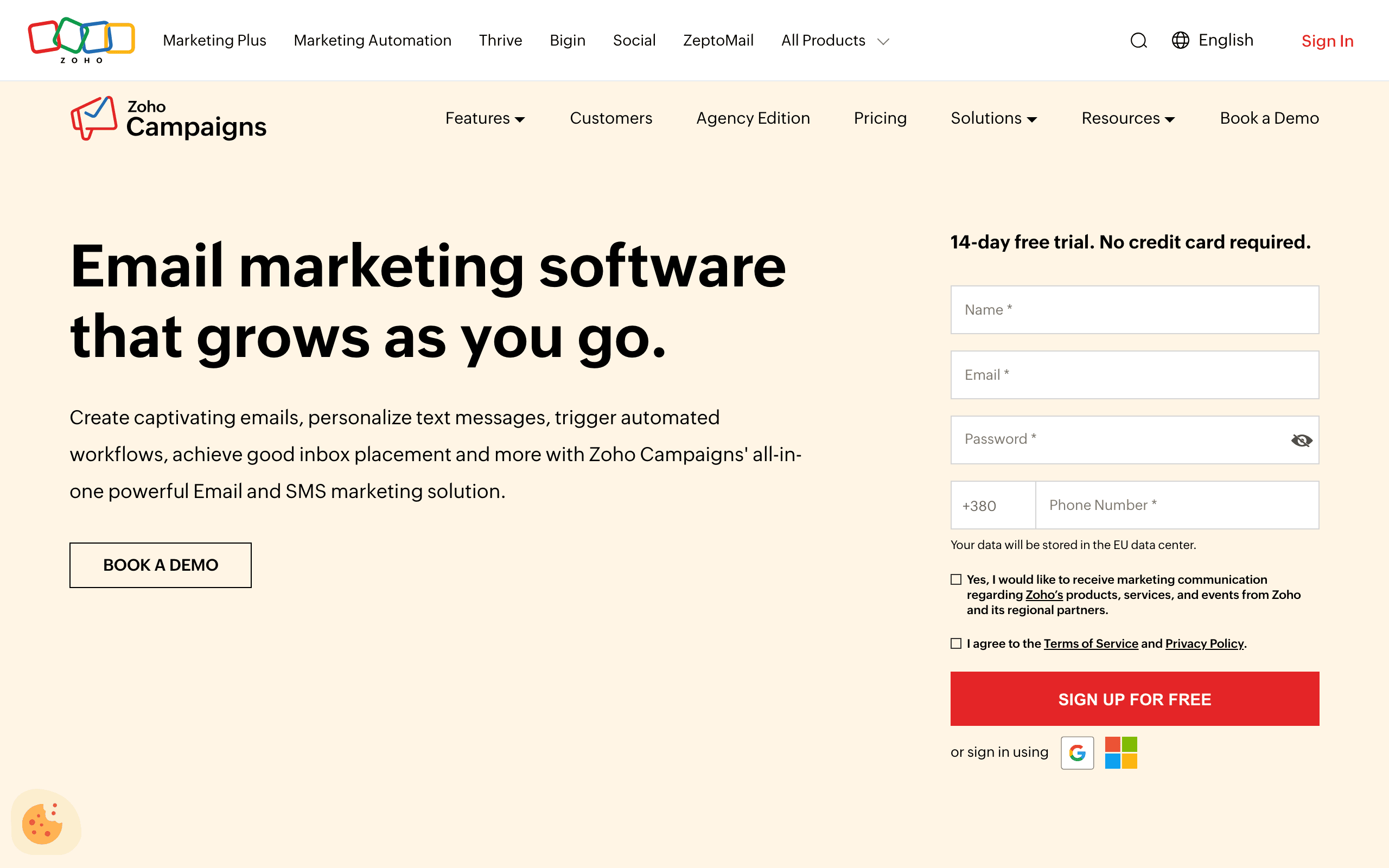
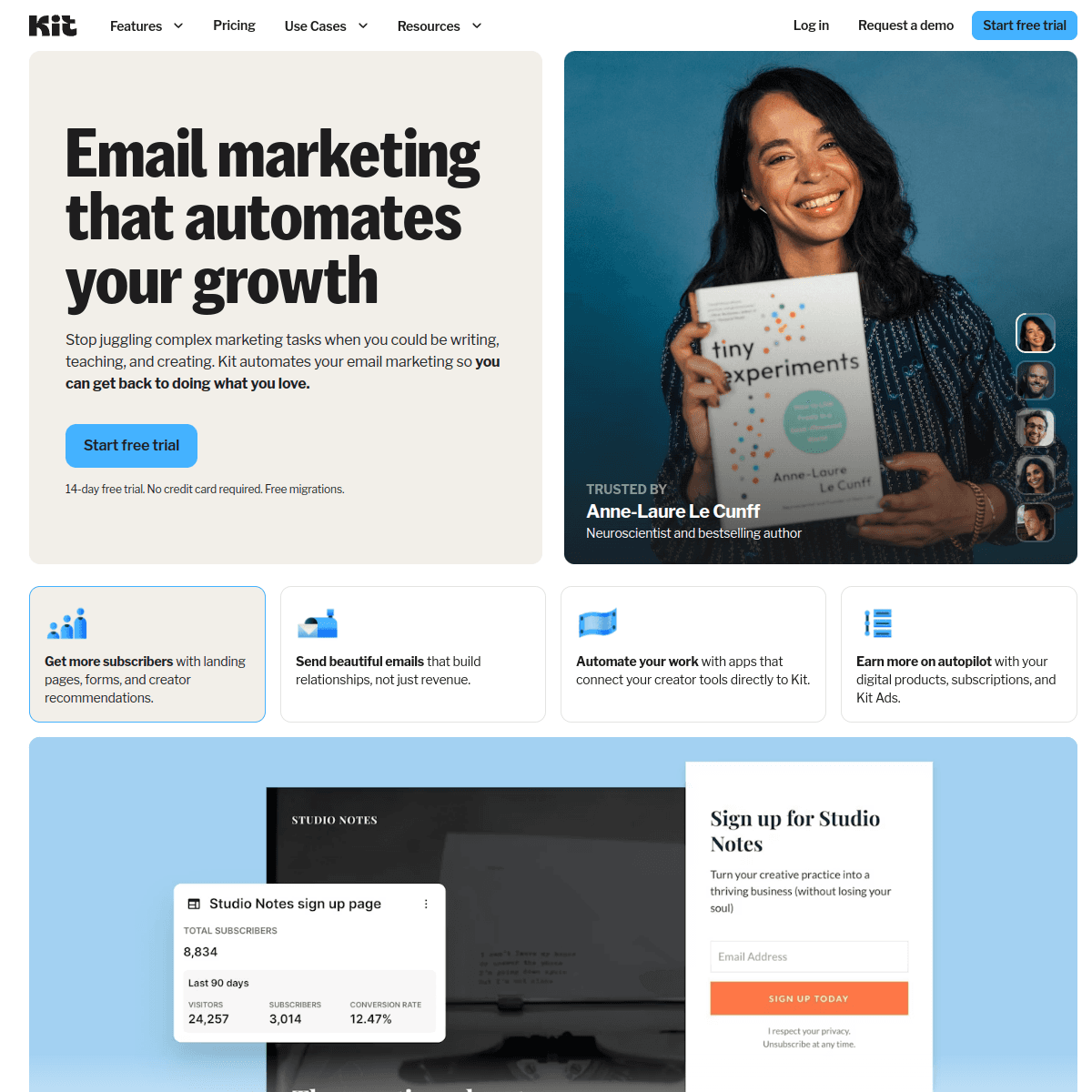
Zoho Campaigns and ConvertKit serve fundamentally different audiences. ConvertKit is built for creators, bloggers, and newsletter writers with features like paid subscriptions and digital product sales. Zoho Campaigns is traditional business email marketing with CRM integration. See our ConvertKit comparison for more context.
This is not about which is better. It is about which fits what you are building.
The Creator Difference
ConvertKit is purpose-built for the creator economy:
- Paid newsletters: Charge subscribers monthly for premium content
- Digital products: Sell courses, ebooks, and downloads directly
- Creator network: Get recommended by other newsletters
- Tip jar: Accept one-time contributions from fans
Zoho Campaigns has none of these features. It is email marketing for businesses, not creator monetization.
Email Design Philosophy
Zoho Campaigns offers full drag-and-drop design with 240+ templates. You can create branded, designed marketing emails.
ConvertKit intentionally keeps emails simple and text-focused. The philosophy is that creator newsletters perform better when they feel personal, not like marketing. No elaborate templates.
If you want designed emails, Zoho wins. If you want authentic creator content, ConvertKit's approach may work better.
Pricing Difference
At 10,000 contacts:
- Zoho Campaigns: ~$40/month
- ConvertKit Creator Pro: $119/month
That is nearly 3x the price. ConvertKit's premium makes sense if you are monetizing a creator business. If you just need email marketing, the price difference is hard to justify.
CRM Integration
Zoho Campaigns integrates natively with Zoho CRM for deep contact sync, lead scoring, and deal tracking. ConvertKit has basic integrations but no native CRM depth.
For businesses where CRM-driven marketing matters, Zoho wins. For creators, CRM features are typically less relevant.
When Each Platform Shines
Choose Zoho Campaigns when: You are a business, not a creator. You want designed marketing emails. You use Zoho CRM. Budget matters and you do not need creator features.
Choose ConvertKit when: You are a creator, blogger, or newsletter writer. You want to monetize your audience directly. You prefer simple, text-focused emails. You value creator-specific tools and community.
For SaaS Companies
Neither platform is specifically designed for SaaS. ConvertKit is for creators. Zoho is general business email. Both lack subscription-aware automation and Stripe integration. If you are building software, Sequenzy offers Stripe integration with automation designed for SaaS use cases.
The Creator Economy vs Business Email
This comparison is really about two different email paradigms. ConvertKit is built for individual creators, writers, podcasters, and course builders who want to monetize their audience directly. The platform includes paid newsletter subscriptions, digital product sales, tip jars, and a creator recommendation network. These are monetization tools, not marketing tools.
Zoho Campaigns is traditional business email marketing. Designed templates, CRM integration, lead scoring, and campaign analytics serve companies that use email as a channel within a broader marketing strategy. There is no overlap in the creator monetization features, and Zoho does not try to compete in that space.
If you are building a personal brand or content business, ConvertKit is the right choice regardless of price. If you are running a company that needs professional marketing emails tied to a sales pipeline, Zoho is the right choice regardless of ConvertKit's popularity. The platforms serve different purposes and comparing them feature-by-feature misses this fundamental distinction.
Email Design Philosophy and Its Impact
ConvertKit deliberately limits email design to favor plain-text-style messages. The philosophy is that creator newsletters perform better when they feel like personal letters rather than marketing collateral. For writers and thought leaders, this approach works. High open rates on ConvertKit newsletters support the thesis that readers prefer authentic communication.
Zoho Campaigns takes the opposite approach with a full email editor offering 240+ templates, image blocks, button components, and branded layouts. For businesses sending product announcements, event invitations, or promotional campaigns, designed emails are expected by recipients. A plain-text product launch email would feel unprofessional from most brands.
Neither approach is universally better. The right choice depends on your relationship with your audience. Creators have personal relationships where plain text feels intimate. Businesses have brand relationships where design signals professionalism. Match the platform to the relationship.
Audience Growth and Subscriber Acquisition
ConvertKit's Creator Network is a genuinely unique feature. When creators recommend each other, subscribers can opt in to new newsletters directly from their inbox. This peer-to-peer growth channel has helped some creators add thousands of subscribers without paid advertising. Combined with ConvertKit's landing pages and embeddable opt-in forms, the platform provides a complete subscriber acquisition toolkit.
Zoho Campaigns relies on traditional acquisition methods: signup forms, landing pages (basic), and CRM imports. Growth comes from your own marketing efforts rather than platform-driven discovery. If you use Zoho Social, you can coordinate social media campaigns with email signups, but there is no built-in discovery mechanism equivalent to the Creator Network.
For SaaS companies, subscriber acquisition typically happens through product signups rather than content discovery. Neither platform's growth tools are optimized for product-led growth. Sequenzy's Stripe integration automatically imports customers as subscribers when they start a trial or make a purchase, skipping the manual import step entirely.
Use-case matchups
| Situation | Best first look | Why |
|---|---|---|
| Team already uses Zoho and wants low-cost email campaigns | Zoho Campaigns | Zoho Campaigns is the baseline when Zoho ecosystem fit and affordable campaigns matter most. |
| Creator wants audience-first workflows | ConvertKit | ConvertKit is stronger when creator products, broadcasts, and sequences drive the business. |
| SaaS or commerce team wants lifecycle and transactional email | Sequenzy | Sequenzy is stronger when Stripe events, transactional messages, and lifecycle automation matter more than Zoho suite alignment. |
| Team wants straightforward newsletters inside a familiar business suite | Zoho Campaigns | Zoho Campaigns should be tested first if contacts and CRM data already live in Zoho. |
| Team needs the specialist capability | ConvertKit | ConvertKit deserves the first demo when the main requirement is creator newsletters, forms, products, and sequences. |
| Team wants focused email workflows without a broader business suite | Sequenzy | Sequenzy is more relevant when app, store, and billing events drive the email program. |
Pricing reality
The pricing signals on this page list Zoho Campaigns at $40/month, ConvertKit at $119/month, and Sequenzy at $49/month. Compare total workflow cost, not only list price.
Zoho Campaigns can be a strong value when the team already uses Zoho CRM or Zoho apps. ConvertKit's real cost depends on whether the team needs creator newsletters, forms, products, and sequences.
Review signals
This page has existing review data from G2, Capterra, Product Hunt. Keep those sources in the decision because buyers often discover differences in support, editor quality, deliverability, integration depth, pricing, and day-to-day usability through reviews.
For Zoho Campaigns, validate review themes around Zoho CRM integration, campaign editor workflow, support, deliverability, and list management. For ConvertKit, focus review research on whether users praise the reason you would choose it: creator newsletters, forms, products, and sequences.
Best Fit by Ecosystem and Creator Needs
Best email platform for Zoho-centered businesses
Zoho Campaigns fits teams already using Zoho CRM, Books, Desk, or other Zoho apps and wanting affordable email inside that ecosystem. It is strongest when vendor alignment and shared business data matter more than creator features.
Best creator email platform for audience-led businesses
ConvertKit is the better fit when the user needs newsletters, forms, sequences, paid subscriptions, and digital products around a personal or creator brand. It works best when audience monetization matters more than CRM suite alignment.
Best SaaS lifecycle platform for product and billing automation
Sequenzy fits SaaS teams where lifecycle email should react to signups, product behavior, subscriptions, invoices, and failed payments. It is more focused when revenue events matter more than either Zoho ecosystem fit or creator workflows.
Migration checklist
| Workstream | Moving toward Zoho Campaigns | Moving toward ConvertKit | Simplifying to Sequenzy |
|---|---|---|---|
| Contacts and consent | Import contacts, lists, segments, Zoho CRM fields, consent, unsubscribes, and suppressions. | Map subscribers, tags, segments, forms, landing pages, broadcasts, sequences, and products. | Import subscribers, attributes, tags, suppressions, store events, Stripe events, and transactional paths. |
| Ecosystem fit | Confirm Zoho CRM, Zoho Forms, Zoho Commerce, or other Zoho apps are actually part of the workflow. | Confirm whether ConvertKit replaces or integrates with the existing CRM and store stack. | Keep CRM-suite features outside scope unless they feed lifecycle email. |
| Automations | Rebuild welcome, newsletter, CRM nurture, ecommerce, and reactivation flows. | Rebuild the workflows that prove ConvertKit's advantage in creator newsletters, forms, products, and sequences. | Rebuild lifecycle and transactional email flows. |
| Templates and forms | Move templates, signup forms, sender identities, brand assets, and preference paths. | Move templates, forms, brand assets, and workflow-specific content. | Move email templates and transactional message content. |
| Reporting | Validate campaign reports, CRM attribution, exports, segment performance, and deliverability. | Validate reporting for creator newsletters, forms, products, and sequences before committing. | Validate campaign, automation, transactional, and lifecycle reporting. |
Decision checklist
- Does your team already run Zoho CRM, Books, or Desk, so that native Zoho CRM sync and lead scoring would actually get used, or is the choice mostly about the email bill?
- Does ConvertKit's strength in creator newsletters, forms, products, and sequences matter more than Zoho Campaigns' low-cost suite fit?
- Compare how each platform handles consent, suppressions, and list imports: the Zoho path means bringing over consent records, unsubscribes, and suppressions, while ConvertKit's mapping centers on subscribers, tags, and segments.
- Recheck the approximate ~$40 Zoho figure and the $119 ConvertKit Creator Pro price against your real contact count, and note that ConvertKit's multi-user access is limited to higher-priced plans, so your team size can change the bill.
- If revenue events matter more than newsletters, would Sequenzy's Stripe-triggered emails for trial endings, failed payments, upgrades, and cancellations, plus its transactional email, give you more value than another general newsletter tool?
- ConvertKit should win only if creator workflows matter more than Zoho ecosystem fit.








