
Overview
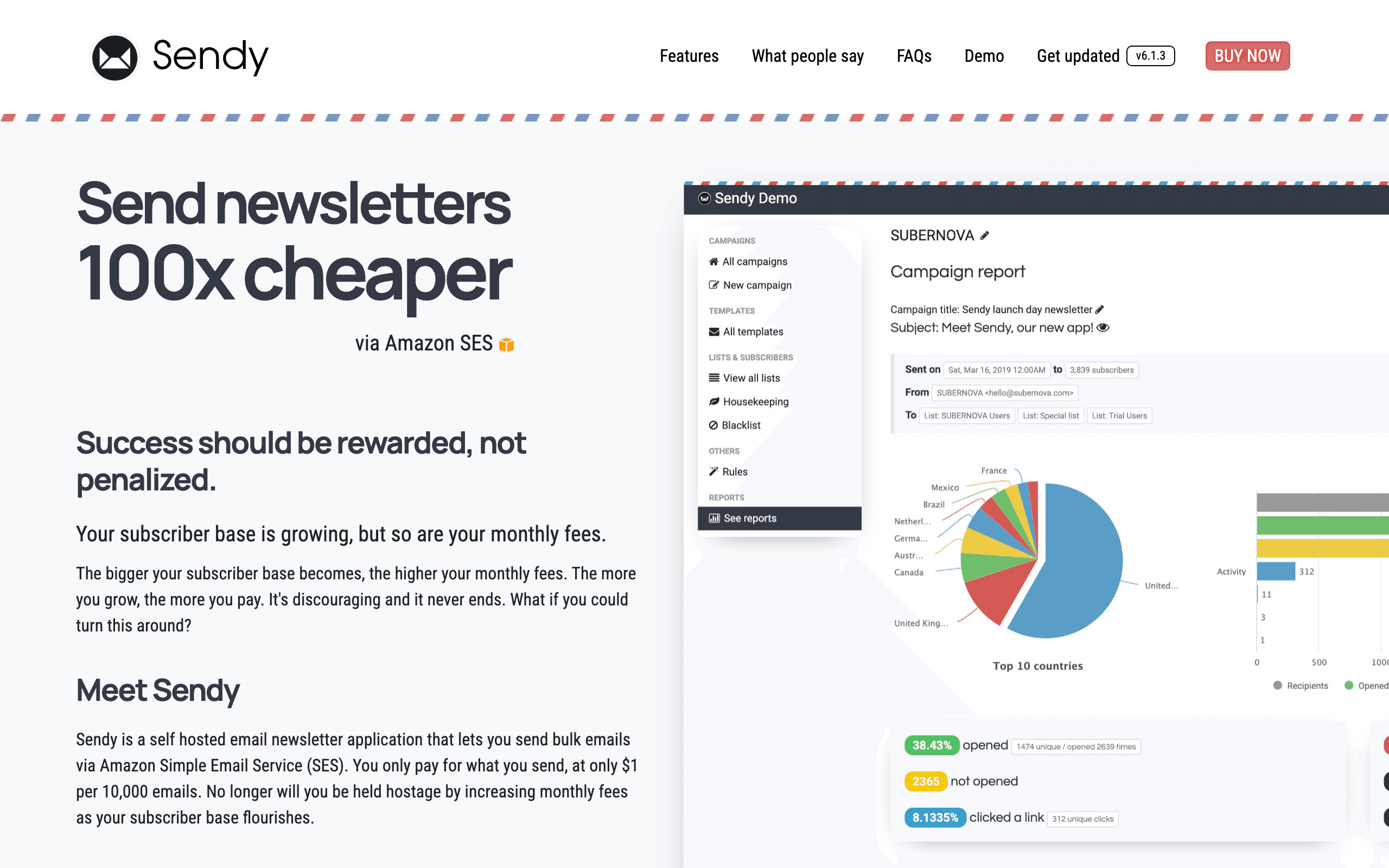
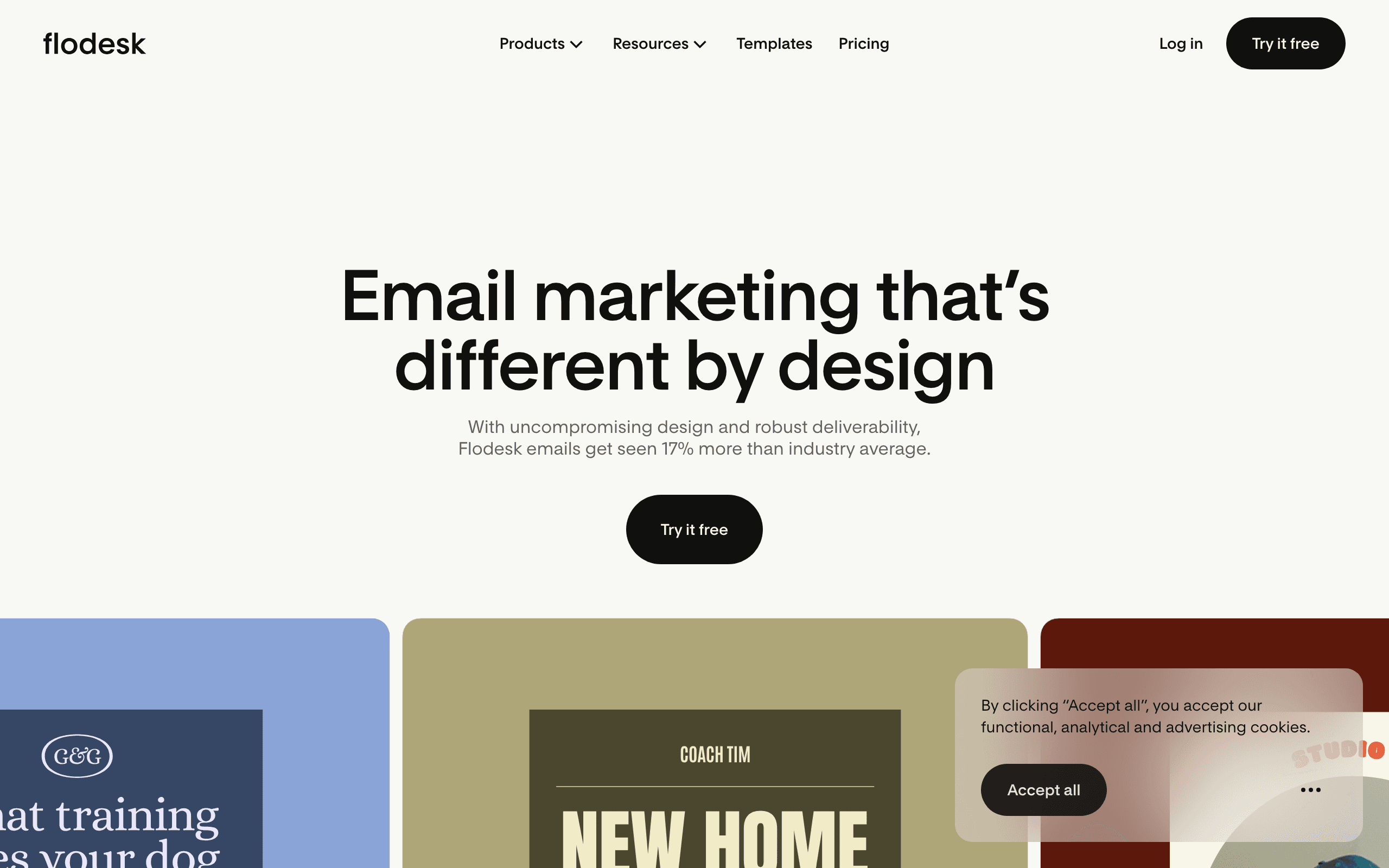
Sendy and Flodesk represent opposite philosophies. Sendy is for technical users who want to minimize costs through self-hosting. Flodesk is for creative professionals who want stunning emails without technical work. The choice usually comes down to who you are.
Different Users, Different Needs
Sendy targets developers and technical marketers. Flodesk targets creative professionals, coaches, and lifestyle brands. A developer sending newsletters chooses differently than a photographer building a client list.
Sendy's Cost Advantage
At 25,000 subscribers, Sendy costs $5-10/month (Amazon SES fees only). Flodesk costs $38/month flat. Over a year, that's $350+ in savings. At higher volumes, Sendy maintains its cost advantage.
Flodesk's Design Advantage
Flodesk templates are stunning. They're designed by professionals and make any email look premium. Sendy templates are dated and basic. For brands where visual perception matters, Flodesk delivers quality that Sendy cannot match.
Flat Pricing Appeal
Flodesk charges $38/month regardless of subscriber count. At 100k subscribers, you pay the same as 1k. This is unusual and valuable for growing lists. Sendy's SES costs scale with volume, though they remain cheap.
Technical Reality
Sendy requires server setup, Amazon SES configuration, DNS records, and ongoing maintenance. Flodesk is sign-up-and-design. The time spent on Sendy infrastructure could be spent on your creative work.
For SaaS Companies
Neither Sendy nor Flodesk is built for SaaS. Sendy lacks modern automation. Flodesk targets creatives, not software companies. For SaaS with Stripe billing and event-based automation, consider Sequenzy.
Making the Choice
Choose Sendy if you're technical, prioritize cost savings, and can live with dated design. Choose Flodesk if you're a creative professional who wants beautiful emails without server management. For SaaS companies, consider Sequenzy.
Design as a Business Asset vs Design as Irrelevant
The Sendy vs Flodesk comparison reveals a deeper question: does email design matter for your business? For a photography studio, fashion brand, or interior designer, email aesthetics directly reflect brand quality. A poorly designed email undermines credibility. For these businesses, Flodesk's stunning templates are not a luxury -- they are a business necessity.
For a developer newsletter, SaaS changelog, or technical community, design is secondary to content. Subscribers care about the information, not the visual presentation. Plain text or minimally styled emails perform as well or better than designed alternatives. For these use cases, paying for Flodesk's design capabilities is paying for something your audience does not value.
This is not about which approach is better universally. It is about understanding your audience's expectations and your brand's positioning. A luxury brand sending emails that look like 2012 web pages damages their positioning. A technical newsletter adding unnecessary design flourishes wastes effort and may actually reduce readability.
Flat Pricing vs Variable Costs: Long-term Economics
Flodesk's $38/month flat pricing is unusual and valuable for growing businesses. Whether you have 1,000 or 100,000 subscribers, the cost stays the same. This predictability simplifies budgeting and removes the anxiety of list growth increasing costs. Most email platforms penalize growth with higher pricing tiers.
Sendy's costs are variable but stay very low. SES charges $0.10 per 1,000 emails, so costs scale with sending volume rather than list size. At 100,000 subscribers sending weekly, SES costs roughly $40/month -- slightly more than Flodesk. At 100,000 subscribers sending monthly, SES costs only $10. The economics depend on sending frequency.
The comparison reveals an interesting crossover point. For very large lists with infrequent sending, Sendy remains cheaper. For large lists with frequent sending, Flodesk's flat pricing can actually be competitive with SES costs while providing dramatically better design tools. The math depends on your specific list size and sending cadence.
The Creative Professional Toolkit
Flodesk positions itself as part of the creative professional's toolkit alongside Canva, Squarespace, and Adobe Creative Cloud. The platform assumes users think visually and want tools that produce beautiful results without requiring design training. Every template, form, and landing page reflects this creative-first philosophy.
Sendy positions itself as a developer tool alongside AWS, Docker, and command-line utilities. The platform assumes users think technically and want tools that are efficient, cheap, and controllable. Every feature reflects this engineering-first philosophy.
These positioning differences mean the platforms attract entirely different communities. Flodesk users share template inspiration and design tips. Sendy users share server optimization guides and SES configuration tutorials. Choosing between them is partly about choosing which community and ecosystem aligns with how you work.
When Neither Platform Is Right
For SaaS companies, neither Sendy's basic capabilities nor Flodesk's creative focus addresses core needs. SaaS businesses need event-based automation triggered by user behavior, Stripe integration for subscription lifecycle emails, and transactional email for system notifications. Neither Sendy nor Flodesk provides these capabilities.
Sequenzy fills this gap with smart segments based on subscription status, AI-generated sequences for onboarding and retention, and unified marketing and transactional email. At $49/month for 60,000 emails with unlimited contacts, it costs more than Sendy's rock-bottom pricing and Flodesk's flat rate while offering SaaS-specific features neither platform can match.
Use-case matchups
| Situation | Best first look | Why |
|---|---|---|
| Team wants the lowest visible email sending cost and can self-host | Sendy | Sendy is the baseline here for teams comfortable operating their own app layer on top of a sending service. |
| Team cares more about email design than self-hosted savings | Flodesk | Flodesk is stronger when creative workflow and template quality matter more than infrastructure control. |
| SaaS or subscription team wants lifecycle and transactional email | Sequenzy | Sequenzy is stronger when Stripe events, transactional messages, and campaigns need a hosted lifecycle workflow. |
| Technical team already owns servers and AWS email operations | Sendy | Sendy can make sense when maintenance, updates, deliverability setup, and backup ownership are acceptable. |
| Team needs the specialist capability | Flodesk | Flodesk deserves the first demo when the main requirement is beautiful email design and simple visual workflows. |
| Team wants hosted workflows without self-hosting | Sequenzy | Sequenzy removes Sendy-style app maintenance while staying focused on email automation and transactional messages. |
Pricing reality
The pricing signals on this page list Sendy at ~$5-10/month or equivalent operating cost, Flodesk at $38/month, and Sequenzy at $199/month. Sendy's number should never be read as the whole cost.
Sendy usually shifts cost from the vendor invoice to operations: hosting, updates, backups, SES or SMTP setup, bounce handling, deliverability monitoring, and internal troubleshooting. Flodesk's real cost depends on whether the team needs beautiful email design and simple visual workflows.
Review signals
For Sendy, validate reviews around setup, updates, SES integration, bounce handling, deliverability, and the amount of technical maintenance required. For Flodesk, focus review research on whether users praise the reason you would choose it: beautiful email design and simple visual workflows.
Best Fit by Design Workflow and Infrastructure Ownership
Best low-cost newsletter tool for technical operators
Sendy is the better fit when the team values owned infrastructure and Amazon SES savings more than visual design polish. It works for senders who can handle hosting, DNS, bounces, complaints, updates, and deliverability monitoring without slowing marketing work.
Best visual email platform for design-led creators
Flodesk is the better fit when beautiful templates, brand presentation, forms, and simple visual workflows matter more than advanced infrastructure control. It suits creators and small brands that want polished campaigns without maintaining a self-hosted tool.
Best SaaS email platform for lifecycle and transactional workflows
Sequenzy fits teams that need more than design-led newsletters: campaigns, transactional email, product events, Stripe triggers, and lifecycle sequences. It is relevant when automation depth matters more than Sendy's cost or Flodesk's visual editor.
Migration checklist
| Workstream | Moving toward Sendy | Moving toward Flodesk | Simplifying to Sequenzy |
|---|---|---|---|
| Hosting and ownership | Provision hosting, backups, updates, SSL, cron jobs, sending service credentials, and admin access. | Map segments, forms, templates, workflows, brand assets, and commerce needs. | Import subscribers, attributes, tags, suppressions, and lifecycle events into a hosted workflow. |
| Sending setup | Configure SES or SMTP, SPF, DKIM, DMARC, bounce processing, complaint handling, and suppression logic. | Confirm sender authentication, deliverability tooling, and plan limits. | Configure sending domains and transactional paths without self-hosting. |
| Contacts and consent | Import lists, custom fields, segments, unsubscribes, bounces, and suppression records. | Import the data model Flodesk needs for beautiful email design and simple visual workflows. | Import subscriber data and lifecycle attributes. |
| Automations | Rebuild simple autoresponders and campaigns; custom lifecycle logic may need outside code. | Rebuild the workflows that prove Flodesk's advantage. | Rebuild campaign, lifecycle, and transactional email flows. |
| Reporting | Decide which analytics are built in and which require outside tooling. | Validate reporting for beautiful email design and simple visual workflows before committing. | Validate campaign, automation, transactional, and subscription lifecycle reporting. |
Decision checklist
- Can your team keep up Sendy's PHP/MySQL hosting, updates, backups, and Amazon SES deliverability work?
- Does Flodesk's strength in beautiful email design and simple visual workflows matter more than Sendy's low visible cost?
- On Sendy, bounces, complaints, and suppressions fall to your Amazon SES setup, so assign an owner before migrating.
- Once server hosting and maintenance time are added, Sendy's $5-10/month is no longer the real cost, while Flodesk's $38 stays flat.
- For Stripe-triggered or transactional email, Sequenzy bundles both with campaigns in one hosted product, often a better fit than self-hosting.
- Flodesk only wins if visual simplicity is a core requirement.









