Overview
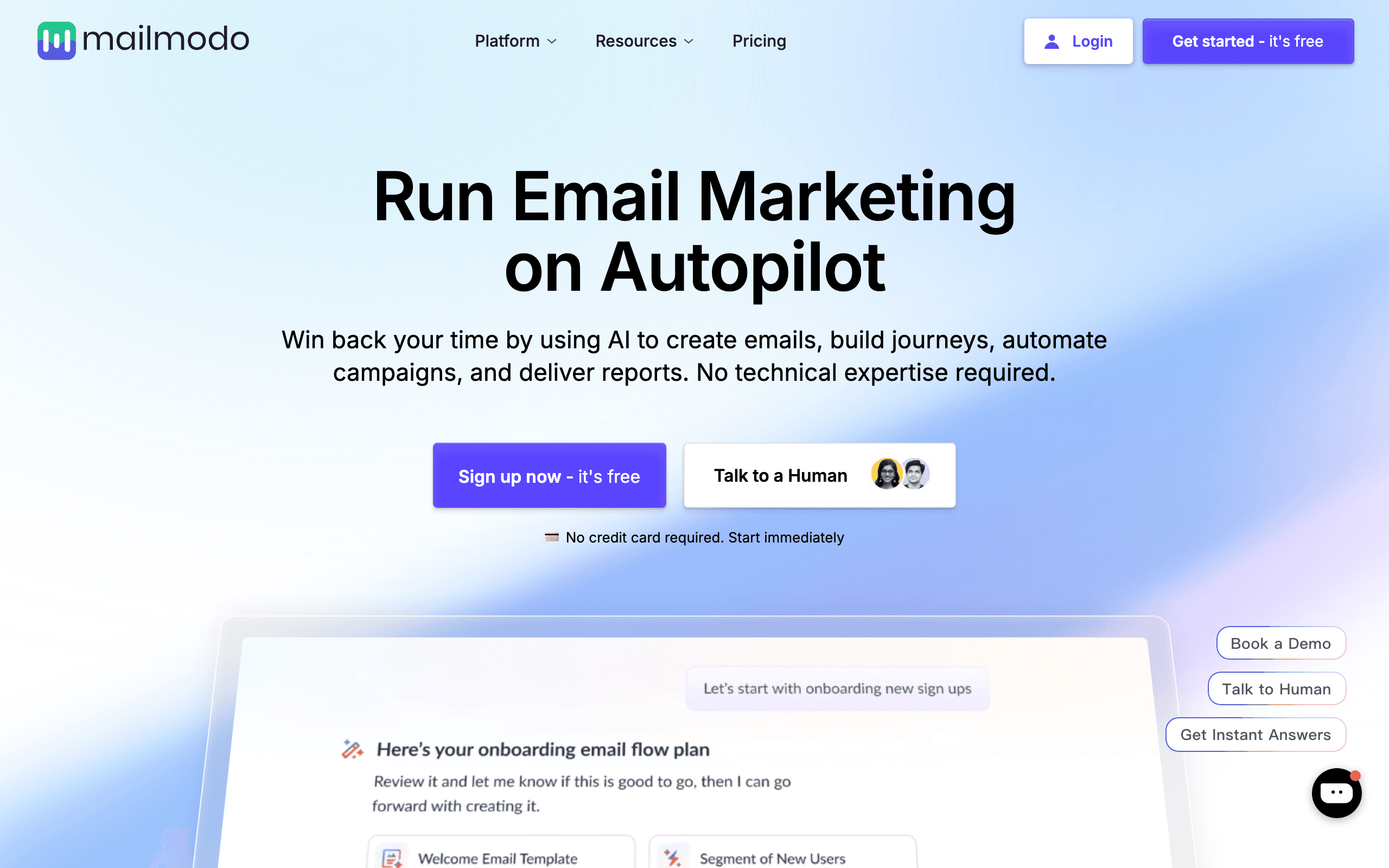
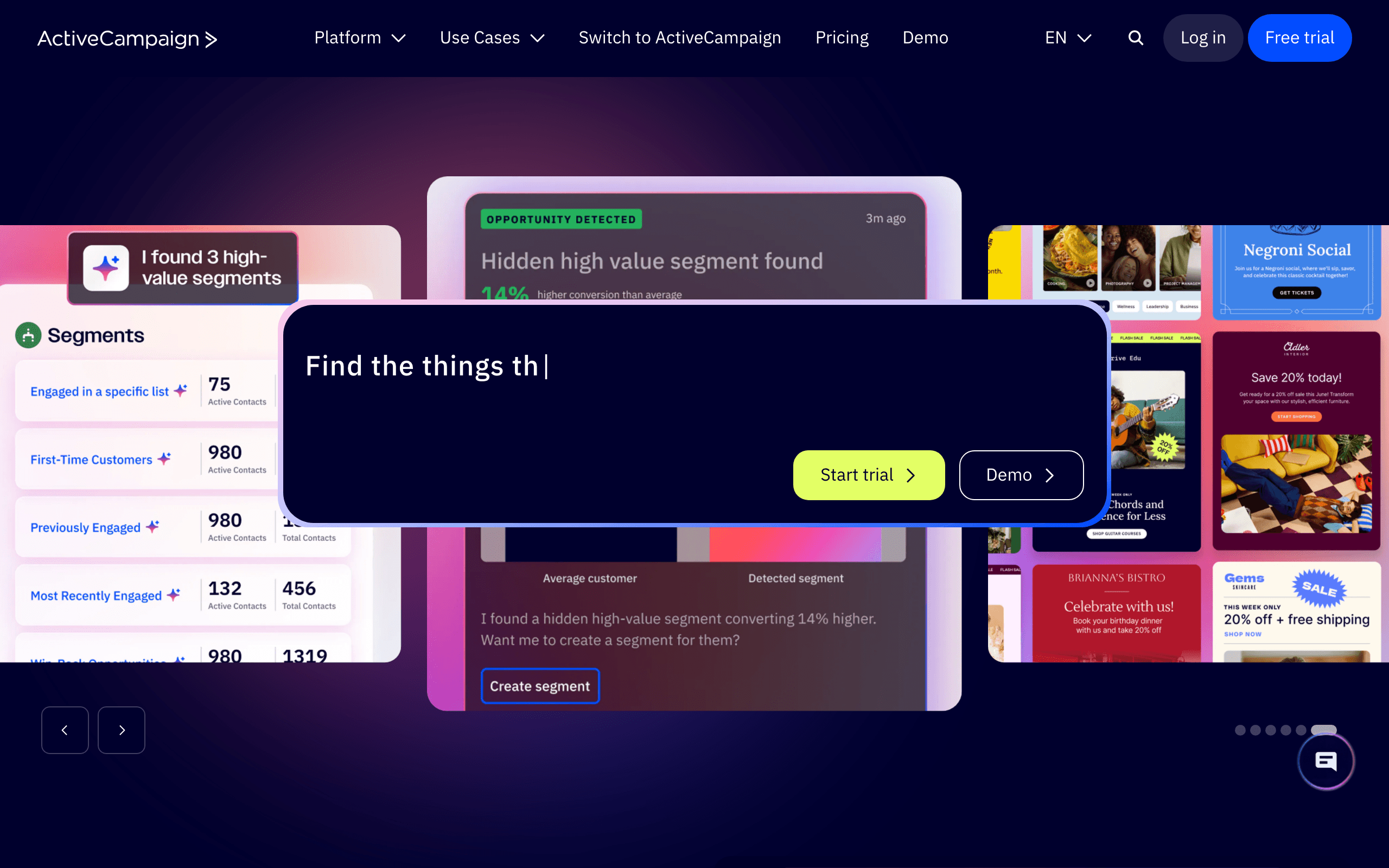
Mailmodo and ActiveCampaign represent different approaches to email marketing excellence. Mailmodo innovates on email format with AMP technology. ActiveCampaign innovates on automation depth and CRM integration. See our ActiveCampaign comparison for more context.
Each is best in class at different things.
AMP Email Innovation
Mailmodo's core feature is AMP (Accelerated Mobile Pages) for email. Subscribers can fill forms, take quizzes, and submit surveys without leaving their inbox. For Gmail and Yahoo Mail users, this reduces friction and can improve conversions.
ActiveCampaign uses standard email with traditional click-through interactions. No AMP support, but emails work identically everywhere.
Automation Comparison
ActiveCampaign has the best automation in email marketing. Conditional logic with multiple branches, split testing within workflows, lead scoring that triggers actions, deep CRM integration - it handles complexity that other platforms cannot match.
Mailmodo has visual automation that works for common workflows. It's functional but not sophisticated. For complex customer journeys with many conditions, ActiveCampaign is in a different league.
Note: ActiveCampaign's Starter plan ($149 at 10k) limits automations to 5 steps without branching. Real automation requires Plus tier at significantly higher cost.
CRM and Sales
ActiveCampaign includes a full CRM with pipeline management, deal tracking, and sales automation. It's designed for sales-driven organizations with long customer journeys.
Mailmodo has no CRM. It focuses purely on email marketing. If you need contact management, pipeline tracking, or sales automation, you'll need additional tools with Mailmodo.
Email Client Support
ActiveCampaign emails work in every client - Outlook, Gmail, Apple Mail, everything. Universal compatibility with consistent experience.
Mailmodo's AMP features only work in Gmail and Yahoo Mail (roughly 50-60% of B2C lists). Other clients receive HTML fallback. For B2B audiences that use Outlook heavily, Mailmodo's main selling point doesn't apply.
When Each Platform Shines
Choose Mailmodo when: Your audience is Gmail-heavy. In-email engagement is more important than automation complexity. You want innovation in email format rather than workflows.
Choose ActiveCampaign when: Automation is critical. You need sophisticated customer journeys. Your business is sales-driven with CRM needs. Universal email client support matters.
For SaaS Companies
Neither platform is built for SaaS. ActiveCampaign's automation is powerful but doesn't understand subscriptions or billing events. Mailmodo's AMP features don't address subscription management.
For Stripe integration and subscription-aware automation, consider Sequenzy. It costs less than both ($49 vs $78-149) while offering what SaaS companies actually need.
The AMP Engagement Question
Mailmodo's AMP technology raises an important strategic question: is higher engagement among half your audience better than standard engagement among everyone? For Gmail-heavy B2C lists, the answer may be yes. In-email forms can double or triple conversion rates compared to click-through forms. But for B2B audiences with significant Outlook usage, the investment may not pay off.
ActiveCampaign's approach to engagement is different. Rather than changing the email format, it optimizes who receives which message and when. Sophisticated automation with behavioral triggers can achieve high engagement through relevance rather than interactivity.
Automation Depth vs Email Innovation
ActiveCampaign's automation capabilities are genuinely best-in-class. Conditional branching with multiple paths, split testing within workflows, lead scoring that triggers different sequences, and CRM deal stage triggers. For organizations with complex customer journeys, this depth is irreplaceable.
Mailmodo's automation is functional for common workflows but cannot handle the complexity that ActiveCampaign manages. If your business relies on sophisticated multi-step nurture sequences with many conditions, ActiveCampaign is in a different category.
The CRM Factor
ActiveCampaign includes a full CRM with pipeline management, deal tracking, and sales automation. This eliminates the need for a separate CRM tool for many small to mid-size businesses. Mailmodo has no CRM functionality, so sales-driven organizations would need to integrate a third-party CRM, adding complexity and cost.
For SaaS companies specifically, neither platform offers native Stripe integration. Sequenzy fills this gap with subscription-aware automation that connects email directly to billing events.
Workflow Complexity and Logic
Marketing automation ranges from simple welcome sequences to complex multi-branch workflows. Mailmodo and ActiveCampaign offer different levels of automation sophistication. The visual builder experience and available trigger types determine what you can build without code.
Advanced automation features like conditional splits, wait conditions, and goal tracking let you create more personalized customer journeys. Consider how each platform handles edge cases - what happens when a subscriber triggers multiple automations, or when they meet criteria for multiple branches.
CRM and Sales Integration
Marketing automation works best when connected to your sales process. Mailmodo and ActiveCampaign handle the marketing-to-sales handoff differently. Some platforms include CRM features, while others rely on integrations.
Evaluate lead scoring capabilities, sales notification triggers, and how each platform tracks the complete customer journey from first touch to conversion. For SaaS companies, connecting email automation with Stripe billing events creates powerful lifecycle marketing.
Reporting and Attribution
Understanding which automations drive results requires good reporting. Mailmodo and ActiveCampaign provide different levels of analytics, from basic open and click rates to revenue attribution and conversion tracking.
Look beyond email metrics to business impact. Which platform helps you understand how your email campaigns contribute to signups, trials, and revenue? Attribution modeling and integration with analytics tools affect your ability to optimize over time.
Use-case matchups
| Need | Better fit | Why |
|---|---|---|
| Interactive AMP emails, in-email forms, and surveys | Mailmodo | Mailmodo is built around no-code AMP campaigns and in-email engagement. |
| Sophisticated branching automation and CRM workflows | ActiveCampaign | ActiveCampaign's cited strengths are advanced automation, built-in CRM, machine learning predictions, and sales automation. |
| B2B audiences with heavy Outlook usage | ActiveCampaign | Standard HTML emails work broadly, while Mailmodo's AMP advantage depends on client support. |
| SaaS lifecycle email tied to billing events | Sequenzy | Sequenzy is the only listed option here with native Stripe integration and SaaS-focused automation. |
Pricing reality
Mailmodo is listed at $78/month for the Pro plan with AMP emails and visual automation. ActiveCampaign is listed at $149/month on annual billing for the Starter plan, and this page notes that Starter automation is limited. Sequenzy is listed at $49/month for SaaS-focused email with Stripe integration and 10k contacts.
That makes Mailmodo cheaper than ActiveCampaign at this contact level, but the comparison is not just price. If you need CRM-driven automation depth, ActiveCampaign may justify the higher cost. If you mainly want interactive email experiments, Mailmodo is the more direct purchase.
Review signals
Mailmodo reviews cited on this page highlight interactive AMP emails, the no-code AMP editor, and in-email forms and surveys. The recurring cautions are that AMP support varies by client and there is a learning curve around AMP.
ActiveCampaign reviews cited here point to advanced automation, the built-in CRM, and machine learning predictions. The tradeoffs are higher pricing as features grow and complexity for beginners.
Best Fit by Campaign Interaction
Best email platform for interactive AMP campaigns
Mailmodo fits teams that need forms, surveys, booking flows, or other interactive experiences inside the inbox. It is strongest when the conversion problem is reducing friction inside a specific email campaign.
Best automation CRM for complex customer journeys
ActiveCampaign is the better fit when the team needs branching automations, lead scoring, CRM pipelines, and sales follow-up across many customer touchpoints. It works better when journey logic matters more than interactive email formats.
Best SaaS lifecycle platform for event-triggered messages
Sequenzy fits SaaS teams that need onboarding, transactional, billing, and retention emails driven by product and subscription events. It is more relevant when the timing and customer state behind the email matter more than AMP interactivity.
Migration checklist
- Export contacts, tags, segments, templates, automations, CRM records if applicable, and suppression lists.
- Audit which Mailmodo campaigns rely on AMP and create HTML fallbacks before moving platforms.
- If moving to ActiveCampaign, map pipeline stages, lead scores, tags, and automation branches before importing.
- If moving to Mailmodo, decide which CRM and sales workflows need a separate system.
- Reconfigure SPF, DKIM, DMARC, tracking domains, sender identities, and unsubscribe handling.
- Run test sends across Gmail, Yahoo, Outlook, Apple Mail, and mobile clients before switching traffic.
Decision checklist
- Choose Mailmodo if interactive AMP email is the main growth experiment.
- Choose ActiveCampaign if automation depth, CRM, lead scoring, and sales workflows matter more.
- Avoid Mailmodo if most recipients use email clients that do not support AMP.
- Avoid ActiveCampaign if the team only needs simple newsletters and will not use the CRM or advanced automation.
- Choose Sequenzy if the real need is SaaS lifecycle email connected to Stripe events.