
Overview
Mailjet and Mailgun are both owned by Sinch but serve different audiences. Mailjet is a user-friendly platform for marketing teams. Mailgun is a developer-focused API for sending email at scale. Same parent company, different products for different needs.
Answer first: which one, by what you are sending
Most people arriving at this comparison are not choosing between two similar products. They are trying to work out which of two different jobs they have. Match your job to the row and you have your answer.
| What you are sending | Pick | Why |
|---|---|---|
| Campaigns and newsletters to a marketing list | Mailjet | Campaign builder, templates, collaborative editor, and contact management are built in. Mailgun has none of this. |
| Password resets, receipts, notifications from your app | Mailgun | API-first, detailed event logs, SDKs, and the debugging tools you need when a specific message fails. |
| Both, from one team | Mailjet first, add Mailgun if you outgrow the API | Mailjet can send transactional email; it just gives developers less control. Start simple. |
| High-volume transactional where deliverability is the product | Mailgun | Inbound routing, email validation, and delivery diagnostics are the differentiators at scale. |
| Lifecycle email tied to product and billing events | Neither, on its own | Both are sending infrastructure. Sequence logic, segmentation, and revenue attribution live elsewhere. |
The short version: Mailgun is infrastructure, Mailjet is a marketing tool that can also send transactional email. If you cannot tell which you need, ask who will be writing the emails. If it is a marketer in an editor, that is Mailjet. If it is a developer calling an API from application code, that is Mailgun.
If you are shopping this category more broadly rather than deciding between these two, the closest comparable products are covered in our MailerSend alternatives and Resend alternatives guides, which cover the newer API-first entrants that compete with Mailgun on developer experience.
Different Target Audiences
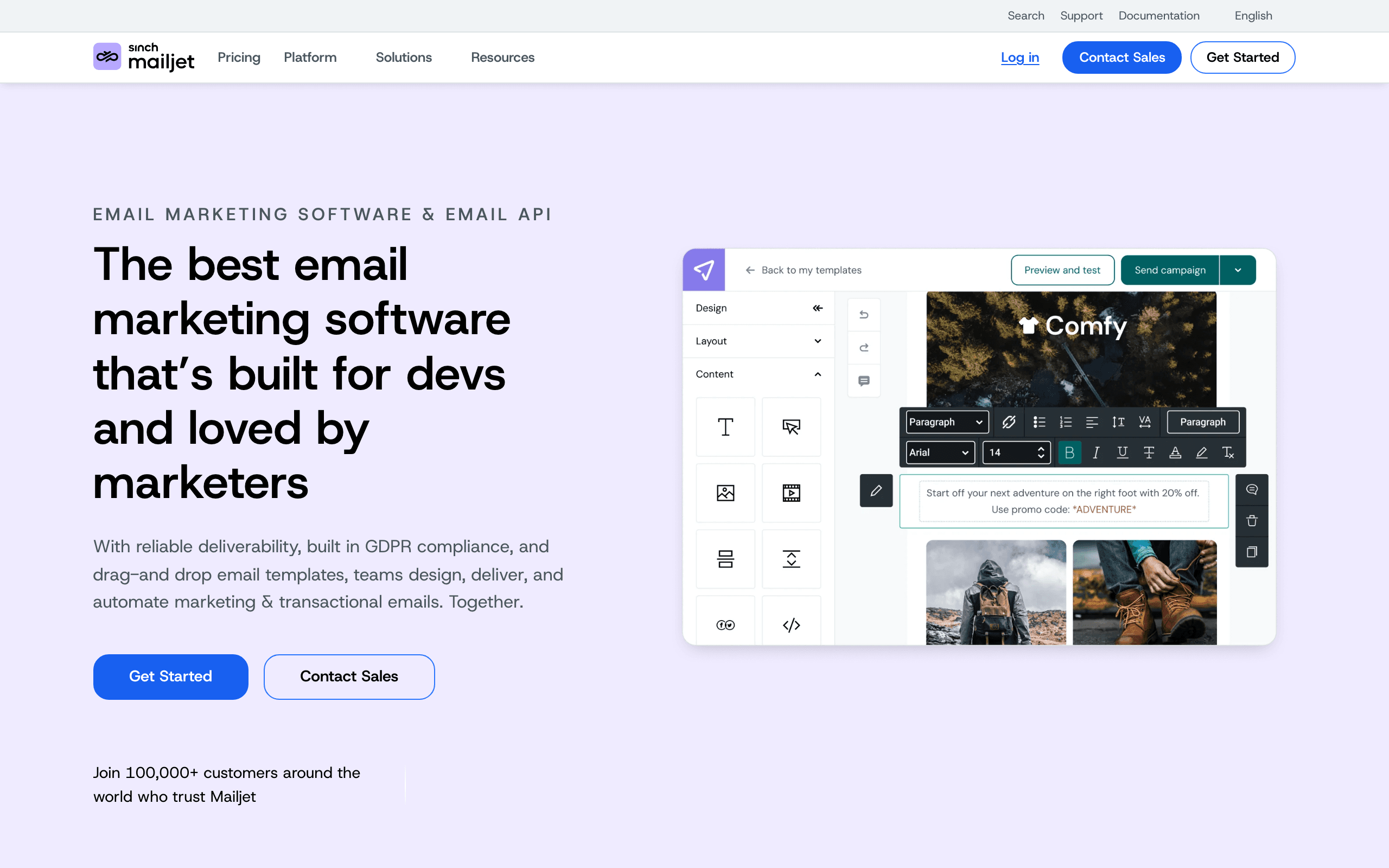
Mailjet: Visual interface, campaign builder, Passport collaborative editor, marketing automation. Built for marketing teams and SMBs.
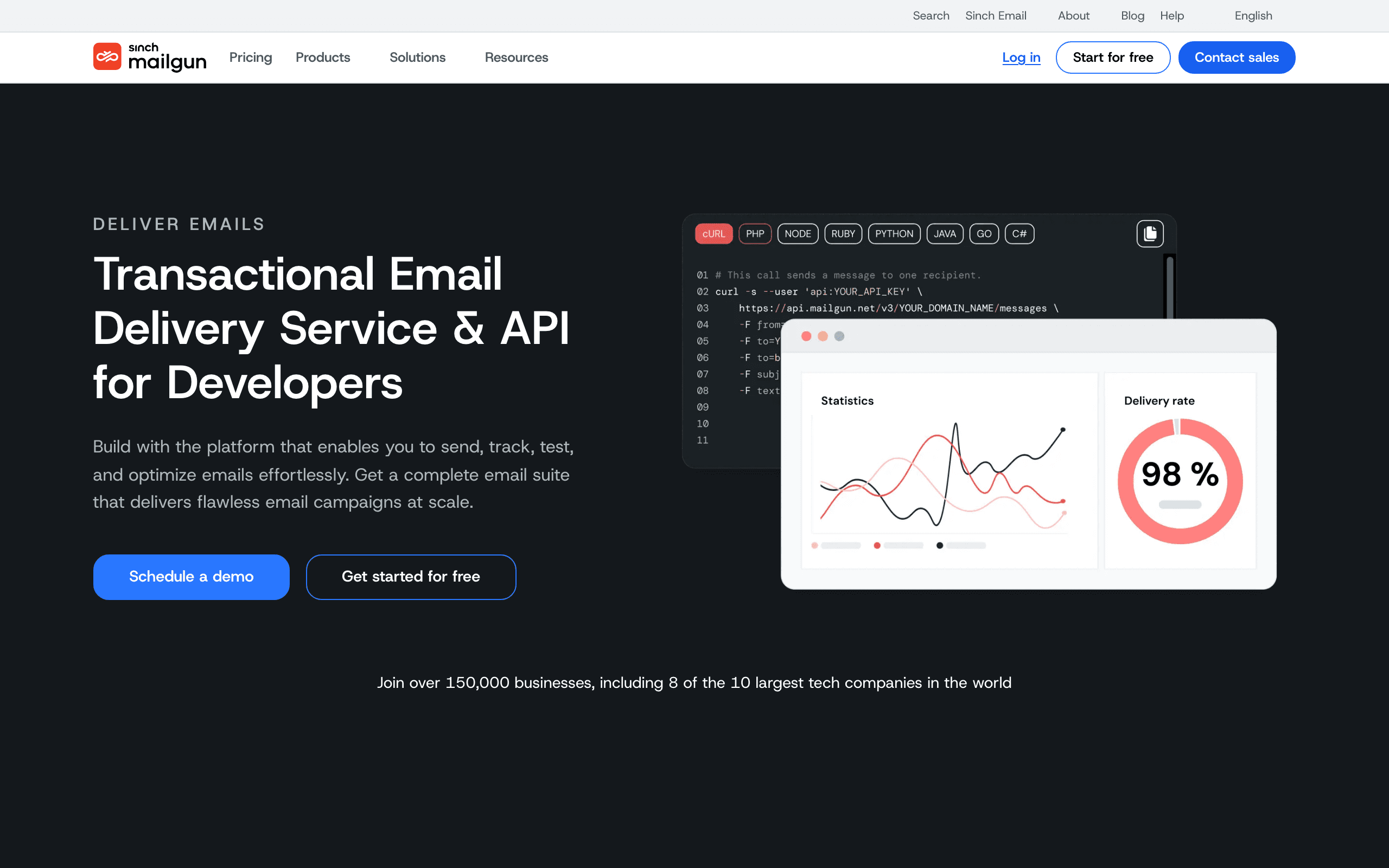
Mailgun: Comprehensive API, email validation service, inbound parsing with routing, extensive SDKs. Built for developers.
This isn't better or worse. It's different tools for different jobs.
Marketing Capabilities
Mailjet has full marketing features:
- Campaigns with visual builder
- Automation on Premium plan
- A/B testing
- Real-time collaborative editing
- Contact list management
Mailgun has basic campaign features (Mailgun Send) but it's clearly not the focus. For marketing email, Mailjet wins decisively.
Developer Features
Mailgun excels for developers:
- Email validation API (check if addresses are valid)
- Advanced inbound email parsing with routing rules
- 7+ SDKs with comprehensive documentation
- Detailed webhooks and analytics
Mailjet has a good API but fewer advanced developer features. For API-first development, Mailgun is more powerful.
Same Infrastructure
Both benefit from Sinch's communication infrastructure. Deliverability is comparable. Support is similar. The difference is interface and feature focus, not underlying quality.
Pricing Comparison
At 50,000 emails:
- Mailjet: ~$35-50/month with marketing features
- Mailgun: $35/month for API access
If you need marketing, Mailjet is better value. If you only need transactional API, Mailgun is focused on that.
For SaaS Companies
Both can work for SaaS. Mailjet if you need marketing. Mailgun if you're building email infrastructure.
If you're SaaS with Stripe billing, consider Sequenzy. We combine marketing and transactional with native Stripe integration that neither Sinch product offers.
Making the Choice
Choose Mailjet for marketing + transactional with user-friendly interface. Choose Mailgun for developer-focused API with validation and inbound processing. For SaaS with Stripe, consider Sequenzy.
Same Parent Company, Different Products
Mailjet and Mailgun are both owned by Sinch, a major communications company. This means comparable infrastructure quality, similar uptime, and related technology. The difference is in focus: Mailjet for marketing teams, Mailgun for developer teams. Understanding this helps frame the comparison as choosing the right tool for your team rather than comparing rival platforms.
If your organization has both marketing and engineering teams with different email needs, you could potentially use both under the same corporate umbrella. The shared Sinch infrastructure ensures consistent quality across both products.
Developer Features That Matter
Mailgun's email validation API saves the cost of a separate validation service. Their inbound email parsing with routing rules enables sophisticated email-powered applications. These are not basic features dressed up in marketing language. They represent genuine developer infrastructure that Mailjet does not replicate.
For applications that need to receive and process incoming emails, build support ticket systems from email, or validate addresses at scale, Mailgun's developer features are essential rather than optional.
The Marketing-Developer Spectrum
Most organizations fall somewhere on a spectrum between marketing-driven and engineering-driven email needs. Pure marketing teams should choose Mailjet without hesitation. Pure engineering teams should choose Mailgun. The interesting decision happens in the middle, where both marketing campaigns and developer API access matter.
For SaaS companies occupying this middle ground, Sequenzy offers marketing campaigns with a developer-friendly API and Stripe integration, addressing both sides of the spectrum without requiring two separate Sinch products.
Delivery Speed and Reliability
Mailjet and Mailgun are both owned by Sinch but built for different jobs, so speed and infrastructure quality end up similar while the surrounding features diverge. Mailjet bundles transactional sending with a full marketing suite and a real-time collaborative editor called Passport, priced around $35 to $50 a month at 50,000 emails. Mailgun's Foundation plan starts at $35 for the same volume but skips marketing entirely in favor of email validation and advanced inbound routing rules aimed at developers.
API Design and Developer Experience
Mailgun's developer tooling goes further than Mailjet's: a built-in validation service, inbound parsing with routing rules, and SDKs across seven or more languages, all documented in detail. Mailjet's REST API is capable but leans toward supporting its visual campaign builder rather than deep developer workflows, and it has no equivalent validation service. Teams building API-first sending pipelines will get more out of Mailgun; teams whose developers mainly support a marketing team will find Mailjet's API sufficient.
Scaling and Cost at Volume
At 50,000 emails a month, Mailgun's Foundation plan starts at $35 while Mailjet's Premium tier with automation runs roughly $35 to $50, putting them in similar territory on raw sending cost. The real cost difference shows up in what each plan includes: Mailjet's price covers a visual editor and campaign tools, while Mailgun's covers validation and routing. Since both belong to Sinch, expect similar underlying delivery infrastructure regardless of which product you pick.
Use-case matchups
| Situation | Best first look | Why |
|---|---|---|
| Marketing team needs campaigns and collaboration | Mailjet | Mailjet has the visual builder, campaign tools, real-time collaboration, and contact management. |
| Developer team needs API depth and inbound processing | Mailgun | Mailgun is stronger for validation, inbound routing, SDKs, and webhook-heavy transactional workflows. |
| Organization wants marketing plus transactional in one interface | Mailjet | Mailjet covers both categories with a marketer-friendly interface. |
| Application needs to receive and process email | Mailgun | Mailgun's inbound parsing and routing are the deciding features for email-powered apps. |
| SaaS team wants marketing, transactional, and Stripe lifecycle email together | Sequenzy | Sequenzy is a better fit when the buyer wants both sides without running two Sinch products. |
Best Fit by Developer vs Marketer Ownership
Best email platform for marketing teams that need transactional sending
Mailjet fits organizations where marketers need campaigns, templates, collaboration, and contacts while developers still need SMTP/API transactional delivery.
Best email API for inbound routing and developer workflows
Mailgun is the better fit when engineering owns email validation, inbound parsing, SDKs, webhooks, logs, and transactional infrastructure.
Best SaaS email platform for unified lifecycle and transactionals
Sequenzy fits SaaS teams that want marketing campaigns, transactional email, and Stripe lifecycle triggers together without splitting work across Sinch products.
Pricing reality
Mailjet's value is strongest when campaign creation, collaboration, and transactional sending are both in scope. Its price should be compared against the cost of separate campaign software plus a delivery API.
Mailgun's value is strongest when developer tooling is the main requirement. Include validation, inbound routing, SDK support, logging, dedicated IPs, and support when judging the price.
Sequenzy is relevant when SaaS lifecycle automation and Stripe events are part of the requirement. It is not a replacement for Mailgun's inbound-routing depth or Mailjet's collaboration editor in every use case.
Review signals
The Mailjet review snippets emphasize real-time collaboration, EU/GDPR positioning, marketing plus transactional sending, and value, with cautions around daily free-plan limits and basic automation.
The Mailgun review snippets emphasize API power, validation, and inbound routing, with cautions around price increases and a limited free tier.
Migration checklist
| Workstream | Moving to Mailjet | Moving to Mailgun | Moving to Sequenzy |
|---|---|---|---|
| Team workflow | Move campaign production, collaboration, and contact management into Mailjet. | Keep workflow developer-led around API, SDKs, and logs. | Centralize campaign and transactional workflows around subscriber events. |
| Templates | Rebuild marketing templates, campaign layouts, and transactional templates. | Rebuild transactional templates and variable payloads. | Rebuild marketing and transactional templates in one workspace. |
| API and events | Configure Mailjet API/SMTP for transactional needs and campaign tracking. | Configure SDKs, inbound routes, validation, and webhooks. | Connect app events, Stripe events, campaigns, and transactional sends. |
| Deliverability | Validate sender domains, tracking domains, suppressions, and contact hygiene. | Validate domains, inbound routes, bounce/complaint handling, and warmup. | Preserve suppressions and warm domains before volume cutover. |
| Reporting | Check campaign, collaboration, transactional, and list reports. | Check delivery, validation, inbound, and event logs. | Check campaign, automation, transactional, and lifecycle reporting. |
Decision checklist
- Are marketers or developers the daily users?
- Do you need inbound routing and email validation deeply enough to pick Mailgun?
- Does Mailjet's collaboration editor change campaign production speed?
- Will one Sinch product cover the job, or would you end up using both?
- Are SaaS billing and lifecycle events part of the core email workflow?









