Overview
Mailjet and Mailchimp both handle email marketing but at different scales and price points. Mailjet is a budget-friendly email platform owned by Sinch (acquired 2019). Mailchimp is the 23-year-old marketing giant owned by Intuit. See our Mailchimp comparison for more alternatives.
The Scope Difference
Mailjet focuses on email. Campaigns, transactional, SMTP relay, and API. That's it.
Mailchimp is a marketing platform. Email plus landing pages, CRM, social posting, surveys, postcards, websites, and 300+ integrations. Some love having everything. Others find it bloated.
If you just need email done well at a good price, Mailjet is leaner. If you want all-in-one marketing, Mailchimp offers more.
Pricing Reality
At 10,000 contacts, the price difference is significant:
- Mailjet: $35-50/month depending on features needed
- Mailchimp: $100-135/month on Standard plan
Mailjet charges per email sent with lower base prices. Mailchimp charges per contact with complex tiers and send limits. For budget-focused teams, Mailjet saves real money.
Transactional Email
This is where Mailjet has a clear advantage. Transactional email is built into the main product with good API and SMTP relay.
Mailchimp requires Mandrill for transactional email. It's a separate product with separate pricing. For teams needing marketing and transactional unified, Mailjet is simpler and cheaper.
Real-Time Collaboration
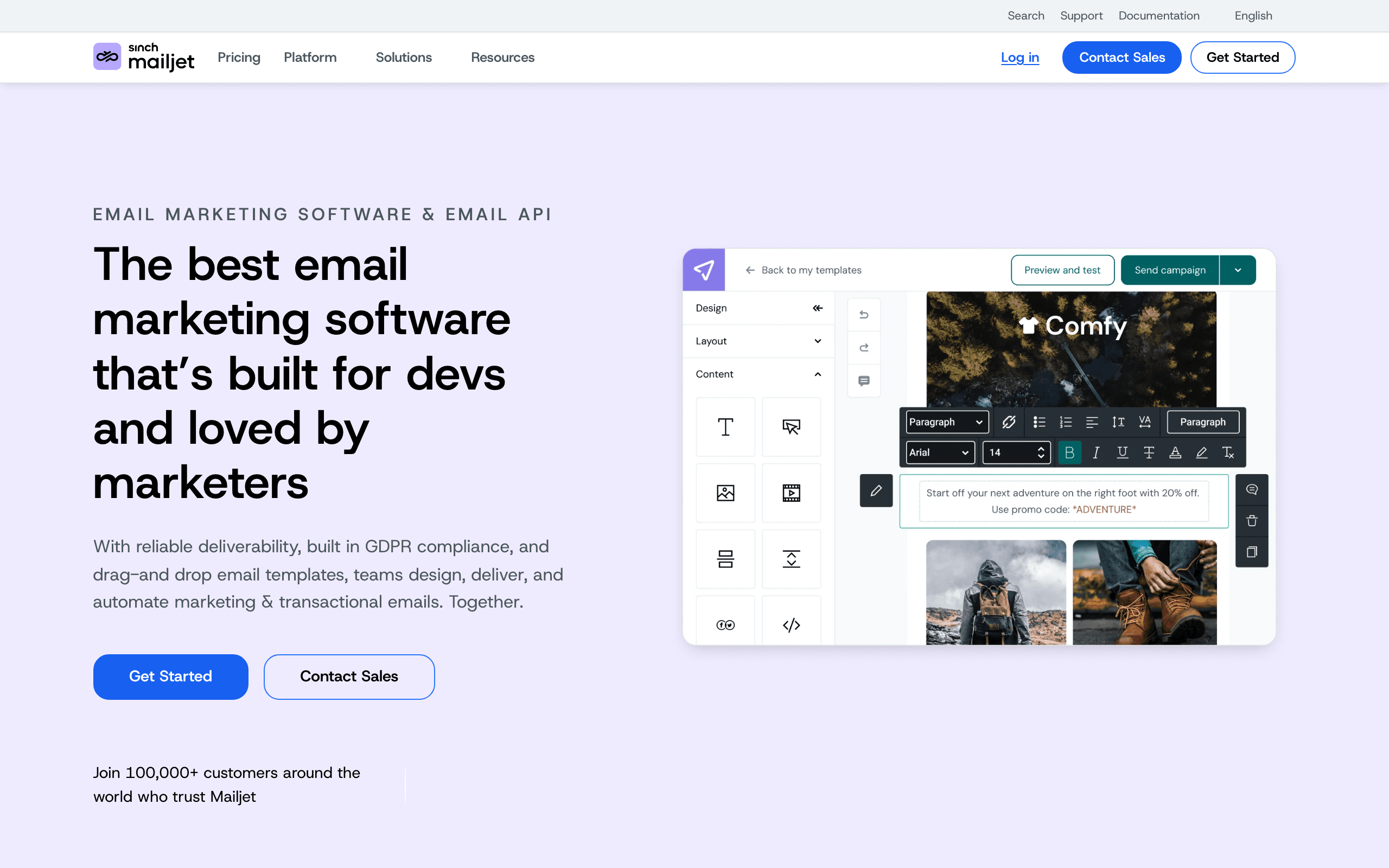
Mailjet's Passport editor allows multiple people to work on the same email simultaneously. It's like Google Docs for email creation. Mailchimp doesn't have this. For teams with marketing/design collaboration needs, Passport is genuinely useful.
For SaaS Companies
Neither platform is built for SaaS specifically. Mailjet is email infrastructure. Mailchimp is general marketing.
If you're a SaaS company with Stripe billing, consider Sequenzy. We offer native Stripe integration for payment-triggered emails, SaaS-focused automation, and unified transactional + marketing at a fair price.
Making the Choice
Choose Mailjet for budget email with good transactional support and real-time collaboration. Choose Mailchimp for a complete marketing platform with landing pages, CRM, and extensive integrations. For SaaS, consider Sequenzy.
Platform vs Tool Philosophy
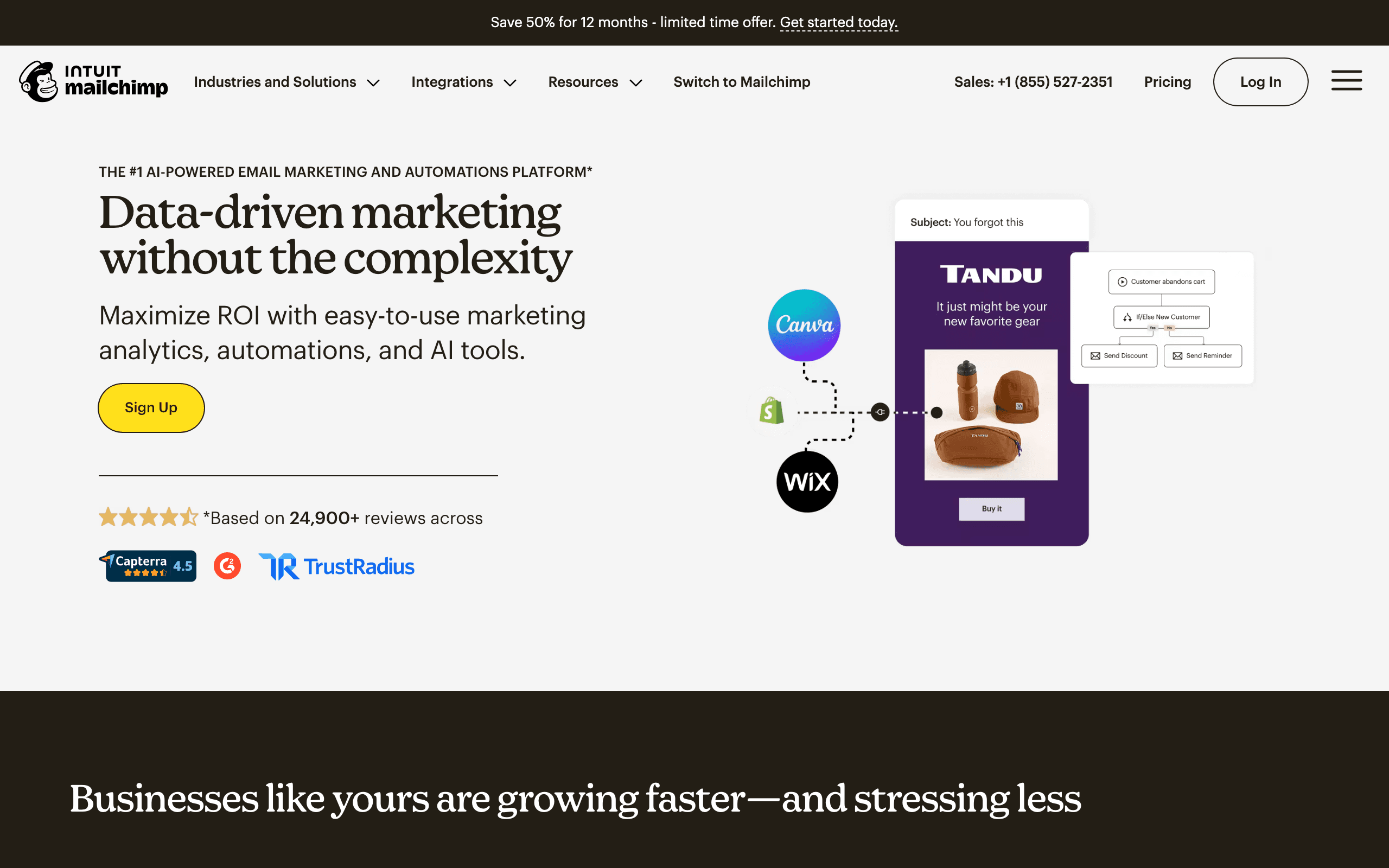
Mailchimp has evolved from an email tool into a full marketing platform. Landing pages, websites, CRM, social posting, surveys, and postcards alongside email. Some teams love having everything in one place. Others find it bloated and overwhelming.
Mailjet stays focused on email. Marketing campaigns, transactional API, collaboration features. Nothing more. For teams that have dedicated tools for landing pages and CRM, Mailjet's focus means every feature is relevant. For teams wanting one tool for everything, Mailchimp's breadth is genuinely useful.
The Transactional Email Advantage
Mailjet includes transactional email with API and SMTP in its main product at no extra charge. Mailchimp requires Mandrill, a separate product with separate pricing and separate configuration. For businesses sending both marketing and transactional email, this bundling represents significant cost and complexity savings.
A developer integrating transactional email can use Mailjet's API directly from the marketing platform. With Mailchimp, they must set up a separate Mandrill account, configure separate API credentials, and manage separate billing. The operational overhead is real.
Integration Ecosystem Gap
Mailchimp's 300+ integrations versus Mailjet's approximately 50 represent a significant ecosystem difference. If your marketing stack relies on niche tools with Mailchimp-specific integrations, switching to Mailjet means losing those connections or building custom alternatives.
For teams with standard stacks using common tools like Shopify, WordPress, or Salesforce, both platforms have adequate integrations. The gap matters primarily for teams relying on specialized Mailchimp-specific integrations that Mailjet does not support.
Email Design and Template Flexibility
Mailjet and Mailchimp approach email design differently. Mailjet's Passport editor supports real-time collaboration and MJML templating for teams building emails together. Mailchimp counters with a much larger template library, over 100 designs, plus drag-and-drop and custom HTML support, giving more out-of-the-box design options at a higher price.
List Management and Segmentation
List management reflects each platform's pricing model. Mailjet charges per email sent, so its list handling stays relatively simple. Mailchimp charges per contact and layers on a basic built-in CRM, giving you more ways to manage and segment subscribers but also making list growth a bigger driver of your monthly bill.
Deliverability and Sender Reputation
Both platforms offer deliverability tooling, but their scope differs. Mailjet keeps transactional and marketing email in one product with GDPR-focused EU hosting. Mailchimp's deliverability infrastructure benefits from its much larger integration ecosystem, over 300 compared to Mailjet's roughly 50, though transactional sending there requires the separate Mandrill add-on rather than Mailjet's built-in approach.
Use-case matchups
| Situation | Best first look | Why |
|---|---|---|
| Budget-conscious team that needs email plus transactional API | Mailjet | Mailjet combines campaigns and transactional sending at a lower price point. |
| Team wants a broad marketing suite with integrations and CRM-style extras | Mailchimp | Mailchimp is stronger when landing pages, social tools, websites, postcards, and integrations matter. |
| Marketing/design team needs real-time collaboration | Mailjet | Passport collaboration is a meaningful workflow advantage. |
| Team depends on Mailchimp-specific integrations | Mailchimp | Mailchimp's larger ecosystem can reduce custom integration work. |
| SaaS team needs marketing plus transactional plus Stripe lifecycle email | Sequenzy | Sequenzy is a better first look when subscription events and unified product email matter more than all-in-one marketing breadth. |
Best Fit by Marketing Platform Breadth
Best email platform for collaborative campaigns and transactional API
Mailjet fits email-first teams that want lower-cost campaigns, SMTP/API sending, transactional email, and real-time production collaboration. It is strongest when design approval and developer sending needs live in the same email-first workflow.
Best marketing suite for broad small-business campaigns
Mailchimp is the better fit when the team actively uses landing pages, websites, social tools, postcards, integrations, and broader campaign features. It is easier to justify when email is one piece of a larger small-business marketing suite.
Best SaaS email platform for Stripe lifecycle and transactionals
Sequenzy fits SaaS teams that need marketing email, transactional email, and subscription-triggered lifecycle messages without Mailchimp's broad marketing suite. It is a better match when Stripe and product events are more important than general marketing add-ons.
Pricing reality
Mailjet's lower price is strongest when the requirement is email-first: campaigns, transactional API, SMTP, and collaborative editing. Include send volume, automation tier, dedicated IP needs, and support expectations.
Mailchimp's higher price is easier to justify if the team actively uses its broader marketing suite and integration ecosystem. It is harder to justify when the team only needs email campaigns and transactional email.
Sequenzy is relevant when the buyer wants the unified email stack without Mailchimp's broad marketing platform or Mailjet's more general-purpose positioning.
Review signals
The Mailjet snippets emphasize real-time collaboration, EU/GDPR positioning, marketing plus transactional email, and value, with cautions around free-plan limits and basic automation.
The Mailchimp snippets emphasize market share, templates, social tools, and platform breadth, while warning about higher pricing and limited free-plan value.
Migration checklist
| Workstream | Moving to Mailjet | Moving to Mailchimp | Moving to Sequenzy |
|---|---|---|---|
| Contact data | Import contacts, lists, segments, suppressions, and transactional recipients. | Import audiences, tags, segments, ecommerce data, landing pages, and suppressions. | Import subscribers, tags, attributes, suppressions, and Stripe/customer state. |
| Templates | Rebuild campaign templates, Passport workflows, and transactional templates. | Rebuild visual templates, journeys, forms, landing pages, and Mandrill templates if needed. | Rebuild campaigns, transactional templates, and lifecycle sequences. |
| Transactional email | Configure API/SMTP inside the same Mailjet account. | Decide whether Mandrill is required and configure it separately. | Configure transactional sends in the same workspace as marketing. |
| Integrations | Reconnect common ecommerce, CRM, forms, and API workflows. | Reconnect broader integration ecosystem and any Mailchimp-specific apps. | Connect app events, Stripe, ecommerce, campaigns, and transactional paths. |
| Reporting | Validate campaign, collaboration, transactional, and deliverability reporting. | Validate audience, campaign, journey, ecommerce, and Mandrill reports. | Validate campaign, automation, transactional, and subscription reporting. |
Decision checklist
- Do you need email-first value or a broad marketing suite?
- Is transactional email a first-class requirement?
- Will Mailjet's collaboration editor improve production speed?
- Are Mailchimp-specific integrations required for your stack?
- Are SaaS billing events part of the core email workflow?