
Overview
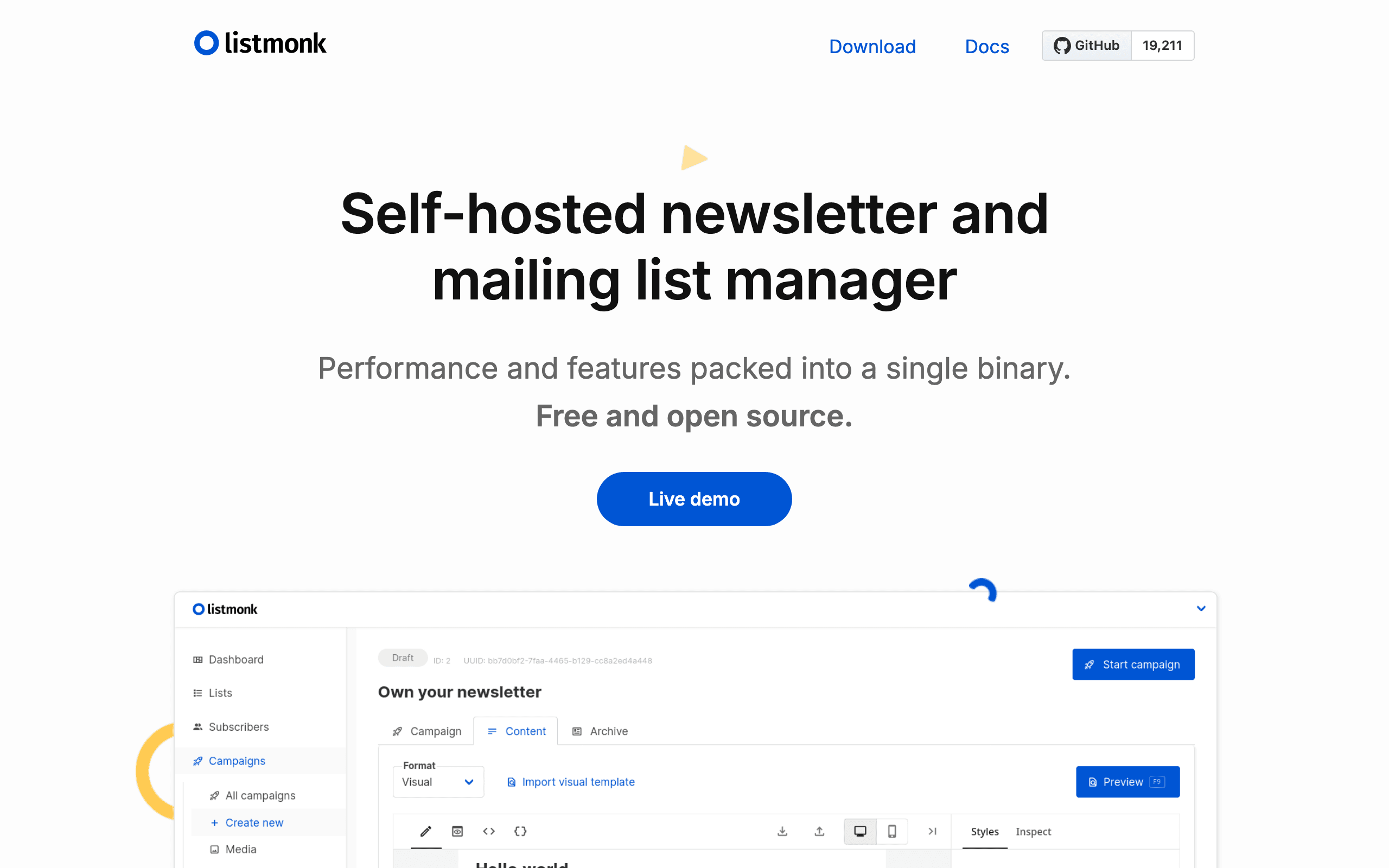
Listmonk and MailerLite approach email marketing from opposite directions. Listmonk is free but technical. MailerLite is affordable but managed. One gives you control and savings at the cost of effort. The other gives you ease at the cost of monthly fees.
The Real Cost Comparison
Listmonk: $0 software + ~$10/month hosting + ~$5/month SMTP = ~$15/month total.
MailerLite: $39/month at 10,000 subscribers.
Difference: ~$24/month or ~$288/year. Real savings, but not transformative at this scale.
At 100,000 subscribers: Listmonk stays ~$20/month. MailerLite jumps to $289/month. Now the difference is $3,200/year. Scale changes the math significantly.
Feature Reality Check
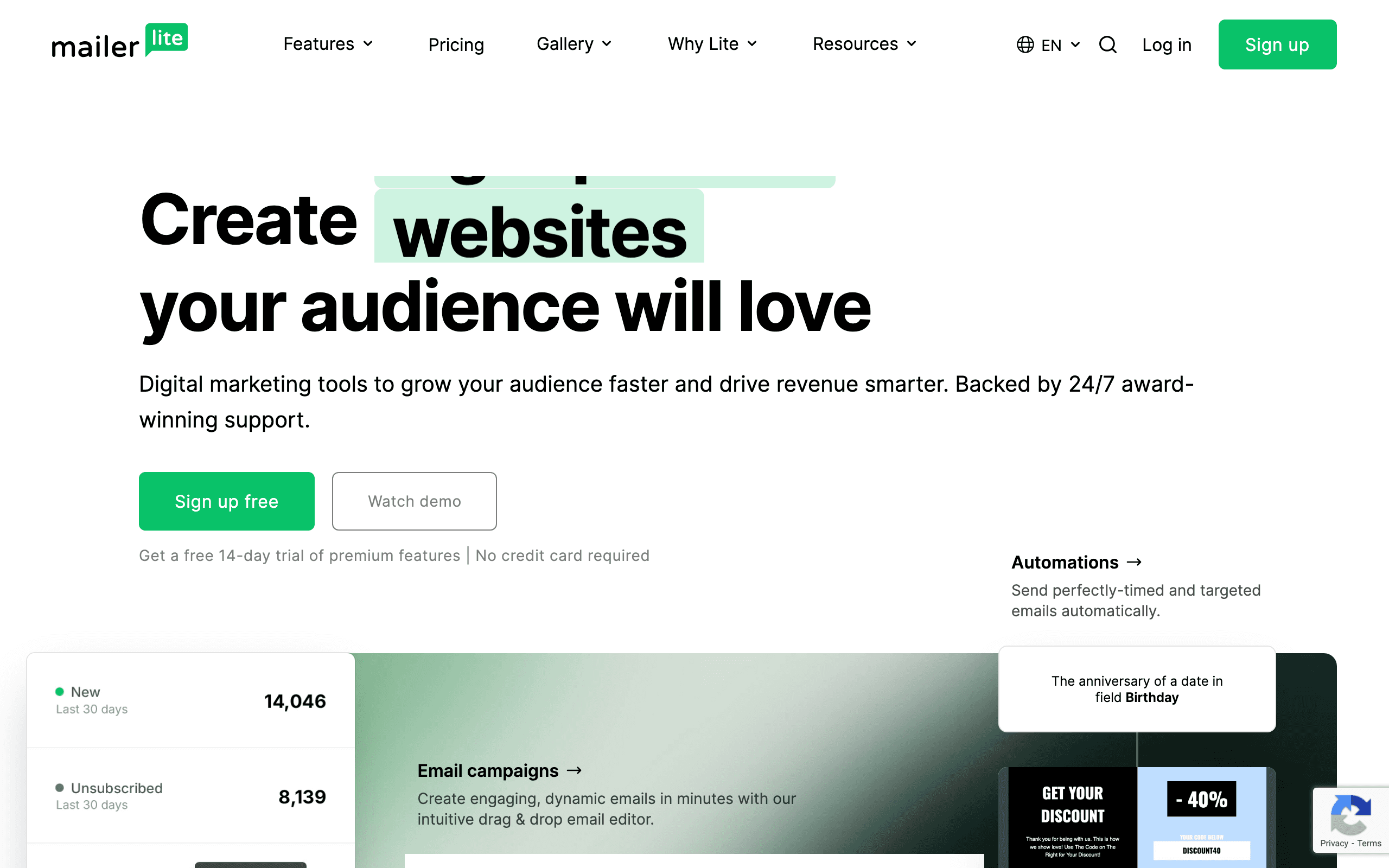
MailerLite offers drag-and-drop email builder, visual automation, landing pages, website builder, popups, forms, and basic e-commerce integration.
Listmonk offers campaign sending and list management. That's it.
If you need automation or landing pages, Listmonk simply doesn't have them. This isn't a bug, it's a design choice. Listmonk does less, but does it simply and freely.
Technical Requirements
MailerLite: Create account, verify email, start sending. No technical skills needed.
Listmonk: Install Docker, deploy container, configure PostgreSQL, set up SMTP, manage server security and updates.
The gap is significant. MailerLite is accessible to anyone. Listmonk requires genuine technical comfort.
Who Should Choose Listmonk
Developers and technical founders who enjoy (or at least tolerate) self-hosting. Organizations with strict data sovereignty requirements. High-volume senders where cost savings compound. People who just need simple newsletters without frills.
Who Should Choose MailerLite
Small businesses and creators wanting easy email marketing. Teams needing automation and landing pages. Anyone who doesn't want to manage servers. Budget-conscious users who aren't technical.
For SaaS Companies
Neither is optimized for SaaS. Listmonk lacks automation entirely. MailerLite lacks SaaS-specific features like Stripe integration or behavioral automation. For SaaS companies, consider Sequenzy with native Stripe integration and subscription-aware automation.
Making the Choice
Choose Listmonk if you can self-host, value savings, and only need basic newsletter sending. Choose MailerLite if you want ease of use, need automation/landing pages, and prefer paying for convenience. For SaaS companies needing subscription lifecycle automation, consider Sequenzy.
The Creator and Small Business Angle
MailerLite has carved out a strong position with creators and small businesses by including features they need: digital product sales, paid newsletter subscriptions, website builder, and landing pages. These bundled tools mean a small business can run their entire online presence through MailerLite without additional subscriptions.
Listmonk serves none of these needs. It is a sending tool, not a business platform. For creators building audience-based businesses, MailerLite's feature bundle provides genuine value that extends well beyond basic email. The monthly cost is justified by the tools it replaces.
Automation Quality Comparison
MailerLite's automation is functional and covers the workflows most small businesses need: welcome sequences, abandoned cart recovery, date-based triggers, and subscriber activity responses. The visual workflow builder is intuitive and handles standard use cases well.
Listmonk has no automation whatsoever. This is not a limitation that can be worked around easily. If your email strategy includes any triggered or time-based messaging, Listmonk requires external tools or custom development. For businesses where automation drives meaningful engagement, this gap alone makes MailerLite the practical choice.
Support and Learning Resources
MailerLite provides 24/7 email and chat support, a comprehensive knowledge base, and video tutorials. For non-technical users troubleshooting deliverability issues or learning automation setup, this support infrastructure is valuable. The platform is designed for self-service with guided onboarding.
Listmonk relies on community support through GitHub issues and forums. The documentation covers setup and configuration but is less focused on marketing strategy or best practices. Technical issues get resolved by the community, which is active but not guaranteed to respond quickly. For teams without in-house email expertise, MailerLite's support is a meaningful advantage. Check our email deliverability guide for best practices applicable to either platform.
Use-case matchups
| Use case | Better fit | Why |
|---|---|---|
| Technical team sending simple newsletters | Listmonk | Listmonk is free, self-hosted, and efficient when you can manage the stack. |
| Non-technical small business email marketing | MailerLite | MailerLite includes hosting, support, templates, automations, and landing pages. |
| Maximum cost savings at high subscriber volume | Listmonk | The software cost stays flat while managed tools grow with list size. |
| Creator or small business growth tools | MailerLite | MailerLite includes landing pages, forms, website tools, and digital product features. |
| SaaS lifecycle email with billing triggers | Sequenzy | Sequenzy is built around managed SaaS email, Stripe, and transactional messages. |
Pricing reality
Listmonk is not literally zero-cost once hosting, SMTP, monitoring, and maintenance are included. It is still much cheaper at large list sizes if you have technical ownership. MailerLite costs more, but the monthly fee buys a managed product, support, visual automation, landing pages, and fewer operational chores.
Review signals
The reviews on this page reinforce the cost-versus-convenience tradeoff. Listmonk users praise savings at large list sizes but warn about missing automation and landing pages. MailerLite users praise ease, templates, support, and small-business features, while accepting that costs grow with subscribers.
Best Fit by Hosting Preference
Best self-hosted newsletter tool for technical teams
Listmonk fits teams that want high-volume newsletters, full data control, and the ability to operate their own email software. It is strongest when developers can manage hosting, deliverability, backups, and monitoring.
Best managed email platform for creators and small businesses
MailerLite is the better fit when the team wants a hosted editor, forms, landing pages, websites, automations, and support without owning infrastructure. It works best when accessibility matters more than stack control.
Best SaaS lifecycle platform for product and billing events
Sequenzy fits SaaS teams that need managed lifecycle email connected to signups, usage, subscriptions, invoices, and failed payments. It is more relevant when event-triggered customer journeys matter more than self-hosted newsletter control.
Migration checklist
| Step | Moving to Listmonk | Moving to MailerLite | Moving to Sequenzy |
|---|---|---|---|
| Infrastructure | Prepare Docker, PostgreSQL, SMTP, backups, and monitoring. | Confirm plan tier, domain setup, and required landing-page or commerce features. | Confirm domains, contact fields, transactional needs, and Stripe integration. |
| Contact export | Export subscribers, lists, custom fields, and unsubscribes. | Export lists, groups, fields, forms, and suppression data. | Export contacts, lifecycle fields, billing IDs, and suppression records. |
| Rebuild assets | Convert templates to HTML and replace forms or landing pages elsewhere. | Recreate templates, forms, landing pages, and automations. | Recreate campaigns, lifecycle journeys, and transactional templates. |
| Launch QA | Test SMTP, bounces, complaints, unsubscribes, backups, and server updates. | Test forms, automations, unsubscribe links, and deliverability. | Test campaign, transactional, and Stripe-triggered flows together. |
Decision checklist
- Choose Listmonk if you can self-host and the use case is mostly simple newsletter sending.
- Choose MailerLite if you need managed email marketing, automations, landing pages, and support.
- Choose Sequenzy if you want a managed SaaS email platform with transactional email and Stripe-aware lifecycle automation.









