
Overview
GetResponse and ConvertKit serve different audiences. GetResponse is an all-in-one marketing platform with unique webinar hosting. ConvertKit is built specifically for creators with a simpler, more focused approach. See our ConvertKit comparison for more details.
The choice depends on whether you're a general business or specifically a creator.
The Core Difference
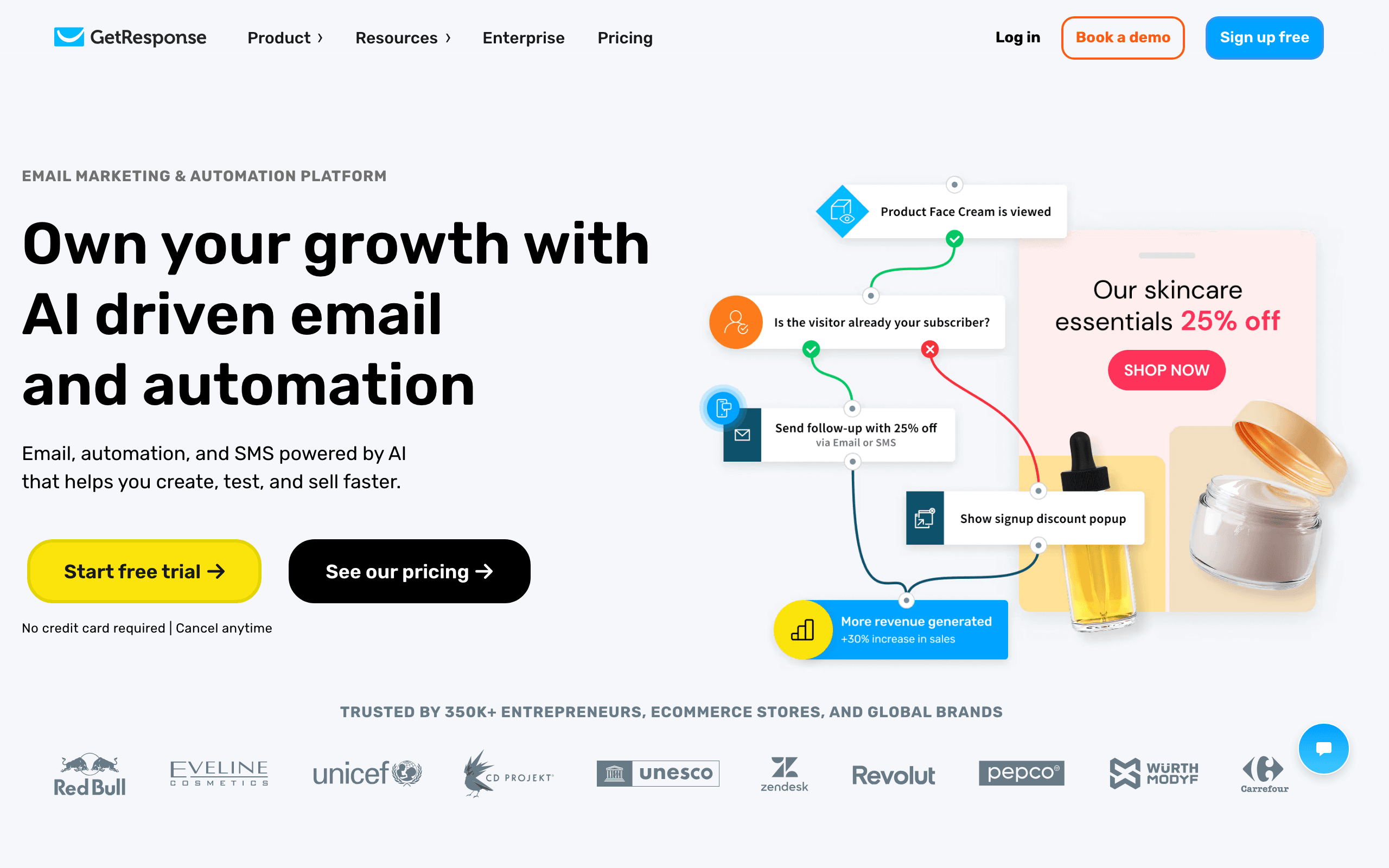
GetResponse has evolved into a full marketing platform with webinars, conversion funnels, and AI-powered tools. It's designed for businesses that want everything in one place.
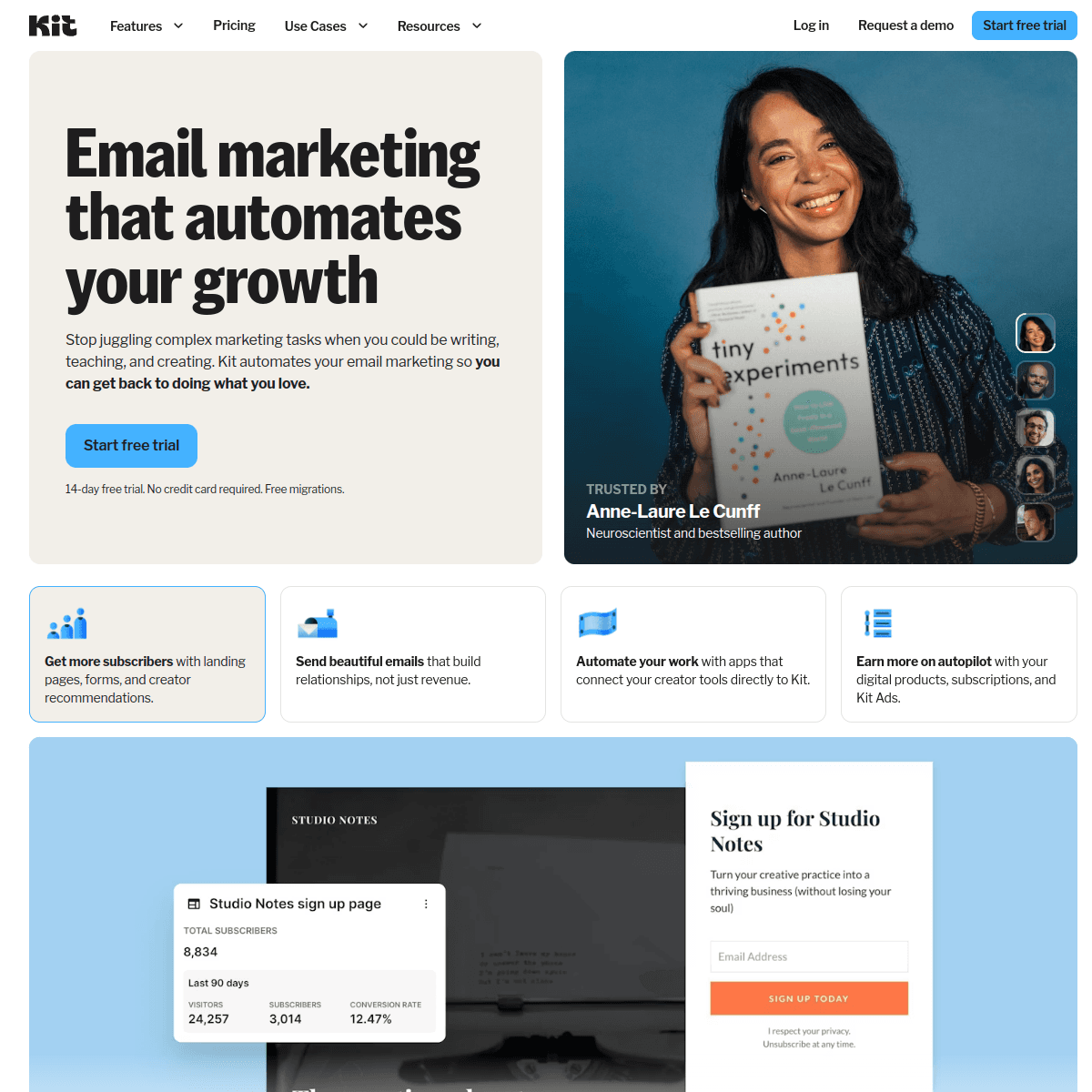
ConvertKit has a specific audience: creators. Bloggers, podcasters, course sellers. The tools are simpler but designed around creator workflows like paid newsletters and digital product delivery.
Pricing: $59 vs $119 at 10K
At 10,000 contacts, GetResponse costs $59/month and ConvertKit costs $119/month. GetResponse is half the price with more features.
ConvertKit's premium pricing is hard to justify on features alone. Creators pay for the focused experience and creator-specific integrations. Whether that's worth 2x the cost depends on how much you value the creator focus.
Use-case matchups
| Use case | Better fit | Why |
|---|---|---|
| Webinar-led lead generation | GetResponse | GetResponse has built-in live, evergreen, and paid webinar workflows. |
| Paid newsletter and creator monetization | ConvertKit | ConvertKit is built around creators, paid subscriptions, digital products, and audience growth. |
| All-in-one funnels and richer email design | GetResponse | Funnels, landing pages, website tools, and richer campaign design matter here. |
| Writing-first creator newsletter | ConvertKit | Simple broadcasts, tags, and creator workflows are the point. |
| SaaS subscription lifecycle email | Sequenzy | Neither GetResponse nor ConvertKit is centered on Stripe-triggered SaaS automation. |
Best Fit by Creator Revenue Model
Best email marketing tool for webinar-based lead generation
GetResponse is the better fit when creators, coaches, or educators sell through webinars, funnels, richer landing pages, and campaign automation. It works best when the email list feeds a guided sales process.
Best email marketing tool for paid newsletters and creator products
ConvertKit is the better fit when the business is built around writing, paid subscriptions, digital products, and creator audience growth. Its focused workflow is easier to justify when creator monetization is the product.
Best email platform for SaaS subscription lifecycle messages
Sequenzy is the better fit when the audience is a product user base rather than a creator readership. Subscription lifecycle, trial conversion, payment recovery, and transactional email need billing-aware automation.
Pricing reality
GetResponse has the stronger feature-for-dollar story at this benchmark if webinars, funnels, landing pages, and richer campaigns are useful. It is not automatically cheaper if you later need a higher tier for webinar capacity, creator tools, or advanced automation requirements.
ConvertKit's higher benchmark can still make sense when creator monetization offsets the platform cost. Paid newsletters, digital products, and the Creator Network should be evaluated as revenue tools, not only as email features.
Sequenzy's $49/month benchmark is relevant for SaaS teams that need billing-aware lifecycle email and transactional messages, not webinars or creator monetization.
Review signals
The review snippets are especially useful on this pair because they show two different definitions of value. GetResponse users praise lower cost and webinar/funnel breadth; ConvertKit users praise direct creator revenue and audience growth. The right metric is not feature count alone, but which platform supports the business model.
Migration checklist
| Workstream | Moving toward GetResponse | Moving toward ConvertKit | Moving toward Sequenzy |
|---|---|---|---|
| Subscribers and consent | Import contacts, tags, segments, custom fields, unsubscribes, and suppressions. | Import subscribers, tags, custom fields, forms, purchases, and consent records. | Map subscribers, attributes, tags, suppression status, and billing/product events. |
| Creator revenue | Move paid newsletter and digital-product workflows elsewhere if GetResponse cannot replace them. | Recreate products, paid newsletters, recommendations, and creator commerce. | Keep creator commerce outside Sequenzy. |
| Webinars and funnels | Rebuild webinar registrations, reminders, recordings, funnels, and follow-up sequences. | Choose separate webinar and funnel tools because ConvertKit does not replace them. | Keep webinar and creator funnels outside Sequenzy. |
| Automations | Rebuild richer journeys, webinar flows, landing-page funnels, and campaign sequences. | Simplify automation into creator-friendly broadcasts, tags, and sequences. | Rebuild trial, billing, churn, onboarding, and transactional paths. |
| Forms and pages | Replace forms, landing pages, websites, and conversion funnels. | Recreate creator landing pages, forms, and recommendation surfaces. | Keep web assets elsewhere unless they feed lifecycle email. |
| Reporting | Export campaign, webinar, funnel, subscriber, product, and revenue reports before switching. | Export subscriber, broadcast, sequence, product, and paid-newsletter reports. | Export lifecycle, campaign, and transactional email metrics. |
Decision checklist
- Will webinars or creator monetization generate measurable revenue?
- Does the team need a full marketing suite or a writing-first creator workflow?
- Is ConvertKit's premium offset by paid newsletters or product sales?
- Can GetResponse replace creator-specific growth tools without hurting the workflow?
- Is the real need SaaS lifecycle email instead of creator or webinar marketing?
Where GetResponse Wins
Native webinar hosting is the feature that sets GetResponse apart here: live sessions for up to 500 attendees, evergreen recordings you can run on autopilot, and built-in payments for paid webinars, all included in its $59-a-month plan at 10,000 contacts. ConvertKit has no webinar tools at all, but it answers with paid newsletter subscriptions, built-in digital product sales, and a creator network for cross-promotion, at a higher $119 a month. Choose based on whether webinars or creator monetization drives your revenue.
Email Design: Rich editors, many templates, sophisticated campaigns. ConvertKit keeps emails intentionally simple.
Price: Half the cost with more features. The math favors GetResponse unless you specifically value ConvertKit's focus.
Conversion Funnels: 30+ templates for lead generation and sales. ConvertKit has landing pages but not full funnel capabilities.
Where ConvertKit Wins
Creator Focus: Every feature is designed for creators. Paid newsletters, Creator Network for cross-promotion, course delivery automations.
Simplicity: Clean, focused interface without feature overwhelm. Creators who want to write and send emails without complexity appreciate this.
Philosophy: ConvertKit believes simple, text-focused emails perform better for creators. If you agree, the simpler editor is a feature, not a limitation.
For SaaS Companies
Neither GetResponse nor ConvertKit is built for SaaS. GetResponse is general marketing. ConvertKit is for creators.
If you're building software, not content, consider Sequenzy. Stripe integration, subscription-aware automation, and SaaS-specific features at $49/month.
The Revenue Generation Argument
ConvertKit's paid newsletter and digital product features can generate thousands in monthly revenue for successful creators. When your email platform earns you $2,000/month through paid subscriptions, the $119/month cost is a 17x return on investment. GetResponse cannot generate direct revenue - it is a cost center, not a revenue generator. For full-time creators whose income depends on audience monetization, ConvertKit's higher price is an investment with measurable returns.
However, most creators do not earn enough from paid subscriptions to justify the premium. If your newsletter has fewer than 500 paid subscribers, the math may not work. GetResponse's lower price and broader features may serve you better while you build your audience to the point where ConvertKit's monetization tools become profitable.
The Content Marketing Approach
GetResponse's webinar and funnel features enable a content marketing strategy where you host educational webinars, capture attendees as leads, and nurture them through automated email sequences. ConvertKit supports a creator-first approach where you build an audience through consistent content, grow through recommendations, and monetize through subscriptions and products. These are different content strategies that suit different business models.
Free Plan Economics
ConvertKit's free plan supports up to 10,000 subscribers - remarkably generous. GetResponse has no comparable free tier. For creators starting from zero, ConvertKit removes the financial barrier entirely. You can build a substantial audience before spending anything. The catch: the free plan excludes automation, which creators eventually need for effective audience nurturing. Still, starting free and upgrading later when revenue justifies it is a pragmatic path.









